Can Cars Really Run on Water?

An exploration to determine if water-fuelled vehicles are for real.

Star.com has an article, Above the Arctic Circle, climate change closes in, that says researchers predict that by mid-century Barrow, Alaska and its eight surrounding villages will be underwater despite decades of erecting barriers, dredging soil and building raised banks to hold back the water. Whatever the cause, climate change is a fact.
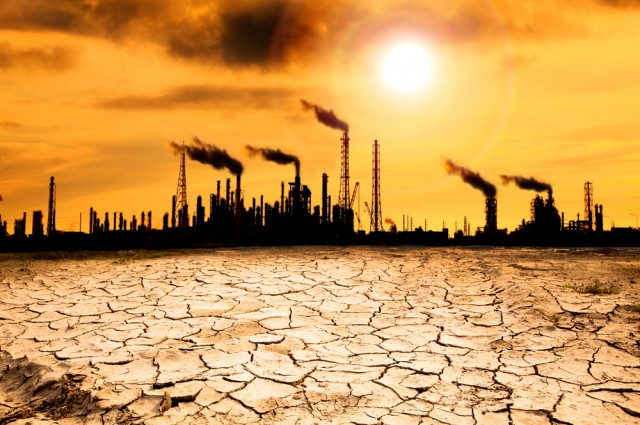
global_warming_0When I was an active teacher I taught science as well as other subjects. In many of those classes we used to discuss climate change, specifically the greenhouse effect, the buildup of greenhouse gases trapping heat in the atmosphere raising our planet’s temperatures. Often during class discussions, we would talk about solutions. That is when I would show them this Fox News video about the inventor, Dennis Klein.

This video would spark some interesting conversation. As you would expect some students would get excited about the solution given in the video. Others would be skeptics. Nonetheless, it made the class interesting. Over the years I often wondered about Mr. Klein’s invention.  I’ve guessed why I’ve never heard about this technology since the early 2000’s. What happened to this technology? My mind would try to explain possible responses. My mind sometimes went to conspiracy, that is, the idea that such a technology might have been discredited or maybe somehow made to disappear by the large oil conglomerates.  So I set out to find some answers.

Now whenever someone does research on the internet, one can get overwhelmed. There’s all sorts of information on the web and much of it  is conspiracy theories claiming that the technology is a scam. I always taught my students to be careful when using the Internet as there are many unreliable websites on the web. I used to tell my students “not to believe everything you read on the Internet as any ‘Joe Blow” can put up a website”. As far as that goes, don’t believe everything you read anywhere as not everything written is true, even when it comes from textbooks. I found many errors and some misinformation in school textbooks over my 35 years of teaching. So when I use the Internet I cross check information. If several websites are making the same claim; it is likely true. If only one site is making a claim, the information is likely not true.

Another thing to remember when researching on the Internet is to use only credible websites. These would be websites like universities, government sites, reputable organizations and so on. The University of Toronto  has a good article, Research Using the Internet, that explains the “ins and outs” of internet research.  So when I do my research, this is what I do.

So what did I learn? It seems the more I read, the more I don’t know. First of all, there are many sites, typically discussion sites, where people are putting forth all sorts of conspiracy theories. I like to stay away from these sites.

Wikipedia, a fairly reliable site, says in 2002, the firm Hydrogen Technology Applications patented an electrolyzer (a process of decomposing a molecule) design and trademarked the term “Aquygen” (changing the H2O to HHO, a new form of water) to refer to the hydrogen oxygen gas mixture produced by the device. The company claimed to be able to run a vehicle exclusively on water, via the production of “Aquygen”, and invoked an unproven state of matter called “magnegases” and a discredited theory about magnecules  to explain their results. Company founder Dennis Klein claimed to be in negotiations with a major US auto manufacturer and that the US government wanted to produce Hummers that used his technology. The company no longer claims it can run a car exclusively on water, and is instead marketing “Aquygen” production as a technique to increase fuel efficiency, thus making it Hydrogen fuel enhancement rather than a water-fueled car. Mr. Klein died in 2013.

So, can vehicles really run on water? The science magazine Scientific American says, Water won’t aid fuel economy in today’s cars, but it may help power the hydrogen cars of tomorrow. The Popular Mechanic’s article, the Truth about Water Powered Cars, says

There is energy in water. Chemically, it’s locked up in the atomic bonds between the hydrogen and oxygen atoms. When the hydrogen and oxygen combine…there’s energy left over in the form of heat or electrons. That’s converted to mechanical energy by the pistons and crankshaft or electrical motors to move the vehicle. Problem: It takes exactly the same amount of energy to pry those hydrogen and oxygen atoms apart inside the electrolysis cell as you get back when they recombine inside the fuel cell…Subtract the losses to heat in the engine…and you’re losing energy, not gaining it.

The Huffington Post’s article, Water-Powered Cars: Possible or Impossible? explains it this way.

Everybody knows it [water] contains hydrogen, and that hydrogen can be burned or used to generate electricity in fuel cells. But what few people seem to realize is that hydrogen is not an energy source …we have to break up water molecules via electrolysis, a process that uses more energy as input than you can then get out of the hydrogen as output.

2008-6-19-car01-copy
From philippinetop10.blogspot.ca

We Are Change is a nonpartisan, independent media organization composed of individuals and groups working to expose corruption worldwide. Seems like a reputable organization to me. Their article, The Suppression of Water Powered Cars, argues that water-fuelled cars is being suppressed from the public, namely by big oil companies. The article goes on to say, should inexpensive water-power exist; these oil companies would be set to lose billions.

So what is my conclusion? If you look at the science, then the claim that water can be used as a viable fuel source is false. To use a proverb, If it’s too good to be true, then it probably is. Having said that, the idea that the truth is being kept from us is always a possibility. Conspiracy theorists certainly would claim this. It’s happened before. Global Research, an organization I’ve referred to before in other posts says in their article, Monsanto’s Sealed Documents Reveal the Truth behind Roundup’s Toxicological Dangers, a large body of independent research has accumulated and now collectively provides a sound scientific rationale to confirm that glyphosate, better known as Roundup®, is far more toxic and poses more serious health risks to animals and humans than Monsanto and the US government admit. Roundup® has always been touted by Monsanto as a safe, environmentally friendly and easy to use herbicide. Too many times we have been told that a chemical is safe only to learn later on that is was not. The pesticide DDT and the herbicide Agent Orange are two examples. I have come to believe over my many years of life that there is always more going on than we will ever know. Another way to put it is to use the idiom, there is more (happening) than meets the eye. Is the truth being kept from us? Who really knows for sure?  Or, does the government know?

Climate Change Confusion

A commentary on whether humans are to blame for climate change

Carbonbrief.org, a UK-based website covering the latest developments in climate science, climate policy and energy policy, reports, Study links heatwave deaths in London and Paris to climate change. The study refers to the 2003 tragedy where more than 70 000 people across Europe died in a  heatwave. Climate Change is a reality. I don’t think anyone disputes that and the science community doesn’t either. All a person needs to do is take note of the strange weather the world has experienced in recent years. In June, we saw extremely wet weather in Europe causing flooding in Paris, France and Germany. In the United States there has been sizzling heat in the Southwest causing uncontrollable wildfires in California.  West Virginia has experienced severe flooding. In the province of Alberta, 88 000 people had to be evacuated from Fort McMurray because of wildfires. Also in June, Eastern China saw a tornado and hailstorm that killed at least 98 people when it sped over the city of Yancheng’s outskirts, destroying buildings, smashing trees and flipping vehicles on their roofs. The list of weird weather goes on and on.

There is no question that our weather is changing and becoming extreme. The ongoing debate is: Is it human activity that is causing climate change? Now I’ve taught about this topic in science for many years and there has been no doubt in my mind that it was indeed humans causing global warming which leads to climate change. I would show the graph comparing CO2 levels to average global temperatures and use it as evidence to convince my students. I would show them pictures of the shrinking polar ice cap and melting glaciers. I would show them Al Gore’s movie: Inconvenient Truth (see trailer below) and emphasize Al Gore’s argument that most of the scientists around the world agree that humans are the main reason for the global warming.

The article Scientific consensus: Earth’s climate is warming on NASA’s Global Climate Change website agrees with Al Gore’s conclusions as it says,

Multiple studies published in peer-reviewed scientific journals show that 97 percent or more of actively publishing climate scientists agree: Climate-warming trends over the past century are extremely likely due to human activities. In addition, most of the leading scientific organizations worldwide have issued public statements endorsing this position.

The Scientific America article: Is Global Warming a Myth? also agrees with Al Gore as it says,

…scientists have not been able to validate any such reasons for the current warming trend, despite exhaustive efforts. And a raft of recent peer reviewed studies—many which take advantage of new satellite data—back up the claim that it is emissions from tailpipes, smokestacks (and now factory farmed food animals, which release methane) that are causing potentially irreparable damage to the environment.

I have always believed that Al Gore must be right. But then I watched a video, on my son’s insistence, called, Climate Change: Fact or Fiction by Dr. Gary Smith (see below). Dr. Smith convincingly argues that humans are not causing global warming.

Global Research.ca, an organization that seems to me to be credible, has an article called Global Warming: Ten Facts and Ten Myths on Climate Change that seems to agree with Dr. Smith’s conclusions. This article agrees with Dr. Smith as it says,

 Climate has always changed, and it always will. The assumption that prior to the industrial revolution the Earth had a “stable” climate is simply wrong. The only sensible thing to do about climate change is to prepare for it.

The reality is that almost every aspect of climate science is the subject of vigorous debate. Further, thousands of qualified scientists worldwide have signed declarations which (i) query the evidence for hypothetical human-caused warming and (ii) support a rational scientific (not emotional) approach to its study within the context of known natural climate change.

So now I’m confused. I thought it was all clear in my mind but now I’m not so sure. The more I learn, the more confused I get. But I guess that is nothing new as Albert Einstein once said, “The more I learn, the more I realize how much I don’t know.”  Even Aristotle said, “The more you know, the more you know you don’t know.”

So now I’m not sure what to think. Am I convinced that humans are not to blame for climate change? NO I’m not. I suspect that we humans are contributing to the problem, but it could also be, at least in part, to natural changes in climate as the earth has gone through many warming and cooling periods. I suspect climate change is due to both. Having said that, I continue to believe that moving away from our addiction of fossil fuels can only help our planet. It just feels like the right thing to do. I guess we will just have to wait and see who wins the debate.

World Water Day

WaterDayTuesday, March 22, 2016 is World Water Day. I had not heard of this day until recently when reading a news article, so I decided to do some research to find out why a day deemed World Water Day was created. What surprised me is this day has been held annually since the 22nd of March 1993, which was the first World Water Day. How could there have been twenty-three World Water Days in the past and I had not heard of it before? Do I live in a bubble? I’ve always known that fresh water was, and still is, a precious resource and that it is rapidly disappearing due to pollution and melting glaciers. In fact, I taught many lessons to my students about it over the years, but when I did some research on the topic, I was surprised by what I learned.

If I am truly honest with myself, I have to admit that I’ve always taken water for granted. There has never been a water shortage where I live. There has always been plenty of fresh, clean water to drink, to have a shower, to operate the clothes washer, to run the dishwasher, and to even water the lawn occasionally. I’ve always assumed, like most people I suspect, that we would always have a supply of fresh water. After doing some research, now I’m not so sure.

The Water Project is a non-profit organization providing reliable water to communities in sub-Saharan Africa. According to the website, water Scarcity is a reality on our planet! That means there is either the lack of enough water or lack of access to safe water. This site says 1 in 9 people worldwide do not have access to safe and clean drinking water. That means over a billion people on our planet lack access to safe water. The site also says that in developing countries, as much as 80% of illnesses are linked to poor water and sanitation conditions.

The World Water Council is an international multi-stakeholder council that promotes awareness, builds political commitment and triggers action on critical water issues. According to the Council, 1.1 billion people live without clean drinking water. The daily per capita use of water in residential areas is

  • 350 litres in North America and Japan
  • 200 litres in Europe
  • 10-20 litres in sub-Saharan Africa

That means each citizen of North America uses 350 litres every day. That’s a lot of water. It begs the question, are we wasting water?

From an agricultural perspective, the Water Councils says the quantity of water needed to produce 1 kg of wheat is 1 000 litres. Rice needs 1 400 litres and beef requires 13 000 litres of water. Perhaps it’s time to eat less steak.

Water.org is an international non-profit organization that brings water and sanitation to the developing world. Here are some interesting statistics I found on their site.

  • 663 million people – 1 in 10 – lack access to safe water.
  • 4 billion people – 1 in 3 – lack access to a toilet.
  • Twice the population of the United States lives without access to safe water.
  • More people have a mobile phone than a toilet.
  • Every 90 seconds a child dies from a water-related disease
eye
From ideahack.me

The Guardian’s article, How will climate change impact fresh water security? says fresh water scarcity is best understood by contemplating the distribution of fresh water on our planet. Approximately 98% of our water is in our oceans, which consists of salt water, and only 2% is fresh water. Of that 2%, almost 70% is snow and ice (namely glaciers), 30% is groundwater, less than 0.5% is surface water (lakes, rivers, etc.) and less than 0.05% is in the atmosphere. Climate change has had enormous effects on the amounts of fresh water available to us on the planet. The primary one is that global warming causes the polar ice caps and the world’s glaciers to melt into the sea, turning it into seawater.

Does this mean we should we alarmed? Yes it does. Does it mean we should lose hope for the future? No it doesn’t. All the various organizations I mentioned above are working towards solving the water scarcity problem. Science is also working towards solutions.

According to The Guardian’s article, 8 unbelievable solutions to future water shortages, science has come up with innovative ideas such as,

  • Waterless bathing using a lotion called DryBath which is a blend of essential oils, bioflavonoids (group of plant pigments), and an odour-eliminating chemical that is said to save four litres of water ever session.
  • Ultra efficient showers that use a screw-in device that captures water at the beginning of a shower and feeds it back into the system.
  • Using lasers to induce rain at times of drought, an idea debated by the World Meteorological Organization.
  • Folding toilets that make more efficient use of water. Its inventors claim that if installed it could save 10,000 litres per person every year.
  • Using a solar-chemical purification process that involves exposing titanium dioxide and zinc oxide to ultra violet radiation from the sun to produce a photo catalytic composite that cleans water.

According to the Canada Free Press’ article, Israel holds the solution to world water crisis, Israel has many new innovative products and policies. Some of these are drip irrigation and “fertigation,” a process of injecting fertilizers, soil amendments, and other water-soluble products into an irrigation system. Israel promotes dual-flush toilets, seawater desalination, advanced wastewater treatment and reuse, free-market pricing of water, drought-resistant seeds, cutting-edge metering and leak-detection systems, conservation education and precision agriculture.

Perhaps the most alarming thing that I’ve learned was on the World Water Council website. It said,

“As the resource is becoming scarce, tensions among different users may intensify, both at the national and international level. Over 260 river basins are shared by two or more countries. In the absence of strong institutions and agreements, changes within a basin can lead to transboundary tensions. When major projects proceed without regional collaboration, they can become a point of conflicts, heightening regional instability.”

Water-Wars-Logo
Logo from touchland.com

The prospect of “water wars” has been flaunted for decades and according to the article, Global ‘water war’ threat by 2030 – US intelligence, it may become reality within a decade. The article says the Office of the Director of National Intelligence (ODNI), the organization that oversees US intelligence agencies such as the CIA and FBI, was commissioned by President Barack Obama to examine the impact of water scarcity worldwide on US security. The ODNI predicts that by 2040 water demand will outstrip current supply by 40 per cent. The organization says it could lead to outright fighting, or water could be used as a tool of political leverage, similar to how gas and oil are used today. It suggests revising international water treaties and investing in superior water purification technologies that will make the increasingly scarce resource plentiful again.

The world faces many serious problems such as global warming and water scarcity. It is time for us to get our “heads out of the sand” and educate ourselves about these issues. Even more, it is time for us to get involved, even if it is something as simple as donating to an organization that brings clean water and sanitation to the developing world, taking shorter showers, or purchasing water efficient appliances. If we all do our small part, we will make a difference.

Bring the New Year

Here we are again saying goodbye to another year and bringing in another new year. It boggles my mind (mainly because it reminds me that I’m getting older) how fast annual events come about, whether they be birthdays, anniversaries, holidays or even the Stanley Cup playoffs. New Years is one of those annual events.

Now when you talk to people you discover that some people tend to live in fear. For example, these individuals are afraid to travel because “terrible things,” like terrorism, might (and I emphasize the word might) occur in the world. I categorize these individuals as the pessimists. Now I will admit that I sometimes can fall into this category. It’s easy to do. These are the people who always point out the negative in the world. These are the folks who say, “What kind of world will our children or grandchildren live in?” Fearful individuals seem to believe the world is “going to hell” and are anxious because 2016 will be even worse than 2015.

What I find interesting is that attitudes have not changed. My Mom talks about how her parents used to worry about the kind of world their children and grandchildren would be born into. My parents used to be concerned about the state of the world as they lived during the Cuban Missile Crisis and the Cold War. The world has always faced challenges and threats. Today is no different. The reality is the world continues to survive.

Now to be fair, there is some merit to their fear; to their pessimism.  2015 has seen many heartbreaking events. Here are some that caught my imagesattention. In October Hurricane Patricia, the most intense hurricane ever recorded in the Western Hemisphere, had winds up to 322 kilometres per hour (200 mph). November saw  multiple attacks by Islamic State of Iraq and the Levant (ISIL), the best known was the attack in Paris, France, resulting in 130 fatalities. Also in November of this year Turkey shot down a Russian fighter jet which is the first case of a NATO member destroying a Russian aircraft since the 1950s. In June of 2015, ISIL claimed responsibility for three attacks around the world during Ramadan such as the one in Kuwait City where a suicide bomber attacked a Mosque killing 27 people and injuring 227 others. Then there was the Greek government debt crisis in July when Greece became the first developed economy to miss a payment to the International Monetary Fund (IMF) in the 70-year history of the IMF.

Of course, I would be remiss if I didn’t mention the story that has been dominating the news most of the 2015 year and that is the Syrian refugee crisis; the worst refugee crisis since the Second World War.  The International Organization for Migration claims that more than one million migrants and refugees crossed into Europe in 2015. Now I could list other events, but there is no question that there have been numerous shameful events in 2015.

Thank God  (or Allah, or Yahweh, or the Universe) there are those who always see the good in the world. I categorize them as the optimists.  Optimists are filled with hope. These are folks who believe that the world can be better; that humanity is not all bad. Individuals such as these look to 2016 with an attitude of hope, hoping that things will improve.  I choose to align myself with the optimists.

There is merit to their argument. Here are some of the jovial events that caught my attention. In April, health officials declared the Americas the first region in the world to be free of the endemic rubella, or German measles, thanks to a 15-year effort to vaccinate men, women, and children everywhere in the northern hemisphere. This is great news since rubella can cause death or severe birth defects when women catch the disease during pregnancy. In July, history was made when Cuba and the United States reestablished full diplomatic relations, ending a 54-year history of GUSTAVO-CAMACHO-GONZALEZ-L1060274_(23430273715)hostility between the nations. In December, a global climate change pact was agreed upon at the COP 21 summit, where  195 countries adopted the first-ever universal, legally binding global climate deal. This is great news for the planet. Also in December of this year SpaceX, a company that hopes to revolutionize space technology, lands a Falcon 9 rocket.  This is the first reusable rocket to successfully enter the Earth’s orbit and return. This brings hope for space travel as it makes it cheaper. December also saw Indian Prime Minister Narendra Modi make a surprise visit to  Pakistan to meet his counterpart, Nawaz Sharif.  This is the first time an Indian leader has visited Pakistan in over a decade.  Relations between these two countries have been bitter ever since the violent division of British India in 1947, and the two nations have a history of  numerous military conflicts. This shows that good relations are possible between rivals. That gives hope that peace is achievable. Also in December the members of the Scottish Parliament voted unanimously in favour of a law to ban smoking in cars that are carrying children. That’s great news for kids. There are certainly more positive events of 2015 I could report, but you get the idea.

The Atlantic Monthly in December of 2015 , a magazine published in Washington, D.C,  wrote an article called 2015: The Best Year in History for the Average Human Being. The article cites numerous reasons for making this claim.  Here are a few that caught my attention.

“At the Paris climate conference in December, countries demonstrated renewed resolve to tackle global climate change together. Absent any policies enacted to slow climate change since 2010, the world might have been more than 4 degrees Celsius hotter in 2100 than pre-industrial temperatures. Existing policies to cut emissions reduced that forecast to 3.6 degrees, and the additional pledges in Paris brought it to 2.7 degrees Celsius.”
“The Global Terrorism Index says, 11,133 people died in terrorist attacks—suggesting terrorism accounted for about 1.8 percent of violent deaths worldwide. And for all that terrorism deaths have increased since 2012, they remain responsible for perhaps three hundredths of one percent of global mortality…Rabies was responsible for three times as many deaths as terrorism that year. Stomach cancer killed more people than murder, manslaughter, and wars combined…”
“Civil and political rights also continued their stuttering spread. While 2015 saw rights on the retreat in countries including Turkey and Thailand, the number of electoral democracies worldwide remains at a historic high according to Freedom House…This year, there were peaceful and democratic transitions of power in settings as diverse as Burkina Faso, Tanzania, Myanmar, and Argentina. And Saudi Arabia held local elections where, for the first time ever, women were allowed to stand as candidates and vote.”
The Atlantic Monthly focuses on the positives of 2015. What astounds me is instead of feeling good about the progress made in 2015, the pessimists choose to downplay the article. CBC did this in their article, 2015 ‘the best year in history’? Not everyone agrees. Why not be proud of what humanity has achieved in 2015? Why can’t humans celebrate the positives rather than dwell on the negatives?
When doing research for this post, I ‘googled’ predictions for 2016. What is intriguing to me is the vast majority of the predictions are ‘doom and gloom’ predictions.  One ‘hit’ was titled 2016 will be a year of living dangerously for the global economy.  The Inquisitr, an internationally recognized news website, predicts World War Three will start in 2016.  When you think about it, the third world war has already started as the war on terrorism involves much of the world community. I guess they’re right about that prediction. At least Newsweek predicts a  rise in electric cars which if it becomes true is great for the environment.  Now remember, a prediction is just a guess or a forecast.  When I ‘googled’, “How many predictions came true in 2015?” the vast majority of ‘hits’ were talking about the movie Back to the Future II. In this movie Marty McFly and Doc Brown travel to the future in their time machine, the DeLorean. The date set on the time machine was October 21, 2015.  The various websites were comparing the 2015 of today with the 2015 of the movie. I had little luck finding anything else. That leads me to believe that most of the predictions made for 2015 didn’t come true. Certainly some of the political changes that occurred in 2015 weren’t predicted.

best-year-everSo what will 2016 bring? The pessimists will likely envision , more ISIL terrorist attacks,  more anger from Mother Nature in the form of violent storms, more conflicts between nations, more economic problems, and on and on. Optimists will focus on the positives like improved political relations, the international community working together to slow climate change, improvements in human rights, improvements in health, and so on. I choose to be in the optimist camp. I choose to believe that 2016 will bring many good things. Really, the only thing we can control is the choices we make. To quote Brad Paisley, “Tomorrow is the first blank page of a 365 [366 for 2016] page book. Write a good one.” I’m choosing to make it a good one. I’m choosing to make 2016  a great year!

Interesting reads: 5 Major Trends and Make your 2016 better

Change is inevitable!

I recently received this quote in an email and the quote got me thinking. The quote was:

Change cannot be avoided in life. So do not resist change, embrace it!

There is no doubt that life is changing all the time.  I’ll use myself as an example.  This year, 2015, has been very much a year of change for myself as well as my family. As I mentioned in some of my other posts, I retired as a classroom teacher after 35 years of teaching.  So to say that this is a huge change for me personally is an understatement.  Really, retirement is a new beginning; it is the beginning of a whole new journey.  For me, that has meant following some of my passions.  One of those passions is writing which is why I started this blog.  I needed an outlet for my writing.  I needed a place to share my stories and my opinions.  It means change because now there will be no more having to get up for work unless I decide to work somewhere.  Working is more of a choice now, rather than a necessity.  That is a good change.  I’ve heard it said, “some people work to live and others live to work”.  I was always one of those that worked to live.  I needed to work to support my family and to feel useful to society.

My wife and I have three wonderful children,  All three of our children have gone through some sort of change this year.  Our eldest daughter has moved to a new place to live after being in her previous place for five years.  That was a major change for her as she is not a person who freely embraces change.  Our youngest daughter is returning to university this year after living and working for the past year in her home town.   Our son is also off to university after spending two years at the local community college.  He is excited for this change as he has been living with us while getting his Diploma.  So as you can see, there has been much change in my family.  The only one that is remaining at her same job is my wife.  Having said that, she has taken a three-month leave of absence from her work place so that we can do some travelling this fall.  So even she has to endure some changes, although they are good changes.

If you listen to the news regularly, then you would also know that the day-to-day conditions on our planet are changing now in ways we could not have anticipated.  Climate change is one of the biggest changes our planet has had to endure.  Every year seems to be reported as the hottest on record.  Storms seem to be getting more and more frequent and progressively more violent.  According to the Union of concerned scientists, “As the Earth warms, the amount of rain or snow falling in the heaviest one percent of storms has risen nearly 20 percent on average in the United States—almost three times the rate of increase in total precipitation between 1958 and 2007.” That is definitely change, and not good change. Our planet needs help.

Changes the world will endure, according to the article, 5 ways the world will change radically, are:

  1. The world is becoming over populated.  The article states that,” India’s population will overtake China’s around 2020, and Africa’s population will overtake India’s by 2040″  That is not change to embrace since Africa is one of the world’s most poverty-stricken continents.
  2. Urbanization will rapidly increase.  The article says, “the number of people living in cities will climb from 3.5 billion today to 6.3 billion by 2050”  That means there will be much less farmland to grow food to feed the people.  That is not good change.
  3. Conflicts over water shortages will probably play out on our planet.  That is not positive change, for that means many people will die because the world is running short of fresh water.
  4. At this time in history, there isn’t enough energy being extracted from known sources of fossil fuels to sustain 10 billion people. That means humans will be forced to turn to new energy sources before the end of the century.  In my opinion this is good change as hopefully these new sources will mean less pollution.
  5. The article maintains, “biologists [not all biologists] believe that with the current rate of extinction, 75 percent of the planet’s species will disappear within the next 300 to 2,000 years”.  That is just sad as this planet has so much biodiversity.  That definitely is not good change.

So the fact of change is real!  The quote at the beginning says, So do not resist change, embrace it.”  When change happens to us individually, then yes it should be embraced.  As it has been said, “A change can be as good as a vacation.”  I think there is truth in that.  Many spiritual writers will say that when change happens to an individual, it is God’s or the universe’s way of forcing you to do what you are not choosing to do yourself, because God knows what is best. Having said that, sometimes individuals need Ostrichto resist change such as when individuals or groups of people are being forced to do something against their will. An example of this might be when groups of people are forced from their homes due to conflict like what we are witnessing in areas of the world like Africa and the Middle East.

However, when it comes to changes affecting this planet, such as climate change, or loss of biodiversity, then change needs to be resisted.  It is time for us humans to “get our heads out of the sand” and start resisting planetary changes that will only cause our planet to be less desirable to live in.