My New Years Resolution – No More News

new-year-clipart-best-free-happy-new-year-borders-clip-artOn January 6, 2017, my wife and I along with our three wonderful children flew back from Mexico after spending Christmas and New Years at a resort. It was paradise with its long ocean beaches, good food, 25 degree Celsius or better temperatures and quality family time. There was time to relax, reflect and forget about everything. I didn’t check my phone once which meant I was totally out of touch with world events.

When we arrived back home, I thought I should check the news to see what is happening in the world. When I did I saw headlines such as;

  • At least 5 dead, 8 hospitalized after shooting at Ft. Lauderdale airport
  • U.S. allies warn of “new level of threat” from North Korea
  • Hundreds arrested, police officer killed in Mexico gas price protests
  • Brazil gang kills 31, many hacked to death, as prison violence explodes
  • Rapes and violence continue in Germany in first week of 2017

What a “downer” it was to read these headlines after spending two weeks in paradise away from reality.

New Year’s Eve was wonderful at our resort. The Mexicans know how to throw a good New Year’s Eve party. The hundreds of people attending the party were festive, cheerful and the room had a wonderful energy; an energy I would describe as optimism and hope.

Whenever a new year concludes people start to tell you about their new year’s resolutions. Now I have to admit, in the past I haven’t been much into the new year’s resolution hullabaloo. When I practiced partaking in new year’s resolutions, like most people, I would start off the year doing my best to honour my new year’s resolution but by the end of January I’d “throw it out the window”.  Resolutions were just too much effort. I would ultimately come to the conclusion that New Year’s resolutions were just a ridiculous ritual.

Where did the idea of New Year’s resolutions even come from? Is it practiced in all countries? I was curious so I looked it up. According to Wikipedia, a New Year’s resolution is when a person resolves to change an undesired trait or behaviour. It is a tradition that is most common in the Western Hemisphere but also found in the Eastern Hemisphere. It is believed to have started with the ancient Babylonians some 4,000 years ago. They were also the first to hold recorded celebrations in honour of the New Year, however for them the year began not in January but in mid-March when the crops were planted.

This year I feel different. This year I am taking on a new year’s resolution. That resolution is to watch less news. I’m not convinced I can stop “cold turkey”.  Why you ask? The answer is simple. The news is depressing. The news media for the most part report the stories of tragedy and sorrow; news stories that cause anxiety.  Now I’ve been told (I don’t remember who) that the mind is like a computer. What goes in is what comes out. So, if that is true and we are constantly filling our minds with tragedy and sorrow, then we become more and more anxious and fearful.

fight-or-flightAccording to Wikipedia, when we start to feel excessive anxiety we’re in trouble. Our bodies never turn off our fight, flight or freeze response. As a former biology teacher, I can tell you that chronic stress, or when the body is in flight or fight mode over a prolonged period of time, can contribute to long-term problems for heart and blood vessels. Specifically, a raised heart rate causes hypertension (high blood pressure) which puts you at higher risk of having a stroke or heart attack. Maybe this is why according to the America Heart Association one of every three deaths in the U.S. in 2013 were from heart disease, stroke and other cardiovascular diseases. According to the Government of Canada cardiovascular disease  is the second leading cause of death in Canada.

Napoleon Hill was an American new thought author who is well known for his book, Think and Grow Rich. Mr. Hill once said,

“Our minds become magnetized with the dominating thoughts we hold in our minds and these magnets attract to us the forces, the people, the circumstances of life which harmonize with the nature of our dominating thoughts.”

Napoleon Hill would likely say that if you’re watching stories that causes your thoughts to be negative and fearful, then that is what becomes your dominating thoughts.   Karen Marie Moning, an American author, seems to agree as she says:

“Who and what we surround ourselves with is who and what we become. In the midst of good people, it is easy to be good. in the midst of bad people, it is easy to be bad.”

If we surround ourselves with “negative news” then we become negative, anxious and fearful. So for me, if watching less negative news makes me feel more positive, optimistic and joyful, then it is worth it. It is so easy to get caught up in the negativity in the world that our minds start to tell us that the world is falling apart; that the world is going to hell; that the world is a “bad” place. I’ve never believed that the world is a horrible place to be. I’ve written about that in previous posts. Anytime I’ve travelled, I’ve met wonderful people who are happy. Our recent trip to Mexico reminded me of that once again. The Mexicans we met were wonderful people. They were joyful, helpful, kind and generous.

The Huffington Post has a news story called, Former Reporter Poses The question we must all ask ourselves about negative news. The story is about Michelle Gielan who was working as a local and national news reporter who covered numerous heartbreaking stories. In all her years as a television journalist, one particular story stuck out and made her question everything about how tragedy is covered in the media. Gielan was assigned to cover the funeral of a young girl who had been an innocent bystander caught up in deadly gang violence in Chicago. A week later, Gielan was covering the young girl’s funeral. That is when the reporter had an epiphany. “It was just beautiful,” she says. “We could talk about the fact that there’s pain and tragedy here, but there’s also hope and optimism and resilience… One story leaves us activated. The other leaves us paralyzed.” It is the elevation of positive news stories and hope, she continues, that holds true power. “What would happen if we talked about that stuff on the news?” Gielan asks. “How would that transform the community? How would that transform the world?” I would encourage you to read the story. Michelle Gielan has since left her job as a reporter and is now a positive psychology researcher.

If the media is going to continue to report on “pain and tragedy” then I choose to no longer watch it. If enough of us make that choice, then maybe, just maybe the news media will change their approach. They can still cover the same stories, but focus on “hope and the optimism”. It’s just a different way of looking at the story. Until then, it very little news for me.
Christmas Controversies 2.0

A commentary on Christmas controversies.

image
Christmas 2015 Starbucks controversy

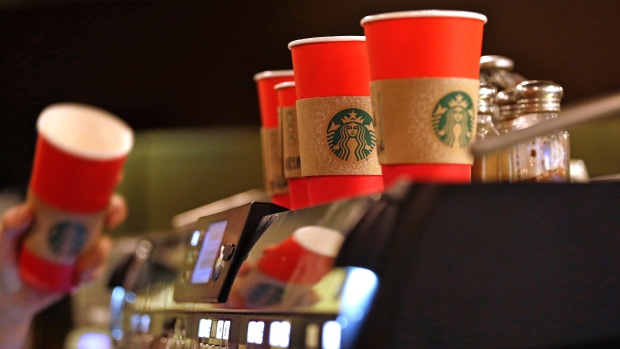
During the 2015 Christmas season, I wrote a post titled Christmas Controversies. One of the quarrels I talked about in that post involved the Starbucks company, a disputation known as the Red Cup Controversy. Previous to 2015, Starbucks had red holiday cups decorated with snowflakes, Christmas ornaments or reindeer but in 2015 the company came out with red cups with just its green logo on it. Starbuck’s reason for the change was to embrace “simplicity and quietness.” As with any controversy, the Christian traditionalists saw this as an attempt to diminish the importance of Christmas.

starbucks
2016 Starbucks controversy from Huffington Post

It seems Starbucks is once again surrounded with Christmas controversy in 2016. The Huffington Post has an article called, People Are Raging Mad That Starbucks’ Newest Cups Aren’t Red, that reports Starbucks introduced a new green cup featuring a “mosaic of more than a hundred people drawn in one continuous stroke,” which the company says represents community and unity in a time of political divisiveness. Like last year many people are reacting with anger claiming this year that the holiday cup is threatened. Personally, I like the message that Starbucks is attempting to deliver. If you think about it, the message of “community and unity in a time of political divisiveness” is an appropriate message during Christmas. Thomas S. Monson, an American religious leader, says, “the spirit of Christmas is the spirit of love and of generosity and of goodness. It illuminates the picture window of the soul, and we look out upon the world’s busy life and become more interested in people than in things”.

Now I agree with Mr. Monson. If this is what Christmas is about then Starbuck’s message of unity is very much a Christmas message. It’s important to understand that the kind of love that Mr. Monson is talking about is what the Greeks call agape love. This is the highest form of love. It’s the kind of love that the Christian bible speaks of. It’s the kind of love that Jesus spoke of and modelled. It is selfless love. Agape love is unconditional love; a love that transcends and operates regardless of circumstances. It should not be confused with what the Greeks called philia, which means brotherly love.   Divisiveness can only be overcome with unconditional love so Starbuck’s message of “community and unity” is most certainly a Christmas message.

636167067021768560-copy-of-103a6339
Scene from “Hipster Nativity” set

Crux, an independent Catholic news site, has an article called, Retail ‘Hipster Nativity’ scene stirs controversy. This controversy is most interesting. This Nativity set, called the “Hipster Nativity” set features Joseph sporting a lumberjack beard as well as a man bun while using his iPhone to selfie the moment as the Segway-riding wise men present baby Jesus with amazon.com boxes. Now I can understand this controversy and why traditionalists might be angered by it. Upon first reading about this controversy, my reaction was, “this makes fun of the manger scene, a sacred Christmas symbol”. But then I thought about it. Maybe we North Americans are just too uptight. Maybe we just need to relax and look at things differently. So, that is what I did. Firstly, if you think about it, this nativity scene is a true commentary about our society. We are a technological and materialistic society. Maybe there is a message for our Western civilization. Maybe the “Hipster Nativity” set is a metaphor reminding us that consumerism is the cause of our divisiveness.  Secondly, if God is a loving God (that is what Christians believe, isn’t it?) would God care about such dissension? The Christian scriptures tell us in 1 John 4:8, “whoever does not love does not know God, for God is love”. Think about that. God’s very essence is love. Now we’re not referring to romantic love here. The kind of love that the biblical passage is referring to is agape love which means unconditional love, the kind of love that God has for humanity. The bottom line is, if God is an unconditionally loving God, then God would not be offended by the “Hipster Nativity” set. In fact, God is likely having a good laugh. Maybe we should too.

game
Santa VS Jesus card game from Amazon

Another interesting controversy is reported by Yahoo News called, This Season’s Most Controversial Holiday Card Game: Santa verses Jesus.  This is a “tongue-in-cheek” card game based on the question; who actually rules Christmas? Is it Santa or is it Jesus?  The creators of Santa VS Jesus Card Game, one of the top-selling card games on Amazon.com in the United Kingdom, splits players into two teams which go head-to-head in an attempt to win the most believers. This determines who will rule Christmas. The two sides, Team Santa and Team Jesus undergo Christmas themed challenges (puzzles, riddles, brainteasers) to win over believers. IBT’s article, Is ‘Santa VS Jesus’ Board Game Blasphemous? discusses the controversy. The article quotes Danny Webster, a spokesperson for the Evangelical Alliance UK, who says the game “trivializes Christian belief and equates them both as fictional characters.”  So once again I ask; Are we North Americans just too uptight?  Let’s look at this controversy differently. Maybe this game is really a blessing in disguise. Maybe it forces people to take a good look at Christmas and what the holiday is all about. Is it a holiday about gift giving, which is what Santa is all about, or is it about Jesus, a holiday where Christians celebrate the birth of Jesus? Whether you believe Jesus is the son of God, as Christians do, or that Jesus is one of many ascended masters (spiritually enlightened beings) or just a man who had a message worth paying attention to, it doesn’t matter. The bottom line is Christmas is about the “Spirit of Christmas” which is about love; agape love actually. It is a season to remind us that we humans need to be inclusive, joyful and most importantly unconditionally loving.  In other words, the very message Jesus delivered.

We can get so caught up in the mentality that Christmas is being attacked instead of paying attention to what is important. What is important you ask? I think the Baha’i faith has it figured out. This is a faith that emphasizes the unity of humanity transcending all divisions of race, nation, gender, caste, and social class, while celebrating its diversity. Baha’u’llah, the founder of the Baha’i Faith wrote, “The earth is but one country, and [hu]mankind its citizens.” Abdu’l-Baha’s, his eldest son, enhanced the message with the “unification of [hu]mankind” has now become “the paramount issue and question in the religious and political conditions of the world.” If we look at what has been occurring in our world recently we can clearly see that divisiveness is alive and well. The American presidential election was one of the most divisive in history. Brexit is another example of European divisiveness rather than unity.  I believe the Baha’i faith has the true Christmas message. We are all part of the human family and therefore we are called to unite through agape love. That is what Christmas is about!

Clairvoyants. Are they for Real?

A commentary on the power of thoughts.

If you watch America’s Got Talent then you’ve likely heard of the Clairvoyants consisting of a mentalist duo, Thommy Ten and Amelie van Tass. To watch them in action is “mind blowing” and captivating to say the least. It makes you ask, is this for real? Can this person really read minds? If you’ve never seen the Clairvoyants, then have a look at this video.

http://www.youtube.com/watch?v=TAckiJJxgkI

Now one thing I’ve discovered is no matter what you read, especially on the Internet, there are people out there who feel it is their sole purpose in life to debunk things. That is why conspiracy theories about the Kennedy assassination and the moon landing exist. The Clairvoyants are no different. There are lots of sites on the Internet putting forth explanations on how these two individuals do what they do. One of the common theories is that someone is communicating with the performers feeding them information. They suggest gadgets like a $200 device from a magic supplier called a thumper, are being used. This technology transmits Morse code via vibrations. (see Clairvoyants revealed). In my mind it would take a great deal of concentration while performing on stage to decipher the Morse code. Furthermore, if you watch the video above you will notice that neither Thommy Ten nor Amelie van Tass see the dice toss. So what message was sent? A guess perhaps?

So is this for real? A Clairvoyant is defined as having or exhibiting an ability to perceive events in the future or beyond normal sensory contact. So is beyond normal sensory contact possible? The Telegraph article, Why mind-reading is a science, not a magic trick, certainly suggests we humans have such an ability. It says “electrical activity within the brain means that our thoughts can be read and understood”. Another site, Live Science, is a site which delivers news about the natural and technological world. It’s article, Scientists Say Everyone Can Read Minds, says,

“Empathy allows us to feel the emotions of others, to identify and understand their feelings and motives and see things from their perspective. How we generate empathy remains a subject of intense debate in cognitive science…Some scientists now believe they may have finally discovered its root. We’re all essentially mind readers.”

So I say maybe Amelie van Tass can read minds. Just because we may have been taught that it is not possible doesn’t mean that that is the truth. “Yeah, right” you might say. “There is no way the mind is that powerful”. Check out these videos.

Japanese Dr. Masaru Emoto was one of the first to do experiments like these. Now if our thoughts can do this to water just imagine what our thoughts are doing to our bodies, which are made up of 50 – 65% water. The mind and body are not separate. Our thoughts have remarkable control over our bodies. I can personally attest to that. Many times I have told myself that I couldn’t do something and guess what? I couldn’t do it. Now I find myself wondering what would have happened had I repeatedly told myself that I could do it.

The Huffington Post published an article called; Can Our Brain Waves Affect Our Physical Reality? The article explains things this way.

Not only your brain, but your entire body has an electric field. Anywhere there’s a nerve cell, there’s electricity. It’s just concentrated the greatest around your head because that’s where the bulk of your nerve cells are.

Your thoughts are formed in this electric field. The measurable perturbations and disturbances in the brain’s overall electric field are your actual thoughts racing through your mind. As you read this article, the thoughts you are thinking of, the words your mind is processing, are all electrical impulses that can be measured if you had a few wires hooked up between your head and a machine. So thoughts are energy, the same as everything else.

The article goes on to explain how those thoughts (pieces of energy) influence the quantum field around us. In quantum physics they would say we are entangled with our environment so we can affect that environment and influence the randomness of it, just as it can influence us. Simply put, our thoughts can influence the environment around us, which is an environment consisting of energy. Albert Eienstein said,

“Everything is energy and that’s all there is to it. Match the frequency of the reality you want and you cannot help but get that reality. It can be no other way. This is not philosophy. This is physics.”

So if thoughts are merely pieces of energy, then wouldn’t it be possible for another person to pick up that energy and “read” it. It seems possible to me. To once again quote Albert Einstein , “The more I learn, the more I realize how much I don’t know.” So I say, it is time we open up our minds, release some of the old beliefs systems and start to broaden our minds. I’m coming to believe that possibilities are limitless. Who living in the 1980s would have thought that computers could do what they do today? Jamie Paolinetti says, “Limitations live only in our minds. But if we use our imaginations, our possibilities become limitless.” I’m beginning to realize he is right. If only I had learned this years ago. The only limits are those we place on ourselves. We believe it is not possible for one person to read another person’s thoughts, so we rationalize that it is a trick. What is a belief anyway? The late Wayne Dyer says, “a belief system is nothing more than a thought you’ve thought over and over again.” If only I had told myself over and over in my youth that I had a brilliant mind, then maybe I could read people’s minds. But then again, would I want to?

Ignorance, Fear, Hate. What about Love?

A commentary on the effects of fear on society.

maxresdefault
From Fox News

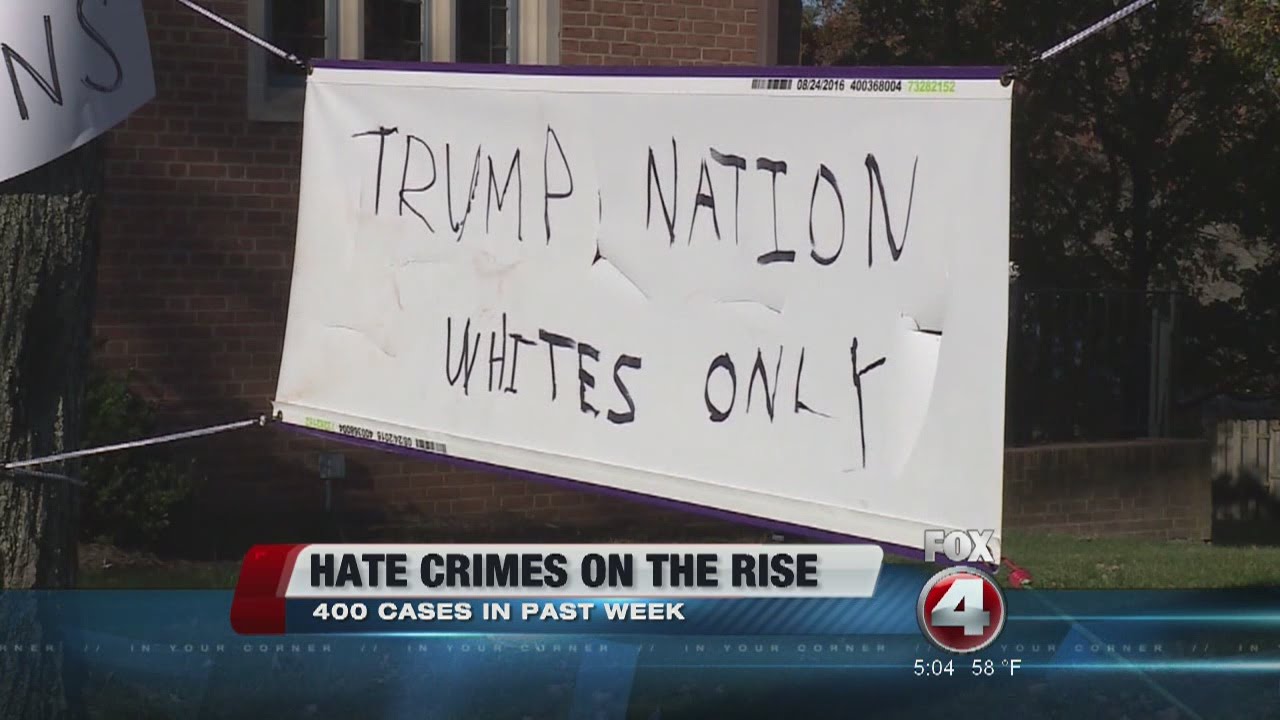
CNN.com reports in their article, ‘Make America White Again’: Hate speech and crimes post-election, that there has been a stark increase in hate crimes against minorities. The article says, while Trump has been accused of fostering xenophobia (fear of people from other countries) and Islamophobia (fear of Muslims), some people have used his words as justification to carry out hateful crimes. Since Trump’s election there have been incidents of racist or anti-Semitic, pro-Trump graffiti along with threats or attacks against Muslims. Graffiti such as, ‘Trump,’ ‘Whites only,’ and ‘White America’ have shown up in high schools. Graffiti written on a wall in Durham, North Carolina said, “Black lives don’t matter and neither does your votes.” In the state of NY ‘Make America White Again’ was written in a softball dugout. This is just a sampling of the post-election happenings. CTV News reports a story that occurred at Royal Oak Middle School the day after Trump won the election where students chanted “build the wall”  in the school cafeteria, a reference to President-elect Donald Trump’s call for a wall along the U.S.-Mexico border. That’s not even mentioning the numerous anti-Trump protests that have occurred since election day.

rtx1gzco (1)What has Trump unleashed in America? One could argue that what Trump has unleashed is hatred. Hatred of non-whites. Hatred of immigrants. Hatred of Hispanics. Hatred towards African-Americans. The list goes on. Dictionary.com defines hate as “to dislike intensely or passionately; to feel extreme aversion for or extreme hostility toward; to detest. Graffiti such as, “Make America White Again” seems to suggest there is a hatred of non-whites.

Ralph Waldo Emerson, an American lecturer, poet, and essayist says, “Fear always springs from ignorance.”  Cyril Connolly, a literary critic and writer says, “Hate is the consequence of fear; we fear something before we hate it; a child who fears noises becomes a man who hates noise”. So, one could surmise that ignorance breeds fear. Fear breeds hate. Hate perpetrates harassment and violence. This is likely what is happening in the United States. Donald Trump has tapped into the fears of Americans (fear of Muslims, fear of immigrants, fear of terrorism) and used that fear to propel himself to the office of the presidency.  Now America is witnessing the consequences of that in the form of hate crimes. One might ask, where does the fear come from? The answer to that question, according to Ralph Waldo Emerson is ignorance. Are Americans really that ignorant?

Steffani Cameron is a journalist who was born and raised in Vancouver, British Columbia, Canada. Feeling trapped by the monotony of life, Ms. Cameron sold her belongings for the chance to work remotely while travelling the world for five years. In the first 13 months, she flew 50,000 kilometres and explored 10 countries. After the Trump victory, she wrote an article titled, Why we need to travel more than ever. In her article she says,

In America, today, fewer than 40% of the populace has a passport, and even fewer put it to use. Beyond that, education is crumbling. Secondary education is for the wealthy…Talk to anyone who has traveled the world at length and they’ll often tell you the biggest lesson they learn is how much we have in common rather than what we don’t. But in places like America, where so few people travel outside the borders, they’re more likely to believe what they’re told about “us” and “them”. When they are told who’s a bad guy, that it’s anyone with a different culture, different colour skin, then they’ll latch onto that story, because they’re unexposed to diversity and it’s an alien enemy they can process…When media talks about “Muslim extremism,” it’s easy to convince an under-educated, under-traveled public that it means all Muslims are extreme. They may not know any, so how can they decide differently?

I would encourage you to read her article. I think what Ms. Cameron says is ‘bang on”. I personally can attest to what she says as I have travelled a far bit. I’ve been to Europe three times visiting numerous European countries. I’ve been to the Balkans, Cuba, and Mexico. I’ve also visited various American states. One thing I’ve discovered during my travels is that there are wonderful people everywhere. In my post, Where are all the Good People? and Let the Adventures Begin, I wrote about some of the wonderful people I encountered while travelling.

Here are some experiences I had on our most recent trip to Europe just over a year ago. My wife and I were driving in France from Bayeux to Lievin and on the way, we stopped in the French village of Aumale. While walking around we discovered a market.  Meandering about the market we came across a table with croissants on it so my wife, salivating for one, asked if she could have one.  The lady at the table spoke no English but still understood what my wife had asked, so she responded with “Oui”.  Then the lady points to the coffee urn and says something in French looking at me.  Realizing that she was offering me coffee I excitedly said, “Oui” as I cherish my coffee. This pleasant, welcoming French lady then proceeds to pour my wife a juice.  The people of Aumale were most gracious and hospitable to us, the strangers in town. These wonderful villagers welcomed us with open arms.

ct-photos-eiffel-tower-in-the-french-flag-s-co-006Just before arriving in the wonderful village of Aumale, we were stopped at an intersection. Drivers around us were pointing at our vehicle so we immediately panicked presuming that we had done something illegal or that something was wrong with our vehicle.  Then one man gets out of his car, comes running up to our vehicle and says something in French while pointing down at the car door.  My wife who was driving at the time rolls down the window and to her horror discovers that her coat was hanging out the car door. This kind man had made the effort to alert us to our carelessness.  There are wonderful, caring people everywhere.

Sadly, this fear is spilling over into Canada. Mohsin Zaman of Edmonton, Alberta wrote a post on Facebook where he describes an incident that he personally experienced. He explains that a white male shouted at him, “You’re done, you brown hippie! Trump is going to send your ass home! Don’t matter if you’re in Canada. You just wait!”  I thought that this fear and hate would remain south of the border but I guess that was too much to hope for. It seems that ignorance is prevalent in Canada as well.

Global News reports that residents in the Toronto’s east-end found “ultra right wing” posters that urged white people “tired of political correctness” and “questioning when immigration will stop” to join an online movement. The signs had a headline that reads “Hey, WHITE PERSON” and asked, “wondering why only white countries have to become ‘multicultural’?” Sadly, Canada is not immune to Donald Trump’s rhetoric.

The late John Lennon once said,

“There are two basic motivating forces: fear and love. When we are afraid, we pull back from life. When we are in love, we open to all that life has to offer with passion, excitement, and acceptance. We need to learn to love ourselves first, in all our glory and our imperfections. If we cannot love ourselves, we cannot fully open to our ability to love others or our potential to create. Evolution and all hopes for a better world rest in the fearlessness and open-hearted vision of people who embrace life.”

bryant-mcgill-fear-love-choiceHis wife, Yoko Ono, once said, “The opposite of love is fear, not hate”. The Christian scriptures in 1 John 4:18  it says, “There is no fear in love, but perfect love casts out fear; for fear has to do with punishment, and whoever fears has not reached perfection in love.” Perhaps America needs to learn to love itself with all its diversity of people and its diversity of views.  It seems Canada may need to do the same. We Canadians need to remember the words of former Prime Minister (PM) of Canada and father of our present PM, the late Pierre Trudeau who said.

We must now establish the basic principles, the basic values and beliefs which hold us together as Canadians so that beyond our regional loyalties there is a way of life and a system of values which make us proud of the country that has given us such freedom and such immeasurable joy.

Pierre Trudeau’s vision was one of embracing our diversity. When a country (or person) fully accepts, embraces and loves who they are then people like Donald Trump have no power. What the United States needs is to learn is to love, not fear! Love casts out fear. Love is inclusive. It celebrates diversity. PLEASE don’t get “sucked into” Donald Trump’s toxic xenophobic and Islamophobic rhetoric. There is way more goodness and love in the world than what our American cousins, and apparently some Canadians think. Just check out some of the news on Good News Network and Good News website if you don’t believe me.

All that Waste. Shame! Shame!

Another rant on the shameful waste of food ensuing our planet.

The other day I saw a disturbing headline on the CBC website. The headline was, Walmart insider says ‘heartbreaking’ amount of food dumped in trash. The article reports that a former worker at almost a dozen Walmart stores in the Vancouver area claims he saw loads of what appeared to be perfectly good food dumped in the trash, even though Walmart says it only discards inedible food.  The article also states that CBC Marketplace investigated this issue with the episode airing Friday, October 28, in which their investigation exposed that in the Toronto area, investigators repeatedly found outdoor garbage bins piled high with everything from produce to baked goods, frozen foods, meat and dairy products.

just-eat-it-a-documentary-about-food-waste
From Just Eat It documentary

Now this is an issue that I’ve twice before written posts about. Those posts were Don’t throw that away and Vive La France. I just can’t wrap my head around why this occurs. Is it that corporations, like Walmart, just can’t be bothered? Do they not care? According to the article, the large retailer is committed to reducing food waste. The Walmart spokesperson says the company has teamed up with many organizations such as food banks to donate unsold food. The company also claims food is only discarded when it’s deemed unsafe to eat. If that is true, why did Marketplace discover all the food waste? The spokesperson could not address all the reports from Walmart insiders who told CBC they were instructed to throw away food if it looked imperfect or was close to an expired best-before date, or if shelf space was needed.

So what are these “best before dates” about?  Another CBC report titled, Best before dates and expiry dates: 5 things you may not know, explains it this way.

The best before date has nothing to do with the safety of the food. It has to do with the taste of the food. Best before dates guarantee freshness. Now expiration dates are different.  The Canadian Food Inspection Agency dictates that only five types of products need to be labelled with an expiration date. These include, baby formula and other human milk substitutes, nutritional supplements, meal replacements, pharmacist-sold foods for very low-energy diets, and formulated liquid diets. So the reality is you don’t have to discard a food item when the best before date is reached. Generally, if the food changes colour, or develops a bad smell, it is no longer safe to eat. Dented, leaking or bulging cans should be discarded. When in doubt throw it out is a good rule of thumb to follow.

apple-v2
From USA Today

Thankfully, there is some good news. Some corporations are truly trying to reduce waste. The CBC article, Selling unwanted food at a discount, says the Loblaws grocery chain recently expanded its Naturally Imperfect line. Loblaws is a supermarket chain with over 2000 stores in Canada. Those are stores such as Loblaws, No Frills, Value-mart, Superstore, Real Canadian Superstore, and numerous others. Its Naturally Imperfect line is where it offers up to a 30 per cent discount for blemished and deformed produce. The program began in Ontario and has now spread to select Loblaws grocery stores across the country.

IGA in Quebec is now selling imperfect produce. (see ugly produce). IGA is part of Sobeys which is the second largest food retailer in Canada. My question is why aren’t they selling imperfect produce in all provinces? Furthermore, why aren’t all grocery chains selling imperfect produce? It’s time we consumers start demanding all stores stock imperfect produce. It decreases food waste and saves us money.

Save-On Foods, a chain of supermarkets across western Canada, announced in September  that they were placing “Misfit” produce in all their stores (see Misfit produce). Thumbs upI give a thumbs up to Loblaws, IGA and Save-On Foods for taking positive steps towards reducing waste.

Furthermore, we need to pressure grocery chains to donate to food charities and pressure governments to enforce it like France and Italy have done. I recently read in a local daily newspaper that the city of Calgary, located in Alberta, Canada, saves nearly a tonne of food a week from the landfill. Using volunteers, Lourdes Juan, founder of non-profit LeftOvers Calgary, picks up leftover food destined for the landfill and delivers it to hungry Calgarians.  (see Calgary Herald article for more). The Globe and Mail did a story called, Charity makes the most out of other people’s leftovers, where the paper reports on organizations who are helping people in need and reducing waste. Kudos to those organizations!

I’ve always been told that the reason grocery chains and food establishments don’t donate their leftover food or the food deemed unsellable is because of liability issues. In other words, if they donated food and someone acquires food poisoning as a result, they could be sued. After I wrote my post, Don’t throw that away, I contacted the provincial government to ask why companies are not protected when they donate food. It turns out they are. Alberta has a law called, The Charitable Donation of Food Act, which protects companies who donate food. According to the website, Imagine Canada, most other provinces do as well. So liability is not the issue. I suspect it is a matter of convenience. When volunteer organizations come to collect the “unsellable food” companies willingly donate it. It seems companies such as Walmart just can’t be bothered to take the “unsellable food” to the charitable organizations. At least that’s my take.

The reality is food waste is an astronomical problem. The CBC article, Selling unwanted food at a discount, that I referred to earlier says that roughly 1/3 of the food produced in the world for human consumption is wasted. It also reports that Canadians waste more that $31 billion, yes billion, in food each year. Another statistic reported in the article is that 45% of all fruit and vegetables produced globally are wasted. That is almost half! Much of this produce was wasted because it was deemed imperfect. This is emphatically wrong! This much food wasted is simply ethically and morally wrong when there are so many starving people on this planet. It’s time we are part of the solution rather than part of the problem, even if that is purchasing “imperfect produce” creating a demand for the product and thereby reducing waste. To quote Eldridge Cleaver, an American writer and political activist, “There is no more neutrality in the world. You either have to be part of the solution, or you’re going to be part of the problem.” Please, do your part to reduce the corrupt waste of food. Be part of the solution!

Thanksgiving, More Than a Holiday.

A commentary on the meaning of Thanksgiving

thanksgiving-clip-art-thanksgiving-turkey-clipart-4-jpg-jcnrel-clipartOn Monday, October 10, 2016 our family, like most Canadians, celebrated the Canadian Thanksgiving holiday. Thanksgiving is a statutory holiday in most of Canada, with the exceptions being the Atlantic provinces of Prince Edward Island, Newfoundland and Labrador, New Brunswick, and Nova Scotia, where it is an optional holiday. In its beginnings Thanksgiving was celebration for a successful harvest but the tradition has changed over the years. Now the focus is to get together with family to eat a large turkey dinner, including stuffing and pumpkin pie for dessert.

The first Thanksgiving Day after Canada’s Confederation was observed as a civic holiday on April 5, 1872. It was to celebrate the recovery of the Prince of Wales, who later became King Edward VII, from a serious illness. It was made official on January 31, 1957, when the Canadian Parliament proclaimed: A Day of General Thanksgiving to Almighty God for the bountiful harvest with which Canada has been blessed, to be observed on the 2nd Monday in October. During and after the American Revolution, Americans who remained loyal to Great Britain moved from United States to Canada. They brought with them the customs and practices of the American Thanksgiving, such as the turkey, pumpkin, and squash.

Thanksgiving in the United States is a public holiday, celebrated on the fourth Thursday in November by all 50 states. Americans commonly trace the Thanksgiving holiday to a 1621 celebration at the Plymouth Plantation, where the settlers held a harvest feast after a successful growing season. It has been celebrated as a federal holiday every year since 1863, due to President Abraham Lincoln’s proclamation declaring it as a national day of “Thanksgiving and Praise to our beneficent Father who dwelleth in the Heavens,” to be celebrated on the last Thursday in November.

An interesting difference between Canada and the US is that in America, Black Friday, the day after Thanksgiving, is one of their biggest shopping days.  Black Friday has been regarded as the beginning of the Christmas shopping season with stores offering many items on sale. That is not the case in Canada although we are starting to see retail outlets offer Black Friday sales in Canada. For Canadians, the holiday Monday means it’s a long weekend and shopping isn’t an essential part of it. Canada’s biggest shopping day of the year is December 26, Boxing Day, the day after Christmas.

Every thanksgiving, barring the occasional exception, we gather as a family to eat our turkey with stuffing, mashed potatoes and gravy, carrots harvested from my garden, and turnips. The meal always finishes with pumpkin pie. Before we eat our delicious meal each family member takes turns sharing with one another at least five things we are thankful for. We have done this since our three children were little. Sometimes they would complain becoming impatient since they were hungry. My wife and I had a policy that if we heard complaining, our children would have to share more than the required number of “thankfuls”. One year when our eldest daughter was in her early teens she starting complaining about the number of “thankfuls” she was required to share. Each time she complained my wife and I added more. She finally stopped complaining after she reached about 12. She reluctantly came up with 12 things she was thankful for. We still laugh about that.

I always take time to express the things I’m grateful for at thanksgiving. I will always be grateful for my loving and supportive wife. She puts up with all my crazy ideas and ventures. I will always be grateful for my three wonderful children. We are fortunate enough to have two daughters and a son. All three of them have made us proud with the hard work they did to achieve their university degrees and how they practice their careers with commitment, purpose and integrity. I am also grateful for my health and the health of my loved ones. I am grateful to be living in a country that is inclusive, safe and respected. I could go on and on.

attitude-whatsapp-profile-pictures-attitude-dp-coolstatus-co-yvaufa-clipartThinking about this post, I realized that Thanksgiving is really about our attitude. Thanksgiving is more than just a holiday. It’s also a reminder to us to have an “attitude of gratitude”. It should be an attitude that we have every day of our lives. Why, you may ask? Psychology Today says there are seven scientifically proven benefits of gratitude. They are

  • Gratitude opens the door to more relationships.
  • Gratitude improves physical health.
  • Gratitude improves psychological health.
  • Gratitude enhances empathy and reduces aggression.
  • Grateful people sleep better.
  • Gratitude improves self-esteem.
  • Gratitude increases mental strength.

The blog, Happier Human, has a post titled, The 31 Benefits of Gratitude You Didn’t Know About: How Gratitude Can Change Your Life, which obviously claims there are 31 benefits of Gratitude. One that caught my attention is gratitude lets you live longer. The Huffington Post’s article, 10 Reasons Why Gratitude Is Healthy, says it has benefits to the heart,  immune system and boosts general well-being.

The article titled, Why Gratitude Is Good, summarizes the benefits of gratitude this way:

Physical
• Stronger immune systems
• Less bothered by aches and pains
• Lower blood pressure
• Exercise more and take better care of their health
• Sleep longer and feel more refreshed upon waking

Psychological
• Higher levels of positive emotions
• More alert, alive, and awake
• More joy and pleasure
• More optimism and happiness

Social
• More helpful, generous, and compassionate
• More forgiving
• More outgoing
• Feel less lonely and isolated.

happy-thanksgiving-clipart-clipart-panda-free-clipart-images-ksmaop-clipartEven though there may not be agreement on the number of benefits to having an “attitude of gratitude”, one can safely conclude that there are benefits to having this attitude. So don’t just have this “attitude of gratitude” at Thanksgiving, have it every single day of your life. Maybe start a gratitude journal. I have done this from time to time. (Now that I think about it, I haven’t done a journal in a while. I need to do something about that). It forces us to think of things that we are thankful for. If you’re not sure what a gratitude journal is or how to do one, see the article, Tips for Keeping a Gratitude Journal. So I encourage you to develop that “attitude of gratitude.” The bottom line is, it’s good for you.

Will There Ever be Peace Among Religions?

A commentary on the religious tensions on our planet.

09-donald-trump-bully.w536.h357.2xRepublican presidential candidate, Donald Trump has given several anti-Muslim orations perpetrating a
widespread belief that the United States is at war against Islam. Canada, too, has had its share of people who have an anti-Muslim sentiment.

The Archbishop of Canterbury in a Church Times article, is quoted as saying, “the global turmoil and conflict driven by extremism can be stopped only once religiously motivated violence has been purged from every faith tradition”. Archbishop Welby goes on to say; “the world was facing, for the first time in centuries, an obviously religious conflict that encompassed all faiths.” His claims are based in his travels around the Anglican Communion, where he says he had come across “Islamic violence, Christian violence, Hindu violence, Buddhist violence”.

Screen Shot 2016-03-16 at 7.36.11 PM

Euronews, a website that lists news about “Religious conflict” has numerous news articles about the latest religious skirmishes. Here are some of them.

Hundreds of Iranians held  protests in central Tehran over Saudi Arabia’s execution of the prominent Shiite cleric. A wave of anger against the Sunni-led kingdom has led to the ransacking of its embassy in Tehran.

Persecution against Pakistan’s Christians in the form of suicide bombs outside two churches killed at least 15 people in the eastern city of Lahore.

Iraq could once again descend into civil war between the Shiites and Sunni Muslim factions after the country’s most senior Shia Muslim cleric issued a call to arms to fight a rapidly advancing Sunni insurgency.

The United States, along with its allies, has launched airstrikes at Islamic State or ISIL (Islamic State of Iraq and the Levant) targets in Iraq in an expansion of its military campaign against the jihadists (those carrying out a war or struggle against unbelievers).

Two Buddhists have been jailed in the Southeast Asian nation of Myanmar for murders that took place during religious violence in March of 2015. They are the first Buddhists to be convicted of any serious offence relating to the rioting, which mainly targeted Muslims and left around 40 people dead.

The history of modern India has many incidents of violence. During the 1947 partition there was religious violence between Muslim-Hindu, Muslim-Sikhs and Muslim-Jains (followers of Jainism) on a gigantic scale. Hundreds of religious riots have been recorded since then in every decade of independent India. In these riots, the victims have included many Muslims, Hindus, Sikhs, Jains, Christians and Buddhists.

In 2013, hundreds of villagers fled their homes in the northern Indian state of Uttar Pradesh after three days of bloody sectarian clashes left at least 38 people dead and dozens wounded. The fighting between Hindus and Muslims in the area, the worst in years, was sparked by a violent dispute between two families of different faiths last month, authorities said.

Researchers say statistics from the multi-state study tell us in 2015, anti-Islam attacks in the United States were up 78% from 2014, and anti-Arab hate crimes increased 219%.

This is but a sampling of the numerous religious conflicts on the planet. Hans Küng, a Swiss Catholic priest, theologian, and author and President of the Foundation for a Global Ethic since 1995, once said, “No peace among the nations without peace among the religions. No peace among the religions without dialogue between the religions. No dialogue between the religions without investigation of the foundation of the religions.” I’m beginning to think Mr. Kung may be right.

Rebecca Rosen, in her book, Awaken the Spirit Within, says,

“the path to God in life was not the way, but only a way and that truly all paths lead home [to God]. Consider that God, metaphorically, is the centre of a wheel. The spokes on the wheel represent the many unique and different paths people use to reach God, and yet each spoke is connected to the same central hub. Meaning that all religions, all paths serve a similar purpose, [that is], to connect us to and bring us closer to God. In fact, the root of the word religion means “to bind” or “to connect. When you think about it, whether you practice Catholicism, Judaism, Buddhism, any other religion, or Atheism, it’s really meaningful and purposeful connection that you’re after…no matter what your religion or belief system, we’re all searching for and wanting the same basic stuff.”

Rebecca says it so well. There is no one path to God, there are many. Every religion is a path. Once humanity understands this and accepts this, then maybe there will be peace among religions. There are even references in the sacred scriptures from the various world religions that support the idea that there are many paths to God.

Christianity: And Peter opened his mouth and said, “Truly I perceive that God shows no partiality, but in every nation any one who fears him [meaning a sense of respect, awe] and does what is right is acceptable to him.” (Acts 10.34-35)  

Hinduism: As men approach Me [Krishna, a Hindu deity], so I receive them. All paths, Arjuna, lead to Me. (Bhagavad Gita 4.11)

Judaism: Rabbi Johanan ben Zakkai said, “Just as the sin-offering atones for Israel, so righteousness atones for the Peoples of the world.” (Talmud, Baba Batra 10b)

Islam: Say, “We believe in God, and in what has been revealed to us, and what was revealed to Abraham, Ishmael, Isaac, Jacob, and the Tribes, and in what was given to Moses, Jesus, and the Prophets from their Lord. We make no distinction between any of them, and to God do we submit.”(Qur’an 3.84)

Those who believe in the Qur’an, those who follow the Jewish scriptures, and the Sabeans and the Christians–any who believe in God and the Last Day, and work righteousness–on them shall be no fear, nor shall they grieve. (Qur’an 5.69)

Buddhism: Sometimes I [the Buddha] spoke of myself, sometimes of others; sometimes I presented myself, sometimes others; sometimes I showed my own actions, sometimes those of others. All my doctrines are true and none are false. (Lotus Sutra 16)

We must stop being so narrow-minded and get beyond the belief that “our religion” is the only path to the divine. It is incredibly naïve of a person to believe that they have the only exclusive knowledge on reaching God or the divine and that people of a different belief system have it wrong. Is it not so difficult to believe that all religions have truth and that there are many ways to reach the divine? Religious tolerance and understanding is a goal we must all strive for. Martin Luther King, Jr. once said, “We must learn to live together as brothers, or we are going to perish together as fools.”  Mahatma Gandhi says, “The pursuit of truth does not permit violence being inflicted on one’s opponent.”  Both of these men, two men who I admire, had wisdom for achieving peace, yet humanity continues to ignore it.peace-sign

Remembering 9/11 and Rethinking Terrorism.

A commentary on terrorism.

2011-09-11-schorwtc1
From Huffington Post

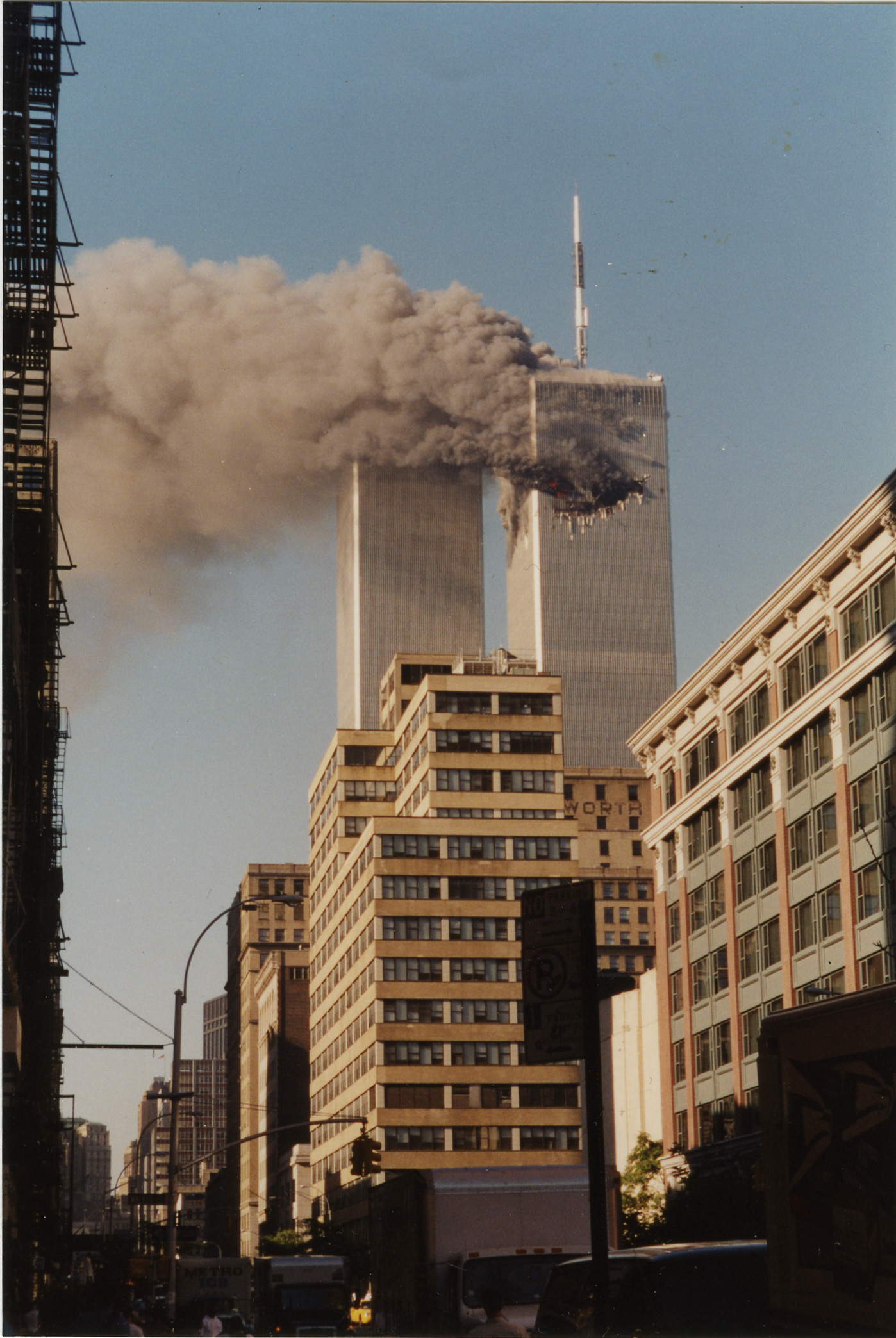
This week is the 15th anniversary of the 9/11 terrorist attacks against the United States. The world changed that day. I distinctly remember feeling that way when I learned of the horrific acts of terror effected that day. Mohammed Adam wrote a column in the Ottawa Citizen entitled, Fearful shadows of 9/11 still haunt Muslims, where he wrote:

Post-9/11, Islam was vilified and many Muslims were attacked and hounded as potential terrorists. Muslim women in particular, easily identifiable by their hijabs, faced verbal abuse, intimidation and even violence. A lot of bad things — the Iraq war, torture, Guantanamo — all happened. Draconian laws that curtailed age-old freedoms were passed, including here in Canada.

There has been a rise in anti-Muslim hate crimes in recent months especially since Donald Trump, Republican presidential nominee, has been spouting his rhetoric about a Muslim immigration ban.  The Guardian article, Hate crimes and attacks against Muslims, reports the Council on American-Islamic Relations (Cair) published new data showing that incidents against Muslims in California increased by 58% between 2014 and 2015, and that communities throughout the US are seeing similar trends.

afp_f02vx_49929083
From National Post

Many French Riviera mayors imposed a ban on full-body bathing suits known as burkinis this summer. France’s top court later ruled that basic freedoms were infringed upon and that mayors had overstepped their powers when they decreed a ban on burkinis at the beach. BBC News reports that French cities, such as Nice, have since lifted the controversial ban to be in line with a national court ruling. French opinion polls suggested most French people backed the burkini bans igniting fierce debate in France and around the world, with Muslims saying they were being unfairly discriminated against. Now I think the court decision was the right decision. It is simply discriminatory for one group with one set of values to tell another group that their set of values is wrong or at the very least unwelcome.

Pope_Francis_Korea_Haemi_Castle_19_(cropped)Even Pope Francis, leader of the world’s Catholics, defends Muslims. In the CBC article, Pope Francis defends Muslims, the pope says,

“I think it is not right to identify Islam with terrorism. It is not right and it is not true. I don’t like to talk about Islamic violence because every day when I look at the papers I see violence here in Italy – someone killing his girlfriend, someone killing his mother-in-law. These are baptized Catholics. If I speak of Islamic violence, I have to speak of Catholic violence. Not all Muslims are violent.”

The pope went on to talk about the causes of terrorism. He said,

“I know it is dangerous to say this but terrorism grows when there is no other option and when money is made and it, instead of the person, is put at the centre of the world economy. I ask myself how many young people that we Europeans have left devoid of ideals, who do not have work. Then they turn to drugs and alcohol or enlist in ISIS.”

Now  I certainly don’t agree with everything Pope Francis says but I agree with him on this. I agree that terrorism is related to social problems. Terrorism is defined by Dictionary.com as the use of violence and threats to intimidate or coerce, especially for political purposes. With that definition one could argue that many if not most acts of violence are acts of terrorism. Let’s look at the city of Chicago, Illinois in the United States as an example. That city has been making news headlines lately because of its high rate of gun violence. CNN reports in its report, 500 homicides. 9 months. 1 American city, that on Labor Day weekend Chicago’s 500th homicide of the year took place.  These are Americans carrying out acts of terror on one another and I suspect the majority of violent acts are not carried out by Muslims. So I asked myself, Why? This article says there are nearly 82 shootings per week. What does that tell me? Guns are too readily available but that is a whole other post. But why would people want to carry out acts of violence? Some Chicagoans blame the violence on economic struggles and lack of jobs. What’s interesting to note is Chicago’s unemployment rate fell from 6.1% in 2015 to 5.5% in 2016. Others say social problems are the root cause of the violence. Regardless of the cause, my point is that there is so much media emphasis on Islamic extremism when really there is much more terrorism being caused by non-Muslims. Most acts of terrorism are carried out by home grown  non-Muslim citizens.

In our local paper recently there was headline titled, Mobile Muslims launch 40-day campaign. The story explained that members of the Muslim community stopped in our little town spreading teachings of peace and love in hopes of changing their religion’s stereotype. One of the Mobile Muslims said, “There are many and false teachings associated with Islam and we need to dispel them.” CBC did a piece on this group called, Muslims go on cross-country tour. Kudos to the Mobile Muslims who are trying to set the record straight. It’s time to stop blaming terrorism on the all Muslims.  The number of radical Muslims who practice terrorism is only a small group.

But let’s not forget that radicalism is not unique to Islam. The news site, AlterNet.org, published an article called, 6 Modern-Day Christian Terrorist Groups You Never Hear About, which talks about six Christian terrorist groups. These are groups like the “Army of God” who openly promote killing abortion providers and who also have a history of promoting violence against the LGBT community. It also talks about “The Lord’s Resistance Army” (LRA) who according to Human Rights Watch, has committed thousands of killings and kidnappings. It seems terrorism does not exclusively belong to Muslim extremists. The Christian religion has had its fair share of extremists. Terrorism, no matter who carries it out, is WRONG! Discrimination against any group is WRONG! It’s time we focus on building a world of tolerance and understanding.