
William James, an American philosopher and psychologist, once said, “Religious awe is the same organic thrill which we feel in a forest at twilight, or in a mountain gorge.” I totally understand what Mr. James is communicating. I have had many experiences of awe when out in nature. But first, we should understand what awe is.
The Cambridge Dictionary defines awe as a feeling of great respect sometimes mixed with fear or surprise. Now that word fear usually confuses me especially when talking about awe. We typically think of fear as being afraid of something or someone. However, Dictonary.com says in addition to being afraid, fear is reverential awe, especially toward God. The Free Dictionary describes awe as a feeling of respect or reverence mixed with dread and wonder, often inspired by something majestic or powerful.
Dacher Keltner, Professor of psychology at the University of California, defines awe as the feeling of being in the presence of something vast that transcends your understanding of the world. So the way I understand awe is that awe are those moments when we experience something majestic or powerful; when we feel wonder. They are the times when we have an encounter with the divine. They are moments when we in some way experience God or the Source of all Being or something mystical. It’s when you are touched at a soul or spiritual level; when what we are witnessing or experiencing is beyond our understanding.
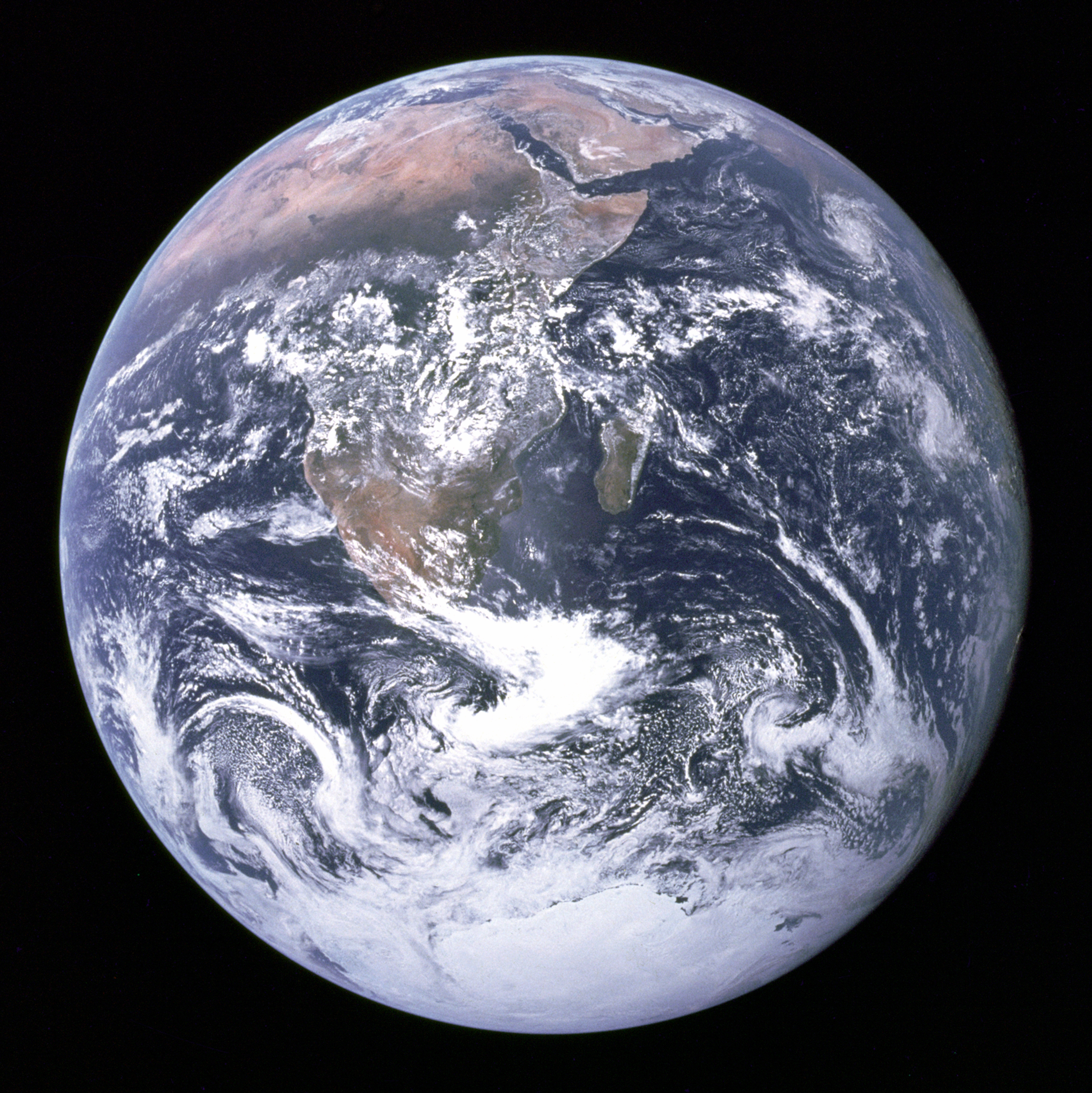 Many astronauts talk about their experiences of awe when looking at the planet earth from space. Alan Shepard, Apollo 14 astronaut said, “When I first looked back at the Earth, standing on the Moon, I cried.” Russell “Rusty” Schweikart, Apollo 9 astronaut said, “When you go around the Earth in an hour and a half, you begin to recognize that your identity is with that whole thing. That makes a change … it comes through to you so powerfully that you’re the sensing element for Man.”
One of the best known for his experience of seeing Earth from space is Apollo 14 astronaut Edgar Mitchell who said:
“That’s a powerful experience, to see Earth rise over the surface [of the Moon]. And I suddenly realized that the molecules in my body, and the molecules in the spacecraft and my partners had been prototyped, maybe even manufactured, in some ancient generation of stars. But instead of being an intellectual experience, it was a personal feeling… And that was accompanied by a sense of joy and ecstasy, which caused me to say ‘What is this?’ It was only after I came back that I did the research and found that the term in ancient Sanskrit was Samadhi.”
Oxford dictionary defines Samadhi as a state of intense concentration achieved through meditation. In Hindu yoga, this is regarded as the final stage at which union with the divine is reached. In essence what Mr. Mitchell is saying is he felt some sort of union with the divine.
Susan Santucci, a learning specialist and author says, “Watch for glimpses of the divine order. Find those experiences, sights, and sounds, which fill you with awe. Any experience met with awe can be spiritual: a safari through an animal kingdom, taking in a sunset, a hike to an awesome mountaintop.”
 I have hiked in the mountains with my son and friends and family for many years. I have to agree with Susan Santucci as every time I stand on top of a mountain, I feel that sense of awe. For me, it is a spiritual experience. It is an experience where I am overtaken with the beauty of the mountain landscape. I have this same experience when I am at the ocean. Standing on an ocean beach, looking at the vast amount of water in front of me sets me into a state of awe. Sunsets do the same. When my wife and I were in Europe a few months ago, we were blessed to see numerous sunsets and even sunrises. It never ceases to amaze me how beautiful those magnificent colourful skies can be. Each sunrise we beheld on our trip was uniquely beautiful. I have a sense of awe or wonder every time I am lucky enough to see the northern lights or the aurora borealis. For me, each of these experiences were, as Dacher Keltner put it, a feeling of being in the presence of something vast that transcends ones understanding of the world.
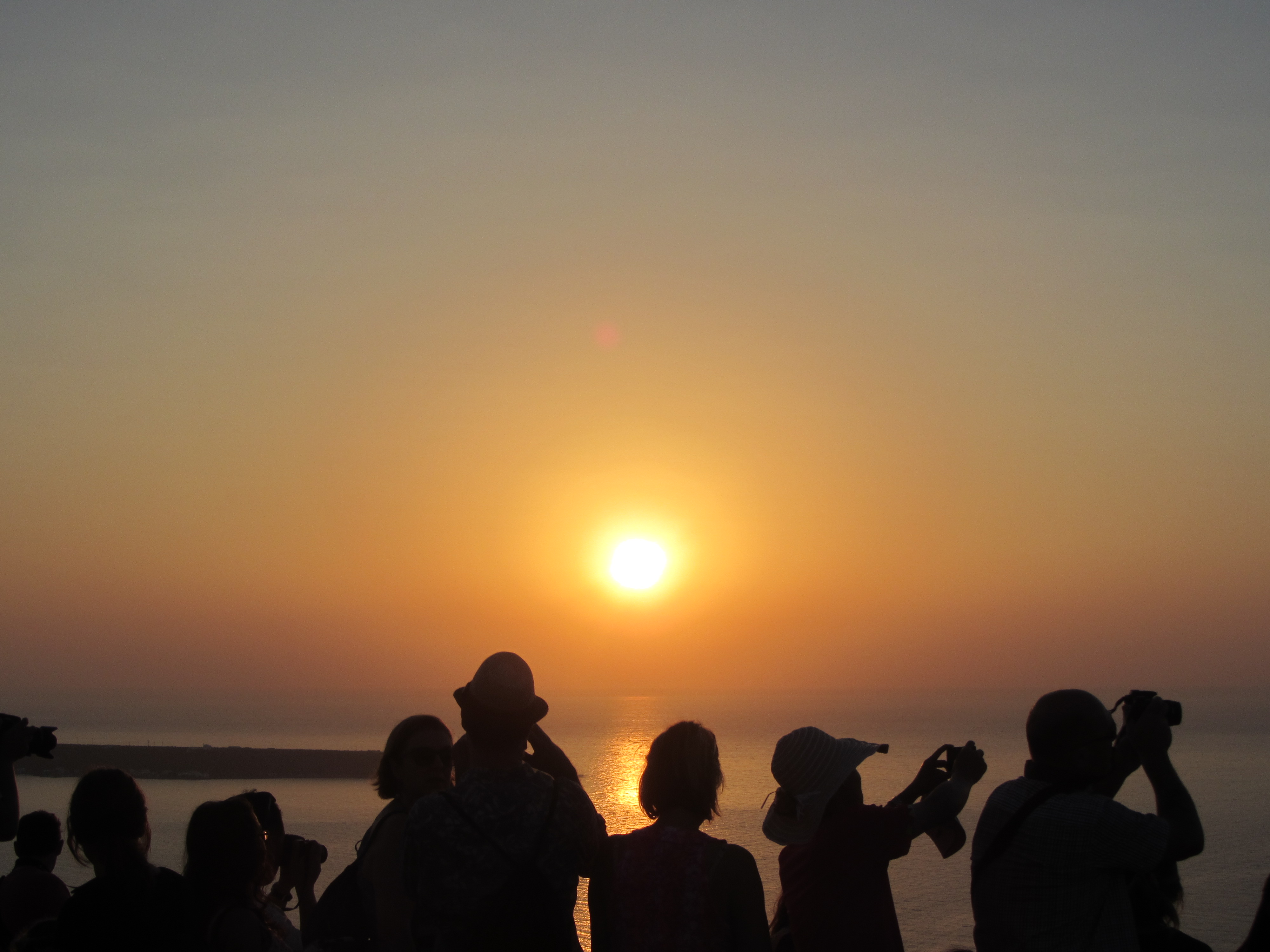
Yes, I understand some of the science behind how mountains are built with colliding tectonic plates. I comprehend that when the Sun appears lower and lower on the horizon, its light needs to pass through more of the atmosphere to reach our eyes, so as the sun drops towards the horizon, it progressively loses violets and blues, then greens and yellows, and finally even the oranges, leaving only the reds behind. It is mind-boggling to comprehend that 70% of the Earth’s surface is covered by ocean, and the deepest known area measures 11 kilometres (6 miles) deep. I understand that the aurora borealis occurs when collisions between electrically charged particles from the sun enter the earth’s atmosphere and collide with its gases. As amazing as the science is, when I experience the above-mentioned things I experience something beyond my science understanding. My experience is met with awe and wonder. When I am experiencing these things I touch the divine.
I had another one of these experiences when my daughter showed me a video of Jeffrey Li, a 10-year-old boy from Canada, and Celine Tam, a 7-year-old girl from Hong Kong, performing a duet of the song “You Raise Me Up”. I was blown away. These two singers literally took my breath away. What I heard from these two young people touched me at a soul or spiritual level. It made me ask, “How can a seven and ten year old have singing voices like this?” The singing voice of these two “kids” was beyond my understanding. If you haven’t seen the video, check it out below.
Maybe it is time to seek out more of those awe experiences, whatever they may be for you. In fact, doing so just may make the world a better place. Articles such as High on Wonder: People Who Experience More Awe Are Nicer, Better People, and The Key to Fulfillment claim science is providing empirical evidence that awe is the emotion that motivates people to do things that enhance the greater good. If we choose to get rid of the some of the distractions like cell phones and watching television in our lives and seek to put ourselves in new situations such as going to new places, and meeting new people, this may increase our chances of encountering awe. If it is true what the studies are saying, experiencing awe will make us better people. I implore you to seek out some awe and wonderment in your lives. You will be better for it!
 Over the years I have been periodically greeted with a greeting known as “Namaste”. This is a gesture that entails a slight bow made with hands pressed together, palms touching and fingers pointed upwards in front of the chest. I have witnessed speakers and performers greet their audiences with this sign. Many years ago our school hosted an exchange student from Thailand who when she first arrived would greet her teachers and fellow students with the Namaste gesture. Some of my yoga instructors concluded every practice by uttering “Namaste” while bowing with hands pressed together. Even in Taekwondo we bowed to our opponents although not with our hands together. A bow in Taekwondo was a sign of respect which is its meaning in all martial arts. We even bowed when we entered the dojang or gym as a sign of respect for it.
 all. It betokens our intuition that all souls are divine. It reminds us in quite a graphic manner, and with insistent repetition, that we can see God everywhere and in every human being we meet. It is saying, silently, ‘I see the Deity in us both, and bow before It. I acknowledge the holiness of even this mundane meeting. I cannot separate that which is spiritual in us from that which is human and ordinary.’”
 No matter how Namaste is interpreted, it invokes a sense of sharing a spiritual connection and creates a sense and feeling of oneness. It is a way to feel connected. It conjures up feelings of respect. It is a sign of universal oneness. Maybe this world would be in a better place if all humans practiced this simple gesture. As the Buddhists believe, it just may be a “remedy” for pride that is the cause of many problems. I’m convinced this simple gesture brings about more feelings of reverence and honour for others. Mohandas K. Gandhi allegedly said once, “Namaste. I honor the place in you where the entire universe resides. A place of light, of love, of truth, of peace, of wisdom. I honor the place in you where when you are in that place, and I am in that place, there is only one of us.” Such a simple sign, a bow with hands together, with the intended meaning as Gandhi explained, just might make all the difference in this world.

 headlines in November. The company typically has its red holiday cups decorated with snowflakes, Christmas ornaments or reindeer, but chose for a minimalist design this year with cups that are red with nothing but its green logo. Starbucks executives said they wanted to embrace “simplicity and quietness.” However some Christian conservatives saw these new cups as an attempt to diminish the importance of Christmas.
 Another controversy occurred in Oakville, Washington, a town of 700 people who typically celebrates Christmas without controversy (see
  The Jewish tradition celebrates Hanukkah or the “Feast of Dedication,” also known as the “Festival of Lights”. This festival is celebrated on the 8th day of December and it is a time when Jewish people recall a miracle in the Jerusalem temple during a war fought by the Maccabees for the cause of religious freedom. Temple candles only had enough oil to burn for a single day. Yet they burned for eight days. Jews light candles on a menorah, two on the first day, three on the second, to nine on the eighth day. Jews should not feel restricted in any way when celebrating Hanukkah. In fact, this celebration should be encouraged. Perhaps in addition to Starbucks having cups with Christmas decorations on it, the company should also include cups with the menorah on it.
 Since my wife and I had just been in Paris, France a month ago, I was filled with great sadness when I heard about the terrorist attacks that occurred in Paris on Friday, November 13, 2015. Terrorism is something I have a difficult time wrapping my head around. I cannot for the life of me understand how someone can cause harm and death to innocent people such as the carnage we saw in Paris. The news media has repeatedly said that the people who carry out such acts of violence have been radicalized, that is, have become more radical. Merriam-Webster dictionary defines a radical as “advocating extreme measures to retain or restore a political state of affairs”. I guess for radicals that means carrying out acts of murder. This is what I can’t get my head around. How can someone with any kind of conscience murder innocent people? The only explanation I can come up with is these people have been brainwashed. The MacMillan Dictionary defines brainwash as “to force someone to accept a particular set of beliefs by repeating the same idea many times so that the person cannot think in an independent way”. How exactly terrorist groups such as Al-Qaeda or ISIL (Islamic State of Iraq and the Levant) are able to do this using the internet is a mystery to me, but this must be what is happening.
 What concerns me the most is that many people are becoming fearful. On November 23rd, the American Government issued a
  This fear, caused by the Paris terrorists and other terror attacks, has changed the debate over refugees. Since returning home from Europe a few weeks ago I have been asked many times if we were affected by the refugees that had been dominating the news media before the Paris incident. Of course we were not. My wife and I even had a conversation with another couple recently at an airport where this couple expressed real concern over Canada accepting refugees from Syria. They told us that they heard one of the Paris extremists was a refugee. Once again their concerns were stemming from fear.


 Sommer Season all year