2/3 Wildlife to Disappear by 2020. That’s Disturbing!

A commentary on climate change and endangered species.

A few weeks ago, an article on CBC.ca caused me some distress. The article is called; Two-thirds of wildlife will disappear by 2020, WWF. The news report says that according to the WWF conservation group, “worldwide populations of mammals, birds, fish, amphibians and reptiles have plunged by almost 60% since 1970.” It then goes on to say, “the decline is yet another sign that people have become the driving force for change on Earth”. Specifically, according to the article, this change is due to “the rising human population…threatening wildlife by clearing land for farms and cities”. It also lists other causes as “pollution, invasive species, hunting and climate change”. Think about that for a second. The year 2020 is only three years from now and according to the WWF 2/3 or 67%; more than half of the worlds wildlife will be extinct. I grew up seeing many of these animals in the wild or in zoos. To think my grandchildren will only be able to see pictures or videos of these animals is upsetting.

I went on to research this topic further. Another CBC report; A third of birds in North America threatened with extinction, states that “the first State of North America’s Birds report finds that of 1,154 bird species that live in and migrate among Canada, the U.S. and Mexico, 432 are of ‘high concern’ due to low or declining populations, shrinking ranges and threats such as human-caused habitat loss, invasive predators and climate change”. Still another CBC report, Hundreds of animals, plants locally extinct due to climate change, reveals that a “new study found local extinctions (this is when a species can no longer be found at a location where it once lived) related to global warming have occurred in half of species studied”. But the article that alarmed me the most was CBC’s, Giraffes threatened by extinction, put on watch list. Giraffes! Really! The article blamed shrinking living space as the main cause. It says the giraffe situation is worsened by poaching and disease. There seems to be a common theme here, that is, that we humans are the problem. Another common theme is climate change.

Now I understand that climate change is not the sole cause for the loss of wildlife but I’ve read enough articles to come to the conclusion that it is definitely a big part of the problem. We’ve all heard the stories about polar bears. The chief threat to the polar bear is the loss of its sea ice habitat due to global warming. The National Wildlife Federation’s article; Effects on Wildlife and Habitat,  goes into detail of how climate change is affecting wildlife.

There are still people who have “their head in the sand”. There is still debate about the cause of climate change. Is it due to human activities or is it a natural phenomenon? There is no doubt that climate change is happening as the CBC news article, ‘It’s a little scary’: On Lennox Island, no one debates whether climate change is real, says. If you are at all skeptical watch the documentary Chasing Ice. It’s a 2012 documentary film about the efforts of nature photographer James Balog and his Extreme Ice Survey to inform the public to the effects of climate change. My wife and I, on recommendation of my sister, recently watched it on Netflix. If you haven’t seen it, I would strongly encourage you to. In case you haven’t, here it is.

According to Wikipedia, a 2013 paper in Environmental Research Letters (a scientific journal) reviewed 11,944 abstracts of scientific papers matching “global warming” or “global climate change”. They found 4,014 which discussed the cause of recent global warming, and of these 97.1% endorsed the consensus position that humans are causing global warming. To me that says that the vast majority of environmental scientists agree that climate change is due to human influence.
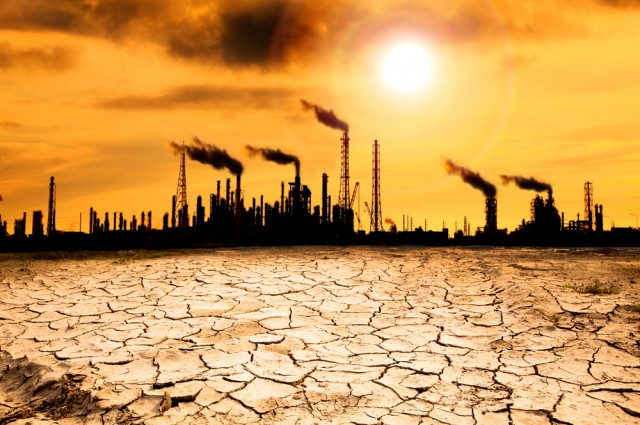
global_warming_0It concerns me when the president-elect in the United States tweeted in November of 2012 “The concept of global warming was created by and for the Chinese in order to make U.S. manufacturing non-competitive” and who promised during his campaign to roll back President Obama’s efforts to combat climate change. According to CNBC, a business news site, “president-elect Donald Trump’s Energy Department transition team sent the agency a memo this week asking for the names of people who have worked on climate change…alarming employees and advisors”. The fear is that Trump is preparing a political enemies list. At least I can proudly say that the Canadian government is working on implementing a national climate change plan (see Manitoba will not sign).

Historically, the European immigrants came to North America with their Eurocentric world view; a view that tended to interpret the world in terms of European values and experiences; a view that saw European values as better than Aboriginal values.  In reality, the aboriginal people had the right values as they had the far superior values. Before European influence, many First Nation communities believed everything was connected. The spirit world was connected to the earthly world; the sea was connected to the land and that the sky was connected to the land. Consequently, humans co-existed with animals and plants, with equal rights to life. In this belief lies commitment to respect all living things. George Blondin, a highly respected Dene Elder who was born in the Northwest Territories, put it this way.

“We are people of the land; we see ourselves as no different than the trees, the caribou, and the raven, except we are more complicated.”

First Nations people were very religious and respectful of the Great Spirit, and other spirits that they believe inhabited the land and animals all around them. These people were taught from a very young age to respect and give thanks to the animals, birds, plants, land and water which gave them everything they needed to stay alive.

Maybe it is time to take a serious look at aboriginal spirituality. These people once had a sacred relationship with Mother Earth and had a reverent respect for the plants and animals.  The reality is if we don’t, we may end up living on a planet with 2/3 less plant and animal species or worse. That would be shameful and a complete lack of respect for our future ancestors. But then again, maybe, just maybe, science can come to the rescue. CBC has a news article called, Reviving extinct species within reach, which quotes Hendrik Poinar, a scientist at McMaster University’s Ancient DNA Centre, who says, “The revival of an extinct species is in reach.” He is referring to a new field of science called ‘de-extinction’.

All that Waste. Shame! Shame!

Another rant on the shameful waste of food ensuing our planet.

The other day I saw a disturbing headline on the CBC website. The headline was, Walmart insider says ‘heartbreaking’ amount of food dumped in trash. The article reports that a former worker at almost a dozen Walmart stores in the Vancouver area claims he saw loads of what appeared to be perfectly good food dumped in the trash, even though Walmart says it only discards inedible food.  The article also states that CBC Marketplace investigated this issue with the episode airing Friday, October 28, in which their investigation exposed that in the Toronto area, investigators repeatedly found outdoor garbage bins piled high with everything from produce to baked goods, frozen foods, meat and dairy products.

just-eat-it-a-documentary-about-food-waste
From Just Eat It documentary

Now this is an issue that I’ve twice before written posts about. Those posts were Don’t throw that away and Vive La France. I just can’t wrap my head around why this occurs. Is it that corporations, like Walmart, just can’t be bothered? Do they not care? According to the article, the large retailer is committed to reducing food waste. The Walmart spokesperson says the company has teamed up with many organizations such as food banks to donate unsold food. The company also claims food is only discarded when it’s deemed unsafe to eat. If that is true, why did Marketplace discover all the food waste? The spokesperson could not address all the reports from Walmart insiders who told CBC they were instructed to throw away food if it looked imperfect or was close to an expired best-before date, or if shelf space was needed.

So what are these “best before dates” about?  Another CBC report titled, Best before dates and expiry dates: 5 things you may not know, explains it this way.

The best before date has nothing to do with the safety of the food. It has to do with the taste of the food. Best before dates guarantee freshness. Now expiration dates are different.  The Canadian Food Inspection Agency dictates that only five types of products need to be labelled with an expiration date. These include, baby formula and other human milk substitutes, nutritional supplements, meal replacements, pharmacist-sold foods for very low-energy diets, and formulated liquid diets. So the reality is you don’t have to discard a food item when the best before date is reached. Generally, if the food changes colour, or develops a bad smell, it is no longer safe to eat. Dented, leaking or bulging cans should be discarded. When in doubt throw it out is a good rule of thumb to follow.

apple-v2
From USA Today

Thankfully, there is some good news. Some corporations are truly trying to reduce waste. The CBC article, Selling unwanted food at a discount, says the Loblaws grocery chain recently expanded its Naturally Imperfect line. Loblaws is a supermarket chain with over 2000 stores in Canada. Those are stores such as Loblaws, No Frills, Value-mart, Superstore, Real Canadian Superstore, and numerous others. Its Naturally Imperfect line is where it offers up to a 30 per cent discount for blemished and deformed produce. The program began in Ontario and has now spread to select Loblaws grocery stores across the country.

IGA in Quebec is now selling imperfect produce. (see ugly produce). IGA is part of Sobeys which is the second largest food retailer in Canada. My question is why aren’t they selling imperfect produce in all provinces? Furthermore, why aren’t all grocery chains selling imperfect produce? It’s time we consumers start demanding all stores stock imperfect produce. It decreases food waste and saves us money.

Save-On Foods, a chain of supermarkets across western Canada, announced in September  that they were placing “Misfit” produce in all their stores (see Misfit produce). Thumbs upI give a thumbs up to Loblaws, IGA and Save-On Foods for taking positive steps towards reducing waste.

Furthermore, we need to pressure grocery chains to donate to food charities and pressure governments to enforce it like France and Italy have done. I recently read in a local daily newspaper that the city of Calgary, located in Alberta, Canada, saves nearly a tonne of food a week from the landfill. Using volunteers, Lourdes Juan, founder of non-profit LeftOvers Calgary, picks up leftover food destined for the landfill and delivers it to hungry Calgarians.  (see Calgary Herald article for more). The Globe and Mail did a story called, Charity makes the most out of other people’s leftovers, where the paper reports on organizations who are helping people in need and reducing waste. Kudos to those organizations!

I’ve always been told that the reason grocery chains and food establishments don’t donate their leftover food or the food deemed unsellable is because of liability issues. In other words, if they donated food and someone acquires food poisoning as a result, they could be sued. After I wrote my post, Don’t throw that away, I contacted the provincial government to ask why companies are not protected when they donate food. It turns out they are. Alberta has a law called, The Charitable Donation of Food Act, which protects companies who donate food. According to the website, Imagine Canada, most other provinces do as well. So liability is not the issue. I suspect it is a matter of convenience. When volunteer organizations come to collect the “unsellable food” companies willingly donate it. It seems companies such as Walmart just can’t be bothered to take the “unsellable food” to the charitable organizations. At least that’s my take.

The reality is food waste is an astronomical problem. The CBC article, Selling unwanted food at a discount, that I referred to earlier says that roughly 1/3 of the food produced in the world for human consumption is wasted. It also reports that Canadians waste more that $31 billion, yes billion, in food each year. Another statistic reported in the article is that 45% of all fruit and vegetables produced globally are wasted. That is almost half! Much of this produce was wasted because it was deemed imperfect. This is emphatically wrong! This much food wasted is simply ethically and morally wrong when there are so many starving people on this planet. It’s time we are part of the solution rather than part of the problem, even if that is purchasing “imperfect produce” creating a demand for the product and thereby reducing waste. To quote Eldridge Cleaver, an American writer and political activist, “There is no more neutrality in the world. You either have to be part of the solution, or you’re going to be part of the problem.” Please, do your part to reduce the corrupt waste of food. Be part of the solution!

Can Cars Really Run on Water?

An exploration to determine if water-fuelled vehicles are for real.

Star.com has an article, Above the Arctic Circle, climate change closes in, that says researchers predict that by mid-century Barrow, Alaska and its eight surrounding villages will be underwater despite decades of erecting barriers, dredging soil and building raised banks to hold back the water. Whatever the cause, climate change is a fact.

global_warming_0When I was an active teacher I taught science as well as other subjects. In many of those classes we used to discuss climate change, specifically the greenhouse effect, the buildup of greenhouse gases trapping heat in the atmosphere raising our planet’s temperatures. Often during class discussions, we would talk about solutions. That is when I would show them this Fox News video about the inventor, Dennis Klein.

This video would spark some interesting conversation. As you would expect some students would get excited about the solution given in the video. Others would be skeptics. Nonetheless, it made the class interesting. Over the years I often wondered about Mr. Klein’s invention.  I’ve guessed why I’ve never heard about this technology since the early 2000’s. What happened to this technology? My mind would try to explain possible responses. My mind sometimes went to conspiracy, that is, the idea that such a technology might have been discredited or maybe somehow made to disappear by the large oil conglomerates.  So I set out to find some answers.

Now whenever someone does research on the internet, one can get overwhelmed. There’s all sorts of information on the web and much of it  is conspiracy theories claiming that the technology is a scam. I always taught my students to be careful when using the Internet as there are many unreliable websites on the web. I used to tell my students “not to believe everything you read on the Internet as any ‘Joe Blow” can put up a website”. As far as that goes, don’t believe everything you read anywhere as not everything written is true, even when it comes from textbooks. I found many errors and some misinformation in school textbooks over my 35 years of teaching. So when I use the Internet I cross check information. If several websites are making the same claim; it is likely true. If only one site is making a claim, the information is likely not true.

Another thing to remember when researching on the Internet is to use only credible websites. These would be websites like universities, government sites, reputable organizations and so on. The University of Toronto  has a good article, Research Using the Internet, that explains the “ins and outs” of internet research.  So when I do my research, this is what I do.

So what did I learn? It seems the more I read, the more I don’t know. First of all, there are many sites, typically discussion sites, where people are putting forth all sorts of conspiracy theories. I like to stay away from these sites.

Wikipedia, a fairly reliable site, says in 2002, the firm Hydrogen Technology Applications patented an electrolyzer (a process of decomposing a molecule) design and trademarked the term “Aquygen” (changing the H2O to HHO, a new form of water) to refer to the hydrogen oxygen gas mixture produced by the device. The company claimed to be able to run a vehicle exclusively on water, via the production of “Aquygen”, and invoked an unproven state of matter called “magnegases” and a discredited theory about magnecules  to explain their results. Company founder Dennis Klein claimed to be in negotiations with a major US auto manufacturer and that the US government wanted to produce Hummers that used his technology. The company no longer claims it can run a car exclusively on water, and is instead marketing “Aquygen” production as a technique to increase fuel efficiency, thus making it Hydrogen fuel enhancement rather than a water-fueled car. Mr. Klein died in 2013.

So, can vehicles really run on water? The science magazine Scientific American says, Water won’t aid fuel economy in today’s cars, but it may help power the hydrogen cars of tomorrow. The Popular Mechanic’s article, the Truth about Water Powered Cars, says

There is energy in water. Chemically, it’s locked up in the atomic bonds between the hydrogen and oxygen atoms. When the hydrogen and oxygen combine…there’s energy left over in the form of heat or electrons. That’s converted to mechanical energy by the pistons and crankshaft or electrical motors to move the vehicle. Problem: It takes exactly the same amount of energy to pry those hydrogen and oxygen atoms apart inside the electrolysis cell as you get back when they recombine inside the fuel cell…Subtract the losses to heat in the engine…and you’re losing energy, not gaining it.

The Huffington Post’s article, Water-Powered Cars: Possible or Impossible? explains it this way.

Everybody knows it [water] contains hydrogen, and that hydrogen can be burned or used to generate electricity in fuel cells. But what few people seem to realize is that hydrogen is not an energy source …we have to break up water molecules via electrolysis, a process that uses more energy as input than you can then get out of the hydrogen as output.

2008-6-19-car01-copy
From philippinetop10.blogspot.ca

We Are Change is a nonpartisan, independent media organization composed of individuals and groups working to expose corruption worldwide. Seems like a reputable organization to me. Their article, The Suppression of Water Powered Cars, argues that water-fuelled cars is being suppressed from the public, namely by big oil companies. The article goes on to say, should inexpensive water-power exist; these oil companies would be set to lose billions.

So what is my conclusion? If you look at the science, then the claim that water can be used as a viable fuel source is false. To use a proverb, If it’s too good to be true, then it probably is. Having said that, the idea that the truth is being kept from us is always a possibility. Conspiracy theorists certainly would claim this. It’s happened before. Global Research, an organization I’ve referred to before in other posts says in their article, Monsanto’s Sealed Documents Reveal the Truth behind Roundup’s Toxicological Dangers, a large body of independent research has accumulated and now collectively provides a sound scientific rationale to confirm that glyphosate, better known as Roundup®, is far more toxic and poses more serious health risks to animals and humans than Monsanto and the US government admit. Roundup® has always been touted by Monsanto as a safe, environmentally friendly and easy to use herbicide. Too many times we have been told that a chemical is safe only to learn later on that is was not. The pesticide DDT and the herbicide Agent Orange are two examples. I have come to believe over my many years of life that there is always more going on than we will ever know. Another way to put it is to use the idiom, there is more (happening) than meets the eye. Is the truth being kept from us? Who really knows for sure?  Or, does the government know?

Bears Have Rights Too

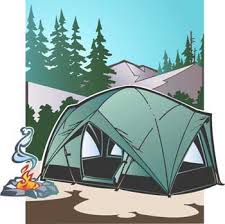
tentI mentioned in a previous blog post, The Encounter, that my son and I do annual hiking trips in the Canadian Rocky Mountains. This past weekend we did a trip to Jasper National Park hiking up the Sunwapta Peak trail.  This was our 14th trip together. We stayed in a campground called, Wabasso, near the town of Jasper. When we were registering at the campground, we were warned that a black bear had been in the campsite the previous night. While eating our supper that evening, the people at the tent next to us started yelling, “there’s a bear!” They made a bunch of noise to scare the bear away. We never did get a glimpse of the wild animal but nonetheless, the possibility of a bear nearby always makes a person a bit anxious.

Now in the 14 years of doing this, we have only encountered a bear once (if you can call it that).  It was five years ago and the black bear was on the trail in Jasper National Park some 500 or more metres ahead of us.  When we yelled and my brother-in-law set off a “bear banger” (that is a device that makes a very loud bang) the bear took off. Bears are always on your mind when hiking in the mountainous wilderness so we’ve always taken precautions. All of us carry bear spray, a type of pepper spray or capsicum deterrent that is used to deter aggressive bears. Thankfully, we’ve never had to use it although we have talked to hikers who have. When we hike we travel in groups and make lots of noise so that if there is a bear nearby, it knows humans are nearby as Parks Canada advises. (see Safe Travel in Bear Country). We also make sure our food is stored in vehicles, lockers or on bear poles. Bear poles are tall metal poles with hooks so that hikers can hoist their bags (food especially) up to the hooks for safekeeping overnight.

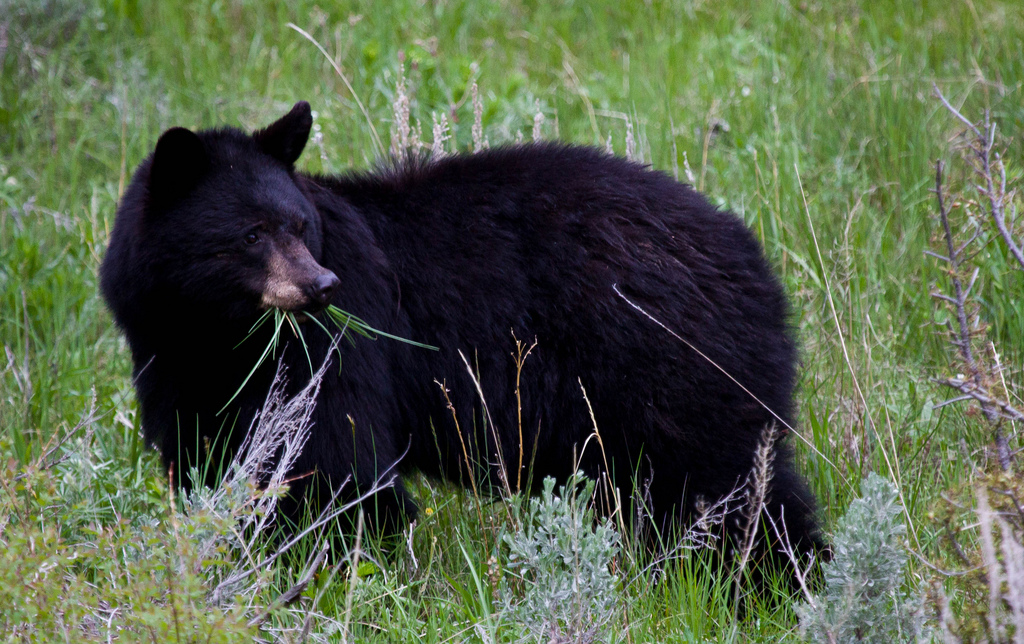
black-bear-blogHaving freshly done a mountain hike in bear country, I began to have some questions about bears so I did some research. The first question I wondered: Just how common are bear attacks? According to the article, Behaviour, by the Get Bear Smart Society,

Bears are NOT mean or malicious. Bears are normally shy, retiring animals that have very little desire to interact with humans. Unless they are forced to be around humans to be near a food source, they usually choose to avoid us.

That leads to my second question: Just how common are bear attacks? According to the article, A few surprises in decades-long black bear study, in the  Globe and Mail,

“Fatal black bear attacks were rare from 1900 to 2009 but they disproportionately occurred in Canada, according to an analysis published in the Journal of Wildlife Management. Of the 63 people who died in 59 incidents, 44 victims were mauled in Canada. It’s not known why, but periodic food shortages due to shorter growing seasons could be a factor.”

That means there were only 44 Canadian victims in 109 year span. The article also reports,

Researchers found that the vast majority of the confrontations weren’t the result of chance meetings in the woods, but the outcome of predatory behaviour, nearly always by lone male black bears. Surprisingly, only 8 per cent of the deadly attacks were attributed to mother bears.

So that made me wonder: Why are there bear attacks?  According to the Globe and Mail article,

Bear-caused fatalities have increased largely in lockstep with the continent’s human population growth and subsequent rise of recreational activities. Most of the deadly encounters with bears – 86 per cent – were recorded since 1960. Nine out of 10 times, the victim was alone or with only one other person. Improperly stored food and garbage was a likely attractant in 38 per cent of the incidents… In all cases, researchers found that bear pepper spray was not deployed as a measure of defence.

Another question: How do conservationists respond to bear habituation? Habituation is when a bear has constant, repeated exposure to people. When this happens bears can become increasingly bold and less afraid of people. These bears run the risk of becoming “problem” bears that enter townsites and campgrounds, places they are more likely to be illegally fed or rewarded with improperly stored garbage or pet food. Parks Canada’s wildlife specialists do their best to reverse this behaviour, but if a bear can’t be rehabilitated they are destroyed because they became too much of a risk to public safety. In areas outside the national parks, bears are often destroyed once they’ve been habituated. In Revelstoke, British Columbia, nine bears were destroyed in one week. (see the CBC article,  9 Bears Killed in one Week).

Recently Josh Bowmar, an American and a former javelin athlete, posted a video of himself killing a black bear in Alberta with a spear. That video caused sharp criticism on social media and from the provincial government. In the video, a black bear can be seen circling and then approaching the area that had been baited where Bowmar stands nearby before he impels the spear into the bear’s stomach.  The bear ran off, likely suffering for many hours and was found dead the next day. Alberta’s government have since announced it will introduce a ban on spear hunting this fall as part of those updated regulations. (see Alberta Government orders Investigation). If you haven’t seen the video, here it is.

I was surprised that spear hunting was even legal in Alberta. I was even more surprised to learn that baiting bears and other animals was also legal. Personally, I’ve never understood the appeal of hunting. When I was a teen I once shoot a sparrow with my pellet gun and killed the bird. I felt so incredibly guilty when the bird died that I’ve never intentional killed an animal since except for mosquitos, flies and spiders when my wife forces me to. Typically, I rescue the spiders and put them outside.

The bottom line is we humans have an obligation to learn how to live in harmony with wildlife. All living creatures have a right to exist. In fact, UNESCO, an agency of the United Nations, issued a Declaration for All Life on Earth which declared, we shall create a world based on love and harmony in which all forms of life are respected. Organizations such as, World Wildlife Federation (WWF) states their mission to stop the degradation of the planet’s natural environment and to build a future in which humans live in harmony with nature. I believe this is possible and education is the key. Dr. Jane Goodall, an animal rights activist and best known for dwelling with Tanzanian chimps to observe their behaviour, said it best when she said, “Only if we understand, will we care. Only if we care, will we help. Only if we help shall all be saved.”  If you are going to be in bear country, it is imperative that you get educated.  A good place to start is to read the Dispelling Myths article by the Get Bear Smart Society. To quote Nelson Mandela, “Education is the most powerful weapon which you can use to change the world”. 

Littering! Really?

A commentary on the disrespectful act of littering.

For the past three summers, my wife and I have camped for several weeks at a campsite near where we live. This campsite is beside a river and has a golf course where I golf at least once a day. The campsite is located in a beautifully treed area where you can truly feel connected with nature. I don’t need to write about the health benefits of being in nature as I did that in my post Nature’s Wonders in May. Spending time golfing and having campfires is what I’ve been doing for the last few weeks so in case you’ve been wondering, that is why I haven’t published anything lately.

My wife loves to walk and so I go for walks as often as I can with her. It’s good quality time together and we often have some of our best talks doing this. We either walk around the campsite visiting the occasional camper that we know or we walk down a rural road near the campground. It’s about a six kilometre (3.7 mile) walk to the location we go to and back. The road is a gravel road so sometimes we get bombarded with dust when a vehicle goes by but for the most part the road is a beautiful walk in the river valley.

litter
From Litter Heros website

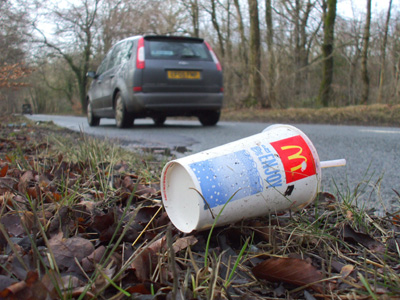
The last time I walked this route, I was alone which gave me more time to observe my surroundings. What struck me was the amount of litter I saw. I counted eight (8) soft drink or coffee cups. They were from such fast food restaurants as Dairy Queen (DQ), Tim Horton’s, and MacDonald’s.  I also saw fast food napkins, a hamburger Styrofoam box, a beer bottle and a beer can. There were also candy wrappers and a level which must have fallen off a work truck. That was what I could see just from the road. I’m sure there was much more litter as the grass was long in the ditches. What disturbs me about finding beer containers is the people who tossed them likely were drinking and driving. That to me is alarming!

Years ago our son was in 4H and every year the 4H clubs participated in the Alberta Highway cleanup where 4H members gather to clean up a section of a highway. I participated with him and what I remember most about that event was the number of cigarette packages there were. Smokers seem to be some of the worst litterers. The second most common piece of litter we picked up were fast food cups. Of course there were numerous bottles and cans and other miscellaneous items including dirty diapers. During a town cleanup last year we picked up mainly fast food cups, cigarette packages, along with other miscellaneous items and yes even dirty disposable diapers.

I’ve tried to understand why people litter and the only thing I can conclude is that people are just too lazy to find a garbage can and that people really don’t care about our environment. This inspired me to learn more about the topic.

Here are some facts from a website created by a Litter Reduction Task Force to address the litter issues within the Region of Waterloo, Ontario, Canada. This site is called, The only cure for litter is you.

  • The average distance someone will carry garbage before littering is 12 paces.
  • Most litter occurs within 5 meters of a garbage receptacle.
  • Single use food and beverage litter made up 45 per cent of litter cleaned up in the Great Canadian Shoreline Cleanup in Ontario, Canada.
  • There are 8,000 tonnes of cigarette butts dropped by Canadians each year, the majority within 10 feet of an ashtray. It takes 10 years for the filter to biodegrade.

What people need to understand is that much of this litter remains in the environment for a long time. According to this same website, it takes an aluminum can 80 to 200 years to break down naturally but if recycled, it can be reused within six weeks.  Here is some information about how long it takes other items to break down naturally.

  • Banana peel: 3 to 4 weeks
  • Paper bag: 1 month
  • Cardboard: 2 months
  • Wool sock: 1 year
  • Tin steel can: 50 years
  • Disposable diapers: 550 years
  • Plastic bags: 20 to 1000 years
  • Plastic jug: 1 million years
  • Glass: 1 to 2 million years
  • Styrofoam: 1+ million years
6_pack_duck_270x224
From humanesociety.org

It seems obvious to me that people just don’t care what they are doing to Mother Earth. So that begs the question, Why should we care about the problem of littering? According to the same website,

  • Litter is damaging to plant life. Litter can stunt plant growth.
  • Every year, millions of birds, fish and animals die from ingesting litter.
  • Litter on the ground and in our water is dangerous to humans.
  • Litter destroys the beauty of the community. Litter begets litter. One piece of litter on the ground signals others to litter.
  • Litter is a safety hazard. It is a breeding ground for rodents and bacteria.

According to the website, Conserve Energy Future (CCF),

  • Littering is expensive. Every year millions upon millions of dollars are spent cleaning up litter. This money should be going to more productive things, but instead, people don’t realize that something as small as littering done on a mass scale does indeed affect them. Taxpayers’ dollars are being spent on littering…
  • A very large majority of Americans have admitted to littering in their lifetimes. I’ll admit it. I have littered. The average American only walks a few steps before dumping their trash on the ground without even searching for a garbage can.
  • Billions of tons of litter are dumped into the ocean each year…This leads to the repeated killing of fish on a daily basis and the gradual depletion of marine life. Believe it or not, the litter we produce is causing more underwater species to become endangered.
  • Cigarette butts make up over half of our littered objects, and they take a grand total of ten years to decompose because of a cellulose acetate, contrary to the popular perception that cigarette butts decompose very quickly in only a matter of days. In reality, cigarette butts are a serious threat to the environment.

According to the article, Littering a crime of inconvenience for Canadians by Marc and Craig Kielburger, WWF Canada says Canadians are frustrated with environmental groups telling them that making small changes will have a big impact on our planet.

But Canadians are doing their part to clean up the mess we humans have created. According to the Kielburger brothers, The Great Canadian Shoreline Cleanup is one of the largest public action conservation programs in the country. Last year, more than 58,000 volunteers picked up litter along 3,000 km of shoreline and inventoried every piece. Having said that, we need to do more.

do-not-see-clipart-1It’s time we humans stop this disrespectful action of littering and start getting involved in public actions such as the Great Canadian Shoreline Cleanup, Alberta Highway Clean Up (if you live in Alberta) or in your local community spring clean-ups (see Communities celebrate spring with clean ups). It’s time to be stewards and to protect, respect and take care of our precious planet. No longer should we take our environment for granted. So do the right thing!

Climate Change Confusion

A commentary on whether humans are to blame for climate change

Carbonbrief.org, a UK-based website covering the latest developments in climate science, climate policy and energy policy, reports, Study links heatwave deaths in London and Paris to climate change. The study refers to the 2003 tragedy where more than 70 000 people across Europe died in a  heatwave. Climate Change is a reality. I don’t think anyone disputes that and the science community doesn’t either. All a person needs to do is take note of the strange weather the world has experienced in recent years. In June, we saw extremely wet weather in Europe causing flooding in Paris, France and Germany. In the United States there has been sizzling heat in the Southwest causing uncontrollable wildfires in California.  West Virginia has experienced severe flooding. In the province of Alberta, 88 000 people had to be evacuated from Fort McMurray because of wildfires. Also in June, Eastern China saw a tornado and hailstorm that killed at least 98 people when it sped over the city of Yancheng’s outskirts, destroying buildings, smashing trees and flipping vehicles on their roofs. The list of weird weather goes on and on.

There is no question that our weather is changing and becoming extreme. The ongoing debate is: Is it human activity that is causing climate change? Now I’ve taught about this topic in science for many years and there has been no doubt in my mind that it was indeed humans causing global warming which leads to climate change. I would show the graph comparing CO2 levels to average global temperatures and use it as evidence to convince my students. I would show them pictures of the shrinking polar ice cap and melting glaciers. I would show them Al Gore’s movie: Inconvenient Truth (see trailer below) and emphasize Al Gore’s argument that most of the scientists around the world agree that humans are the main reason for the global warming.

The article Scientific consensus: Earth’s climate is warming on NASA’s Global Climate Change website agrees with Al Gore’s conclusions as it says,

Multiple studies published in peer-reviewed scientific journals show that 97 percent or more of actively publishing climate scientists agree: Climate-warming trends over the past century are extremely likely due to human activities. In addition, most of the leading scientific organizations worldwide have issued public statements endorsing this position.

The Scientific America article: Is Global Warming a Myth? also agrees with Al Gore as it says,

…scientists have not been able to validate any such reasons for the current warming trend, despite exhaustive efforts. And a raft of recent peer reviewed studies—many which take advantage of new satellite data—back up the claim that it is emissions from tailpipes, smokestacks (and now factory farmed food animals, which release methane) that are causing potentially irreparable damage to the environment.

I have always believed that Al Gore must be right. But then I watched a video, on my son’s insistence, called, Climate Change: Fact or Fiction by Dr. Gary Smith (see below). Dr. Smith convincingly argues that humans are not causing global warming.

Global Research.ca, an organization that seems to me to be credible, has an article called Global Warming: Ten Facts and Ten Myths on Climate Change that seems to agree with Dr. Smith’s conclusions. This article agrees with Dr. Smith as it says,

 Climate has always changed, and it always will. The assumption that prior to the industrial revolution the Earth had a “stable” climate is simply wrong. The only sensible thing to do about climate change is to prepare for it.

The reality is that almost every aspect of climate science is the subject of vigorous debate. Further, thousands of qualified scientists worldwide have signed declarations which (i) query the evidence for hypothetical human-caused warming and (ii) support a rational scientific (not emotional) approach to its study within the context of known natural climate change.

So now I’m confused. I thought it was all clear in my mind but now I’m not so sure. The more I learn, the more confused I get. But I guess that is nothing new as Albert Einstein once said, “The more I learn, the more I realize how much I don’t know.”  Even Aristotle said, “The more you know, the more you know you don’t know.”

So now I’m not sure what to think. Am I convinced that humans are not to blame for climate change? NO I’m not. I suspect that we humans are contributing to the problem, but it could also be, at least in part, to natural changes in climate as the earth has gone through many warming and cooling periods. I suspect climate change is due to both. Having said that, I continue to believe that moving away from our addiction of fossil fuels can only help our planet. It just feels like the right thing to do. I guess we will just have to wait and see who wins the debate.

Nature’s Wonders

IMG_4412
Lake Louise

It astonishes me the number of beautiful places this planet has to offer for us humans to appreciate. I consider myself blessed because my wife and I have seen a handful of them. When I look at websites advocating must see places to visit in the world, I am surprised at how many I have seen. These sites often mention places such as Santorini in Greece, Venice in Italy, Paris in France, Rome in Italy, Stonehenge at Amesbury, England, Glacier National Park in Montana, USA all of which I have visited. With the exception of Glacier Park, these places all involve flights over oceans but we don’t have to travel across oceans to see beautiful places. There are so many places right here in our own country. The Internet has many lists of must see places on it and many of these lists include places in the Canadian Rocky Mountains; places like Banff National Park, Lake Louise, Jasper National Park, and Maligne Lake in Jasper National Park.

The Reader’s Digest’s article, 10 Places In Canada Every Canadian Needs To Visit includes Banff National Park and Lake Louise on its list. CNN’s article, 20 of the most beautiful places in Canada includes Jasper National Park and Lake Louise on it. When you search the Internet for must see places in Canada, the Canadian Rockies, Banff National Park, Jasper National Park or Lake Louise will almost inevitably show up on the list.

The Canadian Rockies are an assemblage of mountains that extend to  parts of British Columbia and Alberta. They were formed about 55 to 80 million years ago in what is called the Cretaceous era. These mountains are made up of layered sedimentary rocks and when you take the time to look you can see the layers. Their peaks are sharp and pointy because of glaciers on it.

2016-05-16 15.17.13
Bighorn sheep

There are five national parks that are part of the Canadian Rockies; these are Yoho, Jasper, Kootenay, Banff and Waterton. Banff National Park was the first to be formed. The UNESCO World Heritage Site is made up of four Canadian Rocky Mountain national parks and has a total protected area of over 20,000 square kilometres. If you are lucky enough you might see animals such as grizzly or black bears, deer, elk, moose, cougars and bighorn sheep. My wife and I caught a glimpse of a black bear and numerous bighorn sheep. We also saw some moose. The Canadian Rockies have been likened to the 2016-05-15 15.33.08African Serengeti in terms of the abundance of wildlife. When you drive in Banff National Park you’ll notice places where wildlife can cross the Trans-Canada Highway on specially built over and under passes, designed to reduce collisions with the animals.

My wife and I just recently spent a week in the Canadian Rocky Mountains. We visited three of the five national parks; Banff, Jasper and Kootenay. Even though I’ve been to the Rockies many times, I still find the beauty of these majestic mountains to be breathtaking. When I’m among these gigantic, unique pieces of rock I feel a closeness to our creator God especially when we are walking on one of the numerous beautiful hiking trails. My wife and I spent three days in Jasper National Park where we went to Maligne Lake for the first time. It was truly one of the most beautiful places I have ever seen.

Maligne Lake, Jasper

Another thing that always amazes me, or both of us really, is the number of people from all over the world you meet or the variety of languages you hear. We heard languages in French, German, Chinese, Japanese and some we didn’t recognize. We met people from France, China, United States, and Germany. It truly is a global village. All of these people were doing the same thing as we were. They were taking in the beauty of the Canadian Rockies.

It astounds me the number of people I know who live in the province of Alberta, Canada, that have never been to the Canadian Rockies. We live on the east side of the province of Alberta, probably one of the farthest points from the Rockies yet both my wife and I have been there too many times to count. It takes us six hours to drive to the Jasper town site. Yet, so many people who live even closer to the west side of the province where the Rockies are located have never taken the time to visit those majestic sites.

There are so many wonderful places to see in our world, many of them in our own back yard. Life is too short to procrastinate seeing them. Now I know it is human nature to make excuses for not doing it; excuses like it costs too much, not enough time or work is just too important to miss. I just think it is sad that people don’t take the time to see such wonderful formations of nature. It is so important to spend time seeing what nature has created and just being in nature. It doesn’t have to be the Rocky Mountains although if you haven’t seen them you definitely should. There are so many benefits to being in nature. According to the article, Get Outside! 7 Scientifically-Backed Health Benefits of Being in Nature, spending time in nature improves attention spans, boosts serotonin (the feel good neurotransmitter) levels and shows increased activity in the parts of the brain responsible for empathy, emotional stability, and love.  Some research suggests urban environments do the same for fear and anxiety. Being in nature is good for your health. Take the time to experience a bit of heaven on earth. It is worth the effort. Or as the French author, Jules Renard says,  On earth there is no heaven, but there are pieces of it.

Don’t throw that away!

The CBC news article, Starbucks pledges to donate 100% of unsold food, reported that Starbucks corporation on March 23, 2016 publicized plans to eliminate food waste and donate all of its unused food items from its U.S. stores to the needy within five years. Perishable items such as breakfast sandwiches, salads, and other ready-to-eat meal packages would be donated. The company said it will add up to five million meals in its first year, and more than 50 million free meals by 2021. They plan to use an agency called Food Donation Connection (FDC) to get the items to the food banks and homeless shelters. Since 2010, Starbucks has been collecting pastries at the company’s 7,600 stores after they can no longer be sold to customers, and working with FDC to get the pastries to people who need them.

Canadian Starbucks locations will not be included in the program, but a spokesperson told CBC News that Canadian Starbucks is watching closely. Food consultancy Value Chain Management International Inc. estimates that roughly $31 billion worth of food is wasted in Canada every year. According to a Starbucks spokesperson, “In Canada we currently have measures in place to donate unused food and are working to formalize the practices so that we can maximize our efforts in this market.”

I did some research and learned that there are other companies who donate unsold food. According to an article on AME Science, Tesco is a British multinational grocery and general merchandise retailer who plans to eradicate all its food waste by 2017. They’ve started several projects to achieve this goal. It has also started selling “wonky veg” boxes, to encourage consumers to buy imperfect foods. In a 14-store pilot programme the company provided the equivalent of 50,000 meals to less fortunate people.

oranges10a
from theguardian.com

According to figures published by Tesco 55,400 tonnes of food were thrown away at its stores and distribution centres across the country in 2015. This would be the equivalent of over 125,000,000 meals, assuming all the food were edible. Even if half of it is edible, that still brings a huge amount of meals. Another article by Salon reports Tesco’s initial report found the biggest losses were in bagged salad, two-thirds of which was being discarded either in-store or by customers; it was also wasting 40 percent of apples, a quarter of grapes and a fifth of bananas.

I was curious as to why grocery stores throw out so much food although it is only 10% of the total food wasted, whereas about 14% of all household food is wasted according to davidsuzuki.org. The site says over 30 percent of fruits and vegetables in North America don’t even make it onto store shelves because they’re not pretty enough for picky consumers. According to Business Insider, the reasons why stores waste is:

  • Most grocery stores assume that customers are more likely to buy produce if it’s from a fully stocked display.
  • Customers expect perfect produce. Retailers stock their produce according to that expectation.
  • Customers don’t understand what expiration dates, sell-by dates, use-by dates, or best-by dates mean. They assume that food is no longer good after these days. Instead, sell-by dates are guidelines for sellers to indicate peak freshness. Most foods are good long after the sell-by date. Consequently, most grocery stores pull the items from the shelves several days before the sell-by date.
  • Sometimes, product packaging gets damaged during shipping, causing supermarkets to toss products even though the food hasn’t been compromised. The assumption is that no consumer is going to buy it if a faulty one is right next to it.

So why don’t all stores donate the unsold food to charities. From what I can determine, the reason is businesses fear they will be held liable should the product donated later cause harm to the recipient. It’s Interesting to note that in 1996 U.S. President Bill Clinton passed the Good Samaritan Act to encourage companies to donate healthy food that would otherwise go to the waste dump. This law protects businesses from liability when they donate to a non-profit organization. To my knowledge Canada has no such law. The province of Ontario, however has such a law called the Donation of Food Act which was passed in 1994.

clapping-hands-transparent-b-g-mdKudos to the Starbucks and Tesco corporations. I’m quite sure my research is not thorough. I’m sure there are other companies out there so I applaud any of the companies I’ve missed who donate unsold food to charities.

On August 7, 2015 I wrote a post about the France National Assembly who voted unanimously to ban supermarkets from throwing away or destroying unsold food.  According to the article, France pass new law forbidding food waste, large grocery stores must donate edible food to charities and allow inedible food to be used for animal feed or compost.

I have since learned that Italy is set to become the second European country to pass legislation that will pressure supermarkets to stop throwing out food waste, and instead give it to those in need. (See Italy’s about to pass law). The soon to be Italian law is slightly different from the French law in that Italy’s legislation rewards companies for donating by reducing their rubbish tax. The more food companies donate, the bigger savings they’ll receive in taxes.

Thumbs upThumbs up to the European countries of Italy and France who are making efforts to waste less food and support less fortunate people. Kudos to the United States and to the province of Ontario for passing laws that protect companies who choose  to donate food instead of throwing it out. It is time for other provinces or Canada as a whole to do the same.

smileyMy research also showed me that there are many food rescue (also known as food recovery or food salvage) organizations in Canada and the United States. These organizations glean edible food from places such as restaurants, grocery stores, produce markets, or dining facilities and distribute it to emergency food programs. The food would otherwise go to waste. In Canada there are organizations such as Second Harvest and Forgotten Harvest. In the US there is Feeding America, Food Forward and many more. I salute those charity organizations who do the right thing.

British novelist and author of the Chronicles of Narnia, once said, “Integrity is doing the right thing, even when no one is watching.” I am so grateful that there are people, organizations, companies and countries in this world that have integrity.