Judge Not!

Now that I have some time, I spend some time perusing the internet reading interesting articles.  I recently read an article titled, We’re all the Same.  Basically, the article says we as humans are quick to judge others.  It makes bold statements like:

  • Let’s face it. We all do it. We judge.
  • We like to label others and shove them into this box.
  • We don’t like ”undefined” people.
  • We assume we know who someone is based on our interactions and observations.
  • Judging makes us feel safe and comfortable.
  • It gives us a sense of control.
  • But despite our best efforts to judge, we all know deep down inside, we can’t and shouldn’t really judge another person.

Now my initial reaction was, “Not me!  I don’t judge people.”  But who am I kidding?  So I thought about it.  Do I judge others or not?  If I am honest with myself, the answer of course is “Yes”.

The year 2015 was a year of change for my wife and I.  I retired from teaching.  My eldest daughter moved to a different apartment which is closer to her work.  My youngest daughter returned to university, so she is moved back to the city after living in the rural community she grew up in.  And my son, who has been going to the local college, is moved to the city to continue his education at university.  My wife is the only stable one (in more ways than one) as she is continuing with the same job.

JudgeSo a few months ago, my wife and I were helping our eldest daughter find furniture for her new apartment.  She had been getting some used stuff off of Kijji, an online garage sale site.  She had looked at a media unit with an electric fire-place and decided to purchase it.  She gave the young man $40 to hold it, and arranged to pick it up when I could bring up the truck. On a Saturday morning we arrived at this person’s apartment complex at the agreed upon time only to find that he was not there.  My daughter texted him and called him only to discover his voice mail box was full. Being the Dad that I am, I immediately jumped to conclusions. As far as I was concerned this guy had ripped off my daughter.  My daughter and wife, on the other hand, kept reminding me that maybe he had a family emergency or something.  I, on the other hand, was convinced that he had swindled my daughter out of  $40.  After an hour of waiting and me “steaming” we left and continued with our day.

Now it turns out that this fine, young man did indeed have a family emergency. His explanation to my daughter alluded to perhaps a death in the family.  This man felt very bad about the incident and returned my daughter’s $40 to her.   I had totally misjudged the situation and the young man involved.  Now I am the one feeling bad and guilty that I had so little faith in people. This was not the only time recently that I had jumped to conclusions and misjudged a situation.

As I mentioned earlier, I just retired from teaching.  The school that I worked at submits a weekly newspaper column in the local papers.  Well, at the end of June, I was all “bent out of shape” because my school (so I thought) did not even care that I was leaving after 26 years of service. They didn’t even have the decency to acknowledge my exit in the school column.  I was feeling sorry for myself.  I had convinced myself that my colleagues didn’t even care that I was leaving.

The next week the local papers arrived at our house and I my wife pointed out that I, and the other colleagues that retired with me, were acknowledged in the school column.  Lesson learned (I hope); Do not be so quick to judge people and situations. Once again, I felt bad and guilty that I  had so little faith in my colleagues. I know I could just blame it on “human nature”, but that is still not an excuse.

As a former school teacher I can recall numerous occasions where I prejudged students based on hearsay around the staffroom, only to discover that my experiences with those students were different from the prejudgements. It is so important to resist judging.

So, what is wrong with judging? I’m sure someone is wondering. The late Earl Nightingale, an American radio personality, writer, speaker and author who dealt mostly on the subjects of human character, once said, “When you judge others, you do not define them, you define yourself.” That is so true! Judging others is about our need to feel safe and comfortable. When we judge others we feel better about ourselves because judging others occurs when we believe we are better than the people we’ve judged. Really, we have no right to judge anyone unless we know everything about that person, which is impossible. There is a native American proverb that says, Don’t judge any man until you have walked two moons in his moccasins.” As I learned from my experience with the young man who I believed conned by daughter out of $40, you never really know what is going on in that person’s life, so as in my case, most often our judgements are based on ignorance or misinformation.

So remember, things are not always what you perceive them to be or believe them to be.  Don’t be so quick to judge a situation. Michael J. Fox, best known for his role as Marty McFly in the Back to the Future movie trilogy, once said,  The least amount of judging we can do, the better off we are.” He is right! I am going to try to follow Fox’s advice from now on, or at least that is the goal.

Namaste, a Reverent Gesture

A_yoga_namaste_Hindu_culture_religion_rites_rituals_sights.jpgOver the years I have been periodically greeted with a greeting known as “Namaste”. This is a gesture that entails a slight bow made with hands pressed together, palms touching and fingers pointed upwards in front of the chest. I have witnessed speakers and performers greet their audiences with this sign. Many years ago our school hosted an exchange student from Thailand who when she first arrived would greet her teachers and fellow students with the Namaste gesture. Some of my yoga instructors concluded every practice by uttering “Namaste” while bowing with hands pressed together. Even in Taekwondo we bowed to our opponents although not with our hands together. A bow in Taekwondo was a sign of respect which is its meaning in all martial arts. We even bowed when we entered the dojang or gym as a sign of respect for it.

Whenever someone greets me with the Namaste gesture, and especially when saying the word “Namaste”, I feel very honoured. I feel respected and accepted. It truly is a wonderful feeling when acknowledged with a gesture of Namaste. So what does this form of salutation mean? Where does it come from as it is not a common form of greeting in my part of the world?

In my part of the world, the handshake is the popular form of greeting. A handshake is a ritual in which two people grasp one of each other’s like hands and give a brief up and down movement of the grasped hands. The origins of the handshake are unknown as historians say that the handshake predates written history, and therefore is somewhat difficult to track down. What I find fascinating is there are some historians who claim the ritual dates to the Romans who would approach each other and grab the forearm to make sure the other man was not carrying a weapon. If that is true, then the handshake has a very different connotation than Namaste does.

The  Namaste gesture is widely used throughout India, Nepal, and parts of Asia.  Namaste or namaskar is used as a respectful form of greeting, acknowledging and welcoming a relative, guest or stranger as well as with goodbyes. It is also used when a person expresses gratitude for assistance offered or given, and to thank the other person for his or her benevolence.

The gesture (or mudra) of Namaste is a simple act made by bringing together both palms of the hands before the heart (sometimes the forehead), and lightly bowing the head. In the simplest of terms it is accepted as a humble greeting straight from the heart and reciprocated accordingly. But does it have a deeper meaning? Being a teacher who taught Religious Education, I knew it did. So here is a lesson.

From the great religion of Hinduism, the sign of Namaste is an ancient Sanskrit greeting still in everyday use in India and especially on the trail in the Nepal Himalaya. Translated roughly, it means, “I bow to the God within you,” or “The Spirit within me salutes the Spirit in you,” a Hindu knowing that we are all made from the same One Divine Consciousness. More specifically, nama means bow, as means I, and te means you. Therefore, Namaste literally means, “bow me you” or “I bow to you.”

Now this can be thought of in many ways. These are some of the ways the meaning of Namaste has been explained to me.

  • The Divine light in me acknowledges the Divine light in you.
  • The God in me greets the God in you.
  • I honor the spirit in you that is also in me.
  • The Divine wisdom in me recognizes and acknowledges the Divine wisdom in you.

Hinduism Today says the Namaste gesture

“bespeaks our inner valuing of the sacredness of 216px-An_Oberoi_Hotel_employee_doing_Namaste,_New_Delhiall. It betokens our intuition that all souls are divine. It reminds us in quite a graphic manner, and with insistent repetition, that we can see God everywhere and in every human being we meet. It is saying, silently, ‘I see the Deity in us both, and bow before It. I acknowledge the holiness of even this mundane meeting. I cannot separate that which is spiritual in us from that which is human and ordinary.’”

One practicing Hindu put it this way.

“I’ve heard it means, ‘I salute God within you.’ The true Namaste gesture is accompanied by bowing the head and shoulders slightly. This is a gesture that lessens our sense of ego and self-centeredness, requiring some humility to do it well–whereas shaking hands can be quite an arrogant event.”

According to Buddha Weekly, it is not just a salutation. For Buddhists the gesture is called Anjali and it serves many purposes. In spiritual activities, the mudra Anjali (offering with both hands), indicates we are making a “divine offering.” In a Buddhist context, it is the “cure” for pride, one of the great obstacles in their practice. In day-to-day life it indicates respect, literally meaning “I bow to you.”  Also, in acupuncture terms, the tips of the fingers activate certain energies.

Now I was raised a Christian, so how might this fit into a Christian context. In 1 Corinthians 3:16 it says, “Do you not know that you are God’s temple and that God’s Spirit dwells in you?” (NRSV) To me that aligns with the Hindu claim that the divine is within us. Christians just call it the Holy Spirit. I was taught that at baptism or confirmation, depending on the religious tradition, that the Holy Spirit entered and from then on resided in us.

In Galatians 5:22-23 it is written, “By contrast, the fruit of the Spirit is love, joy, peace, patience, kindness, generosity, faithfulness, gentleness, and self-control. There is no law against such things.” (NRSV) So Christians believe that if a person allows the spirit to be active in them, then that person should express love, joy, peace, and so on. Wouldn’t it be wonderful if Christians supported this belief with the Namaste gesture, a slight bow made with hands pressed together.

namaste-2No matter how Namaste is interpreted, it invokes a sense of sharing a spiritual connection and creates a sense and feeling of oneness. It is a way to feel connected. It conjures up feelings of respect. It is a sign of universal oneness. Maybe this world would be in a better place if all humans practiced this simple gesture. As the Buddhists believe, it just may be a “remedy” for pride that is the cause of many problems. I’m convinced this simple gesture brings about more feelings of reverence and honour for others. Mohandas K. Gandhi allegedly said once, “Namaste. I honor the place in you where the entire universe resides. A place of light, of love, of truth, of peace, of wisdom. I honor the place in you where when you are in that place, and I am in that place, there is only one of us.” Such a simple sign, a bow with hands together, with the intended meaning as Gandhi explained, just might make all the difference in this world.

What to believe?

Napoleon Bonaparte was once reported to have said, “History is the version of past events that people have decided to agree upon.”   George Kitson Clark once said, “No historian should be trusted implicitly.”  Norman Pearson is quoted as saying, “To look back upon history is inevitably to distort it.” There was a time whenever I read something in a history book or was taught something in a history class, I believed it to be the “Gospel truth.”  Now being older and wiser I no longer do.  So why would I say that?

imagesI recently read a book titled, Inconvenient Indian by Thomas King. What surprised me, was that Mr. King claims that the massacre that allegedly occurred at the Alamo was a fabrication, a story created over the years. But that is not what history says.

I did some internet research and Wikipedia says this about the Alamo massacre: “In the early morning hours of March 6, 1866,  the Mexican Army advanced on the Alamo. After repulsing two attacks, the Texans were unable to fend off a third attack… Between five and seven Texans may have surrendered; if so, they were quickly executed. Most eyewitness accounts reported between 182 and 257 Texans died, while most historians of the Alamo agree that around 600 Mexicans were killed or wounded.”  I checked other websites which say more or less the same thing. So who is right?

Mr. King also says, the story about Pocahontas and John Smith, perpetrated by Disney’s movie Pocahontas  is also a myth, or in other words a fabricated story. He claims that John Smith would have been 24 years old and Pocahontas maybe 10 or 12 years old at best.

Now Disney’s version of the story is one of romance between an American Indian woman named Pocahontas and John Smith, who journeyed together to the New World with other settlers to begin new lives.  Do the children, or even adults for that matter, who have watched this movie believe they have watched a historically accurate depiction of events of the past?  Probably.  My experience as a teacher has been most young people think what they see in movies and on television is truth or is real history. At least Wikipedia sets the record straight about the story of Pocahontas as it says, “In a well-known historical anecdote, she [Pocahontas] is said to have saved the life of an Indian captive, Englishman John Smith, in 1607 by placing her head upon his own when her father raised his war club to execute him. The general consensus of historians is that this story, as told by Smith, is untrue.”  So we know Mr. King is likely right about the Pocahontas story.

In July of 2007 while on a family trip to Eastern Canada,  we visited the Maritime Museum of the Atlantic in Halifax, NS. At that time there was an exhibition on pirates. It was interesting to learn that commonly held belief that pirates make their enemies walk the plank as well as the belief that  pirates often have parrots on their shoulders are myths. We learned that these are myths. There apparently is no historical evidence to support these commonly held beliefs about pirates. Also, the wide held belief that pirates buried their treasures is also a myth. I guess I was somewhat disappointed to learn about these untruths as I always thought pirates did bury their treasures.

So what else have we been taught that is NOT a historical truth?  According to the article, Facts Prove Everything You Thought You Knew About History… Is Dead Wrong, Christopher Columbus did not discover America. He only discovered the Caribbean Islands.  I don’t know about you, but I was taught in school that Columbus discovered America.  It has been proven that the Vikings were in North America before Columbus as there is an archeological site at the northern tip of Newfoundland where they discovered the remains of the Viking’s houses. In fact, they reconstructed a replica of the settlement about 100 yards away from the site. It has been unquestionably determined that the Vikings were there for about 10 years, specifically, Leif Erikson and his extended family. I guess I can erase that untruth from my memory.

Dictonary.com defines the “Napoleon complex” as the condition of being small in stature but aggressively ambitious and seeking absolute control. It could just as easily be called the “Short Man Syndrome.” In other words, this complex is named after Napoleon Bonaparte because of the widely held belief that Napoleon was short. But according to the 16 facts article I referred to earlier, the truth is Napoleon Bonaparte was not short at all. He was five feet, seven inches. That was slightly taller than average for a Frenchman at the time. Another historical inaccuracy to erase from memory.

The idea that Albert Einstein failed math in school is an urban myth (see 20 things you need to know about Einstein). It turns out that Einstein didn’t fail math in school, it was a false claim published by Ripley’s. The truth be known is that when he was 15, he mastered differential and integral calculus which makes sense since he is widely held as one of the world’s few geniuses.

Then there is the History Channel series called Hunting Hitler that proposes that Hitler faked his own death, escaped through the Berlin underground to an airport, flew to Spain where he was smuggled onto a U-boat and taken to Argentina with a stop at the Canary Islands. He then lived hidden in the Argentina jungles and was eventually seen in Brazil and Columbia. Now I was always taught that Adolf Hitler committed suicide in his bunker in Berlin in 1945 although this apparently has never been confirmed. Now I must say after watching eight episodes and considering the evidence provided, I am now thinking what I’ve been taught about Hitler is wrong. I am now leaning towards the premise that Hitler did not die in his bunker in 1945.

Louis_RielIn Canada, history has always taught that Louis Riel, a Canadian Métis trailblazer, who led two resistance movements against the Canadian government and its first prime minister, Sir John A. Macdonald was a traitor. He was a traitor because he led two rebellions known as the Red River Rebellion of 1869–1870 and North-West Rebellion of 1885. In July of 1885 Riel was charged with treason. Riel was publicly executed by way of hanging in November of 1885. Since that time, the majority of Canadians have held the belief and been taught in school that Louis Riel was a trouble maker; someone who betrayed Canada which is why he was hung for treason. This is what I was taught in school and I have always believed that he was an insane traitor of Canada.  Ironically, on March 10, 1992, the Parliament of Canada passed a unanimous resolution that named Louis Riel as founder of the Province of Manitoba, because of his role in defending the interests of the Métis people and contributing to the political development of Western Canada.  So what is the truth?  Was he a traitor or was he one of Canada’s founders?  Personally, I now side with Riel as a hero who was willing to stand up to the government of the day for the rights of his people; the Métis people.

So what is a person to believe?  Should we trust what we read in the history books or what we see on the History Channel? I think not.  We must at the very least be skeptical. It is interesting how a person can grow up learning about historical events only to discover later in life that those events are untruths, or at least they have been exaggerated.  Having taught Social Studies for years, I have always taught my students to be skeptical.  History involves interpretation of the events that occurred in the past.  Therefore, interpretations can be slanted, exaggerated, and falsified.   To quote the Roman poet Phaedrus, “Things are not always what they seem; the first appearance deceives many; the intelligence of a few perceives what has been carefully hidden.” Things are seldom what we’ve been led to believe. I guess now I have become a bit of a skeptic.

A New Beginning!

As a now retired school teacher who taught high school social studies, I have taught about the indigenous (First Nations or aboriginal) people for about 30 years. I have always been drawn to the indigenous people especially to their spirituality and their tremendous respect for Mother Earth before contact with the European explorers. For several years I had the privilege of working with aboriginal people when I taught courses to adults a few weekends during the year. I have always been sympathetic to the plight of the aboriginal people in North America. From the moment the Europeans landed on this continent to the present day, aboriginal people have been exploited and treated unjustly, so when I read about improved relations between our leaders and indigenous people, I cheer.

According to a CBC article, Aboriginal’s top newsmakers of 2015, it was an exceptional year for indigenous people in Canada, a year that included truth and reconciliation, a year when ten indigenous Members of Parliament (MPs) were elected to Canada’s parliament and the year the long-awaited inquiry into missing and murdered indigenous women and girls was announced.

In case you are not familiar with the Truth and Reconciliation Commission (TRC), here is a little history lesson. The Commission’s five-year mandate was to inform all Canadians about what happened in Indian Residential Schools (IRS).  The TRC hopes to guide and inspire Aboriginal people and Canadians in a process of reconciliation and renewed relationships that are based on mutual understanding and respect.  After travelling about the country for six years, the committee collected 6,740 statements from survivors of the Residential Schools and recorded 1,355 hours of testimony.  The Commission completed its task on June 2, 2015.

The Truth and Reconciliation Commission report makes 94 recommendations for change in policies, programs and the “way we talk to, and about, each other.” These recommendations include the creation of a National Centre and Council for Truth and Reconciliation and the drafting of new and revised legislation for education, child welfare, aboriginal languages, and the implementation of the United Nations Declaration on Indigenous Peoples.

ch-3-p40-41-old-sun-classroom-p7538-1005If you don’t know much about the legacies of Residential Schools, here is another lesson. (It’s the teacher in me. I just have to teach). After the closing of the schools, which operated from the 1870s to 1996, and held some 150,000 aboriginal children over the decades, many former students made allegations of physical, psychological, and sexual abuse, plus accusations of neglect. The sole aim of residential schools was to assimilate First Nations children into the European culture. There were also student deaths at these institutions as well as burials of numerous deceased students in unmarked graves without the notification or consent of the parents. I personally have heard residential school survivors tell their stories and break down weeping when doing so. It is a very painful topic for many of them. This is not a part of our history that I am proud of. I have also taught about the atrocities that have occurred in these schools and witnessed students distraught because of it. Students instinctively know, as all of us do, that the way the indigenous people were treated was unjust.

CBC reports that on December 14,2015, the completed Truth and Reconciliation report was released in an emotional ceremony that had commission chair Justice Murray Sinclair choked with emotion and newly elected Prime Minister Justin Trudeau wiping away tears. Kudos to our leaders who recognize the wrongs done to the aboriginal people.

missing-and-murdered-aboriginal-womenThen there is the missing and murdered aboriginal women in Canada, an issue that First Nations people have been lobbying our government to conduct an inquiry on for at least a decade. The following statistics are from the Native Women’s Association of Canada (NWAC) fact sheet based on March 2010 statistics. The association gathered information on about 582 cases of missing and murdered Aboriginal women and girls. Of these:

  • 67% are murder cases (death as the result of homicide or negligence);

  • 20% are cases of missing women or girls;

  • 4% are cases of suspicious death—deaths regarded as natural or accidental by police, but considered suspicious by family or community members; and

  • 9% are cases where the nature of the case is unknown—it is unclear whether the woman was murdered, is missing or died in suspicious circumstances.

The number of missing and murdered Aboriginal women and girls in Canada is disproportionately high. NWAC’s research indicates that, between 2000 and 2008, Aboriginal women and girls represented approximately 10% of all female homicides in Canada. However, Aboriginal women make up only 3% of the female population. What is interesting is the NWAC has found that only 53% of murder cases involving Aboriginal women and girls have led to charges of homicide. This is dramatically different from other homicide cases in Canada, which was last reported as 84% solved cases according to Statistics Canada.

On December 8th, 2015, Canada’s new Liberal government announced that the first phase of an inquiry into missing and murdered indigenous women and girls would begin. This is great news for those grieving families who lost their children. They have a right to know what happened to their loved ones.

liberal-cabinet-20151104The October 2015 federal election saw  54 indigenous candidates enter the race, and a groundbreaking push to have First Nation, Inuit and Métis people head to the polls. When it was over, ten indigenous MPs were elected to Canada’s House of Commons; the most ever. Newly elected Prime Minister Justin Trudeau told the Assembly of First Nations, “It is time for a renewed, nation-to-nation relationship with First Nations people. One that understands that the constitutionally guaranteed rights of First Nations in Canada are not an inconvenience but rather a sacred obligation.”  This is great news for Canada. I cannot say it any better than Assembly of First Nations Chief Perry Bellegarde who said, “It sends a powerful statement about inclusion and it sends a powerful statement about the reconciliation that is going to be required in rebuilding a new relationship between Canada and Indigenous Peoples.” A new kind of relationship with our First Nations people has been long overdue. Kudos to Canada’s new PM for initiating a new kind of relationship; a relationship that can only make this a better country.

Now I know many people do not feel the same as I do about these events. There has been, and still is, much racism between our people. Having said that, racism stems from ignorance, and so much of that racism is due to misinformation and misunderstanding between aboriginal and non-aboriginal people. I am hopeful that the TRC and the National Inquiry will educate and eradicate that ignorance, bringing about a new relationship. They were the first people on this continent and rightfully deserve to be treated with the same respect and privileges as non-aboriginal Canadians. It has been a long time coming! 

Interesting reads: 

Source: The Two-Sentence View of History                                                                  SourceDEAR MEDIA, I AM MORE THAN JUST VIOLENCE

Bring the New Year

Here we are again saying goodbye to another year and bringing in another new year. It boggles my mind (mainly because it reminds me that I’m getting older) how fast annual events come about, whether they be birthdays, anniversaries, holidays or even the Stanley Cup playoffs. New Years is one of those annual events.

Now when you talk to people you discover that some people tend to live in fear. For example, these individuals are afraid to travel because “terrible things,” like terrorism, might (and I emphasize the word might) occur in the world. I categorize these individuals as the pessimists. Now I will admit that I sometimes can fall into this category. It’s easy to do. These are the people who always point out the negative in the world. These are the folks who say, “What kind of world will our children or grandchildren live in?” Fearful individuals seem to believe the world is “going to hell” and are anxious because 2016 will be even worse than 2015.

What I find interesting is that attitudes have not changed. My Mom talks about how her parents used to worry about the kind of world their children and grandchildren would be born into. My parents used to be concerned about the state of the world as they lived during the Cuban Missile Crisis and the Cold War. The world has always faced challenges and threats. Today is no different. The reality is the world continues to survive.

Now to be fair, there is some merit to their fear; to their pessimism.  2015 has seen many heartbreaking events. Here are some that caught my imagesattention. In October Hurricane Patricia, the most intense hurricane ever recorded in the Western Hemisphere, had winds up to 322 kilometres per hour (200 mph). November saw  multiple attacks by Islamic State of Iraq and the Levant (ISIL), the best known was the attack in Paris, France, resulting in 130 fatalities. Also in November of this year Turkey shot down a Russian fighter jet which is the first case of a NATO member destroying a Russian aircraft since the 1950s. In June of 2015, ISIL claimed responsibility for three attacks around the world during Ramadan such as the one in Kuwait City where a suicide bomber attacked a Mosque killing 27 people and injuring 227 others. Then there was the Greek government debt crisis in July when Greece became the first developed economy to miss a payment to the International Monetary Fund (IMF) in the 70-year history of the IMF.

Of course, I would be remiss if I didn’t mention the story that has been dominating the news most of the 2015 year and that is the Syrian refugee crisis; the worst refugee crisis since the Second World War.  The International Organization for Migration claims that more than one million migrants and refugees crossed into Europe in 2015. Now I could list other events, but there is no question that there have been numerous shameful events in 2015.

Thank God  (or Allah, or Yahweh, or the Universe) there are those who always see the good in the world. I categorize them as the optimists.  Optimists are filled with hope. These are folks who believe that the world can be better; that humanity is not all bad. Individuals such as these look to 2016 with an attitude of hope, hoping that things will improve.  I choose to align myself with the optimists.

There is merit to their argument. Here are some of the jovial events that caught my attention. In April, health officials declared the Americas the first region in the world to be free of the endemic rubella, or German measles, thanks to a 15-year effort to vaccinate men, women, and children everywhere in the northern hemisphere. This is great news since rubella can cause death or severe birth defects when women catch the disease during pregnancy. In July, history was made when Cuba and the United States reestablished full diplomatic relations, ending a 54-year history of GUSTAVO-CAMACHO-GONZALEZ-L1060274_(23430273715)hostility between the nations. In December, a global climate change pact was agreed upon at the COP 21 summit, where  195 countries adopted the first-ever universal, legally binding global climate deal. This is great news for the planet. Also in December of this year SpaceX, a company that hopes to revolutionize space technology, lands a Falcon 9 rocket.  This is the first reusable rocket to successfully enter the Earth’s orbit and return. This brings hope for space travel as it makes it cheaper. December also saw Indian Prime Minister Narendra Modi make a surprise visit to  Pakistan to meet his counterpart, Nawaz Sharif.  This is the first time an Indian leader has visited Pakistan in over a decade.  Relations between these two countries have been bitter ever since the violent division of British India in 1947, and the two nations have a history of  numerous military conflicts. This shows that good relations are possible between rivals. That gives hope that peace is achievable. Also in December the members of the Scottish Parliament voted unanimously in favour of a law to ban smoking in cars that are carrying children. That’s great news for kids. There are certainly more positive events of 2015 I could report, but you get the idea.

The Atlantic Monthly in December of 2015 , a magazine published in Washington, D.C,  wrote an article called 2015: The Best Year in History for the Average Human Being. The article cites numerous reasons for making this claim.  Here are a few that caught my attention.

“At the Paris climate conference in December, countries demonstrated renewed resolve to tackle global climate change together. Absent any policies enacted to slow climate change since 2010, the world might have been more than 4 degrees Celsius hotter in 2100 than pre-industrial temperatures. Existing policies to cut emissions reduced that forecast to 3.6 degrees, and the additional pledges in Paris brought it to 2.7 degrees Celsius.”
“The Global Terrorism Index says, 11,133 people died in terrorist attacks—suggesting terrorism accounted for about 1.8 percent of violent deaths worldwide. And for all that terrorism deaths have increased since 2012, they remain responsible for perhaps three hundredths of one percent of global mortality…Rabies was responsible for three times as many deaths as terrorism that year. Stomach cancer killed more people than murder, manslaughter, and wars combined…”
“Civil and political rights also continued their stuttering spread. While 2015 saw rights on the retreat in countries including Turkey and Thailand, the number of electoral democracies worldwide remains at a historic high according to Freedom House…This year, there were peaceful and democratic transitions of power in settings as diverse as Burkina Faso, Tanzania, Myanmar, and Argentina. And Saudi Arabia held local elections where, for the first time ever, women were allowed to stand as candidates and vote.”
The Atlantic Monthly focuses on the positives of 2015. What astounds me is instead of feeling good about the progress made in 2015, the pessimists choose to downplay the article. CBC did this in their article, 2015 ‘the best year in history’? Not everyone agrees. Why not be proud of what humanity has achieved in 2015? Why can’t humans celebrate the positives rather than dwell on the negatives?
When doing research for this post, I ‘googled’ predictions for 2016. What is intriguing to me is the vast majority of the predictions are ‘doom and gloom’ predictions.  One ‘hit’ was titled 2016 will be a year of living dangerously for the global economy.  The Inquisitr, an internationally recognized news website, predicts World War Three will start in 2016.  When you think about it, the third world war has already started as the war on terrorism involves much of the world community. I guess they’re right about that prediction. At least Newsweek predicts a  rise in electric cars which if it becomes true is great for the environment.  Now remember, a prediction is just a guess or a forecast.  When I ‘googled’, “How many predictions came true in 2015?” the vast majority of ‘hits’ were talking about the movie Back to the Future II. In this movie Marty McFly and Doc Brown travel to the future in their time machine, the DeLorean. The date set on the time machine was October 21, 2015.  The various websites were comparing the 2015 of today with the 2015 of the movie. I had little luck finding anything else. That leads me to believe that most of the predictions made for 2015 didn’t come true. Certainly some of the political changes that occurred in 2015 weren’t predicted.

best-year-everSo what will 2016 bring? The pessimists will likely envision , more ISIL terrorist attacks,  more anger from Mother Nature in the form of violent storms, more conflicts between nations, more economic problems, and on and on. Optimists will focus on the positives like improved political relations, the international community working together to slow climate change, improvements in human rights, improvements in health, and so on. I choose to be in the optimist camp. I choose to believe that 2016 will bring many good things. Really, the only thing we can control is the choices we make. To quote Brad Paisley, “Tomorrow is the first blank page of a 365 [366 for 2016] page book. Write a good one.” I’m choosing to make it a good one. I’m choosing to make 2016  a great year!

Interesting reads: 5 Major Trends and Make your 2016 better

Christmas Controversies

Every year as the Christmas season approaches controversies erupt around political correctness and tolerance. This year there was the Starbucks controversy (see Red Cup Controversy) , which monopolized imageheadlines in November. The company typically has its red holiday cups decorated with snowflakes, Christmas ornaments or reindeer, but chose for a minimalist design this year with cups that are red with nothing but its green logo. Starbucks executives said they wanted to embrace “simplicity and quietness.” However some Christian conservatives saw these new cups as an attempt to diminish the importance of Christmas.

Screen Shot 2015-12-15 at 10.50.33 AMAnother controversy occurred in Oakville, Washington, a town of 700 people who typically celebrates Christmas without controversy (see Christmas Message Sparks Controversy).  This year volunteer firefighters at Grays Harbor Fire District No.1 put a biblical message on their sign. The sign outside the fire station read, “Unto us a savior is born. Merry Christmas.” So when someone complained the fire commissioner ordered the sign to come down and their Christmas tree turned off.

I understand some of the thinking around these controversies. After all we live in a multicultural country and it is important to be sensitive to the different cultures around us. In fact, Canada celebrates multiculturalism and has officially made multiculturalism it’s policy. In 1971, then Prime Minister Pierre Trudeau, the father of Canada’s present prime minister, Justin Trudeau, acknowledged its commitment to the principle of multiculturalism and formalized a policy to protect and promote diversity. Canada was the first country in the world to adopt multiculturalism as an official policy. This policy affirmed the value and dignity of all Canadian citizens regardless of their racial or ethnic origins, their language, or their religious affiliation.

In 1988, the Canadian Multiculturalism Act was enacted by then Prime Minister Brian Mulroney. This Act has two fundamental principles:

  1. All citizens are equal and have the freedom to preserve, enhance and share their cultural heritage.
  2. Multiculturalism promotes the full and equitable participation of individuals and communities of all origins in all aspects of Canadian society.

The United States does not have any kind of act recognizing its multicultural diversity that I am aware of, but nonetheless, like Canada, it is a country made up of immigrants and therefore it’s society encompasses many cultures.

So I get it (I think). I understand the need to be sensitive to other religious traditions and cultures. After all, the Canadian Multiculturalism Act states, “Citizens…have the freedom to preserve, enhance and share their cultural heritage.” So the way I see it, Christmas is a time for Christians to share their religious heritage.

Christmas is celebrated on December 25th and is the day when Christians celebrate the birth of Yeshua or Jesus of Nazareth. Jesus is regarded by most Christians as the Son of God and the savior of humanity. It seems every year there are some people who take offense to Christians expressing this belief.  Christians should not feel stifled in any way when celebrating one of their biggest festivals!

250px-Menorah_0307The Jewish tradition celebrates Hanukkah or the “Feast of Dedication,” also known as the “Festival of Lights”.  This festival is celebrated on the 8th day of December and it is a time when Jewish people recall a miracle in the Jerusalem temple during a war fought by the Maccabees for the cause of religious freedom. Temple candles only had enough oil to burn for a single day. Yet they burned for eight days. Jews light candles on a menorah, two on the first day, three on the second, to nine on the eighth day. Jews should not feel restricted in any way when celebrating Hanukkah. In fact, this celebration should be encouraged. Perhaps in addition to Starbucks having cups with Christmas decorations on it, the company should also include cups with the menorah on it.

Also on December 8th, or on the Sunday immediately preceding it, the Buddhists celebrate Bodhi Day. This day recalls the day in 596 BCE, when Siddhartha Gautama, also known as the Buddha (meaning enlightened one) sat beneath a Bodhi tree and is believed to have achieved enlightenment, thus escaping the repeating cycle of reincarnation: involving birth, life, death and rebirth. Being this is an important day for the Buddhists, why not have some Starbucks cups with Bodhi trees on them in December as well. This would be a great way to educate people about the various religious traditions among us and maybe even build religious tolerance, which is so badly needed in our world.

For Muslims, Eid al-Adha is a significant annual Islamic observance for many Muslims around the world. It is also known as the Feast of Sacrifice or Festival of Sacrifice or Day of Sacrifice as it commemorates Ibrahim’s (Abraham) willingness to sacrifice his son to God. Eid al-Adha is a happy occasion that many Muslims celebrate. It is around the 10th to the 13th days of the Islamic month of Dhu al-Hijjah (or Dhul Hijja). This is the twelfth and final month in the Islamic calendar. It is a very sacred month in the Islamic calendar, one in which Hajj (pilgrimage to Mecca) takes place. It is a time marked by special prayers and many Muslims gather for special prayer services. Many people also visit family and friends, exchange greetings and gifts, and make donations to the poor. It is also a time for forgiveness and compassion. Doesn’t that sound a lot like Christians at Christmas? At Christmas don’t people gather for special prayer services, visit family and friends, and exchange greetings and gifts?

In 2006, 2007, and 2008, Eid al-Adha was celebrated in December. These holy days have left December, but will return in about three decades. Why not have some Starbucks cups commemorating this Islamic festival during the month when it is celebrated. This would be a great way to educate people about Islam especially during a time in history when Islamophobia is rampant. Why not?

We can get so caught up in political correctness or the mentality that we might offend non-Christians if we celebrate Christmas publicly. These festivals should be celebrated publicly and acclaimed with pride. I am not referring to just the Christian festivals but all religious festivals. Instead of being afraid to offend someone, companies such as Starbucks, should be willing to acknowledge these festivals when they occur and their cups should acknowledge the festival of whichever religious celebration is occurring. Maybe I’m being naive, I don’t know. Maybe this is easier said than done, but it seems to me that this would be a way to educate people about the various religions of the world and a way to build religious tolerance rather than contributing to fear and resentment of other religious traditions.

Europe Then and Now

Since returning from our trip abroad, my wife and I have been asked numerous times what we found different in Europe compared to our first time over there which was 26 years ago. Our gut response is always to say, “It pretty much looks the same as it did last time we were there.”  Now that is the truth.  It still looks pretty much as it did in the 1980s.  Most of the buildings still look very old and the majority of the streets are still very narrow. However, if there is one thing that was noticeably different was the amount of English around.

When I taught Social Studies, we used to discuss the  question, Is English becoming a universal language? when teaching about how globalization is changing the world.  For me, it was interesting to see if what I taught was indeed truth.  According to the article, 10 Reasons why English is the World’s Language, some of  the reasons why English is considered by some to be, or at least on its way to being, a universal language are:

  1. English is the language of business & finance
  2. Hollywood is the capital of film-making and many foreign actors have had to learn to speak English to work in Hollywood.
  3. If you want to make in the international music arena, you must be able to sing in English.
  4. English is the language of travel. English is the language used when the local hotel, restaurant or retail staff members communicate with foreigners and visitors.
  5. English is the unofficial language of the internet. There are billions upon billions of websites on the Internet nowadays, and it’s estimated that more than half of the entire online material is published in English.
  6. The influence of the United States and the United Kingdom, two very influential English-speaking world players.

Kevin & Marilyn - 1557 of 2668Now this all makes sense to me, but I know when I was teaching this stuff I wondered if it really was that way.  Well I can tell you after returning from Europe, I have to say that I believe there is truth in these arguments.  Allow me to share some of my observations.  When we were in the airports and train stations I noticed the signage would have the language of the country we were in written first, with English written underneath. We were in airports in Athens (Greece), Rome (Italy), Paris (France) Istanbul (Turkey) and Warsaw (Poland).  This was the case in every one of those airports.  I don’t recall that being the case 26 years ago.  Announcements in the airports were also in both the language of the country and in English.  This was also the case for most train stations and we were in many, many train stations throughout Italy and France.

Before leaving for Europe, we prepared by downloading a translator app, and then we inputted and saved numerous phrases that we thought would be necessary when over in Italy, France and Greece.  We did not need to use this app once when talking to people.  Almost everyone we talked to in France, Italy, the Turkish airport, the Polish airport and in Greece spoke fluent English, although with an accent. We were most surprised when we found an English speaking waitress in the Warsaw airport.The only time we used the translator app was when looking at ingredients in a supermarket.

IMG_2491As for the restaurants, no matter what country we were in, most of the staff spoke English.  Not only that, almost every restaurant we ate at had menus in English.  Often they would have the Greek or Italian or French first with the English written underneath.

My wife and I drove in northern France. One day we decided to see what was on the radio, so we turned on the radio only to be pleasantly surprised to hear a song we recognized; a pop song in English.  As soon as the song was finished, we were astonished to hear the disk jockey speak in French.  It struck me as odd; as “out of sink”; as not fitting.  This certainly does suggest that much of the world’s popular music is indeed sung in English.

IMG_2857Another noticeable difference from the 1980s was the number of signs you see in English.  In all three of the countries we visited; France, Italy and Greece, you would see store or company signage in both the language of the country we were in and in English. Often it would be Greek (or Italian or French) on some businesses and English on others. Many of the directions for toilets, exits, or tourist sites would also have English on them.

Another topic I often discussed with my students was; Was the world  becoming more homogenized  (more the same) because of globalization?  I certainly saw evidence of this as well.  The youth in Europe for the most part wore blue jeans just as the youth in North America do.  This was not only true of the youth. The hair styles of the youth were the same styles you would see on North American youth. Then there is the cell phones.  Everyone appears to have one and be on it just like in North America. Whether we were on the Metro, on a bus, in a museum or walking down a street, you would see people texting or talking on their cell phones.This certainly suggests homogenization to me.

It was not unusual to see stores or products from the same corporations in European cities that you would see in North American cities.  I noticed many MacDonald’s restaurants, Burger King, Shell gas stations, Esso gas stations, and clothing stores such as Abercrombie & Fitch and the Gap.  I also noticed Apple Stores, Starbucks coffee, and Disneyland Paris.  There were Coca Cola and/or Pepsi signs every where. I’m sure I missed a few companies that operate in the European Union. This also advocates for the homogenization argument.  We went into one store in Greece only to discover that much of clothing they sold had American cities written on them or some  saying written in English.

IMG_3061I have mixed feelings about these changes that I’ve observed.  Regarding English as perhaps a universal language, that is great for those of us that English is our first language, or in my case the only language.  I guess I should be grateful that the language I was born into is being spoken in most parts of the world. After all, it makes travelling much less stressful.  What bothers me is the possibility that the world is becoming more and more the same culturally.  This saddens me because the point of travel for me at least is to experience the cultural diversity in the world.  I fear that as globalization continues to take hold, diversity will be lost.  The fact that youth in Europe and North America dress the same is evidence of this.  The truth that you see many of the same companies in the European Union as you do in North America suggests the world is indeed becoming more and more alike.  Like anything else there are always pros and cons.  I do hope that the various cultures of the world will be able to resist globalization enough so that they will continue to exist as a unique culture of the world. Variety makes the world more interesting.  If all countries of the world become more and more alike, then won’t that make for a boring world?

Culture of Fear or Compassion ?

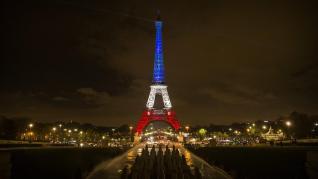
ct-photos-eiffel-tower-in-the-french-flag-s-co-006Since my wife and I had just been in Paris, France a month ago, I  was filled with great sadness when I heard about the terrorist attacks that occurred in Paris on Friday, November 13, 2015.  Terrorism is something I have a difficult time wrapping my head around. I cannot for the life of me understand how someone can cause harm and death to innocent people such as the carnage we saw in Paris. The news media has repeatedly said that the people who carry out such acts of violence have been radicalized, that is, have become more radical. Merriam-Webster dictionary defines a radical as  “advocating extreme measures to retain or restore a political state of affairs”.  I guess for radicals that means carrying out acts of murder.  This is what I can’t get my head around.  How can someone with any kind of conscience murder innocent people? The only explanation I can come up with is these people have been brainwashed. The MacMillan Dictionary defines brainwash as “to force someone to accept a particular set of beliefs by repeating the same idea many times so that the person cannot think in an independent way”.  How exactly terrorist groups such as Al-Qaeda or ISIL (Islamic State of Iraq and the Levant) are able to do this using the internet is a mystery to me, but this  must be what is happening.

IMG_1182What concerns me the most is that many people are becoming fearful. On November 23rd, the American Government issued a world wide travel alert cautioning Americans to possible risks of travel due to increased terrorist threats. This obviously means that Americans are becoming fearful. Don’t get me wrong, caution when traveling is always a good thing.  Travellers should always use caution when travelling outside of their country whether terrorism threats are around or not. That is just common sense.  Moreover, we are beginning to see a rise in Islamophobia (or anti-Muslim sentiment). That is when there is prejudice against, hatred towards, or fear of the religion of Islam or Muslims. U. S. Republican presidential candidates Donald Trump and Ben Carson have been advocating for more surveillance of Muslims. (see Muslim-Americans fear ‘ugly rhetoric’) Mr. Trump says, “we’re being foolish, we’re kidding ourselves” if law enforcement doesn’t keep close surveillance on mosques, and he expressed support for the idea of a database for tracking Muslims in the United States. Some have even resorted to using religion to justify Islamophobia or fear of Muslims. During a November 15 sermon at First Baptist Church in Dallas, pastor Robert Jeffress told his congregation that the Paris terrorists were “acting according to the teaching of Islam,” and said “it is time” to call out Islam as “a false religion … inspired by Satan himself”.  (see Theological Studies Director calls out) This is wrong, pure and simple. It simply is not fair to put all adherents to Islam in the same category.  In fact, the majority of Muslims around the world have condemned the Paris attacks and other acts of terrorism carried out by Muslim extremists. Even more, most if not all non-extremist Muslims categorically say that these extremists are not true Muslims. (see Muslims Around World Speak Out)  The bottom line is we must not let the terrorists achieve their goal. The root word of terrorism is terror which Dictionary.com defines as “an instance or cause of intense fear or anxiety”.  The very goal of terrorism is to instil fear in society so that our leaders cave into their demands. 

IMG_1239This fear, caused by the Paris terrorists and other terror attacks, has changed the debate over refugees.  Since returning home from Europe a few weeks ago I have been asked many times if we were affected by the refugees that had been dominating the news media before the Paris incident. Of course we were not.  My wife and I even had a conversation with another couple recently at an airport where this couple expressed real concern over Canada accepting refugees from Syria. They told us that they heard one of the Paris extremists was a refugee. Once again their concerns were stemming from fear.

There seems to be two camps in this debate; Do we allow the Syrian refugees into our country or do we keep them out as there might be an extremist among them? Canada’s new prime minister,  Justin Trudeau has promised to bring 25 000 Syrian refugees to Canada. (see Trudeau…) The debate in Canada and United States over the refugees is heated.  Several of Canada’s premiers have spoken out on the issue, both for and against. Petitions against bringing in the Syrian refugees have been popping up online. (see Should Canada stop).  Quebec’s premier Philip Couillard said it well when he said, “We must keep our arms open to refugees. They have fled their villages, they have seen their parents murdered and sometimes in front of their eyes. They come here in search of peace and freedom. Always remember that the Syrian refugees that will come to Quebec are themselves the first victims of terror.” (see We must keep our arms open)   The Free Dictionary defines a refugee as “one who flees, especially to another country, seeking refuge from war, political oppression, religious persecution, or a natural disaster”.  These people fear for their lives. They have witnessed horrible things. As Mr. Couillard stated, they are victims themselves. Alberta’s new premier,  Rachel Notley said it even better when she delivered an impassioned speech on the need to keep our doors open to Syrian refugees in the wake of the Paris attack, to not treat them as if they are terrorists about to launch a jihad in Edmonton or Calgary.  (see Graham Thomson) Here are some of Premier Notley’s words from Monday, November 16 speech; “…The refugees are themselves fleeing exactly the kind of terror that we were all shocked to observe and watch unfold this weekend. And that’s why we need to be reaching out to them…” The Premier later told reporters: “We cannot have our decisions being driven by fear.” The premiers of Quebec and Alberta are right! We must not be driven by fear.  My fear is that my country is buying into a culture of fear and as a result becoming less compassionate. I have always believed and been proud of the fact that Canadians are a compassionate people. Now is the time to show compassion for the Syrian refugees and NOT fear them. Now is the time to show the extremists that we will NOT be dictated by fear, that we will continue to travel abroad, and that we will NOT live our lives in fear.  President Franklin D. Roosevelt, the 32nd president of the United State said  in his 1933 Inaugural Address, “The only thing we have to fear is fear itself”. Roosevelt is right! My fear is that fear will take hold in our free society thereby making us prisoners of fear.