
Evo Morales, an Indigenous Bolivian who has served as President of Bolivia since 2006, is quoted as saying, “Sooner or later, we will have to recognize that the Earth has rights, too, to live without pollution. What mankind must know is that human beings cannot live without Mother Earth, but the planet can live without humans.” Mr. Morales is right! We cannot continue to abuse Mother Earth without dire consequences.
According to The Watchers, a daily news service that relays information on global events, world evolution and transformation, there are many environmental catastrophes taking place on our planet. Here are some that I noted.
A state of emergency was declared over a large natural gas leak pouring high quantities of methane and other gases into a Los Angeles neighbourhood on January 6, 2016. Numerous residents reported health issues and thousands of people have been forced to evacuate the area. The leak of natural gas was first observed October 23, 2015, and is now the largest natural gas leak ever reported.
A flow of toxic mining waste, which spilled into a main river in the city of Mariana, Brazil on November 5, 2015 has traveled at least 500 km (310 miles) through the Rio Doce since the event. The disaster has been proclaimed as the country’s worst environmental catastrophe in history. At least 11 people were confirmed dead, 15 went missing and hundreds of homes were devastated.
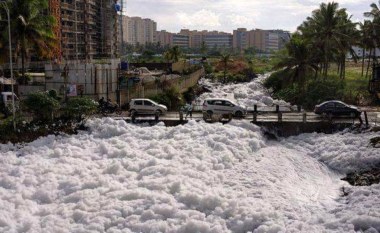
Bellandur Lake, the largest lake in the city of Bangalore, India, is extremely polluted by a high amount of ammonia and phosphate. From the air, the 36 km (22 miles) wide lake visually appears as if snow is covering a mountain. In reality what looks like snow is a large, white foam covering the water surface, an unnatural phenomenon resulting from extremely toxic, untreated, chemical accumulations. The froth has risen to a height of one meter.
A dam at a waste pond on Mount Polley Mine of British Columbia, Canada, full of toxic heavy metals burst on August 4, 2014, releasing 10 million cubic meters of wastewater and 5 million cubic meters of toxic slurry into Hazeltine Creek, Quesnel Lake and Polley Lake. Mining experts warn that the incident is the largest mining disaster in Canadian history, possibly even globally.
There are many, many more environmental catastrophes listed on the Watchers website, and I haven’t even mentioned the biggest one facing the planet, that is, climate change. Now it would be easy to get down and discouraged when reading this kind information, but as they say, “every cloud has a silver lining”. I still believe that the human spirit is strong and that we can correct our wrongs, even when it comes to the environment. So what is the silver lining you may wonder?
The silver lining is that we now have a tremendous opportunity to develop new technologies, which in turn would create new industries and jobs as well as benefit our planet environmentally. So what might these technologies look like? The Greenbiz website lists 9 technologies to clean up the planet. The livescience site lists 10 emerging environmental technologies. Some that caught my attention are:
We now have technologies to prevent CO2 from entering the atmosphere. Some of these makes the CO2 into something else that can be sold as products. Skyonic Corporation is building a commercial CO2 capture plant scheduled to begin operating this year which is expected to reduce 300,000 tons of CO2 emissions per year through a combination of direct capture from a cement plant and the making of commercial products, such as baking soda. This is a technology that could help to curb global warming.
Nuclear reactors are becoming safer. The technology for nuclear power has become so efficient that they now use the byproducts of conventional nuclear power production as fuel. The travel wave reactors, backed by Bill Gates, look to use depleted uranium to generate electricity, rather than leaving it to be stored or used in other applications, such as ammunition. This technology makes nuclear power plants much safer and solves the problem of nuclear waste. This could very well be an alternative to the polluting coal burning power plants.
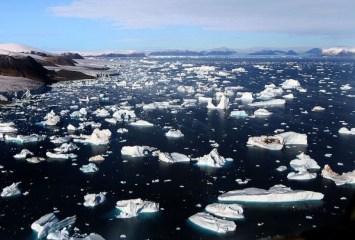
The United Nations have predicted that water supply shortages will affect billions of people by the middle of this century. Desalination, the removing the salt and minerals out of seawater, is one way to provide potable water in parts of the world where supplies are limited but it is expensive and uses a lot of energy. Scientists are working toward better processes where inexpensive fuels can heat and evaporate the water before running it through membranes with microscopic pores to increase efficiency. That gives hope for new fresh water sources as much of our fresh water supply in the form of glaciers is melting and ending up in our oceans.
Hydrogen fuel cell usage has been touted as a pollution-free alternative to using fossil fuels. These cells make water by combining hydrogen and oxygen and in the process they generate electricity. Most recently, scientists have come up with ways to power laptops and small devices with fuel cells, and some car companies are promising that soon we’ll be seeing cars that emit nothing but clean water. That is great news for our environment.
OTEC technologies convert the thermal energy contained in the oceans and turn it into electricity by using the temperature difference between the water’s surface, which is heated, and the cold of the ocean’s bottom. This difference in temperature can operate turbines that can drive generators. This would be a clean source of electricity therefore helping to reduce climate change by eliminating coal burning power plants.
Bioremediation uses microbes and plants to clean up contamination. Examples include the cleanup of nitrates in contaminated water with the help of microbes, and using plants to uptake arsenic from contaminated soil. There is an urgent need to clean up many of the contaminated sites on our planet such as the Deloro mine, a 202-hectare site that lies 65 kilometres east of Peterborough, Ontario, Canada.
I recently watched Disney’s movie, Tomorrowland. This movie delivers a message of hope for humanity. It is a call to use our human mental abilities and imagination to make changes that can repair the environmental damage that we humans have created. Just reading about some of the many new technologies being developed gives me hope for our planet. We humans are masters at screwing things up, such as our environment, but we are resilient and savvy enough to fix our mistakes. It just takes public awareness through education, a political will, and economic motivation. New technologies create new industries and new jobs. We can fix our environmental problems and still have a thriving economy. Keeping things at the status quo is not an option.
There is a Cree Prophecy that says, “When all the trees have been cut down, when all the animals have been hunted, when all the waters are polluted, when all the air is unsafe to breathe, only then will you discover you cannot eat money.” It’s time we put our health and our planet’s welfare ahead of profits. Our survival as a species depends upon it.

 Over the years I have been periodically greeted with a greeting known as “Namaste”. This is a gesture that entails a slight bow made with hands pressed together, palms touching and fingers pointed upwards in front of the chest. I have witnessed speakers and performers greet their audiences with this sign. Many years ago our school hosted an exchange student from Thailand who when she first arrived would greet her teachers and fellow students with the Namaste gesture. Some of my yoga instructors concluded every practice by uttering “Namaste” while bowing with hands pressed together. Even in Taekwondo we bowed to our opponents although not with our hands together. A bow in Taekwondo was a sign of respect which is its meaning in all martial arts. We even bowed when we entered the dojang or gym as a sign of respect for it.
 all. It betokens our intuition that all souls are divine. It reminds us in quite a graphic manner, and with insistent repetition, that we can see God everywhere and in every human being we meet. It is saying, silently, ‘I see the Deity in us both, and bow before It. I acknowledge the holiness of even this mundane meeting. I cannot separate that which is spiritual in us from that which is human and ordinary.’”
 No matter how Namaste is interpreted, it invokes a sense of sharing a spiritual connection and creates a sense and feeling of oneness. It is a way to feel connected. It conjures up feelings of respect. It is a sign of universal oneness. Maybe this world would be in a better place if all humans practiced this simple gesture. As the Buddhists believe, it just may be a “remedy” for pride that is the cause of many problems. I’m convinced this simple gesture brings about more feelings of reverence and honour for others. Mohandas K. Gandhi allegedly said once, “Namaste. I honor the place in you where the entire universe resides. A place of light, of love, of truth, of peace, of wisdom. I honor the place in you where when you are in that place, and I am in that place, there is only one of us.” Such a simple sign, a bow with hands together, with the intended meaning as Gandhi explained, just might make all the difference in this world.
 I recently read a book titled, Inconvenient Indian by Thomas King. What surprised me, was that Mr. King claims that the massacre that allegedly occurred at the Alamo was a fabrication, a story created over the years. But that is not what history says.
 If you don’t know much about the legacies of Residential Schools, here is another lesson. (It’s the teacher in me. I just have to teach). After the closing of the schools, which operated from the 1870s to 1996, and held some 150,000 aboriginal children over the decades, many former students made allegations of physical, psychological, and sexual abuse, plus accusations of neglect. The sole aim of residential schools was to assimilate First Nations children into the European culture. There were also student deaths at these institutions as well as burials of numerous deceased students in unmarked graves without the notification or consent of the parents. I personally have heard residential school survivors tell their stories and break down weeping when doing so. It is a very painful topic for many of them. This is not a part of our history that I am proud of. I have also taught about the atrocities that have occurred in these schools and witnessed students distraught because of it. Students instinctively know, as all of us do, that the way the indigenous people were treated was unjust.
  Then there is the missing and murdered aboriginal women in Canada, an issue that First Nations people have been lobbying our government to conduct an inquiry on for at least a decade. The following statistics are from the
  The October 2015 federal election saw
 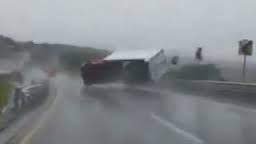 attention. In October Hurricane Patricia, the most intense hurricane ever recorded in the Western Hemisphere, had winds up to 322 kilometres per hour (200 mph). November saw multiple attacks by Islamic State of Iraq and the Levant (ISIL), the best known was the attack in Paris, France, resulting in 130 fatalities. Also in November of this year Turkey shot down a Russian fighter jet which is the first case of a NATO member destroying a Russian aircraft since the 1950s. In June of 2015, ISIL claimed responsibility for three attacks around the world during Ramadan such as the one in Kuwait City where a suicide bomber attacked a Mosque killing 27 people and injuring 227 others. Then there was the Greek government debt crisis in July when Greece became the first developed economy to miss a payment to the International Monetary Fund (IMF) in the 70-year history of the IMF.
 hostility between the nations. In December, a global climate change pact was agreed upon at the COP 21 summit, where 195 countries adopted the first-ever universal, legally binding global climate deal. This is great news for the planet. Also in December of this year SpaceX, a company that hopes to revolutionize space technology, lands a Falcon 9 rocket. This is the first reusable rocket to successfully enter the Earth’s orbit and return. This brings hope for space travel as it makes it cheaper. December also saw Indian Prime Minister Narendra Modi make a surprise visit to Pakistan to meet his counterpart, Nawaz Sharif. This is the first time an Indian leader has visited Pakistan in over a decade. Relations between these two countries have been bitter ever since the violent division of British India in 1947, and the two nations have a history of numerous military conflicts. This shows that good relations are possible between rivals. That gives hope that peace is achievable. Also in December the members of the Scottish Parliament voted unanimously in favour of a law to ban smoking in cars that are carrying children. That’s great news for kids. There are certainly more positive events of 2015 I could report, but you get the idea.
 So what will 2016 bring? The pessimists will likely envision , more ISIL terrorist attacks, more anger from Mother Nature in the form of violent storms, more conflicts between nations, more economic problems, and on and on. Optimists will focus on the positives like improved political relations, the international community working together to slow climate change, improvements in human rights, improvements in health, and so on. I choose to be in the optimist camp. I choose to believe that 2016 will bring many good things. Really, the only thing we can control is the choices we make. To quote Brad Paisley, “Tomorrow is the first blank page of a 365 [366 for 2016] page book. Write a good one.” I’m choosing to make it a good one. I’m choosing to make 2016 a great year!

 headlines in November. The company typically has its red holiday cups decorated with snowflakes, Christmas ornaments or reindeer, but chose for a minimalist design this year with cups that are red with nothing but its green logo. Starbucks executives said they wanted to embrace “simplicity and quietness.” However some Christian conservatives saw these new cups as an attempt to diminish the importance of Christmas.
 Another controversy occurred in Oakville, Washington, a town of 700 people who typically celebrates Christmas without controversy (see
  The Jewish tradition celebrates Hanukkah or the “Feast of Dedication,” also known as the “Festival of Lights”. This festival is celebrated on the 8th day of December and it is a time when Jewish people recall a miracle in the Jerusalem temple during a war fought by the Maccabees for the cause of religious freedom. Temple candles only had enough oil to burn for a single day. Yet they burned for eight days. Jews light candles on a menorah, two on the first day, three on the second, to nine on the eighth day. Jews should not feel restricted in any way when celebrating Hanukkah. In fact, this celebration should be encouraged. Perhaps in addition to Starbucks having cups with Christmas decorations on it, the company should also include cups with the menorah on it.
 Sommer Season all year