Love You Forever

Europe, here we come!

I been thinking a lot about Robert Munsch’s book, Love You Forever. Robert Munsch is an author who was born in the U.S. but moved to Canada, so as far as Canadians are concerned, he is a fellow Canadian. One of his best-known books, Love You Forever, was published in 1986. It is a book that we used to read to our children. It’s a wonderful story about a mother’s—could just as easily be a father’s—love for their child. So why am I thinking about this book now? It’s because we are off to see our daughter in Ireland for the next four weeks which is why you likely won’t hear from me for a short while. My wife and I are so excited about seeing our baby girl.

The following is how Munsch’s story begins:

A mother held her new baby and very slowly rocked him back and forth, back and forth, back and forth. And while she held him, she sang:

I’ll love you forever,
I’ll like you for always,
As long as I’m living
my baby you’ll be.

My wife and I have three wonderful children. Our eldest is a school teacher. Our second born is getting her masters in Dublin, Ireland and our youngest, our son, is an environmental scientist. We haven’t seen our “Irish” daughter since Christmas. The thought of spending time with our baby girl reminds me of the book, Love You Forever.

Later in the book it reads:

That teenager grew. He grew and he grew and he grew. He grew until he was a grown-up man. He left home and got a house across town. But sometimes on dark nights the mother got into her car and drove across town.  If all the lights in her son’s house were out, she opened his bedroom window, crawled across the floor, and looked up over the side of his bed. If that great big man was really asleep she picked him up and rocked him back and forth, back and forth, back and forth. And while she rocked him she sang:

I’ll love you forever,
I’ll like you for always,
As long as I’m living
my baby you’ll be.

Now in our case, all three of our children are grown up and none of them live across town. Our eldest, the teacher, lives two hours away, our middle child is overseas, and our son lives four hours away.  So, needless to say, we don’t sneak over to our children’s homes and sing to them, as tempting as that may be. But we do spend time with them whenever we can.

erseasonallyear.files.wordpress.com/2018/07/will.jpg”> From: newindianexpress.com

[/caption]James E. Faust, an American religious leader, lawyer, and politician, once said, “The depth of the love of parents for their children cannot be measured. It is like no other relationship. It exceeds concern for life itself. The love of a parent for a child is continuous and transcends heartbreak and disappointment.”  This is so true.  The love for my children cannot be quantitatively measured.

Henry Ward Beecher, an American Protestant Clergyman in the 1800s, once said, “We never know the love of a parent till we become parents ourselves.”  How true that is! It wasn’t until after my first child was born that I really truly appreciated my parent’s love for me. When I reflect on all the sacrifices they made for me and my siblings, I understand a parent’s love now. My dad always took time away from busy schedule at his business to teach us some new skill, such as welding. My mom comforted us through many illnesses and injuries, and always dropped what she was doing to do so.

Nicholas Sparks, an American author, once asked, “What it’s like to be a parent: It’s one of the hardest things you’ll ever do but in exchange it teaches you the meaning of unconditional love.”   This is another truth!

When I was teaching, I encountered parents who expected their children to get honours (80% or higher) in all their courses or they would be disappointed. That is not love. That is approval.

What is love? Love needs to be unconditional to be real love. It is a love that doesn’t have to be earned. It is a love doesn’t have to be proven. When someone unconditionally loves you, they love you for who you are, no matter what you do or how you behave.

My wife and I have always just accepted our children for who they are, even though that was very difficult at times. Our middle child is a free spirit or loves adventure. That is why she is studying in Europe and travelling to various European countries when she is able. If we had not chosen to love her unconditionally, then we would have likely discouraged her from going overseas, and she likely would not have gone because of our communication to her that we disapproved. Instead, we supported her emotionally, financially and spiritually, and because of that we a jetting off to Ireland in a few hours.

The way I see it, loving your children unconditionally has its perks. Because one of our daughters is in Ireland, now we have an excuse—as if we need one—to visit Europe. Because we loved our son unconditionally, he doesn’t hesitate to give a helping hand when we ask him and likes to spend time with us. Because we loved our eldest daughter unconditionally, she graciously has a place for us to stay whenever we are in her city and comes to visit us regularly.

files.wordpress.com/2018/07/image.jpg”> From: http://lhyme.com

[/caption]I’m super excited about spending time with our daughter, but I’m also excited about spending time in Ireland.  Ireland is a glorious place with beautiful landscape, a rich history and wonderful culture. The people of Ireland have a reputation of being very hospitable and friendly, much like Canadians do. One thing that truly sets the culture in Ireland aside from other countries, is the pubs. While it is widely recognized that Ireland has a bit of a problem with the over-consumption of alcohol, pubs are quite different in Ireland when compared with North America. In North America, a pub–more commonly known as a bar– is simply a place to drink. In Ireland, however, it is a meeting place. I look forward to meeting people in the Irish pubs and enjoying a cold beer. I’m sure I’ll have some stories to blog about when I return to Canada.

I’ll sign off with an Irish drinking toast

May your glass be ever full.
May the roof over your head be always strong.
And may you be in heaven half an hour before the devil knows you’re dead.

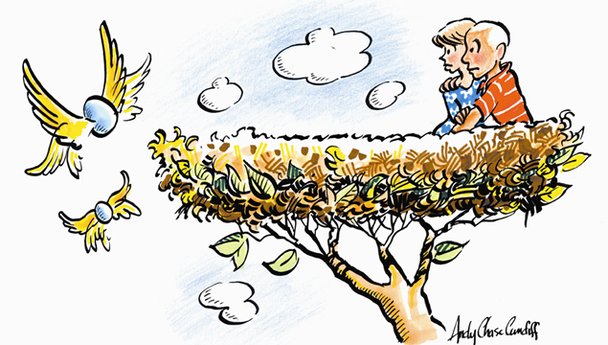
When the Nest Empties

A commentary about dealing with Empty Nest Syndrome.

Robert Neelly Bellah, an American sociologist, once said, “However painful the process of leaving home, for parents and for children, the really frightening thing for both would be the prospect of the child never leaving home.” 

This quote really resonated with me because this week my wife and I, along with two of our adult children, said goodbye to one of our two daughters who flew to Dublin, Ireland to attend Trinity College. Mr. Bellah is right, it is a painful process for both the parents and the child leaving home. I’ve watched my wife cry a few dozen times before our daughter left. I have to be honest, I’ve shed the occasional tear myself thinking about her leaving and while watching her leave. I’ve watched my daughter get emotional talking about saying goodbye to her many friends. It is indeed a painful process.

Our instincts as parents is to keep our children nearby so we can protect them and rescue them when in need. I’ve watched many parents do this as a school teacher during my 35 years of teaching, especially in recent years. We teachers called them ‘helicopter parents’ because they hover and swoop in to rescue their children when the children whimper or if there is any chance their children might fail at something. These parents never want their children to fail or feel bad. As a teacher, I found these parents difficult and inflexible. Even more, I saw the damage they did to their children. What is even more disturbing to me is this is a phenomenon occurring with adult children.

In a blog called, Parenting Grown Children: What Dr. Spock Forgot to Tell Us, has a really interesting blog post called, Letting Go. This article describes what helicopter parents of adult children looks like. It says,

“What does this look like? Millennials’ parents joining their adult children at interviews; parents calling managers to lobby for better reviews or higher raises. Or parents actually doing the work for their adult children – which all unravels when the employee doesn’t have the luxury of time to participate or complete a task.”

If parents are rescuing their adult children when they go off to college or get a job, then in a way those children really haven’t left home, even though they may physically live in their own places. These young people are still being protected by their parents just as they would be when they were living in their parent’s dwelling.  Could this be what Robert Neelly Bellah meant when he said, “the really frightening thing for both would be the prospect of the child never leaving home.” I’m beginning to wonder if Mr. Bellah was referring to overprotective, meddlesome parents.

In the blog post I sited earlier, the author wrote,

“Many of us raised our children to be independent. Once they were adults, we wanted them to come to us for our advice, good counsel and, yes, the occasional handout. But in college, they would be on their own in dealing with professors and deans. In finding a job, we might prep them on how to put their best foot forward, but they would be on their own. Once on the job, they would figure out how to perform and to stand up for their rights and benefits.”

That is how we raised our children. I am so grateful to have a life partner who thought as I did. We wanted our children to be independent and be able to handle things on their own. We travelled with our children extensively so they would be able to confidently travel on their own. That is the reason our daughter was able to go half way around the world to attend graduate school. We gave her the confidence, knowledge and desire to do so. I am proud of that and I am even more proud of her. A friend recently reminded us of that. She told us that the reason our daughter is able to do this is because we raised her to be strong, brave and independent. She is a strong, brave woman and will be even a stronger woman because of this new adventure. Roy T. Bennett, author of The Light in the Heart, wrote, “It’s only after you’ve stepped outside your comfort zone that you begin to change, grow, and transform.” She is able to step outside her comfort zone because of my wife and I. She did this once before when she flew to South Africa alone to volunteer at the age of 21.

llustration by Andy Chase Cundiff

Having said that, seeing your daughter trek across the ocean to live far, far away is not easy. I have a whole array of emotions as does my wife and our other two children.  I was excited for my daughter, yet I was afraid because I would not be nearby to help her should she need help. I was a proud dad, because she was so strong, brave and independent, yet I had all the symptoms of Empty Nest Syndrome. Empty nest syndrome is when a parent has feelings of loneliness or sadness after children grow up and leave home. I was feeling sad. I was feeling lonely even though she just left. I felt so lonely, seeing her go through the airport security gates. I just wanted to give my little girl one more hug and tell her that I loved her one more time.

So many people, without really saying it, communicated to us with their body language and with words left unspoken, that they would not be able to let their child fly across the world to live. We could have expressed to our daughter our displeasure with the idea which would have influenced her decision, but we didn’t. You might be thinking, Why didn’t we? I think Terry Pratchett, an author from the United Kingdom answers that question best when he wrote, “Why do you go away? So that you can come back. So that you can see the place you came from with new eyes and extra colours. And the people there see you differently, too. Coming back to where you started is not the same as never leaving.”  How could any good parent prevent their child from having an experience of a lifetime? An experience where she will grow tenfold in her confidence and maturity. I know that this is part of our daughter’s journey and that she will return a better person.

I admire her. She inspires me. She inspired me when she bravely left for South Africa to volunteer. She inspires me even more now. She will make this world a better place because of what she will take from this experience. I’ll miss her, but love for a child should be unconditional. I love her no matter what, as does my wife, and that is why she is free to experience life. I can’t wait for her to share her experiences with us.

What is up with Canada’s Indigenous Peoples?

A commentary on the Plight of Canada’s Indigenous Peoples

Recently, while my wife and I were travelling in the province of Newfoundland, we met a newlywed American couple from Atlanta, Georgia.  They were a delightful couple who we started chatting with while touring an archeological dig in Ferryland where one of the best preserved English colonial sites in North America is located. The colony was established in 1621 by Sir George Calvert and was known as the Colony of Avalon. What surprised me was the groom randomly asked us if Canadians treated their Indigenous Peoples as badly as they did.

Now this really struck me because all over Newfoundland, we were learning about the Beothuk. I used to teach about the Beothuk when I taught Social Studies.  We visited the Port au Choix National Historic Site of Canada where burial sites were uncovered in the 1960s & 70s. The archeological digs have provided evidence of its earliest settlers such as the Maritime Archaic Indians and the ancestors of the Beothuk. You’re probably wondering: Who are the Beothuk? Here is a short history of their sad story.

The Beothuk lived throughout the island of Newfoundland, and because of the Europeans’ arrival, the Beothuk were forced away from their coastal homelands and fish camps to inland territories. Possible violent encounters with the Vikings between 800 and 1000 CE likely caused the Beothuk to avoid the European newcomers as much as possible. The establishment of permanent European settlements in the 1700s significantly altered the Beothuk way of life. causing them to become increasingly isolated. With the increasing English settlement, the Beothuk now had to compete with the European fur trappers. The Beothuk were increasingly denied access to bays where they fished. This created tension, and at times, conflict, between the Beothuk and the Europeans. Many of the Beothuk were hunted and slain by the Europeans.

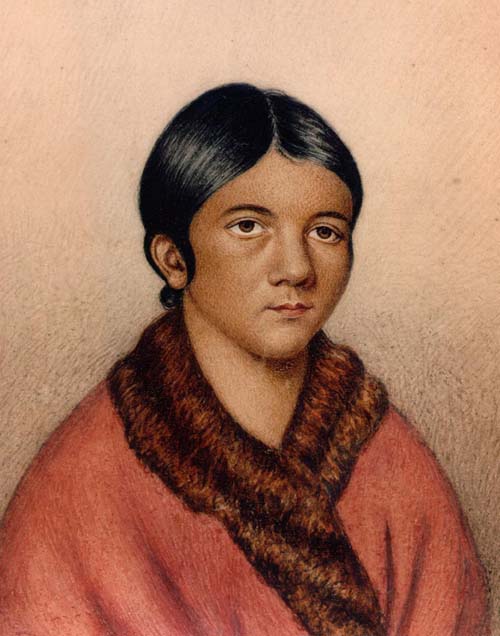
Shawnadithit

Sadly, as a result of European encroachment, slaughter and diseases to which they had no natural resistance, the Beothuk’s numbers diminished rapidly because of European contact. The last known surviving Beothuk, Shawnadithit, died of tuberculosis in St. John’s in June 1829. In essence, the Beothuk are now extinct.

Hearing the sad story of the Beothuk people got me thinking about how the Indigenous people were treated. I started paying attention to the news stories about our First Nations people. There has been a lot about the indigenous people in the Canadian news lately.

The CBC article, Gord Downie takes to Parliament Hill, describes a rare appearance that Gord Downie made on July 1st during Canada Day celebrations on Parliament Hill. Mr. Downie is the lead singer for the Rock Band Tragically Hip and he rarely makes public appearances because he has brain cancer. On Canada Day, he said Canada’s young Indigenous people are still suffering the same kind of pain that aboriginal youth suffered in the residential schools. Downie told the crowd that young Indigenous children in parts of the Canada still must travel great distances to go to school. He said, “It’s time to listen to the stories of the Indigenous [people], to hear stories about now. We are blessed as a young country to be able to look to the wisdom of a really, really old country.”

In another CBC news article called, Cornwallis statue removal, is a story on the controversial statue erected in the 1930s of Edward Cornwallis, founder of the city of Halifax in Nova Scotia. The statue first became controversial in 1993, when Mi’kmaq writer Daniel Paul released the book We Were Not the Savages. Mr. Paul describes the treatment of the Mi’kmaq people by Cornwallis and the early British settlers whereby the British took land from the Mi’kmaq people, attacked their communities with the aim to drive them out of Nova Scotia, and in 1749 Governor Edward Cornwallis offered a cash bounty to anyone who killed a Mi’kmaq person.

Municipal crews draped a black cloth over the statue of Cornwallis on July 15th when protesters gathered with a plan to remove the statue. The protesters were told that the city would shroud the monument as a sign of good faith. (see Offensive and disgraceful). Indigenous protestors said they will continue negotiating with the city to peacefully remove the statue. Patrick LeBlanc, one of the protesters, said the statue is a painful reminder of the oppression of First Nations people in Canada. LeBlanc said, “This gentleman [Cornwallis] here represented a genocide for our people and to see it every day, it just brings back memories and it also brings back pain.”

In still another CBC news story, Indigenous leaders boycott, it is explained that leaders from the three national Indigenous organizations refused to attend the meeting of Canada’s premiers in Edmonton, Alberta, saying the format does not adhere to the spirit of reconciliation. Assembly of First Nations (AFN) National Chief Perry Bellegarde, Inuit Tapiriit Kanatami President Natan Obed and Métis National Council President Clément Chartier told reporters in Toronto, Ontario that the current format subjugates Indigenous issues, because they cannot participate in meetings as full members of the Council of the Federation with province-like powers. In other words, these Indigenous leaders feels that they are not being treated as equals.

Canada is currently celebrating 150 years as a nation, as we should. But let’s be clear. What Canada is really celebrating is 150 years since Confederation, when Canada was granted freedom from British Colonial Rule with the passing of the British North America (BNA) Act. I really like Gord Downie’s words, “We are blessed as a young country to be able to look to the wisdom of a really, really old country.” We are a really old country! Canada is much older than 150 years and it is time to fully recognize and honour the first occupants of our country, our Indigenous people.  There is a reason the Indigenous people are referred to as Canada’s First Nation peoples. They were here first.

Shortly after returning to our home province my wife and I attended a Pow Wow at a nearby Cree Nation Reserve. A Pow Wow is a social gathering of different American Indigenous communities where people meet and dance, sing, socialize, and honour their cultures. It often involves dance and drumming competitions. I was amazed by the elaborate, colourful regalia (costumes) and the supple movements of the ceremonial dances. It is truly an amazing culture and I felt privileged to experience some of it.

A CBC article entitled, Archeological find, describes the ancient archeological find of a Heiltsuk settlement on Triquet Island on the coast of British Columbia. The Heiltsuk are an Indigenous people centred on the island communities of Bella Bella and Klemtu. Archaeologists have excavated a settlement in the area and dated it to 14,000 years ago, during the last ice age when glaciers covered much of North America. William Housty, a member of Heiltsuk Nation said, “This find is very important because it reaffirms a lot of the history that our people have been talking about for thousands of years,” This means the Indigenous people were here at least 14 000 years ago. The English and French didn’t arrive until the 1600s. That is less than 500 years ago.

Our Indigenous people are right to demand to be heard and deserve to be heard. Let’s face it, our European ancestors did not treat the Indigenous people very well, and I have to wonder if we are treating them any better today. If we are, then why are our First Nations people still protesting and demanding equality.

Our Prime Minister, Justin Trudeau, in his statement to Canadians on Canada Day said,

“As we mark Canada 150, we also recognize that for many, today is not an occasion for celebration. Indigenous Peoples in this country have faced oppression for centuries. As a society, we must acknowledge and apologize for past wrongs, and chart a path forward for the next 150 years – one in which we continue to build our nation-to-nation, Inuit-Crown, and government-to-government relationship with the First Nations, Inuit, and Métis Nation. Our efforts toward reconciliation reflect a deep Canadian tradition – the belief that better is always possible…”

I wholeheartedly agree.

Who really discovered the Americas?

Some thoughts about history

I was taught in school that Christopher Columbus was the first person to “discover” America. I never gave that a thought until recent years after learning about the Viking settlement that archeologists discovered in Newfoundland, Canada. My wife and I are presently touring the province of Newfoundland and Labrador; a wonderful province filled with natural beauty, fine sea food, and wonderful, friendly people. We recently visited L’Anse aux Meadows where excavations of a Norse settlement occurred. This got me thinking. Who really discovered the Americas? Was it Columbus? Was it the Norse? Was it the Irish? Was it the Chinese? Or was it someone else? Truth is, no one can really answer that question with certainty. Of course, we must not forget that there were indigenous people here long before North America was “discovered”. Scientists know that First Nations people have lived in North America for at least 12,000 years because they have found bones and artifacts that go back that far.

L’Anse aux Meadows, whom the Norse explorers and traders called Vinland, is really a fascinating place. It is located on the northern tip of the Great Northern Peninsula in the province of Newfoundland in Canada. ThoughtCo is a website about learning which says in 1961, archaeologists Helge Ingstad and his wife Anne Stine discovered an irrefutably Viking settlement. Eleventh-century Norse artifacts recovered from l’Anse aux Meadows numbered in the hundreds and included a soapstone spindle whorl and a bronze-ringed pin process, as well as other iron, bronze, stone, and bone items. Carbon dating placed the occupation at the site between 990-1030 C.E.

Reconstructed Norse buildings in L’Anse aux Meadows

The site consisted of three building complexes and a bloomer, a building where they made iron products such as nails used to repair their ships, but there were no barns or stables that would be associated with farming. It is inferred that the elites, such as Leif Eriksson, resided in one end of the large hall, ordinary sailors slept in sleeping areas within the halls and servants, likely slaves, resided in the huts. L’Anse aux Meadows housed between 80 to 100 individuals, possibly up to three ship crews.

Leif Eriksson is generally credited as the first European to set foot on the shores of North America, nearly five centuries before Christopher Columbus would arrive in 1492. Most scholars agree that Eriksson was most likely a member of an early Viking voyage to North America, if not, in fact, the leader of that first expedition. Our interpreter told us that it was the Norseman who established the settlement, and not the Vikings as Vikings travelled about raiding and pillaging. Norsemen refers to explorers and traders.

So why were we taught that Christopher Columbus was the first European to set foot in North America. According to LiveScience, Columbus didn’t even set foot in America since he actually landed in the Bahamas, an island later named Hispaniola.  Today that island is split into Haiti and the Dominican Republic. On his subsequent voyages, he went farther south, to Central and South America. He never set foot in North America in what is now Canada, the United States and Mexico.

So why does the United States celebrate Columbus day? I was surprised to learn that this is because the 13 colonies (the beginnings of the United States) rebelled against and fought with England. It was John Cabot who “discovered” Newfoundland in England’s name around 1497 and paved the way for England’s colonization of most of North America. This is why the American colonialists turned to Columbus as their hero, not England’s Cabot. This is also why the U.S. capital, Washington, D.C. which stands for District of Columbia and not District of Cabot.

What about China being the first to “discover” the Americas? An amateur historian and author Gavin Menzies in his controversial book “1421: The Year China Discovered the World” (William Morrow, 2002), claimed that a Chinese fleet helmed by Admiral Zheng had sailed to the Americas in 1421 and left behind ample archaeological and genetic evidence of their journey. Menzies’ claims were roundly criticized by respected researchers and historians (see LiveScience).  Now this begs the question: Did the Chinese discover America before the Norse?  Just how credible is this hypothesis?

The article, Did China discover AMERICA? claims researchers have discovered ancient scripts that suggest Chinese explorers may have discovered America long before Europeans arrived there. They have found pictograms etched into the rocks around the United States that appear to belong of an ancient Chinese script. These pictograms could have been inscribed there alongside the carvings of Native Americans by Chinese explorers thousands of years ago. This means ancient Chinese people were possibly exploring and interacting with the Native peoples over 2,500 years ago. John Ruskamp, a retired chemist and amateur epigraph researcher from Illinois, discovered the unusual markings while walking in the Petroglyph National Monument in Albuquerque, New Mexico.

Our interpreter at L’Anse aux Meadows mentioned that St. Brenden, an Irish monk, was another European who potentially “discovered” North America. According to Heritage Newfoundland and Labrador, a case can be made for transatlantic voyages made by medieval Irish monks. During the fifth and sixth centuries CE, Irish monks ventured out into the North Atlantic in pursuit of some kind of divine mission. According to legend, Brendan was in his seventies when he and 17 other monks set out on a westward voyage in a curragh, a wood-framed boat covered in sewn ox-hides. The monks sailed about the North Atlantic for seven years, according to details set down in the Navigatio Sancti Brendani Abbatis in the tenth century.

But would a trans-Atlantic voyage have even been possible in the sixth century? According to the History Channel’s story, Did an Irish Monk “Discover” America? a modern-day adventurer, Tim Severin, attempted to answer the question. In 1976, based on the description of the curragh in the text, he crafted an identical vessel and began his voyage where St. Brendan had been entranced in prayer prior to his voyage (now named Mount Brandon in the saint’s honour). He followed the prevailing winds across the northernmost part of the Atlantic Ocean, and crossed it using landing points such as the Aran Islands, the Hebrides, the Faroe Islands, Iceland and Greenland as stepping stones before arriving in Newfoundland, proving that is was a possibility. As of yet, there is no reliable evidence to indicate that Brendan ever reached Greenland or America.

from monovisions.com

I love learning about history, but keep in mind that history is merely a person or person’s interpretation of the past. Do we really know who was first to “discover” North America? No, we don’t. We can, however, confidently say that the First Nations people have lived in North America for 12,000 years or longer. Perhaps we should be celebrating and emphasizing that fact along with our colonial roots. Canada is 150 years old as a nation this year but she has been a nation for much longer than that because of our indigenous peoples who were our nation long before the Chinese or Irish or Norse ever arrived.

What happened to the Golden Rule?

the-golden-rule.gifGrowing up I was always reminded of the Golden Rule, both at school and by my parents. Being raised in a Christian community this rule was always emphasized. It wasn’t always stated as “treat others the way you wish to be treated” but often in other ways such as, “show respect to your elders” and “always respect your teachers.” I have always believed that if all people could bring themselves to live by this ethic, humankind would be in a much better place.

The Ethic of Reciprocity, or what is better known as the Golden Rule, simply states that we are to treat other people the same way we would wish to be treated. It can be worded in various forms. Wikipedia describes this rule in three forms:

  1. Positive or directive form: One should treat others as one would like others to treat oneself.
  2. Negative or prohibitive form: One should not treat others in ways that one would not like to be treated.
  3. Empathic or responsive form: What you wish upon others, you wish upon yourself.

No matter how the rule is stated, it boils down to the word respect. Merriam Webster dictionary defines respect as “a feeling of admiring someone or something that is good, valuable, important, etc” or 
as “a feeling or understanding that someone or something is important, serious, etc., and should be treated in an appropriate way.” So when a person shows respect for another then they treat that person the way they would wish to be treated.

What always astounded me about the Golden Rule is that all organized religions have this ethic.

  • In Christianity it is found in Matthew 7:12 (NRSV) of the Christian bible where it is written, ‘in everything do to others as you would have them do to you; for this is the law and the prophets.”
  • In the Buddhist tradition it is found in a collection of verses known as the Udanavarga. In chapter 5, verse 18 of the Udanavarga it says, Hurt not others in ways that you yourself would find hurtful.”
  • In Hinduism, it is found in their sacred scriptures Mahabharata 5:1517 where it is written, this is the sum of duty: do not do to others what would cause pain if done to you.
  • Judaism has it in two places, the Talmud and Book of Tobit. The first book of the Talmud is about Shabbat, the Jewish day of rest. In Shabbat 31a. It states, “What is hateful to you, do not do to your fellow man. This is the law: all the rest is commentary.” In the Jewish scriptures, specifically the book of Tobit, it says, “And what you hate, do not do to any one.” (4:15)
  • In Islam, it can be found in a compilation of forty hadiths by Imam al-Nawawi, an influential Sunni hadith scholar. A hadith is one of various reports describing the words, actions, or habits of the Islamic prophet Muhammad. Number 13 of Imam Al-Nawawi’s Forty Hadiths, it says, “None of you [truly] believes until he wishes for his brother what he wishes for himself.”

The Golden Rule is such a simple thing and makes a lot of sense. It begs the question, why is it so important to live by the Golden Rule. The answer to that question has to do with the idiom, “What goes around comes around” or stated another way, “as you sow, so shall you reap”. These are simply reminding us that when people do bad things to other people, bad things will happen to them. This is what the expression, “you’ve made your bed, now lie in it,” refers to as well. An individual must accept the unpleasant results of something they have done. Really all of these expressions could be understood as karma, the law of cause and effect. Karma is a Sanskrit term that literally means “action” or “doing”. In the Buddhist tradition, karma refers to action driven by intention, which leads to future consequences. Good intent contributes to good karma and happiness in the future, while bad intent contribute to bad karma and suffering in the future.

The Huffington Post article on Karma puts it this way:

“Everything we say and do determines what’s going to happen to us in the future. Whether we act honestly, dishonestly, help or hurt others, it all gets recorded and manifests as a karmic reaction either in this life or a future life…There is no exact formula that is provided for how and when karmic reactions will appear in our lives, but one can be sure they will appear in some form or other. One may be able to get away with a crime they committed, or avoid paying taxes, but according to karma, no one gets away with anything for long.”

What I find even more thought provoking is that science supports this idea of “cause and effect”.  Science, specifically Quantum Physics, is providing evidence that the mind can affect matter. There is a theory known as quantum entanglement. According to Space.com, the theory states when changing one particle it changes the other even if they are on opposite sides of the galaxy, 100,000 light-years apart. In other words, they behave like one object even though they are physically apart. Einstein called this idea “spooky action at a distance”.

Quantum Entanglement: What It Is And Why It’s Relevant says,

“Quantum entanglement means that every action, thought, feeling and emotion is connected and can affect the whole in one manner or another. We are all made up of atoms, photons and electrons. We are all in a constant state of vibration. Our emotions, feelings, hearts and minds have the ability to affect what frequency our molecular structure vibrates at. Quantum entanglement is observed at a physical level, meaning what we do to one particle at one location, happens for another particle at the a different location.”

So even science reinforces the idea that every single thing that a person does, thinks, etc. has an affect. Now I know from experience that when I said something hurtful to a student or to a family member there was an effect. The impact was typically in the form of parental wrath or an angry family member.

9-11We’ve all felt the impact of the actions of an individual or group of people. There are many examples of this in history, such as the terrorist attacks in Paris in 2015. The affect of this event has made many people fearful and afraid to travel. We still feel the effects of the 9/11 attack in New York City as flight travel is much more cumbersome with all the extra security. Terrorism initiated by ISIL or ISIS caused much of world community to participate in a bombing campaign, bombing areas where the terrorists were located. What goes around comes around.
It’s fair to say that one person can impact the world. We just need to look at the legacies of Mahatma Gandhi and Martin Luther King Junior to see this. Mahatma Gandhi once said, “In a gentle way, you can shake the world.”

So remember every action you take, every word you say to someone, or even every action you don’t take has an impact on your community, on your planet or maybe even the universe. It seems to me that in this time of Islamophobia, fear of terrorists, and anti-immigration, the Golden Rule is very much needed. Perhaps people (no names mentioned) who spout anti-Muslim, anti-immigration, and racist rhetoric ought to remember, “What goes around comes around”.

Should the World be Worried About Trump?

A commentary on the actions of Trump’s first week in office.

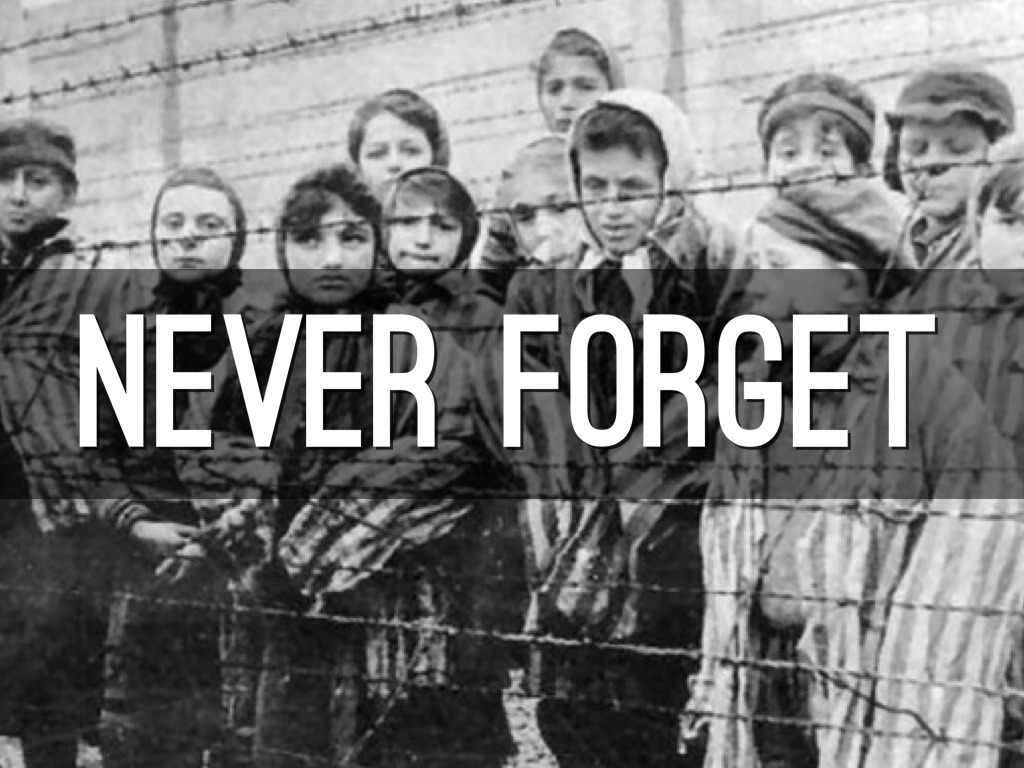
8409107_origJanuary 27th was International Holocaust Remembrance Day.  This is a day in which the victims of the Holocaust are to be remembered. The Holocaust was a genocide (the methodical killing of a large group of people) that resulted in the death of an estimated 6 million Jewish people, 200,000 Romani people, 250,000 mentally and physically disabled people, and 9,000 homosexual men by the Nazi regime during the 1930s and 1940s. As a social studies teacher, I taught my students about this event and emphasized the importance of remembering such events so that such atrocities would never happen again. Now I have to wonder if history is about to repeat itself.

My New Year’s resolution this year was to watch less news which I’ve been successfully doing for the most part, but on January 27th, everyone that I met or connected with on social media was talking about Trump’s travel ban.  Mr. Trump signed an executive order implementing a travel ban of people from seven majority Muslim countries for 90-days. The seven countries are Iran, Iraq, Somalia, Syria, Sudan, Libya and Yemen. This order also suspends all refugee admissions for 120 days with “case-by-case” exceptions and suspends entry of Syrian refugees indefinitely. This caused confusion as permanent residents and green card holders didn’t know if they could enter the country due to conflicting advice sent to airlines by the White House. It also sparked outrage in the form of protests across the United States (see Protests Held). The President claims he is “Protecting the nation from foreign terrorist entry into the United States”.

According to the Huffington Post, from 1975 to 2015, foreign nationals from Iran, Iraq, Libya, Somalia, Sudan, Syria and Yemen killed exactly zero Americans on U.S. soil. The article sites an analysis of terror attacks by the Cato Institute.  In 2016 alone, 188 people were killed on U.S. soil in mass shootings not involving Muslim American extremists, the report says. Meanwhile, there have been 230,000 murders in the U.S. since 9/11. These are Americans shooting Americans.

The White House stated “Numerous foreign-born individuals have been convicted or implicated in terrorism-related crimes since September 11, 2001,” when it issued the order. What is interesting to note is on Sept. 11, 2001, 19 militants hijacked four commercial airlines to carry out terrorist attacks on the U.S. that killed 2,996 people and wounded more than 6,000 others. The 19 men were associated with al-Qaeda, led by Osama bin Laden. Of the 19 hijackers, 15 were from Saudi Arabia, two from the United Arab Emirates, one from Egypt and one from Lebanon. None of these countries are on the ban list. People from those three countries are still welcome to apply for U.S. visas and travel permits. This made no sense in my mind. The question is why? According to the Daily News,  Trump’s business empire holds multi-million dollar licensing and development deals in all of those countries raising alarming questions over what actually went into the decision process behind the executive order.

On Facebook, a video went viral of an Irish Senator, Aodhán Riordáin, reacting to the victory of Donald Trump. I encourage you to have a look. (see Trump is a Fascist). What struck me is that the senator referred to Trump as a fascist. During the U. S. Primaries last year my son sent a text me and referred to candidate Trump as a “modern day Hitler”. I’m now beginning to wonder if there might be some truth in his assessment of the man. There are several definitions of fascism but I like the definition on businessdictionary.com. It defines fascism as a

“Political ideology that imposes strict social and economic measures as a method of empowering the government and stripping citizens of rights. This authoritative system of government is usually headed by an absolute dictator who keeps citizens suppressed via acts of violence and strict laws that govern the people. The most noted form of fascism was implemented under Benito Mussolini and Adolf Hitler, who both stripped citizens of their rights and maintained strict regimes that resulted in the deaths of thousands of humans. Some of the defining characteristics of fascism are: (1) racism, (2) militarism, (3) dictatorship, and (4) destructive nationalistic policies”.

rtx1gzco (1)Now if we look at the entire definition, we cannot say with conviction that the Trump administration is a fascist government. The key part of the definition that would dispute this is “headed by an absolute dictator who keeps citizens suppressed via acts of violence.” Mr. Trump was elected democratically, has not carried out acts of violence to my knowledge and is not an absolute (as in his word is final) dictator although signing executive orders is sort of dictatorial since it hasn’t been approved by the Senate or House of Representatives.

Are citizens being stripped of their rights?  The January 21 Women’s March was held because woman, believed women’s rights, LGBTQ rights, racial equality, freedom of religion, and workers’ rights were all threatened under a Trump presidency.  The Independent reports that Donald Trump’s travel ban has been denounced by the UN as “mean-spirited” and illegal under international human rights law. Discrimination on nationality alone is forbidden under human rights law. Essentially, this ban is removing human rights on the basis of nationality and religion. There is little doubt that citizen’s rights are being infringed upon. That smacks of fascism to me.

The above definition says, “some of the defining characteristics of fascism are: (1) racism, (2) militarism, (3) dictatorship, and (4) destructive nationalistic policies”. Are these characteristics of the Trump administration?

Racism:  According to dictionary.com, a definition of racism is “intolerance of another race”.  The travel ban targets Muslim majority nations, and one could argue the Muslim religion, since no terrorist acts on US soil have been carried out by people from these seven countries. How does this protect Americans? Sounds like intolerance to me. The only logical explanation is racism. So is the Trump administration racist? Looks that way to me.

Militarism: Is Trump militaristic? He just signed an executive order to rebuild the military. You be the judge.

Dictatorship: Is Trump a dictator? He has signed several executive orders. These orders were not investigated by legal, policy, or political staff to ensure acceptability. An executive order is an official statement from the president about how the federal agencies he oversees are to use their resources. The president’s executive orders are recorded in the Federal Register and are considered binding, but they are subject to legal review. What this means is Trump is governing by decree; as if he had been elected dictator. One definition of a dictator is undemocratic rule. Close enough for me.

Destructive Nationalistic Policies: Is Trump putting into place destructive nationalistic policies? The travel ban sounds destructive to me or at the very least divisive, and is certainly a nationalistic policy since it is a policy based in fear. Nationalism is the policy of asserting the interests of one’s own nation separate from the interests of other nations or the common interests of all nations. According to that definition, all of Trump’s actions are nationalistic. Sounds eerily like fascism to me.

donaldtrumpadolfhitler
from .breakingnews.ie

I think it is fair to say that some of the things Trump is doing draws parallels to the Nazis. Hitler was able to tap into the Germans’ frustration by blaming the Jews. He claimed the Jews were taking over the country by stealing high-paying jobs. He was able to animate the uneducated by saying that Jews were destroying Germany. Now compare that to what is happening now. The Trump “movement” claims that the Mexicans are stealing jobs and are responsible for much of their crime. He is also perpetrating the idea that Muslims are terrorists. Most of his support appears to come from the uneducated. The Vox article, Election Results 2016, reports, Trump won “on the basis of overwhelming support in rural areas, particularly among non-college-educated whites” 

Now there are two ways to look at this mess. We could all be fearful and think the worst convincing ourselves that the beginnings of WWIII are happening. I refuse to believe that. It excites me that the actions of Trump appear to be “waking” the American people up. Perhaps this will force the United States to decide what type of a society they truly desire. Do they want a society based in fear, isolationism, individualism, and nationalism; a society that seems to have lost the of values “human dignity and respect.”  Or, do they want a society that cares about its citizens or even better all citizens; a society that values human dignity and a society that loves, cares and respects all people and not just their own. I like to think that Americans desire the latter and are waking up to the reality that Trump is creating the opposite of what American’s desire; a society built on fear, intolerance and perhaps even hate. The Huffington Post has an article called, The Inevitability of Impeachment, which states “Impeachment is gaining ground because it’s so horribly clear that Trump is unfit for office”. I sincerely hope they are right!

We Shall Never Forget!

John 15:13 of the Christian Scriptures says, “No one has greater love than this, to lay down one’s life for one’s friends.” Always remember that this is what those who died fighting for our freedoms did.

Sommer season all year's avatarSommer Season all year

As I’ve mentioned in my first Remembrance Day post, November 11th is an important day to observe as it marks the anniversary of the official ending of World War I. That war ended on the 11th hour of the 11th day of the 11th month thus explaining why Remembrance day is November 11th.  When in France recently, my wife and I visited the Normandy D-Day beaches. In case you don’t know the significance of those beaches, here is a history lesson.

On D-Day, June 6, 1944, “Operation Overlord”, the allied invasion of Nazi-occupied Europe started at 06:30. The target was an 80 kilometre (50-mile) stretch of the Normandy coast, which was divided into five sectors: Utah, Omaha, Gold, Juno and Sword Beach. The Utah and Omaha sectors would be assaulted by the American Army, Gold and Sword beaches by the British troops and Juno beach by the Canadians. We visited the British, Canadian and American beaches. The success…

View original post 1,195 more words

We Shall Remember!

This post was first published on November 6th of last year upon returning from Europe. My wife and I spent time exploring the Normandy Beaches in France and the Vimy Ridge memorial. This was a profound experience for us and has made Remembrance Day that much more important. Never forget this ultimate sacrifice our soldiers made.

Sommer season all year's avatarSommer Season all year

November 11th is an important day to observe as it marks the anniversary of the official ending of World War I. That war ended on the 11th hour of the 11th day of the 11th month thus explaining why Remembrance day is November 11th. In Canada Remembrance Day is a national holiday and all Commonwealth Nations observe this day as a day to remember the members of their armed forces who have died in the line of duty. For those that don’t know, the Commonwealth is an organization of 53 member states that were mostly territories of the former British Empire, which includes the United Kingdom. The United States has a day of remembrance called Veterans Day, which is an official federal holiday that is observed annually on November 11. Its purpose is to honor people who have served in the U.S. Armed Forces, that is, its veterans. Armistice Day remains the name of…

View original post 1,556 more words