

Heraclitus, a Greek philosopher, is credited for saying, “The Only Thing That Is Constant Is Change.” Now that I have had a lot of life experience, I realize how true that is. I remember my parents talking about how much the world had changed in their lifetime. They talked about how they grew up with outhouses. That usually happened when us kids were complaining about something. We only had one washroom between seven of us, so it was likely when someone was hogging the bathroom. For those that don’t know, an outhouse was an outbuilding containing a toilet with no plumbing. Essentially it had a wooden platform with a hole in it so the human waste would fall into a hole in the ground. Mom and Dad both expressed how much they hated having to go to an outhouse, especially at night in the winter.

My parents also talked about having to haul water in from the well to fill the bucket that they drank out of using a dipper—a ladle or scoop. I remember visiting my grandparents and drinking water from a dipper. My grandparents eventually got plumbing and running water installed. My parents also spoke of oil lamps used for lighting which was replaced by electric lights. What a major change those were. I can only imagine how excited that must have been for my grandparents.
My parents also talked about riding on horse and buggies and walking to their school—usually uphill both ways—to a one room, multi-grade school. Now kids are picked up with school busses and taken to schools with multiple rooms, one room per grade. My mom is still alive so she saw travel with horse and buggy to nowadays where automobiles, planes and trains are used.
I could go on and on. Even in my lifetime, I’ve witnessed a lot of change. I remember phone numbers of two digits. I remember having to get the phone operator to connect me to whomever I was calling. In those days, they were party lines, so your neighbours could listen in on your conversations. Then we had dial phones with 7 digits. I remember how frustrating that was to get to the 6 or 7th digit and your finger slips. That meant you had to start all over. Then there was touch tone. Now you just press a button and the phone dials the number for you.


When I started teaching, we used Gestetners. These machines used a stencil, a thin sheet of wax-coated paper which when written or typed upon creating a broken line in the stencil. Ink was forced through the stencil by an ink roller to make copies. I remember my hands and sometimes clothes getting ink on them. It was a messy job. We also used Spirit Duplicators where a master, either created or purchased, containing an alcohol soluble dye-carbon which was transferred to the paper. The alcohol had a distinct smell which is why they were called spirit—the alcohol—machines. Before photocopies, that is how us teachers cranked out our handouts and worksheets. In the very early 1980s, our school got its first photocopiers. We were so excited as a staff. When I left teaching, I used computers with smartboards. Many assignments I sent out electronically and most assignments that students handed in were handed in via email. When I think about it, I’ve seen a lot of change.
My son is planning to backpack in Europe for several weeks this spring where he will spend some time with his “Irish” sister. My daughter is planning to visit her sister in the summer of 2019. These plans of travelling to Europe got me thinking about 21st century travel verses 20th century travel, comparing it to when I first backpacked in Europe in 1986, over 30 years ago.
When I backpacked in Europe, the only way to communicate with home was telephone. In those days, you bought a phone card which gave you so many minutes to call back to Canada. It was about a week after I left that I called home. I didn’t consider the time difference enough because my mom said it is 6 am in the morning when I called. She said she did not care, because she was so happy to hear my voice. My mother still remarks, even today, that for all she knew I was “dead in a ditch somewhere.”
Even when my wife and I backpacked in Europe in 1989, the only way to connect with home was phone. We each called our parents once and asked whichever parent we talked to, to call the other’s parents so that they would know we were fine. It seems archaic when you compare to nowadays.
In this 21st century, in my opinion, I think we are too connected with home. We can phone, text, WhatsApp, email, send a tweet, send an Instagram, Facetime or Skype, and numerous other modalities to connect with people back home. I must admit though, now that I have a daughter living in Ireland, I am very grateful to be able to see her face using Facetime or Skype. On the negative side, some people spend more time posting pictures of their trip, or connecting with people on social media, instead of enjoying a new culture. Like everything, there are pros and cons.
Navigating around a foreign country is another big change. In the 80s, we used maps and relied on kind foreigners to guide us. Maps were the only way we had available to find our way through cities. My wife and I had one of our worst arguments over which direction to get to the museum where the statue of David in Florence, Italy was. I humbly admit that it was I who couldn’t read a map properly. I sometimes have to wonder how I made my way through multiple countries and cities in Europe using maps when I travelled alone in 1986. My middle daughter often comments, “I don’t get how you navigated using just maps.”
My son, just the other day, was talking about travel phone plans and whether or not to get a SIM card in Europe as he depended on his phone for navigation. I must admit, an app that shows you where you are, what direction you are walking verses which direction you need to go is pretty handy. I likely would not have been lost as much had we had smartphones, apps and GPS back in the 80s.
In 1989, you didn’t book ahead of time for accommodations. There was no such thing as Vacation Rental by Owner (VRBOs) and Airbnbs. There were hotels and Bed & Breakfasts. In those days, you when you arrived in a foreign city, you went to the nearest information centre and they found you a room or hotel. Now the options are almost limitless—Airbnbs, VRBOs, Hostels, Couchsurfing, house sitting, homestays, Guesthouses, pet sitting, and who knows what else—and these are all arranged and booked months in advance using the Internet. This is the way my wife and I travelled the last two times we visited Europe.
 Even travelling around a country or continent has changed drastically. In the 1980s, you could purchase a Eurorail pass which enabled you to travel in any participating European country by just showing the conductor your pass. I understand these passes are still available but they are not as handy or economically advantageous as they once were. Back then, you went to the train station, studied the schedule to determine when you needed to catch your train. Today, you can book a spot on the train—very advisable—as well as determine when your train arrives or leaves using an Internet site. Much easier these days. You can also purchase your tickets using the Internet instead of physically going to the train station.
You definitely have to be more prepared to travel nowadays. When I travelled Europe in 1986, I “flew by the seat of my pants.” In other words, I didn’t plan too much. I went to the train station, decided when and where I would go next, and when I arrived in a new destination, I relied on the tourist information booths to find me a place to stay, which was usually a youth hostel. I would not advise anyone to do that today.
As I’ve already stated, Heraclitus is credited for saying, “The Only Thing That Is Constant Is Change.” Actually, I would say there are two things; taxes and change. I will admit, I don’t like change much especially when it is sprung on me. Having said that, we have no choice but to embrace changes as they happen because they’re going to happen, like it or not.


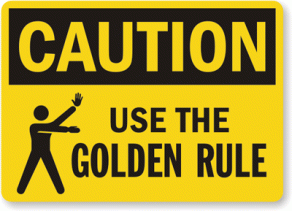 Growing up I was always reminded of the Golden Rule, both at school and by my parents. Being raised in a Christian community this rule was always emphasized. It wasn’t always stated as “treat others the way you wish to be treated” but often in other ways such as, “show respect to your elders” and “always respect your teachers.” I have always believed that if all people could bring themselves to live by this ethic, humankind would be in a much better place.
 We’ve all felt the impact of the actions of an individual or group of people. There are many examples of this in history, such as the terrorist attacks in Paris in 2015. The affect of this event has made many people fearful and afraid to travel. We still feel the effects of the 9/11 attack in New York City as flight travel is much more cumbersome with all the extra security. Terrorism initiated by ISIL or ISIS caused much of world community to participate in a bombing campaign, bombing areas where the terrorists were located. What goes around comes around.
 I am a Star Trek addict. I admit it. There are many of us out there. I have watched Star Trek since my college days when most of the dorm community would watch the original Star Trek series before going for our evening meal. Ever since, I have continued to watch the various series such as Star Trek: The Next Generation, Voyager, Star Trek: Enterprise and even Deep Space Nine. I anxiously await the new series premiering in 2017. What attracted me to Star Trek, even though I understood that it is science fiction, is the technologies used on the voyages and ideas put forth by the various episodes seem possible. I have always been intrigued by such ideas as transporters, which convert a person or object into an energy pattern and then “beams” it to a target, where it is reconverted into matter. Especially intriguing to me are the concepts of time travel, the space-time continuum, and the idea that multiple dimensions or universes exist. What I find especially fascinating is that science, especially quantum physics, is now providing credible evidence that notions such as time travel and multiple universes may actually exist.
 Even transporters may be possible, according to Quantum Physics. In May of 2014,

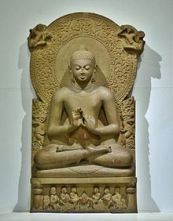 I’ve always been intrigued with Buddhism. The founder of Buddhism is said to have declared, “What we think, we become.” What does this really mean? I have been pondering that question for some time now. Others have said something similar. Ralph Waldo Emerson, an American essayist, lecturer, and poet, once said, “We become what we think about all day long.” Henry Ford, the founder of the Ford Motor Company, once said, “Whether you think you can or can’t, you’re right.” That is just a sampling of like-minded thinkers. So that begs the question, what do these quotes really mean?

 Sommer Season all year