Littering! Really?

A commentary on the disrespectful act of littering.

For the past three summers, my wife and I have camped for several weeks at a campsite near where we live. This campsite is beside a river and has a golf course where I golf at least once a day. The campsite is located in a beautifully treed area where you can truly feel connected with nature. I don’t need to write about the health benefits of being in nature as I did that in my post Nature’s Wonders in May. Spending time golfing and having campfires is what I’ve been doing for the last few weeks so in case you’ve been wondering, that is why I haven’t published anything lately.

My wife loves to walk and so I go for walks as often as I can with her. It’s good quality time together and we often have some of our best talks doing this. We either walk around the campsite visiting the occasional camper that we know or we walk down a rural road near the campground. It’s about a six kilometre (3.7 mile) walk to the location we go to and back. The road is a gravel road so sometimes we get bombarded with dust when a vehicle goes by but for the most part the road is a beautiful walk in the river valley.
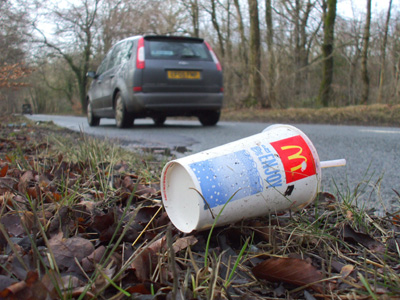
litter
From Litter Heros website

The last time I walked this route, I was alone which gave me more time to observe my surroundings. What struck me was the amount of litter I saw. I counted eight (8) soft drink or coffee cups. They were from such fast food restaurants as Dairy Queen (DQ), Tim Horton’s, and MacDonald’s.  I also saw fast food napkins, a hamburger Styrofoam box, a beer bottle and a beer can. There were also candy wrappers and a level which must have fallen off a work truck. That was what I could see just from the road. I’m sure there was much more litter as the grass was long in the ditches. What disturbs me about finding beer containers is the people who tossed them likely were drinking and driving. That to me is alarming!

Years ago our son was in 4H and every year the 4H clubs participated in the Alberta Highway cleanup where 4H members gather to clean up a section of a highway. I participated with him and what I remember most about that event was the number of cigarette packages there were. Smokers seem to be some of the worst litterers. The second most common piece of litter we picked up were fast food cups. Of course there were numerous bottles and cans and other miscellaneous items including dirty diapers. During a town cleanup last year we picked up mainly fast food cups, cigarette packages, along with other miscellaneous items and yes even dirty disposable diapers.

I’ve tried to understand why people litter and the only thing I can conclude is that people are just too lazy to find a garbage can and that people really don’t care about our environment. This inspired me to learn more about the topic.

Here are some facts from a website created by a Litter Reduction Task Force to address the litter issues within the Region of Waterloo, Ontario, Canada. This site is called, The only cure for litter is you.

  • The average distance someone will carry garbage before littering is 12 paces.
  • Most litter occurs within 5 meters of a garbage receptacle.
  • Single use food and beverage litter made up 45 per cent of litter cleaned up in the Great Canadian Shoreline Cleanup in Ontario, Canada.
  • There are 8,000 tonnes of cigarette butts dropped by Canadians each year, the majority within 10 feet of an ashtray. It takes 10 years for the filter to biodegrade.

What people need to understand is that much of this litter remains in the environment for a long time. According to this same website, it takes an aluminum can 80 to 200 years to break down naturally but if recycled, it can be reused within six weeks.  Here is some information about how long it takes other items to break down naturally.

  • Banana peel: 3 to 4 weeks
  • Paper bag: 1 month
  • Cardboard: 2 months
  • Wool sock: 1 year
  • Tin steel can: 50 years
  • Disposable diapers: 550 years
  • Plastic bags: 20 to 1000 years
  • Plastic jug: 1 million years
  • Glass: 1 to 2 million years
  • Styrofoam: 1+ million years
6_pack_duck_270x224
From humanesociety.org

It seems obvious to me that people just don’t care what they are doing to Mother Earth. So that begs the question, Why should we care about the problem of littering? According to the same website,

  • Litter is damaging to plant life. Litter can stunt plant growth.
  • Every year, millions of birds, fish and animals die from ingesting litter.
  • Litter on the ground and in our water is dangerous to humans.
  • Litter destroys the beauty of the community. Litter begets litter. One piece of litter on the ground signals others to litter.
  • Litter is a safety hazard. It is a breeding ground for rodents and bacteria.

According to the website, Conserve Energy Future (CCF),

  • Littering is expensive. Every year millions upon millions of dollars are spent cleaning up litter. This money should be going to more productive things, but instead, people don’t realize that something as small as littering done on a mass scale does indeed affect them. Taxpayers’ dollars are being spent on littering…
  • A very large majority of Americans have admitted to littering in their lifetimes. I’ll admit it. I have littered. The average American only walks a few steps before dumping their trash on the ground without even searching for a garbage can.
  • Billions of tons of litter are dumped into the ocean each year…This leads to the repeated killing of fish on a daily basis and the gradual depletion of marine life. Believe it or not, the litter we produce is causing more underwater species to become endangered.
  • Cigarette butts make up over half of our littered objects, and they take a grand total of ten years to decompose because of a cellulose acetate, contrary to the popular perception that cigarette butts decompose very quickly in only a matter of days. In reality, cigarette butts are a serious threat to the environment.

According to the article, Littering a crime of inconvenience for Canadians by Marc and Craig Kielburger, WWF Canada says Canadians are frustrated with environmental groups telling them that making small changes will have a big impact on our planet.

But Canadians are doing their part to clean up the mess we humans have created. According to the Kielburger brothers, The Great Canadian Shoreline Cleanup is one of the largest public action conservation programs in the country. Last year, more than 58,000 volunteers picked up litter along 3,000 km of shoreline and inventoried every piece. Having said that, we need to do more.

do-not-see-clipart-1It’s time we humans stop this disrespectful action of littering and start getting involved in public actions such as the Great Canadian Shoreline Cleanup, Alberta Highway Clean Up (if you live in Alberta) or in your local community spring clean-ups (see Communities celebrate spring with clean ups). It’s time to be stewards and to protect, respect and take care of our precious planet. No longer should we take our environment for granted. So do the right thing!

Climate Change Confusion

A commentary on whether humans are to blame for climate change

Carbonbrief.org, a UK-based website covering the latest developments in climate science, climate policy and energy policy, reports, Study links heatwave deaths in London and Paris to climate change. The study refers to the 2003 tragedy where more than 70 000 people across Europe died in a  heatwave. Climate Change is a reality. I don’t think anyone disputes that and the science community doesn’t either. All a person needs to do is take note of the strange weather the world has experienced in recent years. In June, we saw extremely wet weather in Europe causing flooding in Paris, France and Germany. In the United States there has been sizzling heat in the Southwest causing uncontrollable wildfires in California.  West Virginia has experienced severe flooding. In the province of Alberta, 88 000 people had to be evacuated from Fort McMurray because of wildfires. Also in June, Eastern China saw a tornado and hailstorm that killed at least 98 people when it sped over the city of Yancheng’s outskirts, destroying buildings, smashing trees and flipping vehicles on their roofs. The list of weird weather goes on and on.

There is no question that our weather is changing and becoming extreme. The ongoing debate is: Is it human activity that is causing climate change? Now I’ve taught about this topic in science for many years and there has been no doubt in my mind that it was indeed humans causing global warming which leads to climate change. I would show the graph comparing CO2 levels to average global temperatures and use it as evidence to convince my students. I would show them pictures of the shrinking polar ice cap and melting glaciers. I would show them Al Gore’s movie: Inconvenient Truth (see trailer below) and emphasize Al Gore’s argument that most of the scientists around the world agree that humans are the main reason for the global warming.

The article Scientific consensus: Earth’s climate is warming on NASA’s Global Climate Change website agrees with Al Gore’s conclusions as it says,

Multiple studies published in peer-reviewed scientific journals show that 97 percent or more of actively publishing climate scientists agree: Climate-warming trends over the past century are extremely likely due to human activities. In addition, most of the leading scientific organizations worldwide have issued public statements endorsing this position.

The Scientific America article: Is Global Warming a Myth? also agrees with Al Gore as it says,

…scientists have not been able to validate any such reasons for the current warming trend, despite exhaustive efforts. And a raft of recent peer reviewed studies—many which take advantage of new satellite data—back up the claim that it is emissions from tailpipes, smokestacks (and now factory farmed food animals, which release methane) that are causing potentially irreparable damage to the environment.

I have always believed that Al Gore must be right. But then I watched a video, on my son’s insistence, called, Climate Change: Fact or Fiction by Dr. Gary Smith (see below). Dr. Smith convincingly argues that humans are not causing global warming.

Global Research.ca, an organization that seems to me to be credible, has an article called Global Warming: Ten Facts and Ten Myths on Climate Change that seems to agree with Dr. Smith’s conclusions. This article agrees with Dr. Smith as it says,

 Climate has always changed, and it always will. The assumption that prior to the industrial revolution the Earth had a “stable” climate is simply wrong. The only sensible thing to do about climate change is to prepare for it.

The reality is that almost every aspect of climate science is the subject of vigorous debate. Further, thousands of qualified scientists worldwide have signed declarations which (i) query the evidence for hypothetical human-caused warming and (ii) support a rational scientific (not emotional) approach to its study within the context of known natural climate change.

So now I’m confused. I thought it was all clear in my mind but now I’m not so sure. The more I learn, the more confused I get. But I guess that is nothing new as Albert Einstein once said, “The more I learn, the more I realize how much I don’t know.”  Even Aristotle said, “The more you know, the more you know you don’t know.”

So now I’m not sure what to think. Am I convinced that humans are not to blame for climate change? NO I’m not. I suspect that we humans are contributing to the problem, but it could also be, at least in part, to natural changes in climate as the earth has gone through many warming and cooling periods. I suspect climate change is due to both. Having said that, I continue to believe that moving away from our addiction of fossil fuels can only help our planet. It just feels like the right thing to do. I guess we will just have to wait and see who wins the debate.

Nature’s Wonders

IMG_4412
Lake Louise

It astonishes me the number of beautiful places this planet has to offer for us humans to appreciate. I consider myself blessed because my wife and I have seen a handful of them. When I look at websites advocating must see places to visit in the world, I am surprised at how many I have seen. These sites often mention places such as Santorini in Greece, Venice in Italy, Paris in France, Rome in Italy, Stonehenge at Amesbury, England, Glacier National Park in Montana, USA all of which I have visited. With the exception of Glacier Park, these places all involve flights over oceans but we don’t have to travel across oceans to see beautiful places. There are so many places right here in our own country. The Internet has many lists of must see places on it and many of these lists include places in the Canadian Rocky Mountains; places like Banff National Park, Lake Louise, Jasper National Park, and Maligne Lake in Jasper National Park.

The Reader’s Digest’s article, 10 Places In Canada Every Canadian Needs To Visit includes Banff National Park and Lake Louise on its list. CNN’s article, 20 of the most beautiful places in Canada includes Jasper National Park and Lake Louise on it. When you search the Internet for must see places in Canada, the Canadian Rockies, Banff National Park, Jasper National Park or Lake Louise will almost inevitably show up on the list.

The Canadian Rockies are an assemblage of mountains that extend to  parts of British Columbia and Alberta. They were formed about 55 to 80 million years ago in what is called the Cretaceous era. These mountains are made up of layered sedimentary rocks and when you take the time to look you can see the layers. Their peaks are sharp and pointy because of glaciers on it.

2016-05-16 15.17.13
Bighorn sheep

There are five national parks that are part of the Canadian Rockies; these are Yoho, Jasper, Kootenay, Banff and Waterton. Banff National Park was the first to be formed. The UNESCO World Heritage Site is made up of four Canadian Rocky Mountain national parks and has a total protected area of over 20,000 square kilometres. If you are lucky enough you might see animals such as grizzly or black bears, deer, elk, moose, cougars and bighorn sheep. My wife and I caught a glimpse of a black bear and numerous bighorn sheep. We also saw some moose. The Canadian Rockies have been likened to the 2016-05-15 15.33.08African Serengeti in terms of the abundance of wildlife. When you drive in Banff National Park you’ll notice places where wildlife can cross the Trans-Canada Highway on specially built over and under passes, designed to reduce collisions with the animals.

My wife and I just recently spent a week in the Canadian Rocky Mountains. We visited three of the five national parks; Banff, Jasper and Kootenay. Even though I’ve been to the Rockies many times, I still find the beauty of these majestic mountains to be breathtaking. When I’m among these gigantic, unique pieces of rock I feel a closeness to our creator God especially when we are walking on one of the numerous beautiful hiking trails. My wife and I spent three days in Jasper National Park where we went to Maligne Lake for the first time. It was truly one of the most beautiful places I have ever seen.

Maligne Lake, Jasper

Another thing that always amazes me, or both of us really, is the number of people from all over the world you meet or the variety of languages you hear. We heard languages in French, German, Chinese, Japanese and some we didn’t recognize. We met people from France, China, United States, and Germany. It truly is a global village. All of these people were doing the same thing as we were. They were taking in the beauty of the Canadian Rockies.

It astounds me the number of people I know who live in the province of Alberta, Canada, that have never been to the Canadian Rockies. We live on the east side of the province of Alberta, probably one of the farthest points from the Rockies yet both my wife and I have been there too many times to count. It takes us six hours to drive to the Jasper town site. Yet, so many people who live even closer to the west side of the province where the Rockies are located have never taken the time to visit those majestic sites.

There are so many wonderful places to see in our world, many of them in our own back yard. Life is too short to procrastinate seeing them. Now I know it is human nature to make excuses for not doing it; excuses like it costs too much, not enough time or work is just too important to miss. I just think it is sad that people don’t take the time to see such wonderful formations of nature. It is so important to spend time seeing what nature has created and just being in nature. It doesn’t have to be the Rocky Mountains although if you haven’t seen them you definitely should. There are so many benefits to being in nature. According to the article, Get Outside! 7 Scientifically-Backed Health Benefits of Being in Nature, spending time in nature improves attention spans, boosts serotonin (the feel good neurotransmitter) levels and shows increased activity in the parts of the brain responsible for empathy, emotional stability, and love.  Some research suggests urban environments do the same for fear and anxiety. Being in nature is good for your health. Take the time to experience a bit of heaven on earth. It is worth the effort. Or as the French author, Jules Renard says,  On earth there is no heaven, but there are pieces of it.

Power of the Mind

Buddha_in_Sarnath_Museum_(Dhammajak_Mutra)I’ve always been intrigued with Buddhism. The founder of Buddhism is said to have declared, “What we think, we become.” What does this really mean? I have been pondering that question for some time now. Others have said something similar. Ralph Waldo Emerson, an American essayist, lecturer, and poet, once said, “We become what we think about all day long.” Henry Ford, the founder of the Ford Motor Company, once said, “Whether you think you can or can’t, you’re right.” That is just a sampling of like-minded thinkers. So that begs the question, what do these quotes really mean?

I suppose the Buddha’s comment “What we think, we become” could be referring to self-esteem or self-talk. I know from personal experience and from observing my students as a teacher for 35 years, that self-talk is huge. I remember one particular student who thought that she could not pass my exams, and in fact, rarely did. What was interesting is this did not change until her thinking changed. I recommended to this student to visit the school counselor. She did and the counselor after much questioning discovered that her self-talk was such that she believed she could not pass my exams. The counselor worked with the student for a long while to change her thinking and lo and behold she started passing my exams. I also have worked with numerous students who told themselves that they were stupid, and these students were seldom successful. I suspect that this self-talk was reinforced at home. So quite literally “What we think, we become.”

Now this ties into what is known as the law of attraction. According to Wikipedia, “the law of attraction is the name given to the adage “like attracts like” which in New Thought philosophy is used to sum up the idea that by focusing on positive or negative thoughts a person brings positive or negative experiences into their life. This belief is based upon the idea that people and their thoughts are both made from “pure energy”, and the belief that “like energy attracts like energy.” So this law would say if you think about something long enough, you will attract it to you. Now I’ve had experiences that could be explained by this law. A number of years ago we took a family vacation to the east coast of Canada using a rental car to travel around. As we often did, we stopped to pick up pudding cups for a treat. Since I didn’t want my children to spill pudding in our rental vehicle, I didn’t allow them to consume theirs in the car. The decision was solely mine as there was much protest from my children and my wife. We all stood outside and ate our pudding. After all my lecturing to my children, along with their opposition and my wife’s belief that I was being a “worry wart”, guess who slopped  all over themselves. You guessed it, me. You could call that law of attraction or as Ralph Waldo Emerson put it, “We become what we think about all day long.”

 Now the law of attraction would say that when we worry about something, say “I hope the car won’t break down” or “What if the car breaks down” that we attract that into our life even though we may not want it. I can also relate to this. Many years ago my wife and I took a road trip. Out of the blue my wife asks, “What would we do if the van breaks down?” I responded with, “find a mechanic.” Well, a few hours later our van died as the alternator failed. We had to find a mechanic. Was that the Law of Attraction? Perhaps. Orison Swett Marden, an American inspirational author and founder of SUCCESS magazine, said, “Worry clogs the brain and paralyzes the thought. A troubled brain can not think clearly, vigorously, locally.” This law would say that because we were worrying, thus constantly thinking that the van might break down; we attracted that into our experience.

What I find particularly fascinating is that science is providing evidence that the mind can affect matter. Here are two studies that caught my attention. The first is what is called the placebo affect. We’ve all heard of the use of placebos used in the study of new medications. A Baylor School of Medicine study, published in 2002 in the New England Journal of Medicine (see Study Finds…), looked at surgery for patients with severe and debilitating knee pain. The patients were divided into three groups. The surgeons shaved the damaged cartilage in the knee of one group. For the second group they flushed out the knee-joint, removing all of the material believed to be causing inflammation. The third group received a “fake” surgery, where the patients were only sedated and tricked that they actually had the knee surgery. For the patients who received the “fake” surgery, the doctors made the incisions and splashed salt water on the knee as they would in normal surgery. They then sewed up the incisions like the real thing. All three groups went through the same rehab process, and the results were surprising. The placebo group improved just as much as the other two groups who had surgery.

Another fascinating example of how science is showing the power of the mind influences matter is the work of Dr. Masaru Emoto.  Dr. Emoto has been studying the effects of thoughts and feelings on water. He did this by producing different focused intentions through written and spoken words directed towards water samples. He did the same using musical styles. Dr. Emoto would literally present these thoughts to water samples and the water appears to “change its expression”. One of his books, The Hidden Messages in Water (1999), explains how he demonstrated the effects of human thoughts on water. More specifically, he observed the crystals of frozen water after exposing the water to music or thoughts. I have personally read this book and found it quite captivating and he has since published many more. (See Masaru Emoto)

There are many more captivating scientific studies that provide evidence that thought, or the human mind, can influence matter. See the 10 Scientific Studies… to learn more.

170px-Timehenryford
Henry Ford, Time Magazine, Jan 1935

So maybe there is something to the Buddha quote, “What we think, we become.” Or as Henry Ford said, “Whether you think you can or can’t, you’re right.” If we think we are a failure, we become a failure. If we think we are brainy, we become brainy. Now I’m not suggesting it is magic. If we think and believe we are good at something, say hockey, doesn’t mean we magically are. However, the wanting to be good motivates a person to practice and become good at it. Eckhart Tolle, a German-born resident of Canada, best known as the author of The Power of Now and A New Earth: Awakening to your Life’s Purpose, says, “The mind is a superb instrument if used rightly. Used wrongly, however, it becomes very destructive. To put it more accurately, it is not so much that you use your mind wrongly—you usually don’t use it at all. It uses you.” I get that now. If we control those negative or destructive thoughts then our mind can’t use us. If we use our mind in positive and creative ways, then we grow as human beings. It is true. What we think, we become.”

Don’t throw that away!

The CBC news article, Starbucks pledges to donate 100% of unsold food, reported that Starbucks corporation on March 23, 2016 publicized plans to eliminate food waste and donate all of its unused food items from its U.S. stores to the needy within five years. Perishable items such as breakfast sandwiches, salads, and other ready-to-eat meal packages would be donated. The company said it will add up to five million meals in its first year, and more than 50 million free meals by 2021. They plan to use an agency called Food Donation Connection (FDC) to get the items to the food banks and homeless shelters. Since 2010, Starbucks has been collecting pastries at the company’s 7,600 stores after they can no longer be sold to customers, and working with FDC to get the pastries to people who need them.

Canadian Starbucks locations will not be included in the program, but a spokesperson told CBC News that Canadian Starbucks is watching closely. Food consultancy Value Chain Management International Inc. estimates that roughly $31 billion worth of food is wasted in Canada every year. According to a Starbucks spokesperson, “In Canada we currently have measures in place to donate unused food and are working to formalize the practices so that we can maximize our efforts in this market.”

I did some research and learned that there are other companies who donate unsold food. According to an article on AME Science, Tesco is a British multinational grocery and general merchandise retailer who plans to eradicate all its food waste by 2017. They’ve started several projects to achieve this goal. It has also started selling “wonky veg” boxes, to encourage consumers to buy imperfect foods. In a 14-store pilot programme the company provided the equivalent of 50,000 meals to less fortunate people.

oranges10a
from theguardian.com

According to figures published by Tesco 55,400 tonnes of food were thrown away at its stores and distribution centres across the country in 2015. This would be the equivalent of over 125,000,000 meals, assuming all the food were edible. Even if half of it is edible, that still brings a huge amount of meals. Another article by Salon reports Tesco’s initial report found the biggest losses were in bagged salad, two-thirds of which was being discarded either in-store or by customers; it was also wasting 40 percent of apples, a quarter of grapes and a fifth of bananas.

I was curious as to why grocery stores throw out so much food although it is only 10% of the total food wasted, whereas about 14% of all household food is wasted according to davidsuzuki.org. The site says over 30 percent of fruits and vegetables in North America don’t even make it onto store shelves because they’re not pretty enough for picky consumers. According to Business Insider, the reasons why stores waste is:

  • Most grocery stores assume that customers are more likely to buy produce if it’s from a fully stocked display.
  • Customers expect perfect produce. Retailers stock their produce according to that expectation.
  • Customers don’t understand what expiration dates, sell-by dates, use-by dates, or best-by dates mean. They assume that food is no longer good after these days. Instead, sell-by dates are guidelines for sellers to indicate peak freshness. Most foods are good long after the sell-by date. Consequently, most grocery stores pull the items from the shelves several days before the sell-by date.
  • Sometimes, product packaging gets damaged during shipping, causing supermarkets to toss products even though the food hasn’t been compromised. The assumption is that no consumer is going to buy it if a faulty one is right next to it.

So why don’t all stores donate the unsold food to charities. From what I can determine, the reason is businesses fear they will be held liable should the product donated later cause harm to the recipient. It’s Interesting to note that in 1996 U.S. President Bill Clinton passed the Good Samaritan Act to encourage companies to donate healthy food that would otherwise go to the waste dump. This law protects businesses from liability when they donate to a non-profit organization. To my knowledge Canada has no such law. The province of Ontario, however has such a law called the Donation of Food Act which was passed in 1994.

clapping-hands-transparent-b-g-mdKudos to the Starbucks and Tesco corporations. I’m quite sure my research is not thorough. I’m sure there are other companies out there so I applaud any of the companies I’ve missed who donate unsold food to charities.

On August 7, 2015 I wrote a post about the France National Assembly who voted unanimously to ban supermarkets from throwing away or destroying unsold food.  According to the article, France pass new law forbidding food waste, large grocery stores must donate edible food to charities and allow inedible food to be used for animal feed or compost.

I have since learned that Italy is set to become the second European country to pass legislation that will pressure supermarkets to stop throwing out food waste, and instead give it to those in need. (See Italy’s about to pass law). The soon to be Italian law is slightly different from the French law in that Italy’s legislation rewards companies for donating by reducing their rubbish tax. The more food companies donate, the bigger savings they’ll receive in taxes.

Thumbs upThumbs up to the European countries of Italy and France who are making efforts to waste less food and support less fortunate people. Kudos to the United States and to the province of Ontario for passing laws that protect companies who choose  to donate food instead of throwing it out. It is time for other provinces or Canada as a whole to do the same.

smileyMy research also showed me that there are many food rescue (also known as food recovery or food salvage) organizations in Canada and the United States. These organizations glean edible food from places such as restaurants, grocery stores, produce markets, or dining facilities and distribute it to emergency food programs. The food would otherwise go to waste. In Canada there are organizations such as Second Harvest and Forgotten Harvest. In the US there is Feeding America, Food Forward and many more. I salute those charity organizations who do the right thing.

British novelist and author of the Chronicles of Narnia, once said, “Integrity is doing the right thing, even when no one is watching.” I am so grateful that there are people, organizations, companies and countries in this world that have integrity.

World Water Day

WaterDayTuesday, March 22, 2016 is World Water Day. I had not heard of this day until recently when reading a news article, so I decided to do some research to find out why a day deemed World Water Day was created. What surprised me is this day has been held annually since the 22nd of March 1993, which was the first World Water Day. How could there have been twenty-three World Water Days in the past and I had not heard of it before? Do I live in a bubble? I’ve always known that fresh water was, and still is, a precious resource and that it is rapidly disappearing due to pollution and melting glaciers. In fact, I taught many lessons to my students about it over the years, but when I did some research on the topic, I was surprised by what I learned.

If I am truly honest with myself, I have to admit that I’ve always taken water for granted. There has never been a water shortage where I live. There has always been plenty of fresh, clean water to drink, to have a shower, to operate the clothes washer, to run the dishwasher, and to even water the lawn occasionally. I’ve always assumed, like most people I suspect, that we would always have a supply of fresh water. After doing some research, now I’m not so sure.

The Water Project is a non-profit organization providing reliable water to communities in sub-Saharan Africa. According to the website, water Scarcity is a reality on our planet! That means there is either the lack of enough water or lack of access to safe water. This site says 1 in 9 people worldwide do not have access to safe and clean drinking water. That means over a billion people on our planet lack access to safe water. The site also says that in developing countries, as much as 80% of illnesses are linked to poor water and sanitation conditions.

The World Water Council is an international multi-stakeholder council that promotes awareness, builds political commitment and triggers action on critical water issues. According to the Council, 1.1 billion people live without clean drinking water. The daily per capita use of water in residential areas is

  • 350 litres in North America and Japan
  • 200 litres in Europe
  • 10-20 litres in sub-Saharan Africa

That means each citizen of North America uses 350 litres every day. That’s a lot of water. It begs the question, are we wasting water?

From an agricultural perspective, the Water Councils says the quantity of water needed to produce 1 kg of wheat is 1 000 litres. Rice needs 1 400 litres and beef requires 13 000 litres of water. Perhaps it’s time to eat less steak.

Water.org is an international non-profit organization that brings water and sanitation to the developing world. Here are some interesting statistics I found on their site.

  • 663 million people – 1 in 10 – lack access to safe water.
  • 4 billion people – 1 in 3 – lack access to a toilet.
  • Twice the population of the United States lives without access to safe water.
  • More people have a mobile phone than a toilet.
  • Every 90 seconds a child dies from a water-related disease
eye
From ideahack.me

The Guardian’s article, How will climate change impact fresh water security? says fresh water scarcity is best understood by contemplating the distribution of fresh water on our planet. Approximately 98% of our water is in our oceans, which consists of salt water, and only 2% is fresh water. Of that 2%, almost 70% is snow and ice (namely glaciers), 30% is groundwater, less than 0.5% is surface water (lakes, rivers, etc.) and less than 0.05% is in the atmosphere. Climate change has had enormous effects on the amounts of fresh water available to us on the planet. The primary one is that global warming causes the polar ice caps and the world’s glaciers to melt into the sea, turning it into seawater.

Does this mean we should we alarmed? Yes it does. Does it mean we should lose hope for the future? No it doesn’t. All the various organizations I mentioned above are working towards solving the water scarcity problem. Science is also working towards solutions.

According to The Guardian’s article, 8 unbelievable solutions to future water shortages, science has come up with innovative ideas such as,

  • Waterless bathing using a lotion called DryBath which is a blend of essential oils, bioflavonoids (group of plant pigments), and an odour-eliminating chemical that is said to save four litres of water ever session.
  • Ultra efficient showers that use a screw-in device that captures water at the beginning of a shower and feeds it back into the system.
  • Using lasers to induce rain at times of drought, an idea debated by the World Meteorological Organization.
  • Folding toilets that make more efficient use of water. Its inventors claim that if installed it could save 10,000 litres per person every year.
  • Using a solar-chemical purification process that involves exposing titanium dioxide and zinc oxide to ultra violet radiation from the sun to produce a photo catalytic composite that cleans water.

According to the Canada Free Press’ article, Israel holds the solution to world water crisis, Israel has many new innovative products and policies. Some of these are drip irrigation and “fertigation,” a process of injecting fertilizers, soil amendments, and other water-soluble products into an irrigation system. Israel promotes dual-flush toilets, seawater desalination, advanced wastewater treatment and reuse, free-market pricing of water, drought-resistant seeds, cutting-edge metering and leak-detection systems, conservation education and precision agriculture.

Perhaps the most alarming thing that I’ve learned was on the World Water Council website. It said,

“As the resource is becoming scarce, tensions among different users may intensify, both at the national and international level. Over 260 river basins are shared by two or more countries. In the absence of strong institutions and agreements, changes within a basin can lead to transboundary tensions. When major projects proceed without regional collaboration, they can become a point of conflicts, heightening regional instability.”

Water-Wars-Logo
Logo from touchland.com

The prospect of “water wars” has been flaunted for decades and according to the article, Global ‘water war’ threat by 2030 – US intelligence, it may become reality within a decade. The article says the Office of the Director of National Intelligence (ODNI), the organization that oversees US intelligence agencies such as the CIA and FBI, was commissioned by President Barack Obama to examine the impact of water scarcity worldwide on US security. The ODNI predicts that by 2040 water demand will outstrip current supply by 40 per cent. The organization says it could lead to outright fighting, or water could be used as a tool of political leverage, similar to how gas and oil are used today. It suggests revising international water treaties and investing in superior water purification technologies that will make the increasingly scarce resource plentiful again.

The world faces many serious problems such as global warming and water scarcity. It is time for us to get our “heads out of the sand” and educate ourselves about these issues. Even more, it is time for us to get involved, even if it is something as simple as donating to an organization that brings clean water and sanitation to the developing world, taking shorter showers, or purchasing water efficient appliances. If we all do our small part, we will make a difference.

Adventures with Mother Nature

Every summer since 2002, starting when my son was 8 years old, my son and I have taken hiking excursions to the Canadian Rockies. Traditionally, we go with my brother-in-law and his two sons. Sometimes my brother and his son would join us as well as a friend and his two sons at the beginning. These excursions entail carrying 40-pound backpacks containing food and cooking equipment, sleeping gear and a tent. On some occasions we carried our 40-pound packs 14 kilometres (8.7 miles) before reaching our destination.

Most hikes were to the backcountry, a remote undeveloped rural area accessible only by hiking trails. We would hike to places such as Landslide Lake, Ribbon Lake, Lillian Lake, Utopia Creek, Glacier Lake, and Celestine Lake to name a few. I realize that these names likely don’t mean much to many of you but I can assure you that these settings are some of the most breath-taking, beautiful scenery in the world.

hiking 04 fishing
Lillian Lake

We’ve had some adventures over the years. In what is called Kananaskis Country, we did a day hike to Ribbon Falls after a good night’s rest at the Ribbon Lake campground. To reach our destination, we had to maneuver down a vertical cliff. Thankfully, there were chains attached to help a person propel downward. By carefully finding footholds and hanging onto the chains we successfully got to the bottom part of the cliff. Being that I am afraid of heights, this was a terrifying experience for me. Climbing up the cliff was much easier.

After hiking the Galatea Creek Trail, also in Kananaskis Country, and arriving at our destination of Lillian Lake we put our backpacks down and went to scout out a site to set up our tents. Several minutes went by before we returned to collect our equipment to take to our chosen site. To our dismay, we discovered a chipmunk chewing its way through the top of my son’s brand new pack which I had just purchased for my son. In fact, this was his first trip with it. The chipmunk had chewed a hole into the top of the pack in an attempt to get at the trail mix inside. I was not happy with that animal and yelled some choice words at the creature. Thankfully the little beast was not successful in retrieving any of the trail mix.

Hinton Jasper 277
Geraldine Lake trail (boulder hoping)

One of the most difficult hikes we’ve done was to Geraldine Lakes in Jasper National Park. It involved a very steep climb beside the waterfalls between Lower and Upper Geraldine Lakes where you come to kilometres of boulder hopping across what is called talus field. To say it was exhausting hopping from boulder to boulder carrying a 40 pound backpack is an understatement. At one point I was feeling sorry for myself asking, “Why am I doing this?” Thinking that I was getting too old for this hiking business (I was in my 40s), we came upon a fellow hiker in his 70s. He told us that Geraldine Lakes was one of his favourite trails and that he had hiked the trail many times. I needed an attitude adjustment at that point and my outlook changed after talking to the senior hiker. If a 70-year-old man can hike that trail, I had nothing to complain about being I was 30 years younger than this man. It’s all about your mental attitude. Being in shape, of course, helps.

One of my favourite hiking experiences was our hike to Utopia Creek in Jasper National Park. There were eleven of us on that expedition. On the Saturday evening we decided to take a different trail back so that we could climb up to what is called the Sulphur Skyline, which has some of the most breathtaking panoramas in Jasper National Park. This meant hiking the Fiddle River 11 kilometre horse trail from our campsite, then going up a 700 metre (2300 feet)  elevation gain of about 2 kilometres (1.2 miles) to reach the skyline. The trailhead had a sign saying, “Trail not recommended,”  but this didn’t stop us. What we did not realize is that we had the cross the Fiddle River not once, not twice but six times.

On our first crossing we carefully hopped across the river from boulder to boulder with our backpacks on until the last bit whereby we took our packs off, tossed them a fair distance to another person on the riverbank and then hopped onto the bank ourselves. Thankfully no one fell into the water and our packs remained dry.

During the second crossing we decided to take our hiking boots off, put on our sandals and cross the river in our sandals. The current was strong and the glacier water literally made my feet hurt.

Now the third crossing was done in our bare feet. By this time the ritual of taking off our boots was becoming burdensome, so when we had to cross the river on the fourth, fifth and sixth occasion we just kept our boots on. The current was strong so there were times when I had to hang onto my son, age 12 at the time, to prevent him from being swept downstream by the current. We stopped at a trailhead leading to Mystery Lake to ring out our wet socks and dried our boots as best we could. We eventually made it to the Sulphur Skyline with one of the most spectacular views I have ever had the privilege to appreciate. The chipmunks on top of the skyline were brave creatures as they would come right up to your fingertips looking for food.

In 2009, nine of us spent three hours hiking the 7 kilometre (4.3 mile) trail to Celestine Lake in Jasper National Park. A friend of mine and I were the last to arrive at our campsite as the younger ones of the group were much quicker than us older ones. What made this adventure so memorable was the fact that when my friend and I arrived at the campsite, we were told that we had to go back as there was a forest fire nearby. Now we didn’t believe them, of course, until we saw the warden’s helicopter take off. Apparently, the park warden arrived in a chopper and called to my brother in law saying, “I have some bad news guys. You have to leave as there is a fire in the area.” So it turned out that we were told the truth. We had to spend the next three hours returning to our starting point.

2013-07-13 01.19.38Now I have been asked over the years why I would go into the back country where there is no contact with the outside world; where there are bears and cougars and it can sometimes get to below freezing at nights. Those are good questions. My first response to those questions is always that it is quality time with my son. But it is more than that. I do it for the adventures. There is nothing like being in nature and the experience of standing on top of mountain with the wind blowing through your hair. The beauty that Mother Nature has to offer is far-fetched until you see it, and even then it can be surreal. For me, being in the wilderness is a chance to touch the divine. It is during those times that I feel closest to God or the Universe.
According to the article, How Does Nature Impact our Wellbeing, put out by the University of Minnesota,

“Being in nature, or even viewing scenes of nature, reduces anger, fear, and stress and increases pleasant feelings. Exposure to nature not only makes you feel better emotionally, it contributes to your physical wellbeing, reducing blood pressure, heart rate, muscle tension, and the production of stress hormones. It may even reduce mortality, according to scientists such as public health researchers Stamatakis and Mitchell.”

Maybe that’s why I do it. Without knowing why, it made me feel better. So, go out into nature and reduce your stress. Speaking from experience it works. It is so easy to get so wrapped up in our daily urban lives that we forget what nature has to offer. Visit Mother Nature to de-stress. When you do you will discover that she is worth protecting.


Seek Some Awe

William James, an American philosopher and psychologist, once said, “Religious awe is the same organic thrill which we feel in a forest at twilight, or in a mountain gorge.” I totally understand what Mr. James is communicating. I have had many experiences of awe when out in nature. But first, we should understand what awe is.

The Cambridge Dictionary defines awe as a feeling of great respect sometimes mixed with fear or surprise. Now that word fear usually confuses me especially when talking about awe.  We typically think of fear as being afraid of something or someone. However, Dictonary.com says in addition to being afraid, fear is reverential awe, especially toward God. The Free Dictionary describes awe as a feeling of respect or reverence mixed with dread and wonder, often inspired by something majestic or powerful.

Dacher Keltner, Professor of psychology at the University of California, defines awe as the feeling of being in the presence of something vast that transcends your understanding of the world. So the way I understand awe is that awe are those moments when we experience something majestic or powerful; when we feel wonder. They are the times when we have an encounter with the divine. They are moments when we in some way experience God or the Source of all Being or something mystical. It’s when you are touched at a soul or spiritual level; when what we are witnessing or experiencing is beyond our understanding.

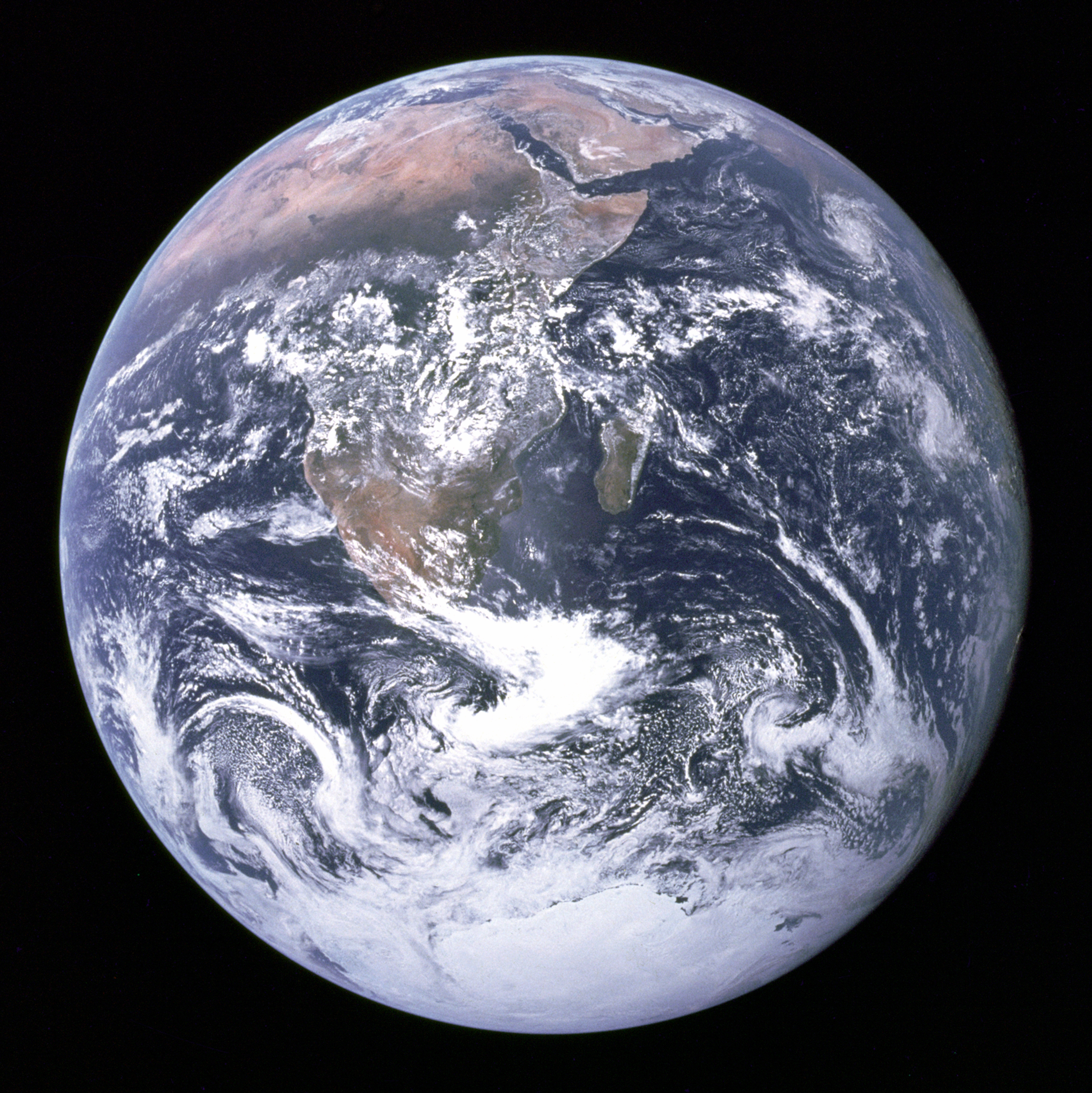
The_Earth_seen_from_Apollo_17Many astronauts talk about their experiences of awe when looking at the planet earth from space. Alan Shepard, Apollo 14 astronaut said, “When I first looked back at the Earth, standing on the Moon, I cried.” Russell “Rusty” Schweikart, Apollo 9 astronaut said, “When you go around the Earth in an hour and a half, you begin to recognize that your identity is with that whole thing. That makes a change … it comes through to you so powerfully that you’re the sensing element for Man.”

One of the best known for his experience of seeing Earth from space is Apollo 14 astronaut Edgar Mitchell who said:

“That’s a powerful experience, to see Earth rise over the surface [of the Moon]. And I suddenly realized that the molecules in my body, and the molecules in the spacecraft and my partners had been prototyped, maybe even manufactured, in some ancient generation of stars. But instead of being an intellectual experience, it was a personal feeling… And that was accompanied by a sense of joy and ecstasy, which caused me to say ‘What is this?’ It was only after I came back that I did the research and found that the term in ancient Sanskrit was Samadhi.”

Oxford dictionary defines Samadhi as a state of intense concentration achieved through meditation. In Hindu yoga, this is regarded as the final stage at which union with the divine is reached. In essence what Mr. Mitchell is saying is he felt some sort of union with the divine.

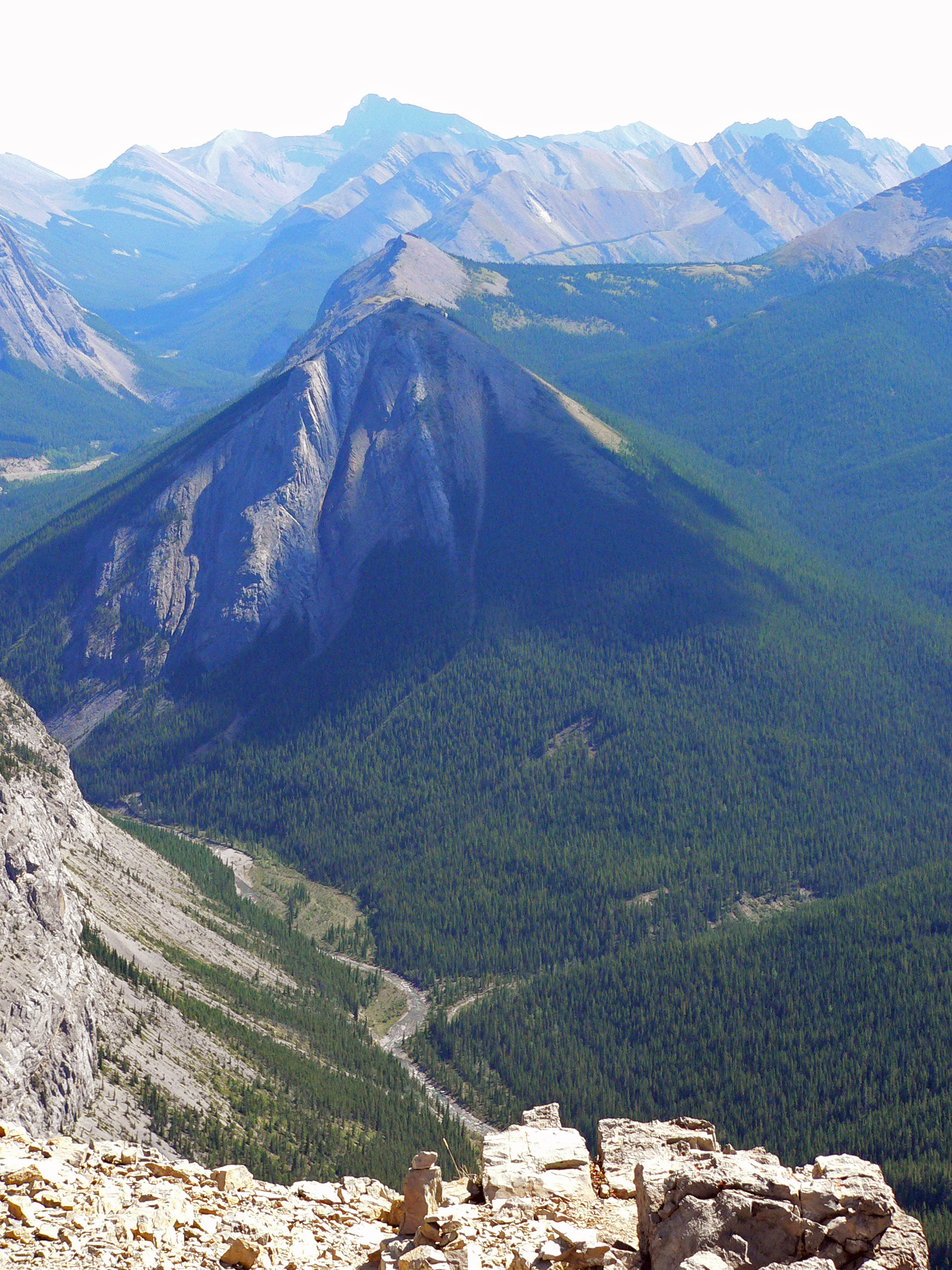
Susan Santucci, a learning specialist and author says, “Watch for glimpses of the divine order.  Find those experiences, sights, and sounds, which fill you with awe.  Any experience met with awe can be spiritual:  a safari through an animal kingdom, taking in a sunset, a hike to an awesome mountaintop.”

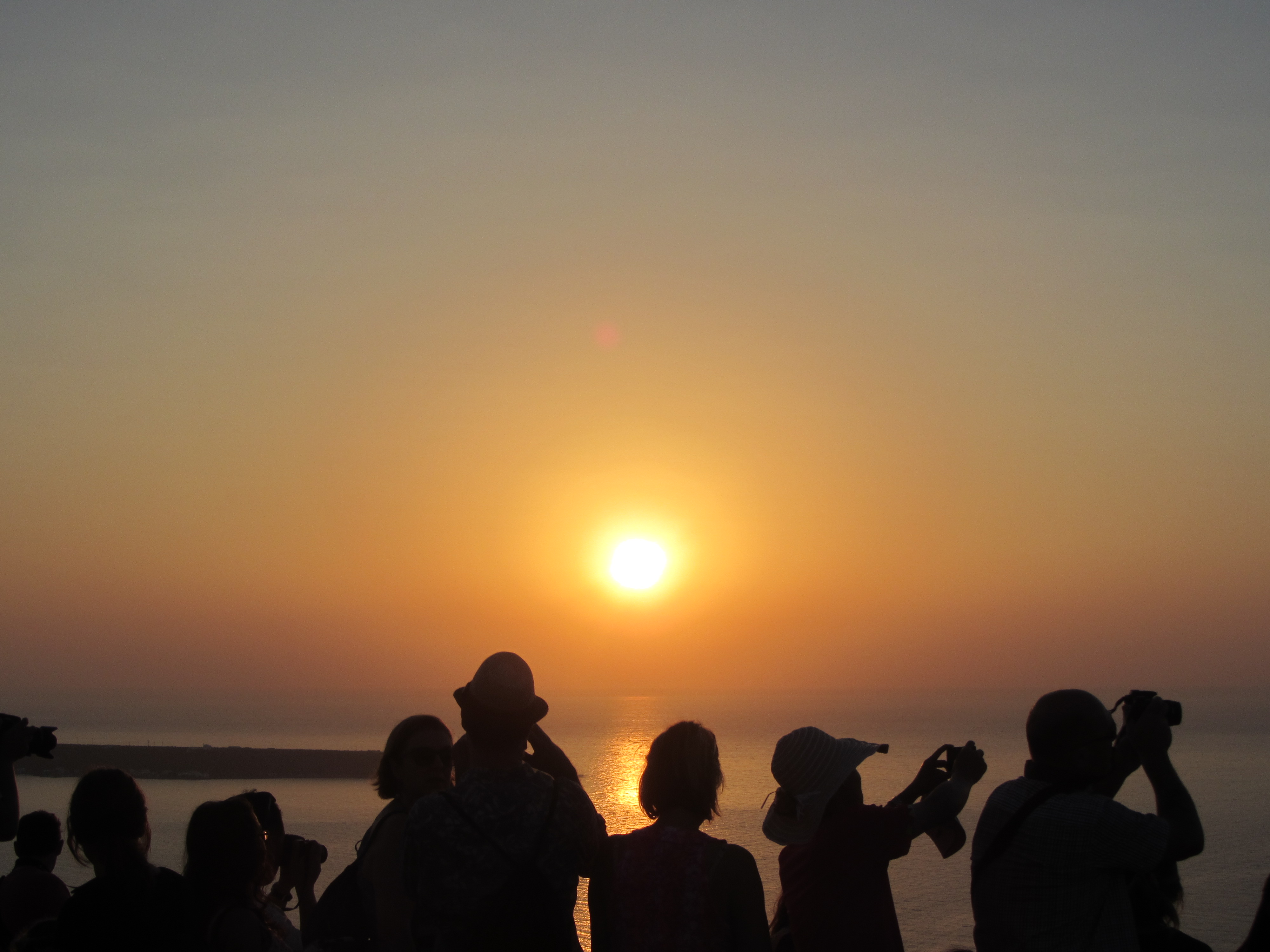
P1030507editedI have hiked in the mountains with my son and friends and family for many years. I have to agree with Susan Santucci as every time I stand on top of a mountain, I feel that sense of awe. For me, it is a spiritual experience. It is an experience where I am overtaken with the beauty of the mountain landscape. I have this same experience when I am at the ocean. Standing on an ocean beach, looking at the vast amount of water in front of me sets me into a state of awe. Sunsets do the same. When my wife and I were in Europe a few months ago, we were blessed to see numerous sunsets and even sunrises. It never ceases to amaze me how beautiful those magnificent colourful skies can be. Each sunrise we beheld on our trip was uniquely beautiful. I have a sense of awe or wonder every time I am lucky enough to see the northern lights or the aurora borealis. For me, each of these experiences were, as Dacher Keltner put it, a feeling of being in the presence of something vast that transcends ones understanding of the world.

Greece

Yes, I understand some of the science behind how mountains are built with colliding tectonic plates. I comprehend that when the Sun appears lower and lower on the horizon, its light needs to pass through more of the atmosphere to reach our eyes, so as the sun drops towards the horizon, it progressively loses violets and blues, then greens and yellows, and finally even the oranges, leaving only the reds behind. It is mind-boggling to comprehend that 70% of the Earth’s surface is covered by ocean, and the deepest known area measures 11 kilometres (6 miles) deep.  I understand that the aurora borealis occurs when collisions between electrically charged particles from the sun enter the earth’s atmosphere and collide with its gases. As amazing as the science is, when I experience the above-mentioned things I experience something beyond my science understanding. My experience is met with awe and wonder. When I am experiencing these things I touch the divine.

I had another one of these experiences when my daughter showed me a video of Jeffrey Li, a 10-year-old boy from Canada, and Celine Tam, a 7-year-old girl from Hong Kong, performing a duet of the song “You Raise Me Up”. I was blown away. These two singers literally took my breath away. What I heard from these two young people touched me at a soul or spiritual level. It made me ask, “How can a seven and ten year old have singing voices like this?” The singing voice of these two “kids” was beyond my understanding. If you haven’t seen the video, check it out below.

Maybe it is time to seek out more of those awe experiences, whatever they may be for you. In fact, doing so just may make the world a better place. Articles such as High on Wonder: People Who Experience More Awe Are Nicer, Better People, and The Key to Fulfillment claim science is providing empirical evidence that awe is the emotion that motivates people to do things that enhance the greater good. If we choose to get rid of the some of the distractions like cell phones and watching television in our lives and seek to put ourselves in new situations such as going to new places, and meeting new people, this may increase our chances of encountering awe. If it is true what the studies are saying, experiencing awe will make us better people. I implore you to seek out some awe and wonderment in your lives. You will be better for it!