
As a now retired school teacher who taught high school social studies, I have taught about the indigenous (First Nations or aboriginal) people for about 30 years. I have always been drawn to the indigenous people especially to their spirituality and their tremendous respect for Mother Earth before contact with the European explorers. For several years I had the privilege of working with aboriginal people when I taught courses to adults a few weekends during the year. I have always been sympathetic to the plight of the aboriginal people in North America. From the moment the Europeans landed on this continent to the present day, aboriginal people have been exploited and treated unjustly, so when I read about improved relations between our leaders and indigenous people, I cheer.
According to a CBC article, Aboriginal’s top newsmakers of 2015, it was an exceptional year for indigenous people in Canada, a year that included truth and reconciliation, a year when ten indigenous Members of Parliament (MPs) were elected to Canada’s parliament and the year the long-awaited inquiry into missing and murdered indigenous women and girls was announced.
In case you are not familiar with the Truth and Reconciliation Commission (TRC), here is a little history lesson. The Commission’s five-year mandate was to inform all Canadians about what happened in Indian Residential Schools (IRS). The TRC hopes to guide and inspire Aboriginal people and Canadians in a process of reconciliation and renewed relationships that are based on mutual understanding and respect. After travelling about the country for six years, the committee collected 6,740 statements from survivors of the Residential Schools and recorded 1,355 hours of testimony. The Commission completed its task on June 2, 2015.
The Truth and Reconciliation Commission report makes 94 recommendations for change in policies, programs and the “way we talk to, and about, each other.” These recommendations include the creation of a National Centre and Council for Truth and Reconciliation and the drafting of new and revised legislation for education, child welfare, aboriginal languages, and the implementation of the United Nations Declaration on Indigenous Peoples.
 If you don’t know much about the legacies of Residential Schools, here is another lesson. (It’s the teacher in me. I just have to teach). After the closing of the schools, which operated from the 1870s to 1996, and held some 150,000 aboriginal children over the decades, many former students made allegations of physical, psychological, and sexual abuse, plus accusations of neglect. The sole aim of residential schools was to assimilate First Nations children into the European culture. There were also student deaths at these institutions as well as burials of numerous deceased students in unmarked graves without the notification or consent of the parents. I personally have heard residential school survivors tell their stories and break down weeping when doing so. It is a very painful topic for many of them. This is not a part of our history that I am proud of. I have also taught about the atrocities that have occurred in these schools and witnessed students distraught because of it. Students instinctively know, as all of us do, that the way the indigenous people were treated was unjust.
CBC reports that on December 14,2015, the completed Truth and Reconciliation report was released in an emotional ceremony that had commission chair Justice Murray Sinclair choked with emotion and newly elected Prime Minister Justin Trudeau wiping away tears. Kudos to our leaders who recognize the wrongs done to the aboriginal people.
 Then there is the missing and murdered aboriginal women in Canada, an issue that First Nations people have been lobbying our government to conduct an inquiry on for at least a decade. The following statistics are from the Native Women’s Association of Canada (NWAC) fact sheet based on March 2010 statistics. The association gathered information on about 582 cases of missing and murdered Aboriginal women and girls. Of these:
-
67% are murder cases (death as the result of homicide or negligence);
-
20% are cases of missing women or girls;
-
4% are cases of suspicious death—deaths regarded as natural or accidental by police, but considered suspicious by family or community members; and
-
9% are cases where the nature of the case is unknown—it is unclear whether the woman was murdered, is missing or died in suspicious circumstances.
The number of missing and murdered Aboriginal women and girls in Canada is disproportionately high. NWAC’s research indicates that, between 2000 and 2008, Aboriginal women and girls represented approximately 10% of all female homicides in Canada. However, Aboriginal women make up only 3% of the female population. What is interesting is the NWAC has found that only 53% of murder cases involving Aboriginal women and girls have led to charges of homicide. This is dramatically different from other homicide cases in Canada, which was last reported as 84% solved cases according to Statistics Canada.
On December 8th, 2015, Canada’s new Liberal government announced that the first phase of an inquiry into missing and murdered indigenous women and girls would begin. This is great news for those grieving families who lost their children. They have a right to know what happened to their loved ones.
 The October 2015 federal election saw 54 indigenous candidates enter the race, and a groundbreaking push to have First Nation, Inuit and Métis people head to the polls. When it was over, ten indigenous MPs were elected to Canada’s House of Commons; the most ever. Newly elected Prime Minister Justin Trudeau told the Assembly of First Nations, “It is time for a renewed, nation-to-nation relationship with First Nations people. One that understands that the constitutionally guaranteed rights of First Nations in Canada are not an inconvenience but rather a sacred obligation.” This is great news for Canada. I cannot say it any better than Assembly of First Nations Chief Perry Bellegarde who said, “It sends a powerful statement about inclusion and it sends a powerful statement about the reconciliation that is going to be required in rebuilding a new relationship between Canada and Indigenous Peoples.” A new kind of relationship with our First Nations people has been long overdue. Kudos to Canada’s new PM for initiating a new kind of relationship; a relationship that can only make this a better country.
Now I know many people do not feel the same as I do about these events. There has been, and still is, much racism between our people. Having said that, racism stems from ignorance, and so much of that racism is due to misinformation and misunderstanding between aboriginal and non-aboriginal people. I am hopeful that the TRC and the National Inquiry will educate and eradicate that ignorance, bringing about a new relationship. They were the first people on this continent and rightfully deserve to be treated with the same respect and privileges as non-aboriginal Canadians. It has been a long time coming!
Interesting reads:
Source: The Two-Sentence View of History Source: DEAR MEDIA, I AM MORE THAN JUST VIOLENCE
 headlines in November. The company typically has its red holiday cups decorated with snowflakes, Christmas ornaments or reindeer, but chose for a minimalist design this year with cups that are red with nothing but its green logo. Starbucks executives said they wanted to embrace “simplicity and quietness.” However some Christian conservatives saw these new cups as an attempt to diminish the importance of Christmas.
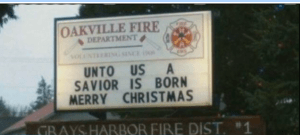 Another controversy occurred in Oakville, Washington, a town of 700 people who typically celebrates Christmas without controversy (see
  The Jewish tradition celebrates Hanukkah or the “Feast of Dedication,” also known as the “Festival of Lights”. This festival is celebrated on the 8th day of December and it is a time when Jewish people recall a miracle in the Jerusalem temple during a war fought by the Maccabees for the cause of religious freedom. Temple candles only had enough oil to burn for a single day. Yet they burned for eight days. Jews light candles on a menorah, two on the first day, three on the second, to nine on the eighth day. Jews should not feel restricted in any way when celebrating Hanukkah. In fact, this celebration should be encouraged. Perhaps in addition to Starbucks having cups with Christmas decorations on it, the company should also include cups with the menorah on it.



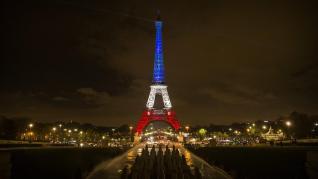 Since my wife and I had just been in Paris, France a month ago, I was filled with great sadness when I heard about the terrorist attacks that occurred in Paris on Friday, November 13, 2015. Terrorism is something I have a difficult time wrapping my head around. I cannot for the life of me understand how someone can cause harm and death to innocent people such as the carnage we saw in Paris. The news media has repeatedly said that the people who carry out such acts of violence have been radicalized, that is, have become more radical. Merriam-Webster dictionary defines a radical as “advocating extreme measures to retain or restore a political state of affairs”. I guess for radicals that means carrying out acts of murder. This is what I can’t get my head around. How can someone with any kind of conscience murder innocent people? The only explanation I can come up with is these people have been brainwashed. The MacMillan Dictionary defines brainwash as “to force someone to accept a particular set of beliefs by repeating the same idea many times so that the person cannot think in an independent way”. How exactly terrorist groups such as Al-Qaeda or ISIL (Islamic State of Iraq and the Levant) are able to do this using the internet is a mystery to me, but this must be what is happening.
 What concerns me the most is that many people are becoming fearful. On November 23rd, the American Government issued a
  This fear, caused by the Paris terrorists and other terror attacks, has changed the debate over refugees. Since returning home from Europe a few weeks ago I have been asked many times if we were affected by the refugees that had been dominating the news media before the Paris incident. Of course we were not. My wife and I even had a conversation with another couple recently at an airport where this couple expressed real concern over Canada accepting refugees from Syria. They told us that they heard one of the Paris extremists was a refugee. Once again their concerns were stemming from fear.


 Sommer Season all year