John 15:13 of the Christian Scriptures says, “No one has greater love than this, to lay down one’s life for one’s friends.” Always remember that this is what those who died fighting for our freedoms did.
As I’ve mentioned in my first Remembrance Day post, November 11th is an important day to observe as it marks the anniversary of the official ending of World War I. That war ended on the 11th hour of the 11th day of the 11th month thus explaining why Remembrance day is November 11th. When in France recently, my wife and I visited the Normandy D-Day beaches. In case you don’t know the significance of those beaches, here is a history lesson.
On D-Day, June 6, 1944, “Operation Overlord”, the allied invasion of Nazi-occupied Europe started at 06:30. The target was an 80 kilometre (50-mile) stretch of the Normandy coast, which was divided into five sectors: Utah, Omaha, Gold, Juno and Sword Beach. The Utah and Omaha sectors would be assaulted by the American Army, Gold and Sword beaches by the British troops and Juno beach by the Canadians. We visited the British, Canadian and American beaches. The success…
This post was first published on November 6th of last year upon returning from Europe. My wife and I spent time exploring the Normandy Beaches in France and the Vimy Ridge memorial. This was a profound experience for us and has made Remembrance Day that much more important. Never forget this ultimate sacrifice our soldiers made.
November 11th is an important day to observe as it marks the anniversary of the official ending of World War I. That war ended on the 11th hour of the 11th day of the 11th month thus explaining why Remembrance day is November 11th. In Canada Remembrance Day is a national holiday and all Commonwealth Nations observe this day as a day to remember the members of their armed forces who have died in the line of duty. For those that don’t know, the Commonwealth is an organization of 53 member states that were mostly territories of the former British Empire, which includes the United Kingdom. The United States has a day of remembrance called Veterans Day, which is an official federal holiday that is observed annually on November 11. Its purpose is to honor people who have served in the U.S. Armed Forces, that is, its veterans. Armistice Day remains the name of…
On Monday, October 10, 2016 our family, like most Canadians, celebrated the Canadian Thanksgiving holiday. Thanksgiving is a statutory holiday in most of Canada, with the exceptions being the Atlantic provinces of Prince Edward Island, Newfoundland and Labrador, New Brunswick, and Nova Scotia, where it is an optional holiday. In its beginnings Thanksgiving was celebration for a successful harvest but the tradition has changed over the years. Now the focus is to get together with family to eat a large turkey dinner, including stuffing and pumpkin pie for dessert.
The first Thanksgiving Day after Canada’s Confederation was observed as a civic holiday on April 5, 1872. It was to celebrate the recovery of the Prince of Wales, who later became King Edward VII, from a serious illness. It was made official on January 31, 1957, when the Canadian Parliament proclaimed: A Day of General Thanksgiving to Almighty God for the bountiful harvest with which Canada has been blessed, to be observed on the 2nd Monday in October. During and after the American Revolution, Americans who remained loyal to Great Britain moved from United States to Canada. They brought with them the customs and practices of the American Thanksgiving, such as the turkey, pumpkin, and squash.
Thanksgiving in the United States is a public holiday, celebrated on the fourth Thursday in November by all 50 states. Americans commonly trace the Thanksgiving holiday to a 1621 celebration at the Plymouth Plantation, where the settlers held a harvest feast after a successful growing season. It has been celebrated as a federal holiday every year since 1863, due to President Abraham Lincoln’s proclamation declaring it as a national day of “Thanksgiving and Praise to our beneficent Father who dwelleth in the Heavens,” to be celebrated on the last Thursday in November.
An interesting difference between Canada and the US is that in America, Black Friday, the day after Thanksgiving, is one of their biggest shopping days. Black Friday has been regarded as the beginning of the Christmas shopping season with stores offering many items on sale. That is not the case in Canada although we are starting to see retail outlets offer Black Friday sales in Canada. For Canadians, the holiday Monday means it’s a long weekend and shopping isn’t an essential part of it. Canada’s biggest shopping day of the year is December 26, Boxing Day, the day after Christmas.
Every thanksgiving, barring the occasional exception, we gather as a family to eat our turkey with stuffing, mashed potatoes and gravy, carrots harvested from my garden, and turnips. The meal always finishes with pumpkin pie. Before we eat our delicious meal each family member takes turns sharing with one another at least five things we are thankful for. We have done this since our three children were little. Sometimes they would complain becoming impatient since they were hungry. My wife and I had a policy that if we heard complaining, our children would have to share more than the required number of “thankfuls”. One year when our eldest daughter was in her early teens she starting complaining about the number of “thankfuls” she was required to share. Each time she complained my wife and I added more. She finally stopped complaining after she reached about 12. She reluctantly came up with 12 things she was thankful for. We still laugh about that.
I always take time to express the things I’m grateful for at thanksgiving. I will always be grateful for my loving and supportive wife. She puts up with all my crazy ideas and ventures. I will always be grateful for my three wonderful children. We are fortunate enough to have two daughters and a son. All three of them have made us proud with the hard work they did to achieve their university degrees and how they practice their careers with commitment, purpose and integrity. I am also grateful for my health and the health of my loved ones. I am grateful to be living in a country that is inclusive, safe and respected. I could go on and on.
Thinking about this post, I realized that Thanksgiving is really about our attitude. Thanksgiving is more than just a holiday. It’s also a reminder to us to have an “attitude of gratitude”. It should be an attitude that we have every day of our lives. Why, you may ask? Psychology Today says there are seven scientifically proven benefits of gratitude. They are
Gratitude opens the door to more relationships.
Gratitude improves physical health.
Gratitude improves psychological health.
Gratitude enhances empathy and reduces aggression.
The article titled, Why Gratitude Is Good, summarizes the benefits of gratitude this way:
Physical • Stronger immune systems
• Less bothered by aches and pains
• Lower blood pressure
• Exercise more and take better care of their health
• Sleep longer and feel more refreshed upon waking
Psychological • Higher levels of positive emotions
• More alert, alive, and awake
• More joy and pleasure
• More optimism and happiness
Social • More helpful, generous, and compassionate
• More forgiving
• More outgoing
• Feel less lonely and isolated.
Even though there may not be agreement on the number of benefits to having an “attitude of gratitude”, one can safely conclude that there are benefits to having this attitude. So don’t just have this “attitude of gratitude” at Thanksgiving, have it every single day of your life. Maybe start a gratitude journal. I have done this from time to time. (Now that I think about it, I haven’t done a journal in a while. I need to do something about that). It forces us to think of things that we are thankful for. If you’re not sure what a gratitude journal is or how to do one, see the article, Tips for Keeping a Gratitude Journal. So I encourage you to develop that “attitude of gratitude.” The bottom line is, it’s good for you.
In late September I saw this video in a news report.
Now I had seen many news reports about Aleppo before but this video really got to me. This video touched me on a deep level. The Canadian band, Nickelback, has a song called, “When We Stand Together”. The beginning lyrics are,
One more depending on a prayer
And we all look away
People pretending everywhere
It’s just another day
There’s bullets flying through the air
And they still carry on
We watch it happen over there
And then just turn it off
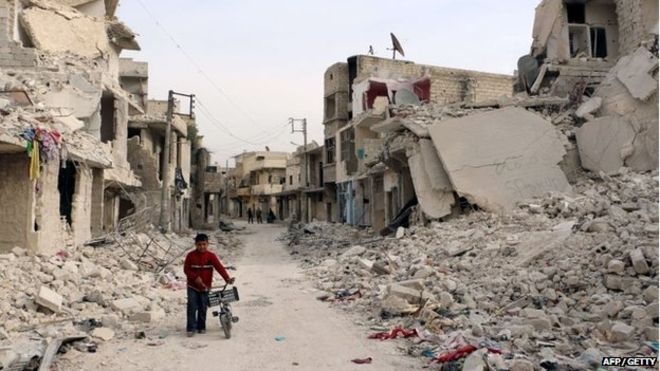
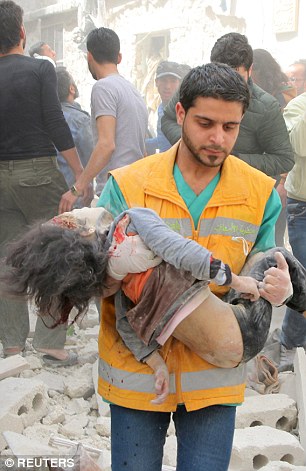
The song portrays exactly what I have typically done and likely most people in the world do. We see what is happening in Aleppo, and other conflicts on the news and at the end of the news broadcast, we “just turn it [the TV] off”. Our mindset is, “it doesn’t really affect me. It’s happening far away from me.” But this time was different. This video got to me. It showed the human toll of this tragic conflict. The video showed how innocent people are being harmed by a senseless civil war and the emotional cost to its first responders. We’re told that 250 000 innocent civilians are trapped in this city that is without clean water, functioning hospitals, and no aid. BBC News reports at least 18 people were killed earlier this month when trucks unloading at a Syrian Arab Red Crescent near Aleppo was attacked by fighter jets. The aid convoy was the result of a long process of obtaining permission and making preparations to assist isolated civilians after a ceasefire was negotiated. The attack occurred when the ceasefire failed.
I wondered what I could do. Donating for aid seemed to be pointless since aid was not reaching Aleppo, so I thought educating people. As a retired teacher that made sense. Maybe if there is enough of an outcry from the world’s people, the international community would do more. Maybe if enough of the world community said to the Syrian and Russian governments, “stop the bombing or else” things might change. I know it’s not as simple as this but peer pressure works.
So you, like I was, might be wondering what this conflict in Syria is all about. Here is some history based on information from Wikipedia.
The war in Syria stems from the 2011 Arab Spring, a revolutionary upsurge of demonstrations and protests in the Arab world. The revolution started in December 2010 in Tunisia and spread. Major insurgencies occurred in Syria, Libya and Yemen. Civil rebellions occurred in Egypt and Bahrain. Large street demonstrations happened in Algeria, Iraq, Jordan, Kuwait, Morocco, and Oman, and some minor protests in Saudi Arabia. In Syria , the revolution escalated to an armed conflict after the government of President Bashar al-Assad violently suppressed protests that were screaming for Assad’s removal. The war is now being fought among several factions which include the Syrian Government, a loose alliance of Syrian Arab rebel groups, the Syrian Democratic Forces, Salafi jihadist groups, and the Islamic State of Iraq and the Levant (ISIL). Many of these factions receive substantial support from foreign governments.
The Battle of Aleppo began in July of 2012. Aleppo is the largest city in Syria with the Old City of Aleppo being a UNESCO World Heritage site. The ongoing war is between the Free Syrian Army, Islamic Front and other Sunni militants and the armies of the Syrian Government who are also supported by Hezbollah and Shiite militants as well as Russia. The government forces and their allies are also attacking the Kurdish People’s Defence Units. The Kurdish people are an ethnic group located in northern Syria as well as in other Middle Eastern counties. Kurdish nationalists are pursuing greater autonomy and cultural rights.
The battle for Aleppo has been marked by the Syrian army’s indiscriminate use of barrel bombs dropped from helicopters, killing thousands of people, and intentionally targeting the civilian population. This includes hospitals and schools. Hundreds of thousands have been forced to evacuate. On October 6th, 2016 President Assad offered amnesty to militants in the city, offering to evacuate them and their families to safe areas but the militants refused this proposal.
The battle has caused catastrophic destruction to the Old City of Aleppo, which I mentioned is a UNESCO World Heritage site. Here are some pictures taken by a drone showing the destruction of Aleppo.
In September 2012, Amnesty International, USA requested that the Geospatial Technologies and Human Rights Project of the American Association for the Advancement of Science (AAAS) to investigate human rights-related reports stemming from the escalating conflict in Aleppo. Their conclusions on the Conflict in Aleppo was,
Space-based monitoring of the conflict in Aleppo has revealed a steady and continuous trend of degradation to the city’s buildings and infrastructure, including residential, religious, commercial, and industrial facilities. Roadblocks and other makeshift fortifications have continued to proliferate, with over a thousand visible in the latest imagery. Other signs of military activity, such as shell craters, armoured vehicle tracks, and evidence of aircraft deployments are likewise visible, and are consistent with reports of ongoing combat involving heavy weaponry in civilian areas. Damage resulting from fighting has resulted in severe losses to the city’s cultural heritage, both in the city as a whole as well as the area designated as a UNESCO World Heritage site.
It saddens me to see a UNESCO World Heritage site destroyed. In case you didn’t know, a World Heritage Site is a place that is listed by the United Nations Educational, Scientific and Cultural Organization (UNESCO) as being of exceptional cultural or physical significance to humanity.
It saddens me even more to hear of the human suffering. The New York Times in its report, Why so many Children are Killed in Aleppo, tell us that roughly 250,000 people trapped in this Syrian city and about 100,000 are children. Children are the most vulnerable victims of the intensified bombings by Syrian forces and their Russian allies.
The Times article goes on to report that children in Aleppo face dire food and medicine shortages. Surgery and blood transfusions required for treating bomb wounds are practically impossible now. Medical workers have left children to die on hospital floors due to lack of supplies. Aid groups estimate that there are only 35 doctors remaining in East Aleppo, that is one for every 7,143 people, assuming a population of 250,000 people.
The reality is no one knows for sure how many people are trapped in Aleppo and how many are being killed. One person suffering, especially a child, is one too many. It all seems so senseless to see a world heritage site destroyed and learn of innocent people killed all because one man, Bashar al-Assad, a selfish leader who won’t give up his control of power. If the international community banded together to put serious pressure on the Assad government, maybe this nonsense would stop.
US Secretary of State, John Kerry, recently called for Syria and Russia to be investigated for war crimes since they keep hitting hospitals, medical facilities, children, and women (see The Guardian). I agree with Mr. Kerry as it appears to me that war crimes are occurring. War crimes are actions carried out during the conduct of a war that violates accepted international rules of war. There are 11 crimes which constitute grave breaches of the Geneva Conventions and applicable only to international armed conflict. These include willful killing and inhumane treatment, both of which have been violated. This would mean, in my view, Vladimir Putin and Bashar al-Assad are guilty of such crimes. It is time for the world to wake up and stop this senseless suffering, especially of innocent children.
Tuesday, March 22, 2016 is World Water Day. I had not heard of this day until recently when reading a news article, so I decided to do some research to find out why a day deemed World Water Day was created. What surprised me is this day has been held annually since the 22nd of March 1993, which was the first World Water Day. How could there have been twenty-three World Water Days in the past and I had not heard of it before? Do I live in a bubble? I’ve always known that fresh water was, and still is, a precious resource and that it is rapidly disappearing due to pollution and melting glaciers. In fact, I taught many lessons to my students about it over the years, but when I did some research on the topic, I was surprised by what I learned.
If I am truly honest with myself, I have to admit that I’ve always taken water for granted. There has never been a water shortage where I live. There has always been plenty of fresh, clean water to drink, to have a shower, to operate the clothes washer, to run the dishwasher, and to even water the lawn occasionally. I’ve always assumed, like most people I suspect, that we would always have a supply of fresh water. After doing some research, now I’m not so sure.
The Water Project is a non-profit organization providing reliable water to communities in sub-Saharan Africa. According to the website, water Scarcity is a reality on our planet! That means there is either the lack of enough water or lack of access to safe water. This site says 1 in 9 people worldwide do not have access to safe and clean drinking water. That means over a billion people on our planet lack access to safe water. The site also says that in developing countries, as much as 80% of illnesses are linked to poor water and sanitation conditions.
The World Water Council is an international multi-stakeholder council that promotes awareness, builds political commitment and triggers action on critical water issues. According to the Council, 1.1 billion people live without clean drinking water. The daily per capita use of water in residential areas is
350 litres in North America and Japan
200 litres in Europe
10-20 litres in sub-Saharan Africa
That means each citizen of North America uses 350 litres every day. That’s a lot of water. It begs the question, are we wasting water?
From an agricultural perspective, the Water Councils says the quantity of water needed to produce 1 kg of wheat is 1 000 litres. Rice needs 1 400 litres and beef requires 13 000 litres of water. Perhaps it’s time to eat less steak.
Water.org is an international non-profit organization that brings water and sanitation to the developing world. Here are some interesting statistics I found on their site.
663 million people – 1 in 10 – lack access to safe water.
4 billion people – 1 in 3 – lack access to a toilet.
Twice the population of the United States lives without access to safe water.
More people have a mobile phone than a toilet.
Every 90 seconds a child dies from a water-related disease
From ideahack.me
The Guardian’s article, How will climate change impact fresh water security?says fresh water scarcity is best understood by contemplating the distribution of fresh water on our planet. Approximately 98% of our water is in our oceans, which consists of salt water, and only 2% is fresh water. Of that 2%, almost 70% is snow and ice (namely glaciers), 30% is groundwater, less than 0.5% is surface water (lakes, rivers, etc.) and less than 0.05% is in the atmosphere. Climate change has had enormous effects on the amounts of fresh water available to us on the planet. The primary one is that global warming causes the polar ice caps and the world’s glaciers to melt into the sea, turning it into seawater.
Does this mean we should we alarmed? Yes it does. Does it mean we should lose hope for the future? No it doesn’t. All the various organizations I mentioned above are working towards solving the water scarcity problem. Science is also working towards solutions.
Waterless bathing using a lotion called DryBath which is a blend of essential oils, bioflavonoids (group of plant pigments), and an odour-eliminating chemical that is said to save four litres of water ever session.
Ultra efficient showers that use a screw-in device that captures water at the beginning of a shower and feeds it back into the system.
Using lasers to induce rain at times of drought, an idea debated by the World Meteorological Organization.
Folding toilets that make more efficient use of water. Its inventors claim that if installed it could save 10,000 litres per person every year.
Using a solar-chemical purification process that involves exposing titanium dioxide and zinc oxide to ultra violet radiation from the sun to produce a photo catalytic composite that cleans water.
According to the Canada Free Press’ article, Israel holds the solution to world water crisis, Israel has many new innovative products and policies. Some of these are drip irrigation and “fertigation,” a process of injecting fertilizers, soil amendments, and other water-soluble products into an irrigation system. Israel promotes dual-flush toilets, seawater desalination, advanced wastewater treatment and reuse, free-market pricing of water, drought-resistant seeds, cutting-edge metering and leak-detection systems, conservation education and precision agriculture.
Perhaps the most alarming thing that I’ve learned was on the World Water Council website. It said,
“As the resource is becoming scarce, tensions among different users may intensify, both at the national and international level. Over 260 river basins are shared by two or more countries. In the absence of strong institutions and agreements, changes within a basin can lead to transboundary tensions. When major projects proceed without regional collaboration, they can become a point of conflicts, heightening regional instability.”
Logo from touchland.com
The prospect of “water wars” has been flaunted for decades and according to the article, Global ‘water war’ threat by 2030 – US intelligence, it may become reality within a decade. The article says the Office of the Director of National Intelligence (ODNI), the organization that oversees US intelligence agencies such as the CIA and FBI, was commissioned by President Barack Obama to examine the impact of water scarcity worldwide on US security. The ODNI predicts that by 2040 water demand will outstrip current supply by 40 per cent. The organization says it could lead to outright fighting, or water could be used as a tool of political leverage, similar to how gas and oil are used today. It suggests revising international water treaties and investing in superior water purification technologies that will make the increasingly scarce resource plentiful again.
The world faces many serious problems such as global warming and water scarcity. It is time for us to get our “heads out of the sand” and educate ourselves about these issues. Even more, it is time for us to get involved, even if it is something as simple as donating to an organization that brings clean water and sanitation to the developing world, taking shorter showers, or purchasing water efficient appliances. If we all do our small part, we will make a difference.
Napoleon Bonaparte was once reported to have said, “History is the version of past events that people have decided to agree upon.” George Kitson Clark once said, “No historian should be trusted implicitly.” Norman Pearson is quoted as saying, “To look back upon history is inevitably to distort it.” There was a time whenever I read something in a history book or was taught something in a history class, I believed it to be the “Gospel truth.” Now being older and wiser I no longer do. So why would I say that?
I recently read a book titled, Inconvenient Indian by Thomas King. What surprised me, was that Mr. King claims that the massacre that allegedly occurred at the Alamo was a fabrication, a story created over the years. But that is not what history says.
I did some internet research and Wikipedia says this about the Alamo massacre: “In the early morning hours of March 6, 1866, the Mexican Army advanced on the Alamo. After repulsing two attacks, the Texans were unable to fend off a third attack… Between five and seven Texans may have surrendered; if so, they were quickly executed. Most eyewitness accounts reported between 182 and 257 Texans died, while most historians of the Alamo agree that around 600 Mexicans were killed or wounded.” I checked other websites which say more or less the same thing. So who is right?
Mr. King also says, the story about Pocahontas and John Smith, perpetrated by Disney’s movie Pocahontas is also a myth, or in other words a fabricated story. He claims that John Smith would have been 24 years old and Pocahontas maybe 10 or 12 years old at best.
Now Disney’s version of the story is one of romance between an American Indian woman named Pocahontas and John Smith, who journeyed together to the New World with other settlers to begin new lives. Do the children, or even adults for that matter, who have watched this movie believe they have watched a historically accurate depiction of events of the past? Probably. My experience as a teacher has been most young people think what they see in movies and on television is truth or is real history. At least Wikipedia sets the record straight about the story of Pocahontas as it says, “In a well-known historical anecdote, she [Pocahontas] is said to have saved the life of an Indian captive, Englishman John Smith, in 1607 by placing her head upon his own when her father raised his war club to execute him. The general consensus of historians is that this story, as told by Smith, is untrue.” So we know Mr. King is likely right about the Pocahontas story.
In July of 2007 while on a family trip to Eastern Canada, we visited the Maritime Museum of the Atlantic in Halifax, NS. At that time there was an exhibition on pirates. It was interesting to learn that commonly held belief that pirates make their enemies walk the plank as well as the belief that pirates often have parrots on their shoulders are myths. We learned that these are myths. There apparently is no historical evidence to support these commonly held beliefs about pirates. Also, the wide held belief that pirates buried their treasures is also a myth. I guess I was somewhat disappointed to learn about these untruths as I always thought pirates did bury their treasures.
So what else have we been taught that is NOT a historical truth? According to the article, Facts Prove Everything You Thought You Knew About History… Is Dead Wrong, Christopher Columbus did not discover America. He only discovered the Caribbean Islands. I don’t know about you, but I was taught in school that Columbus discovered America. It has been proven that the Vikings were in North America before Columbus as there is an archeological site at the northern tip of Newfoundland where they discovered the remains of the Viking’s houses. In fact, they reconstructed a replica of the settlement about 100 yards away from the site. It has been unquestionably determined that the Vikings were there for about 10 years, specifically, Leif Erikson and his extended family. I guess I can erase that untruth from my memory.
Dictonary.com defines the “Napoleon complex” as the condition of being small in stature but aggressively ambitious and seeking absolute control. It could just as easily be called the “Short Man Syndrome.” In other words, this complex is named after Napoleon Bonaparte because of the widely held belief that Napoleon was short. But according to the 16 facts article I referred to earlier, the truth is Napoleon Bonaparte was not short at all. He was five feet, seven inches. That was slightly taller than average for a Frenchman at the time. Another historical inaccuracy to erase from memory.
The idea that Albert Einstein failed math in school is an urban myth (see 20 things you need to know about Einstein). It turns out that Einstein didn’t fail math in school, it was a false claim published by Ripley’s. The truth be known is that when he was 15, he mastered differential and integral calculus which makes sense since he is widely held as one of the world’s few geniuses.
Then there is the History Channel series called Hunting Hitler that proposes that Hitler faked his own death, escaped through the Berlin underground to an airport, flew to Spain where he was smuggled onto a U-boat and taken to Argentina with a stop at the Canary Islands. He then lived hidden in the Argentina jungles and was eventually seen in Brazil and Columbia. Now I was always taught that Adolf Hitler committed suicide in his bunker in Berlin in 1945 although this apparently has never been confirmed. Now I must say after watching eight episodes and considering the evidence provided, I am now thinking what I’ve been taught about Hitler is wrong. I am now leaning towards the premise that Hitler did not die in his bunker in 1945.
In Canada, history has always taught that Louis Riel, a Canadian Métis trailblazer, who led two resistance movements against the Canadian government and its first prime minister, Sir John A. Macdonald was a traitor. He was a traitor because he led two rebellions known as the Red River Rebellion of 1869–1870 and North-West Rebellion of 1885. In July of 1885 Riel was charged with treason. Riel was publicly executed by way of hanging in November of 1885. Since that time, the majority of Canadians have held the belief and been taught in school that Louis Riel was a trouble maker; someone who betrayed Canada which is why he was hung for treason. This is what I was taught in school and I have always believed that he was an insane traitor of Canada. Ironically, on March 10, 1992, the Parliament of Canada passed a unanimous resolution that named Louis Riel as founder of the Province of Manitoba, because of his role in defending the interests of the Métis people and contributing to the political development of Western Canada. So what is the truth? Was he a traitor or was he one of Canada’s founders? Personally, I now side with Riel as a hero who was willing to stand up to the government of the day for the rights of his people; the Métis people.
So what is a person to believe? Should we trust what we read in the history books or what we see on the History Channel? I think not. We must at the very least be skeptical. It is interesting how a person can grow up learning about historical events only to discover later in life that those events are untruths, or at least they have been exaggerated. Having taught Social Studies for years, I have always taught my students to be skeptical. History involves interpretation of the events that occurred in the past. Therefore, interpretations can be slanted, exaggerated, and falsified. To quote the Roman poet Phaedrus, “Things are not always what they seem; the first appearance deceives many; the intelligence of a few perceives what has been carefully hidden.” Things are seldom what we’ve been led to believe. I guess now I have become a bit of a skeptic.
As a now retired school teacher who taught high school social studies, I have taught about the indigenous (First Nations or aboriginal) people for about 30 years. I have always been drawn to the indigenous people especially to their spirituality and their tremendous respect for Mother Earth before contact with the European explorers. For several years I had the privilege of working with aboriginal people when I taught courses to adults a few weekends during the year. I have always been sympathetic to the plight of the aboriginal people in North America. From the moment the Europeans landed on this continent to the present day, aboriginal people have been exploited and treated unjustly, so when I read about improved relations between our leaders and indigenous people, I cheer.
According to a CBC article,Aboriginal’s top newsmakers of 2015, it was an exceptional year for indigenous people in Canada, a year that included truth and reconciliation, a year when ten indigenous Members of Parliament (MPs) were elected to Canada’s parliament and the year the long-awaited inquiry into missing and murdered indigenous women and girls was announced.
In case you are not familiar with the Truth and Reconciliation Commission (TRC), here is a little history lesson. The Commission’s five-year mandate was to inform all Canadians about what happened in Indian Residential Schools (IRS). The TRC hopes to guide and inspire Aboriginal people and Canadians in a process of reconciliation and renewed relationships that are based on mutual understanding and respect. After travelling about the country for six years, the committee collected 6,740 statements from survivors of the Residential Schools and recorded 1,355 hours of testimony. The Commission completed its task on June 2, 2015.
The Truth and Reconciliation Commission report makes 94 recommendations for change in policies, programs and the “way we talk to, and about, each other.” These recommendations include the creation of a National Centre and Council for Truth and Reconciliation and the drafting of new and revised legislation for education, child welfare, aboriginal languages, and the implementation of the United Nations Declaration on Indigenous Peoples.
If you don’t know much about the legacies of Residential Schools, here is another lesson. (It’s the teacher in me. I just have to teach). After the closing of the schools, which operated from the 1870s to 1996, and held some 150,000 aboriginal children over the decades, many former students made allegations of physical, psychological, and sexual abuse, plus accusations of neglect. The sole aim of residential schools was to assimilate First Nations children into the European culture. There were also student deaths at these institutions as well as burials of numerous deceased students in unmarked graves without the notification or consent of the parents. I personally have heard residential school survivors tell their stories and break down weeping when doing so. It is a very painful topic for many of them. This is not a part of our history that I am proud of. I have also taught about the atrocities that have occurred in these schools and witnessed students distraught because of it. Students instinctively know, as all of us do, that the way the indigenous people were treated was unjust.
CBC reports that on December 14,2015, the completed Truth and Reconciliation report was released in an emotional ceremony that had commission chair Justice Murray Sinclair choked with emotion and newly elected Prime Minister Justin Trudeau wiping away tears. Kudos to our leaders who recognize the wrongs done to the aboriginal people.
Then there is the missing and murdered aboriginal women in Canada, an issue that First Nations people have been lobbying our government to conduct an inquiry on for at least a decade. The following statistics are from the Native Women’s Association of Canada (NWAC) fact sheet based on March 2010 statistics. The association gathered information on about 582 cases of missing and murdered Aboriginal women and girls. Of these:
67% are murder cases (death as the result of homicide or negligence);
20% are cases of missing women or girls;
4% are cases of suspicious death—deaths regarded as natural or accidental by police, but considered suspicious by family or community members; and
9% are cases where the nature of the case is unknown—it is unclear whether the woman was murdered, is missing or died in suspicious circumstances.
The number of missing and murdered Aboriginal women and girls in Canada is disproportionately high. NWAC’s research indicates that, between 2000 and 2008, Aboriginal women and girls represented approximately 10% of all female homicides in Canada. However, Aboriginal women make up only 3% of the female population. What is interesting is the NWAC has found that only 53% of murder cases involving Aboriginal women and girls have led to charges of homicide. This is dramatically different from other homicide cases in Canada, which was last reported as 84% solved cases according to Statistics Canada.
On December 8th, 2015, Canada’s new Liberal government announced that the first phase of an inquiry into missing and murdered indigenous women and girls would begin. This is great news for those grieving families who lost their children. They have a right to know what happened to their loved ones.
The October 2015 federal election saw 54 indigenous candidates enter the race, and a groundbreaking push to have First Nation, Inuit and Métis people head to the polls. When it was over, ten indigenous MPs were elected to Canada’s House of Commons; the most ever. Newly elected Prime Minister Justin Trudeau told the Assembly of First Nations, “It is time for a renewed, nation-to-nation relationship with First Nations people. One that understands that the constitutionally guaranteed rights of First Nations in Canada are not an inconvenience but rather a sacred obligation.” This is great news for Canada. I cannot say it any better than Assembly of First Nations Chief Perry Bellegarde who said, “It sends a powerful statement about inclusion and it sends a powerful statement about the reconciliation that is going to be required in rebuilding a new relationship between Canada and Indigenous Peoples.” A new kind of relationship with our First Nations people has been long overdue. Kudos to Canada’s new PM for initiating a new kind of relationship; a relationship that can only make this a better country.
Now I know many people do not feel the same as I do about these events. There has been, and still is, much racism between our people. Having said that, racism stems from ignorance, and so much of that racism is due to misinformation and misunderstanding between aboriginal and non-aboriginal people. I am hopeful that the TRC and the National Inquiry will educate and eradicate that ignorance, bringing about a new relationship. They were the first people on this continent and rightfully deserve to be treated with the same respect and privileges as non-aboriginal Canadians. It has been a long time coming!
As I’ve mentioned in my first Remembrance Day post, November 11th is an important day to observe as it marks the anniversary of the official ending of World War I. That war ended on the 11th hour of the 11th day of the 11th month thus explaining why Remembrance day is November 11th. When in France recently, my wife and I visited the Normandy D-Day beaches. In case you don’t know the significance of those beaches, here is a history lesson.
On D-Day, June 6, 1944, “Operation Overlord”, the allied invasion of Nazi-occupied Europe started at 06:30. The target was an 80 kilometre (50-mile) stretch of the Normandy coast, which was divided into five sectors: Utah, Omaha, Gold, Juno and Sword Beach. The Utah and Omaha sectors would be assaulted by the American Army, Gold and Sword beaches by the British troops and Juno beach by the Canadians. We visited the British, Canadian and American beaches. The success of Operation Overlord was a turning point in World War II and led to the liberation of Europe and the defeat of Nazi Germany.
In regards to the Canadian mission, fourteen thousand young Canadians stormed Juno Beach on D-Day. The landings initially encountered heavy resistance from the German Division as well as Canadian soldiers faced mined beach obstacles. They also discovered upon their landing on the beach that the preliminary bombardment proved less effective than had been hoped, and rough weather forced the first wave to be delayed until 07:35. The Canadians took heavy casualties in the opening minutes of the first wave. Since they had strength of numbers, as well as fire support from artillery and armoured squadrons, the Canadian forces cleared most of the coastal defenses within two hours of landing.
The fighting they endured was fierce and frightening. The price the Canadians paid was high. The battles to take control of the beachhead cost 340 lives and another 574 wounded. John Keegan, distinguished British historian who wrote Six Armies in Normandy, stated the following concerning the Canadian 3rd Division on D-Day: “The opposition the Canadians faced was stronger than that of any other beach save Omaha. That was an accomplishment in which the whole nation could take considerable pride.”
It was very surreal to stand on Juno beach, knowing what happened on that beach 71 years ago. I knelt on the sand, ran the sand through my fingers as I thought about the D-Day invasion and what our troops endured that day. I toured the Nazi bunkers that are still there and envisioned how the Nazis would have operated. One of the most emotional moments at Juno Beach was during the video the museum showed at the end; a video titled, “They walk with us”. It consisted of newsreel footage of the D-Day assault and ends with a father and mother walking down present day Juno beach discussing what happened there with their two children. I’ll say no more other than it affected both my wife and I deeply.
My wife and I also visited Pointe du Hoc located in between the two American beaches of Utah and Omaha. To understand the significance of this place, here is a history lesson.
Pointe du Hoc lies 6.4 kilometres (4 miles) west of the center of Omaha Beach. As part of the Atlantic Wall fortifications, the prominent cliff top location was the most fortified part of the beaches by the Germans.
The American assault force was carried in ten landing craft with another two carrying supplies. One landing craft carrying troops sank and all but one of its occupants drowned, another was swamped. One supply craft sank and the other put the stores overboard to stay afloat. Once within 1.6 kilometres (a mile) of the shore, German mortars and machine guns fired on the craft. These initial setbacks resulted in a 40-minute delay in landing at the base of the cliffs, but British landing craft carrying the Rangers finally reached the base of the cliffs at 7:10 am with approximately half the force it started out with. The landing craft were fitted with rocket launchers to fire grapnels (a device with hooks) so ladders and ropes could be attached to the cliffs. The cliffs proved to be higher than the ladders could reach. As the Rangers (a U.S. WWII soldier specially trained for making surprise raids and attacks in small groups) scaled the cliffs, the Allied destroyers provided them with fire support and ensured that the German defenders above could not fire down on the assaulting troops.
The Rangers successfully scaled the 30 metre (100 foot) cliff only to find that their radios were ineffective. Those Rangers that reached the fortifications learned for the first time that the main objective of the assault, the artillery battery, had been removed. The Rangers regrouped at the top of the cliffs, and a small patrol went off in search of the guns. Two different patrols found five of the six guns nearby (the sixth was being fixed elsewhere) and destroyed their firing mechanisms. At the end of the two-day action, the initial Ranger landing force of over 225 was reduced to about 90 fighting men.
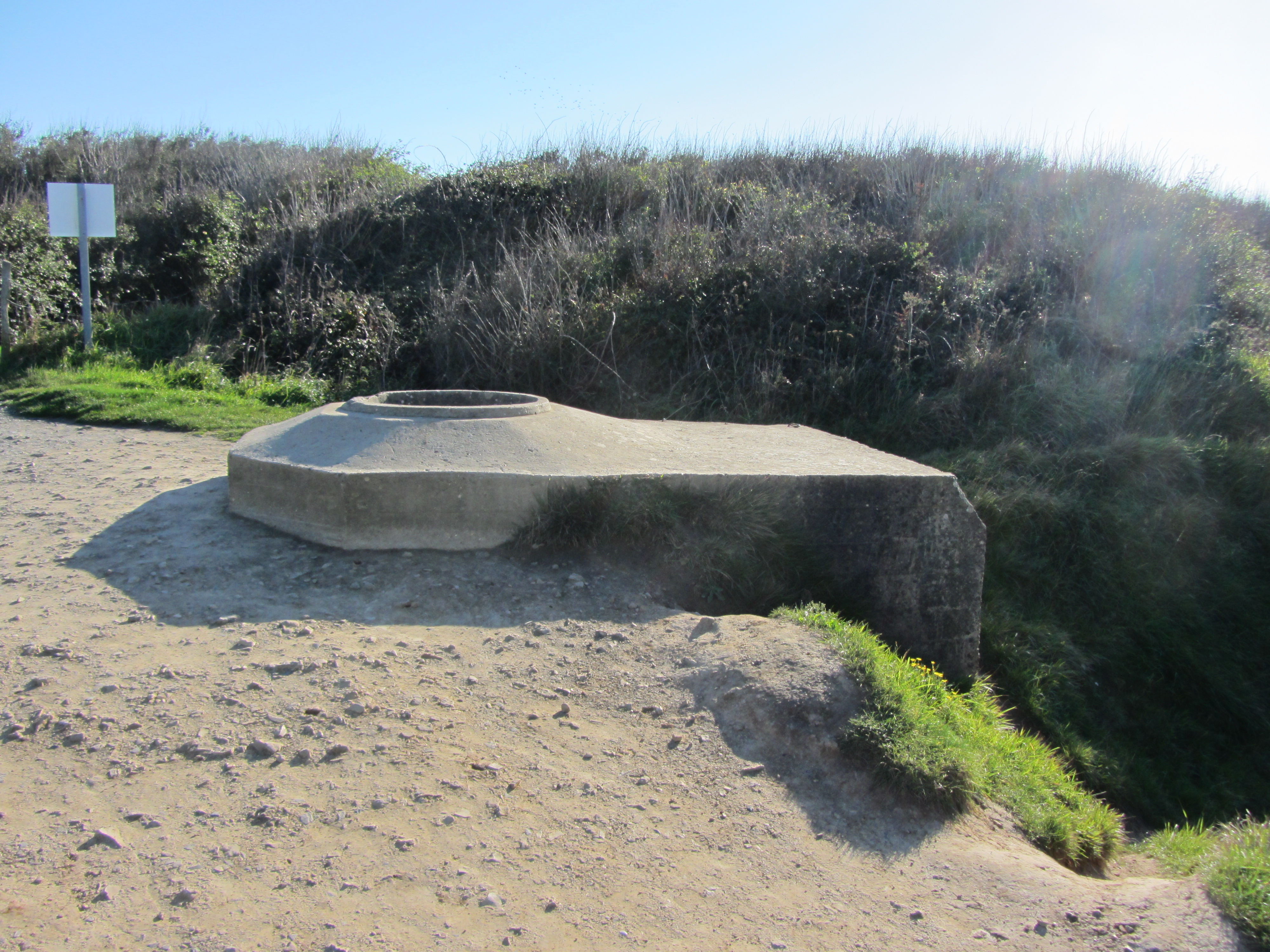
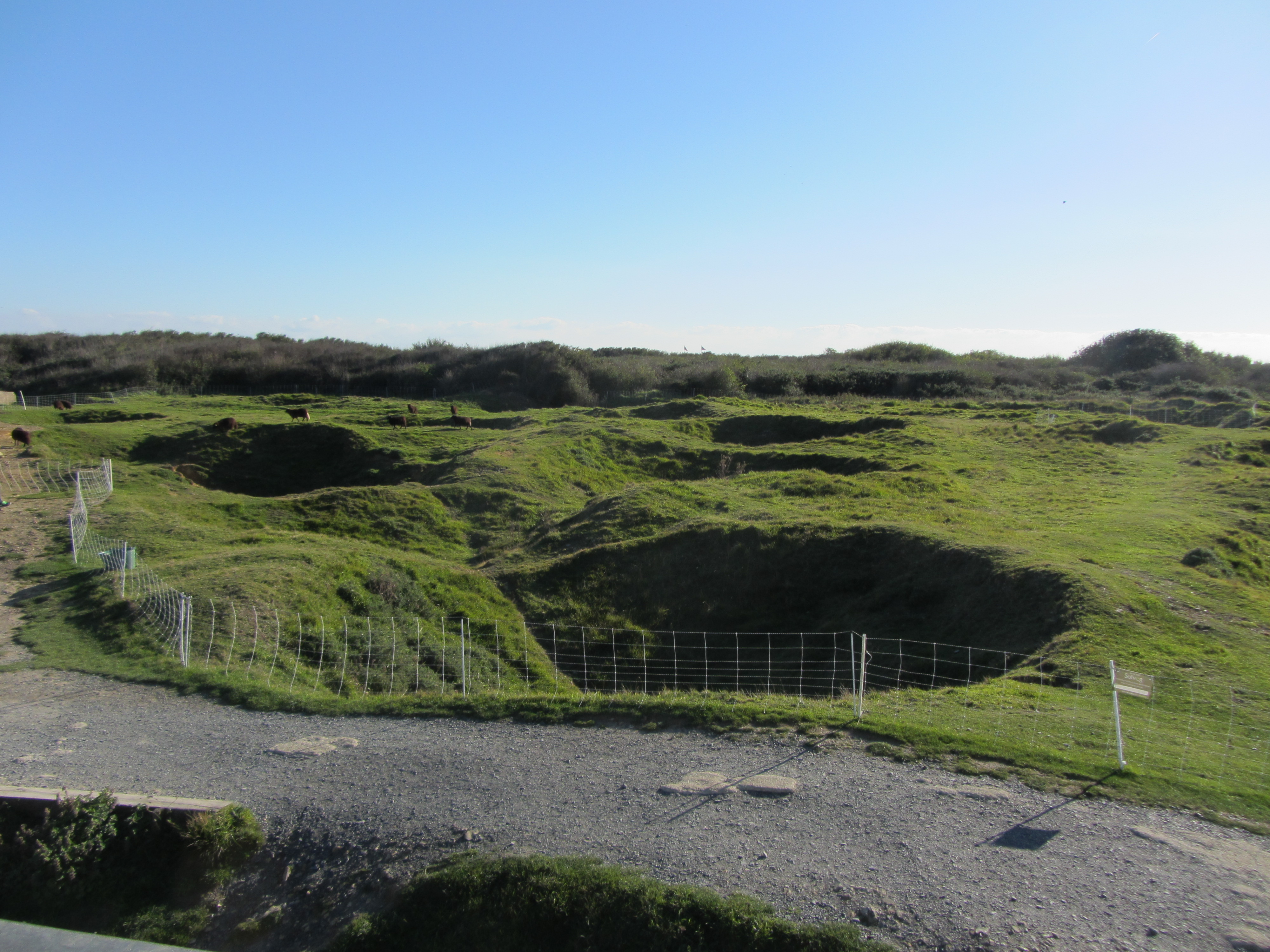
As it was in Juno beach, it was very surreal to be there, knowing what happened on that point 71 years ago. There are still some bunkers intact but the most noticeable markings of the event were the numerous craters caused by the air and naval bombardments. Some of the bunkers were in pieces. Some of the circular gun pits, which housed the 155mm guns, are still there. As we walked about the site I tried to envision what the American Rangers had to endure to succeed at their mission.
We also made a brief stop at Arromanches, located on the British Gold beach, where one of the two portable temporary Mulberry harbours is located that were built and operational within three days of the invasion. Mulberry A was for the Americans at Omaha Beach and Mulberry B was serving the British and Canadians at Arromanches. A heavy storm destroyed the American harbor on June 19, but Mulberry B remained in use for eight months. Block ships were sunk off the Normandy coast to create protection from the open sea. These ships are still there and my wife and I marveled at the ingenuity of the Allied planners. In the first 100 days following D-Day, the harbor landed over 2.5 million men, 500,000 vehicles and 4 million tons of supplies for the Battle of Normandy; successfully contributing to the liberation of Europe and the defeat of Nazi Germany.
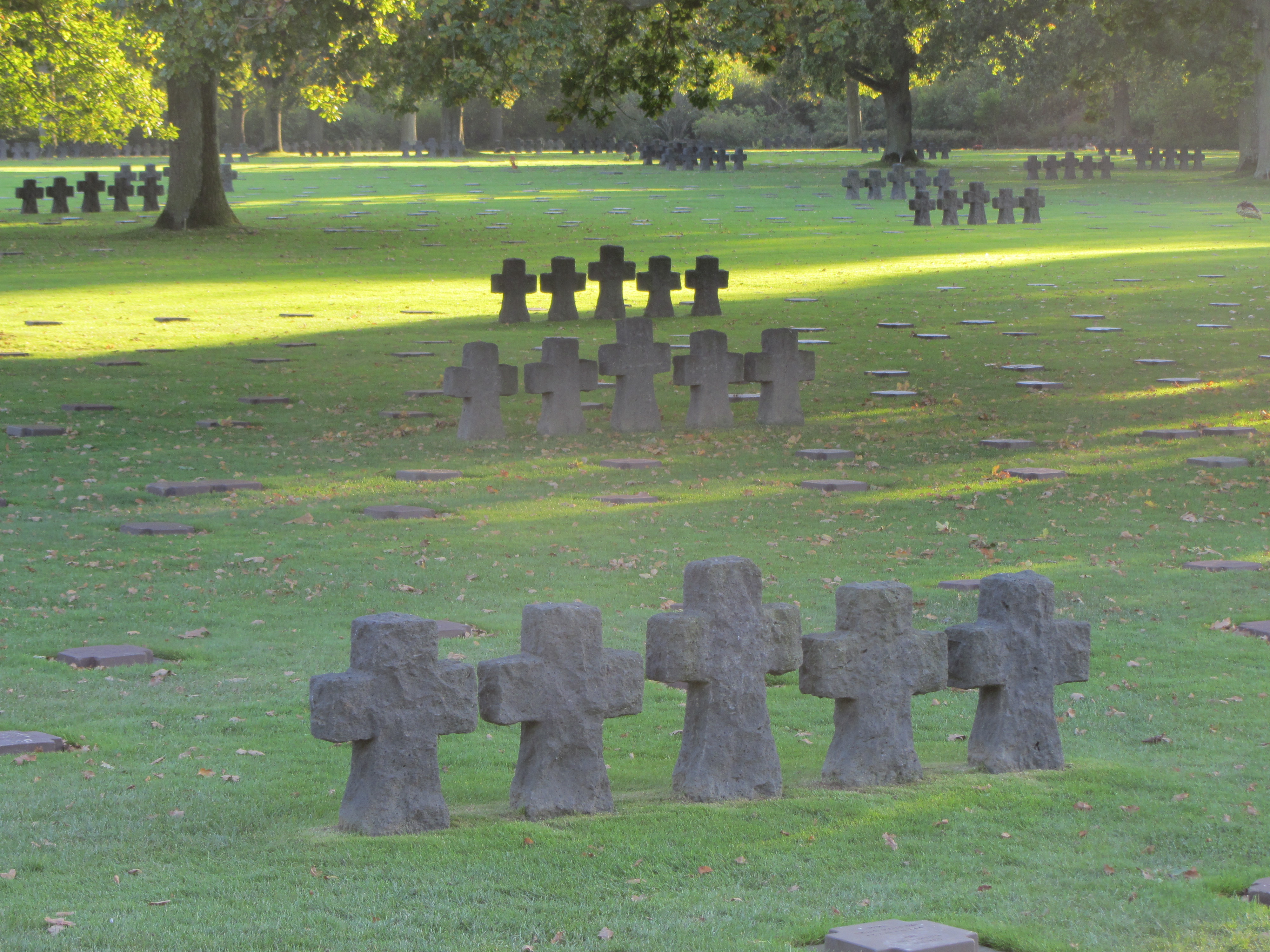
We also visited two of WWII cemeteries; the Canadian cemetery and the German cemetery. Again we were in admiration at how well-kept these cemeteries were, regardless of nationality. We were also saddened when looking at the various head stones when we learned many, many of these soldiers who died ranged between ages of 17 to 23. It was especially heart retching for my wife and I since our son is presently aged 21. Another very stirring moment for us was when we read the sign at the entrance of the German cemetery. The sign read, “Until 1947, this was an American cemetery. The remains were exhumed and shipped to the United States. It has been German since 1948, and contains over 21 000 graves. With its melancholy rigour, it is a graveyard for soldiers not all who had chosen either the cause or the fight. They too have found rest in our soil of France.” As I’ve stated before, this speaks of the nature of the French nation. They have a great respect for the dignity of all fallen soldiers. The French value and honor all soldiers, no matter what side of the war they fought for.
As we did for the WWI soldiers, my wife and I now have a whole new appreciation for the WWII soldiers and the sacrifice they made to liberate France and other European countries from Nazi oppression. I will attend the Remembrance Day ceremonies this year with much more gratitude and appreciation of all soldiers, especially knowing what the soldiers of WWII had to sacrifice to achieve their assigned goals.




 Tuesday, March 22, 2016 is World Water Day. I had not heard of this day until recently when reading a news article, so I decided to do some research to find out why a day deemed World Water Day was created. What surprised me is this day has been held annually since the 22nd of March 1993, which was the first World Water Day. How could there have been twenty-three World Water Days in the past and I had not heard of it before? Do I live in a bubble? I’ve always known that fresh water was, and still is, a precious resource and that it is rapidly disappearing due to pollution and melting glaciers. In fact, I taught many lessons to my students about it over the years, but when I did some research on the topic, I was surprised by what I learned.

 I recently read a book titled, Inconvenient Indian by Thomas King. What surprised me, was that Mr. King claims that the massacre that allegedly occurred at the Alamo was a fabrication, a story created over the years. But that is not what history says.
 If you don’t know much about the legacies of Residential Schools, here is another lesson. (It’s the teacher in me. I just have to teach). After the closing of the schools, which operated from the 1870s to 1996, and held some 150,000 aboriginal children over the decades, many former students made allegations of physical, psychological, and sexual abuse, plus accusations of neglect. The sole aim of residential schools was to assimilate First Nations children into the European culture. There were also student deaths at these institutions as well as burials of numerous deceased students in unmarked graves without the notification or consent of the parents. I personally have heard residential school survivors tell their stories and break down weeping when doing so. It is a very painful topic for many of them. This is not a part of our history that I am proud of. I have also taught about the atrocities that have occurred in these schools and witnessed students distraught because of it. Students instinctively know, as all of us do, that the way the indigenous people were treated was unjust.
  Then there is the missing and murdered aboriginal women in Canada, an issue that First Nations people have been lobbying our government to conduct an inquiry on for at least a decade. The following statistics are from the
  The October 2015 federal election saw



 Sommer Season all year