

It astonishes me the number of beautiful places this planet has to offer for us humans to appreciate. I consider myself blessed because my wife and I have seen a handful of them. When I look at websites advocating must see places to visit in the world, I am surprised at how many I have seen. These sites often mention places such as Santorini in Greece, Venice in Italy, Paris in France, Rome in Italy, Stonehenge at Amesbury, England, Glacier National Park in Montana, USA all of which I have visited. With the exception of Glacier Park, these places all involve flights over oceans but we don’t have to travel across oceans to see beautiful places. There are so many places right here in our own country. The Internet has many lists of must see places on it and many of these lists include places in the Canadian Rocky Mountains; places like Banff National Park, Lake Louise, Jasper National Park, and Maligne Lake in Jasper National Park.
The Reader’s Digest’s article, 10 Places In Canada Every Canadian Needs To Visit includes Banff National Park and Lake Louise on its list. CNN’s article, 20 of the most beautiful places in Canada includes Jasper National Park and Lake Louise on it. When you search the Internet for must see places in Canada, the Canadian Rockies, Banff National Park, Jasper National Park or Lake Louise will almost inevitably show up on the list.
The Canadian Rockies are an assemblage of mountains that extend to parts of British Columbia and Alberta. They were formed about 55 to 80 million years ago in what is called the Cretaceous era. These mountains are made up of layered sedimentary rocks and when you take the time to look you can see the layers. Their peaks are sharp and pointy because of glaciers on it.

There are five national parks that are part of the Canadian Rockies; these are Yoho, Jasper, Kootenay, Banff and Waterton. Banff National Park was the first to be formed. The UNESCO World Heritage Site is made up of four Canadian Rocky Mountain national parks and has a total protected area of over 20,000 square kilometres. If you are lucky enough you might see animals such as grizzly or black bears, deer, elk, moose, cougars and bighorn sheep. My wife and I caught a glimpse of a black bear and numerous bighorn sheep. We also saw some moose. The Canadian Rockies have been likened to the  African Serengeti in terms of the abundance of wildlife. When you drive in Banff National Park you’ll notice places where wildlife can cross the Trans-Canada Highway on specially built over and under passes, designed to reduce collisions with the animals.
My wife and I just recently spent a week in the Canadian Rocky Mountains. We visited three of the five national parks; Banff, Jasper and Kootenay. Even though I’ve been to the Rockies many times, I still find the beauty of these majestic mountains to be breathtaking. When I’m among these gigantic, unique pieces of rock I feel a closeness to our creator God especially when we are walking on one of the numerous beautiful hiking trails. My wife and I spent three days in Jasper National Park where we went to Maligne Lake for the first time. It was truly one of the most beautiful places I have ever seen.

Another thing that always amazes me, or both of us really, is the number of people from all over the world you meet or the variety of languages you hear. We heard languages in French, German, Chinese, Japanese and some we didn’t recognize. We met people from France, China, United States, and Germany. It truly is a global village. All of these people were doing the same thing as we were. They were taking in the beauty of the Canadian Rockies.
It astounds me the number of people I know who live in the province of Alberta, Canada, that have never been to the Canadian Rockies. We live on the east side of the province of Alberta, probably one of the farthest points from the Rockies yet both my wife and I have been there too many times to count. It takes us six hours to drive to the Jasper town site. Yet, so many people who live even closer to the west side of the province where the Rockies are located have never taken the time to visit those majestic sites.
There are so many wonderful places to see in our world, many of them in our own back yard. Life is too short to procrastinate seeing them. Now I know it is human nature to make excuses for not doing it; excuses like it costs too much, not enough time or work is just too important to miss. I just think it is sad that people don’t take the time to see such wonderful formations of nature. It is so important to spend time seeing what nature has created and just being in nature. It doesn’t have to be the Rocky Mountains although if you haven’t seen them you definitely should. There are so many benefits to being in nature. According to the article, Get Outside! 7 Scientifically-Backed Health Benefits of Being in Nature, spending time in nature improves attention spans, boosts serotonin (the feel good neurotransmitter) levels and shows increased activity in the parts of the brain responsible for empathy, emotional stability, and love. Some research suggests urban environments do the same for fear and anxiety. Being in nature is good for your health. Take the time to experience a bit of heaven on earth. It is worth the effort. Or as the French author, Jules Renard says, On earth there is no heaven, but there are pieces of it.
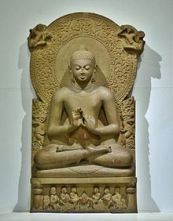 I’ve always been intrigued with Buddhism. The founder of Buddhism is said to have declared, “What we think, we become.” What does this really mean? I have been pondering that question for some time now. Others have said something similar. Ralph Waldo Emerson, an American essayist, lecturer, and poet, once said, “We become what we think about all day long.” Henry Ford, the founder of the Ford Motor Company, once said, “Whether you think you can or can’t, you’re right.” That is just a sampling of like-minded thinkers. So that begs the question, what do these quotes really mean?

 Tuesday, March 22, 2016 is World Water Day. I had not heard of this day until recently when reading a news article, so I decided to do some research to find out why a day deemed World Water Day was created. What surprised me is this day has been held annually since the 22nd of March 1993, which was the first World Water Day. How could there have been twenty-three World Water Days in the past and I had not heard of it before? Do I live in a bubble? I’ve always known that fresh water was, and still is, a precious resource and that it is rapidly disappearing due to pollution and melting glaciers. In fact, I taught many lessons to my students about it over the years, but when I did some research on the topic, I was surprised by what I learned.





 So always remember that someone is likely seeing you, maybe even looking up to you, and preparing to follow your example. Let this guide your next choice.

 Now I have been asked over the years why I would go into the back country where there is no contact with the outside world; where there are bears and cougars and it can sometimes get to below freezing at nights. Those are good questions. My first response to those questions is always that it is quality time with my son. But it is more than that. I do it for the adventures. There is nothing like being in nature and the experience of standing on top of mountain with the wind blowing through your hair. The beauty that Mother Nature has to offer is far-fetched until you see it, and even then it can be surreal. For me, being in the wilderness is a chance to touch the divine. It is during those times that I feel closest to God or the Universe.
 Sommer Season all year