
 In 2017, US President Donald Trump claimed that political correctness had gotten in the way of celebrating Christmas saying, “We’re getting near that beautiful Christmas season that people don’t talk about anymore. They don’t use the word Christmas because it’s not politically correct.” (see Trump: ‘We’re saying merry Christmas again’). It seems every holiday season there is another debate about whether to say “Happy Holidays” or “Merry Christmas.” I (#blogger #blog #somseason #YA #authors) wrote about this in Christmas Controversies 3.0 and Christmas Controversies 3.1 in 2017.
The ridiculousness has continued this year as the National Post reports that Canada’s Federal commission declares Christmas holiday is ‘religious intolerance’. The Canadian Human Rights Commission — an agency created in 1977 to enforce the Canadian Human Rights Act and is fully funded by the Canadian government—argued that a day off on Christmas is ‘discriminatory.’ Christmas, really? Christmas has been around since at least the 4th century (more on that later), and suddenly it’s discriminatory?
The commission published a Discussion Paper on Religious Intolerance saying that the Christian holidays of Christmas and Easter get days off, while non-Christians have to “request special accommodations to observe their holy days.” The discussion paper cited the statutory Christmas holidays as a form of “religious intolerance” arguing that this constitutes a “form of discrimination.”
That is a ridiculous argument because polls clearly show that non-Christian Canadians almost universally have no problem with Christian holidays. A Leger poll from 2022 asked non-Christian Canadians whether they were offended by the greeting “Merry Christmas.” Of respondents, 92% said “no.” It also asked Canadians of all religious faiths if Christmas if “religious” holidays should be struck from the country’s official statutory holidays. Only 6% said “yes.” That means potentially, only 6% of Canadians think Christian holidays are discriminatory. Does that warrant removing Christmas as a statutory holiday? Absolutely not.
 Then there was the law Student’s request to display a menorah prompting the University of Alberta to remove Christmas trees instead. A University of Alberta law student is frustrated after her request to display a menorah alongside a Christmas tree in a study space led the faculty to remove the Christmas trees. The student says she never took issue with the Christmas trees. The decision to remove the trees and confine any potentially non-secular displays to an out-of-the-way room left her baffled. Now that seems a pretty extreme reaction to me, and borders on bullying (#bullying, #antibullying).
Christmas is the festival that Christians celebrate the birth of Jesus. Is Christmas really the day Jesus was born? It seems the birthdate of Jesus is in dispute as indicated in the article, Why scholars disagree with Christmas birth date. The article states that “despite scholarly research regarding Christmas Day, most ‘experts’ are still unsure about the true date” of Jesus’ birth. The article, On what day and month was Jesus born? using scriptural evidence, places Jesus’ birth between September 16 and 29, while other theologians have suggested that Jesus was born sometime in the spring. This is based on the biblical narrative that shepherds were watching over their flocks in the fields on the night of Jesus’ birth. When I studied Biblical Theology, we were taught that the biblical stories were myth, that they were a symbolic narrative, and not historical.
Why do we celebrate Christmas on December 25th? According to Wikipedia the Roman Empire held a festival called the Dies Natalis Solis Invicti (‘birthday of the Invincible Sun’) on 25 December, the date of the winter solstice in the Roman calendar. It was dedicated to the sun god “Sol Invictus” (the Unconquered Sun). Some argue that this was the pagan festival that was Christianized . When I took Biblical Theology courses, we were told Christmas was a pagan festival that was Christianized, so that makes sense.
According to The History of Christmas, the church ‘Christianized’ the Saturnalia festival in the 4th century CE, hoping to take the pagan masses in with it. This holiday was a week-long period of lawlessness celebrated between December 17-25. Roman law dictated that no one would be punished for damaging property or injuring people during the weeklong celebration. The festival began when Roman authorities chose “an enemy of the Roman people” to represent the “Lord of Misrule.” Each community selected a victim whom they forced to indulge in food and other physical pleasures throughout the week. At the festival’s conclusion, December 25th, Roman authorities believed they were destroying the forces of darkness by brutally murdering this innocent man or woman.
This same article refers to the ancient Greek poet and historian Lucian, who in his dialogue entitled Saturnalia, describes the festival’s observance. He references human sacrifice, widespread intoxication, going house to house singing naked, rape, other sexual activities, and consuming human-shaped biscuits.
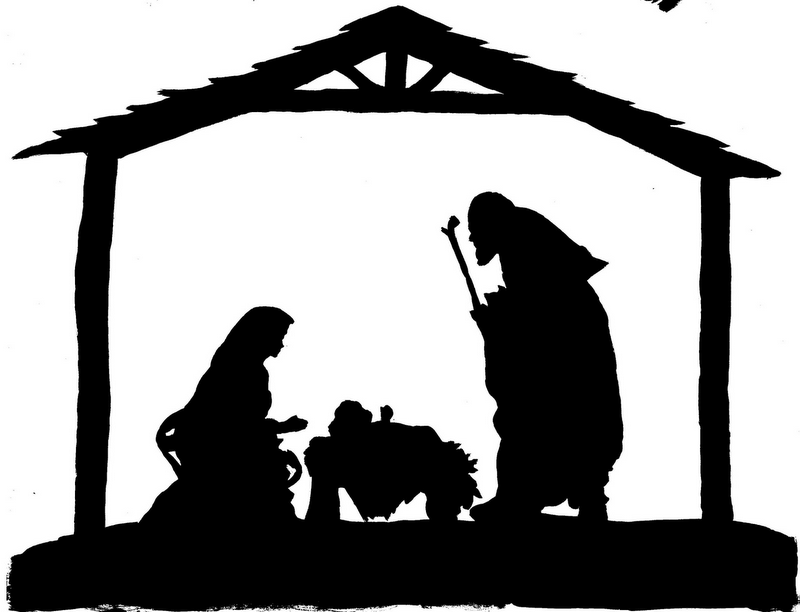 According to that article, the DePascha Computus, an anonymous document allegedly written around 243 CE, placed Jesus’ birth on March 28. Clement, a bishop of Alexandria (d. ca. 215 CE), thought Jesus was born on November 18. Joseph B. Fitzmyer, professor of Biblical Studies at the Catholic University of America guesses that Jesus birth occurred on September 11, 3 BCE. He based his guess on historical records.
All of this leaves me with many questions. Why would church fathers choose to Christianize a pagan festival involving such debauchery? Why would church fathers choose December 25th as the birth date of Jesus when most ‘experts’ are unsure about the true date of Jesus’ birth? Furthermore, wouldn’t it make more sense to base the date on biblical evidence placing the date of Jesus’ birth in September or sometime in the spring? Is there some hidden relevance to the December 25th date that is being kept from us?
According to The History of Christmas, many of the most popular Christmas traditions, including Christmas trees, mistletoe, Christmas presents, and Santa Claus, are modern embodiments of depraved pagan rituals. The article provides a more detailed explanation of this. I doubt many Christians know that. Why would church fathers allow these traditions to creep into the said birthdate of Christian saviour, and the one that Christians proclaim as the Son of God?
No one can deny that Christmas is a hugely commercialized holiday. Christmas focuses on the buying and selling of gifts, with its advertising to convince people what items they should buy as Christmas gifts. How Did Christmas Become Commercialized? It’s not uncommon to hear slogans like “Keep Christ in Christmas” and “Jesus is the Reason for the Season” because Christmas has become so commercialized. There is even a Keep Christ in Christmas Evangelization Program, a campaign that sends religious Christmas cards throughout the US.
I am not trying to put a downer on the Christmas season. Christmas was my favourite time when I was a kid. As an adult, Christmas doesn’t make sense anymore. December 25th is likely not the actual birth date of Jesus. Governments and media are now calling Christmas a form of “religious intolerance.” Some universities are removing Christmas decorations for reasons that are unclear, likely because Christmas trees are politically incorrect. Calgary’s mayor, Jyoti Gondek, declined to attend a Hanukkah event at city hall, claiming it had “been repositioned as an event to support Israel” and its invasion of Gaza as shown in the news article, Social media reacts to Calgary mayor’s decision to not attend City Hall menorah lighting. It seems Religious festivals are becoming politicized.
As Andy Williams’ traditional Christmas song, “It’s (Christmas) the Most Wonderful Time of the Year” says, Christmas is supposed to be the most wonderful time of the year. What has changed?








 Sommer Season all year