“You’re Chicken”

Anybody that knows me understands that I am not one of the bravest people on the planet.  I do not like speed so I avoid being in fast cars, speed boats and roller coasters.  Moreover, I am afraid of heights. I was terrified standing on the CN Tower in Toronto, Canada. You could not pay me enough to stand on that glass bottom.  Strangely, standing on top of a mountain or walking along a trail with a steep cliff beside me, I’m not afraid.  But put me on a roof to shingle it, I’m terrified.  My brothers, when asking for family members to help shingle a roof don’t even bother asking me because they know I’m useless due to my fear of heights.

disneyland-resort-logo-540154My wife loves anything Disney, so in 2004, we took a family vacation to spend time at Disneyland in California, U.S.A.  I will admit, to use the idiom,  that I was a “chicken”.  I refused to go on anything labelled a roller coaster.  That meant that the Space Mountain ride was out.  We were in line to experience the ride Big Thunder Mountain Railroad when I noticed a sign stating that the ride was a roller coaster.  I questioned my wife about it and she assured me it was a very mild roller coaster.  So I went.  That was a one time experience though.  Then there is California Adventure Land. They have the California Screamin’, a huge roller coaster.  There was no way in hell that I was going on that.  Then there was the then newly opened The Twilight Zone Tower of Terror ride.  That is a ride that simulates an out of control elevator dropping.  That sounded just too terrifying for me, so I used my “I’ll pass” card.  Let’s face it, I am just a big chicken.

Three years ago, in 2013, my daughter volunteered in South Africa for two weeks with a group of university students.  She also spent two weeks traveling on safaris and experiencing Africa.  My daughter declared her  motto to be, “This is a once in a lifetime opportunity, so I’m going to experience all that I can.”  I was so proud of her.  She tried new foods such as crocodile, wildebeest, and warthogs. She went shark cage diving.  She did cliff diving, surfing and caving.  The list goes on and on. I thought she was incredibly brave.
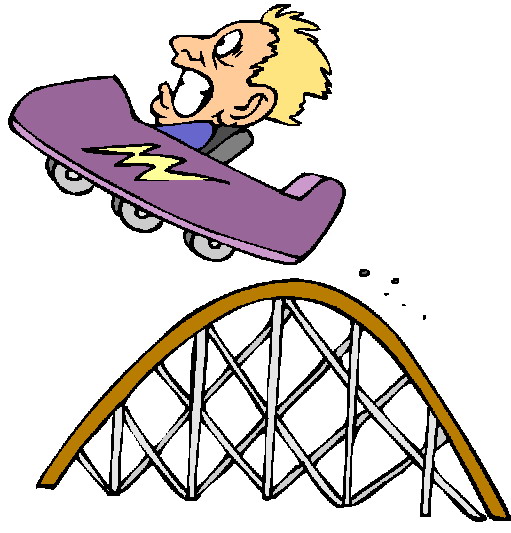
clip-art-rollercoaster-347569That same year, my wife had a work related conference in Anaheim, California,  so we decided to make a vacation of it.  I, along with two of our children, went with her to once again experience Disneyland and California Adventure Land. So I thought, if my daughter can be brave and was willing to try new things in Africa, then I can be brave too.  My new motto for the trip was, “If my daughter can try new things, so can I”.  It was  carpe diem; “seize the day” for me. No one was going to accuse me of being chicken this time.  So off we went to experience the theme parks.

1280px-Tower_of_terror_dca
Disneyland’s Tower of Terror

My wife loved Space Mountain, so I said, “I’ll try that.” I did but only once.  Then there was the The Twilight Zone Tower of Terror which I was terrified to go on in 2004.  Not this time.  While waiting in line, I’ll be honest, I was nervous, very nervous actually, but if my daughter could be brave so can I.  The ride turned out to be fun.  In fact, we went three more times after that. I drew the line at the huge roller coaster known as California Sceamin’.  My wife and son loved it.  My eldest daughter and I just waited for them.  She is a bit like her Dad. She is not overly brave but she did try most rides like me.

We also spent a day at Universal Studios in Hollywood, California. I am so proud of myself as I did the new Transformers: the ride 3D and Revenge of the Mummy: the Ride, both of which are a type of roller coaster.

So, I learned something on that trip.  It is okay to try new things; to have new experiences.  Sometimes we just have to face our fears and ‘seize the day’.  I made a deal with myself then to take some risks and to just go for it, although I do draw the line at extreme activities such a sky diving and parasailing. Author Neil Gaiman in The Graveyard Book, says, “If you dare nothing, then when the day is over, nothing is all you will have gained.” That is so true!

The article, Seeking the potential vs the risk, in Huffpost Business says,

Taking risks empowers you to establish new limits in your mind. We all have boundaries or a comfort zone where we’d like to stay and many have misconstrued visions of what we think we deserve or are capable of accomplishing. When you take risks, you can eradicate that thinking, establish new boundaries, improve your outlook on life and your ability to achieve on high levels.

That is what happened to me. I like my comfort zones. In my mind I set limits like “no roller coasters” but when I decided to take risks, I eradicated those old limits and established new boundaries. I decided that I could handle some roller coasters and even an out of control elevator ride. So take some risks. Have some adventures in life. Life is too short to be scared. Helen Keller in her book,  The Open Door says, Life is either a daring adventure or nothing at all.” I prefer to have adventures. You should too.
Someone is Watching You

I regularly receive emails from various websites. Most of them are emails containing inspirational quotes or sayings; basically emails that encourage us to be better human beings. I recently received this one.

Remember that someone is looking up to you now, preparing to follow your example. Let this guide your next choice.

We often think that we are operating in a vacuum, that no one is watching us, that our actions are mostly private. Yet, what if you knew that your every thought, word, and deed today was going to be imitated by one who admires you?

I’ve been pondering on this email for a while now. Being in the teaching profession for 35 years I know unreservedly what being watched is like. Whether we teachers like it or not, we are always being watched by our students and their parents. It is a rare occurrence for me to not be seen by a former student of mine when out in public. It is not unusual to have some young person from the school I taught at in my community to yell out to me with a greeting or to wave at me when I am out and about in the community. It was also common to have a student, when I was still teaching, come up to me and tell me that they saw me in some store or walking on the street, or some such thing. As a teacher, you are always in the public eye. Now I admit, I have always had struggles with this. I sometimes avoided attending community events because of it. It has also given me a much greater compassion for our political leaders, entertainers, sports stars and other people who are even under more scrutiny by the public.

I often think of celebrities and how difficult it must be for them. Not only do random strangers notice them, but many of them are constantly followed by the Paparazzi. There is a reason that LAX is providing a new option for Hollywood celebrities looking to skirt airport paparazzi. The article states LAX is set to approve plans to convert a cargo office into a small new terminal that will allow passengers to drive into a secluded entrance, get screened by the Transportation Security Administration privately and be driven across the airfield straight to the stairs to board their flights.

In August of 2015, Buckingham Palace issued an appeal to world media not to publish unauthorized images of two-year-old Prince George, the elder child of Prince William, Duke of Cambridge, and Catherine, Duchess of Cambridge. He is third in line to succeed his paternal great-grandmother, Queen Elizabeth II, after his paternal grandfather Charles, and his father, William. (see Prince George harassed)

The palace says in recent months, photographers have done such things as used long-range lenses to photograph the Duchess of Cambridge playing with her son in private parks, have monitored the movements of Prince George and his nanny around London parks, as well as observed movements of other household staff, pursued cars leaving family homes, and used other children to draw Prince George into view around playgrounds. Whether people are a member of a Royal family, a Hollywood celebrity, or politician, these people have a right to privacy, although I am certain that they are all very aware that they are in the public eye.

dead-poets-society*580xx936-624-0-45
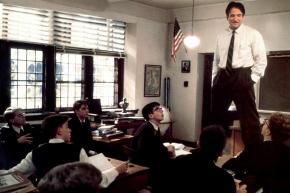
Scene from Dead Poet’s Society

Over the years I have become more and more aware of how much I was being examined. Sometimes when talking to former students I will ask them what they remember about my classes. I have yet to have a former student tell me it was one of those brilliant lessons (at least I thought so) I had taught. Instead their response to my question is always connected to relationship. Former students would tell me it was most often something I said to a student. I had one former student tell me that it meant the world to him when I told him in school, paraphrased “You’re a lousy student but you are a really nice guy.” He said he appreciated the fact that I still liked him even though he wasn’t the best student. Another student told me that I was one of the teachers that cared; I was one of the teachers that always listened and helped. Now I write this with the risk of sounding vain but the point I am making is that students notice. They notice when you care. They notice when you are kind. They know when you like them or not.

A person does not realize how much they have impacted a student until they receive letters from them. One student wrote, “I haven’t been in this school very long; you were one of my first teachers… During the many classes we had together you made it very enjoyable and you were very understanding when people didn’t have a clue on what you were talking about.” Another student in a “Thank You” card wrote, “Thanks for being a part of my high school career. I know we had our ups and downs, but just know you have made a difference in my life, and every one else’s”. Still another student wrote in a letter, “I would like to start this letter of appreciation to you by saying what a great teacher you are. Whenever I needed help, you would come right over and do your best to help me understand and that goes for the rest of the class too…I feel lucky to be in your classes at school.” My intent here is not to boast but to demonstrate that people notice how you treat them, what you say to them and most importantly your attitudes towards them.

In the 1980s I worked at a summer camp for three years. I was part of a team that planned, organized and implemented the programs. One of the first weeks of camp we did was what was called Counsellors Week. It was the week where we prepared the counsellors for the weeks where they would be working with the 9, 10, 11, 12 and 13 year olds. I just went about doing my duties as a team member and being me. I had no idea how much I had impacted this one counsellor until I received a letter from him a number of weeks later. In the letter he told me that he had watched me during Counsellor’s Week, that I inspired him, and that he wanted to eventually be part of the team at camp so he could emulate me. I had no idea that I had such an impact on this young man. To say that I was shocked when I got the letter is an understatement. The point is people are noticing you even when you are not aware of it.

During a parent teacher interview many years ago, I expressed concern to the parents that I had noticed a change in their child.  I was stunned to learn that the reason for this change was due to something I had said to the child; something the young person took offense to. The choices we make affect others whether we’re aware of it or not.

lg-Eyes-OjosSo always remember that someone is likely seeing you, maybe even looking up to you, and preparing to follow your example. Let this guide your next choice.

We are NOT operating in a void where no one is watching us, that our actions are mostly remote. Someone who admires you will reproduce your every thought, your every word, and your every action? Make your next choice with this in mind. Your choices could impact another person for the rest of their lives. That could be positively or negatively. If you are not sure how to be the kind of person that people look up to, check out, How to be a good person that people look up to.


Political Bullying

I have always had an interest in politics. I taught social studies in high school for years and would passionately discuss politics with my students and give projects to them when election campaigns were on. I’ve even scrutineered once.  For those of you who don’t know what a scrutineer is, in the British and Canadian systems, a scrutineer is an official examiner of votes in an election. There was even a time when I would have seriously considered running for office. I used to think politicians were honourable people and individuals to be admired for their service. Now don’t get me wrong, there are still a few honourable people who are leaders. However, as I watch the politicking of our neighbours to the south, I begin to wonder if honourable and honest people enter politics anymore.

You’re probably wondering why I say such a thing. I was recently watching some of the analysis on CNN regarding the most recent primaries that are happening in the United States. One of the commentators was discussing the insults that were exchanged between Donald Trump and Marco Rubio, two candidates running for the Republican Party nomination for president. Here is an article about what I’m talking about –Us Election 2016. There were insults traded between the two candidates about misspelled tweets, wet trousers, wearing makeup and Trump ridiculing Marco Rubio for his love of drinking water.  Apparently, in a State of the Union response speech in 2013 while on national television Mr. Rubio paused for a sip of water. But what really got me were their exchanges about sweating.

Trump
From BBC.com

According to Business Insider, the exchange apparently happened backstage when they were debating one another. Mr. Rubio insinuated that Trump possibly “wet” himself. “He called me Mr. Meltdown,” Rubio went on to say, “Let me tell you, during one of the breaks — two of the breaks — he went backstage. He was having a meltdown. First he had this little makeup thing, applying makeup around his mustache, because he had one of those sweat mustaches. Then he asked for a full-length mirror. I don’t know why, because the podium goes up to here. Maybe he was making sure his pants weren’t wet. I don’t know.

Trump countered with, “He’s with a pile of makeup putting it on his face, I said Marco, easy with the makeup, you don’t need that much. You know the story with Marco. I watched Marco with this man [Christie]. Where Marco, he was right over here I asked him I said are you okay? He looked like he just came out of a swimming pool. He was a mess.” Anyway, I’m sure you get what I’m talking about.

The first question I have is, Why are they throwing insults when I’m sure the American people want to hear about solutions to the problems the country faces? Donald Trump’s campaign slogan is, “Make America Great Again.” A great slogan I might add. But I seldom hear him telling the American people how he intends to do that. What I typically hear is insults flying and Trump being a bully. The other Republican candidates don’t seem to be a whole lot better. Are these the best candidates that America has to offer, candidates throwing insults at one another? Granted, it might be entertaining, but really it’s bullying. No wonder our society has a bullying problem. When I vote, I vote for those candidates that reflect my values, but even more because they’ve explained what they will do to make their country better.

Canada is not immune to such antics. During the last 2015 Federal Election in Canada, the then reigning Conservative government placed ads in local newspapers and flyers, questioning whether Justin Trudeau, Canada’s current Prime Minister, shares their values. The ads tried to foster fear that a Liberal government would legalize marijuana, “making access easier for kids.” The ad warns there would be legal drug-injection sites in our neighbourhoods and that prostitution would be legalized, “putting brothels in our communities.” The Conservative Party attack ad finishes with, “Those aren’t our values either. Vote for your values.”  They were twisting the truth. Mr. Trudeau did make a campaign promise to legalize marijuana, but he never explicitly said he would legalize prostitution or drug injection sites. That was only Conservative fear mongering.

TrudeauOf course there was the long running television ads attacking Mr. Trudeau’s credibility saying, “He’s just not ready” to be prime minister. The Liberal Party of Canada is also guilty of attack ads. In 2006  then Liberal Party Leader Paul Martin approved a controversial ad suggesting the Tories would post armed soldiers on the streets of Canadian cities. During the last weeks of the campaign, the Liberals resorted to negative ads directed towards the Conservative party, attempting to depict its leader Stephen Harper as an extreme right-wing politician. The most controversial ad said, “Stephen Harper actually announced he wants to increase military presence in our cities. Canadian cities. Soldiers with guns. In our cities. In Canada.”

Chretien_AdHistorically, one that stands out for me was the 1993 Progressive Conservative Party attack on then Liberal leader Jean Chretien, who was elected as Prime Minister that year. The ad showed a picture (on left) of Mr. Chretien saying,”Is this a Prime Minister?” This ad was interpreted as mocking Chretien’s slight deformity and speech impediment that were leftover from a childhood case of Bell’s Palsy.  This is a condition where paralysis of the facial nerves occur, causing muscular weakness in one side of the face. To me, that was a “low blow.” That was “hitting below the belt.”

Why does politics have to be about attacking another’s character? Most people I have talked to express how repugnant this type of politicking is. I’m grateful that Canada’s present Prime Minister, Justin Trudeau, did not run any attack ads during the 2015 election and does not resort to bullying to achieve his goals. In fact, in October of 2015 on CTV’s Canada AM Mr. Trudeau said,“I don’t believe in attack ads. I think they hurt your ability to govern and my capacity to stay positive and focused on our platform.” I say kudos to Canada’s Prime Minister. It is time to get back to what I call honourable politicking, where politicians put forth their platforms for making their country great. It’s time to bring honour and respect back to politics.  Time to give us politicians who have creative new ideas, who aren’t bullies, and who want to lead because they want to make a difference in this world. It is a sad state of affairs when the only potential leaders that step forward are bullies who attack their opponents. Enough already!

Adventures with Mother Nature

Every summer since 2002, starting when my son was 8 years old, my son and I have taken hiking excursions to the Canadian Rockies. Traditionally, we go with my brother-in-law and his two sons. Sometimes my brother and his son would join us as well as a friend and his two sons at the beginning. These excursions entail carrying 40-pound backpacks containing food and cooking equipment, sleeping gear and a tent. On some occasions we carried our 40-pound packs 14 kilometres (8.7 miles) before reaching our destination.

Most hikes were to the backcountry, a remote undeveloped rural area accessible only by hiking trails. We would hike to places such as Landslide Lake, Ribbon Lake, Lillian Lake, Utopia Creek, Glacier Lake, and Celestine Lake to name a few. I realize that these names likely don’t mean much to many of you but I can assure you that these settings are some of the most breath-taking, beautiful scenery in the world.

hiking 04 fishing
Lillian Lake

We’ve had some adventures over the years. In what is called Kananaskis Country, we did a day hike to Ribbon Falls after a good night’s rest at the Ribbon Lake campground. To reach our destination, we had to maneuver down a vertical cliff. Thankfully, there were chains attached to help a person propel downward. By carefully finding footholds and hanging onto the chains we successfully got to the bottom part of the cliff. Being that I am afraid of heights, this was a terrifying experience for me. Climbing up the cliff was much easier.

After hiking the Galatea Creek Trail, also in Kananaskis Country, and arriving at our destination of Lillian Lake we put our backpacks down and went to scout out a site to set up our tents. Several minutes went by before we returned to collect our equipment to take to our chosen site. To our dismay, we discovered a chipmunk chewing its way through the top of my son’s brand new pack which I had just purchased for my son. In fact, this was his first trip with it. The chipmunk had chewed a hole into the top of the pack in an attempt to get at the trail mix inside. I was not happy with that animal and yelled some choice words at the creature. Thankfully the little beast was not successful in retrieving any of the trail mix.

Hinton Jasper 277
Geraldine Lake trail (boulder hoping)

One of the most difficult hikes we’ve done was to Geraldine Lakes in Jasper National Park. It involved a very steep climb beside the waterfalls between Lower and Upper Geraldine Lakes where you come to kilometres of boulder hopping across what is called talus field. To say it was exhausting hopping from boulder to boulder carrying a 40 pound backpack is an understatement. At one point I was feeling sorry for myself asking, “Why am I doing this?” Thinking that I was getting too old for this hiking business (I was in my 40s), we came upon a fellow hiker in his 70s. He told us that Geraldine Lakes was one of his favourite trails and that he had hiked the trail many times. I needed an attitude adjustment at that point and my outlook changed after talking to the senior hiker. If a 70-year-old man can hike that trail, I had nothing to complain about being I was 30 years younger than this man. It’s all about your mental attitude. Being in shape, of course, helps.

One of my favourite hiking experiences was our hike to Utopia Creek in Jasper National Park. There were eleven of us on that expedition. On the Saturday evening we decided to take a different trail back so that we could climb up to what is called the Sulphur Skyline, which has some of the most breathtaking panoramas in Jasper National Park. This meant hiking the Fiddle River 11 kilometre horse trail from our campsite, then going up a 700 metre (2300 feet)  elevation gain of about 2 kilometres (1.2 miles) to reach the skyline. The trailhead had a sign saying, “Trail not recommended,”  but this didn’t stop us. What we did not realize is that we had the cross the Fiddle River not once, not twice but six times.

On our first crossing we carefully hopped across the river from boulder to boulder with our backpacks on until the last bit whereby we took our packs off, tossed them a fair distance to another person on the riverbank and then hopped onto the bank ourselves. Thankfully no one fell into the water and our packs remained dry.

During the second crossing we decided to take our hiking boots off, put on our sandals and cross the river in our sandals. The current was strong and the glacier water literally made my feet hurt.

Now the third crossing was done in our bare feet. By this time the ritual of taking off our boots was becoming burdensome, so when we had to cross the river on the fourth, fifth and sixth occasion we just kept our boots on. The current was strong so there were times when I had to hang onto my son, age 12 at the time, to prevent him from being swept downstream by the current. We stopped at a trailhead leading to Mystery Lake to ring out our wet socks and dried our boots as best we could. We eventually made it to the Sulphur Skyline with one of the most spectacular views I have ever had the privilege to appreciate. The chipmunks on top of the skyline were brave creatures as they would come right up to your fingertips looking for food.

In 2009, nine of us spent three hours hiking the 7 kilometre (4.3 mile) trail to Celestine Lake in Jasper National Park. A friend of mine and I were the last to arrive at our campsite as the younger ones of the group were much quicker than us older ones. What made this adventure so memorable was the fact that when my friend and I arrived at the campsite, we were told that we had to go back as there was a forest fire nearby. Now we didn’t believe them, of course, until we saw the warden’s helicopter take off. Apparently, the park warden arrived in a chopper and called to my brother in law saying, “I have some bad news guys. You have to leave as there is a fire in the area.” So it turned out that we were told the truth. We had to spend the next three hours returning to our starting point.

2013-07-13 01.19.38Now I have been asked over the years why I would go into the back country where there is no contact with the outside world; where there are bears and cougars and it can sometimes get to below freezing at nights. Those are good questions. My first response to those questions is always that it is quality time with my son. But it is more than that. I do it for the adventures. There is nothing like being in nature and the experience of standing on top of mountain with the wind blowing through your hair. The beauty that Mother Nature has to offer is far-fetched until you see it, and even then it can be surreal. For me, being in the wilderness is a chance to touch the divine. It is during those times that I feel closest to God or the Universe.
According to the article, How Does Nature Impact our Wellbeing, put out by the University of Minnesota,

“Being in nature, or even viewing scenes of nature, reduces anger, fear, and stress and increases pleasant feelings. Exposure to nature not only makes you feel better emotionally, it contributes to your physical wellbeing, reducing blood pressure, heart rate, muscle tension, and the production of stress hormones. It may even reduce mortality, according to scientists such as public health researchers Stamatakis and Mitchell.”

Maybe that’s why I do it. Without knowing why, it made me feel better. So, go out into nature and reduce your stress. Speaking from experience it works. It is so easy to get so wrapped up in our daily urban lives that we forget what nature has to offer. Visit Mother Nature to de-stress. When you do you will discover that she is worth protecting.


Seek Some Awe

William James, an American philosopher and psychologist, once said, “Religious awe is the same organic thrill which we feel in a forest at twilight, or in a mountain gorge.” I totally understand what Mr. James is communicating. I have had many experiences of awe when out in nature. But first, we should understand what awe is.

The Cambridge Dictionary defines awe as a feeling of great respect sometimes mixed with fear or surprise. Now that word fear usually confuses me especially when talking about awe.  We typically think of fear as being afraid of something or someone. However, Dictonary.com says in addition to being afraid, fear is reverential awe, especially toward God. The Free Dictionary describes awe as a feeling of respect or reverence mixed with dread and wonder, often inspired by something majestic or powerful.

Dacher Keltner, Professor of psychology at the University of California, defines awe as the feeling of being in the presence of something vast that transcends your understanding of the world. So the way I understand awe is that awe are those moments when we experience something majestic or powerful; when we feel wonder. They are the times when we have an encounter with the divine. They are moments when we in some way experience God or the Source of all Being or something mystical. It’s when you are touched at a soul or spiritual level; when what we are witnessing or experiencing is beyond our understanding.

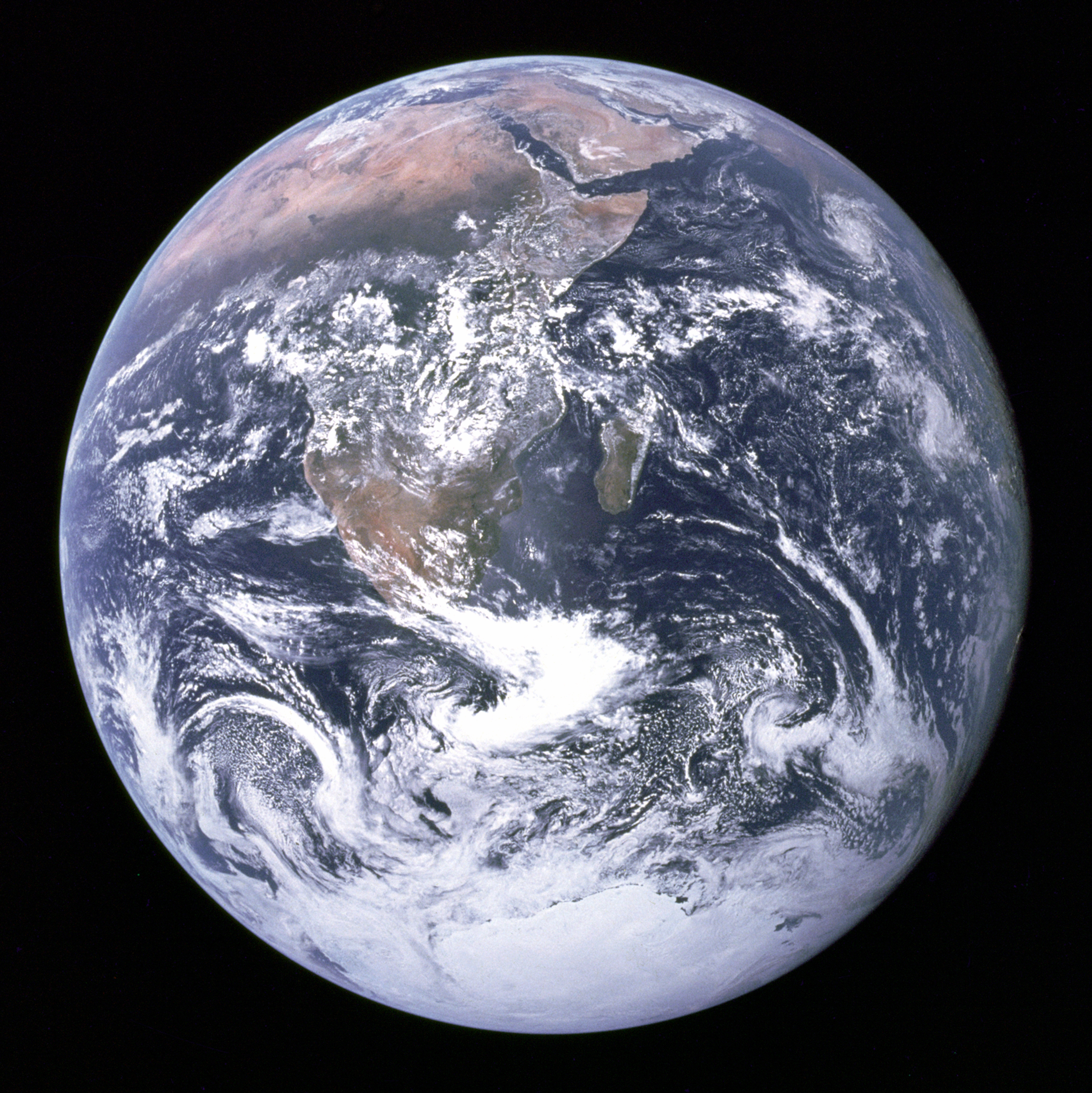
The_Earth_seen_from_Apollo_17Many astronauts talk about their experiences of awe when looking at the planet earth from space. Alan Shepard, Apollo 14 astronaut said, “When I first looked back at the Earth, standing on the Moon, I cried.” Russell “Rusty” Schweikart, Apollo 9 astronaut said, “When you go around the Earth in an hour and a half, you begin to recognize that your identity is with that whole thing. That makes a change … it comes through to you so powerfully that you’re the sensing element for Man.”

One of the best known for his experience of seeing Earth from space is Apollo 14 astronaut Edgar Mitchell who said:

“That’s a powerful experience, to see Earth rise over the surface [of the Moon]. And I suddenly realized that the molecules in my body, and the molecules in the spacecraft and my partners had been prototyped, maybe even manufactured, in some ancient generation of stars. But instead of being an intellectual experience, it was a personal feeling… And that was accompanied by a sense of joy and ecstasy, which caused me to say ‘What is this?’ It was only after I came back that I did the research and found that the term in ancient Sanskrit was Samadhi.”

Oxford dictionary defines Samadhi as a state of intense concentration achieved through meditation. In Hindu yoga, this is regarded as the final stage at which union with the divine is reached. In essence what Mr. Mitchell is saying is he felt some sort of union with the divine.

Susan Santucci, a learning specialist and author says, “Watch for glimpses of the divine order.  Find those experiences, sights, and sounds, which fill you with awe.  Any experience met with awe can be spiritual:  a safari through an animal kingdom, taking in a sunset, a hike to an awesome mountaintop.”

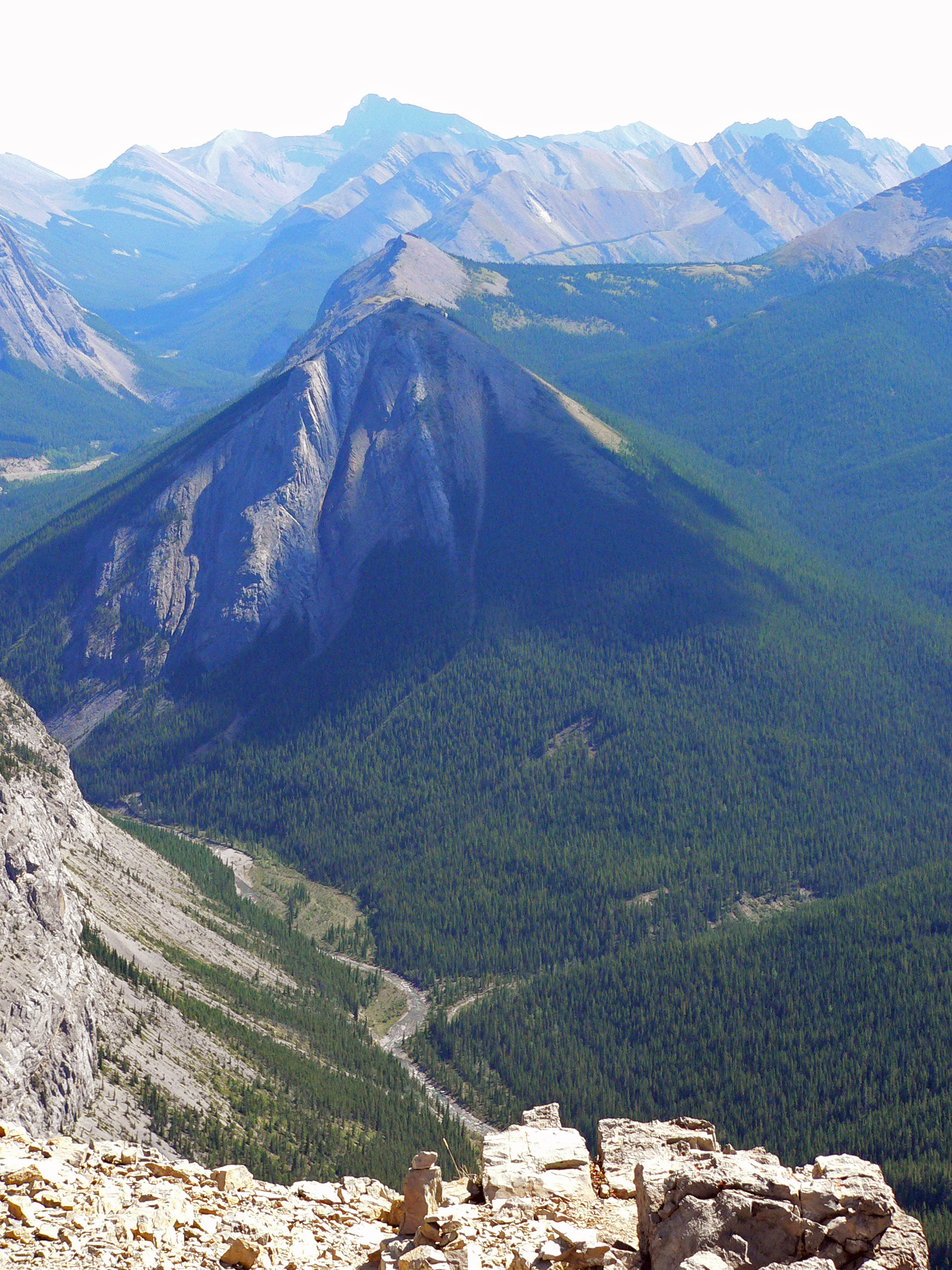
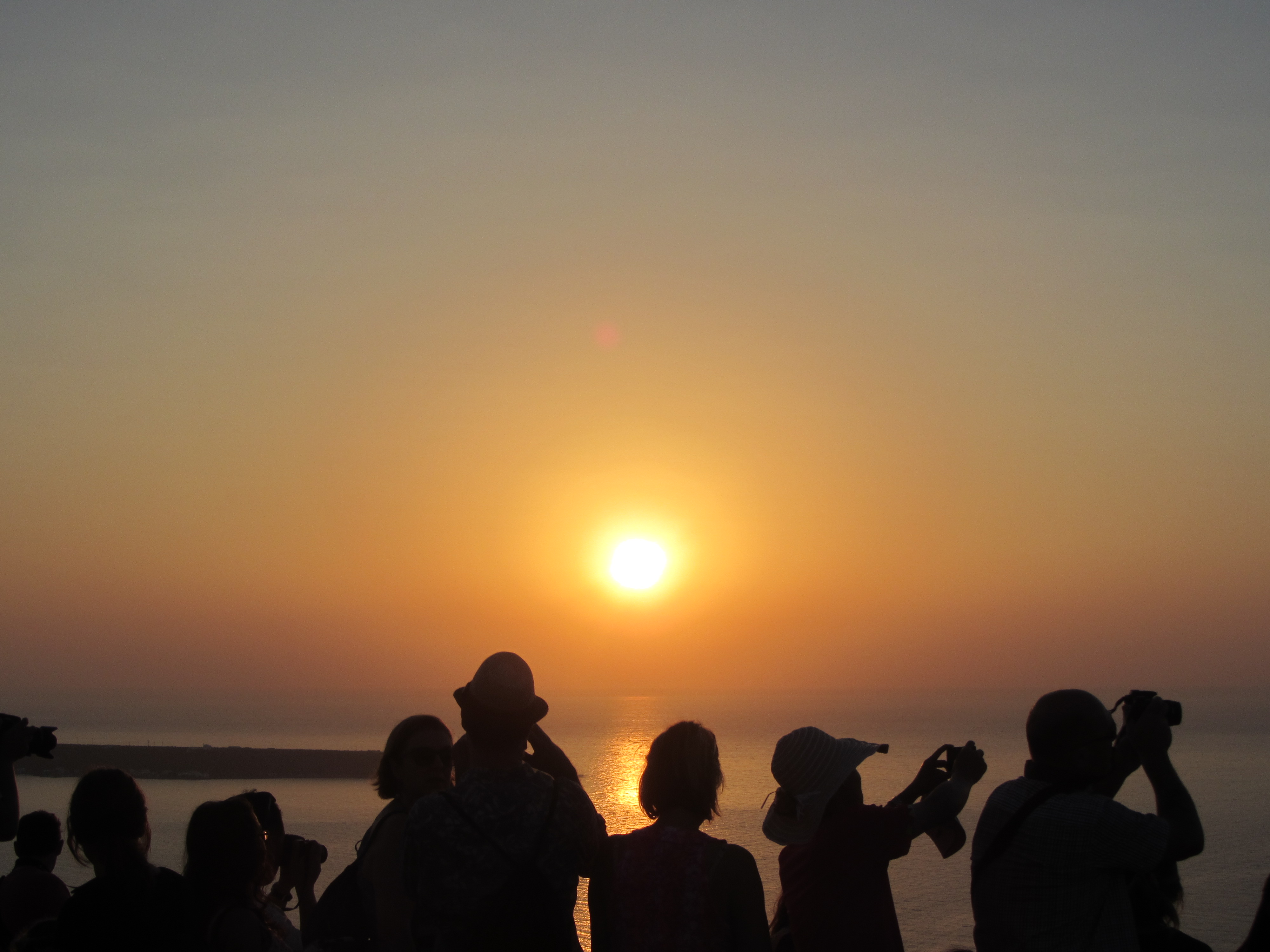
P1030507editedI have hiked in the mountains with my son and friends and family for many years. I have to agree with Susan Santucci as every time I stand on top of a mountain, I feel that sense of awe. For me, it is a spiritual experience. It is an experience where I am overtaken with the beauty of the mountain landscape. I have this same experience when I am at the ocean. Standing on an ocean beach, looking at the vast amount of water in front of me sets me into a state of awe. Sunsets do the same. When my wife and I were in Europe a few months ago, we were blessed to see numerous sunsets and even sunrises. It never ceases to amaze me how beautiful those magnificent colourful skies can be. Each sunrise we beheld on our trip was uniquely beautiful. I have a sense of awe or wonder every time I am lucky enough to see the northern lights or the aurora borealis. For me, each of these experiences were, as Dacher Keltner put it, a feeling of being in the presence of something vast that transcends ones understanding of the world.

Greece

Yes, I understand some of the science behind how mountains are built with colliding tectonic plates. I comprehend that when the Sun appears lower and lower on the horizon, its light needs to pass through more of the atmosphere to reach our eyes, so as the sun drops towards the horizon, it progressively loses violets and blues, then greens and yellows, and finally even the oranges, leaving only the reds behind. It is mind-boggling to comprehend that 70% of the Earth’s surface is covered by ocean, and the deepest known area measures 11 kilometres (6 miles) deep.  I understand that the aurora borealis occurs when collisions between electrically charged particles from the sun enter the earth’s atmosphere and collide with its gases. As amazing as the science is, when I experience the above-mentioned things I experience something beyond my science understanding. My experience is met with awe and wonder. When I am experiencing these things I touch the divine.

I had another one of these experiences when my daughter showed me a video of Jeffrey Li, a 10-year-old boy from Canada, and Celine Tam, a 7-year-old girl from Hong Kong, performing a duet of the song “You Raise Me Up”. I was blown away. These two singers literally took my breath away. What I heard from these two young people touched me at a soul or spiritual level. It made me ask, “How can a seven and ten year old have singing voices like this?” The singing voice of these two “kids” was beyond my understanding. If you haven’t seen the video, check it out below.

Maybe it is time to seek out more of those awe experiences, whatever they may be for you. In fact, doing so just may make the world a better place. Articles such as High on Wonder: People Who Experience More Awe Are Nicer, Better People, and The Key to Fulfillment claim science is providing empirical evidence that awe is the emotion that motivates people to do things that enhance the greater good. If we choose to get rid of the some of the distractions like cell phones and watching television in our lives and seek to put ourselves in new situations such as going to new places, and meeting new people, this may increase our chances of encountering awe. If it is true what the studies are saying, experiencing awe will make us better people. I implore you to seek out some awe and wonderment in your lives. You will be better for it!

There is Hope

Evo Morales, an Indigenous Bolivian who has served as President of Bolivia since 2006, is quoted as saying, “Sooner or later, we will have to recognize that the Earth has rights, too, to live without pollution. What mankind must know is that human beings cannot live without Mother Earth, but the planet can live without humans.”  Mr. Morales is right!  We cannot continue to abuse Mother Earth without dire consequences.

According to The Watchers, a daily news service that relays information on global events, world evolution and transformation, there are many environmental catastrophes taking place on our planet. Here are some that I noted.

A state of emergency was declared over a large natural gas leak pouring high quantities of methane and other gases into a Los Angeles neighbourhood on January 6, 2016. Numerous residents reported health issues and thousands of people have been forced to evacuate the area. The leak of natural gas was first observed October 23, 2015, and is now the largest natural gas leak ever reported.

A flow of toxic mining waste, which spilled into a main river in the city of Mariana, Brazil on November 5, 2015 has traveled at least 500 km (310 miles) through the Rio Doce since the event. The disaster has been proclaimed as the country’s worst environmental catastrophe in history. At least 11 people were confirmed dead, 15 went missing and hundreds of homes were devastated.

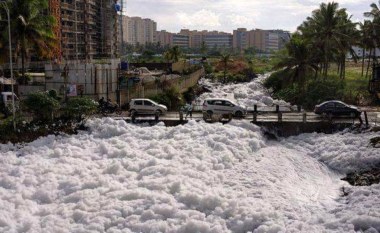
bellandur-new-2
Bellandur Lake, India (dogonews.com)

Bellandur Lake, the largest lake in the city of Bangalore, India, is extremely polluted by a high amount of ammonia and phosphate. From the air, the 36 km (22 miles) wide lake visually appears as if snow is covering a mountain. In reality what looks like snow is a large, white foam covering the water surface, an unnatural phenomenon resulting from extremely toxic, untreated, chemical accumulations. The froth has risen to a height of one meter.

A dam at a waste pond on Mount Polley Mine of British Columbia, Canada, full of toxic heavy metals burst on August 4, 2014, releasing 10 million cubic meters of wastewater and 5 million cubic meters of toxic slurry into Hazeltine Creek, Quesnel Lake and Polley Lake.  Mining experts warn that the incident is the largest mining disaster in Canadian history, possibly even globally.

There are many, many more environmental catastrophes listed on the Watchers website, and I haven’t even mentioned the biggest one facing the planet, that is, climate change. Now it would be easy to get down and discouraged when reading this kind information, but as they say, “every cloud has a silver lining”. I still believe that the human spirit is strong and that we can correct our wrongs, even when it comes to the environment. So what is the silver lining you may wonder?

The silver lining is that we now have a tremendous opportunity  to develop new technologies, which in turn would create new industries and jobs as well as benefit our planet environmentally. So what might these technologies look like? The Greenbiz website lists 9 technologies to clean up the planet.   The livescience site lists 10 emerging environmental technologies. Some that caught my attention are:

We now have technologies to prevent CO2 from entering the atmosphere. Some of these makes the CO2 into something else that can be sold as products. Skyonic Corporation is building a commercial CO2 capture plant scheduled to begin operating this year which is expected to reduce 300,000 tons of CO2 emissions per year through a combination of direct capture from a cement plant and the making of commercial products, such as baking soda. This is a technology that could help to curb global warming.

Nuclear reactors are becoming safer. The technology for nuclear power has become so efficient that they now use the byproducts of conventional nuclear power production as fuel. The travel wave reactors, backed by Bill Gates, look to use depleted uranium to generate electricity, rather than leaving it to be stored or used in other applications, such as ammunition. This technology makes nuclear power plants much safer and solves the problem of nuclear waste. This could very well be an alternative to the polluting coal burning power plants.

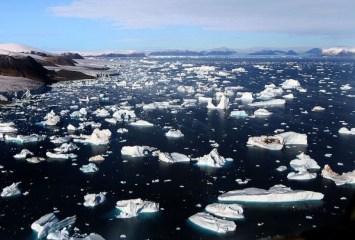
glaciers-melting-600x407
From the Berkeley Blog

The United Nations have predicted that water supply shortages will affect billions of people by the middle of this century. Desalination, the removing the salt and minerals out of seawater, is one way to provide potable water in parts of the world where supplies are limited but it is expensive and uses a lot of energy. Scientists are working toward better processes where inexpensive fuels can heat and evaporate the water before running it through membranes with microscopic pores to increase efficiency. That gives hope for new fresh water sources as much of our fresh water supply in the form of glaciers is melting and ending up in our oceans.

Hydrogen fuel cell usage has been touted as a pollution-free alternative to using fossil fuels. These cells make water by combining hydrogen and oxygen and in the process they generate electricity. Most recently, scientists have come up with ways to power laptops and small devices with fuel cells, and some car companies are promising that soon we’ll be seeing cars that emit nothing but clean water. That is great news for our environment.

OTEC technologies convert the thermal energy contained in the oceans and turn it into electricity by using the temperature difference between the water’s surface, which is heated, and the cold of the ocean’s bottom. This difference in temperature can operate turbines that can drive generators. This would be a clean source of electricity therefore helping to reduce climate change by eliminating coal burning power plants.

Bioremediation uses microbes and plants to clean up contamination. Examples include the cleanup of nitrates in contaminated water with the help of microbes, and using plants to uptake arsenic from contaminated soil. There is an urgent need to clean up many of the contaminated sites on our planet such as the Deloro mine, a 202-hectare site that lies 65 kilometres east of Peterborough, Ontario, Canada.

I recently watched Disney’s movie, Tomorrowland.  This movie delivers a  message of hope for humanity. It is a call to use our human mental abilities and imagination to make changes that can repair the environmental damage that we humans have created. Just reading about some of the many new technologies being developed gives me hope for our planet. We humans are masters at screwing things up, such as our environment, but we are resilient and savvy enough to fix our mistakes. It just takes public awareness through education, a political will, and economic motivation. New technologies create new industries and new jobs. We can fix our environmental problems and still have a thriving economy.  Keeping things at the status quo is not an option.

There is a Cree Prophecy that says, “When all the trees have been cut down, when all the animals have been hunted, when all the waters are polluted, when all the air is unsafe to breathe, only then will you discover you cannot eat money.” It’s time we put our health and our planet’s welfare ahead of profits. Our survival as a species depends upon it.


Judge Not!

Now that I have some time, I spend some time perusing the internet reading interesting articles.  I recently read an article titled, We’re all the Same.  Basically, the article says we as humans are quick to judge others.  It makes bold statements like:

  • Let’s face it. We all do it. We judge.
  • We like to label others and shove them into this box.
  • We don’t like ”undefined” people.
  • We assume we know who someone is based on our interactions and observations.
  • Judging makes us feel safe and comfortable.
  • It gives us a sense of control.
  • But despite our best efforts to judge, we all know deep down inside, we can’t and shouldn’t really judge another person.

Now my initial reaction was, “Not me!  I don’t judge people.”  But who am I kidding?  So I thought about it.  Do I judge others or not?  If I am honest with myself, the answer of course is “Yes”.

The year 2015 was a year of change for my wife and I.  I retired from teaching.  My eldest daughter moved to a different apartment which is closer to her work.  My youngest daughter returned to university, so she is moved back to the city after living in the rural community she grew up in.  And my son, who has been going to the local college, is moved to the city to continue his education at university.  My wife is the only stable one (in more ways than one) as she is continuing with the same job.

JudgeSo a few months ago, my wife and I were helping our eldest daughter find furniture for her new apartment.  She had been getting some used stuff off of Kijji, an online garage sale site.  She had looked at a media unit with an electric fire-place and decided to purchase it.  She gave the young man $40 to hold it, and arranged to pick it up when I could bring up the truck. On a Saturday morning we arrived at this person’s apartment complex at the agreed upon time only to find that he was not there.  My daughter texted him and called him only to discover his voice mail box was full. Being the Dad that I am, I immediately jumped to conclusions. As far as I was concerned this guy had ripped off my daughter.  My daughter and wife, on the other hand, kept reminding me that maybe he had a family emergency or something.  I, on the other hand, was convinced that he had swindled my daughter out of  $40.  After an hour of waiting and me “steaming” we left and continued with our day.

Now it turns out that this fine, young man did indeed have a family emergency. His explanation to my daughter alluded to perhaps a death in the family.  This man felt very bad about the incident and returned my daughter’s $40 to her.   I had totally misjudged the situation and the young man involved.  Now I am the one feeling bad and guilty that I had so little faith in people. This was not the only time recently that I had jumped to conclusions and misjudged a situation.

As I mentioned earlier, I just retired from teaching.  The school that I worked at submits a weekly newspaper column in the local papers.  Well, at the end of June, I was all “bent out of shape” because my school (so I thought) did not even care that I was leaving after 26 years of service. They didn’t even have the decency to acknowledge my exit in the school column.  I was feeling sorry for myself.  I had convinced myself that my colleagues didn’t even care that I was leaving.

The next week the local papers arrived at our house and I my wife pointed out that I, and the other colleagues that retired with me, were acknowledged in the school column.  Lesson learned (I hope); Do not be so quick to judge people and situations. Once again, I felt bad and guilty that I  had so little faith in my colleagues. I know I could just blame it on “human nature”, but that is still not an excuse.

As a former school teacher I can recall numerous occasions where I prejudged students based on hearsay around the staffroom, only to discover that my experiences with those students were different from the prejudgements. It is so important to resist judging.

So, what is wrong with judging? I’m sure someone is wondering. The late Earl Nightingale, an American radio personality, writer, speaker and author who dealt mostly on the subjects of human character, once said, “When you judge others, you do not define them, you define yourself.” That is so true! Judging others is about our need to feel safe and comfortable. When we judge others we feel better about ourselves because judging others occurs when we believe we are better than the people we’ve judged. Really, we have no right to judge anyone unless we know everything about that person, which is impossible. There is a native American proverb that says, Don’t judge any man until you have walked two moons in his moccasins.” As I learned from my experience with the young man who I believed conned by daughter out of $40, you never really know what is going on in that person’s life, so as in my case, most often our judgements are based on ignorance or misinformation.

So remember, things are not always what you perceive them to be or believe them to be.  Don’t be so quick to judge a situation. Michael J. Fox, best known for his role as Marty McFly in the Back to the Future movie trilogy, once said,  The least amount of judging we can do, the better off we are.” He is right! I am going to try to follow Fox’s advice from now on, or at least that is the goal.

Namaste, a Reverent Gesture

A_yoga_namaste_Hindu_culture_religion_rites_rituals_sights.jpgOver the years I have been periodically greeted with a greeting known as “Namaste”. This is a gesture that entails a slight bow made with hands pressed together, palms touching and fingers pointed upwards in front of the chest. I have witnessed speakers and performers greet their audiences with this sign. Many years ago our school hosted an exchange student from Thailand who when she first arrived would greet her teachers and fellow students with the Namaste gesture. Some of my yoga instructors concluded every practice by uttering “Namaste” while bowing with hands pressed together. Even in Taekwondo we bowed to our opponents although not with our hands together. A bow in Taekwondo was a sign of respect which is its meaning in all martial arts. We even bowed when we entered the dojang or gym as a sign of respect for it.

Whenever someone greets me with the Namaste gesture, and especially when saying the word “Namaste”, I feel very honoured. I feel respected and accepted. It truly is a wonderful feeling when acknowledged with a gesture of Namaste. So what does this form of salutation mean? Where does it come from as it is not a common form of greeting in my part of the world?

In my part of the world, the handshake is the popular form of greeting. A handshake is a ritual in which two people grasp one of each other’s like hands and give a brief up and down movement of the grasped hands. The origins of the handshake are unknown as historians say that the handshake predates written history, and therefore is somewhat difficult to track down. What I find fascinating is there are some historians who claim the ritual dates to the Romans who would approach each other and grab the forearm to make sure the other man was not carrying a weapon. If that is true, then the handshake has a very different connotation than Namaste does.

The  Namaste gesture is widely used throughout India, Nepal, and parts of Asia.  Namaste or namaskar is used as a respectful form of greeting, acknowledging and welcoming a relative, guest or stranger as well as with goodbyes. It is also used when a person expresses gratitude for assistance offered or given, and to thank the other person for his or her benevolence.

The gesture (or mudra) of Namaste is a simple act made by bringing together both palms of the hands before the heart (sometimes the forehead), and lightly bowing the head. In the simplest of terms it is accepted as a humble greeting straight from the heart and reciprocated accordingly. But does it have a deeper meaning? Being a teacher who taught Religious Education, I knew it did. So here is a lesson.

From the great religion of Hinduism, the sign of Namaste is an ancient Sanskrit greeting still in everyday use in India and especially on the trail in the Nepal Himalaya. Translated roughly, it means, “I bow to the God within you,” or “The Spirit within me salutes the Spirit in you,” a Hindu knowing that we are all made from the same One Divine Consciousness. More specifically, nama means bow, as means I, and te means you. Therefore, Namaste literally means, “bow me you” or “I bow to you.”

Now this can be thought of in many ways. These are some of the ways the meaning of Namaste has been explained to me.

  • The Divine light in me acknowledges the Divine light in you.
  • The God in me greets the God in you.
  • I honor the spirit in you that is also in me.
  • The Divine wisdom in me recognizes and acknowledges the Divine wisdom in you.

Hinduism Today says the Namaste gesture

“bespeaks our inner valuing of the sacredness of 216px-An_Oberoi_Hotel_employee_doing_Namaste,_New_Delhiall. It betokens our intuition that all souls are divine. It reminds us in quite a graphic manner, and with insistent repetition, that we can see God everywhere and in every human being we meet. It is saying, silently, ‘I see the Deity in us both, and bow before It. I acknowledge the holiness of even this mundane meeting. I cannot separate that which is spiritual in us from that which is human and ordinary.’”

One practicing Hindu put it this way.

“I’ve heard it means, ‘I salute God within you.’ The true Namaste gesture is accompanied by bowing the head and shoulders slightly. This is a gesture that lessens our sense of ego and self-centeredness, requiring some humility to do it well–whereas shaking hands can be quite an arrogant event.”

According to Buddha Weekly, it is not just a salutation. For Buddhists the gesture is called Anjali and it serves many purposes. In spiritual activities, the mudra Anjali (offering with both hands), indicates we are making a “divine offering.” In a Buddhist context, it is the “cure” for pride, one of the great obstacles in their practice. In day-to-day life it indicates respect, literally meaning “I bow to you.”  Also, in acupuncture terms, the tips of the fingers activate certain energies.

Now I was raised a Christian, so how might this fit into a Christian context. In 1 Corinthians 3:16 it says, “Do you not know that you are God’s temple and that God’s Spirit dwells in you?” (NRSV) To me that aligns with the Hindu claim that the divine is within us. Christians just call it the Holy Spirit. I was taught that at baptism or confirmation, depending on the religious tradition, that the Holy Spirit entered and from then on resided in us.

In Galatians 5:22-23 it is written, “By contrast, the fruit of the Spirit is love, joy, peace, patience, kindness, generosity, faithfulness, gentleness, and self-control. There is no law against such things.” (NRSV) So Christians believe that if a person allows the spirit to be active in them, then that person should express love, joy, peace, and so on. Wouldn’t it be wonderful if Christians supported this belief with the Namaste gesture, a slight bow made with hands pressed together.

namaste-2No matter how Namaste is interpreted, it invokes a sense of sharing a spiritual connection and creates a sense and feeling of oneness. It is a way to feel connected. It conjures up feelings of respect. It is a sign of universal oneness. Maybe this world would be in a better place if all humans practiced this simple gesture. As the Buddhists believe, it just may be a “remedy” for pride that is the cause of many problems. I’m convinced this simple gesture brings about more feelings of reverence and honour for others. Mohandas K. Gandhi allegedly said once, “Namaste. I honor the place in you where the entire universe resides. A place of light, of love, of truth, of peace, of wisdom. I honor the place in you where when you are in that place, and I am in that place, there is only one of us.” Such a simple sign, a bow with hands together, with the intended meaning as Gandhi explained, just might make all the difference in this world.