“Trump This”

As I mentioned in one of my earlier blog posts, Political Bullying, I have always had an interest in politics. I taught social studies in high school for many years and I would passionately discuss politics with my students and give projects to them when election campaigns were on. It is because of this keen interest in politics that I watch the election campaign in the United States whereby the Republican and Democrat Parties select their presidential nominees. What I find both “mind blowing” and perplexing is the fact that Republicans have selected Donald Trump as their nominee. Granted it makes for good entertainment for us Canadians, I  just can’t wrap my head around the psyche of the people who think he is a good choice. Trump has been referred to as a modern-day Hitler and according to the article, 9 times Donald Trump has been compared to Hitler, in the Jerusalem Post he has been compared to Hitler on nine different occasions.

Now one might ask, why should we Canadians care about what is happening politically in the United States? The reality is that because the Americans are our largest trading partners and our closest neighbour, everything they do influences us. Former prime minster and father of our present prime minister, Pierre Trudeau once said,

“Living next to you [the United States] is in some ways like sleeping with an elephant. No matter how friendly and even-tempered is the beast, if I can call it that, one is affected by every twitch and grunt.”

In September Donald Trump spoke these words about Carly Fiorina, then a 09-donald-trump-bully.w536.h357.2xpresidential candidate. “Look at that face. Would anybody vote for that? Can you imagine that, the face of our next president? ! I mean, she’s a woman, and I’m not s’posedta say bad things, but really, folks, come on. Are we serious? ” Now Dictionary.com defines sexism as, The belief that one gender is superior to the other, especially that men are superior to women. Trump’s words, “she’a a woman” sounds to me that he thinks women are lesser than men. That sounds like  sexism to me. In fact, the Telegraph has a Donald Trump sexism tracker listing many of the sexist remarks he has made and trust me, there are many.

Donald Trump, during his presidential announcement speech, June 16, 2015 said “When Mexico sends its people, they’re not sending their best…They’re sending people who have lots of problems, and they’re bringing those problems with us. They’re bringing drugs. They’re bringing crime. They’re rapists. And some, I assume, are good people.” Dictiionary.com defines a racist as a person who believes in racism, the doctrine that one’s own racial group is superior or that a particular racial group is inferior to the others. I don’t know about you, but that sounds like racism to me. The fact that Trump has said he intends to build a wall along the US-Mexican border to keep Mexicans out of the United States, plus he wants to ban all Muslims from entering that country insinuates to me that he thinks Muslims and Mexicans are lesser races or groups. And then there is the fact that Mr. Trump claimed not to “know enough” about the KKK to distance him self from a David Duke endorsement. David Duke is an American white nationalist, antisemitic conspiracy theorist, Holocaust denier and former Grand Wizard of the Ku Klux Klan. Is Mr. Trump a white supremacist too? (see 10 Examples Of Donald Trump Being Racist)

Judge Gonzalo Curiel, is the judge presiding over the case against Trump University. A federal judge unsealed court documents in a fraud lawsuit against Donald Trump’s now defunct real estate school, known as Trump University LLC. Mr. Trump said,

“The judge should have thrown the case out on summary judgment. But because it was me and because there’s a hostility toward me by the judge, tremendous hostility, beyond belief––I believe he happens to be Spanish, which is fine, he’s Hispanic, which is fine, and we haven’t asked for a recusal, which we may do, but we have a judge who’s very hostile.”

rtx1gzco (1)On a CNN program, speaking with Jake Tapper, Mr. Trump specifically attacked the “Mexican heritage” of the judge. Mr. Curiel is a man who was born in Indiana, who battled Mexican drug cartels as a federal prosecutor and was appointed to the bench by a Republican. “This judge is of Mexican heritage,” Trump said in the interview. He went on to say, “I’m building a wall, OK? I’m building a wall. … He’s a member of a society where, you know, very pro-Mexico. And that’s fine. But I think he should recuse himself.” When asked on CBS’ “Face the Nation” if a Muslim judge would treat him unfairly because he has vowed to ban Muslims from entering America, the potential president said: “It’s possible, yes. That would be possible, absolutely.” (see Donald Trump amplifies racist attacks). Dictionary.com defines a bigot as a person who is utterly intolerant of any creed, belief, or opinion that differs from one’s  own. Now that sounds like bigotry to me. It certainly is racism.

On May 31st, Trump called a Press Conference to bash the press. During the press conference he rambled saying, “Instead of being like, ‘Thank you very much, Mr. Trump,’ or ‘Trump did a good job…you make me look very bad. I have never received such bad publicity for doing such a good job.” Trump even called a reporter for ABC News, Tom Llamas, a “sleaze”. Essentially, Mr. Trump’s pattern is to insult people who disagrees with him. The NY Times has article, The 224 People, Places and Things Donald Trump Has Insulted on Twitter outlining many of those insults. According to oxforddictionaries.com, a bully uses superior strength or influence to intimidate (someone), typically to force them to do something. Mr. Trump’s antics sound an awfully lot like bullying tactics to me.

In an exchange with former presidential rival Jeb Bush back in February, Trump insisted that he’d never gone bankrupt, and that claims to the contrary are a lie.  According to the National Review’s article, Trump, Lies, and Bankruptcy, Trump has gone bankrupt at least four times. Not only that, he has had numerous business failures. Time.com lists Top 10 Donald Trump Failures. Oxford Dictionary defines a lie as an intentionally false statement. It sounds to me like Trump is a liar as well.

So what should a person conclude from this information? My conclusion is that Donald Trump is a sexist, a racist, a bigot, a liar, and a bully. I think I am pretty safe in saying that most Canadians do not want the leader of their closest neighbour to be a sexist, a racist, a bigot, a liar, and a bully. I can’t imagine that the American people would either. I just cannot comprehend how Mr. Trump has secured the GOP nomination. I’ve heard it said that the American voters are angry. Now I understand voter unrest and anger. We’ve experienced this in Canada recently when the New Democratic Party was elected in the province of Alberta after a 40-year reign of the Progressive Conservative Party. No one in the country thought such an event could ever happen yet it did. We also saw the Federal Conservative Party lose to the Liberal Party of Canada. This can only be explained by voter dissatisfaction. But what is happening with our neighbour to the south makes no logical sense. Why would the people of the United States (I realize it isn’t all Americans) want to elect a president who is a sexist, a racist, a bigot, a liar, and a bully? Has there has ever been a president in the past who was sexist,  racist,  bigot, a liar, and/or a bully? Probably not but to my knowledge there has never been a potential president who was so blatantly a sexist, a racist, a bigot, a liar, and a bully.  That is a recipe for disaster; a disaster for the United States and potentially a disaster for the world. I just hope the American electorate will eventually see the Republican candidate for who he truly is; a sexist, a racist, a bigot, a liar, and a bully.
Power of the Mind

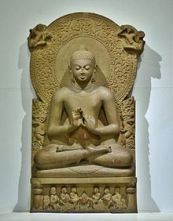
Buddha_in_Sarnath_Museum_(Dhammajak_Mutra)I’ve always been intrigued with Buddhism. The founder of Buddhism is said to have declared, “What we think, we become.” What does this really mean? I have been pondering that question for some time now. Others have said something similar. Ralph Waldo Emerson, an American essayist, lecturer, and poet, once said, “We become what we think about all day long.” Henry Ford, the founder of the Ford Motor Company, once said, “Whether you think you can or can’t, you’re right.” That is just a sampling of like-minded thinkers. So that begs the question, what do these quotes really mean?

I suppose the Buddha’s comment “What we think, we become” could be referring to self-esteem or self-talk. I know from personal experience and from observing my students as a teacher for 35 years, that self-talk is huge. I remember one particular student who thought that she could not pass my exams, and in fact, rarely did. What was interesting is this did not change until her thinking changed. I recommended to this student to visit the school counselor. She did and the counselor after much questioning discovered that her self-talk was such that she believed she could not pass my exams. The counselor worked with the student for a long while to change her thinking and lo and behold she started passing my exams. I also have worked with numerous students who told themselves that they were stupid, and these students were seldom successful. I suspect that this self-talk was reinforced at home. So quite literally “What we think, we become.”

Now this ties into what is known as the law of attraction. According to Wikipedia, “the law of attraction is the name given to the adage “like attracts like” which in New Thought philosophy is used to sum up the idea that by focusing on positive or negative thoughts a person brings positive or negative experiences into their life. This belief is based upon the idea that people and their thoughts are both made from “pure energy”, and the belief that “like energy attracts like energy.” So this law would say if you think about something long enough, you will attract it to you. Now I’ve had experiences that could be explained by this law. A number of years ago we took a family vacation to the east coast of Canada using a rental car to travel around. As we often did, we stopped to pick up pudding cups for a treat. Since I didn’t want my children to spill pudding in our rental vehicle, I didn’t allow them to consume theirs in the car. The decision was solely mine as there was much protest from my children and my wife. We all stood outside and ate our pudding. After all my lecturing to my children, along with their opposition and my wife’s belief that I was being a “worry wart”, guess who slopped  all over themselves. You guessed it, me. You could call that law of attraction or as Ralph Waldo Emerson put it, “We become what we think about all day long.”

 Now the law of attraction would say that when we worry about something, say “I hope the car won’t break down” or “What if the car breaks down” that we attract that into our life even though we may not want it. I can also relate to this. Many years ago my wife and I took a road trip. Out of the blue my wife asks, “What would we do if the van breaks down?” I responded with, “find a mechanic.” Well, a few hours later our van died as the alternator failed. We had to find a mechanic. Was that the Law of Attraction? Perhaps. Orison Swett Marden, an American inspirational author and founder of SUCCESS magazine, said, “Worry clogs the brain and paralyzes the thought. A troubled brain can not think clearly, vigorously, locally.” This law would say that because we were worrying, thus constantly thinking that the van might break down; we attracted that into our experience.

What I find particularly fascinating is that science is providing evidence that the mind can affect matter. Here are two studies that caught my attention. The first is what is called the placebo affect. We’ve all heard of the use of placebos used in the study of new medications. A Baylor School of Medicine study, published in 2002 in the New England Journal of Medicine (see Study Finds…), looked at surgery for patients with severe and debilitating knee pain. The patients were divided into three groups. The surgeons shaved the damaged cartilage in the knee of one group. For the second group they flushed out the knee-joint, removing all of the material believed to be causing inflammation. The third group received a “fake” surgery, where the patients were only sedated and tricked that they actually had the knee surgery. For the patients who received the “fake” surgery, the doctors made the incisions and splashed salt water on the knee as they would in normal surgery. They then sewed up the incisions like the real thing. All three groups went through the same rehab process, and the results were surprising. The placebo group improved just as much as the other two groups who had surgery.

Another fascinating example of how science is showing the power of the mind influences matter is the work of Dr. Masaru Emoto.  Dr. Emoto has been studying the effects of thoughts and feelings on water. He did this by producing different focused intentions through written and spoken words directed towards water samples. He did the same using musical styles. Dr. Emoto would literally present these thoughts to water samples and the water appears to “change its expression”. One of his books, The Hidden Messages in Water (1999), explains how he demonstrated the effects of human thoughts on water. More specifically, he observed the crystals of frozen water after exposing the water to music or thoughts. I have personally read this book and found it quite captivating and he has since published many more. (See Masaru Emoto)

There are many more captivating scientific studies that provide evidence that thought, or the human mind, can influence matter. See the 10 Scientific Studies… to learn more.

170px-Timehenryford
Henry Ford, Time Magazine, Jan 1935

So maybe there is something to the Buddha quote, “What we think, we become.” Or as Henry Ford said, “Whether you think you can or can’t, you’re right.” If we think we are a failure, we become a failure. If we think we are brainy, we become brainy. Now I’m not suggesting it is magic. If we think and believe we are good at something, say hockey, doesn’t mean we magically are. However, the wanting to be good motivates a person to practice and become good at it. Eckhart Tolle, a German-born resident of Canada, best known as the author of The Power of Now and A New Earth: Awakening to your Life’s Purpose, says, “The mind is a superb instrument if used rightly. Used wrongly, however, it becomes very destructive. To put it more accurately, it is not so much that you use your mind wrongly—you usually don’t use it at all. It uses you.” I get that now. If we control those negative or destructive thoughts then our mind can’t use us. If we use our mind in positive and creative ways, then we grow as human beings. It is true. What we think, we become.”

Legalized Discrimination

I’ve always held the belief that at least in the developed world human rights were considered sacred. I wanted to believe that because we live in the 21st century we had moved beyond discriminatory practices and racism. I thought the human race was evolving for the better. It seems I’m naive and that my assumptions were wrong.

On December 10, 1948, the United Nations General Assembly proclaimed The Universal Declaration of Human Rights (UDHR), a document listing universal rights entitled to all human beings. A human right is a right that is believed to belong justifiably to every person. Article 6 of UDHR states, everyone has the right to recognition everywhere as a person before the law. Article 7 of that document states, all are equal before the law and are entitled without any discrimination to equal protection of the law. All are entitled to equal protection against any discrimination in violation of this Declaration and against any incitement to such discrimination.

So why am I bringing up the UDHR? Well it appears that even in this modern era where we have an international declaration enshrining our human rights, that there are still people hell-bent on denying certain groups of people their rights.

On March 30 of this year, the State of Mississippi in the United States passed an Anti-LGBT (lesbian, gay, bisexual or transgender) Bill. Some of the law in Mississippi states, so long as individuals are motivated by “a sincerely held religious belief or moral conviction,” any of the following behaviours would be considered legal by the government:

  • Religious organizations can decline to honour any same-sex marriage or provide any services related to recognizing that marriage.
  • Religious organizations can refuse to hire, fire, and discipline employees for violating the organization’s religious beliefs, basically protecting those who carry out above mentioned actions towards the LGBT community.
  • Religious organizations can choose not to sell, rent, or otherwise provide shelter to namely the LGBT community.
  • Religious organizations that provide foster or adoptive services can decline service without risking their state subsidies.
  • Any person can choose not to provide treatment, counselling, or surgery related to gender transition or same-sex parenting.

On March 23, North Carolina passed the Public Facilities Privacy & Security Act that states, All public schools, government agencies and public college campuses to require that multiple-occupancy bathrooms and changing facilities, such as locker rooms, be designated for use only by people based on their “biological sex” stated on their birth certificate.

half-vic-lgbt
from nohatespeechmovement.org

Clearly the laws passed in North Carolina and Mississippi are in violation of UDHR, namely article 6 and 7. In essence these states have legalized discrimination.  Now this is not without consequences. The Guardian says President Barack Obama has called for North Carolina and Mississippi to overturn state laws that affect gay and transgender residents. The United Kingdom Foreign Office issued to its citizens a statement warning LGBT tourists of the dangers of visiting North Carolina and Mississippi after both introduced “anti-LGBT” laws.

According to BuzzFeedNews entertainers such as Pearl Jam, Cirque du Soleil, Bruce Springsteen and Bryan Adams have cancelled plans to perform in those states. The Corporation PayPal cancelled its plans to open a new global operations centre in the city of Charlotte, North Carolina. The German Deutsche Bank announced that it was freezing plans to create 250 new jobs in North Carolina due to the state’s anti-LGBT law. At least 13 conventions in Charlotte were cancelled over concerns over the bill. Actress Sharon Stone, scheduled to film a movie in Mississippi, decided to change the location after the passage of the controversial law.

NewNowNext reported the corporation holding the rights of the musicals West Side Story and Footloose have withdrawn permission for their musicals to be done in the states of North Carolina and Mississippi, because of the anti-LGBT laws. The Blue Man Group tour was also withdrawn.

These anti-LGBT laws were passed despite the fact that the Supreme Court of the United States, the highest court of the land, ruled that same-sex marriages  were legal throughout the entire country.

Now the justification for these laws is based on religious beliefs; the beliefs of Christianity. Yes you can find passages in the Christian scriptures supporting the belief that homosexuality is sinful. Having said that you can also find numerous passages in scripture justifying slavery as well. Does that mean that we should also pass laws legalizing slavery? I think there would be a huge public outcry if we did. Slavery was a socially acceptable practice in biblical times but now it isn’t. Perhaps the beliefs about homosexuality shown in scripture are also reflecting the social norms of day. From what I’ve learned about LGBT, it is not a choice. Their sexual orientation is a part of their genetic and/or spiritual makeup. They can’t help who they are.

First Nations or aboriginal people use the umbrella term “two-spirited” to describe same-sex attraction and gender variance. The term refers to a person who has both a masculine and a feminine spirit. I first heard of this term many years ago when I was teaching a scripture course to a group of aboriginal people. From what I was told, the LGBT community is much more accepted by the First Nations people.

419339211_640
from joshuanhook.com

Moreover, if Christianity is going to be used as justification for these laws, then all of scripture must be considered. Christians are called to follow and emulate Jesus. In John 8:1-11 is a story about Jesus who sat down in the temple to address a group of scribes and Pharisees who confronted Jesus. They brought up the issue of an adulteress woman, and invited Jesus to pass judgment upon her when they asked the question, should she be stoned, which is what the Law of Moses instructed. Jesus responded by stating that the one who is without sin is the one who should cast the first stone. The religious leaders then departed, leaving Jesus and the woman alone. Jesus then asked the woman if anyone had condemned her. When she answers no, Jesus said that he did not condemn her either, and told her to go and sin no more. This story clearly shows that Jesus did not judge or condemn others for their lifestyles. NOR SHOULD WE.

No one should be denied their human rights no matter what their sexual orientation is or what the colour of their skin is or for any other reason for that matter. If the makers of these laws truly proclaim their actions are rooted in Christian belief, then they should take heed to Luke 6:35 (NRSV) where it says, But love your enemies, do good, and lend, expecting nothing in return. Your reward will be great, and you will be children of the Most High; for he [God] is kind to the ungrateful and the wicked. Now don’t get me wrong. I’m not suggesting in any way that the LGBT community is wicked. I am only trying to get across the point that God treats everyone with kindness, even the wicked. As far as I’m concerned, LGBT individuals are like you and me. They are merely trying to happily live their lives like everyone else. No matter what our beliefs are, we must still learn to be tolerant and understanding of all people.

Fear or Love

BELGIUM-BLASTc2303_620_427_100
Banner reads ‘I am Brussels’ in French & Flemish – Reuters pic

One week ago on Tuesday, March 22, 2016, three coordinated bombings occurred in Brussels, Belgium’s capital. Two attacks occurred in the Brussels airport, and one at its metro station. During these attacks, 31 innocent victims were killed along with three suicide bombers. Even more disturbing is the 300 innocent people who were injured.

I feel great sadness when I hear of a terrorist attack especially when it occurs in Europe because just six months ago my wife and I were in Europe. In October of 2015, my wife and I visited Belgium. While Brussels was not one of the places we visited, we did visit several of the World War One sites in Flanders’ Fields. We also visited Paris, France on our trip so when the Paris attacks happened it deeply affected us both, as did the Brussels attack.

As I stated in my November 27, 2015  post about the Paris attacks, terrorism is something I cannot understand. I’ve tried to put myself into the shoes of a terrorist in order to comprehend how someone can cause harm and death to innocent people like the bloodshed that happened in Brussels. The news media repeatedly tells us that the people who carry out such acts of violence have been radicalized.  Merriam-Webster dictionary defines a radical as  “advocating extreme measures to retain or restore a political state of affairs”. So as I understand it, radicals are people who carrying out acts of murder for political gain.  This is what I can’t wrap my head around.  In my mind killing innocent people for political gain, or any reason, is wrong!

How can someone with any kind of conscience murder innocent people? As I mentioned in the November post, the only thing I can come up with is that these people have been brainwashed. It is the only explanation that makes sense.

What disturbs me the most is when a terrorist attack  happens on our planet panic sets in. Panic is a symptom of fear. The school that I taught in is taking a group of students to Germany this month. The Brussels event set off a wave of panic among the parents. These parents were fearful because their children were off to Europe, where terrorist attacks occur. Now I’m a parent, so I understand the need to protect your children. But when we cave in to fear, the terrorists succeed.

Perhaps it’s time to look at the issue of terrorism from a different perspective. According to many spiritual writers today, all behaviours and emotions can be put into two categories – love and fear. These writers tell us fear is the opposite of love. So what is fear? Fear results in a feeling of not being protected or feeling secure. So when it comes to terrorism, fear sets in because we feel insecure and vulnerable. In fact, that is what terrorism is all about, instilling fear. Terrorists want us to be fearful. They want to cause terror. In fact, ‘terror’ is the root word of ‘terrorist’ or ‘terrorism’.

Fear limits our minds. People who live in fear will do harmful things. They lash out at those whom they perceive to be the cause of their pain. The same could be argued for animals. When do animals attack? It is when they fear for their survival.

Now most people would argue that the opposite of love is hate but when you think about it, hate is really stemming from fear. A person might “hate” someone who has abandoned or disrespected him. Abandonment makes more sense in terms of the fear. When a person feels abandoned, their emotions are stemming from fear of being alone. Disrespect is when a person feels scorned or disregarded, so it stems from the fear a person has when they are not honoured or regarded.

In a CNN report, Republican front-runner Donald Trump is quoted as saying,

“It’s going to get worse and worse. In my opinion, this is just the beginning. It will get worse and worse because we are lax and we are foolish — we can’t allow these people, at this point we cannot allow these people to come into our country. I’m sorry…”

His remarks clearly come from fear. His and others like him lack love and compassion. Banishing others does not stem from love. It stems from fear which indicates that there is no love.

Love on the other hand doesn’t hurt. If it hurts it is fear. Love is a core emotion from which many other emotions are created. Emotions such as happiness, kindness, charity, faith, empathy, fairness and compassion all come from loving intentions. This type of love is what the Greeks called agape love. This love is selfless, sacrificial, unconditional love. It is the highest form of love there is. With this type of love there is no exclusiveness.

Fear is the opposite of love because fear is the base emotion from which hate, prejudice, greed, stress, paranoia, and many other negative emotions are based.

1 John 4:18 of the Christian scriptures tells us, “There is no fear in love, but perfect love casts out fear; for fear has to do with punishment, and whoever fears has not reached perfection in love.” It is also interesting that scripture scholars tell us the phrases “do not fear” and “do not be afraid” appears 365 times in the Christian Bible. I don’t think that is coincidence. Perhaps a basic message in the scriptures is, do not have fear because when you are fearful, you do not possess love.

The CNN report referred to above quotes Pascale Rouhier, a 38-year-old resident of Brussels, as saying, “I’m not going to change my way of living because Brussels is my city.”

The article also reports that 2,000 people gathered in front of  the Brussels stock exchange, with Belgium Prime Minister Charles Michel and other leaders who laid wreaths at Maelbeek metro station.

German Chancellor Angela Merkel said, “Our strength lies in our unity, and our free societies will prove to be stronger than terrorism.” (see article)

These are all examples of people whereby fear has not taken hold. Their reactions and comments stem from love. Love unifies while fear divides.

Perhaps former Beatle John Lennon sums it up best when he said,

“There are two basic motivating forces: fear and love. When we are afraid, we pull back from life. When we are in love, we open to all that life has to offer with passion, excitement, and acceptance. We need to learn to love ourselves first, in all our glory and our imperfections. If we cannot love ourselves, we cannot fully open to our ability to love others or our potential to create. Evolution and all hopes for a better world rest in the fearlessness and open-hearted vision of people who embrace life.”

Franklin D. Roosevelt, the 32nd President of the United States was right when he said during his inaugural address on March 4, 1933,   “Let me assert my firm belief that the only thing we have to fear is…fear itself.”  If terrorists succeed in their mission to instil fear into the world then they will create a culture of fear; a culture where there is no love; a world full of hate, prejudice, greed, stress, and paranoia. But, if we don’t allow fear to take hold then we will have a culture filled with happiness, kindness, charity,  empathy, fairness and compassion; a culture where there is love. The choice is ours.

Adventures with Mother Nature

Every summer since 2002, starting when my son was 8 years old, my son and I have taken hiking excursions to the Canadian Rockies. Traditionally, we go with my brother-in-law and his two sons. Sometimes my brother and his son would join us as well as a friend and his two sons at the beginning. These excursions entail carrying 40-pound backpacks containing food and cooking equipment, sleeping gear and a tent. On some occasions we carried our 40-pound packs 14 kilometres (8.7 miles) before reaching our destination.

Most hikes were to the backcountry, a remote undeveloped rural area accessible only by hiking trails. We would hike to places such as Landslide Lake, Ribbon Lake, Lillian Lake, Utopia Creek, Glacier Lake, and Celestine Lake to name a few. I realize that these names likely don’t mean much to many of you but I can assure you that these settings are some of the most breath-taking, beautiful scenery in the world.

hiking 04 fishing
Lillian Lake

We’ve had some adventures over the years. In what is called Kananaskis Country, we did a day hike to Ribbon Falls after a good night’s rest at the Ribbon Lake campground. To reach our destination, we had to maneuver down a vertical cliff. Thankfully, there were chains attached to help a person propel downward. By carefully finding footholds and hanging onto the chains we successfully got to the bottom part of the cliff. Being that I am afraid of heights, this was a terrifying experience for me. Climbing up the cliff was much easier.

After hiking the Galatea Creek Trail, also in Kananaskis Country, and arriving at our destination of Lillian Lake we put our backpacks down and went to scout out a site to set up our tents. Several minutes went by before we returned to collect our equipment to take to our chosen site. To our dismay, we discovered a chipmunk chewing its way through the top of my son’s brand new pack which I had just purchased for my son. In fact, this was his first trip with it. The chipmunk had chewed a hole into the top of the pack in an attempt to get at the trail mix inside. I was not happy with that animal and yelled some choice words at the creature. Thankfully the little beast was not successful in retrieving any of the trail mix.

Hinton Jasper 277
Geraldine Lake trail (boulder hoping)

One of the most difficult hikes we’ve done was to Geraldine Lakes in Jasper National Park. It involved a very steep climb beside the waterfalls between Lower and Upper Geraldine Lakes where you come to kilometres of boulder hopping across what is called talus field. To say it was exhausting hopping from boulder to boulder carrying a 40 pound backpack is an understatement. At one point I was feeling sorry for myself asking, “Why am I doing this?” Thinking that I was getting too old for this hiking business (I was in my 40s), we came upon a fellow hiker in his 70s. He told us that Geraldine Lakes was one of his favourite trails and that he had hiked the trail many times. I needed an attitude adjustment at that point and my outlook changed after talking to the senior hiker. If a 70-year-old man can hike that trail, I had nothing to complain about being I was 30 years younger than this man. It’s all about your mental attitude. Being in shape, of course, helps.

One of my favourite hiking experiences was our hike to Utopia Creek in Jasper National Park. There were eleven of us on that expedition. On the Saturday evening we decided to take a different trail back so that we could climb up to what is called the Sulphur Skyline, which has some of the most breathtaking panoramas in Jasper National Park. This meant hiking the Fiddle River 11 kilometre horse trail from our campsite, then going up a 700 metre (2300 feet)  elevation gain of about 2 kilometres (1.2 miles) to reach the skyline. The trailhead had a sign saying, “Trail not recommended,”  but this didn’t stop us. What we did not realize is that we had the cross the Fiddle River not once, not twice but six times.

On our first crossing we carefully hopped across the river from boulder to boulder with our backpacks on until the last bit whereby we took our packs off, tossed them a fair distance to another person on the riverbank and then hopped onto the bank ourselves. Thankfully no one fell into the water and our packs remained dry.

During the second crossing we decided to take our hiking boots off, put on our sandals and cross the river in our sandals. The current was strong and the glacier water literally made my feet hurt.

Now the third crossing was done in our bare feet. By this time the ritual of taking off our boots was becoming burdensome, so when we had to cross the river on the fourth, fifth and sixth occasion we just kept our boots on. The current was strong so there were times when I had to hang onto my son, age 12 at the time, to prevent him from being swept downstream by the current. We stopped at a trailhead leading to Mystery Lake to ring out our wet socks and dried our boots as best we could. We eventually made it to the Sulphur Skyline with one of the most spectacular views I have ever had the privilege to appreciate. The chipmunks on top of the skyline were brave creatures as they would come right up to your fingertips looking for food.

In 2009, nine of us spent three hours hiking the 7 kilometre (4.3 mile) trail to Celestine Lake in Jasper National Park. A friend of mine and I were the last to arrive at our campsite as the younger ones of the group were much quicker than us older ones. What made this adventure so memorable was the fact that when my friend and I arrived at the campsite, we were told that we had to go back as there was a forest fire nearby. Now we didn’t believe them, of course, until we saw the warden’s helicopter take off. Apparently, the park warden arrived in a chopper and called to my brother in law saying, “I have some bad news guys. You have to leave as there is a fire in the area.” So it turned out that we were told the truth. We had to spend the next three hours returning to our starting point.

2013-07-13 01.19.38Now I have been asked over the years why I would go into the back country where there is no contact with the outside world; where there are bears and cougars and it can sometimes get to below freezing at nights. Those are good questions. My first response to those questions is always that it is quality time with my son. But it is more than that. I do it for the adventures. There is nothing like being in nature and the experience of standing on top of mountain with the wind blowing through your hair. The beauty that Mother Nature has to offer is far-fetched until you see it, and even then it can be surreal. For me, being in the wilderness is a chance to touch the divine. It is during those times that I feel closest to God or the Universe.


According to the article, How Does Nature Impact our Wellbeing, put out by the University of Minnesota,

“Being in nature, or even viewing scenes of nature, reduces anger, fear, and stress and increases pleasant feelings. Exposure to nature not only makes you feel better emotionally, it contributes to your physical wellbeing, reducing blood pressure, heart rate, muscle tension, and the production of stress hormones. It may even reduce mortality, according to scientists such as public health researchers Stamatakis and Mitchell.”

Maybe that’s why I do it. Without knowing why, it made me feel better. So, go out into nature and reduce your stress. Speaking from experience it works. It is so easy to get so wrapped up in our daily urban lives that we forget what nature has to offer. Visit Mother Nature to de-stress. When you do you will discover that she is worth protecting.


Seek Some Awe

William James, an American philosopher and psychologist, once said, “Religious awe is the same organic thrill which we feel in a forest at twilight, or in a mountain gorge.” I totally understand what Mr. James is communicating. I have had many experiences of awe when out in nature. But first, we should understand what awe is.

The Cambridge Dictionary defines awe as a feeling of great respect sometimes mixed with fear or surprise. Now that word fear usually confuses me especially when talking about awe.  We typically think of fear as being afraid of something or someone. However, Dictonary.com says in addition to being afraid, fear is reverential awe, especially toward God. The Free Dictionary describes awe as a feeling of respect or reverence mixed with dread and wonder, often inspired by something majestic or powerful.

Dacher Keltner, Professor of psychology at the University of California, defines awe as the feeling of being in the presence of something vast that transcends your understanding of the world. So the way I understand awe is that awe are those moments when we experience something majestic or powerful; when we feel wonder. They are the times when we have an encounter with the divine. They are moments when we in some way experience God or the Source of all Being or something mystical. It’s when you are touched at a soul or spiritual level; when what we are witnessing or experiencing is beyond our understanding.

The_Earth_seen_from_Apollo_17Many astronauts talk about their experiences of awe when looking at the planet earth from space. Alan Shepard, Apollo 14 astronaut said, “When I first looked back at the Earth, standing on the Moon, I cried.” Russell “Rusty” Schweikart, Apollo 9 astronaut said, “When you go around the Earth in an hour and a half, you begin to recognize that your identity is with that whole thing. That makes a change … it comes through to you so powerfully that you’re the sensing element for Man.”

One of the best known for his experience of seeing Earth from space is Apollo 14 astronaut Edgar Mitchell who said:

“That’s a powerful experience, to see Earth rise over the surface [of the Moon]. And I suddenly realized that the molecules in my body, and the molecules in the spacecraft and my partners had been prototyped, maybe even manufactured, in some ancient generation of stars. But instead of being an intellectual experience, it was a personal feeling… And that was accompanied by a sense of joy and ecstasy, which caused me to say ‘What is this?’ It was only after I came back that I did the research and found that the term in ancient Sanskrit was Samadhi.”

Oxford dictionary defines Samadhi as a state of intense concentration achieved through meditation. In Hindu yoga, this is regarded as the final stage at which union with the divine is reached. In essence what Mr. Mitchell is saying is he felt some sort of union with the divine.

Susan Santucci, a learning specialist and author says, “Watch for glimpses of the divine order.  Find those experiences, sights, and sounds, which fill you with awe.  Any experience met with awe can be spiritual:  a safari through an animal kingdom, taking in a sunset, a hike to an awesome mountaintop.”

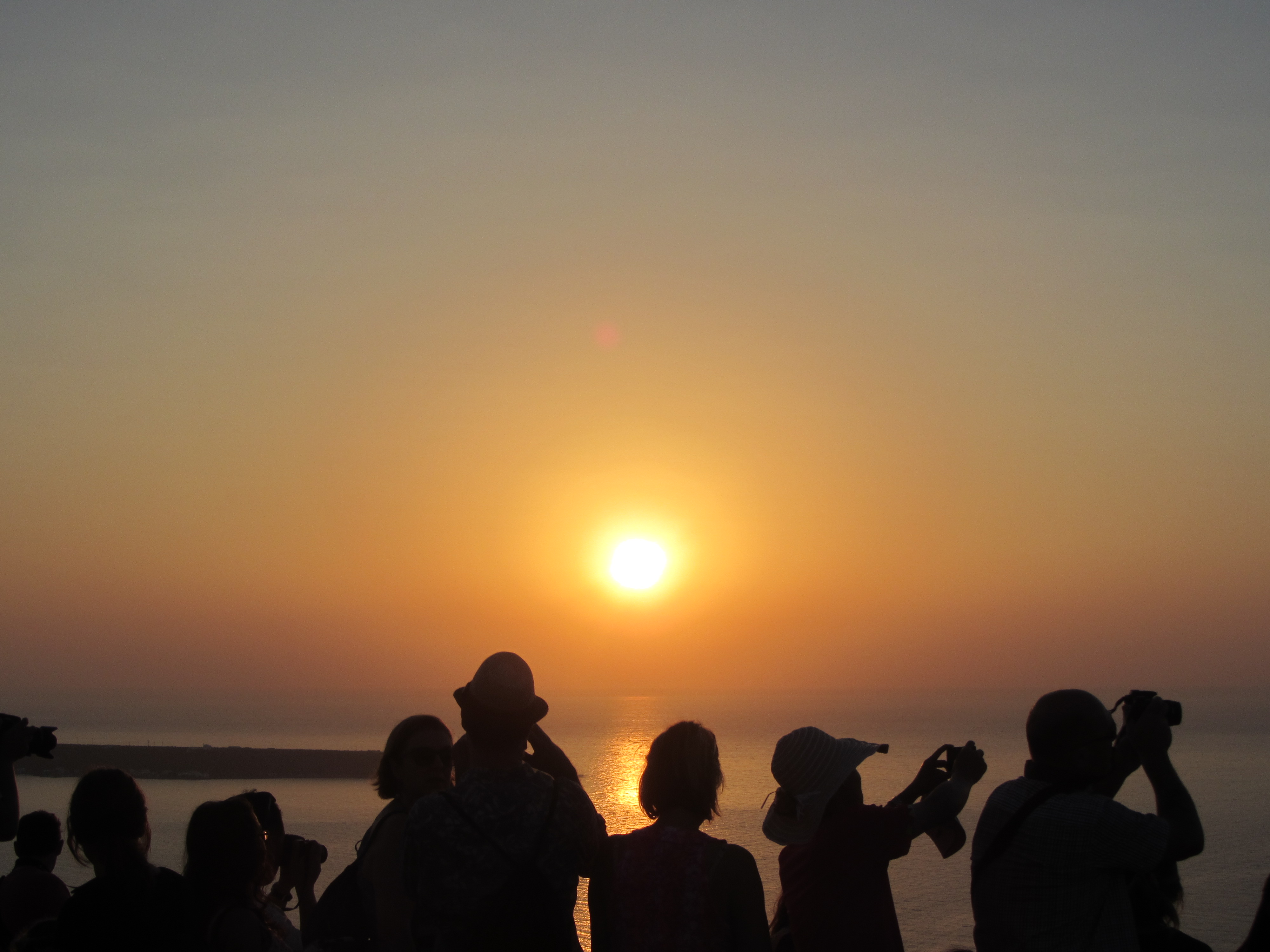
P1030507editedI have hiked in the mountains with my son and friends and family for many years. I have to agree with Susan Santucci as every time I stand on top of a mountain, I feel that sense of awe. For me, it is a spiritual experience. It is an experience where I am overtaken with the beauty of the mountain landscape. I have this same experience when I am at the ocean. Standing on an ocean beach, looking at the vast amount of water in front of me sets me into a state of awe. Sunsets do the same. When my wife and I were in Europe a few months ago, we were blessed to see numerous sunsets and even sunrises. It never ceases to amaze me how beautiful those magnificent colourful skies can be. Each sunrise we beheld on our trip was uniquely beautiful. I have a sense of awe or wonder every time I am lucky enough to see the northern lights or the aurora borealis. For me, each of these experiences were, as Dacher Keltner put it, a feeling of being in the presence of something vast that transcends ones understanding of the world.

Greece

Yes, I understand some of the science behind how mountains are built with colliding tectonic plates. I comprehend that when the Sun appears lower and lower on the horizon, its light needs to pass through more of the atmosphere to reach our eyes, so as the sun drops towards the horizon, it progressively loses violets and blues, then greens and yellows, and finally even the oranges, leaving only the reds behind. It is mind-boggling to comprehend that 70% of the Earth’s surface is covered by ocean, and the deepest known area measures 11 kilometres (6 miles) deep.  I understand that the aurora borealis occurs when collisions between electrically charged particles from the sun enter the earth’s atmosphere and collide with its gases. As amazing as the science is, when I experience the above-mentioned things I experience something beyond my science understanding. My experience is met with awe and wonder. When I am experiencing these things I touch the divine.

I had another one of these experiences when my daughter showed me a video of Jeffrey Li, a 10-year-old boy from Canada, and Celine Tam, a 7-year-old girl from Hong Kong, performing a duet of the song “You Raise Me Up”. I was blown away. These two singers literally took my breath away. What I heard from these two young people touched me at a soul or spiritual level. It made me ask, “How can a seven and ten year old have singing voices like this?” The singing voice of these two “kids” was beyond my understanding. If you haven’t seen the video, check it out below.

http://www.youtube.com/watch?v=XIucRL4iQTI

Maybe it is time to seek out more of those awe experiences, whatever they may be for you. In fact, doing so just may make the world a better place. Articles such as High on Wonder: People Who Experience More Awe Are Nicer, Better People, and The Key to Fulfillment claim science is providing empirical evidence that awe is the emotion that motivates people to do things that enhance the greater good. If we choose to get rid of the some of the distractions like cell phones and watching television in our lives and seek to put ourselves in new situations such as going to new places, and meeting new people, this may increase our chances of encountering awe. If it is true what the studies are saying, experiencing awe will make us better people. I implore you to seek out some awe and wonderment in your lives. You will be better for it!

Namaste, a Reverent Gesture

A_yoga_namaste_Hindu_culture_religion_rites_rituals_sights.jpgOver the years I have been periodically greeted with a greeting known as “Namaste”. This is a gesture that entails a slight bow made with hands pressed together, palms touching and fingers pointed upwards in front of the chest. I have witnessed speakers and performers greet their audiences with this sign. Many years ago our school hosted an exchange student from Thailand who when she first arrived would greet her teachers and fellow students with the Namaste gesture. Some of my yoga instructors concluded every practice by uttering “Namaste” while bowing with hands pressed together. Even in Taekwondo we bowed to our opponents although not with our hands together. A bow in Taekwondo was a sign of respect which is its meaning in all martial arts. We even bowed when we entered the dojang or gym as a sign of respect for it.

Whenever someone greets me with the Namaste gesture, and especially when saying the word “Namaste”, I feel very honoured. I feel respected and accepted. It truly is a wonderful feeling when acknowledged with a gesture of Namaste. So what does this form of salutation mean? Where does it come from as it is not a common form of greeting in my part of the world?

In my part of the world, the handshake is the popular form of greeting. A handshake is a ritual in which two people grasp one of each other’s like hands and give a brief up and down movement of the grasped hands. The origins of the handshake are unknown as historians say that the handshake predates written history, and therefore is somewhat difficult to track down. What I find fascinating is there are some historians who claim the ritual dates to the Romans who would approach each other and grab the forearm to make sure the other man was not carrying a weapon. If that is true, then the handshake has a very different connotation than Namaste does.

The  Namaste gesture is widely used throughout India, Nepal, and parts of Asia.  Namaste or namaskar is used as a respectful form of greeting, acknowledging and welcoming a relative, guest or stranger as well as with goodbyes. It is also used when a person expresses gratitude for assistance offered or given, and to thank the other person for his or her benevolence.

The gesture (or mudra) of Namaste is a simple act made by bringing together both palms of the hands before the heart (sometimes the forehead), and lightly bowing the head. In the simplest of terms it is accepted as a humble greeting straight from the heart and reciprocated accordingly. But does it have a deeper meaning? Being a teacher who taught Religious Education, I knew it did. So here is a lesson.

From the great religion of Hinduism, the sign of Namaste is an ancient Sanskrit greeting still in everyday use in India and especially on the trail in the Nepal Himalaya. Translated roughly, it means, “I bow to the God within you,” or “The Spirit within me salutes the Spirit in you,” a Hindu knowing that we are all made from the same One Divine Consciousness. More specifically, nama means bow, as means I, and te means you. Therefore, Namaste literally means, “bow me you” or “I bow to you.”

Now this can be thought of in many ways. These are some of the ways the meaning of Namaste has been explained to me.

  • The Divine light in me acknowledges the Divine light in you.
  • The God in me greets the God in you.
  • I honor the spirit in you that is also in me.
  • The Divine wisdom in me recognizes and acknowledges the Divine wisdom in you.

Hinduism Today says the Namaste gesture

“bespeaks our inner valuing of the sacredness of 216px-An_Oberoi_Hotel_employee_doing_Namaste,_New_Delhiall. It betokens our intuition that all souls are divine. It reminds us in quite a graphic manner, and with insistent repetition, that we can see God everywhere and in every human being we meet. It is saying, silently, ‘I see the Deity in us both, and bow before It. I acknowledge the holiness of even this mundane meeting. I cannot separate that which is spiritual in us from that which is human and ordinary.’”

One practicing Hindu put it this way.

“I’ve heard it means, ‘I salute God within you.’ The true Namaste gesture is accompanied by bowing the head and shoulders slightly. This is a gesture that lessens our sense of ego and self-centeredness, requiring some humility to do it well–whereas shaking hands can be quite an arrogant event.”

According to Buddha Weekly, it is not just a salutation. For Buddhists the gesture is called Anjali and it serves many purposes. In spiritual activities, the mudra Anjali (offering with both hands), indicates we are making a “divine offering.” In a Buddhist context, it is the “cure” for pride, one of the great obstacles in their practice. In day-to-day life it indicates respect, literally meaning “I bow to you.”  Also, in acupuncture terms, the tips of the fingers activate certain energies.

Now I was raised a Christian, so how might this fit into a Christian context. In 1 Corinthians 3:16 it says, “Do you not know that you are God’s temple and that God’s Spirit dwells in you?” (NRSV) To me that aligns with the Hindu claim that the divine is within us. Christians just call it the Holy Spirit. I was taught that at baptism or confirmation, depending on the religious tradition, that the Holy Spirit entered and from then on resided in us.

In Galatians 5:22-23 it is written, “By contrast, the fruit of the Spirit is love, joy, peace, patience, kindness, generosity, faithfulness, gentleness, and self-control. There is no law against such things.” (NRSV) So Christians believe that if a person allows the spirit to be active in them, then that person should express love, joy, peace, and so on. Wouldn’t it be wonderful if Christians supported this belief with the Namaste gesture, a slight bow made with hands pressed together.

namaste-2No matter how Namaste is interpreted, it invokes a sense of sharing a spiritual connection and creates a sense and feeling of oneness. It is a way to feel connected. It conjures up feelings of respect. It is a sign of universal oneness. Maybe this world would be in a better place if all humans practiced this simple gesture. As the Buddhists believe, it just may be a “remedy” for pride that is the cause of many problems. I’m convinced this simple gesture brings about more feelings of reverence and honour for others. Mohandas K. Gandhi allegedly said once, “Namaste. I honor the place in you where the entire universe resides. A place of light, of love, of truth, of peace, of wisdom. I honor the place in you where when you are in that place, and I am in that place, there is only one of us.” Such a simple sign, a bow with hands together, with the intended meaning as Gandhi explained, just might make all the difference in this world.

Will there ever be peace?

According to International Relations.com, there are ten wars where the fatalities are greater than 1000 every year and  five serious armed conflicts with fatalities just under a 1000 per year, happening on our planet at the present moment. According to the website, Syria remains the most lethal and overall “biggest” conflict, with an estimated 250,000 deaths in the past three years, of which fewer than half were battle-related deaths. The website goes on to list 15 other conflicts where less than a 1000 people are killed per year. For me, that is appalling.  For me that says something about the world’s sad state of affairs. It begs the question, “Will this planet ever experience peace?”  An even better question would be, “Is peace on this planet even possible?”

Personally I believe it is.  At the beginning of the Great War, otherwise known as World War One, the Christmas Truce of 1914 gives me a glimmer of hope. According the BBC,  a scattered series of small-scale cease fires did happen between some German and British forces. But this brief festive reprieve was not a mass event as some people have come to believe. In many places along the Western Front, December 25, 1914 was a day of brutal fighting like any other day in war times. Where it did occur, accounts suggest that men sang carols and in some cases left their trenches and met in No Man’s Land. If events where enemies put down their differences and celebrate, in this case Christmas, then those actions suggest to me that peace is achievable because of personal choices.  Each soldier involved in one of those brief cease-fires made a personal choice to make efforts of peace and goodwill towards their enemies.  It was a choice.

So is peace possible? Hans Küng,a scholar of theology and philosophy and author of many books, wrote in Christianity: Essence, History, Future, “No peace among the nations without peace among the religions. No peace among the religions without dialogue between the religions. No dialogue between the religions without investigation of the foundation of the religions”.  Many of the conflicts in the world involve tensions between the world religions. Hans Küng holds part of the key to the solution for world peace.  World religions need to understand one another and to practice what their religions teach, which is the ideals of their faith’s.  All world religions teach ideals of compassion, love and tolerance.

There have been and still are many spiritual leaders in history that have given us ways to achieve peace. The historical Jesus, the Buddha, Mahatma Gandhi, Martin Luther King Jr, and the Dalai Lama to name a few. Gandhi once said,”An eye for an eye will only make the whole world blind”.  In other words, violence begets violence. History has demonstrated to humanity that most human conflicts have been as a result of stubbornness on the part of our leaders.  If our leaders could just learn that most disputes can be resolved by showing a willingness to understand the issues of our opponents and that by using diplomacy and compassion these issues can be solved peacefully.  Mahatma Gandhi also said, “There are many causes that I am prepared to die for but no cause that I am prepared to kill for”.

Martin Luther King Jr. said, “that peace is not merely a distant goal that we seek, but a means by which we arrive at that goal”.  His wisdom holds true not only for peace in our world, but for peace within ourselves.  Mr. Gandhi taught, “We must become the change we want to see in the world”This is by far Mahatma Gandhi’s wisest teaching. To achieve peace, be peace. How does one be peace? By a sheer act of Will. By the decision to always act peacefully and by causing others to experience what you wish to experience, that is peace.

peace-signThis especially holds true for our leaders, especially our political leaders. One cannot bring world peace to all unless a leader demonstrates peaceful acts of kindness daily.  Just think how different the world would be if our political or even religious leaders didn’t act like bullies, but instead always acted out of love, understanding and tolerance. It would be a very different world. A world living together in peace.

So what is my point simply put? Seymour Miller & Jill Jackson, a husband and wife songwriting team, say it much better than I could when they wrote the 1955 song, “Let There Be Peace on Earth,  with those beautiful words, ” Let there be peace on earth, And let it begin with me”. Peace begins with you and me!