Nature’s Wonders

IMG_4412
Lake Louise

It astonishes me the number of beautiful places this planet has to offer for us humans to appreciate. I consider myself blessed because my wife and I have seen a handful of them. When I look at websites advocating must see places to visit in the world, I am surprised at how many I have seen. These sites often mention places such as Santorini in Greece, Venice in Italy, Paris in France, Rome in Italy, Stonehenge at Amesbury, England, Glacier National Park in Montana, USA all of which I have visited. With the exception of Glacier Park, these places all involve flights over oceans but we don’t have to travel across oceans to see beautiful places. There are so many places right here in our own country. The Internet has many lists of must see places on it and many of these lists include places in the Canadian Rocky Mountains; places like Banff National Park, Lake Louise, Jasper National Park, and Maligne Lake in Jasper National Park.

The Reader’s Digest’s article, 10 Places In Canada Every Canadian Needs To Visit includes Banff National Park and Lake Louise on its list. CNN’s article, 20 of the most beautiful places in Canada includes Jasper National Park and Lake Louise on it. When you search the Internet for must see places in Canada, the Canadian Rockies, Banff National Park, Jasper National Park or Lake Louise will almost inevitably show up on the list.

The Canadian Rockies are an assemblage of mountains that extend to  parts of British Columbia and Alberta. They were formed about 55 to 80 million years ago in what is called the Cretaceous era. These mountains are made up of layered sedimentary rocks and when you take the time to look you can see the layers. Their peaks are sharp and pointy because of glaciers on it.

2016-05-16 15.17.13
Bighorn sheep

There are five national parks that are part of the Canadian Rockies; these are Yoho, Jasper, Kootenay, Banff and Waterton. Banff National Park was the first to be formed. The UNESCO World Heritage Site is made up of four Canadian Rocky Mountain national parks and has a total protected area of over 20,000 square kilometres. If you are lucky enough you might see animals such as grizzly or black bears, deer, elk, moose, cougars and bighorn sheep. My wife and I caught a glimpse of a black bear and numerous bighorn sheep. We also saw some moose. The Canadian Rockies have been likened to the 2016-05-15 15.33.08African Serengeti in terms of the abundance of wildlife. When you drive in Banff National Park you’ll notice places where wildlife can cross the Trans-Canada Highway on specially built over and under passes, designed to reduce collisions with the animals.

My wife and I just recently spent a week in the Canadian Rocky Mountains. We visited three of the five national parks; Banff, Jasper and Kootenay. Even though I’ve been to the Rockies many times, I still find the beauty of these majestic mountains to be breathtaking. When I’m among these gigantic, unique pieces of rock I feel a closeness to our creator God especially when we are walking on one of the numerous beautiful hiking trails. My wife and I spent three days in Jasper National Park where we went to Maligne Lake for the first time. It was truly one of the most beautiful places I have ever seen.

Maligne Lake, Jasper

Another thing that always amazes me, or both of us really, is the number of people from all over the world you meet or the variety of languages you hear. We heard languages in French, German, Chinese, Japanese and some we didn’t recognize. We met people from France, China, United States, and Germany. It truly is a global village. All of these people were doing the same thing as we were. They were taking in the beauty of the Canadian Rockies.

It astounds me the number of people I know who live in the province of Alberta, Canada, that have never been to the Canadian Rockies. We live on the east side of the province of Alberta, probably one of the farthest points from the Rockies yet both my wife and I have been there too many times to count. It takes us six hours to drive to the Jasper town site. Yet, so many people who live even closer to the west side of the province where the Rockies are located have never taken the time to visit those majestic sites.

There are so many wonderful places to see in our world, many of them in our own back yard. Life is too short to procrastinate seeing them. Now I know it is human nature to make excuses for not doing it; excuses like it costs too much, not enough time or work is just too important to miss. I just think it is sad that people don’t take the time to see such wonderful formations of nature. It is so important to spend time seeing what nature has created and just being in nature. It doesn’t have to be the Rocky Mountains although if you haven’t seen them you definitely should. There are so many benefits to being in nature. According to the article, Get Outside! 7 Scientifically-Backed Health Benefits of Being in Nature, spending time in nature improves attention spans, boosts serotonin (the feel good neurotransmitter) levels and shows increased activity in the parts of the brain responsible for empathy, emotional stability, and love.  Some research suggests urban environments do the same for fear and anxiety. Being in nature is good for your health. Take the time to experience a bit of heaven on earth. It is worth the effort. Or as the French author, Jules Renard says,  On earth there is no heaven, but there are pieces of it.
Fear or Love

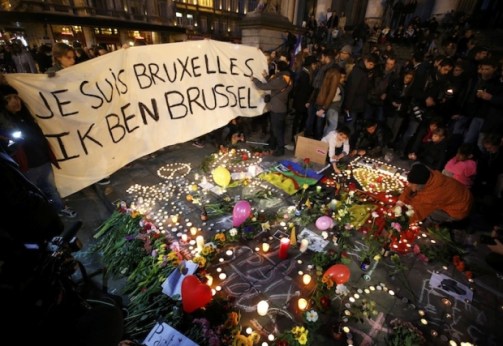
BELGIUM-BLASTc2303_620_427_100
Banner reads ‘I am Brussels’ in French & Flemish – Reuters pic

One week ago on Tuesday, March 22, 2016, three coordinated bombings occurred in Brussels, Belgium’s capital. Two attacks occurred in the Brussels airport, and one at its metro station. During these attacks, 31 innocent victims were killed along with three suicide bombers. Even more disturbing is the 300 innocent people who were injured.

I feel great sadness when I hear of a terrorist attack especially when it occurs in Europe because just six months ago my wife and I were in Europe. In October of 2015, my wife and I visited Belgium. While Brussels was not one of the places we visited, we did visit several of the World War One sites in Flanders’ Fields. We also visited Paris, France on our trip so when the Paris attacks happened it deeply affected us both, as did the Brussels attack.

As I stated in my November 27, 2015  post about the Paris attacks, terrorism is something I cannot understand. I’ve tried to put myself into the shoes of a terrorist in order to comprehend how someone can cause harm and death to innocent people like the bloodshed that happened in Brussels. The news media repeatedly tells us that the people who carry out such acts of violence have been radicalized.  Merriam-Webster dictionary defines a radical as  “advocating extreme measures to retain or restore a political state of affairs”. So as I understand it, radicals are people who carrying out acts of murder for political gain.  This is what I can’t wrap my head around.  In my mind killing innocent people for political gain, or any reason, is wrong!

How can someone with any kind of conscience murder innocent people? As I mentioned in the November post, the only thing I can come up with is that these people have been brainwashed. It is the only explanation that makes sense.

What disturbs me the most is when a terrorist attack  happens on our planet panic sets in. Panic is a symptom of fear. The school that I taught in is taking a group of students to Germany this month. The Brussels event set off a wave of panic among the parents. These parents were fearful because their children were off to Europe, where terrorist attacks occur. Now I’m a parent, so I understand the need to protect your children. But when we cave in to fear, the terrorists succeed.

Perhaps it’s time to look at the issue of terrorism from a different perspective. According to many spiritual writers today, all behaviours and emotions can be put into two categories – love and fear. These writers tell us fear is the opposite of love. So what is fear? Fear results in a feeling of not being protected or feeling secure. So when it comes to terrorism, fear sets in because we feel insecure and vulnerable. In fact, that is what terrorism is all about, instilling fear. Terrorists want us to be fearful. They want to cause terror. In fact, ‘terror’ is the root word of ‘terrorist’ or ‘terrorism’.

Fear limits our minds. People who live in fear will do harmful things. They lash out at those whom they perceive to be the cause of their pain. The same could be argued for animals. When do animals attack? It is when they fear for their survival.

Now most people would argue that the opposite of love is hate but when you think about it, hate is really stemming from fear. A person might “hate” someone who has abandoned or disrespected him. Abandonment makes more sense in terms of the fear. When a person feels abandoned, their emotions are stemming from fear of being alone. Disrespect is when a person feels scorned or disregarded, so it stems from the fear a person has when they are not honoured or regarded.

In a CNN report, Republican front-runner Donald Trump is quoted as saying,

“It’s going to get worse and worse. In my opinion, this is just the beginning. It will get worse and worse because we are lax and we are foolish — we can’t allow these people, at this point we cannot allow these people to come into our country. I’m sorry…”

His remarks clearly come from fear. His and others like him lack love and compassion. Banishing others does not stem from love. It stems from fear which indicates that there is no love.

Love on the other hand doesn’t hurt. If it hurts it is fear. Love is a core emotion from which many other emotions are created. Emotions such as happiness, kindness, charity, faith, empathy, fairness and compassion all come from loving intentions. This type of love is what the Greeks called agape love. This love is selfless, sacrificial, unconditional love. It is the highest form of love there is. With this type of love there is no exclusiveness.

Fear is the opposite of love because fear is the base emotion from which hate, prejudice, greed, stress, paranoia, and many other negative emotions are based.

1 John 4:18 of the Christian scriptures tells us, “There is no fear in love, but perfect love casts out fear; for fear has to do with punishment, and whoever fears has not reached perfection in love.” It is also interesting that scripture scholars tell us the phrases “do not fear” and “do not be afraid” appears 365 times in the Christian Bible. I don’t think that is coincidence. Perhaps a basic message in the scriptures is, do not have fear because when you are fearful, you do not possess love.

The CNN report referred to above quotes Pascale Rouhier, a 38-year-old resident of Brussels, as saying, “I’m not going to change my way of living because Brussels is my city.”

The article also reports that 2,000 people gathered in front of  the Brussels stock exchange, with Belgium Prime Minister Charles Michel and other leaders who laid wreaths at Maelbeek metro station.

German Chancellor Angela Merkel said, “Our strength lies in our unity, and our free societies will prove to be stronger than terrorism.” (see article)

These are all examples of people whereby fear has not taken hold. Their reactions and comments stem from love. Love unifies while fear divides.

Perhaps former Beatle John Lennon sums it up best when he said,

“There are two basic motivating forces: fear and love. When we are afraid, we pull back from life. When we are in love, we open to all that life has to offer with passion, excitement, and acceptance. We need to learn to love ourselves first, in all our glory and our imperfections. If we cannot love ourselves, we cannot fully open to our ability to love others or our potential to create. Evolution and all hopes for a better world rest in the fearlessness and open-hearted vision of people who embrace life.”

Franklin D. Roosevelt, the 32nd President of the United States was right when he said during his inaugural address on March 4, 1933,   “Let me assert my firm belief that the only thing we have to fear is…fear itself.”  If terrorists succeed in their mission to instil fear into the world then they will create a culture of fear; a culture where there is no love; a world full of hate, prejudice, greed, stress, and paranoia. But, if we don’t allow fear to take hold then we will have a culture filled with happiness, kindness, charity,  empathy, fairness and compassion; a culture where there is love. The choice is ours.

“You’re Chicken”

Anybody that knows me understands that I am not one of the bravest people on the planet.  I do not like speed so I avoid being in fast cars, speed boats and roller coasters.  Moreover, I am afraid of heights. I was terrified standing on the CN Tower in Toronto, Canada. You could not pay me enough to stand on that glass bottom.  Strangely, standing on top of a mountain or walking along a trail with a steep cliff beside me, I’m not afraid.  But put me on a roof to shingle it, I’m terrified.  My brothers, when asking for family members to help shingle a roof don’t even bother asking me because they know I’m useless due to my fear of heights.

disneyland-resort-logo-540154My wife loves anything Disney, so in 2004, we took a family vacation to spend time at Disneyland in California, U.S.A.  I will admit, to use the idiom,  that I was a “chicken”.  I refused to go on anything labelled a roller coaster.  That meant that the Space Mountain ride was out.  We were in line to experience the ride Big Thunder Mountain Railroad when I noticed a sign stating that the ride was a roller coaster.  I questioned my wife about it and she assured me it was a very mild roller coaster.  So I went.  That was a one time experience though.  Then there is California Adventure Land. They have the California Screamin’, a huge roller coaster.  There was no way in hell that I was going on that.  Then there was the then newly opened The Twilight Zone Tower of Terror ride.  That is a ride that simulates an out of control elevator dropping.  That sounded just too terrifying for me, so I used my “I’ll pass” card.  Let’s face it, I am just a big chicken.

Three years ago, in 2013, my daughter volunteered in South Africa for two weeks with a group of university students.  She also spent two weeks traveling on safaris and experiencing Africa.  My daughter declared her  motto to be, “This is a once in a lifetime opportunity, so I’m going to experience all that I can.”  I was so proud of her.  She tried new foods such as crocodile, wildebeest, and warthogs. She went shark cage diving.  She did cliff diving, surfing and caving.  The list goes on and on. I thought she was incredibly brave.

clip-art-rollercoaster-347569That same year, my wife had a work related conference in Anaheim, California,  so we decided to make a vacation of it.  I, along with two of our children, went with her to once again experience Disneyland and California Adventure Land. So I thought, if my daughter can be brave and was willing to try new things in Africa, then I can be brave too.  My new motto for the trip was, “If my daughter can try new things, so can I”.  It was  carpe diem; “seize the day” for me. No one was going to accuse me of being chicken this time.  So off we went to experience the theme parks.

1280px-Tower_of_terror_dca
Disneyland’s Tower of Terror

My wife loved Space Mountain, so I said, “I’ll try that.” I did but only once.  Then there was the The Twilight Zone Tower of Terror which I was terrified to go on in 2004.  Not this time.  While waiting in line, I’ll be honest, I was nervous, very nervous actually, but if my daughter could be brave so can I.  The ride turned out to be fun.  In fact, we went three more times after that. I drew the line at the huge roller coaster known as California Sceamin’.  My wife and son loved it.  My eldest daughter and I just waited for them.  She is a bit like her Dad. She is not overly brave but she did try most rides like me.

We also spent a day at Universal Studios in Hollywood, California. I am so proud of myself as I did the new Transformers: the ride 3D and Revenge of the Mummy: the Ride, both of which are a type of roller coaster.

So, I learned something on that trip.  It is okay to try new things; to have new experiences.  Sometimes we just have to face our fears and ‘seize the day’.  I made a deal with myself then to take some risks and to just go for it, although I do draw the line at extreme activities such a sky diving and parasailing. Author Neil Gaiman in The Graveyard Book, says, “If you dare nothing, then when the day is over, nothing is all you will have gained.” That is so true!

The article, Seeking the potential vs the risk, in Huffpost Business says,

Taking risks empowers you to establish new limits in your mind. We all have boundaries or a comfort zone where we’d like to stay and many have misconstrued visions of what we think we deserve or are capable of accomplishing. When you take risks, you can eradicate that thinking, establish new boundaries, improve your outlook on life and your ability to achieve on high levels.

That is what happened to me. I like my comfort zones. In my mind I set limits like “no roller coasters” but when I decided to take risks, I eradicated those old limits and established new boundaries. I decided that I could handle some roller coasters and even an out of control elevator ride. So take some risks. Have some adventures in life. Life is too short to be scared. Helen Keller in her book,  The Open Door says, Life is either a daring adventure or nothing at all.” I prefer to have adventures. You should too.

Adventures with Mother Nature

Every summer since 2002, starting when my son was 8 years old, my son and I have taken hiking excursions to the Canadian Rockies. Traditionally, we go with my brother-in-law and his two sons. Sometimes my brother and his son would join us as well as a friend and his two sons at the beginning. These excursions entail carrying 40-pound backpacks containing food and cooking equipment, sleeping gear and a tent. On some occasions we carried our 40-pound packs 14 kilometres (8.7 miles) before reaching our destination.

Most hikes were to the backcountry, a remote undeveloped rural area accessible only by hiking trails. We would hike to places such as Landslide Lake, Ribbon Lake, Lillian Lake, Utopia Creek, Glacier Lake, and Celestine Lake to name a few. I realize that these names likely don’t mean much to many of you but I can assure you that these settings are some of the most breath-taking, beautiful scenery in the world.

hiking 04 fishing
Lillian Lake

We’ve had some adventures over the years. In what is called Kananaskis Country, we did a day hike to Ribbon Falls after a good night’s rest at the Ribbon Lake campground. To reach our destination, we had to maneuver down a vertical cliff. Thankfully, there were chains attached to help a person propel downward. By carefully finding footholds and hanging onto the chains we successfully got to the bottom part of the cliff. Being that I am afraid of heights, this was a terrifying experience for me. Climbing up the cliff was much easier.

After hiking the Galatea Creek Trail, also in Kananaskis Country, and arriving at our destination of Lillian Lake we put our backpacks down and went to scout out a site to set up our tents. Several minutes went by before we returned to collect our equipment to take to our chosen site. To our dismay, we discovered a chipmunk chewing its way through the top of my son’s brand new pack which I had just purchased for my son. In fact, this was his first trip with it. The chipmunk had chewed a hole into the top of the pack in an attempt to get at the trail mix inside. I was not happy with that animal and yelled some choice words at the creature. Thankfully the little beast was not successful in retrieving any of the trail mix.

Hinton Jasper 277
Geraldine Lake trail (boulder hoping)

One of the most difficult hikes we’ve done was to Geraldine Lakes in Jasper National Park. It involved a very steep climb beside the waterfalls between Lower and Upper Geraldine Lakes where you come to kilometres of boulder hopping across what is called talus field. To say it was exhausting hopping from boulder to boulder carrying a 40 pound backpack is an understatement. At one point I was feeling sorry for myself asking, “Why am I doing this?” Thinking that I was getting too old for this hiking business (I was in my 40s), we came upon a fellow hiker in his 70s. He told us that Geraldine Lakes was one of his favourite trails and that he had hiked the trail many times. I needed an attitude adjustment at that point and my outlook changed after talking to the senior hiker. If a 70-year-old man can hike that trail, I had nothing to complain about being I was 30 years younger than this man. It’s all about your mental attitude. Being in shape, of course, helps.

One of my favourite hiking experiences was our hike to Utopia Creek in Jasper National Park. There were eleven of us on that expedition. On the Saturday evening we decided to take a different trail back so that we could climb up to what is called the Sulphur Skyline, which has some of the most breathtaking panoramas in Jasper National Park. This meant hiking the Fiddle River 11 kilometre horse trail from our campsite, then going up a 700 metre (2300 feet)  elevation gain of about 2 kilometres (1.2 miles) to reach the skyline. The trailhead had a sign saying, “Trail not recommended,”  but this didn’t stop us. What we did not realize is that we had the cross the Fiddle River not once, not twice but six times.

On our first crossing we carefully hopped across the river from boulder to boulder with our backpacks on until the last bit whereby we took our packs off, tossed them a fair distance to another person on the riverbank and then hopped onto the bank ourselves. Thankfully no one fell into the water and our packs remained dry.

During the second crossing we decided to take our hiking boots off, put on our sandals and cross the river in our sandals. The current was strong and the glacier water literally made my feet hurt.

Now the third crossing was done in our bare feet. By this time the ritual of taking off our boots was becoming burdensome, so when we had to cross the river on the fourth, fifth and sixth occasion we just kept our boots on. The current was strong so there were times when I had to hang onto my son, age 12 at the time, to prevent him from being swept downstream by the current. We stopped at a trailhead leading to Mystery Lake to ring out our wet socks and dried our boots as best we could. We eventually made it to the Sulphur Skyline with one of the most spectacular views I have ever had the privilege to appreciate. The chipmunks on top of the skyline were brave creatures as they would come right up to your fingertips looking for food.

In 2009, nine of us spent three hours hiking the 7 kilometre (4.3 mile) trail to Celestine Lake in Jasper National Park. A friend of mine and I were the last to arrive at our campsite as the younger ones of the group were much quicker than us older ones. What made this adventure so memorable was the fact that when my friend and I arrived at the campsite, we were told that we had to go back as there was a forest fire nearby. Now we didn’t believe them, of course, until we saw the warden’s helicopter take off. Apparently, the park warden arrived in a chopper and called to my brother in law saying, “I have some bad news guys. You have to leave as there is a fire in the area.” So it turned out that we were told the truth. We had to spend the next three hours returning to our starting point.

2013-07-13 01.19.38Now I have been asked over the years why I would go into the back country where there is no contact with the outside world; where there are bears and cougars and it can sometimes get to below freezing at nights. Those are good questions. My first response to those questions is always that it is quality time with my son. But it is more than that. I do it for the adventures. There is nothing like being in nature and the experience of standing on top of mountain with the wind blowing through your hair. The beauty that Mother Nature has to offer is far-fetched until you see it, and even then it can be surreal. For me, being in the wilderness is a chance to touch the divine. It is during those times that I feel closest to God or the Universe.

According to the article, How Does Nature Impact our Wellbeing, put out by the University of Minnesota,

“Being in nature, or even viewing scenes of nature, reduces anger, fear, and stress and increases pleasant feelings. Exposure to nature not only makes you feel better emotionally, it contributes to your physical wellbeing, reducing blood pressure, heart rate, muscle tension, and the production of stress hormones. It may even reduce mortality, according to scientists such as public health researchers Stamatakis and Mitchell.”

Maybe that’s why I do it. Without knowing why, it made me feel better. So, go out into nature and reduce your stress. Speaking from experience it works. It is so easy to get so wrapped up in our daily urban lives that we forget what nature has to offer. Visit Mother Nature to de-stress. When you do you will discover that she is worth protecting.


What to believe?

Napoleon Bonaparte was once reported to have said, “History is the version of past events that people have decided to agree upon.”   George Kitson Clark once said, “No historian should be trusted implicitly.”  Norman Pearson is quoted as saying, “To look back upon history is inevitably to distort it.” There was a time whenever I read something in a history book or was taught something in a history class, I believed it to be the “Gospel truth.”  Now being older and wiser I no longer do.  So why would I say that?

imagesI recently read a book titled, Inconvenient Indian by Thomas King. What surprised me, was that Mr. King claims that the massacre that allegedly occurred at the Alamo was a fabrication, a story created over the years. But that is not what history says.
I did some internet research and Wikipedia says this about the Alamo massacre: “In the early morning hours of March 6, 1866,  the Mexican Army advanced on the Alamo. After repulsing two attacks, the Texans were unable to fend off a third attack… Between five and seven Texans may have surrendered; if so, they were quickly executed. Most eyewitness accounts reported between 182 and 257 Texans died, while most historians of the Alamo agree that around 600 Mexicans were killed or wounded.”  I checked other websites which say more or less the same thing. So who is right?

Mr. King also says, the story about Pocahontas and John Smith, perpetrated by Disney’s movie Pocahontas  is also a myth, or in other words a fabricated story. He claims that John Smith would have been 24 years old and Pocahontas maybe 10 or 12 years old at best.

Now Disney’s version of the story is one of romance between an American Indian woman named Pocahontas and John Smith, who journeyed together to the New World with other settlers to begin new lives.  Do the children, or even adults for that matter, who have watched this movie believe they have watched a historically accurate depiction of events of the past?  Probably.  My experience as a teacher has been most young people think what they see in movies and on television is truth or is real history. At least Wikipedia sets the record straight about the story of Pocahontas as it says, “In a well-known historical anecdote, she [Pocahontas] is said to have saved the life of an Indian captive, Englishman John Smith, in 1607 by placing her head upon his own when her father raised his war club to execute him. The general consensus of historians is that this story, as told by Smith, is untrue.”  So we know Mr. King is likely right about the Pocahontas story.

In July of 2007 while on a family trip to Eastern Canada,  we visited the Maritime Museum of the Atlantic in Halifax, NS. At that time there was an exhibition on pirates. It was interesting to learn that commonly held belief that pirates make their enemies walk the plank as well as the belief that  pirates often have parrots on their shoulders are myths. We learned that these are myths. There apparently is no historical evidence to support these commonly held beliefs about pirates. Also, the wide held belief that pirates buried their treasures is also a myth. I guess I was somewhat disappointed to learn about these untruths as I always thought pirates did bury their treasures.

So what else have we been taught that is NOT a historical truth?  According to the article, Facts Prove Everything You Thought You Knew About History… Is Dead Wrong, Christopher Columbus did not discover America. He only discovered the Caribbean Islands.  I don’t know about you, but I was taught in school that Columbus discovered America.  It has been proven that the Vikings were in North America before Columbus as there is an archeological site at the northern tip of Newfoundland where they discovered the remains of the Viking’s houses. In fact, they reconstructed a replica of the settlement about 100 yards away from the site. It has been unquestionably determined that the Vikings were there for about 10 years, specifically, Leif Erikson and his extended family. I guess I can erase that untruth from my memory.

Dictonary.com defines the “Napoleon complex” as the condition of being small in stature but aggressively ambitious and seeking absolute control. It could just as easily be called the “Short Man Syndrome.” In other words, this complex is named after Napoleon Bonaparte because of the widely held belief that Napoleon was short. But according to the 16 facts article I referred to earlier, the truth is Napoleon Bonaparte was not short at all. He was five feet, seven inches. That was slightly taller than average for a Frenchman at the time. Another historical inaccuracy to erase from memory.

The idea that Albert Einstein failed math in school is an urban myth (see 20 things you need to know about Einstein). It turns out that Einstein didn’t fail math in school, it was a false claim published by Ripley’s. The truth be known is that when he was 15, he mastered differential and integral calculus which makes sense since he is widely held as one of the world’s few geniuses.

Then there is the History Channel series called Hunting Hitler that proposes that Hitler faked his own death, escaped through the Berlin underground to an airport, flew to Spain where he was smuggled onto a U-boat and taken to Argentina with a stop at the Canary Islands. He then lived hidden in the Argentina jungles and was eventually seen in Brazil and Columbia. Now I was always taught that Adolf Hitler committed suicide in his bunker in Berlin in 1945 although this apparently has never been confirmed. Now I must say after watching eight episodes and considering the evidence provided, I am now thinking what I’ve been taught about Hitler is wrong. I am now leaning towards the premise that Hitler did not die in his bunker in 1945.

Louis_RielIn Canada, history has always taught that Louis Riel, a Canadian Métis trailblazer, who led two resistance movements against the Canadian government and its first prime minister, Sir John A. Macdonald was a traitor. He was a traitor because he led two rebellions known as the Red River Rebellion of 1869–1870 and North-West Rebellion of 1885. In July of 1885 Riel was charged with treason. Riel was publicly executed by way of hanging in November of 1885. Since that time, the majority of Canadians have held the belief and been taught in school that Louis Riel was a trouble maker; someone who betrayed Canada which is why he was hung for treason. This is what I was taught in school and I have always believed that he was an insane traitor of Canada.  Ironically, on March 10, 1992, the Parliament of Canada passed a unanimous resolution that named Louis Riel as founder of the Province of Manitoba, because of his role in defending the interests of the Métis people and contributing to the political development of Western Canada.  So what is the truth?  Was he a traitor or was he one of Canada’s founders?  Personally, I now side with Riel as a hero who was willing to stand up to the government of the day for the rights of his people; the Métis people.

So what is a person to believe?  Should we trust what we read in the history books or what we see on the History Channel? I think not.  We must at the very least be skeptical. It is interesting how a person can grow up learning about historical events only to discover later in life that those events are untruths, or at least they have been exaggerated.  Having taught Social Studies for years, I have always taught my students to be skeptical.  History involves interpretation of the events that occurred in the past.  Therefore, interpretations can be slanted, exaggerated, and falsified.   To quote the Roman poet Phaedrus, “Things are not always what they seem; the first appearance deceives many; the intelligence of a few perceives what has been carefully hidden.” Things are seldom what we’ve been led to believe. I guess now I have become a bit of a skeptic.

Bring the New Year

Here we are again saying goodbye to another year and bringing in another new year. It boggles my mind (mainly because it reminds me that I’m getting older) how fast annual events come about, whether they be birthdays, anniversaries, holidays or even the Stanley Cup playoffs. New Years is one of those annual events.

Now when you talk to people you discover that some people tend to live in fear. For example, these individuals are afraid to travel because “terrible things,” like terrorism, might (and I emphasize the word might) occur in the world. I categorize these individuals as the pessimists. Now I will admit that I sometimes can fall into this category. It’s easy to do. These are the people who always point out the negative in the world. These are the folks who say, “What kind of world will our children or grandchildren live in?” Fearful individuals seem to believe the world is “going to hell” and are anxious because 2016 will be even worse than 2015.

What I find interesting is that attitudes have not changed. My Mom talks about how her parents used to worry about the kind of world their children and grandchildren would be born into. My parents used to be concerned about the state of the world as they lived during the Cuban Missile Crisis and the Cold War. The world has always faced challenges and threats. Today is no different. The reality is the world continues to survive.

Now to be fair, there is some merit to their fear; to their pessimism.  2015 has seen many heartbreaking events. Here are some that caught my imagesattention. In October Hurricane Patricia, the most intense hurricane ever recorded in the Western Hemisphere, had winds up to 322 kilometres per hour (200 mph). November saw  multiple attacks by Islamic State of Iraq and the Levant (ISIL), the best known was the attack in Paris, France, resulting in 130 fatalities. Also in November of this year Turkey shot down a Russian fighter jet which is the first case of a NATO member destroying a Russian aircraft since the 1950s. In June of 2015, ISIL claimed responsibility for three attacks around the world during Ramadan such as the one in Kuwait City where a suicide bomber attacked a Mosque killing 27 people and injuring 227 others. Then there was the Greek government debt crisis in July when Greece became the first developed economy to miss a payment to the International Monetary Fund (IMF) in the 70-year history of the IMF.

Of course, I would be remiss if I didn’t mention the story that has been dominating the news most of the 2015 year and that is the Syrian refugee crisis; the worst refugee crisis since the Second World War.  The International Organization for Migration claims that more than one million migrants and refugees crossed into Europe in 2015. Now I could list other events, but there is no question that there have been numerous shameful events in 2015.

Thank God  (or Allah, or Yahweh, or the Universe) there are those who always see the good in the world. I categorize them as the optimists.  Optimists are filled with hope. These are folks who believe that the world can be better; that humanity is not all bad. Individuals such as these look to 2016 with an attitude of hope, hoping that things will improve.  I choose to align myself with the optimists.

There is merit to their argument. Here are some of the jovial events that caught my attention. In April, health officials declared the Americas the first region in the world to be free of the endemic rubella, or German measles, thanks to a 15-year effort to vaccinate men, women, and children everywhere in the northern hemisphere. This is great news since rubella can cause death or severe birth defects when women catch the disease during pregnancy. In July, history was made when Cuba and the United States reestablished full diplomatic relations, ending a 54-year history of GUSTAVO-CAMACHO-GONZALEZ-L1060274_(23430273715)hostility between the nations. In December, a global climate change pact was agreed upon at the COP 21 summit, where  195 countries adopted the first-ever universal, legally binding global climate deal. This is great news for the planet. Also in December of this year SpaceX, a company that hopes to revolutionize space technology, lands a Falcon 9 rocket.  This is the first reusable rocket to successfully enter the Earth’s orbit and return. This brings hope for space travel as it makes it cheaper. December also saw Indian Prime Minister Narendra Modi make a surprise visit to  Pakistan to meet his counterpart, Nawaz Sharif.  This is the first time an Indian leader has visited Pakistan in over a decade.  Relations between these two countries have been bitter ever since the violent division of British India in 1947, and the two nations have a history of  numerous military conflicts. This shows that good relations are possible between rivals. That gives hope that peace is achievable. Also in December the members of the Scottish Parliament voted unanimously in favour of a law to ban smoking in cars that are carrying children. That’s great news for kids. There are certainly more positive events of 2015 I could report, but you get the idea.

The Atlantic Monthly in December of 2015 , a magazine published in Washington, D.C,  wrote an article called 2015: The Best Year in History for the Average Human Being. The article cites numerous reasons for making this claim.  Here are a few that caught my attention.

“At the Paris climate conference in December, countries demonstrated renewed resolve to tackle global climate change together. Absent any policies enacted to slow climate change since 2010, the world might have been more than 4 degrees Celsius hotter in 2100 than pre-industrial temperatures. Existing policies to cut emissions reduced that forecast to 3.6 degrees, and the additional pledges in Paris brought it to 2.7 degrees Celsius.”
“The Global Terrorism Index says, 11,133 people died in terrorist attacks—suggesting terrorism accounted for about 1.8 percent of violent deaths worldwide. And for all that terrorism deaths have increased since 2012, they remain responsible for perhaps three hundredths of one percent of global mortality…Rabies was responsible for three times as many deaths as terrorism that year. Stomach cancer killed more people than murder, manslaughter, and wars combined…”
“Civil and political rights also continued their stuttering spread. While 2015 saw rights on the retreat in countries including Turkey and Thailand, the number of electoral democracies worldwide remains at a historic high according to Freedom House…This year, there were peaceful and democratic transitions of power in settings as diverse as Burkina Faso, Tanzania, Myanmar, and Argentina. And Saudi Arabia held local elections where, for the first time ever, women were allowed to stand as candidates and vote.”
The Atlantic Monthly focuses on the positives of 2015. What astounds me is instead of feeling good about the progress made in 2015, the pessimists choose to downplay the article. CBC did this in their article, 2015 ‘the best year in history’? Not everyone agrees. Why not be proud of what humanity has achieved in 2015? Why can’t humans celebrate the positives rather than dwell on the negatives?
When doing research for this post, I ‘googled’ predictions for 2016. What is intriguing to me is the vast majority of the predictions are ‘doom and gloom’ predictions.  One ‘hit’ was titled 2016 will be a year of living dangerously for the global economy.  The Inquisitr, an internationally recognized news website, predicts World War Three will start in 2016.  When you think about it, the third world war has already started as the war on terrorism involves much of the world community. I guess they’re right about that prediction. At least Newsweek predicts a  rise in electric cars which if it becomes true is great for the environment.  Now remember, a prediction is just a guess or a forecast.  When I ‘googled’, “How many predictions came true in 2015?” the vast majority of ‘hits’ were talking about the movie Back to the Future II. In this movie Marty McFly and Doc Brown travel to the future in their time machine, the DeLorean. The date set on the time machine was October 21, 2015.  The various websites were comparing the 2015 of today with the 2015 of the movie. I had little luck finding anything else. That leads me to believe that most of the predictions made for 2015 didn’t come true. Certainly some of the political changes that occurred in 2015 weren’t predicted.

best-year-everSo what will 2016 bring? The pessimists will likely envision , more ISIL terrorist attacks,  more anger from Mother Nature in the form of violent storms, more conflicts between nations, more economic problems, and on and on. Optimists will focus on the positives like improved political relations, the international community working together to slow climate change, improvements in human rights, improvements in health, and so on. I choose to be in the optimist camp. I choose to believe that 2016 will bring many good things. Really, the only thing we can control is the choices we make. To quote Brad Paisley, “Tomorrow is the first blank page of a 365 [366 for 2016] page book. Write a good one.” I’m choosing to make it a good one. I’m choosing to make 2016  a great year!

Interesting reads: 5 Major Trends and Make your 2016 better

Europe Then and Now

Since returning from our trip abroad, my wife and I have been asked numerous times what we found different in Europe compared to our first time over there which was 26 years ago. Our gut response is always to say, “It pretty much looks the same as it did last time we were there.”  Now that is the truth.  It still looks pretty much as it did in the 1980s.  Most of the buildings still look very old and the majority of the streets are still very narrow. However, if there is one thing that was noticeably different was the amount of English around.

When I taught Social Studies, we used to discuss the  question, Is English becoming a universal language? when teaching about how globalization is changing the world.  For me, it was interesting to see if what I taught was indeed truth.  According to the article, 10 Reasons why English is the World’s Language, some of  the reasons why English is considered by some to be, or at least on its way to being, a universal language are:

  1. English is the language of business & finance
  2. Hollywood is the capital of film-making and many foreign actors have had to learn to speak English to work in Hollywood.
  3. If you want to make in the international music arena, you must be able to sing in English.
  4. English is the language of travel. English is the language used when the local hotel, restaurant or retail staff members communicate with foreigners and visitors.
  5. English is the unofficial language of the internet. There are billions upon billions of websites on the Internet nowadays, and it’s estimated that more than half of the entire online material is published in English.
  6. The influence of the United States and the United Kingdom, two very influential English-speaking world players.

Kevin & Marilyn - 1557 of 2668Now this all makes sense to me, but I know when I was teaching this stuff I wondered if it really was that way.  Well I can tell you after returning from Europe, I have to say that I believe there is truth in these arguments.  Allow me to share some of my observations.  When we were in the airports and train stations I noticed the signage would have the language of the country we were in written first, with English written underneath. We were in airports in Athens (Greece), Rome (Italy), Paris (France) Istanbul (Turkey) and Warsaw (Poland).  This was the case in every one of those airports.  I don’t recall that being the case 26 years ago.  Announcements in the airports were also in both the language of the country and in English.  This was also the case for most train stations and we were in many, many train stations throughout Italy and France.

Before leaving for Europe, we prepared by downloading a translator app, and then we inputted and saved numerous phrases that we thought would be necessary when over in Italy, France and Greece.  We did not need to use this app once when talking to people.  Almost everyone we talked to in France, Italy, the Turkish airport, the Polish airport and in Greece spoke fluent English, although with an accent. We were most surprised when we found an English speaking waitress in the Warsaw airport.The only time we used the translator app was when looking at ingredients in a supermarket.

IMG_2491As for the restaurants, no matter what country we were in, most of the staff spoke English.  Not only that, almost every restaurant we ate at had menus in English.  Often they would have the Greek or Italian or French first with the English written underneath.

My wife and I drove in northern France. One day we decided to see what was on the radio, so we turned on the radio only to be pleasantly surprised to hear a song we recognized; a pop song in English.  As soon as the song was finished, we were astonished to hear the disk jockey speak in French.  It struck me as odd; as “out of sink”; as not fitting.  This certainly does suggest that much of the world’s popular music is indeed sung in English.

IMG_2857Another noticeable difference from the 1980s was the number of signs you see in English.  In all three of the countries we visited; France, Italy and Greece, you would see store or company signage in both the language of the country we were in and in English. Often it would be Greek (or Italian or French) on some businesses and English on others. Many of the directions for toilets, exits, or tourist sites would also have English on them.

Another topic I often discussed with my students was; Was the world  becoming more homogenized  (more the same) because of globalization?  I certainly saw evidence of this as well.  The youth in Europe for the most part wore blue jeans just as the youth in North America do.  This was not only true of the youth. The hair styles of the youth were the same styles you would see on North American youth. Then there is the cell phones.  Everyone appears to have one and be on it just like in North America. Whether we were on the Metro, on a bus, in a museum or walking down a street, you would see people texting or talking on their cell phones.This certainly suggests homogenization to me.

It was not unusual to see stores or products from the same corporations in European cities that you would see in North American cities.  I noticed many MacDonald’s restaurants, Burger King, Shell gas stations, Esso gas stations, and clothing stores such as Abercrombie & Fitch and the Gap.  I also noticed Apple Stores, Starbucks coffee, and Disneyland Paris.  There were Coca Cola and/or Pepsi signs every where. I’m sure I missed a few companies that operate in the European Union. This also advocates for the homogenization argument.  We went into one store in Greece only to discover that much of clothing they sold had American cities written on them or some  saying written in English.

IMG_3061I have mixed feelings about these changes that I’ve observed.  Regarding English as perhaps a universal language, that is great for those of us that English is our first language, or in my case the only language.  I guess I should be grateful that the language I was born into is being spoken in most parts of the world. After all, it makes travelling much less stressful.  What bothers me is the possibility that the world is becoming more and more the same culturally.  This saddens me because the point of travel for me at least is to experience the cultural diversity in the world.  I fear that as globalization continues to take hold, diversity will be lost.  The fact that youth in Europe and North America dress the same is evidence of this.  The truth that you see many of the same companies in the European Union as you do in North America suggests the world is indeed becoming more and more alike.  Like anything else there are always pros and cons.  I do hope that the various cultures of the world will be able to resist globalization enough so that they will continue to exist as a unique culture of the world. Variety makes the world more interesting.  If all countries of the world become more and more alike, then won’t that make for a boring world?

Culture of Fear or Compassion ?

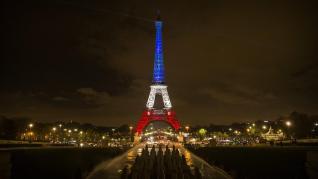
ct-photos-eiffel-tower-in-the-french-flag-s-co-006Since my wife and I had just been in Paris, France a month ago, I  was filled with great sadness when I heard about the terrorist attacks that occurred in Paris on Friday, November 13, 2015.  Terrorism is something I have a difficult time wrapping my head around. I cannot for the life of me understand how someone can cause harm and death to innocent people such as the carnage we saw in Paris. The news media has repeatedly said that the people who carry out such acts of violence have been radicalized, that is, have become more radical. Merriam-Webster dictionary defines a radical as  “advocating extreme measures to retain or restore a political state of affairs”.  I guess for radicals that means carrying out acts of murder.  This is what I can’t get my head around.  How can someone with any kind of conscience murder innocent people? The only explanation I can come up with is these people have been brainwashed. The MacMillan Dictionary defines brainwash as “to force someone to accept a particular set of beliefs by repeating the same idea many times so that the person cannot think in an independent way”.  How exactly terrorist groups such as Al-Qaeda or ISIL (Islamic State of Iraq and the Levant) are able to do this using the internet is a mystery to me, but this  must be what is happening.

IMG_1182What concerns me the most is that many people are becoming fearful. On November 23rd, the American Government issued a world wide travel alert cautioning Americans to possible risks of travel due to increased terrorist threats. This obviously means that Americans are becoming fearful. Don’t get me wrong, caution when traveling is always a good thing.  Travellers should always use caution when travelling outside of their country whether terrorism threats are around or not. That is just common sense.  Moreover, we are beginning to see a rise in Islamophobia (or anti-Muslim sentiment). That is when there is prejudice against, hatred towards, or fear of the religion of Islam or Muslims. U. S. Republican presidential candidates Donald Trump and Ben Carson have been advocating for more surveillance of Muslims. (see Muslim-Americans fear ‘ugly rhetoric’) Mr. Trump says, “we’re being foolish, we’re kidding ourselves” if law enforcement doesn’t keep close surveillance on mosques, and he expressed support for the idea of a database for tracking Muslims in the United States. Some have even resorted to using religion to justify Islamophobia or fear of Muslims. During a November 15 sermon at First Baptist Church in Dallas, pastor Robert Jeffress told his congregation that the Paris terrorists were “acting according to the teaching of Islam,” and said “it is time” to call out Islam as “a false religion … inspired by Satan himself”.  (see Theological Studies Director calls out) This is wrong, pure and simple. It simply is not fair to put all adherents to Islam in the same category.  In fact, the majority of Muslims around the world have condemned the Paris attacks and other acts of terrorism carried out by Muslim extremists. Even more, most if not all non-extremist Muslims categorically say that these extremists are not true Muslims. (see Muslims Around World Speak Out)  The bottom line is we must not let the terrorists achieve their goal. The root word of terrorism is terror which Dictionary.com defines as “an instance or cause of intense fear or anxiety”.  The very goal of terrorism is to instil fear in society so that our leaders cave into their demands. 

IMG_1239This fear, caused by the Paris terrorists and other terror attacks, has changed the debate over refugees.  Since returning home from Europe a few weeks ago I have been asked many times if we were affected by the refugees that had been dominating the news media before the Paris incident. Of course we were not.  My wife and I even had a conversation with another couple recently at an airport where this couple expressed real concern over Canada accepting refugees from Syria. They told us that they heard one of the Paris extremists was a refugee. Once again their concerns were stemming from fear.

There seems to be two camps in this debate; Do we allow the Syrian refugees into our country or do we keep them out as there might be an extremist among them? Canada’s new prime minister,  Justin Trudeau has promised to bring 25 000 Syrian refugees to Canada. (see Trudeau…) The debate in Canada and United States over the refugees is heated.  Several of Canada’s premiers have spoken out on the issue, both for and against. Petitions against bringing in the Syrian refugees have been popping up online. (see Should Canada stop).  Quebec’s premier Philip Couillard said it well when he said, “We must keep our arms open to refugees. They have fled their villages, they have seen their parents murdered and sometimes in front of their eyes. They come here in search of peace and freedom. Always remember that the Syrian refugees that will come to Quebec are themselves the first victims of terror.” (see We must keep our arms open)   The Free Dictionary defines a refugee as “one who flees, especially to another country, seeking refuge from war, political oppression, religious persecution, or a natural disaster”.  These people fear for their lives. They have witnessed horrible things. As Mr. Couillard stated, they are victims themselves. Alberta’s new premier,  Rachel Notley said it even better when she delivered an impassioned speech on the need to keep our doors open to Syrian refugees in the wake of the Paris attack, to not treat them as if they are terrorists about to launch a jihad in Edmonton or Calgary.  (see Graham Thomson) Here are some of Premier Notley’s words from Monday, November 16 speech; “…The refugees are themselves fleeing exactly the kind of terror that we were all shocked to observe and watch unfold this weekend. And that’s why we need to be reaching out to them…” The Premier later told reporters: “We cannot have our decisions being driven by fear.” The premiers of Quebec and Alberta are right! We must not be driven by fear.  My fear is that my country is buying into a culture of fear and as a result becoming less compassionate. I have always believed and been proud of the fact that Canadians are a compassionate people. Now is the time to show compassion for the Syrian refugees and NOT fear them. Now is the time to show the extremists that we will NOT be dictated by fear, that we will continue to travel abroad, and that we will NOT live our lives in fear.  President Franklin D. Roosevelt, the 32nd president of the United State said  in his 1933 Inaugural Address, “The only thing we have to fear is fear itself”. Roosevelt is right! My fear is that fear will take hold in our free society thereby making us prisoners of fear.