
Here we are again saying goodbye to another year and bringing in another new year. It boggles my mind (mainly because it reminds me that I’m getting older) how fast annual events come about, whether they be birthdays, anniversaries, holidays or even the Stanley Cup playoffs. New Years is one of those annual events.
Now when you talk to people you discover that some people tend to live in fear. For example, these individuals are afraid to travel because “terrible things,” like terrorism, might (and I emphasize the word might) occur in the world. I categorize these individuals as the pessimists. Now I will admit that I sometimes can fall into this category. It’s easy to do. These are the people who always point out the negative in the world. These are the folks who say, “What kind of world will our children or grandchildren live in?” Fearful individuals seem to believe the world is “going to hell” and are anxious because 2016 will be even worse than 2015.
What I find interesting is that attitudes have not changed. My Mom talks about how her parents used to worry about the kind of world their children and grandchildren would be born into. My parents used to be concerned about the state of the world as they lived during the Cuban Missile Crisis and the Cold War. The world has always faced challenges and threats. Today is no different. The reality is the world continues to survive.
Now to be fair, there is some merit to their fear; to their pessimism. 2015 has seen many heartbreaking events. Here are some that caught my 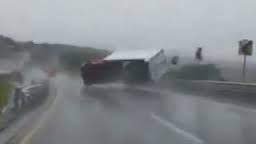 attention. In October Hurricane Patricia, the most intense hurricane ever recorded in the Western Hemisphere, had winds up to 322 kilometres per hour (200 mph). November saw multiple attacks by Islamic State of Iraq and the Levant (ISIL), the best known was the attack in Paris, France, resulting in 130 fatalities. Also in November of this year Turkey shot down a Russian fighter jet which is the first case of a NATO member destroying a Russian aircraft since the 1950s. In June of 2015, ISIL claimed responsibility for three attacks around the world during Ramadan such as the one in Kuwait City where a suicide bomber attacked a Mosque killing 27 people and injuring 227 others. Then there was the Greek government debt crisis in July when Greece became the first developed economy to miss a payment to the International Monetary Fund (IMF) in the 70-year history of the IMF.
Of course, I would be remiss if I didn’t mention the story that has been dominating the news most of the 2015 year and that is the Syrian refugee crisis; the worst refugee crisis since the Second World War. The International Organization for Migration claims that more than one million migrants and refugees crossed into Europe in 2015. Now I could list other events, but there is no question that there have been numerous shameful events in 2015.
Thank God (or Allah, or Yahweh, or the Universe) there are those who always see the good in the world. I categorize them as the optimists. Optimists are filled with hope. These are folks who believe that the world can be better; that humanity is not all bad. Individuals such as these look to 2016 with an attitude of hope, hoping that things will improve. I choose to align myself with the optimists.
There is merit to their argument. Here are some of the jovial events that caught my attention. In April, health officials declared the Americas the first region in the world to be free of the endemic rubella, or German measles, thanks to a 15-year effort to vaccinate men, women, and children everywhere in the northern hemisphere. This is great news since rubella can cause death or severe birth defects when women catch the disease during pregnancy. In July, history was made when Cuba and the United States reestablished full diplomatic relations, ending a 54-year history of  hostility between the nations. In December, a global climate change pact was agreed upon at the COP 21 summit, where 195 countries adopted the first-ever universal, legally binding global climate deal. This is great news for the planet. Also in December of this year SpaceX, a company that hopes to revolutionize space technology, lands a Falcon 9 rocket. This is the first reusable rocket to successfully enter the Earth’s orbit and return. This brings hope for space travel as it makes it cheaper. December also saw Indian Prime Minister Narendra Modi make a surprise visit to Pakistan to meet his counterpart, Nawaz Sharif. This is the first time an Indian leader has visited Pakistan in over a decade. Relations between these two countries have been bitter ever since the violent division of British India in 1947, and the two nations have a history of numerous military conflicts. This shows that good relations are possible between rivals. That gives hope that peace is achievable. Also in December the members of the Scottish Parliament voted unanimously in favour of a law to ban smoking in cars that are carrying children. That’s great news for kids. There are certainly more positive events of 2015 I could report, but you get the idea.
The Atlantic Monthly in December of 2015 , a magazine published in Washington, D.C, wrote an article called 2015: The Best Year in History for the Average Human Being. The article cites numerous reasons for making this claim. Here are a few that caught my attention.
“At the Paris climate conference in December, countries demonstrated renewed resolve to tackle global climate change together. Absent any policies enacted to slow climate change since 2010, the world might have been more than 4 degrees Celsius hotter in 2100 than pre-industrial temperatures. Existing policies to cut emissions reduced that forecast to 3.6 degrees, and the additional pledges in Paris brought it to 2.7 degrees Celsius.”
“The Global Terrorism Index says, 11,133 people died in terrorist attacks—suggesting terrorism accounted for about 1.8 percent of violent deaths worldwide. And for all that terrorism deaths have increased since 2012, they remain responsible for perhaps three hundredths of one percent of global mortality…Rabies was responsible for three times as many deaths as terrorism that year. Stomach cancer killed more people than murder, manslaughter, and wars combined…”
“Civil and political rights also continued their stuttering spread. While 2015 saw rights on the retreat in countries including Turkey and Thailand, the number of electoral democracies worldwide remains at a historic high according to Freedom House…This year, there were peaceful and democratic transitions of power in settings as diverse as Burkina Faso, Tanzania, Myanmar, and Argentina. And Saudi Arabia held local elections where, for the first time ever, women were allowed to stand as candidates and vote.”
 So what will 2016 bring? The pessimists will likely envision , more ISIL terrorist attacks, more anger from Mother Nature in the form of violent storms, more conflicts between nations, more economic problems, and on and on. Optimists will focus on the positives like improved political relations, the international community working together to slow climate change, improvements in human rights, improvements in health, and so on. I choose to be in the optimist camp. I choose to believe that 2016 will bring many good things. Really, the only thing we can control is the choices we make. To quote Brad Paisley, “Tomorrow is the first blank page of a 365 [366 for 2016] page book. Write a good one.” I’m choosing to make it a good one. I’m choosing to make 2016 a great year!
Interesting reads: 5 Major Trends and Make your 2016 better


 headlines in November. The company typically has its red holiday cups decorated with snowflakes, Christmas ornaments or reindeer, but chose for a minimalist design this year with cups that are red with nothing but its green logo. Starbucks executives said they wanted to embrace “simplicity and quietness.” However some Christian conservatives saw these new cups as an attempt to diminish the importance of Christmas.
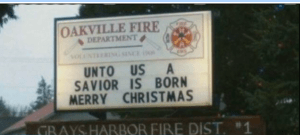 Another controversy occurred in Oakville, Washington, a town of 700 people who typically celebrates Christmas without controversy (see
  The Jewish tradition celebrates Hanukkah or the “Feast of Dedication,” also known as the “Festival of Lights”. This festival is celebrated on the 8th day of December and it is a time when Jewish people recall a miracle in the Jerusalem temple during a war fought by the Maccabees for the cause of religious freedom. Temple candles only had enough oil to burn for a single day. Yet they burned for eight days. Jews light candles on a menorah, two on the first day, three on the second, to nine on the eighth day. Jews should not feel restricted in any way when celebrating Hanukkah. In fact, this celebration should be encouraged. Perhaps in addition to Starbucks having cups with Christmas decorations on it, the company should also include cups with the menorah on it.


 It is referred to as the greenhouse effect because the earth acts just like a greenhouse does. The sun gives off electromagnetic radiation, in particular infrared radiation, visible light, and ultraviolet light. Visible light consists of short wavelengths of energy, which are able to pass through the glass or plastic of a greenhouse, and are absorbed. It is then released back as heat (thermal energy) or infrared radiation. This is what heats up the greenhouse as infrared radiation consists of long wavelengths of energy which are unable to pass through the greenhouse’s glass or plastic, thus are trapped in the greenhouse.
 water supply is in the glaciers that are disappearing. That’s not mentioning the numerous plant and animal species that will likely disappear because of global warming. (see
 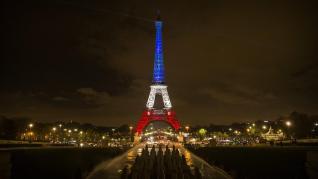 Since my wife and I had just been in Paris, France a month ago, I was filled with great sadness when I heard about the terrorist attacks that occurred in Paris on Friday, November 13, 2015. Terrorism is something I have a difficult time wrapping my head around. I cannot for the life of me understand how someone can cause harm and death to innocent people such as the carnage we saw in Paris. The news media has repeatedly said that the people who carry out such acts of violence have been radicalized, that is, have become more radical. Merriam-Webster dictionary defines a radical as “advocating extreme measures to retain or restore a political state of affairs”. I guess for radicals that means carrying out acts of murder. This is what I can’t get my head around. How can someone with any kind of conscience murder innocent people? The only explanation I can come up with is these people have been brainwashed. The MacMillan Dictionary defines brainwash as “to force someone to accept a particular set of beliefs by repeating the same idea many times so that the person cannot think in an independent way”. How exactly terrorist groups such as Al-Qaeda or ISIL (Islamic State of Iraq and the Levant) are able to do this using the internet is a mystery to me, but this must be what is happening.
 What concerns me the most is that many people are becoming fearful. On November 23rd, the American Government issued a
  This fear, caused by the Paris terrorists and other terror attacks, has changed the debate over refugees. Since returning home from Europe a few weeks ago I have been asked many times if we were affected by the refugees that had been dominating the news media before the Paris incident. Of course we were not. My wife and I even had a conversation with another couple recently at an airport where this couple expressed real concern over Canada accepting refugees from Syria. They told us that they heard one of the Paris extremists was a refugee. Once again their concerns were stemming from fear.


 Sommer Season all year