The Hideous Consequences of Political Rhetoric

A commentary on the increase in “hate crimes” due to political rhetoric.

rhetI am deeply disturbed by some of the events occurring in my beloved country of Canada. I have always been proud of the fact that Canada celebrates cultural diversity. Multiculturalism in Canada is the sense of an equal celebration of racial, religious and cultural backgrounds.  The Canadian federal government, under then Prime Minister Pierre Elliott Trudeau, put forth the ideology of multiculturalism which places emphasis on the social importance of immigration. The Canadian Multiculturalism Act is a law that was passed in 1988 and it aims to preserve and enhance multiculturalism in Canada. When I taught high school social studies I always proudly emphasized this fact to my students. So, when I learn of islamophobia, anti-Semitism, and anti-immigration views expressed in my country, I am alarmed and angered. These are some of the things that have happened in Canada.

In early March, Montreal police arrested a 47-year-old man hours after a bomb threat targeting Muslim students forced the evacuation of three buildings at Concordia University’s downtown campus. Apparently, several media outlets in Montreal received a bomb threat claiming to be from the “Council of Concerned Citizens of Canada,” a white supremacist organization also known as C4, which claimed that “small […] amateur explosive devices” had been placed in two buildings on the University. The email stated that C4’s goal was to injure Muslim students. The email also began by citing the election of U.S. President Donald Trump as inspiration for the group’s violent agenda (see CBC News).

Also in early March, a late-night fire at an Islamic information centre and mosque is being investigated by Toronto police. A police spokesperson said the fire is considered “suspicious” and being investigated as arson. It was not ruled as a hate crime then, but it certainly “smells” like a hate crime (see CBC News).

The Globe and Mail is reporting that police are investigating the discovery of swastikas inside an Ontario university classroom this week which left some students feeling distraught; the school calling the symbols “hate graffiti”. The news report says the police are treating the incident as a case of mischief at the time of the article. Marc Newburgh, CEO of Hillel Ontario told reporters, “This incident is an unfortunate reminder that anti-Semitism continues to persist even in a society as welcoming as Canada and a city as diverse as Toronto.” Hillel Ontario is an organization that strives to enrich the lives of Jewish students attending Ontario’s colleges and universities (see Globe & Mail). Sure seems like a hate crime to me.

Far right groups opposed to a federal government motion condemning Islamophobia took to the streets of Montreal in early March. On the opposing side were around 100 representatives of anti-fascist groups, carrying signs saying “Make racists afraid again” and chanting “Immigrants in, fascists out.” Tensions between the groups quickly flared despite a police presence (see CBC News).

Then there was the Quebec City Mosque attack that occurred on January 29th. Alexandre Bissonnette, only 27, was charged with six counts of first-degree murder and five counts of attempted murder while using a restricted firearm. During that attack, six men died in the shooting while evening prayers were underway at the Centre Culturel Islamique de Québec (Islamic cultural centre of Quebec) [see CBC News].

A Winnipeg business owner who identifies herself as a witch says her store has been repeatedly vandalized over the past six years and she wants police to investigate the incidents as hate crimes. Dominique Smith owns Elemental Book & Curiosity Shop Inc. Smith sells alternative spirituality products such as herbs, crystals, incense, books and tarot cards. She also teaches classes out of the business and occasionally has gatherings for worship and rituals. She says her shop’s window has been broken three times. She has had people come into the store harassing her and her staff, telling them that we were evil and needed to repent. Ms. Smith says she’s had to clean spit and urine off of her door and windows countless times over the past few years (see CBC News).

Now I ask the question: what has happened to “tolerance and understanding”? Why does it appear to be disappearing? Don’t get me wrong. I’m not that naive. Canada has always had its share of racists and bigots, but for the most part my country is seen as a tolerant, multicultural society. In fact, analysts at the London-based think tank, the Legatum Institute, ranks 142 countries based on their economy, entrepreneurship and opportunity, governance, education, health, safety and security, personal freedom and social capital.  In 2015, the Institute ranked Canada as number one for being the “freest country in the world” with its tolerance of immigrants, minorities, freedom of expression and beliefs. In fact, an overwhelming percentage of Canadians (92 %) agreed that their country is a good place for immigrants. The United States was ranked 15th for personal freedom (see CTV News).  In 2016, Canada dropped to second place and the United States dropped to position 26 in terms of personal freedom. (see Legatum 2016).

mother-teresa-beautiful-words-love-thy-neighbor-quotes-if-you-judge-people-have-not-time-acknowledge-them-caring-givingCanada is predominantly a Christian country. In the 2011 National Household Survey, two-thirds of Canada’s population reported affiliation with a Christian religion. Christianity is a religion that follows the teachings of Jesus whose teachings focus on the themes of love of God and love of neighbour. In fact, Matthew 22:36 – 40 in the Christian scriptures says, ‘Teacher [Jesus], which commandment in the law is the greatest?’ He [Jesus] said to him,” You shall love the Lord your God with all your heart, and with all your soul, and with all your mind.” This is the greatest and first commandment. And a second is like it: “You shall love your neighbour as yourself.” On these two commandments hang all the law and the prophets.’ If Christians believe this, then I do not understand why Canadians (at least some of them) are becoming (maybe they’ve always been so) increasingly intolerant and bigoted. At least this is what the various news articles are suggesting is the trend. It just doesn’t fit with the teachings of Jesus.

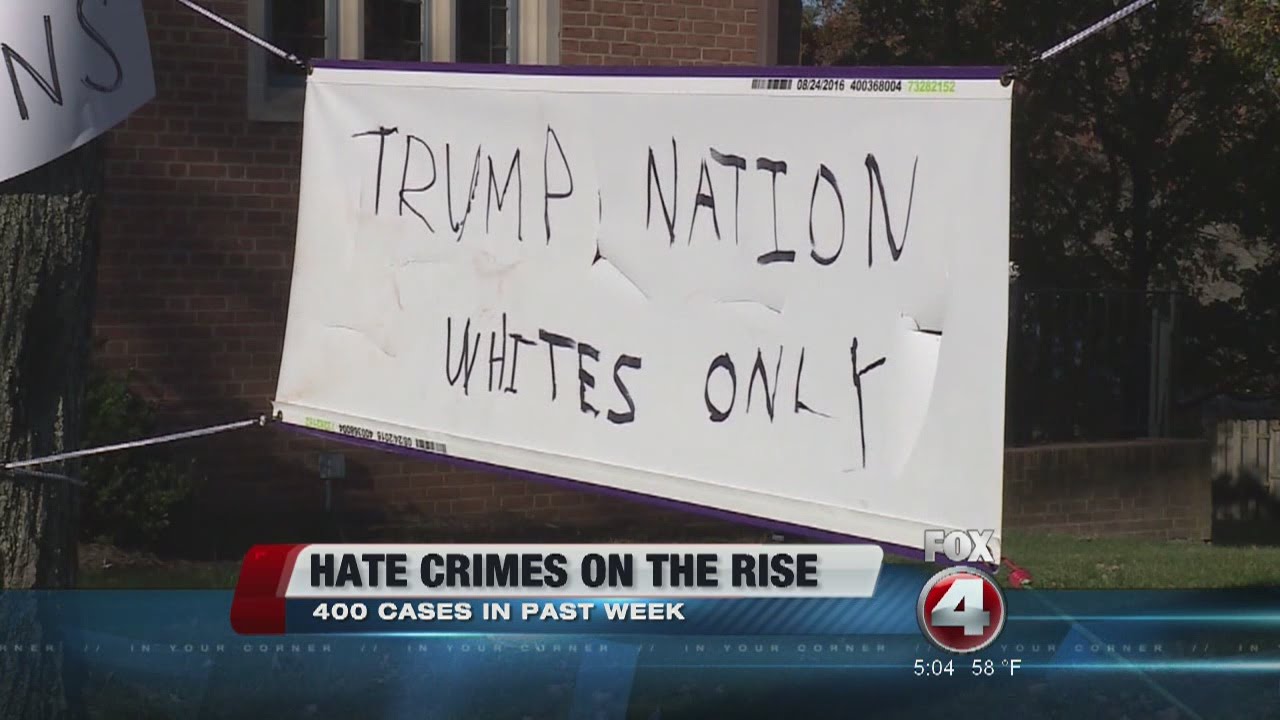
Sadly, this trend seems to have begun when the US presidential campaign began and much anti-immigration, anti-Muslim and anti-Mexico rhetoric began filtering into Canada’s news. Middle East Eye, an online news organization that provides news from a Middle Eastern perspective, reports that Donald Trump’s election victory is causing a ‘spill-over effect’ in Canada, where hate-motivated incidents have seen a recent spike (see MEE). Even some of our Canadian politicians are now spewing toxic, divisive rhetoric. I truly thought Canadians were different; that Canadians were more tolerant because of our multicultural diversity.  In fact, our Prime Minister, Justin Trudeau, during an address in London, United Kingdom, in November of 2015 said, “Diversity is our strength.” Now I always thought so, but perhaps I’m just naive.  It was Pierre Bayle, a French philosopher, who once said, “It is thus tolerance that is the source of peace, and intolerance that is the source of disorder and squabbling”. He is so right! I still choose to believe that the majority of Canadians are tolerant and welcoming people no matter what race, religion and belief a person may have. The individuals carrying out these despicable hate crimes act out of fear perpetrated by rhetoric. Publius Cornelius Tacitus, a senator and an historian of the Roman Empire, once said, “Fear is not in the habit of speaking truth.” People are acting out of fear and thus executing heinous, hateful, acts because of lies spread by toxic political rhetoric. This has to stop!

Why is the Vatican Still Stonewalling Pope Francis?

A commentary on the sexual abuse scandal in religious institutions

Pope_Francis_Korea_Haemi_Castle_19_(cropped)CBC recently had a story that caught my attention. The story was called, Leading member of pope’s sex abuse panel quits, says Vatican is stonewalling. I haven’t heard much about the sexual abuse scandal in a long time, so I naturally assumed that the church had dealt with the issue. It seems I was wrong.

The news article reports that Marie Collins, a member of the Pontifical Commission for the Protection of Minors, quit out of frustration because of the lack of co-operation from other Vatican offices, known as the Curia. Ms. Collins claims there is “cultural resistance” at the Vatican that include some officials refusing the pope’s instructions to reply to all correspondence from abuse survivors. Collins wondered if the continuing reluctance to address the problem is “driven by internal politics, fear of change, clericalism which instills a belief that ‘they know best’ or a closed mindset which sees abuse as an inconvenience?”

clapping-hands-transparent-b-g-mdNow I applaud Pope Francis as I sincerely believe  he is trying to correct a wrong. A CBC article, Pope condemns “evil” child abuse, reports that in 2014, Pope Francis made his first public plea for forgiveness for the “evil” committed by priests who molested children. He then stated, “I feel compelled to personally take on all the evil that some priests… [committed]… to personally ask for forgiveness for the damage they have done for having sexually abused children.” He went on to say, “The Church is aware of this … personal, moral damage carried out by men of the Church, and we will not take one step backward with regards to how we will deal with this problem…” It was then that Pope Francis set up the Pontifical Commission for the Protection of Minors, a commission whose job was to propose the best initiatives for protecting minors and vulnerable adults, so that everything possible was done to ensure that no more children are abused by predator priests.

Historically, there was a systematic cover up by bishops and other Catholic hierarchy in many dioceses around the world to cover up the crimes of pedophile priests who raped children and committed other sexual abuses. This was done by moving allegedly abusive priests to other parishes, where abuse often continued. Protection of the institutional church became of all-encompassing importance to the Catholic hierarchy. Here is a brief history of the sexual abuse scandal in the Catholic church.

According to the National Catholic Reporter, reports of clergy sexually abusing children first surfaced in the mid 1980s. In the mid-1990s a number of books were published on the topic. The topic became the focus of intense scrutiny and debate after the Boston Globe published a series of articles covering cases of sexual abuse in the Boston archdiocese.

The National Catholic Reporter reports that in January of 2002, a Judge ordered Boston Cardinal Bernard Law to turn over 10,000 pages of records. The Boston Globe used this evidence to initiate an extensive series on clerical sexual abuse in the archdiocese. It was the Globe and Mail that revealed that John Geoghan, a former Boston priest, who was accused of abusing more than 130 children during his 30 years as a priest and as a result was convicted of molesting a child in 1991 and sentenced to 9-10 years in prison where he was killed by a inmate.

According to a study being conducted by John Jay College of Criminal Justice in New York, about 4% of priests committed an act of sexual abuse on a minor between 1950 and 2002. However, it should be noted that the graphs and statistics sited in the report end before the Boston scandal.

The sexual abuse of children under the age of consent by priests has been reported in the United States, Canada, Ireland, the United Kingdom, Mexico, Belgium, France, Germany and Australia as well as other nations throughout the world. Many of the cases spanned several decades and were brought forward years after the abuse occurred.

This abuse is not unique to the Catholic church. Wikipedia has a list of abuse allegations that occurred in Jewish communities, Church of Jesus Christ of Latter Day Saints (Mormons), the Anglican Church, as well as other religious institutions.

It isn’t just prevalent in religious communities. In Portland, Ore, a jury reached a $1.4 million verdict against the Boy Scouts of America in a trial that showed that since the 1920s, Scouts officials kept “perversion files” on suspected abusers but kept them secret.

The Huffington Post reports that in June 17, 2012 then Pope Benedict XVI told Irish Catholics that it is a “mystery” to him why priests and other church officials have been abusing children entrusted to their care for at least the past several decades.

Much of the abuse in the Catholic church was directed towards altar boys. I was an altar boy in the 1960s so I could have easily been one of those victims. Thankfully, I wasn’t. I can easily see how the abuse occurred. In the 1960s it was taught that the “holy fathers” (priests in other words) were directly consecrated by God.  These men believed they were Christ’s representatives on earth and were acting on Christ’s behalf.  These men were often put in charge of large numbers of children who have been taught that priests are God’s representatives and must be obeyed in all matters. You can see how easily abusing young children would have been. Talk about a “betrayal of trust.” I personally knew some of the priests who were accused of sexual abusing children.

I also personally know people who have experienced sexual abuse, none of which were by priests however. Nonetheless, I’ve seen firsthand what this abuse has did to them. People who were abused as children become damaged adults. Sexual Assault Services of Saskatchewan (SASS) is a provincial membership organization that supports agencies who offer services to survivors of sexual assault and abuse. This organization says survivors experience many of these responses after sexual assault or abuse:

  • Diminished self-esteem with frequent feelings of shame, humiliation, guilt, anger, and powerlessness
  • Negative self/body image and feelings of ugliness associated with shame and embarrassment of body
  • Physical symptoms of stress – such as headaches, stomach upsets, eating and sleeping problems, lethargy
  • Increased anxieties or tendency towards depression or depressive behaviour
  • Feelings of anger, fear, rage, couple with numbness and disconnection from shock
  • Increased isolation from others, withdrawn or difficulty trusting others
  • Erratic mood swings from hyper-alert to inconsolable grief to aggressive
  • Increased usage of alcohol or drugs to numb or cope with feelings and memories
  • Self-harm such as cutting, burning or scratching as way to numb or cope with feelings
  • Difficulty in returning to usual behaviours with inter-personal relationships
  • No or little desire for sexual intimacy
  • Increase in risky sexual behaviours
  • Flashbacks of the incident(s) and fear of being alone
  • Nightmares or other sleep disturbances
  • Loss of employment or school time due to inability to concentrate

This is why, in my view, sexual abuse by clergy is so difficult to comprehend. These men were supposed to be holy folks; people who carry out God’s work, yet they carried out heinous acts. This is why, in my view, crimes by the priesthood or a minister are so much graver and need to be taken seriously. Furthermore, those at the top of the hierarchy who knew of these scandalous acts, and yet still protected the abusers, should be even more shamefaced. I applaud Pope Francis for trying to prevent these atrocious crimes from happening again, but it seems there is still resistance within the church to deal with the issue seriously.

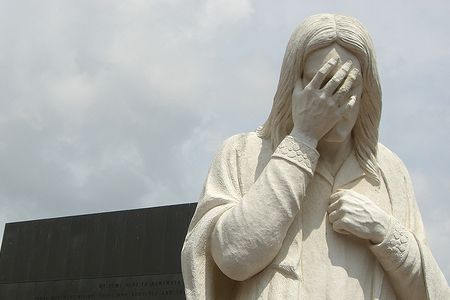
weeping-jesusThe Guardian quotes Father Thomas Doyle, a former canonical lawyer at the Vatican’s Washington embassy, as saying, “One of the massive holes in the Roman Catholic church’s approach to this issue, still today, is a failure to completely comprehend the depth of the spiritual damage that is done to the victims, to their families, especially their parents, to their friends and to the community itself.”  It is not difficult to understand why the faithful are confused when they were taught that sexual acts outside of marriage were intrinsically evil, always a mortal sin (an action that leads to a separation from God’s saving grace), and never moral, regardless of intention or circumstance. To preach one thing and act in opposition to what was taught would confuse anyone. I’m sure Jesus must be weeping.

You Just Have to” Give Your Head a Shake”

An outsiders view of the Trump presidency (so far)

Now I have been trying to avoid writing about Trump because I think he gets far too much attention than he deserves, but this man just keeps delivering me something more to write about.

A news headline that recently caught my attention was, Trump says anti-Semitism is ‘horrible’. My immediate reaction was to laugh. I literary shook my head. Why, you may ask? This is the man who said in June 2015, while announcing his candidacy for president, “When Mexico sends its people, they’re not sending their best…They’re sending people that have lots of problems, and they’re bringing those problems with us. They’re bringing drugs. They’re bringing crime. They’re rapists. And some, I assume, are good people.”  Then in December 2015 rally in Charleston, South Carolina, he called for a complete and total halt of Muslims entering the United States “until our country’s representatives can figure out what the hell is going on.” Both of these statements are clearly xenophobic demonstrating his intolerance to Muslims and Mexicans.

09-donald-trump-bully.w536.h357.2xThe article, Trump says anti-Semitism is ‘horrible. reports that on Tuesday, February 21, after touring the National Museum of African American History and Culture in Washington, Trump told reporters that the museum was a “meaningful reminder of why we have to fight bigotry, intolerance and hatred in all forms.” He then called the recent threats against Jewish community centres “horrible and painful.” Several Jewish community centers across the United States were evacuated the day before after receiving bomb threats. Trump reportedly said, “I will tell you that anti-Semitism is horrible and it’s going to stop and it has to stop”.

Trump has been accused of encouraging, or ignoring, bigotry against groups including Muslims, Mexicans and Jews. He refused to take a question about anti-Semitism during a news conference, plus his administration came under fire for not mentioning Jews or anti-Semitism in its statement marking Holocaust Remembrance Day.

It is hypocritical when someone utters anti-Muslim, anti-immigration, and racist remarks and then talks about anti-Semitism being horrible. How can Americans, or the world for that matter, take this man seriously or believe anything he says. I am not the only person who sees Trump’s hypocrisy. Steven Goldstein, executive director of Anne Frank Center for Mutual Respect (see Anne Frank Center Criticizes Trump) said on February 21,  “His [Trump’s] statement today is a pathetic asterisk of condescension after weeks in which he and his staff have committed grotesque acts and omissions reflecting anti-Semitism.”  These are pretty strong words.

The CBC news article, Human rights at risk amid rise of ‘fear and disunity’: Amnesty International, discusses Amnesty International’s annual report, The State of the World’s Human Rights, which documents “grave violations of human rights” in 159 countries. This 408-page report described 2016 as “the year when the cynical use of ‘us vs. them’ narratives of blame, hate and fear took on a global prominence to a level not seen since the 1930s,” when Adolf Hitler rose to power in Germany. I find these words rather upsetting. The report laid much of the blame on Donald Trump who’s “Poisonous” rhetoric in his election campaign exemplified “the global trend of angrier and more divisive politics”.

I am proud to say, the 2016 report highlighted Canada’s recent record on treatment of Syrian refugees, noting that at least 38,000 Syrians were resettled in my country. It was not all praise for Canada, though, as the report expressed concern regarding Indigenous people’s rights. I’ve always felt Canada has failed in its treatment of the First Nations people.

I am also alarmed by the effect Trump has had on Canada. I have always supposed Canada to be a much more tolerant and understanding society, but since Trump came into the picture, I’ve seen some intolerance and racism rise up in this country, like the January 30 Quebec City mosque attack. As a Canadian, I also find it disconcerting that a CBC news article, 1 in 4 Canadians want Trump-style travel ban, reports that an Angus Reid Institute poll that looked at Canadians’ attitudes toward the federal government’s handling of refugees, revealed a “significant segment” of Canadians say the country’s 2017 refugee target of 40,000 is too high.  It alarms me even more that one in four Canadians wants the Canadian government to impose its own Trump-style travel ban. This is the direct result of the rhetoric Trump has been spewing since announcing his candidacy for president.

Trump’s campaign slogan was, “Make America Great Again”. An AlJazeera news report, Mapping hate, provides some unsettling statistics. It reports that there has been a rise in the number of hate groups operating in the United States for a second year in a row. This is according to the Southern Poverty Law Center (SPLC) monitoring group.  The SPLC found that the total number of hate groups in the US in 2016 grew to 917 from 892 a year earlier. Since 1999, the total number of hate groups in the US has more than doubled.  The article says there are now more anti-Muslim, anti-immigrant, anti-LGBT, white nationalist, neo-Nazi, neo-Confederate and black separatist organizations than ever before. The sharpest increase was among anti-Muslim groups, which grew from 37 to 101, a 197% increase in just one year.

maxresdefaultWhat is especially troubling is the sharp rise in “bias incidents” following the election of Donald Trump. Bias incidents are instances of hate crimes or harassment and intimidation. In the first three months following Trump’s election, 1,372 bias incidents were reported. Of that total, more than 25% were motivated by anti-immigrant sentiments. Now I ask you, how is this making America great? I would argue the opposite is true. What Trump is doing is making America repugnant.

In my previous post, I discussed the Golden Rule and its relationship to karma, the law of cause and effect. When people spout anti-Muslim, anti-immigration, and racist rhetoric it comes back to haunt them, as “what goes around comes around”.  Gertrude Buckingham, an American poet, says, “Hate brings to men wars and fear.”  I agree!  Hate begets more hate. Trump’s “hate rhetoric” has clearly caused more hate to come around. That is what the statistics suggest.

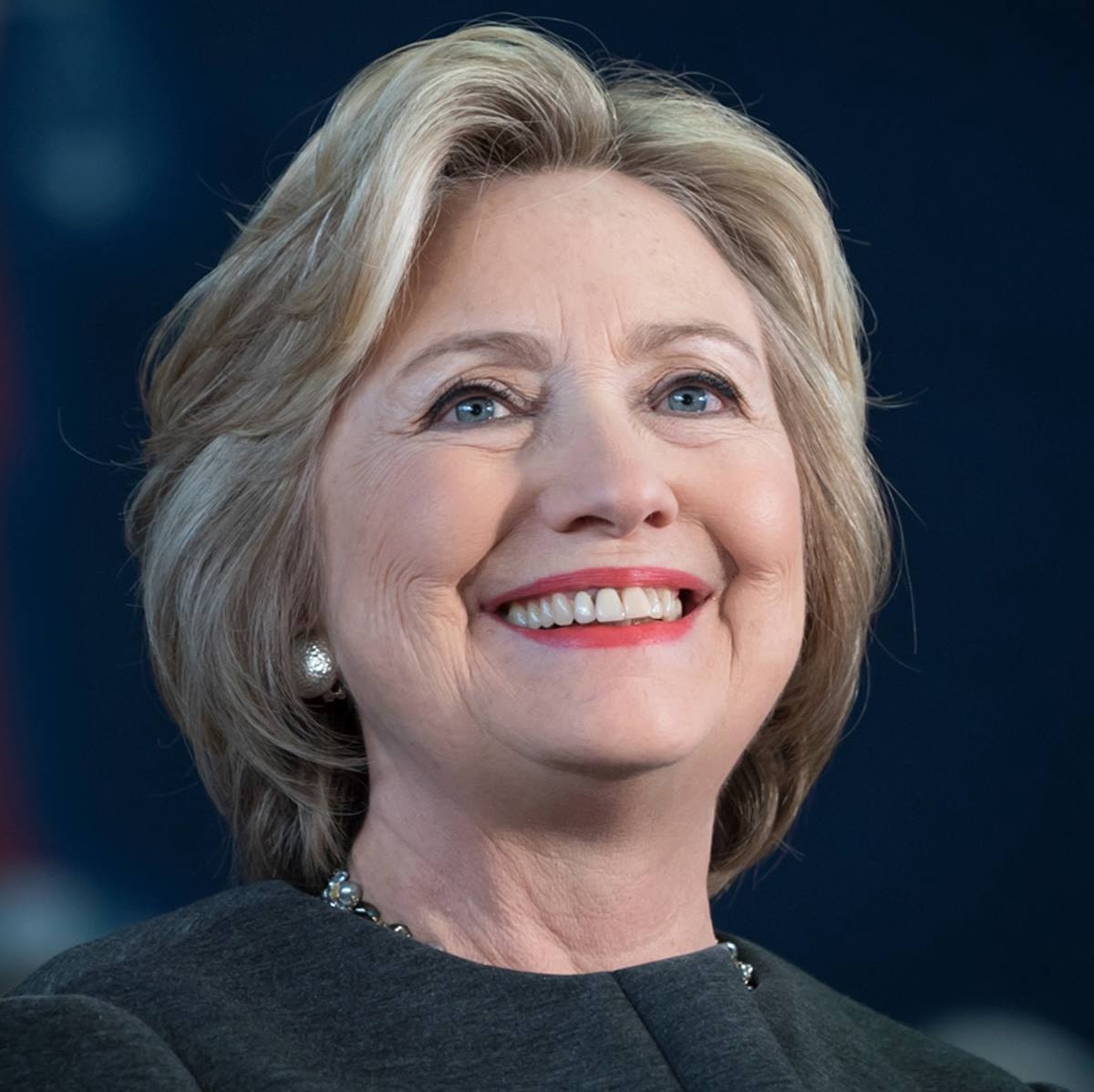
photoMartin Luther King, Jr. once said, “Darkness cannot drive out darkness; only light can do that. Hate cannot drive out hate; only love can do that”.  What America needs is more love. Ironically, in July of 2016, at a rally in Tampa, Florida, Hillary Clinton said, “You can’t put this into laws: We need more love and kindness in this country. We need more respect between and among our fellow Americans. We need to be listening more to each other.” One has to wonder what America would be like under a Hillary Clinton administration. Now give your head a shake! I am.

What happened to the Golden Rule?

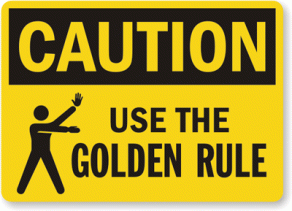
the-golden-rule.gifGrowing up I was always reminded of the Golden Rule, both at school and by my parents. Being raised in a Christian community this rule was always emphasized. It wasn’t always stated as “treat others the way you wish to be treated” but often in other ways such as, “show respect to your elders” and “always respect your teachers.” I have always believed that if all people could bring themselves to live by this ethic, humankind would be in a much better place.

The Ethic of Reciprocity, or what is better known as the Golden Rule, simply states that we are to treat other people the same way we would wish to be treated. It can be worded in various forms. Wikipedia describes this rule in three forms:

  1. Positive or directive form: One should treat others as one would like others to treat oneself.
  2. Negative or prohibitive form: One should not treat others in ways that one would not like to be treated.
  3. Empathic or responsive form: What you wish upon others, you wish upon yourself.

No matter how the rule is stated, it boils down to the word respect. Merriam Webster dictionary defines respect as “a feeling of admiring someone or something that is good, valuable, important, etc” or 
as “a feeling or understanding that someone or something is important, serious, etc., and should be treated in an appropriate way.” So when a person shows respect for another then they treat that person the way they would wish to be treated.

What always astounded me about the Golden Rule is that all organized religions have this ethic.

  • In Christianity it is found in Matthew 7:12 (NRSV) of the Christian bible where it is written, ‘in everything do to others as you would have them do to you; for this is the law and the prophets.”
  • In the Buddhist tradition it is found in a collection of verses known as the Udanavarga. In chapter 5, verse 18 of the Udanavarga it says, Hurt not others in ways that you yourself would find hurtful.”
  • In Hinduism, it is found in their sacred scriptures Mahabharata 5:1517 where it is written, this is the sum of duty: do not do to others what would cause pain if done to you.
  • Judaism has it in two places, the Talmud and Book of Tobit. The first book of the Talmud is about Shabbat, the Jewish day of rest. In Shabbat 31a. It states, “What is hateful to you, do not do to your fellow man. This is the law: all the rest is commentary.” In the Jewish scriptures, specifically the book of Tobit, it says, “And what you hate, do not do to any one.” (4:15)
  • In Islam, it can be found in a compilation of forty hadiths by Imam al-Nawawi, an influential Sunni hadith scholar. A hadith is one of various reports describing the words, actions, or habits of the Islamic prophet Muhammad. Number 13 of Imam Al-Nawawi’s Forty Hadiths, it says, “None of you [truly] believes until he wishes for his brother what he wishes for himself.”

The Golden Rule is such a simple thing and makes a lot of sense. It begs the question, why is it so important to live by the Golden Rule. The answer to that question has to do with the idiom, “What goes around comes around” or stated another way, “as you sow, so shall you reap”. These are simply reminding us that when people do bad things to other people, bad things will happen to them. This is what the expression, “you’ve made your bed, now lie in it,” refers to as well. An individual must accept the unpleasant results of something they have done. Really all of these expressions could be understood as karma, the law of cause and effect. Karma is a Sanskrit term that literally means “action” or “doing”. In the Buddhist tradition, karma refers to action driven by intention, which leads to future consequences. Good intent contributes to good karma and happiness in the future, while bad intent contribute to bad karma and suffering in the future.

The Huffington Post article on Karma puts it this way:

“Everything we say and do determines what’s going to happen to us in the future. Whether we act honestly, dishonestly, help or hurt others, it all gets recorded and manifests as a karmic reaction either in this life or a future life…There is no exact formula that is provided for how and when karmic reactions will appear in our lives, but one can be sure they will appear in some form or other. One may be able to get away with a crime they committed, or avoid paying taxes, but according to karma, no one gets away with anything for long.”

What I find even more thought provoking is that science supports this idea of “cause and effect”.  Science, specifically Quantum Physics, is providing evidence that the mind can affect matter. There is a theory known as quantum entanglement. According to Space.com, the theory states when changing one particle it changes the other even if they are on opposite sides of the galaxy, 100,000 light-years apart. In other words, they behave like one object even though they are physically apart. Einstein called this idea “spooky action at a distance”.

Quantum Entanglement: What It Is And Why It’s Relevant says,

“Quantum entanglement means that every action, thought, feeling and emotion is connected and can affect the whole in one manner or another. We are all made up of atoms, photons and electrons. We are all in a constant state of vibration. Our emotions, feelings, hearts and minds have the ability to affect what frequency our molecular structure vibrates at. Quantum entanglement is observed at a physical level, meaning what we do to one particle at one location, happens for another particle at the a different location.”

So even science reinforces the idea that every single thing that a person does, thinks, etc. has an affect. Now I know from experience that when I said something hurtful to a student or to a family member there was an effect. The impact was typically in the form of parental wrath or an angry family member.

9-11We’ve all felt the impact of the actions of an individual or group of people. There are many examples of this in history, such as the terrorist attacks in Paris in 2015. The affect of this event has made many people fearful and afraid to travel. We still feel the effects of the 9/11 attack in New York City as flight travel is much more cumbersome with all the extra security. Terrorism initiated by ISIL or ISIS caused much of world community to participate in a bombing campaign, bombing areas where the terrorists were located. What goes around comes around.
It’s fair to say that one person can impact the world. We just need to look at the legacies of Mahatma Gandhi and Martin Luther King Junior to see this. Mahatma Gandhi once said, “In a gentle way, you can shake the world.”

So remember every action you take, every word you say to someone, or even every action you don’t take has an impact on your community, on your planet or maybe even the universe. It seems to me that in this time of Islamophobia, fear of terrorists, and anti-immigration, the Golden Rule is very much needed. Perhaps people (no names mentioned) who spout anti-Muslim, anti-immigration, and racist rhetoric ought to remember, “What goes around comes around”.

Do Europeans Really do Things Better?

My wife and I recently watched Michael Moore’s latest movie called, “Where to Invade Next”. I have a great deal of admiration and respect for Michael Moore as he is not afraid to question the status quo in his homeland, the United States of America. In the movie, Moore leaves North America and heads to Europe with a stop-over in North Africa, ready to claim any policies that would make the U.S.A a better country. If you’ve never seen it, I would encourage you to do so. Here is the trailer.

According to National Observer, Americans kill 51 times more people with guns than Canadians do. That is but one reason why I’m thankful to be living in Canada; a country with strict gun controls (for which I am grateful), a country that has pretty good social programs, free health care, and is a very safe country to live in. Having said that, my wife and I were still blown away by some of the European polices and attitudes. Canada, like the United States, could learn a thing or two from the Europeans.

flag_of_europe-svgHere are some of the things Europeans do that Mr. Moore claimed as ideal policies for his country.

ITALY is a country that knows how to have balance when it comes to work life. Italy has one of the highest rates of paid vacation, maternity leave, and honeymoon allowance in the world. That is not even mentioning the two-hour workday lunches.  Italians seem to know how to take the stress out of a working life. Being a bit of a cynic, I did some research. Time reports that the American Psychological Association found that average stress levels in the U.S. rose since 2014, from 4.9 to 5.1 on a 10-point stress scale. Statistics Canada reports that in 2015 Canadian workers ages 15 to 75 that 28.4% reported high work-related stress. That is not to say that there is no stress among Italian workers. Eurofound, a European Foundation for the Improvement of Living and Working Conditions, reports (2010), 33.6% of respondents consider their work as a source of excessive stress. These figures were higher amongst respondents selling and/or promoting financial products.

FRANCE is a country that feeds its school children with amazing, almost gourmet style healthy food. In the movie, school children shun Moore’s offer of a coke and feast upon a four-course healthy lunch. Lunch hour in France is considered a course where students are taught proper etiquette.  In the French school system, adolescents also learn about the realities of sex and respectful relationships.

FINLAND is a country whose school system went from being one of the worst in the world to one of the best.  What is their philosophy? Children spend less time in school (about three hours a day), no time doing homework, write no standardized tests, and lots of time playing.  As a retired teacher, I wondered how this could be and if indeed it is true. In 2015, Finland was ranked 5th in the world. (see The Best Education Systems in The World in 2015). Canada was ranked tenth (not to shabby) and the U.S. was ranked 29 out of 76 countries.

SLOVENIA is an eastern European country where school is considered a basic human right for all. As a result, students can get a complete college education costing them nothing. Not only is it for Slovenian students, but a college education is afforded to anyone no matter what passport a student may hold. This is not unique to Solvenia as  schools and universities are free in many European countries.

In GERMANY employees are given an equal say in business matters as company boards are composed of at least 50% workers.  If workers get stressed, a doctor can authorize a stay at a government funded spa since Germany prioritizes health before productivity. It is also noteworthy that Germany does not ignore its dark past regarding Hitler and the Holocaust. This country has a policy of acknowledgment and understanding of the past to affect a positive future.

PORTUGAL’S answer to the war on drugs is to decriminalize its usage and offer free treatment and comprehensive healthcare. In the words of a Lisbon police officer, “Human dignity is the backbone of our society.”

NORWAY’s penal system is one of rehabilitation and not revenge.  Prisons in Norway offer a chance for prisoners to rehabilitate and regain self-worth. There are no guard towers, no fences and no beatings in Norway’s prisons; even in their maximum-security prisons. Instead, prisons have a fair amount of freedom with four prison guards carrying no weapons responsible for over 100 inmates. It is also amazing to learn that of those coming out of the penal system, only 20% reoffend in Norway. Compare that to the United States.   A Bureau of Justice Statistic study reported that of inmates released from state prisons, 76.6% have a five-year reconviction rate. Canada’s reconviction rate is in the range of 41% to 44%, according to Public Safety Canada.

TUNISIA is a majority Muslim country, yet it provides government funded abortions and free women’s health clinics to ensure women are in control of their reproduction and in turn their basic rights.

ICELAND is a country that during the 2008 economic crisis had three of its major privately owned commercial banks default, all of which were run by men. The only bank that did not fail had female executives. It is also a country that had the first female president. Iceland empowers its women. The Economist named Iceland the world’s best place for working women in 2016. In comparison, Canada was ranked 11th and the U.S. was ranked 20th.

One thing that struck me was that in every country visited by Mr. Moore, the interviewees always stressed the importance of human dignity. What is human dignity? Oxford dictionary defines dignity as the state or quality of being worthy of honour or respect. Merriam-Webster dictionary defines dignity as the quality or state of being worthy, honored, or esteemed. All humans deserve to be treated respectfully. Really, it boils down to the Golden Rule which the Christian scriptures state as, “So in everything, do to others what you would have them do to you…” (Matthew 7:12).

So, do Europeans really do things better? According to the article, 16 Ways Europeans Are Just Better At Life, Switzerland came in second to Japan for the world’s longest life expectancy, according to a 2015 World Health Organization study. In fact, eight European nations have a life expectancy of 82 years. Canada is also at 82 years. In fact, 24 European nations rank ahead of the U.S. on the list, which comes in at number 33, just one spot ahead of Cuba at 79.3 years.

As the new Trump administration repeals Obamacare, Europe offers a number of examples of far more efficient health care systems. According to a Bloomberg study, America is number 50 out of 55 countries that were assessed for their health care systems. All European countries ranked higher than the U.S. Canada ranked 16th which is pretty good but still five European countries ranked ahead of Canada.

Who are the top nations in the world, in terms of time off? According to USA Today, all are European. Austrians get 35 paid days off per year. Meanwhile, the U.S. is the sole developed nation that requires no paid vacation time or holidays by law. As for Canada, the law is employees must receive at least 2 weeks of vacation per year for the first four years of employment, and a minimum of 3 weeks of vacation after the fifth consecutive year.

It seems to me that Europeans do know how to live life better. We Canadians do a pretty good job, but we could still learn a thing or two from the Europeans. According to Business Insider, every European nation has a higher standard of living than the United States which is ranked number 19. I’m proud to say, Canada is ranked second. Michael Moore is on the right track looking at the Europeans.

Now I’ve heard Americans refer to Canada and the European nations as socialist countries. Peerform, an American financial institution, lists Canada (along with 7 European countries) as socialist countries. One definition of socialism from yourdictionary.com is a system based “on principles of community decision making, social equality and the avoidance of economic and social exclusion, with economic policy should giving first preference to community goals over individual ones”. The way I see it is, I would rather live in a socialist country where we take care of each other as opposed to a strictly capitalist country where individualism is the focus, where individuals fend for themselves, and the sole goal is to get wealthy. It seems obvious to me that countries who adopt “socialist” ideals do better. The statistics speak for themselves.

Should the World be Worried About Trump?

A commentary on the actions of Trump’s first week in office.

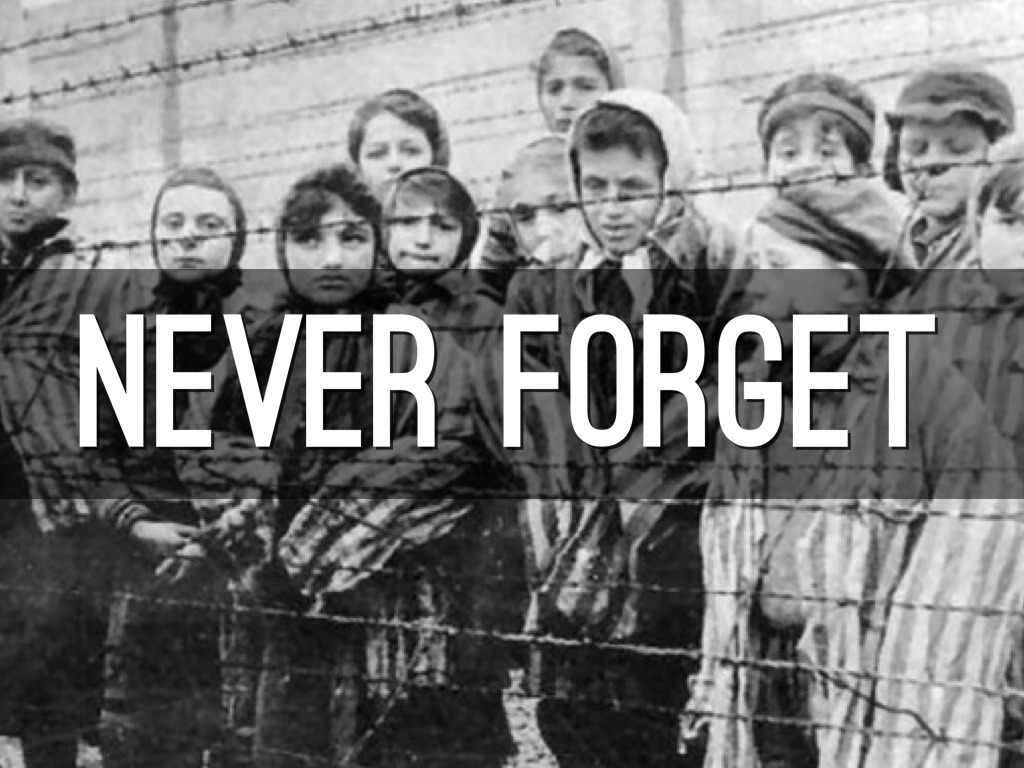
8409107_origJanuary 27th was International Holocaust Remembrance Day.  This is a day in which the victims of the Holocaust are to be remembered. The Holocaust was a genocide (the methodical killing of a large group of people) that resulted in the death of an estimated 6 million Jewish people, 200,000 Romani people, 250,000 mentally and physically disabled people, and 9,000 homosexual men by the Nazi regime during the 1930s and 1940s. As a social studies teacher, I taught my students about this event and emphasized the importance of remembering such events so that such atrocities would never happen again. Now I have to wonder if history is about to repeat itself.

My New Year’s resolution this year was to watch less news which I’ve been successfully doing for the most part, but on January 27th, everyone that I met or connected with on social media was talking about Trump’s travel ban.  Mr. Trump signed an executive order implementing a travel ban of people from seven majority Muslim countries for 90-days. The seven countries are Iran, Iraq, Somalia, Syria, Sudan, Libya and Yemen. This order also suspends all refugee admissions for 120 days with “case-by-case” exceptions and suspends entry of Syrian refugees indefinitely. This caused confusion as permanent residents and green card holders didn’t know if they could enter the country due to conflicting advice sent to airlines by the White House. It also sparked outrage in the form of protests across the United States (see Protests Held). The President claims he is “Protecting the nation from foreign terrorist entry into the United States”.

According to the Huffington Post, from 1975 to 2015, foreign nationals from Iran, Iraq, Libya, Somalia, Sudan, Syria and Yemen killed exactly zero Americans on U.S. soil. The article sites an analysis of terror attacks by the Cato Institute.  In 2016 alone, 188 people were killed on U.S. soil in mass shootings not involving Muslim American extremists, the report says. Meanwhile, there have been 230,000 murders in the U.S. since 9/11. These are Americans shooting Americans.

The White House stated “Numerous foreign-born individuals have been convicted or implicated in terrorism-related crimes since September 11, 2001,” when it issued the order. What is interesting to note is on Sept. 11, 2001, 19 militants hijacked four commercial airlines to carry out terrorist attacks on the U.S. that killed 2,996 people and wounded more than 6,000 others. The 19 men were associated with al-Qaeda, led by Osama bin Laden. Of the 19 hijackers, 15 were from Saudi Arabia, two from the United Arab Emirates, one from Egypt and one from Lebanon. None of these countries are on the ban list. People from those three countries are still welcome to apply for U.S. visas and travel permits. This made no sense in my mind. The question is why? According to the Daily News,  Trump’s business empire holds multi-million dollar licensing and development deals in all of those countries raising alarming questions over what actually went into the decision process behind the executive order.

On Facebook, a video went viral of an Irish Senator, Aodhán Riordáin, reacting to the victory of Donald Trump. I encourage you to have a look. (see Trump is a Fascist). What struck me is that the senator referred to Trump as a fascist. During the U. S. Primaries last year my son sent a text me and referred to candidate Trump as a “modern day Hitler”. I’m now beginning to wonder if there might be some truth in his assessment of the man. There are several definitions of fascism but I like the definition on businessdictionary.com. It defines fascism as a

“Political ideology that imposes strict social and economic measures as a method of empowering the government and stripping citizens of rights. This authoritative system of government is usually headed by an absolute dictator who keeps citizens suppressed via acts of violence and strict laws that govern the people. The most noted form of fascism was implemented under Benito Mussolini and Adolf Hitler, who both stripped citizens of their rights and maintained strict regimes that resulted in the deaths of thousands of humans. Some of the defining characteristics of fascism are: (1) racism, (2) militarism, (3) dictatorship, and (4) destructive nationalistic policies”.

rtx1gzco (1)Now if we look at the entire definition, we cannot say with conviction that the Trump administration is a fascist government. The key part of the definition that would dispute this is “headed by an absolute dictator who keeps citizens suppressed via acts of violence.” Mr. Trump was elected democratically, has not carried out acts of violence to my knowledge and is not an absolute (as in his word is final) dictator although signing executive orders is sort of dictatorial since it hasn’t been approved by the Senate or House of Representatives.

Are citizens being stripped of their rights?  The January 21 Women’s March was held because woman, believed women’s rights, LGBTQ rights, racial equality, freedom of religion, and workers’ rights were all threatened under a Trump presidency.  The Independent reports that Donald Trump’s travel ban has been denounced by the UN as “mean-spirited” and illegal under international human rights law. Discrimination on nationality alone is forbidden under human rights law. Essentially, this ban is removing human rights on the basis of nationality and religion. There is little doubt that citizen’s rights are being infringed upon. That smacks of fascism to me.

The above definition says, “some of the defining characteristics of fascism are: (1) racism, (2) militarism, (3) dictatorship, and (4) destructive nationalistic policies”. Are these characteristics of the Trump administration?

Racism:  According to dictionary.com, a definition of racism is “intolerance of another race”.  The travel ban targets Muslim majority nations, and one could argue the Muslim religion, since no terrorist acts on US soil have been carried out by people from these seven countries. How does this protect Americans? Sounds like intolerance to me. The only logical explanation is racism. So is the Trump administration racist? Looks that way to me.

Militarism: Is Trump militaristic? He just signed an executive order to rebuild the military. You be the judge.

Dictatorship: Is Trump a dictator? He has signed several executive orders. These orders were not investigated by legal, policy, or political staff to ensure acceptability. An executive order is an official statement from the president about how the federal agencies he oversees are to use their resources. The president’s executive orders are recorded in the Federal Register and are considered binding, but they are subject to legal review. What this means is Trump is governing by decree; as if he had been elected dictator. One definition of a dictator is undemocratic rule. Close enough for me.

Destructive Nationalistic Policies: Is Trump putting into place destructive nationalistic policies? The travel ban sounds destructive to me or at the very least divisive, and is certainly a nationalistic policy since it is a policy based in fear. Nationalism is the policy of asserting the interests of one’s own nation separate from the interests of other nations or the common interests of all nations. According to that definition, all of Trump’s actions are nationalistic. Sounds eerily like fascism to me.

donaldtrumpadolfhitler
from .breakingnews.ie

I think it is fair to say that some of the things Trump is doing draws parallels to the Nazis. Hitler was able to tap into the Germans’ frustration by blaming the Jews. He claimed the Jews were taking over the country by stealing high-paying jobs. He was able to animate the uneducated by saying that Jews were destroying Germany. Now compare that to what is happening now. The Trump “movement” claims that the Mexicans are stealing jobs and are responsible for much of their crime. He is also perpetrating the idea that Muslims are terrorists. Most of his support appears to come from the uneducated. The Vox article, Election Results 2016, reports, Trump won “on the basis of overwhelming support in rural areas, particularly among non-college-educated whites” 

Now there are two ways to look at this mess. We could all be fearful and think the worst convincing ourselves that the beginnings of WWIII are happening. I refuse to believe that. It excites me that the actions of Trump appear to be “waking” the American people up. Perhaps this will force the United States to decide what type of a society they truly desire. Do they want a society based in fear, isolationism, individualism, and nationalism; a society that seems to have lost the of values “human dignity and respect.”  Or, do they want a society that cares about its citizens or even better all citizens; a society that values human dignity and a society that loves, cares and respects all people and not just their own. I like to think that Americans desire the latter and are waking up to the reality that Trump is creating the opposite of what American’s desire; a society built on fear, intolerance and perhaps even hate. The Huffington Post has an article called, The Inevitability of Impeachment, which states “Impeachment is gaining ground because it’s so horribly clear that Trump is unfit for office”. I sincerely hope they are right!

Is Science Fiction Really Fiction?

I used to think Star Trek was just fantasy, but is it?

STC_Enterprise-tI am a Star Trek addict. I admit it. There are many of us out there. I have watched Star Trek since my college days when most of the dorm community would watch the original Star Trek series before going for our evening meal. Ever since, I have continued to watch the various series such as Star Trek: The Next Generation, Voyager, Star Trek: Enterprise and even Deep Space Nine. I anxiously await the new series premiering in 2017. What attracted me to Star Trek, even though I understood that it is science fiction, is the technologies used on the voyages and ideas put forth by the various episodes seem possible. I have always been intrigued by such ideas as transporters, which convert a person or object into an energy pattern and then “beams” it to a target, where it is reconverted into matter. Especially intriguing to me are the concepts of time travel, the space-time continuum, and the idea that multiple dimensions or universes exist. What I find especially fascinating is that science, especially quantum physics, is now providing credible evidence that notions such as time travel and multiple universes may actually exist.

In the Star Trek: The Next Generation series there is an episode called Parallels where the Enterprise returns to the location of the fissure, attempting to return Worf to his original universe. A Bajoran ship, which causes the fissure to destabilize and the various realities to merge, then attacks the Enterprise resulting in over 285,000 Enterprises appearing in the same area of space. The android, Data determines that the way to restore the realities is to send Worf by shuttlecraft to the Enterprise of his universe, passing through the fissure and using the shuttlecraft’s engines to close it. Worf safely passes through the fissure, finding himself back in normality with a single Enterprise in front of him. After boarding, Worf finds that no time has passed since he initially entered the fissure. When he returns to his room expecting a surprise party, he finds only Troi, the ships counsellor, waiting with the knowing that the two are married in many alternate universes.

According to the article, Will we ever have a Theory of Everything, on bbc.com’s Earth page, our universe is one of many. This huge collection of universes is referred to as the “multiverse”. The article describes it this way.

“At the beginning of time, the multiverse was like ‘a great foam of bubbles’, all slightly different shapes and sizes. Each bubble then expanded into its own universe. We’re in just one of those bubbles,” says Barrow of the University of Cambridge in the UK. As the bubbles expand, other bubbles can arise inside them, each one a new universe. “It’s making the geography of the universe really complicated.” Within each bubble universe, the same physical laws will apply. That’s why everything in our universe seems to behave the same. But the rules will be different in other universes. “The laws we see in our universe are just like bylaws,” says Barrow. “They govern our bit, but not all of the universes”…There are trillions of other universes, each one unique.

It seems that many theorize that multiple universes or dimensions, like the one put forth in the Star Trek episode, Parallels, may indeed be reality. Who knew?

Without getting into the detailed plots, there are two Star Trek movies built on the theme of time travel. The first is the movie Star Trek IV, the crew of the Enterprise must travel back in time to get whales in order to save the future of Earth. In the movie Star Trek: First Contact, the Borg make a second attempt to conquer the Federation. Captain Picard and the crew of the USS Enterprise follow the Borg three hundred years into the past when Zefram Cochrane is preparing to launch Humanity’s first warp-capable engine.

What is fascinating is the world of quantum physics, specifically the Quantum Entanglement theory, strongly proposes that time is an illusion; that time does not exist. Time in reality is a human creation. Experiments have been done where two particles (photons or electrons) A and B are paired, then separated, and placed in different locations. When particle A is stimulated, particle B reacts without any time delay. That means that both particles act at the same moment in time regardless of distance. This provides evidence that time does not exist, at the fundamental level. Our concept of time as a linear passage of events is perhaps wrong. All there is, is now. Everything exists in an ever-present moment.

Albert Einstein, known for his brilliant mind in science, wrote a letter to his close friend’s family, that is, Michele Besso’s family, saying that although Besso had preceded him in death it was of no consequence, “…for us physicists believe the separation between past, present, and future is only an illusion, although a convincing one.” Even Stephen Hawking, one of the most brilliant minds alive today, is now saying time travel is possible. In a lecture titled, Space and Time Warps, he says, “The conclusion of this lecture is that rapid space-travel, or travel back in time, can’t be ruled out, according to our present understanding.” So it seems that science is suggesting that time travel may be possible.

star-trek-1966-01-gEven transporters may be possible, according to Quantum Physics. In May of 2014, The New York Times reported that scientists have achieved Quantum teleportation. This involves transferring so-called quantum information, or what is known as the spin state of an electron, from one place to another without moving the physical matter to which the information is attached.

Now this is a long way from transport machines on star ships, but it does lend itself to the possibility that it may one day be reality. There is no question that some of the things quantum physics are doing is mind blowing. In fact Niels Bohr who received the Nobel Prize in Physics in 1922 once said, “If quantum mechanics hasn’t profoundly shocked you, you haven’t understood it yet. Everything we call real is made of things that cannot be regarded as real.” I must say some of the things that are being discovered in quantum physics does shock me, and I don’t pretend to fully understand it.

So what is my point? What science seems to be telling us is that our world and our universe is much more complicated than what we’ve been taught. We humans like to get comfortable in our “little boxes” where we’ve been programmed to believe that things are a certain way. We resist any ideas or thoughts that oppose our conceptions of reality. We humans even go to great extremes to defend our beliefs about reality. It amazes me that there are still people who believe and set out to prove that the earth is flat. If you don’t believe, check out the Flat Earth Society website.

Maybe it’s time to open up our minds to the possibility that things may not be the way we think. One thing I’ve learned in my many years of life is that things are never as they seem. Actually, the poet W. H. Auden, says it better. “There’s always another story. There’s more than meets the eye.” There is always much more going on than we like to admit or even desire to know. Maybe science fiction is not so fiction after all.

What a difference eight years can make!

A commentary comparing the inauguration of President Trump to that of former President Obama.

FILE - In this July 5, 2016 photo, President Barack Obama waves as he walks across the South Lawn of the White House, in Washington, as he returns from Charlotte, N.C. where he participated in a campaign event with Democratic presidential candidate Hillary Clinton. Obama is interrupting his summer vacation to do some campaigning for Hillary Clinton, the Democratic presidential nominee. Obama is slated to headline a Democratic Party reception Monday, Aug. 15, 2016, on Martha's Vineyard, the tony Massachusetts island where he's been vacationing with his family. (AP Photo/Carolyn Kaster, File)
. (AP Photo/Carolyn Kaster, File)

I remember inauguration day eight years ago when Barack Obama was sworn in as the 44th president of the United States. It truly felt like history was made. “A New Birth of Freedom” served as the inaugural theme and there was a larger than usual celebrity attendance. In his inaugural speech President Obama talked about renewal, continuity and national unity. There was so much optimism and hope that day. The world rejoiced as the first African American president took office.

Now compare that to the inauguration of Donald Trump in 2017. There were only five notable celebrities who attended the Trump inauguration. Instead, many of the same celebrities who criticized Trump during his campaign attacked him on social media during his inauguration  The Atlantic described the inaugural address as “unusually dark and political, delivered in a forum where new presidents have tended to reach for a language of unity, positivity, and non-partisanship”. There lacked enthusiasm and a feeling of hope. Instead, many people appeared to have a cautious wait and see attitude. I personally felt some trepidation for the future when the 45th president was sworn in.

Let’s compare the two men; the one coming into office and the one leaving. Earlier this month, veteran news anchor, Tom Brokaw, said this about former President Barack Obama. (see Tom Brokaw praises Obama)

“He’s been scandal-free, frankly, in the White House. We haven’t had that what for a while. There have been some issues around his campaign, but they’ve not settled on him.”

I agree wholeheartedly with Mr. Brokaw. Obama’s presidency has been relatively scandal free. There were no wars fought during the eight years of the Obama administration. There were no marital affairs or scandalous words said by Mr. Obama. He tried to make life better for ordinary Americans with his Obamacare. There certainly were no personal scandals like those of Nixon or Clinton. When you Google scandals involving President Obama, all you find is controversies surrounding decisions made by his administration. These were controversies such as Benghazi, a terror attack in Benghazi, Libya which resulted in four Americans dying. The criticism is that help could have been sent, but wasn’t. It is argued that requests for security prior to the attack were repeatedly denied.  Then there was “Operation Fast and Furious” in which the Obama administration is accused of arming drug cartels south of the border as a means to undermine the Second Amendment. It doesn’t matter which president in history you look at you will find these kinds of scandals.

09-donald-trump-bully.w536.h357.2xNow let’s compare the now President Donald Trump, who has only been president for a few days. The Atlantic provides a list of numerous scandals surrounding Donald Trump. There are numerous sexual-assault allegations with the most famous being the 2005 video, exposed during the campaign, in which the now president boasted about sexually assaulting women. On the infamous tape Trump brags about groping at women’s genitals. He says to Billy Bush of Access Hollywood, “And when you’re a star they let you do it.” There are scandals involving beauty pageants, racial discrimination allegations, the Trump University fiasco and even allegations of Mafia ties. The list of scandals goes on and on. It is unfair to put these two men into the same category.

Pew Research Center studies trends in U.S. politics and policy, global attitudes, and numerous other trends. In June 2016, the Center published, As Obama Years Draw to Close…, in which they reported that across the ten EU nations polled, an average of 77% have confidence in Obama to do the right thing in world affairs.  When asked about Trump, just 9% of Europeans trust he’ll do the right thing in world affairs. That is a stark difference.

Pew Research Center reports the majorities in nine of 10 European countries surveyed express confidence in Obama’s ability to handle international issues whereas, overwhelming majorities in most of the countries surveyed have little or no confidence in Trump’s ability to handle international affairs. Again, that is a shocking difference. In 2008, the Pew Global Attitudes Project reported that the majorities in 19 of the 24 countries had little or no confidence in then President George W Bush. I think it is fair to say that Obama is the only president to have the confidence of much of the world community in recent years.

What about the world’s opinion of the United States? Research conducted by the  Pew Research Center in 2016 shows 13 out of 15 countries surveyed have positive views of the United States. In many of these countries, notably France, Poland, Spain, the UK and Japan, favourable views of the U.S. have endured since 2009, when President Barack Obama first took office. The Los Angeles Times reports that in early 2007, when George W Bush was president, a mere 29% of those polled in 18 countries viewed the U.S. mainly as a force for good in the world. It seems former President Barack Obama did more for the reputation of the United States than his predecessor and based on world opinions of his successor, Donald Trump, it’s unlikely that that positive international reputation will remain.

Now let’s go back to the January 20, 2017 inauguration day. According to the article, Trump’s Inauguration.., about 250,000 people came out for Donald Trump inauguration. By comparison, 1.8 million people came out for Obama in 2009. There were no protests during Obama’s 2009 inauguration. Contrast that to the numerous protests which occurred in Washington DC, as well as other American cities, during Trump’s inauguration. Some of these protests turned violent causing police to use tear gas, water cannons, and pepper spray. Protests not only occurred in the United States, but around the world. According to The Guardian, protests occurred in London, Tokyo, Berlin, in the West Bank, the Philippians, Rome and even Russia. The Canadian Press reported protests in Montreal and Toronto. When I learn of these kinds world events, it does not give me confidence in this new president. I fear turbulent times may be ahead for our southern neighbours and perhaps the world.

The article, A nation of dissent, reports that demonstrations were held during George W Bush’s inauguration in 2001. Four years later, for Bush’s second inauguration, more than 1,000 protested the Iraq war. A difference is, these protests did not involve violence. There haven’t been violent protests during an inauguration since Richard Nixon. Burning miniature flags and stones were hurled at police during the inauguration of Richard Nixon in 1969 to protest the Vietnam War. We all know what happened to Nixon. In 1974, the House Judiciary Committee recommended Articles of Impeachment to the House of Representatives, but Nixon resigned before the House voted on the Articles. Could this be an omen for President Donald Trump?