Why the Ominous Language?

I know it’s been some time since I (#blogger #blog #somseason #YA #authors) have written a blog post. Let me explain. Our daughter got married in March in Portugal, so that monopolized some of my time. We also bought a lake property and had lots of projects there to contend with, so that took up our summer. I know, these sound like excuses and you’re right, they are. The truth is, I needed a break from blogging. As they say, ‘You can lead a horse to water, but you can’t make it drink.” In other words, you can show someone the truth, but you can’t force them to explore or accept truth if they don’t want to. Or, as Danish theologian and philosopher, Soren Kierkegaard says, “There are two ways to be fooled. One is to believe what isn’t true; the other is to refuse to believe what is true.” New Thought self-help book author, W. Clement Stone, once said, “Truth will always be truth, regardless of lack of understanding, disbelief or ignorance.” The fact is, truth does not mind being questioned, but a lie does not like being challenged. It felt like I was beating a dead horse meaning I was wasting my time and effort trying to do something that is impossible, which is to wake up people to what is really going on. Anyway, I’m back.

I’ve been noticing a pattern lately when it comes to the weather. It seems that rain has become a flood warning. Snow has become a snow warning. Wind is now a tornado or hurricane warning. Summertime has become an extreme heat warning, and wintertime has become extreme cold alert. Even more, the language being used by meteorologists to describe weather phenomena has become very threatening, like the CBC news article, How can B.C. protect itself from the next atmospheric river? Or the NASA website’s report, Another Atmospheric River Hits British Columbia. I have never heard of atmospheric rivers until recently. In my day, we would say, “that was a downpour.”  The article, What are atmospheric rivers? says atmospheric rivers are relatively long, narrow regions in the atmosphere – like rivers in the sky. It says they come in many shapes and sizes, those that contain the largest amounts of water vapor and the strongest winds can create extreme rainfall and floods, often by stalling over watersheds vulnerable to flooding. There has always being heavy rains that caused flooding. Wikipedia reports that between the years 1900 and 2005 there were 241 flood disasters in Canada. Why weren’t atmospheric rivers to blame then?  Why the ominous language?

According to the Time Magazine article, ‘Bomb Cyclone’ and Other Weird Weather Words for Our Climate Change Era, Atmospheric Lakes –a term coined in 2021—are a thing. This article defines atmospheric lakes as “compact, slow-moving, moisture-rich pools” of water vapor that detach from atmospheric rivers to create their own smaller, slower weather system. Not sure if Atmospheric Lakes are real, but in my day we would call these of rains a “soaker.” Are they just trying to scare us?

Another strange weather expression I heard was regarding a storm in our neighbouring province of British Columbia (BC). I saw headlines such as, Another bomb cyclone heads for B.C. this weekend, but this will be different and Bomb cyclone: What is the weather phenomenon slamming B.C. and U.S.?  In my day, we would say, “that was a wicked storm,” but it was just another storm. The article, What are bomb cyclones and how do they form? defines a bomb cyclone as… “a mid-latitude cyclone that has rapidly intensifies.” A cyclone is a low-pressure weather system with winds rotating inward, counter clockwise in the northern hemisphere. According to Wikpedia, there have been many recorded Pacific hurricanes (tropical cyclones) since 1858. Seldom do they reach BC though. Why don’t they just say cyclone or hurricane instead of the scary-sounding weather term bomb cyclone?

Then there are Firenados, as in the CNN news article, California’s largest single wildfire spawned two massive firenados. According to the Time article, Firendados are a blend of fire and tornado, that is, flaming columns of rotating fire, often erupting during a wildfire (where else would they occur?) when intense heat rises and combines with turbulent winds up to 100 mph. I’ve heard about forest fires all my life, but never a Firenado. Weird! Is this just another weather term to scare us?

The article, The weirdest and rarest weather phenomena from around the world, talks about microbursts. Never heard of those as a kid. A microburst is a smaller version of a downburst, the opposite of a tornado.  The article claims instead of the wind pulling air to a central point and then sucking it up from the ground, a downburst drops the air and forces it out in all directions once it reaches the ground which can lead to a lot of strong winds emanating from a single point. Apparently, there are wet downbursts associated with large amounts of rainfall during a thunderstorm, while a microburst is the same but on a smaller scale. In my day, we’d say that was a wicked thunder storm, but you must admit, downbursts and microbursts sound a lot scarier.

Have you heard of a flash drought? I’ve heard of flash floods, but flash droughts? Come on, that seems a bit of a stretch. The Time Magazine article I sited earlier defines it as the “rapid onset or intensification of drought” when a period of lower-than-normal precipitation rates combines with extreme heat and wind. These typically develop quickly over the course of a month or less. We’d call these dry spells as a kid; a period of time when it didn’t rain in over a month, but let’s face it, a flash drought sounds more ominous.

Now the weather term—a term that quickly gained popularity with mainstream U.S. media—is “heatflation.” This term was coined to describe scenarios “when hot temperatures sent prices soaring.” Now droughts have always killed crops, and caused less food to be produced, but heatflation? Come on, that is just fear porn to support the climate change narrative.

Why all these scary weather terms? My answer is the climate change agenda. Climate change has always occurred and the narrative that we humans are causing it is a fraud. When government and corporate elites stop flying around in their private jets, which contributes much higher CO2 emissions than vehicles, then I’ll take climate change seriously. These weather terms are fear-mongering!

It was Adolf Hitler who said, “By means of shrewd lies, unremittingly repeated, it is possible to make people believe that heaven is hell – and hell heaven. The greater the lie, the more readily it will be believed.” He also said, “Tell a lie loud enough and long enough and people will believe it.” Remember, “A lie doesn’t become truth, wrong doesn’t become right, and evil doesn’t become good, just because it’s accepted by a majority.” American educator, author, Booker T. Washington said that.

They’ve been lying about humans triggering climate change for a long time. The article, Wrong Again: 50 Years of Failed Eco-pocalyptic Predictions says in the 1970’s, we were told an ice age was coming, and oil reserves would run out. In the 1980s there were dire warnings about ozone depletion. In the 1990s global warming, due to the Greenhouse Effect, would cause long hot summers and droughts. In the 2000s we were warned of melting arctic ice and rising sea levels. Well, none of it happened. It’s all to keep us fearful; bullying (#bullying, #antibullying) really to get us to pay things like carbon taxes as Trudeau imposed on Canadians. In fact, at the 2023 COP28 Summit, Africa proposed global carbon taxes to fight climate change.

Yes, I know I sound like one of those crazy conspiracy theorists, and you probably think I believe weather is manipulated. Yet it is interesting that there is a company called Weather Modification and that there are Eight American States Seeding Clouds to Overcome Megadrought. Explain that.

The author of 1984 and Animal Farm, George Orwell said, “In a time of universal deceit – telling the truth is a revolutionary act.” Being called a conspiracy theorist is actually a complement to me as a conspiracy theorist is someone who figures out the truth before most people do. “You must always be willing to truly consider evidence that contradicts your beliefs, and admit the possibility that you may be wrong. Intelligence isn’t knowing everything, it’s the ability to challenge everything you know.”  Author unknown. Sometimes pride gets in the way of seeking truth.

Coffee Drinkers Beware

I (#blogger #blog #somseason #YA #authors) have not paid much attention to the 2024 World Economic Forum (WEF) meeting that happened from Jan. 15 to Jan. 19 in Davos, Switzerland as it’s just a bunch of elites wanting to dictate to us how to live our lives . The WEF was founded by Klaus Schwab, who is still the Founder and Executive Chairman. The WEF’s stated mission is “improving the state of the world by engaging business, political, academic, and other leaders of society to shape global, regional, and industry agendas.” In plain speak, the WEF knows what’s best for us non-elites.

This non-elected group of the world’s elites (political and corporate elites) fly to Davos every year in their private jets to decide how we non-elites should live. What are some of their plans? The WEF published ‘8 predictions for the world in 2030’ in 2016 outlining their objectives. Watch the video to discover these 8 predictions.

The most controversial prediction is “You’ll own nothing” and “you’ll be happy about it.” Now keep in mind, they never said ‘we’ (the elites) will own nothing. It’s us commoners that will own nothing.

Another prediction is “You’ll eat much less meat” as meat will be “an occasional treat, not a staple, for the good of the environment and our health.” These elites who travel around the globe in their private jets claim the cattle industry is in part causing a climate crisis, so to save the planet, we need eat less meat. Yet, the article, It’s time to stop comparing meat emissions to flying, clearly shows that private jets have a much larger carbon footprint than the cattle industry. Why would anyone listen to these hypocrites?

As I said earlier, I wasn’t paying much attention to the WEF until the headline, WEF Demands Crackdown on Public Coffee-Drinking to ‘Fight Climate Change’ caught my attention. Excuse me! Are you telling me I need to stop drinking coffee? You’re talking to a coffee lover here. According to the WEF elites, they need to stop the public from drinking coffee to ‘save the planet’ from a “climate crisis.”  How does drinking coffee cause a climate crisis? According to the WEF, the consumption of coffee emits between 15 and 20 tons of CO2 per ton of coffee. Let’s compare the said coffee carbon footprint to the elite’s private jets. According to the article, Flying Private Has Never Been More Popular. But Is It Taking Us on a Flightpath to Climate Hell? private aviation accounted for 37.1 million tons of CO2 in 2019.  That’s more, much more than what they claim coffee releases. I’ll stop drinking coffee when the elites stop flying in their private jets. I find it insulting that the elites solicit our trust in them, as said the article, WEF says rebuilding trust only possible with cooperation as Davos meet ends. I simply cannot trust hypocrites.

I’m not the only one that feels this way.  Watch Tucker Carlson’s veiws on the elites and their private jets (See Tucker’s video) Watch Tucker’s reaction to John Kerry’s excuse for using a private jet.

The agenda of this year’s WEF meeting, Davos 2024: 4 things to know, claims we have an ‘existential climate crisis’, with one of the WEF elites saying, “A sense of urgency is our only savior.” The document also states that failure to act on climate change has implications for the planet, and claims the climate crisis is also a health crisis.

Independent media, The Eureporter, published an article, Climate change and nature loss pose greatest risks for humanity: WEF Global Risk Report 2024 that agrees with the WEF Global Risks 2024 Report. The report makes the claim that extreme weather events and critical change to the Earth systems is the greatest concern facing the world over the next decade. While misinformation and disinformation—the latest buzz words—is seen as the biggest short-term risk over the next two years, while environmental risks dominate over a ten-year period.

On January 23 of the new year, the Doomsday Clock will remain at 90 seconds to midnight in 2024. This is the second year in a row the clock was set at 90 seconds to midnight. The clock is a symbolic timepiece showing how close the world is to ending because of climate change. As you can see, the climate crisis rhetoric, or shall I say propaganda machine, is in full swing early in this new year.

It’s all fear porn. Why would I say such an outrageous statement? The truth is, we’ve being hearing the climate doomsday scenario for years. The article, 10 times ‘experts’ predicted the world would end by now, shows 10 times when so called “experts” said the world would end because of climate change and human overpopulation, dating back to 1975, yet the world has never ended. If the elites have been propagating a sense of urgency—fear porn really—since 1975, likely even sooner, and no doomsday has ever arrived, then there is no urgency. They want us afraid to exert control over us.

Not only that, 2023 is considered a year of intense global wildfire activity, where the article claims global wildfires generated approximately 2,170 megatons of carbon emissions in 2023, of which the Canadian wildfires accounted for 22%. The article doesn’t directly relate CO2 emissions to the climate crisis, but it is certainly implied.

Now, I am not denying that climate change exists. The climate is changing, and always has, but is it changing because of human activity? I am skeptical that we humans are the problem when CO2 is only 0.04% of the planet’s atmosphere. Reading articles about how CO2 contributes to climate change, the “experts” refer to CO2 in parts per million (ppm). The article, If CO2 Is Only 0.04% of the Atmosphere, How Does it Drive Global Warming? says before the industrial revolution, the amount of CO2 in the atmosphere was about 288 ppm, but now has reached about 414 ppm. Yes, that sounds alarming as it almost doubled, but when you’re talking ppm, that is a very small amount of 0.04%. It doesn’t convince me that humans are the problem, and no I don’t trust the science.

Yet, governments continue to push the climate crisis agenda motivating Thousands of German farmers block highways over climate cuts over government climate policies. Here in Canada, Trudeau hopes to stop climate change with more taxes; with the Carbon Tax. As the article, The Trudeau climate plan runs into reality says, Canada missed its emission targets, has huge public backlash against the carbon tax, and there is growing realization that nothing Canada does will change global temperatures.

Since the new year has arrived, I’ve seen many January 2024 articles like, A conspiracy theorist who blamed the government for forest fires admitted that he started 14 himself, Nova Scotia man charged for starting massive forest fire that Liberals blamed on climate change, and Quebec man pleads guilty to starting 14 forest fires . I find it very difficult the believe that climate change is to be blamed for the wildfires of 2023 when over and over I read about humans admitting to starting the fires. My question is why did these people start the fires? Were they paid to create the illusion of climate change? I merely ask the question.

I know, I know, I sound like a crazy conspiracy theorist. When you google ‘conspiracy theorists,’ the articles that come up all try to discredit people who go against the official narrative. The article, Top 2022 conspiracy theories that turned out to be true, lists numerous stories that Legacy Media called “conspiracy theories” that were actually true. There is also the articles, Top 10 Conspiracy Theories That Turned Out To Be True and Not so crazy now: Five theories that dropped the ‘conspiracy’ in 2021. It seems to me that crazy conspiracy theorists speak truth. Maybe I am not so crazy after all.

All I am saying is the elites will need to do a much better job convincing me to give up coffee.

(#bullying, #antibullying)

The Two Faces of a Pandemic

A commentary on the current pandemic

The NetFlix docuseries Pandemic

As I watch the world literally shut down because of the virus known as COVID-19, and as my wife and I are practicing “social distancing” by self-isolating in our home, I can observe and reflect on the world’s new reality.  American author, J Lynn, says, “Sometimes when things are falling apart, they may actually be falling into place,” or American singer-songwriter, Morgan Harper Nichols who says, “Going through things you never thought you’d go through, will only take you places you’d never thought you’d get to.” Perhaps this is what is happening. This COVID-19 pandemic may involve forces we don’t understand that are taking the world in a new direction. My wife and I call it a “reset.”

I been  feeling like the world is out of control for a while now. Democracy in its present form is failing us. Corporate greed is irreparably damaging the planet. Racism and hate are on the rise. I could go on and on.

Tough times—presently the COVID-19 virus—can bring out the best in people, and the worst in people. I witnessed and read about both. First, the worst in people.

A personal example is recently a parent asked our great nieces to stop at the grocery store on the way home from school to pick up some milk. It just so happened that they got the last jug. Three ladies with their carts stocked piled with various products followed them around the store, calling them selfish. They were traumatized by the experience and refused to ever go back during this pandemic.

Barbara Coloroso,  an international bestselling author says this about bullying:

Bullying is not about anger, it’s about contempt, a powerful feeling of dislike toward somebody considered to be worthless, inferior, and undeserving of respect…

These three selfish ladies were feeling contempt towards our nieces because they were not able to get the last jug of milk. They likely—I’m speculating—considered two teenagers to be inferior and undeserving of their respect. The Japan Times has an news report titled, Japan sees rise in harassment, bullying and discrimination linked to COVID-19, so bullying is occurring as a result of this pandemic.

The HuffPost article, Forced To Finally Take Coronavirus Seriously, Trump Turns To Racism, reports that after months of properly referring to the virus as Coronavirus or COVID-19, the U. S. president is now insisting on calling it the “Chinese virus.” Trump claims he does this because it is where the pandemic has its roots, but what he is really doing is laying blame on Chinese people and encouraging prejudice and violence against people of Chinese or Asian descent. The American leader is promoting hatred, racism, and bullying. Is racism bullying, you ask?

Childline, based in London, England, is a confidential service for children, says this about bullying and racism.

Racial bullying is a type of racism where someone’s bullying focuses on your race, ethnicity, or culture. Racism and racist bullying can include:

  • being called racist names or being sent insulting messages or threats
  • having your belongings damaged or having to see racist graffiti
  • personal attacks, including violence or assault
  • being left out, treated differently or excluded
  • people making assumptions about you because of your colour, race or culture
  • being made to feel like you have to change how you look
  • racist jokes, including jokes about your colour, nationality race or culture.

What Trump is doing is shamefully encouraging people to be exclusive of Asians and to treat Asians differently. Racism is bullying!

I have also observed that this pandemic is doing wonderful things. China and Italy’s pollution have drastically lessoned. (see CBC News). Fish and dolphins have returned to Venice’s canals because of halted tourism (see Venice). Italians sing from their balconies during pandemic lockdown (see Singing). People are posting all sorts humorous memes (see example below) to uplift people’s spirits, and posting creative ways to de-stress during this difficult time.  I could go on.

What I find most interesting during this difficult time in history, is people’s attitudes seem to be shifting. I’ve heard people say, “I feel relief and less stressed now that my commitments are gone.” One person told my wife that she has never felt better now that she isn’t working because of social distancing.  People seem to be coming to the realization that maybe their lives have been out of control, and this pandemic is forcing them to slow down. The world was required to “be still” as the Christian scriptures say, “Be still and know that I am God” in Psalm 46:10. Many in the world are beginning to see all humans as a family, saying things like, “We’re all in this together,” and “We all must do our part to prevent overwhelming our health care systems.” Humanity is reaching out to one another.

For example, people are making posts of encouragement. I just read this one:

This too shall pass. I just wanted to take a moment today to remind everyone that storms do end and nothing lasts forever. Things may get worse before they get better, but as a world we will get through this crisis together and emerge stronger because of it. This is a time to demonstrate our capacity to come together to help, care for, and support one another.  We can use these struggles to reforge our faith in one another and prove to ourselves our capacity to tackle difficult global challenges collaboratively. Like our ancestors before us did after the wars, we can use this humbling situation as a catalyst for new grow and new direction for the century to come.

Perhaps this is the silver lining! Perhaps this pandemic is transforming the world into one that is simpler, kinder, and more caring. Let’s hope so.

The Lungs of the Earth are in Trouble

A commentary on the state of our planet

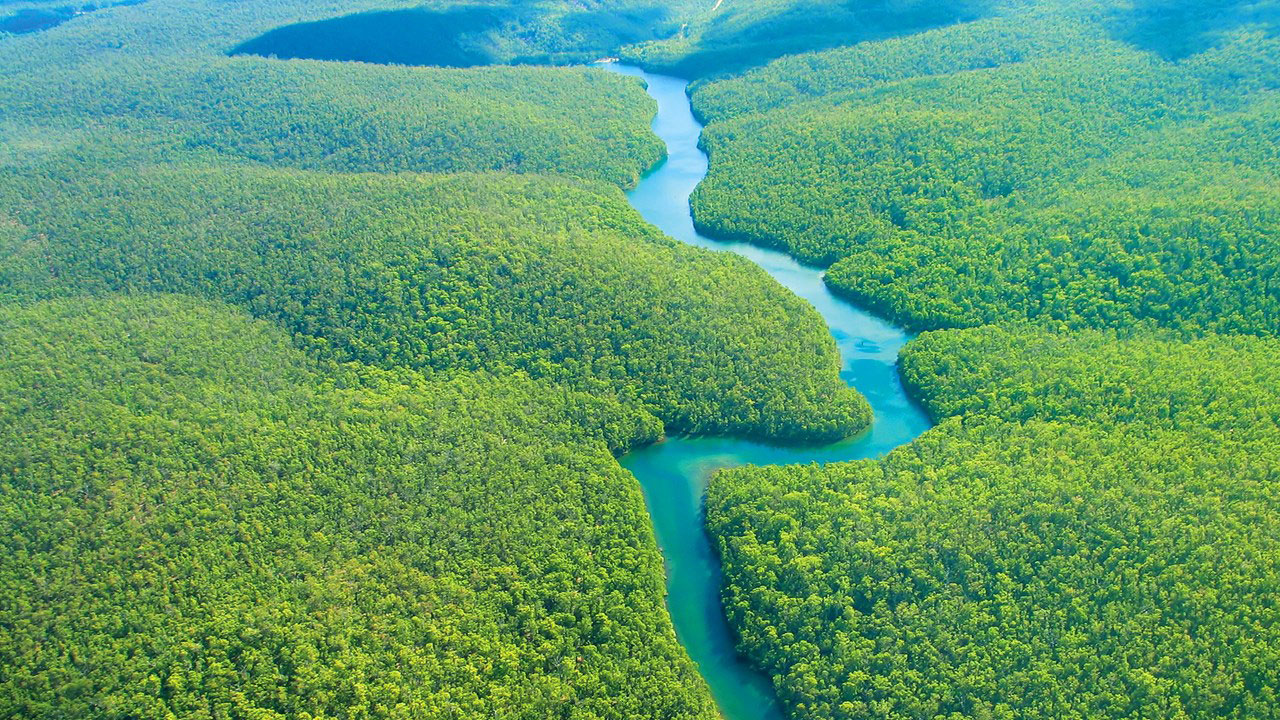
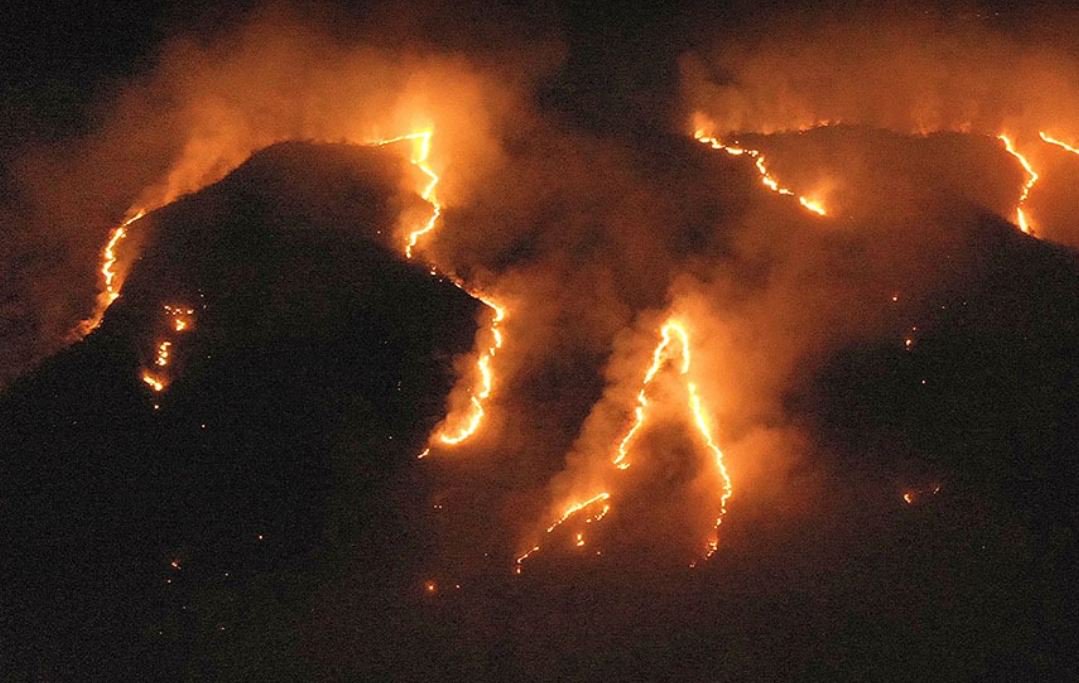
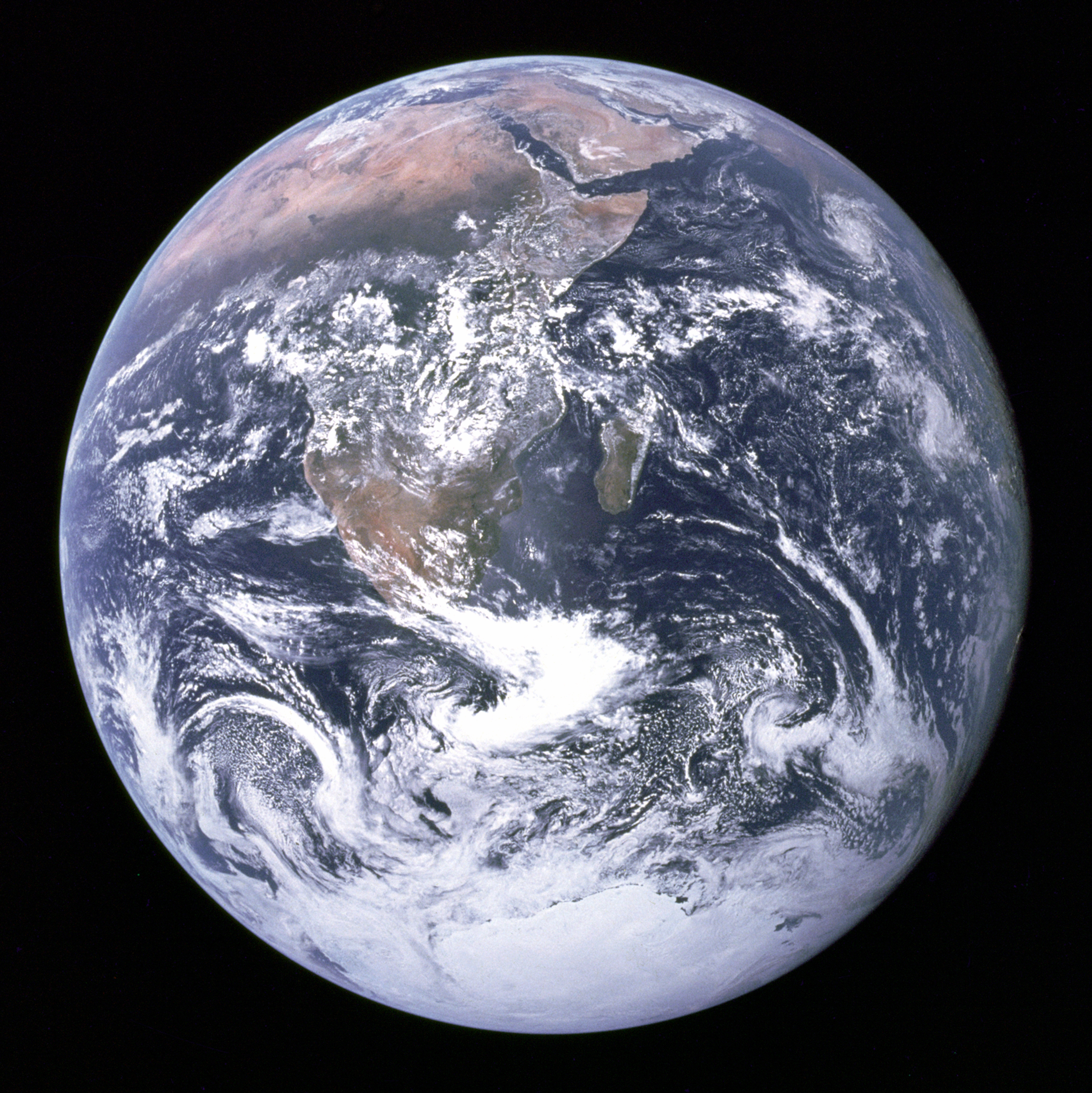
For the past week or so, I’ve seen several posts and news reports about the Amazon Forest burning. This is terrible, and  if you’re not alarmed, you should be. Why? According to National Geographic’s Amazon Facts, the Amazon Forest is often referred to as ‘the lungs of the Earth’ because of its rich vegetation that takes carbon dioxide (CO2) out of the air, and releases oxygen back in it. More than 20% of the world’s oxygen is produced by the Amazon, and some articles say up to 30%.

Amazon Rain Forest

Here are some facts about the Amazon, according to National Geographic. The Amazon is the world’s largest tropical rainforest, covering over 5.5 million square kilometres. It is so big, that the UK and Ireland would fit into it 17 times! It has an incredibly rich ecosystem – there are around 40,000 plant species, 1,300 bird species, 3,000 types of fish, 430 mammals and 2.5 million different insects. The Amazon is home to a whole host of fascinating – and deadly – creatures, including electric eels, flesh eating piranhas, poison dart frogs, jaguars, and some seriously venomous snakes.

Since the beginning of 2019, Brazil’s National Institute for Space Research (INPE) has reported 72,843 fires in the country, with more than half of these being seen in the Amazon region. This means more than one-and-a-half soccer fields of Amazon rainforest is being destroyed every minute of every day. An 80% increase in deforestation has occurred so far this year compared to last year, according to the institute. That is alarming to say the least.

So why is the rainforest burning? According to the CNN article, Here’s what we know about the fires in the Amazon rainforest, farmers and cattle ranchers have long used fire to clear land and make it ready for use, so they are likely behind the unusually large number fires burning in the Amazon today. This year’s fires fit with an established seasonal agricultural pattern, said CNN meteorologist Haley Brink. “It’s the best time to burn because the vegetation is dry. Farmers wait for the dry season and they start burning and clearing the areas so that their cattle can graze. And that’s what we’re suspecting is going on …”

Mongabay,  a nonprofit environmental science and conservation news platform, agrees saying 65-70% of the deforestation in the Amazon is caused by cattle ranching, 25-30 by agriculture, and 2-3% by logging.

Amazon on fire

UNILAD, a youth platform for breaking news, in its article, Brazil’s President Is Actively Trying To Destroy Amazon, claims Bolsonaro, Brazil’s controversial far-right president, appears to be sabotaging a conservation effort aiming to conserve 265 million square kilometers of the Amazon forest. Brazil’s president is not the only president putting our planet in jeopardy. National Geographic has a running list of how Trump, the current resident of the US White House, is harming the planet, all designed to increase corporate profit.

So I must ask: Is leaving a planet that is inhabitable for our children and grandchildren a priority, or is making money? Saving our planet, which is in crisis, should be the priority. Back in October of 2018, the New York Post ran a headline, Terrifying climate change warning: 12 years until we’re doomed. The headline speaks for itself. The United Nations says,

Climate Change is the defining issue of our time and we are at a defining moment. From shifting weather patterns that threaten food production, to rising sea levels that increase the risk of catastrophic flooding, the impacts of climate change are global in scope and unprecedented in scale. Without drastic action today, adapting to these impacts in the future will be more difficult and costly.

How does Climate Change relate to the Amazon Forest? The answer relates to Greenhouse Gases of which CO2 is one of the biggest ones. As the forest burns, it releases CO2 into the air, contributing to global warming. As more and more of the forest is destroyed, less and less of the CO2 is removed from our atmosphere since trees trap CO2 and release O2. Remember, as I mentioned earlier, more than 20%-maybe 30%-of the world’s oxygen is produced by the Amazon. If the Amazon Forest disappears, we will have 20% to 30% less O2 for us to breathe. That is frightening, folks!

The way I see it, the world’s biggest forest—the Amazon Forest—is being deforested so more meat can be provided for the planet since 65-70% of the deforestation in the Amazon is caused by cattle ranching. A growing trend toward veganism and vegetarianism is happening, in part because of this issue. Food Revolution Network, a site committed to healthy, ethical, and sustainable food for all reports

Veganism was a top search trend in Canada in 2017. And the preliminary draft of Canada’s new Food Guide, released in 2017 by the Canadian government, favors plant-based foods

There’s been a 600% increase in people identifying as vegans in the U.S in the last three years.According to a report by research firm GlobalData, only 1% of U.S. consumers claimed to be vegan in 2014. And in 2017, that number rose to 6%.

Am I advocating that everyone should become vegans or vegetarians? No, but we certainly can decrease our meat consumption to help the planet. My wife and I have made that choice, not only to save the planet, but also for health reasons. In the September 2019 Reader’s Digest magazine is an article entitled, Foods: “Good or Bad” Too Simplistic, describes a Harvard lead analysis of 36 trials where red-meat was replaced with plant-based proteins to study the effects of meat verses plant-based diets.  Their conclusion was that cardiovascular risk factors changed more favourably with those on a plant-based diet. It seems there is increased evidence that diets high in meat—especially red meat—are not healthy. There are lots of books and documentaries on this topic, so don’t take my word for it; do your own research.

Perhaps it is time for us in North America to decrease our meat consumption for the sake our planet and maybe for our health as well. According to World Atlas’ article, Top Meat Consuming Countries In The World,  the United States is the second largest consumer of meat on the planet consuming 200.6 pounds of meat per person per year. Australia is number one at 205 pounds per person annually. Canada is in ninth place on the list of high meat-consuming countries.

We can stick our head in the sand and pretend everything is fine, or we can do something. To save our planet, there are a few things you can do. You can demand that protecting the planet is priority over profit. Demand our governments leave a planet that is inhabitable for our children and grandchildren. We can also decrease our consumption of meat. And lastly, learn about the issues. Learn about Climate Change, deforestation, and other issues that planet Earth faces. Our grandchildren are counting on it, and our planet depends on it.

Christmas Controversies 4.0

A commentary on this year’s Christmas controversies.

I do have more to say about China, but since Christmas is rapidly approaching, let’s talk about Christmas. Every year, I’m curious as to what Christmas controversies will erupt. In past years, Starbuck’s Christmas cups spurred controversy and this year seems to be no different. According to The Washington Post, this year’s debate is the same as 2015.  There are claims that Starbucks is not embracing Christmas. The coffee giant said it wanted to “look to the past” for inspiration. It seems there are some people who think the coffee giant’s cups lack Christmas symbolism and thus is an attack on Christmas. Starbucks seems to be ‘damned if they do and damned if they don’t.’ I can’t help but think of the idiom, “You can’t please everyone.” The truth is, you will never please everyone, so why bother. Maybe that is the approach Starbucks is taking.

The Guardian has an article, Iceland’s Christmas TV advert rejected for being political, about a controversial ad in United Kingdom. Here is the ad:

A supermarket chain in the United Kingdom, Iceland Foods, pledged removal of palm oil from all its own-brand foods. Habitat loss in countries such as Malaysia – a major global producer of palm oil – has contributed to the orangutan endangerment. The supermarket says, “this is a huge story that needs to be told.”  Iceland Food’s Christmas commercial, about the plight of the critically endangered orangutan, was banned from airing on television.

The ad was pulled from TV because it breached political advertising rules. Ads are prohibited if it is “directed towards a political end.” My question: Was the ad too political because it was affecting sales of palm oil products? The supermarket was merely trying to educate people on the plight of the orangutan. Scientists estimate that 150-200 species of plant, insect, bird and mammal become extinct every 24 hours (see UN Environment Programme). That is alarming! The world needs to be educated, but if people know this truth they may stop buying palm oil products—therein lies the politics—thus affecting profits. That applies to many products. This isn’t so much a controversy about Christmas as it is about keeping people ignorant. The reality is, for the corporate world, making money is more important than saving the environment or endangered species. There is a so-called Native American saying, “When the last tree has been cut down, the last fish caught, the last river poisoned, only then will we realize that one cannot eat money.”  I fear this may become truth.

Black Pete Character

Another interesting controversy is taking place in the Netherlands regarding Black Pete or Black Peter—Zwarte Piet in Dutch—a companion of Saint Nicholas (the Dutch say Sinterklaas). On the feast day of Saint Nicholas, celebrated December 5 in the Netherlands and December 6 in Belgium, this character can be seen.  The character’s depiction typically accompanies Sinterklaas, involves covering the skin in black makeup, wearing black wigs, large earrings and  distributing presents to children. Many people in the Netherlands dress up as Zwarte Piet as well.

Traditions surrounding Zwarte Piet have been controversial since the late 20th century. Opponents to the Black Pete character argue that he stems from Dutch colonial heritage, in which black people were submissive to whites, in other words, enslaved. The Netherlands abolished slavery in 1863.  National Geographic reports,

The character [Black Pete] was popularized in a mid-19th century children’s book written by a man who was very interested in the Dutch royal family members, “one of whom bought a slave in a slave market in Cairo in the mid-19th century,” says Joke Hermes, a professor of media, culture, and citizenship at Inholland University. This slave, Hermes suggests, may have helped inspire the character of Zwarte Piet.

Others reject the stereotypical black features of the figure, such as bright red lips, curly hair and large golden earrings. Some argue that it’s a way the white Dutch people remind black Dutch people that they are tolerated but not yet fully accepted citizens. National Geographic reports that white supremacists raised Nazi salutes at the Sinterklass parade in the Dutch city of Hoorn, and flew neo-Nazi flags at the one in Zaandijk. In Eindhoven, an estimated 250 white extremists chanted racist slogans and threw eggs and beer cans at people peacefully protesting the parade.

Now the question is: Should this tradition continue or should it discontinue as it promotes racism or at least keeps alive a racist past? Many argue that Black Pete is harmless fun. Which is more important, tradition or preserving peace? We are living during a time when racism seems to acceptable and even encouraged by some politicians. If black Dutch people, whose ancestors were slaves, are offended, then the tradition is unacceptable! Any traditional Christmas character that prompts white supremacists to raise Nazi salutes needs to be rejected.

The biggest Christmas controversy of 2018 surrounds the song “Baby, It’s Cold Outside,” a popular song written by Frank Loesser in 1944. It is a duet in which a host, usually performed by a male voice, tries to convince a guest, usually performed by a female voice, that she should stay the evening because the weather is cold and the trip home could be problematic. While the lyrics make no mention of any holiday, it is popularly regarded as a Christmas song due to its winter theme. If you’re unfamiliar with the song—I was—here it is.

Why is an old song causing so much controversy to the extent where it is being refused to be played on some radio stations.  CBC News explains that the song is offensive because of the man’s refusal to accept the woman’s “No” for an answer. It says many modern listeners view the song as “coercive and problematic.” For an in-depth analysis of the lyrics, see Vox.

Ironically, recently on my Facebook feed, was a post that forcibly argued that this controversy was ridiculous as people know that the song was written in the 1940s, and must be interpreted in light of the times. I doubt young people know this. In the 1940s it was considered a romantic, innocent song. This individual argued that there are worse things, like violent video games, that we should be concerned with rather than an old Christmas song.

Even though the author made some valid arguments, we must be sensitive to the fact that we now live in a #metoo era. The Me Too (#MeToo) movement is a crusade against sexual harassment and sexual assault. This year has been filled with numerous women coming forward with sexual harassment and assault allegations against celebrities, coaches, and politicians, all people with money and power. The current resident of the U.S. Whitehouse has had several accusations lodged against him. This is an issue not to be taken lightly.

A global rape prevention organization known as, No Means No Worldwide (NMNW), has a mission to end sexual violence against women and children. According to this organization,

Globally, an estimated 35% of women experience some form of sexual violence in their lifetime. In Africa, that percentage increases to 45%. According to the UN Population Fund, almost 50% of all sexual assault victims are girls age 15 or younger. In the slums of Nairobi, where our programming started, 1 in 4 girls are raped every year.

This organization teaches a preventative program. In other words, when a woman, child, or man for that matter, says NO, then they mean no. In the song, the female declares her intentions, “I simply must go.” The male’s response, “Baby, it’s cold outside.” She declares her intentions again, “The answer is no.” The guy’s response, “Ooh baby, it’s cold outside.” Later in the song, the guy plays with her emotions (my interpretation) saying, “What’s the sense in hurting my pride,” and “Baby don’t hold out.”  Now I can see why people would take offense to this song. The male character in the song doesn’t respect the female’s answer of no. No doesn’t mean no to him. It means maybe, hopefully, try harder and so on.

An article titled, What Nobody Wants To Admit About Rape Culture, says,

One of the most common occurrences when a woman has been raped is that her entire sexual history is brought up and used against her. The point of this attack is not that rape is okay, it’s that she’s a slut so she must have consented, right? Therefore it’s not rape. When guys are told “When a woman says no, she means try harder,” it doesn’t mean that rape is okay. It means that a woman is still consenting even if she says no. Therefore it’s not rape.

Does this song promote the rape—legally known as sexual assault—culture? Seems to. Should a song that is a traditional Christmas song—even that is open to debate—that may preserve a rape culture  be aired on radio because ‘it’s traditional? No. Should radio take this as an opportunity to teach about the objectionable parts of the song? Yes. Just because a song is a traditional Christmas song doesn’t make it acceptable. W. Edwards Deming, an American engineer, statistician, professor, author, and lecturer, once said, “Two basic rules of life are: 1) Change is inevitable. 2) Everybody resists change.” Sometimes Christmas traditions have to change. Airing of this song may be one of them.

When Lydia Liza heard the song, she was offended. She disliked the song so much, she recorded her own, “consensual” version with fellow musician Josiah Lemanski, in 2016.  In other words, she disliked the traditional version, so she changed it, and that is okay. I’ll end with Lydia’s version.

China Gave Me Much to Think About

Some thoughts on the recent trip to China

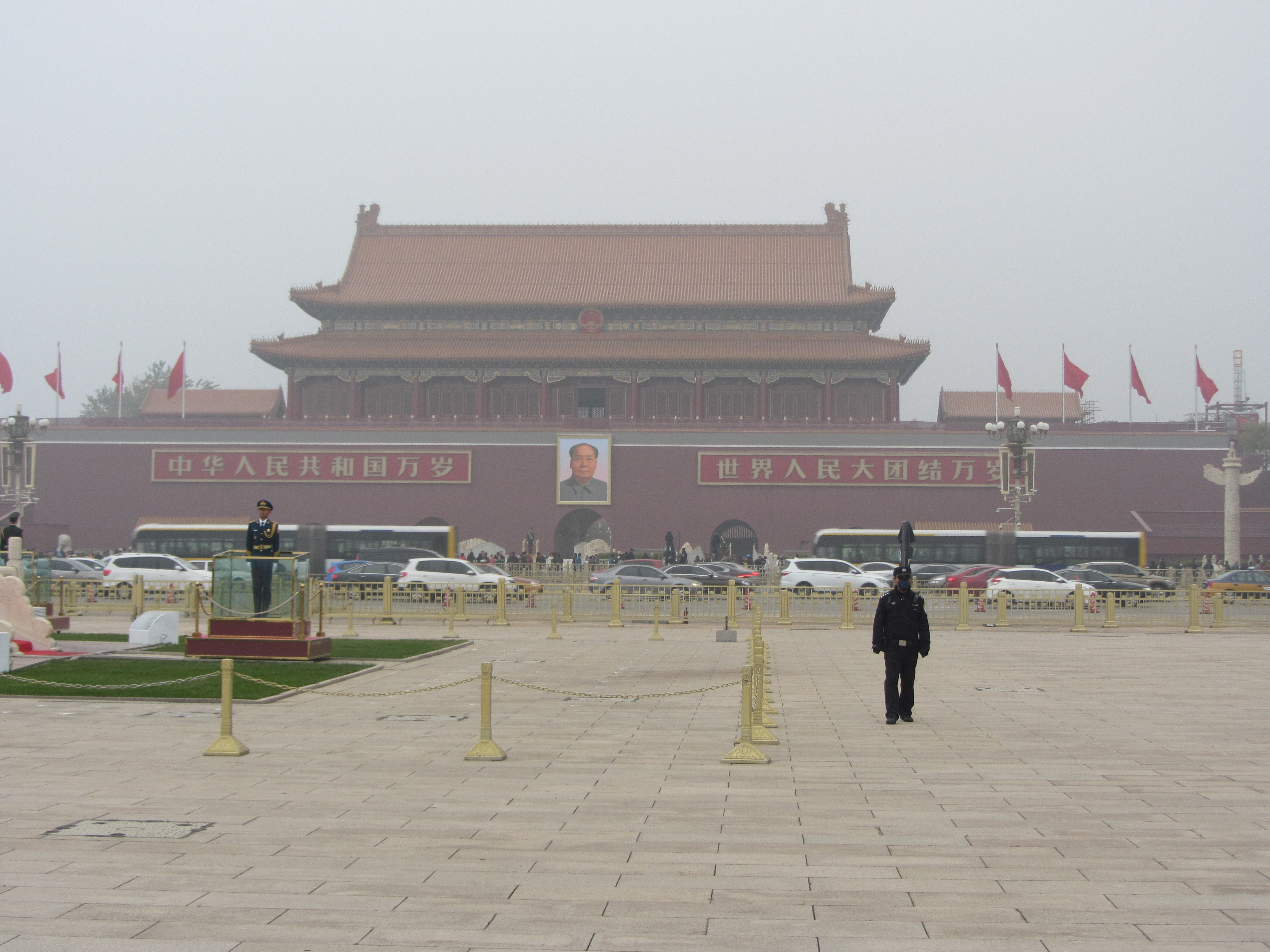
Tiananmen Square , Beijing

On November 20th, I returned home from an eleven-day trip to China. It was indeed a busy, yet educational adventure. The trip made me wonder about economic and political systems. Is capitalism better than communism? Canada is considered a mixed economy where there are some government owned corporations as well as privately owned businesses.

I grew up during the Cold War, continuously hearing about the evils of communism. North Americans were indoctrinated to believe communism was immoral and we were to fear it. I heard U.S. presidents such as, Richard Nixon, say, “The Cold War isn’t thawing; it is burning with a deadly heat. Communism isn’t sleeping; it is, as always, plotting, scheming, working, fighting,” and John F. Kennedy saying, “Communism has never come to power in a country that was not disrupted by war or corruption, or both.”  I lived through the Cuban missile crisis and fearing a nuclear war.

First let’s be clear on the difference between communism and capitalism. The word ‘communism’ has Latin roots, communi, which means ‘common.’ Although it is more complicated, simply put, in communism, everything is owned communally. Ideally, there is no government or class division, and wealth is distributed among people based on their needs; each person contributes to society as best as he or she is able, and takes from that society only what he or she needs. Communism is based on the principle of economic equality. Capitalism, on the other hand, stems from the word, capital, or the “means of production,” which is owned, operated, and supplied to generate profits for private owners or shareholders. Simply put, capitalism is an economic system which individuals own economic resources and industry.  Capitalism is based on the principles of profit and competition.

Climbing Great Wall of China

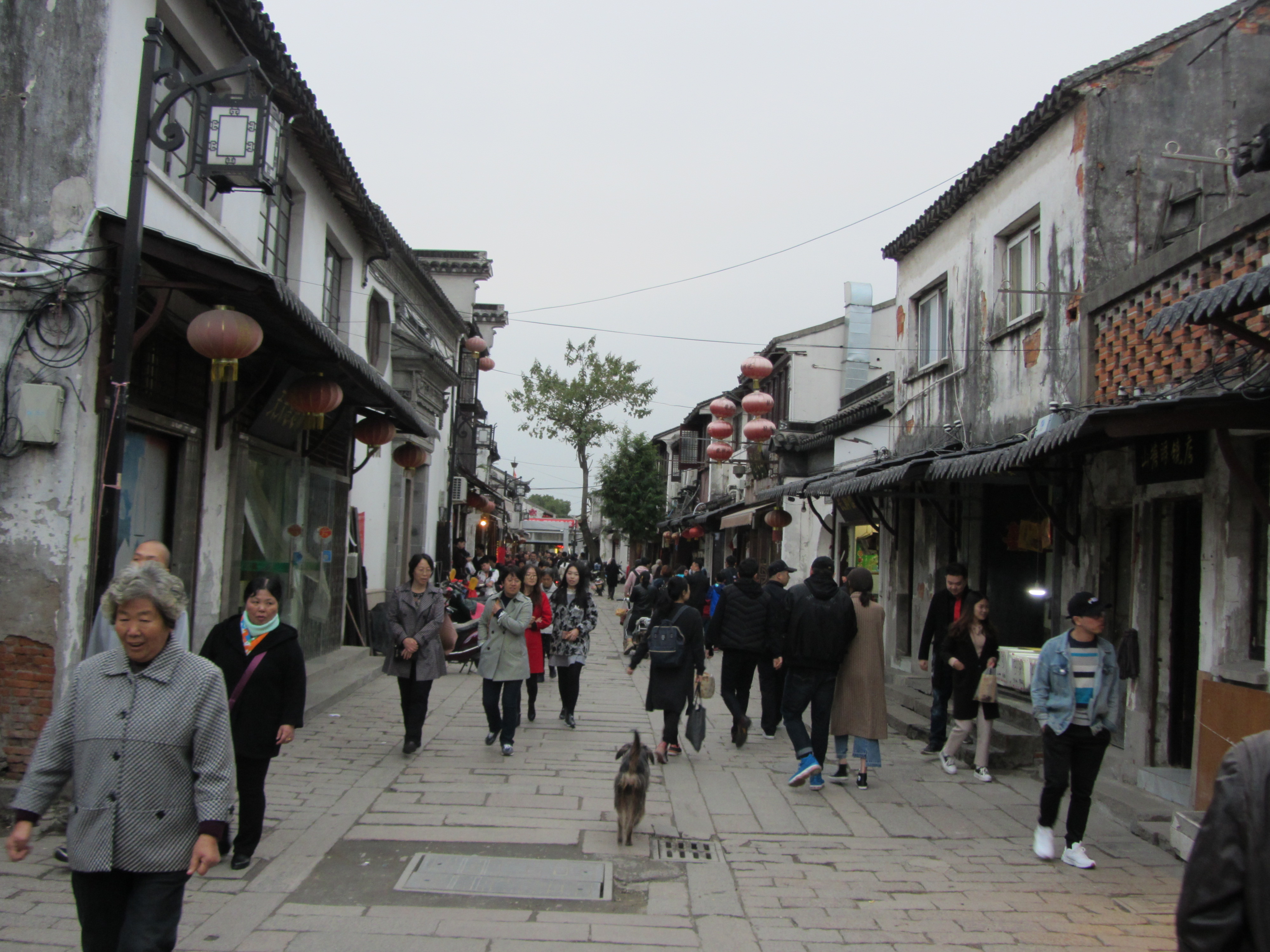
Based on what I observed, China seemed to have both systems. Many of the places we visited, such as the Jade factory, the pearl factory and embroidery Institute were all government-owned businesses. Free enterprise, or private businesses, were in China as well. We were told that Jack Ma, the co-founder and chairman of Alibaba, (equivalent to Amazon in North America) was the richest man in China.  We visited markets in the cities of Suzhou and Shanghai where small businesses were selling all sorts of things.

Something I noticed about the Chinese people is that they have a great love for their country. They speak of Chairman Mao, China’s revolutionary leader, with love and affection. Forbes describes China’s present leader  Xi Jinping as having a dream of a “moderately prosperous society,” instead of a communist utopia. He talks about “national rejuvenation,” and a China with a space program, high-speed rail network and high technology parks. One of our tour guides said Xi Jinping most known sayings—at least in China—is, “If it is good for China, then China will do it.” It seems to work as China is growing rapidly. Forbes says, China is on its way to becoming the largest economy in the world. It reports that in just one generation, 300 million+ people went from rural subsistence farming to urban industrial and technology jobs. The United States has always been considered the world’s economic power house in modern times, but the New York Times says,

Emerging signs of weakness in major economic sectors…are prompting some forecasters to warn that one of the longest periods of economic growth in American history may be approaching the end of its run.

Temple of Heaven exercise park

Another thing I observed while visiting China, was how happy the Chinese people were. In fact, one of my travel partners commented on how happy the Chinese people were, and how unhappy the people back home were because they were always complaining. The Chinese government does takes care of its people. For example, their government provides exercise parks for their retired citizens. We visited one at the Temple of Heaven Park. The Chinese people were happy to show us how the various machines worked. In this Beijing park, we saw musicians and large groups of people singing loudly and looked to be having fun. We also witnessed this at the Summer Palace. In fact, one Chinese person grabbed the hands of two people in our tour group and starting dancing with them. Unemployment, we were told, was non-existent. One of our tour guides told us that unless retired, everyone had a job. I saw numerous people with brooms cleaning the streets and removing falling autumn leaves. There was virtually no garbage anywhere.

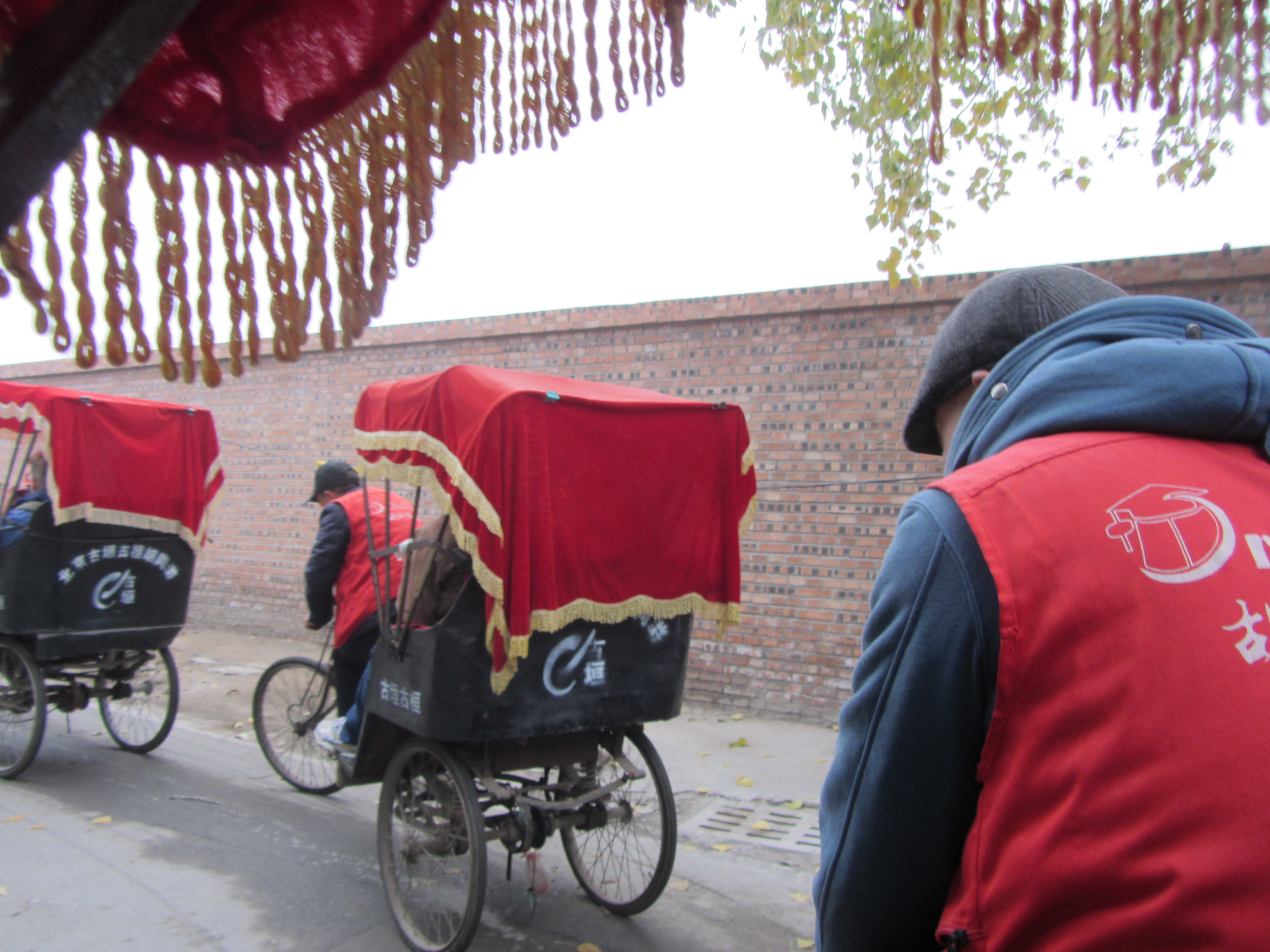
Rickshaw Ride

China’s political system is drastically different from democratic countries like Canada and the U.S. China has a one-party system; the Communist Party. We asked about what Chinese people thought about the politics of their country. The guide’s response (paraphrased) was Chinese people really don’t care about politics or their government. As long as people are living a good life, have a job and making money, they are happy. He said there is consistency with a one-party system as when there is a change in leadership, the policy of the previous government continues. Then our tour guide said something thought-provoking. He said in the democratic world, little is accomplished as governments are always squabbling. He further explained, whenever a new party is elected, they reverse the previous party’s policies, thus little progress is made.

Now this made me think. It’s true. In Canada, when a new party takes power—presently it’s the Liberal Party—they change many of the policies put into place by the previous ruling Conservative Party. In the United States, the Trump administration—Republicans—are reversing and changing many of the policies that the Obama administration—Democrats—put in place. It’s accurate, there is no consistency in policy. No wonder little progress occurs. The U.S. is a very divided country, and Canada has its divisions as well. China, because it is a one-party system, is relatively united.

Now I’m not saying that China doesn’t have problems, it does. According to Global Risk Insights,

“Land disputes, labour strikes and environmental concerns have been frequently cited as the leading causes of protest across China in recent years, as the drive for growth has resulted in the destruction of farmland, the proliferation of polluting factories and waste plants, and poor labour rights.”

Smog was prevalent in Beijing. I’m sure we visited only places the government wanted us to see. We saw none of the negative parts of society. But that is also true of tours taken in democratic countries I’ve visited.

Chinese Market

It was obvious that the Chinese people are likely one of the most watched people in the world. I saw cameras everywhere. But is it any different in the “free world?” According to Crime Feed, an average American citizen can be caught on camera more than 75 times a day. I was unable find stats on Canada, but likely it is no different in my country. When we entered China, we had finger prints electronically taken, and our passports were scanned by every hotel. We, as foreigners, were tracked. We in the “free world” like to think we have freedom, but the reality is our phones are tracked and our Internet activity is monitored. The Huffpost has an article, 9 Ways You’re Being Spied On Every Day, where it talks of all the ways we are being monitored. In reality, we are just as watched as people in China.

You’re probably wondering if I am a communist. No, I don’t believe so although the idea of economic equality and doing what is best for everyone makes sense. Am I pro-capitalism? Not when I hear stories such as General Motors laying off thousands of workers by closing one plant in Canada and four in the U.S. This is a company that earned $35.79 billion in 2018 in revenue, up 6 percent from $33.62 billion during the same quarter in 2017 (see GM).  Or, when I learn that Sears is seeking court approval to pay its executives as much as $25 million in annual bonuses when the company has declared bankruptcy. Three top executives could get nearly $1 million each if the company goes out of business (see CNN). Furthermore, Sears pensions were cut by 20%, yet billions in payouts to shareholders happened (see Union). Rewarding people whose decisions caused bankruptcy makes no sense. Putting shareholders before workers is unjust.

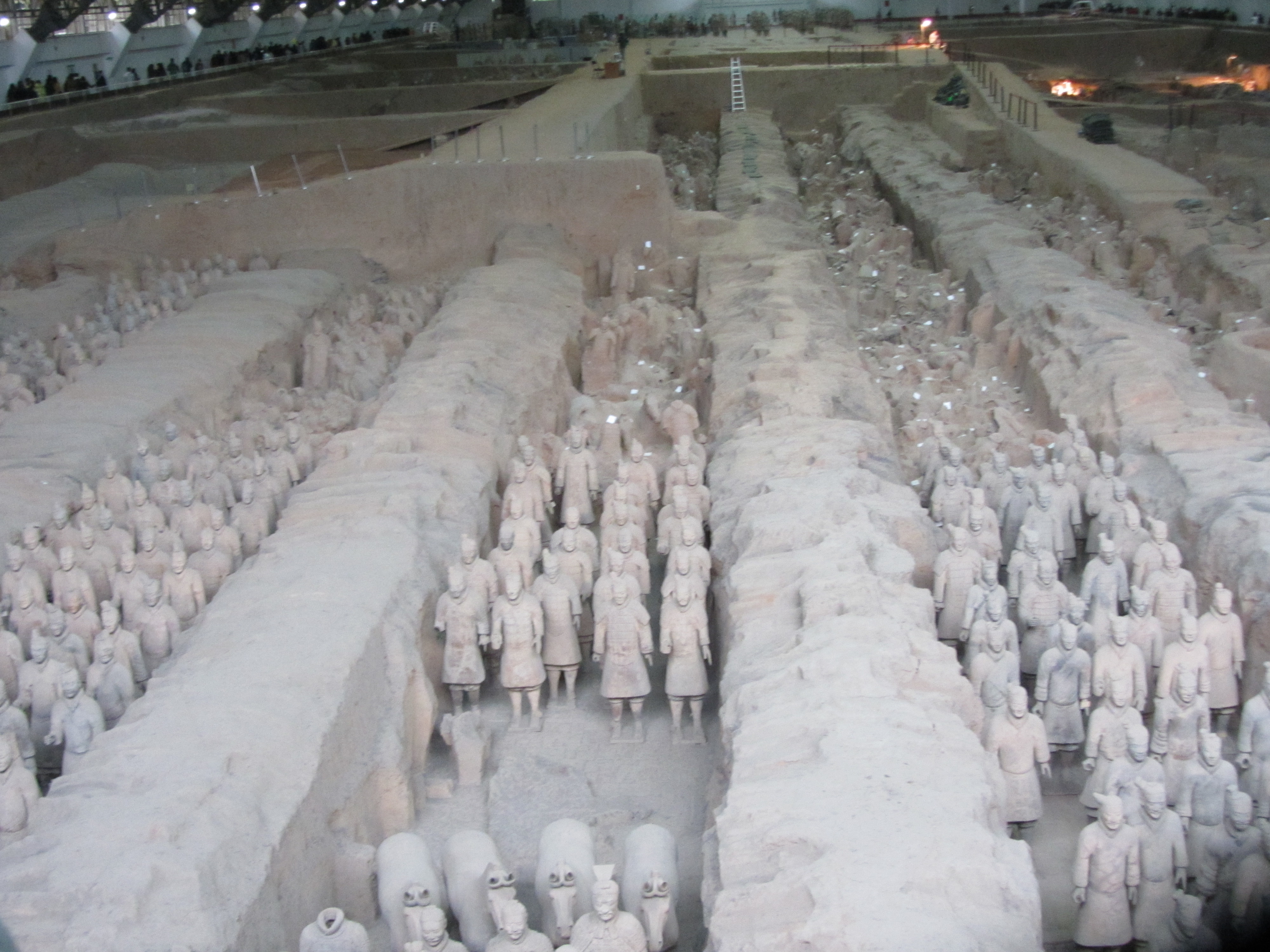
Terracotta Warriors

American celebrity, Whoopi Goldberg, once uttered, “I don’t really view communism as a bad thing.”  I agree with Whoopi. Canadian-born economist, public official, and diplomat, John Kenneth Galbraith, once wrote, “Under capitalism, man exploits man. Under communism, it’s just the opposite.” Exploitation occurs in both economic systems. There are pros and cons to both economic systems and both forms of government. Neal Donald Walsh, in one of his Conversations with God books, wrote, “Your way is not the only way, it is just a way.” That quote sums up my point of view.

Water is Scarce, You Say!

A commentary on the status of the world’s freshwater supply.

Cape Town’s Reservoir From: http://www.capetownpartnership.co.za

Lately I’ve heard people talk about the water crisis in Cape Town, South Africa and I’ve seen the occasional post on Facebook about it. Often, I am skeptical when it comes to posts I see on Facebook. To quote Donald Trump, it could be Fake News. I try to stick to reputable websites when doing my posts. Curious about this water shortage, I did some research. It seems the talk I’ve heard and the posts I’ve seen are true. Cape Town is running out of water.

According to a CBC News article titled, Cape Town water crisis prompts rationing to prevent Day Zero tap shutoff,  a city with 4 million people, Cape Town’s main water source is now at about 27 per cent, but the final 10 per cent is considered unusable because of mud, weeds and debris at the bottom. The city’s managers have instructed residents, starting February 1st, to use only 50 litres of water daily, a decrease from the current 87-litre limit. Day Zero, the day when authorities would force the closure of most taps, is projected to arrive on April 12, but some fear it could come sooner.  The hope is water rationing will prolong Day Zero. The city says it would have to turn off most taps if the average reservoir level falls below 13.5 per cent. If Day Zero arrives, many people would have to go to collection points for a daily ration of 25 litres.

That’s rather disturbing to say the least. Four million people living in a city without water. Reading this got me wondering if water shortages are happening in other locations. It seems there are shortages elsewhere. There have been water shortage scares in the United States, especially in the states of Arizona and California.  Two years ago there was much concern that parts of California would experience a water shortage (see: NYT). Thankfully, heavy winter snows in the Rocky Mountains have rescued Western U.S. cities such as Phoenix, Tucson and Mesa for 2018 (see: Daily Herald).

Does that mean people living in the Western United States can give a sigh of relief? No, it does not. In 2015, the UN Predicted there would be serious water shortages by 2030.  The UN’s World Water Development Report  says, the world will only have 60% of the water it needs by 2030 without significant global policy change. It says countries like India are rapidly depleting their groundwater and rainfall patterns around the world are becoming more unpredictable due to global warming.

According to a National Geographic article entitled, What You Need to Know About the World’s Water Wars, states that fears are being sounded about the depletion of underground water supplies known as aquifers. More specifically, an aquifer is an underground layer of permeable rock, sediment, or soil that produces water. About 30 percent of the planet’s available freshwater is in the aquifers located under every continent. According to this article, the world’s largest underground water reserves in Africa, Eurasia (Europe and Asia), and the Americas are under stress. It is interesting to learn that over two-thirds of the groundwater consumed around the world is for irrigation purposes for agriculture, while the rest supplies drinking water to cities. The article says, Beijing is experiencing sinking because soil collapses into the space created as groundwater is depleted. Parts of Shanghai, Mexico City, and other cities are also sinking because of shrinking aquifers. Sections of California’s Central Valley have dropped by 38 centimetres, and in some localized areas, by as much as 8.5 metres.

Kofi Annan, the seventh Secretary-General of the United Nations, once said, “Fierce national competition over water resources has prompted fears that water issues contain the seeds of violent conflict.”  He may be right. A Newsweek Article, The World will soon be at war over water, lists seven conflicts over water that have already happened. What’s interesting to me is I had no idea that these conflicts were over water. I was happy to read that some of the hottest conflicts over the water supply have been resolved through negotiation.

American composer, musician and poet, Michael Franti once said,

“If we do not change our negative habits toward climate change, we can count on worldwide disruptions in food production, resulting in mass migration, refugee crises and increased conflict over scarce natural resources like water and farm land. This is a recipe for major security problems.”

Mr. Franti is right. Humanity needs to “wake up” and realize that we must change our practices; our practices towards climate change, our habits towards water usage and even the way agriculture is practiced. The reality is water is a limited resource. As 1937 Nobel Prize recipient Albert Szent-Gyorgyi once said, Water is life’s mater and matrix, mother and medium. There is no life without water.”  Let’s face reality. If our water supply runs out, we are doomed.

In September of 2010, the United Nations General Assembly declared “the right to safe and clean drinking water and sanitation as a human right that is essential for the full enjoyment of life and all human rights.” (see: UN declaration). Slovenia in July of 2017 officially declared that having access to drinkable water is a human right. This announcement was made following a vote by the Slovenian parliament who voted in favour of the law that prevents the country’s water sources from being commercialized (see: Slovenia). I say “bravo”! A round of applause for Slovenia. Other countries should be following in Solvenia’s footsteps.

Now I don’t want to sound like a pessimist. I would rather be an optimist., which begs the question: Are there solutions to a water crisis besides conflict? Yes. According to the Canada Free Press’ article, Israel holds the solution to world water crisis, Israel has many new innovative products and policies. Some of these are drip irrigation and “fertigation,” a process of injecting fertilizers, soil amendments, and other water-soluble products into an irrigation system. Israel promotes dual-flush toilets, seawater desalination, advanced wastewater treatment and reuse, free-market pricing of water, drought-resistant seeds, cutting-edge metering and leak-detection systems, conservation education and precision agriculture. These are some of the ways we can use water in a more sustainable way. We just need to ‘wake up’ and demand that changes be made.

Scientists Protesting! An Unprecedented Event

A commentary on the Global March for Science

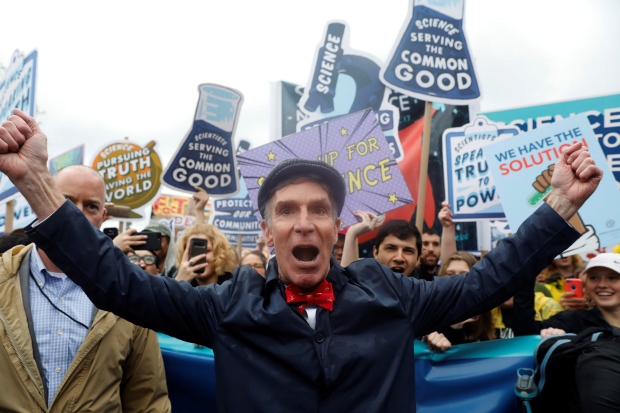
Bill Nye, the Science Guy (from CBC.ca)

CBC recently published an article, Global March for Science which caught my attention. When I read the headline, I was immediately curious as to why a global protest about science was going on. I had never heard of such a thing before and being as I was science teacher, my curiosity got the best of me.

The article reports that scientists along with their supporters marched in hundreds of cities around the world on Earth Day protesting against proposed U.S. government funding cuts to scientific research and public rejection of established science such as climate change. People in at least 18 locations across Canada are participating in marches to promote and advocate for science.

Earth Day is an annual event celebrated on April 22.  Assorted events are held to demonstrate support for environmental protection worldwide. It was first celebrated in 1970 and now events are held in more than 193 countries.

The purpose of the global march was to spread the message that science matters. Protesters are saying to the politicians who try to undermine science, ruin trust in science, or politically motivate funding of science are a risk to the planet and so they are speaking out against it. While climate change is a major issue, protestors are also concerned about a number of Trump’s executive orders and his proposed budget, which proposes massive cuts to scientific research.

So, my next thought was what is this inexperienced, seemingly uninformed president doing south of our border to rile up the science community?. Anything that Trump does regarding the environment is concerning to me since their environmental policies directly affect my country. Acid precipitation is a good example of that. I proceeded to do some research.

Times article, Donald Trump’s Science Denial Is Becoming National Policy, reports soon after Donald Trump was sworn in as president, the official White House website purged all mentions of climate from the site except one,  the promise to eliminate the “harmful and unnecessary” Climate Action Plan implemented by former President Obama. Soon thereafter, scientists and other employees of the Environmental Protection Agency (EPA) and the United States Department of Agriculture (USDA) were told not to speak to the public. When a National Park Service Twitter account sent out impartial facts, the White House had them deleted, plus the EPA was told to take down its climate-change page. Climate change is a huge issue and Trump did tweet on November 6, 2012: “The concept of global warming was created by and for the Chinese in order to make U.S. manufacturing non-competitive.” Then on October 19, 2015, Trump tweeted: “It’s really cold outside, they are calling it a major freeze, weeks ahead of normal. Man, we could use a big fat dose of global warming!” This clearly tells me that this man is ignorant of science.

The Times article also says Trump appointed Robert F. Kennedy, Jr., an anti-vaccine activist to run a commission on immunization safety. Both Trump and Kennedy have spread far-flung theories linking vaccines to autism in children, an idea that medical experts overwhelmingly reject. Experts have warned the refusal to immunize is endangering public health by discouraging parents from immunizing their kids. Trump also appointed Dr. Scott Gottlieb to run the Food and Drug Administration. Dr. Gottlieb is a strong supporter of the pharmaceutical industry and has supported deregulation. Trump is also known to have called the fact that asbestos causes cancer a “con” and even refused to believe the objective scientific reality of drought in California.

The U.S. Senate confirmed Scott Pruitt, Trump’s choice to lead the Environmental Protection Agency.  Susan Margaret Collins, a Senator who is generally seen as the most pro-environment Republican in the Senate, said she was not convinced that Pruitt would protect public health. According to USA Today, she quoted as saying;

I have significant concerns that Mr. Pruitt has actively opposed and sued EPA on numerous issues that are of great importance to the state of Maine, including mercury controls for coal-fired power plants and efforts to reduce cross-state air pollution and greenhouse gas emissions,” Collins said. “His actions leave me with considerable doubts about whether his vision for the EPA is consistent with the Agency’s critical mission to protect human health and the environment.

National Geographic’s, A Running List of How Trump Is Changing the Environment, reports that Trump’s proposed budget plans deep cuts to U.S. science and environmental agencies, especially EPA and the National Oceanic and Atmospheric Administration (NOAA) in an effort to increase defence spending by $54 billion. Actions speak louder than words. Even though Trump says, “We can and must protect our environment without harming America’s working families,” the fact that he is proposing a cut of 31% to the EPA tells me how he really feels about protecting the environment. I find this alarming. Americans should be as well.

National Geographic also say that against the advice of the EPA’s chemical safety experts, EPA administrator Scott Pruitt rejected a decade-old petition asking that the EPA ban all use of the pesticide chlorpyrifos. In 2000, the EPA banned its use in households, but the pesticide is still used on farms, which EPA scientists recommended stop. Even though Dow Chemical, the pesticide’s manufacturer, argues that it is safe when properly used, research suggests that chlorpyrifos may be associated with brain damage in children and farm workers, even at low exposures.

That same article claims President Trump signed a joint resolution passed by Congress revoking the U.S. Department of the Interior’s “Stream Protection Rule.” That rule, put in place by President Obama, placed stricter restrictions on dumping mining waste into surrounding waterways. It seems that mining companies are now free to throw whatever waste they desire in American waterways. These wastes eventually end up in the ocean and affect the ocean’s health. Once again, alarming.

So, is the world’s science community and all its supporters over reacting? Based upon my research, NO! I’ve only mentioned some of the policy changes made by the Trump administration. These policy changes are ALARMING to say the least. I am concerned about the planet. Trump’s choices affect the planet as the U.S.A. is the second largest contributor (15%) of greenhouse gases in the world, second only to China at 22.7% (see Gas Emissions, 2010). Canada only emits 1.7%. I personally would like an inhabitable planet for my children and grandchildren to reside on. Evo Morales, President of Bolivia since 2006, says it best. “Sooner or later, we will have to recognize that the Earth has rights, too, to live without pollution. What [hu]mankind must know is that human beings cannot live without Mother Earth, but the planet can live without humans”.