The Old World (Part Two)

In part one, I (#blogger #blog #somseason #YA #authors) deliberated on some of our history. Let’s continue with that discussion.

Have you ever heard of the “Orphan Trains?”  I hadn’t until recently. Wikipedia’s article, Orphan Train, says:

The Orphan Train Movement was a supervised welfare program that transported children from crowded Eastern cities of the United States to foster homes located largely in rural areas of the Midwestern United States short on farming labor. The orphan trains operated between 1854 and 1929, relocating from about 200,000 children. The co-founders of the orphan train movement claimed that these children were orphaned, abandoned, abused, or homeless, but this was not always true. They were mostly the children of new immigrants and the children of the poor and destitute families living in these cities.

There are lots of articles on Orphan Trains like Orphan Trains – Social Welfare History Project. Wikipedia has another article titled, Home Children, that states in 1869, a child migration scheme began where “more than 100,000 children were sent from the United Kingdom to Australia, Canada, New Zealand, and South Africa.” The article, England’s “migrant children; US “orphan trains” says, “According to the parliamentary report, the shipping out of children was done for a mix of reasons: 1) philanthropic – to remove children from the streets or from parents who posed a serious risk; 2) economic – in England, to lower the budgetary costs of the government providing for neglected children, and in the other countries, to provide a source of cheap labor; 3) racist – as the report states, “the importation of ‘good white stock’  was seen as a desirable policy objective in the developing British Colonies.” 

As you might expect, I have questions. Where did all these homeless children come from? Why were there so many homeless children in the US and Britain? Let’s look at New York City. Wikipedia’s Orphan Train article says, “Around 1830, the number of homeless children in large Eastern cities such as New York City exploded. In 1850, there were an estimated 10,000 to 30,000 homeless children in New York City. At the time, New York City’s population was only 500,000.”  News from the Office of the New York State Comptroller, in its article,  Numbers of Homeless Population Doubled in New York, states “there were more than 158,000 homeless New Yorkers in 2024 – about one in five of the nation’s homeless.” The Sleeping Bag Project’s article, 30K children lived in NYC homeless shelters every month in NYC in 2023. Numbers of homeless children in NYC appears to be roughly the same now as it was in the 1800s. Wouldn’t you expect homelessness to be much higher nowadays with the NY population being higher than 8 million? Why were there so many homeless children during the mid to late 1800s? Something doesn’t add up. What was going on in the 1800s that caused so much child homelessness? Question everything folks!

You’ve likely heard or learned about the Hindenburg disaster, the airship accident that happened on May 6, 1937. An airship is a dirigible balloon, a type of aerostat (lighter-than-air aircraft) that can navigate through the air flying under its own power. The Hindenburg, a German-made commercial passenger-carrying rigid airship was fuelled by hydrogen which caught fire and destroying it during its attempt to dock with its mooring tower. This disaster essentially stopped airship use.

The article, The Comprehensive History of Airships: A Journey Through Time says:

In the early 20th century, airships emerged as a revolutionary mode of passenger transport, offering an alternative to rail and sea travel. These floating giants provided passengers with an unparalleled view of the landscape below, allowing for a leisurely journey marked by comfort and elegance. Airship travel became particularly popular in Europe and North America, facilitated by the luxurious amenities onboard. Passengers enjoyed spacious lounges, exquisite dining experiences, and even sleeping quarters, reminiscent of a grand hotel experience high in the skies. The Grands Balloons offerings made air travel accessible to the affluent, thereby elevating the status of airships in society.

The article, Docking on the Empire State Building, shows these ships docked in city centers. The article, The Forgotten Era of the Airships in Rare Photographs, 1900s-1940s, shows many pictures of these magnificent ships. As expected, I have questions. Why was this type of air travel abandoned? The typical answer given to this question is there was fierce competition with airplanes, which offered faster and more efficient travel, plus the impact of major disasters, notably the Hindenburg catastrophe in 1937, which instilled public fear around airship travel. Now, I don’t know about you, but “spacious lounges, exquisite dining experiences, and even sleeping quarters” sounds much more appealing than crowded planes. It seems to me that with today’s technological advancements, airships would be a much safer  and a more tranquil type of air travel. Could it be that we were made to fear airships and indoctrinated to believe that airplanes were safer? Could it be that crowding people into planes with squashed seats is a way to increase profits? Could it be that airplanes are easy money as the article Airline Profits To Soar in 2024 as Travel Rebounds suggests? It was author, Devin Cabrera, who said, “Because the world runs on money and the ones that have it control everything. The less [money] you have, the less people care about you.” Profits do seem to take precedence over comfort.  Question everything folks!

Have you ever wondered about the many magnificent and beautiful cathedrals throughout the world? I’ve visited many of them, and I am amazed every time I am in one. Let look into Notre-Dame Basilica of Montréal. The Canadian Encyclopedia says, “Construction of on the new Notre-Dame Church—the present-day Basilica—began in 1824 and was completed in 1829.” This cathedral was built of carved solid stones during horse-drawn carriage days. According to Wikipedia, the first Canadian railway was opened outside Montreal in 1836, after the cathedral was built. So, we’re to believe that this grand building was built in 4 years during times of primitive technology. A much smaller building was recently built at our local college, and it took over two years to complete, and that is with modern equipment. Something doesn’t add up. Question everything people.

A cathedral is defined as a very large and important church with a bishop in charge of it. That is what I have always believed until recently. I have recently learned that there is a growing body of research suggesting that these structures may have served a dual purpose: as centers for healing, where sound, light, and sacred geometry joined to create powerful healing environments.  The articles Ancient Cathedrals as Healing Centers, The Healing Resonance of Churches, and Magnetism, Sound And Healing: Now And In Ancient Times explain the healing properties of churches. These articles claim churches do much more than spiritual healing. The Rumble video, Cathedrals are healing centers based on frequency, vibration & resonance provides a good explanation of this research. Could this be true? Could these ancient churches have been healing centers originally and that was kept from us? Why would someone do that? If it’s true, then we have been indirectly bullied (#bullying, #antibullying).

I recently watched a documentary called, Old World Order, Everything We’ve Been Told Is A Lie.  I strongly encourage you to watch it! So, what is the video’s premise? It provides answers to many questions, like those I expressed above, and in Part one. When you see the possibility of a different truth, the world makes way more sense. And with that, “Every person must choose how much truth he [or she] can stand.” Psychiatrist, Irvin D. Yalom said that. You can watch this video below.

You can also watch this film on Stew Peter’s website, Old World Order (2024), and on Rumble:  OLD WORLD ORDER – A DOCUMENTARY BY STEW PETERS

What if our history is false or has been altered? If it is false, then I want to know our true past. The world needs real truth. Is our history fake? Has our true history been concealed?  As I mentioned in a previous blog, George Orwell, author of 1984, said, “The most effective way to destroy people is to deny and obliterate their own understanding of their history,” and Napoleon Bonaparte allegedly said, “History is a set of lies agreed upon.” Were these people trying to tell us something?  I am beginning to think they were.

I did my own research and I have come to my own conclusions. As mentioned in previous blogs, I no longer believe everything I’ve been told. I question everything and draw my own conclusions. So, before you label me a crazy conspiracy theorist, I remind you of what American columnist, Will Cain, said: “Accusations like conspiracy theories, words like disinformation and misinformation, these aren’t words that are meant to guide you as to how much trust you should place in the story. These are weapons used to destroy opposition and you already know that when it comes to debate, disagreement or even election outcomes.” American writer and intellectualist, Gore Vidal, says, “Apparently, ‘conspiracy stuff’ is now shorthand for unspeakable truth.” And never forget what Danish theologian and philosopher, Soren Kierkegaard once said, “There are two ways to be fooled. One is to believe what isn’t true; the other is to refuse to believe what is true.” You decide.

The Old World (Part One)

I (#blogger #blog #somseason #YA #authors) have always been fascinated with history. It’s one of the reason’s I minored in Social Studies, where history is taught in Alberta. The article, What is the Difference Between History and the Past? states:

The past refers to all the events that have ever happened since the beginning of time until the present moment. History, on the other hand, is the interpretation of the past through the study of records and evidence left behind by previous generations. It is a process of interpreting evidence in a thoughtful and informed way, and it gives meaning, sense, and explanatory force to the past in the present. History is open to change and revision as new evidence is discovered and new interpretations are proposed.

This was my approach to teaching Social Studies classes. In the above quote, I especially like the sentence; “History is open to change and revision as new evidence is discovered and new interpretations are proposed.” In the past few months,  I have come across some thought provoking videos and articles, like the one I talked about in my last post, Is Canada Real? That video got me wondering: Is what I taught, and what our history books tell us, really true? Is it really reflecting the world’s past? It was Britain’s war time prime minister, Winston Churchill who allegedly said, “History is written by the victors,” and it was the author of 1984, George Orwell who said, “Who controls the past controls the future. Who controls the present controls the past.” Why would they say such things? Are we missing something? Think about the word history—”his story.” Is history just someone’s, or some group’s story? Is the history we’ve been taught a lie or at the very least altered truth?

I am fascinated with historical buildings. Take, for example, the Canada Permanent Building, located in downtown Edmonton, Alberta, Canada. You can see a picture of this building and learn about it in the articles, CANADA PERMANENT BUILDING and HistoricPlaces.ca .  I have driven by this building many times.  It is said to be built of sandstone and red brick and constructed in 1909. No mention of when construction actually began or finished, so one can only conclude that it was built in 12 months or less. What I find interesting is that this was during the time of dirt roads, and horse and carts, at least that is what we were told. A new smaller sized building was constructed at the local college where I live and it took over 2 years to construct and that’s with modern equipment. It’s bewilders me how a stone and brick building could be constructed in one year in the 1900s when it took over 2 years to construct a building with modern equipment today. Something doesn’t add up.

Another example is First Presbyterian Church, also located in Edmonton. I have walked past this beautiful building many times. You can learn about this building in the articles, FIRST PRESBYTERIAN CHURCH and Wikipedia’s First Presbyterian Church (Edmonton). This brick and sandstone church is said to be constructed in 1911 in the first article, but Wikipedia says the present building was completed in November 1912. The first article says the architect is Wilson and Herrald, but has n/a (non-applicable?) listed for the builder. Why such little information? The first article implies it was built in a year or less, which seems unlikely to me. Like I said above, how can a stone and brick building be constructed in just one year in the 1900s, during a time of horse and carts when it takes two or more years to construct a building of smaller size today with modern equipment?  I question that. Question everything folks!

Teaching Social Studies, I often taught about various empires like the Roman Empire, Chinese Empire, and the British Empire. Never in my 35 years of teaching have I ever come across the Tatarian Empire (also known as Great Tartary and Tartaria). I first learned of Tartaria about two years ago. There is a map of Tartaria located in the Library of Congress which is located in Washington D.C. That means it is real. Here is a link to the Map of the Great Tartary.  Discover Magazine’s article, What Is the Lost Empire Of Tartaria? says:

People who believe in the Tartarian Empire contend it was once a sophisticated, worldwide civilization with impressive architecture. Because such an empire is not mentioned in history books, conspiracy theorists claim it has been intentionally erased. 

Notice that Discover Magazine tries to discredit Tartaria calling it “The Tartarian Empire conspiracy theory.”  If you want to learn about Tartaria, you can read about it in the articles, Tartaria Mud Flood Reset: A Missing Legacy and Tartaria: Lost Timeline of a Global Empire. My question is: why has Tartarian history been kept from us? If you do your own research, you will find lots of articles calling it a conspiracy theory and myth, but is it? The first article says, “the Tartarians were masters of masonry, brickwork, steam punk style technology, universally free energy, and grand architecture.” It also says, “Churches, cathedrals, mosques, and other buildings of worship were originally aetheric power stations, water stations, and sound resonating acoustical healing centers.” Could this be why they kept knowledge of the Tartarians from us? Are they (whoever they are) trying to hide a history with advanced technologies from us? There are various videos to watch in the second article. Watch them, and draw your own conclusions.

What happened to Tartaria? Many say it was wiped out with a mud flood. To understand what I mean, watch this video titled: The Mud Flood Reset that Time Forgot!?

You can also refer to the article, Mud Flood, Dirt Rain, and the story of the Buried Buildings, which has lots of pictures. Many of the buildings from Tartaria still stand and have been repurposed; many cathedrals for example. Could the two buildings I talked about earlier be Tartarian buildings? It would explain why the histories of these building are so vague. Has our history been re-written and hidden from us? Could this be why those who question it are called crazy conspiracy theorists? Question everything people.

Have you ever wondered about the “Great Fires” of cities that happened? I can’t help but think about this with all the news about fires in Los Angeles, California, like this news article, Eaton and Palisades fires. It reminds me of Lahaina in Maui which burned in August of 2023.

The article, Top 10 Most Famous Fires in History, lists—looking at 1800 and 1900s—Boston 1872, Chicago 1871, San Francisco 1906, Peshtigo, Wisconsin 1871, Texas City, Texas 1947, Halifax, Nova Scotia 1917, and Tokyo, Japan 1923 as the most famous city fires. Wikipedia’s List of fires in Canada lists 15 Canadian city fires in the 1800s, and 8 in the 1900s, with some cities being listed more than once with fires in different years. In the USA, I counted 16 great city fires in Wikipedia’s Urban fires in the United States throughout 1700s to 1900s. Why did so many cities burn?

Let’s look at the Great Toronto fire of 1904. The Canadian Encyclopedia’s article, Great Fire of Toronto (1904) has pictures. What’s interesting is the pictures show, what looks like a war zone of brick and stone buildings. How can a fire destroy at least 98 stone buildings? Stone doesn’t burn. Let’s look at the Boston fire of 1872 as explained in the above mentioned article, Top 10 Most Famous Fires in History. This article says, “some 776 building and twenty people—being turned into charred cinders, making it one of the East Coast’s most devastating fires”. Wikipedia’s article, Great Boston Fire of 1872 says,  the fire began “in the basement of a commercial warehouse,” and that “many of the affected buildings were made of brick and stone, but with wooden framing.” It also says “the fire could spread from rooftop to rooftop, and across narrow streets.”  Now I have questions. How can 776 buildings be destroyed and only 20 people die? Why would wood framing be used for brick and stone buildings? Is wood strong enough to support brick and stone? I can’t imagine it is. Something doesn’t make sense. Question everything friends.

I have to wonder if the history we’ve been told is really our true history.  Have we been indoctrinated to believe someone’s fake story? Have we been programmed to believe a history that has been falsified, altered, or hidden? Why would someone do that? If that’s true, then we have been indirectly bullied (#bullying, #antibullying). English writer, Kate Atkinson once said, “Alternate history fascinates me, as it fascinates all novelists, because ‘What if?’ is the big thing.” What if our history is false or altered? George Orwell, author of 1984, said, “The most effective way to destroy people is to deny and obliterate their own understanding of their history,” and it was Napoleon Bonaparte who allegedly said, “History is a set of lies agreed upon.” Why would they say such things? Were they trying to tell us something?  It is time for us to do our own investigating instead of blindly believing what we’re told. I have more to say on this topic, and possible answers to my questions above, in Part Two.

It is Time to Get Serious, People

A commentary on the importance of following pandemic rules

PM Trudeau giving COVID-19 update

Global News reports that Canada’s Prime Minister, Justin Trudeau, said in March that the federal government was/is considering invoking the Emergencies Act to help keep the Canadian economy afloat as the  COVID-19 spreads throughout the country. This act was created to provide a legal framework for power to be temporarily consolidated with the prime minister and cabinet to issue executive orders during national emergencies. It was only used three times in Canadian history. The War Measures Act—the act before 1988—was invoked during the first and second World Wars, as well as during the October Crisis of 1970 when members of the Front de Libération du Québec (FLQ), a terrorist group in Quebec, carried out kidnappings. (see October Crisis).

The point is, the Emergencies Act allows a great deal of power to the prime minister and cabinet. They would have the right to take over property, public utilities, provide special services and special compensation, regulate, prohibit public assembly, and prevent travel anywhere within the country, among other things.

This Act infringes on our individual rights, such as restrict travel in our own country, and dictate who we can and cannot see. The Megan Meier Foundation, a foundation working to create a world without bullying and cyberbullying, defines bullying as “an aggressive behaviour that involves an imbalance of power or strength.” One could argue, that Emergencies Act is aggressive and involves an imbalance of power, since governments would have all the power, thus making an argument that leaders are bullying their citizens to comply with their demands.

The Boston Globe has an opinion piece titled, A civil liberties pandemic, which debates the toll being taken on Americans’ freedom and constitutional liberties by the unprecedented restrictions that have been imposed to enforce physical distancing. The Military Times even has an article titled, Will coronavirus lead to martial law?  Martial law is the replacement of civil rule with temporary military rule in a time of crisis.

NPR is a media organization founded on a mission to create a more informed public. Their article,  Life During Coronavirus, reports that Chinese citizens are financially rewarded for reporting those who fail to follow quarantine orders reflecting a decades-long history of social control, which has been mobilized on an unprecedented scale for the COVID-19 crisis.

The Boston Globe’s opinion piece, A civil liberties pandemic, which I mentioned earlier reports that in Israel, the government has ordered a round-the-clock curfew and deployed anti-terrorist technology to track down people suspected of violating the coronavirus restrictions. In Norway, anyone caught violating isolation rules can be fined $2,000 or jailed for 15 days.

Even in Canada, most provincial governments have issued stay at home orders,  implemented fines for anyone returning to Canada and not self-isolating for 14 days, or not practicing social distancing (see Provinces inpose fines). The purpose of these measures is to avoid overwhelming health care systems and reducing the spread of the Coronavirus.

I have not heard, or read, anything, about any such debate occurring in Canada about civil liberties (freedoms to do certain things without restraint from government), other than the occasional meme on social media saying (paraphrased): “Stay at home or risk losing more civil liberties.”  No one that I have spoken to—via technology, of course—has mentioned any concern about their civil liberties disappearing, unlike the U.S. That doesn’t mean things couldn’t change. Our Prime Minister has not invoked the Emergencies Act as of yet, but if enough people don’t respect the stay at home orders and practice social or physical distancing, then more civil liberties could be removed. Our governments have warned us of that.

Yet, there are still a number of people who are not respecting the pandemic rules. CBC News has an news article, Grocery store staff fed up with ‘social’ shoppers who flout pandemic rules, reporting that customers are chatting and getting too close to others in grocery stores. Some employees say they have been yelled at, cursed at, and accused of overreacting as they try to enforce physical distancing measures put in place by their employers.

I’ve heard of “Snow Birds,” (Canadians who winter in warm places like Arizona or Mexico) returning to Canada after the Canadian Government advised all vacationers to return to Canada. In the town where I grew up, I’ve heard of Snow Birds ignoring the 14-day self-isolation rule by going into the post office to collect their mail. Local papers told of Snow Birds in a nearby town going in the grocery stores upon their return. Urban Dictionary coined the term “convidiot” for those misbehaving during the coronavirus pandemic. Its definition:

1. A stupid person who stubbornly ignored ‘social distancing’ protocol thus help to further spread COVID-19

2. A stupid person who hoards groceries needlessly spreading COVID-19 fears and depriving others of vital supplies

I am very willing to give up my civil liberties if it means keeping my family and me safer. I felt that way during the October or FLQ Crisis in 1970 as well. But the thing is, we don’t have to give up our civil liberties if all people followed the advice of the health professionals, and took this pandemic seriously. Or, to use Urban Dictionary’s word, stop being a convidiots. To me, it is all common sense. Perhaps the French writer and philosopher, Voltaire, was right when he said, “Maybe Common sense is not so common.” The bottom line, we will all get through this much faster—in theory—if everyone followed what the experts tell us, that is, follow the pandemic rules.

There is a post circulating on social media. It reads:

History repeats itself. Came across this poem written in 1869, reprinted during 1919 Pandemic. This is Timeless….It was written in 1869 by Kathleen O’Mara:

And people stayed at home

And read books

And listened

And they rested

And did exercises

And made art and played

And learned new ways of being

And stopped and listened

More deeply

Someone meditated, someone prayed

Someone met their shadow

And people began to think differently

And people healed.

And in the absence of people who

Lived in ignorant ways

Dangerous, meaningless and heartless,

The earth also began to heal

And when the danger ended and

People found themselves

They grieved for the dead

And made new choices

And dreamed of new visions

And created new ways of living

And completely healed the earth

Just as they were healed.

NetFlix docuseries Pandemic

What is the truth around this poem? There was a Cholera pandemic that spread throughout the Middle East and was carried to Russia, Europe, Africa and North America, but according to Oprah Magazine, the poem was actually written by a Kitty O’Meara. Magazine editors contacted the author in her home outside of Madison, WI. Remember, not all you read on social media is fact!  Nonetheless, the message of the poem tells a truth. I’ve seen evidence that people are beginning to think differently. My hope is that there will be an absence of people who live in ignorant ways; who are dangerous, meaningless and heartless. When this is all over, I dream of people making new choices, having new visions, creating new ways of living, and ultimately healing the earth, just as the poem says. As I’ve said in other posts, maybe this virus is trying to teach the world, and more specifically each of us, to live differently. I also mentioned that we humans are slow learners!

Oh, Those Stereotypes.

A commentary on stereotyping.

A stereotype is an over-generalized belief about a particular group of people. Business Insider’s article, 5 mistaken ideas about Americans, says a common stereotype of Americans throughout the world, is Americans are loud, arrogant, and entitled. That is certainly a stereotype that many Canadians hold.

The Globe and Mail’s article, These days, Canadians aren’t big fans of the U.S, published in October 2018, says,

In its report, the Pew Research Center found that “just” 39 per cent of Canadians had a favourable opinion of the U.S., the lowest percentage in polling since 2002. Two years ago, during the final stretch of Barack Obama’s presidency, 65 per cent of Canadians expressed a favourable opinion of their southern neighbour.

The drop was even more dramatic for Mr. Trump himself. “Only” 25 per cent of Canadians have confidence in Mr. Trump, the report said – a slight uptick from 2017, but plummeting from 83 per cent in the final year of Mr. Obama’s tenure.

Now that is striking, and in my experience accurate as pretty much anyone I talk to, has a negative view of Americans. The reality is, America gets a bad rap because of the current resident of the White House.  He certainly fits the American stereotype of being loud, arrogant, and entitled. News reports that us Canadians hear about white supremacy and the anti-immigration rhetoric coming from the United States doesn’t help either.

The Globe and Mail article goes on to say,

The trends in Canada – a two-year erosion of U.S. favourability and presidential ratings – were pervasive among America’s allies and neighbours, the survey suggests. In Mexico, positive views of the U.S. have decreased by an even greater percentage than in Canada since the end of the Obama presidency.

The negative view of the United States is prevalent throughout the world.

I believe regular, everyday Americans are getting a bad rap. Let me tell you why, based on my experience.  My wife and I just returned two weeks ago from a vacation in Maui, Hawaii. It was a wonderful trip of sun and beaches after a winter from hell. But this is not my point. Being we were in one of the American states, as expected, we met American citizens from all over. We met people from California, Tennessee, Kentucky, Oregon, Montana, New York, Washington, Arizona—I’m sure I’m missing some—and Hawaii.  I can honestly tell you that not a single one of them were loud, arrogant, or acted entitled. In fact, the only loud, arrogant person we met, ironically, was a Canadian.

An interesting side note, the vast majority of Americans that we met never spoke of their president or talked politics. I may be wrong, but Americans almost seemed embarrassed by their politics. We did meet a few people who made of point of telling us that their country was a mess because of Trump.

So, the question is: Is the stereotype wrong? No.  The article, All Stereotypes Are True, Except, by Psychology Today,  says,

Many stereotypes are empirical generalizations with a statistical basis and thus on average tend to be true. If they are not true, they wouldn’t be stereotypes. The only problem with stereotypes and empirical generalizations is that they are not always true for all individual cases. They are generalizations, not invariant laws.

There are plenty of Americans who are loud, arrogant, and entitled, but as far as that goes, there are plenty of Canadians who are as well. I’ve met many of them. I’m sure there are in every country.

Is there a danger with Stereotyping?  Yes. Stereotypes encourage prejudice.  How?  Another Psychology Today article, The Psychology of Prejudice and Racism, says,

By definition, stereotypes are limiting and disregard people’s individuality. They also lend themselves to negative and derogatory assumptions. When that happens the stereotype blends into prejudice.

As I mentioned earlier, not a single American that we met in Maui was loud, arrogant, or acted entitled. How does one explain that? Well, I can only speculate, but of all the Americans we met, they all were willing to travel and try new experiences, even if it was only in their own country. Many mentioned that they’ve been to Europe or other places, though. Those that travel meet people of other races and cultures, and become more tolerant of difference.

Intolerance can also be built by meeting and getting to know immigrants. If people—Muslims, Christians, Blacks, White, Indigenous, and so on—get to know one another, prejudices and racism would decrease. The reality is, we are all human beings with the same pains, desires, struggles, etc. This is what William Shakespeare is saying in the play, The Merchant of Venice.

In Act 3, scene 1 of the play, Shylock confronts two provoking Christians saying, “I am a Jew. Hath not a Jew eyes? Hath not a Jew hands, organs, dimensions, senses, affections, passions… warm’d and cool’d by the same winter and summer, as a Christian is? If you prick us, do we not bleed? If you tickle us, do we not laugh? If you poison us, do we not die…”

It seems this struggle has gone on for centuries.

Does creating friendships with individuals from other cultures and races reduce prejudice? Absolutely!  The Psychology Today article mentioned earlier says,

Positive emotional experiences with members of different groups [people from other cultures or races] can also reduce negative stereotypes. Having close friends from different groups is especially effective in this regard.

I would encourage everyone to put away their fear of other cultures and races, and instead ,talk to them, whether that be through travelling or meeting new immigrants. The world will be a better place because of it.

We Canadians Have Something to be Proud of.

A commentary on the Canadian Spirit

Every day I thank the Universe/God that I live in Canada. I am a proud Canadian. Let me tell you why.

The article, 7 Stereotypes About Canadians That Are Too Real, says that:

Canadians are notorious for their politeness and niceness. If you find yourself in a grocery store in Canada, the classic line you’ll hear from Canadians when they want to move through a tight aisle is “just gonna sneak past you there.” Sometimes, there’ll be enough room to fit two trucks, yet Canadians will still say “excuse me” to avoid alarming their neighbour casually looking at the canned goods section.

In fact, most Canucks are so polite that if you bump into one, they will probably apologize for standing in your walking space. When in doubt, Canadians err on the side of apologizing rather to avoid conflict.

In a BBC travel article entitled, Can Canada teach the Rest of us to be Nicer? it says,

We experience Canadian nice as soon as we reach customs. The US border guards are gruff and all business. The Canadians, by contrast, are unfailingly polite, even as they grill us about the number of wine bottles we’re bringing into the country…The niceness continues for our entire trip, as we encounter nice waiters, nice hotel clerks, nice strangers.

Canadian niceness is pure, and untainted by the passive-aggressive undertones found in American niceness (have a good day, or else!). It’s also abundant. Canada is to niceness as Saudi Arabia is to oil. It’s awash in the stuff, and it’s about time, I say, the rest of the world imported some.

In one recent list of rude countries as perceived by travellers, France, Russia and the UK were voted the rudest countries in the world, according to this list. The United States came in seventh place and Canada, I’m proud to say, came in 27th place out of 34 countries listed. The least rude countries on this list is Brazil and Caribbean. We’re not the nicest nation, but we’re rated pretty good.

There were two stories in the news this week that illustrated the truth behind the ‘Canadians are nice’ stereotype. Now, let’s be realistic. It’s a stereotype. Simply Psychology defines stereotype as “a fixed, over generalized belief about a particular group or class of people.” Not all Canadians are nice. I’ve met many unfriendly Canadians. Having said that, I believe most Canadians have integrity, are benevolent, and are altruistic. Here are two examples.

The CTV News article, Closed Kingston grocery store left unlocked, reports that shoppers walked into the downtown Kingston Food Basics store on Family Day—a statutory holiday in some Canadian provinces–when the store was closed, but the front doors were accidentally left unlocked. When a store manager arrived at the store, they found everything still in place. The manager was quoted saying, “Nobody took anything out of the store.” He also said some customers left money on the counter and notes; informing the manager of what they took. Police praised customers for doing the right thing. “It’s rare anywhere. We’re pretty impressed with our citizens that they’d be so honourable, honest to leave a bunch of money for the groceries they were taking.” said a Kingston Police officer. It is fair to say that Canadians value integrity and community. If that doesn’t illustrate integrity and ‘niceness’, I don’t know what does.

The news report, ‘They’re Heroes!’ reports of another example of the “Canadians are  nice’ stereotype. At Grouse Mountain Ski Resort near Vancouver, British Columbia, a group of quick-thinking thirteen year old youths cooperated to rescue an 8-year-old boy who was dangling from a ski lift. The group of teens heard the boy’s cries for help as a man who was on the lift with him—presumably his father—held onto him, unable to pull him back up. As the young boy dangled more than 6 metres (20 feet) above the ground, the group of five 13-year-old friends raced to grab nearby fencing, which they used as an improvised safety net. You can watch the video of the event in the news report.

Youth are often criticized as being trouble makers. The Seventeen Magazine’s article, 11 Ridiculous Stereotypes About Teens That Need To Go Away, list stereotypes such as,

  • Youth are addicted to social media.
  • Teens are all lazy.
  • Youth only care about themselves, and are unwilling to help others.

The ski lift story certainly counters the last stereotype. I know from working with youth for 35 plus years that most youth are compassionate, caring people.

Stereotypes come from some sort of truth. I like to think that we Canadians are friendly people. That is why I am proud to be Canadian. Canadians—for the most part—are nice, kind, , compassionate people with integrity, and community minded citizens. That is why Canada has social programs like universal health care and low-income support. Perhaps that’s why Jane Fonda, an American actress, writer, and activist, said, “When I’m in Canada, I feel this is what the world should be like.” Or, Bono, Irish musician, and philanthropist, said, “I believe the world needs more Canada.”  Bill Clinton, 42nd president of the United States, once said, “In a world darkened by ethnic conflicts that tear nations apart, Canada stands as a model of how people of different cultures can live and work together in peace, prosperity, and mutual respect.”

There must be some reason these people hold Canada up as a model country. Are we (Canadians) perfect? Hardly! Can we do better? You bet. The list of rude countries as perceived by travellers I mentioned earlier listed Canada as the  27th ‘nicest’ country out of 34, so yes we can do better. Does Canada have problems? Of course.  Nonetheless, I think we have something to be proud of.

CNBC gives a list of the 10 top countries to live in. In its article, These are the 10 best countries in the world in 2019, Canada is listed in 3rd place, with Switzerland and Japan listed in 1st and 2nd respectively.  The United States is listed as 8th place.  Business Insider’s article, The 19 best countries to live in if you’re a woman, also lists Canada in 3rd place, with Sweden and Denmark in listed in 1st and 2nd respectively. The United States is listed as 16th place for 2019.  I for one won’t be happy until Canada is number one in both. Still, 3rd place is pretty good.

I say to all Canadians: Well done fellow Canadians, but we can do better. Let’s be a world leader in niceness. Nelson Mandela,  South African anti-apartheid  revolutionary, said, “It is in your hands to create a better world for all who live in it.” Let us make the world a better place as examples of the world’s friendliest people.

China Gave Me Much to Think About

Some thoughts on the recent trip to China

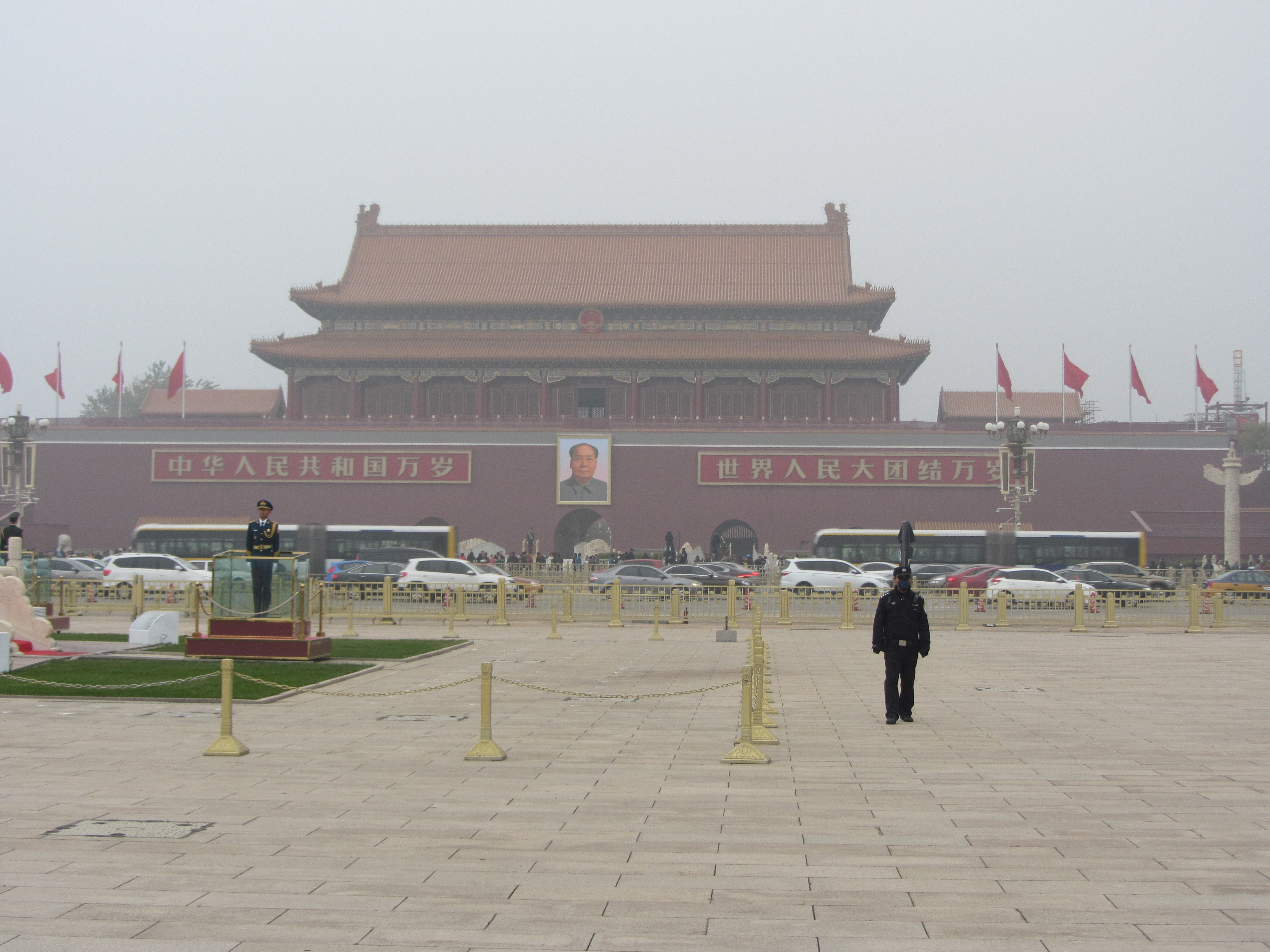
Tiananmen Square , Beijing

On November 20th, I returned home from an eleven-day trip to China. It was indeed a busy, yet educational adventure. The trip made me wonder about economic and political systems. Is capitalism better than communism? Canada is considered a mixed economy where there are some government owned corporations as well as privately owned businesses.

I grew up during the Cold War, continuously hearing about the evils of communism. North Americans were indoctrinated to believe communism was immoral and we were to fear it. I heard U.S. presidents such as, Richard Nixon, say, “The Cold War isn’t thawing; it is burning with a deadly heat. Communism isn’t sleeping; it is, as always, plotting, scheming, working, fighting,” and John F. Kennedy saying, “Communism has never come to power in a country that was not disrupted by war or corruption, or both.”  I lived through the Cuban missile crisis and fearing a nuclear war.

First let’s be clear on the difference between communism and capitalism. The word ‘communism’ has Latin roots, communi, which means ‘common.’ Although it is more complicated, simply put, in communism, everything is owned communally. Ideally, there is no government or class division, and wealth is distributed among people based on their needs; each person contributes to society as best as he or she is able, and takes from that society only what he or she needs. Communism is based on the principle of economic equality. Capitalism, on the other hand, stems from the word, capital, or the “means of production,” which is owned, operated, and supplied to generate profits for private owners or shareholders. Simply put, capitalism is an economic system which individuals own economic resources and industry.  Capitalism is based on the principles of profit and competition.

Climbing Great Wall of China

Based on what I observed, China seemed to have both systems. Many of the places we visited, such as the Jade factory, the pearl factory and embroidery Institute were all government-owned businesses. Free enterprise, or private businesses, were in China as well. We were told that Jack Ma, the co-founder and chairman of Alibaba, (equivalent to Amazon in North America) was the richest man in China.  We visited markets in the cities of Suzhou and Shanghai where small businesses were selling all sorts of things.

Something I noticed about the Chinese people is that they have a great love for their country. They speak of Chairman Mao, China’s revolutionary leader, with love and affection. Forbes describes China’s present leader  Xi Jinping as having a dream of a “moderately prosperous society,” instead of a communist utopia. He talks about “national rejuvenation,” and a China with a space program, high-speed rail network and high technology parks. One of our tour guides said Xi Jinping most known sayings—at least in China—is, “If it is good for China, then China will do it.” It seems to work as China is growing rapidly. Forbes says, China is on its way to becoming the largest economy in the world. It reports that in just one generation, 300 million+ people went from rural subsistence farming to urban industrial and technology jobs. The United States has always been considered the world’s economic power house in modern times, but the New York Times says,

Emerging signs of weakness in major economic sectors…are prompting some forecasters to warn that one of the longest periods of economic growth in American history may be approaching the end of its run.

Temple of Heaven exercise park

Another thing I observed while visiting China, was how happy the Chinese people were. In fact, one of my travel partners commented on how happy the Chinese people were, and how unhappy the people back home were because they were always complaining. The Chinese government does takes care of its people. For example, their government provides exercise parks for their retired citizens. We visited one at the Temple of Heaven Park. The Chinese people were happy to show us how the various machines worked. In this Beijing park, we saw musicians and large groups of people singing loudly and looked to be having fun. We also witnessed this at the Summer Palace. In fact, one Chinese person grabbed the hands of two people in our tour group and starting dancing with them. Unemployment, we were told, was non-existent. One of our tour guides told us that unless retired, everyone had a job. I saw numerous people with brooms cleaning the streets and removing falling autumn leaves. There was virtually no garbage anywhere.

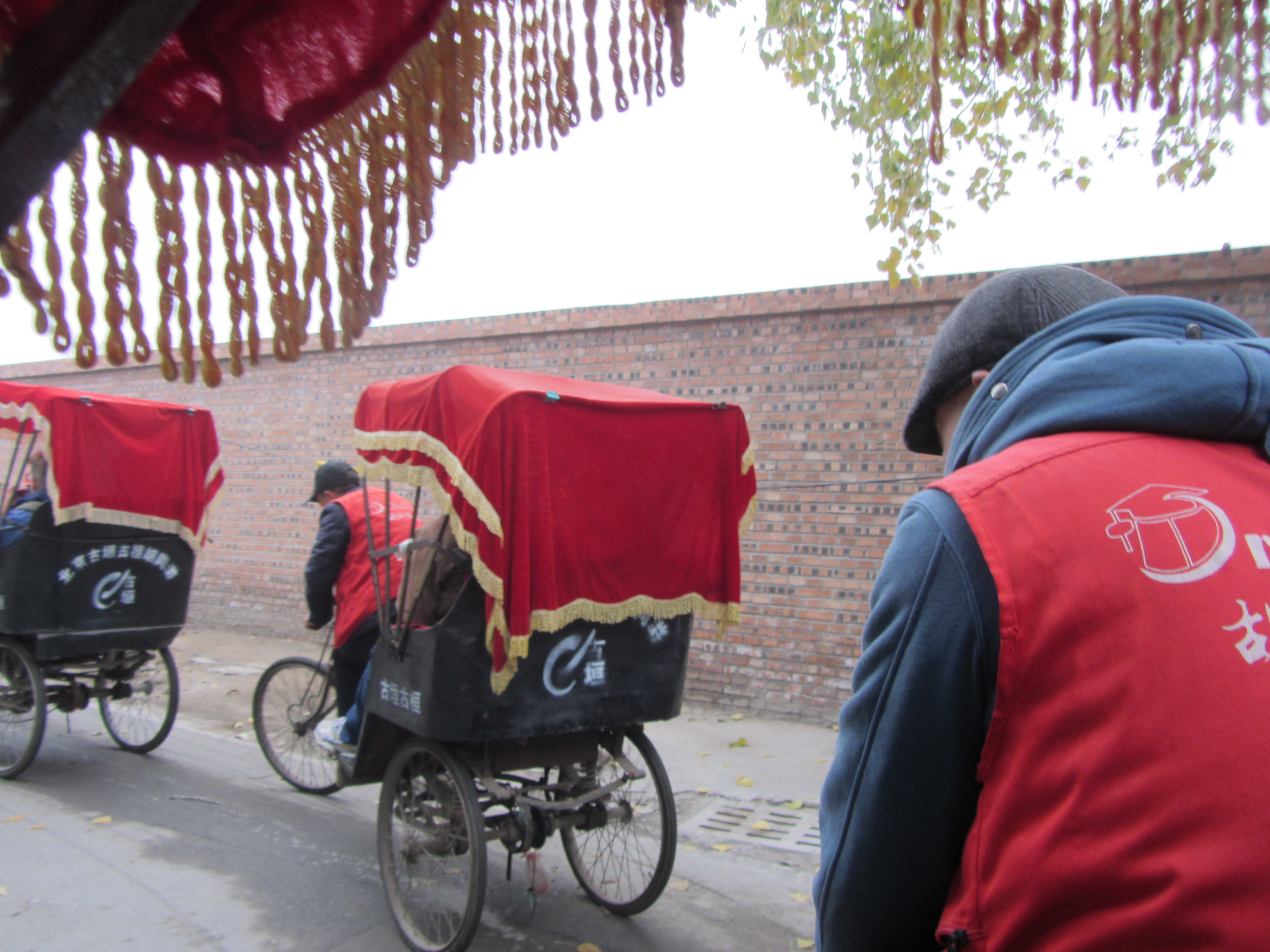
Rickshaw Ride

China’s political system is drastically different from democratic countries like Canada and the U.S. China has a one-party system; the Communist Party. We asked about what Chinese people thought about the politics of their country. The guide’s response (paraphrased) was Chinese people really don’t care about politics or their government. As long as people are living a good life, have a job and making money, they are happy. He said there is consistency with a one-party system as when there is a change in leadership, the policy of the previous government continues. Then our tour guide said something thought-provoking. He said in the democratic world, little is accomplished as governments are always squabbling. He further explained, whenever a new party is elected, they reverse the previous party’s policies, thus little progress is made.

Now this made me think. It’s true. In Canada, when a new party takes power—presently it’s the Liberal Party—they change many of the policies put into place by the previous ruling Conservative Party. In the United States, the Trump administration—Republicans—are reversing and changing many of the policies that the Obama administration—Democrats—put in place. It’s accurate, there is no consistency in policy. No wonder little progress occurs. The U.S. is a very divided country, and Canada has its divisions as well. China, because it is a one-party system, is relatively united.

Now I’m not saying that China doesn’t have problems, it does. According to Global Risk Insights,

“Land disputes, labour strikes and environmental concerns have been frequently cited as the leading causes of protest across China in recent years, as the drive for growth has resulted in the destruction of farmland, the proliferation of polluting factories and waste plants, and poor labour rights.”

Smog was prevalent in Beijing. I’m sure we visited only places the government wanted us to see. We saw none of the negative parts of society. But that is also true of tours taken in democratic countries I’ve visited.

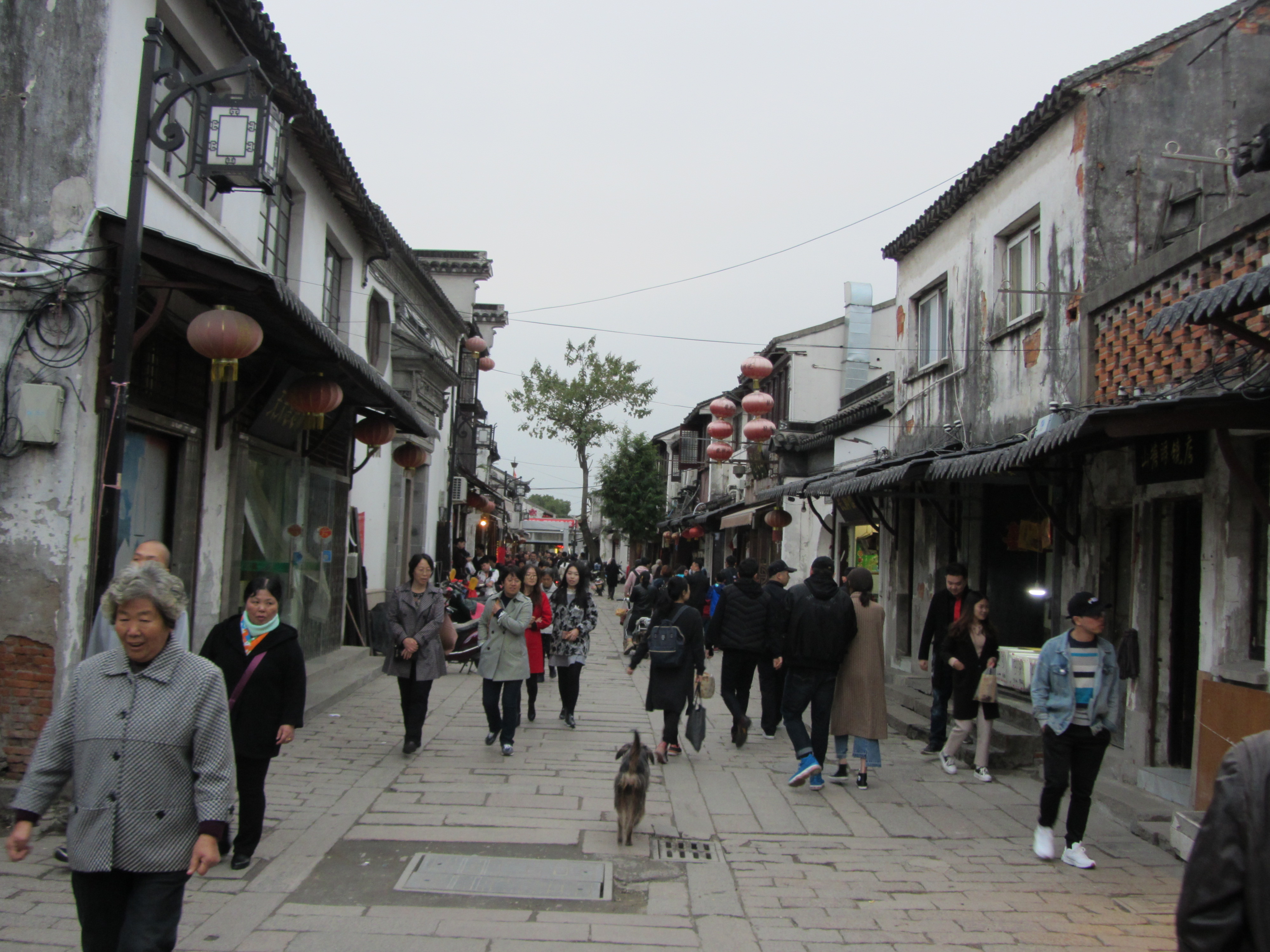
Chinese Market

It was obvious that the Chinese people are likely one of the most watched people in the world. I saw cameras everywhere. But is it any different in the “free world?” According to Crime Feed, an average American citizen can be caught on camera more than 75 times a day. I was unable find stats on Canada, but likely it is no different in my country. When we entered China, we had finger prints electronically taken, and our passports were scanned by every hotel. We, as foreigners, were tracked. We in the “free world” like to think we have freedom, but the reality is our phones are tracked and our Internet activity is monitored. The Huffpost has an article, 9 Ways You’re Being Spied On Every Day, where it talks of all the ways we are being monitored. In reality, we are just as watched as people in China.

You’re probably wondering if I am a communist. No, I don’t believe so although the idea of economic equality and doing what is best for everyone makes sense. Am I pro-capitalism? Not when I hear stories such as General Motors laying off thousands of workers by closing one plant in Canada and four in the U.S. This is a company that earned $35.79 billion in 2018 in revenue, up 6 percent from $33.62 billion during the same quarter in 2017 (see GM).  Or, when I learn that Sears is seeking court approval to pay its executives as much as $25 million in annual bonuses when the company has declared bankruptcy. Three top executives could get nearly $1 million each if the company goes out of business (see CNN). Furthermore, Sears pensions were cut by 20%, yet billions in payouts to shareholders happened (see Union). Rewarding people whose decisions caused bankruptcy makes no sense. Putting shareholders before workers is unjust.

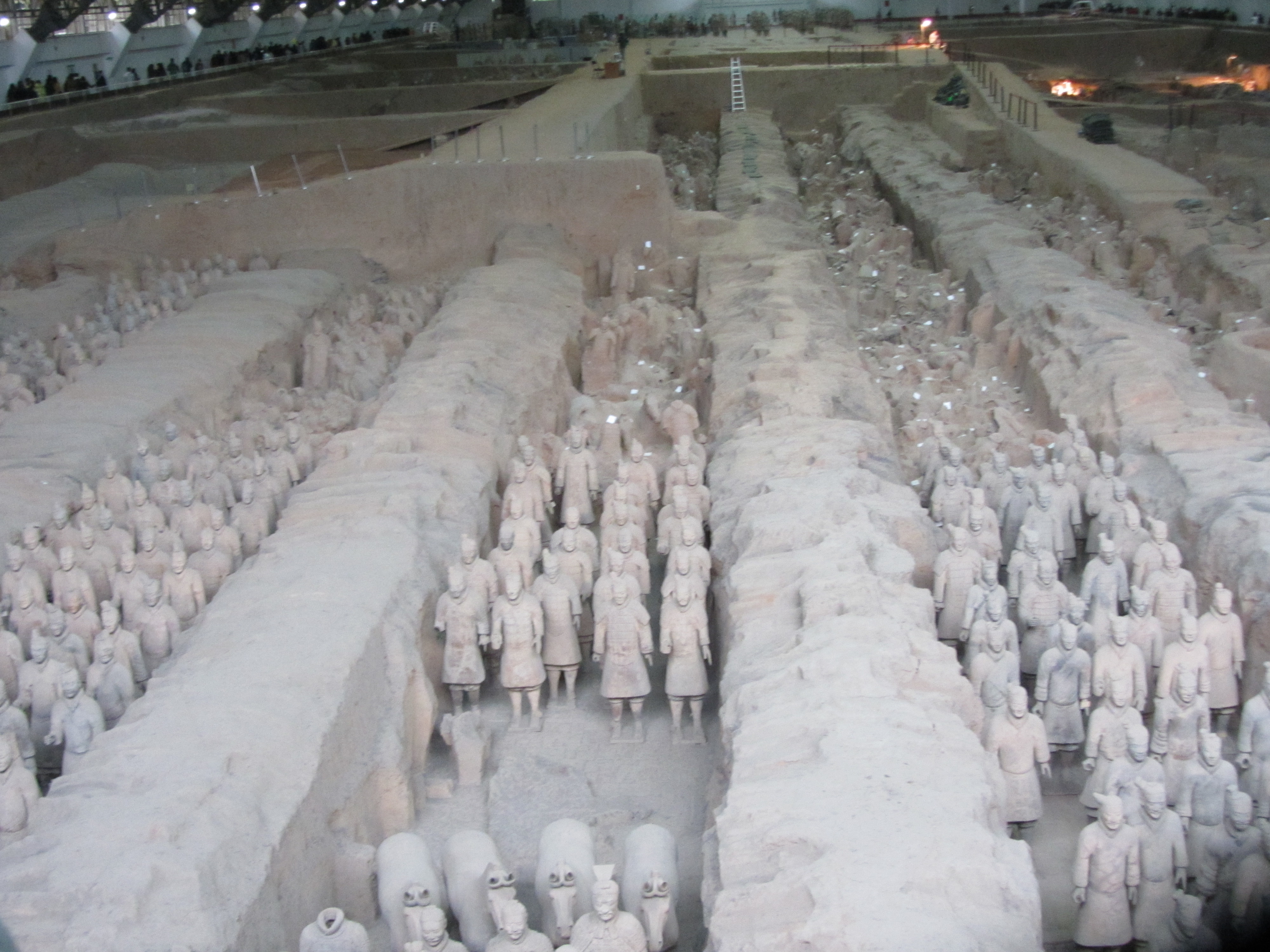
Terracotta Warriors

American celebrity, Whoopi Goldberg, once uttered, “I don’t really view communism as a bad thing.”  I agree with Whoopi. Canadian-born economist, public official, and diplomat, John Kenneth Galbraith, once wrote, “Under capitalism, man exploits man. Under communism, it’s just the opposite.” Exploitation occurs in both economic systems. There are pros and cons to both economic systems and both forms of government. Neal Donald Walsh, in one of his Conversations with God books, wrote, “Your way is not the only way, it is just a way.” That quote sums up my point of view.

How Times Have Changed

A reflection on the changing world

An outhouse like my parents used

Heraclitus, a Greek philosopher, is credited for saying, “The Only Thing That Is Constant Is Change.” Now that I have had a lot of life experience, I realize how true that is. I remember my parents talking about how much the world had changed in their lifetime. They talked about how they grew up with outhouses. That usually happened when us kids were complaining about something. We only had one washroom between seven of us, so it was likely when someone was hogging the bathroom. For those that don’t know, an outhouse was an outbuilding containing a toilet with no plumbing. Essentially it had a wooden platform with a hole in it so the human waste would fall into a hole in the ground. Mom and Dad both expressed how much they hated having to go to an outhouse, especially at night in the winter.

Bucket and dipper, like the one I remember using at my grandparents

My parents also talked about having to haul water in from the well to fill the bucket that they drank out of using a dipper—a ladle or scoop. I remember visiting my grandparents and drinking water from a dipper. My grandparents eventually got plumbing and running water installed. My parents also spoke of oil lamps used for lighting which was replaced by electric lights. What a major change those were. I can only imagine how excited that must have been for my grandparents.

My parents also talked about riding on horse and buggies and walking to their school—usually uphill both ways—to a one room, multi-grade school. Now kids are picked up with school busses and taken to schools with multiple rooms, one room per grade. My mom is still alive so she saw travel with horse and buggy to nowadays where automobiles, planes and trains are used.

I could go on and on. Even in my lifetime, I’ve witnessed a lot of change. I remember phone numbers of two digits. I remember having to get the phone operator to connect me to whomever I was calling. In those days, they were party lines, so your neighbours could listen in on your conversations. Then we had dial phones with 7 digits. I remember how frustrating that was to get to the 6 or 7th digit and your finger slips. That meant you had to start all over. Then there was touch tone. Now you just press a button and the phone dials the number for you.

A Gestetner like I once used

A Spirit Duplicator like I used to use

When I started teaching, we used Gestetners. These machines used a stencil, a thin sheet of wax-coated paper which when written or typed upon creating a broken line in the stencil. Ink was forced through the stencil by an ink roller to make copies. I remember my hands and sometimes clothes getting ink on them. It was a messy job. We also used Spirit Duplicators where a master, either created or purchased, containing an alcohol soluble dye-carbon which was transferred to the paper. The alcohol had a distinct smell which is why they were called spirit—the alcohol—machines. Before photocopies, that is how us teachers cranked out our handouts and worksheets. In the very early 1980s, our school got its first photocopiers. We were so excited as a staff. When I left teaching, I used computers with smartboards. Many assignments I sent out electronically and most assignments that students handed in were handed in via email. When I think about it, I’ve seen a lot of change.

My son is planning to backpack in Europe for several weeks this spring where he will spend some time with his “Irish” sister. My daughter is planning to visit her sister in the summer of 2019. These plans of travelling to Europe got me thinking about 21st century travel verses 20th century travel, comparing it to when I first backpacked in Europe in 1986, over 30 years ago.

When I backpacked in Europe, the only way to communicate with home was telephone. In those days, you bought a phone card which gave you so many minutes to call back to Canada. It was about a week after I left that I called home. I didn’t consider the time difference enough because my mom said it is 6 am in the morning when I called. She said she did not care, because she was so happy to hear my voice. My mother still remarks, even today, that for all she knew I was “dead in a ditch somewhere.”

Even when my wife and I backpacked in Europe in 1989, the only way to connect with home was phone. We each called our parents once and asked whichever parent we talked to, to call the other’s parents so that they would know we were fine. It seems archaic when you compare to nowadays.

In this 21st century, in my opinion, I think we are too connected with home. We can phone, text, WhatsApp, email, send a tweet, send an Instagram, Facetime or Skype, and numerous other modalities to connect with people back home. I must admit though, now that I have a daughter living in Ireland, I am very grateful to be able to see her face using Facetime or Skype. On the negative side, some people spend more time posting pictures of their trip, or connecting with people on social media, instead of enjoying a new culture. Like everything, there are pros and cons.

Navigating around a foreign country is another big change. In the 80s, we used maps and relied on kind foreigners to guide us. Maps were the only way we had available to find our way through cities. My wife and I had one of our worst arguments over which direction to get to the museum where the statue of David in Florence, Italy was. I humbly admit that it was I who couldn’t read a map properly. I sometimes have to wonder how I made my way through multiple countries and cities in Europe using maps when I travelled alone in 1986. My middle daughter often comments, “I don’t get how you navigated using just maps.”

My son, just the other day, was talking about travel phone plans and whether or not to get a SIM card in Europe as he depended on his phone for navigation. I must admit, an app that shows you where you are, what direction you are walking verses which direction you need to go is pretty handy. I likely would not have been lost as much had we had smartphones, apps and GPS back in the 80s.

In 1989, you didn’t book ahead of time for accommodations. There was no such thing as Vacation Rental by Owner (VRBOs) and Airbnbs. There were hotels and Bed & Breakfasts. In those days, you when you arrived in a foreign city, you went to the nearest information centre and they found you a room or hotel. Now the options are almost limitless—Airbnbs, VRBOs, Hostels, Couchsurfing, house sitting, homestays, Guesthouses, pet sitting, and who knows what else—and these are all arranged and booked months in advance using the Internet. This is the way my wife and I travelled the last two times we visited Europe.

Even travelling around a country or continent has changed drastically. In the 1980s, you could purchase a Eurorail pass which enabled you to travel in any participating European country by just showing the conductor your pass. I understand these passes are still available but they are not as handy or economically advantageous as they once were. Back then, you went to the train station, studied the schedule to determine when you needed to catch your train. Today, you can book a spot on the train—very advisable—as well as determine when your train arrives or leaves using an Internet site. Much easier these days. You can also purchase your tickets using the Internet instead of physically going to the train station.

You definitely have to be more prepared to travel nowadays. When I travelled Europe in 1986, I “flew by the seat of my pants.” In other words, I didn’t plan too much. I went to the train station, decided when and where I would go next, and when I arrived in a new destination, I  relied on the tourist information booths to find me a place to stay, which was usually a youth hostel. I would not advise anyone to do that today.

As I’ve already stated, Heraclitus is credited for saying, “The Only Thing That Is Constant Is Change.” Actually, I would say there are two things; taxes and change. I will admit, I don’t like change much especially when it is sprung on me. Having said that, we have no choice but to embrace changes as they happen because they’re going to happen, like it or not.

Could Travelling Abroad Make a Better World?

A Commentary on the benefits of traveling

Being in Europe was wonderful, not only because of its beauty, welcoming people, and its rich history, but because for one entire month my wife and I had a reprieve from hearing about American politics. Our Canadian news media reports constantly on American politics as well as our own. Now that we are back in Canada, we are once again barraged by the political troubles, attacks on allies, outrageous tweets and bizarre behavior of the current resident of the White House. Before leaving for Europe, Trump after the G7 meeting attacked our Prime Minister and country, and even after a month away, he continues to attack Canada. At first, I will admit, I watched the news because I was curious as to what inappropriate tweet Trump would send out that day or to see what unpresidental behavior he exhibited. Now, like most Canadians I’ve talked to, I’m just tired of hearing about Trump and American politics.

Because of Trump, Canadians are more and more developing a revulsion for Americans. Most people I’ve talked to since returning from Europe are expressing resentment towards Americans. I must admit, I was one of them. I, like most Canadians, was beginning to believe that American’s were a racist, self-centred, hostile people. Perhaps such American stereotypes (according to Wikipedia) as lack of intelligence, lack of cultural awareness, being racist and arrogant are true.

The Star, a newspaper from Toronto, reported in June,

“A deep national revulsion [in Canada] toward President Donald Trump has sent Canadians’ opinions of the United States plummeting to a level of antipathy never before seen in 35 years…A major Pew Research survey…found that just 43 per cent of Canadians hold a favourable view of the U.S…

That is a steep decline since…the final year of Democrat Barack Obama’s presidency, when Pew found 65 per cent of Canadians favourably disposed to the U.S. And it is lower than even the low point of the unpopular presidency of Republican George W. Bush, when 55 per cent of Canadians were favourable.”

It appears Canadians are developing a distaste for Americans. I was one of them until my European trip. Why would going to Europe change that, you ask? While we were in Ireland, we met some wonderful Americans.

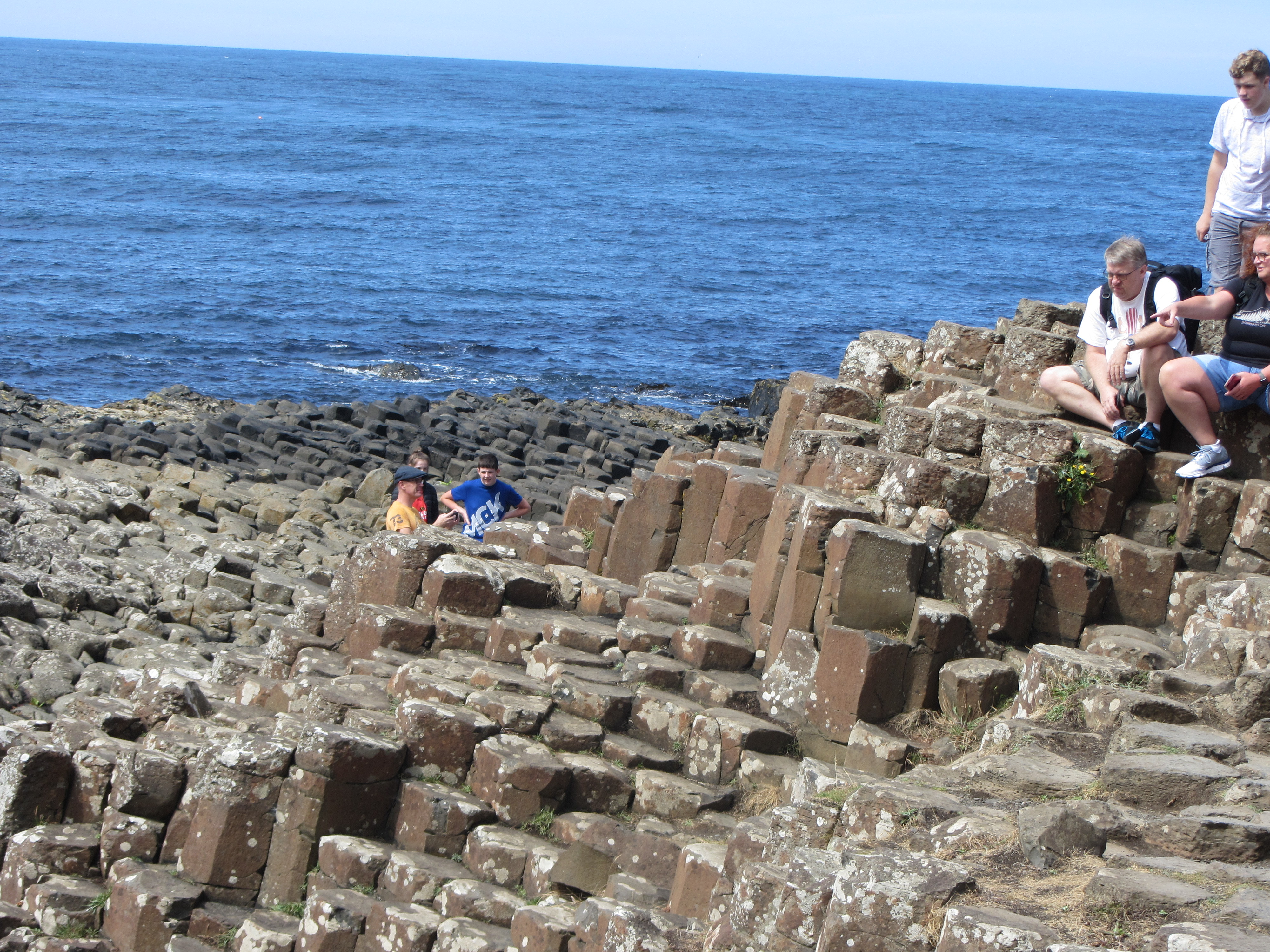
Giant’s Causeway, N. Ireland

While in Ireland, besides spending time with our daughter, we took an eleven-day tour of the country. On that tour with us were three American couples. One couple was from Philadelphia, one from New Jersey and another couple from North Carolina. The first words out of the wonderful man from Philadelphia was, “we are not discussing American politics.” That won us over. During the entire 11 days, little to no discussion was had about Trump and his politics. My wife and I were especially drawn to the couple from Philadelphia as they were so sweet and personable, and the fact that they were both almost 80 “blew our minds.” They did not look or act that age. The other two couples were equally as friendly and in fact, the lady from New Jersey purposely kept her eye out for gluten free food once she discovered I was celiac. Her husband even bought me an Irish whiskey taste experience. Our time with our six American friends was wonderful, and it confirmed for me that not all Americans are racist, self-absorbed or hostile.

We often ran into Americans travelling in Ireland. One evening while staying in an Irish town, we met a couple from the U.S. in a whiskey bar. I don’t recall which state they were from. They were very friendly and we ended up talking to them for a long time. Once again, Trump did not enter the conversation. It was almost as if Americans were too embarrassed to talk about their president.

On another occasion, while exiting the place where we had dinner, a couple asked us if the food in the establishment was good. During our discussion, like we do whenever we travel abroad, we asked them where they were from. They told us they were from New York. Like all the other Americans we encountered, we found them pleasant and easy to talk to.

While taking a bus tour out of Dublin, I sat beside a fellow from Florida. We struck up a conversation and he told me he was visiting Ireland because his ancestors were from there.  As the day progressed, he ended up having lunch with us. The only thing political that he mentioned was that their country’s health care system was a mess. I couldn’t refute what he had said since the U. S. is one of the only developed countries in the world that doesn’t offer universal health care to its citizens.

Now I had to wonder why the Americans we met were so friendly and happy.  None that we met seemed racist or hostile, or self-absorbed or arrogant for that matter. I pondered this for a while and the only logical conclusion I can entertain is that the Americans we were encountering in Europe are travellers who have experienced other cultures and hence are not as racist or self-absorbed or arrogant since they have seen how other people in other parts of the world live. I’ve always believed that people who travel and experience other cultures are much more open minded and tolerant. People who only know their own “little world” and who have never experienced another culture are narrow minded, intolerant and tend to stereotype races in my experience.  I’ve met some here in Canada.

Edinburgh, Scotland

Ironically, while my wife, daughter and I were in Edinburgh, Scotland, while having a cappuccino in a coffee shop waiting for my daughter and wife to return, I met two lovely American ladies. In conversation, I learned they were mother and daughter from South Carolina—assuming my memory is correct. The mother of the pair was a travel agent who was with a group in Europe. We both discussed how much we loved Ireland and Scotland. Although we didn’t talk politics, I did mention that I believed the world would be a better place if more people travelled and experienced other cultures. She immediately got excited and said, “that is how I feel.” She agreed too many people in the U.S. are naïve about other cultures.

The article titled, Off The Grid: Why Americans Don’t Travel Abroad, supports my thinking. This article says, there is a popular belief in the United States that Americans are the second most well-traveled people after Finns. However, the article disproves that belief as it says,

“…only 36 percent of Americans hold a valid passport, according to the State Department, compared to 60 percent of passport-holding Canadians and 75 percent for Brits and Aussies. That means almost 70 percent of us [Americans] are unqualified for international travel. And in actuality, only one in five Americans travels abroad with regularity, according to a recent survey.”

It all makes sense to me now. The Americans we met are worldly and consequently tolerant and non-racist, unlike those who have never left their country. Of the three couples we toured with, all have travelled abroad—obviously, they were in Ireland with us—and all of them had been to Canada. One of the couples even lived and worked in Canada for six years.

Ideas for Leaders, is a website that analyzes research says, travelling abroad builds trust and tolerance. It goes on to say,

“The idea that travel can be important for personal development and ‘growth’ is well established. Spending time overseas can ‘broaden the mind’ — not only by increasing knowledge but also by reducing xenophobia [racism]. The maximum benefits, however, might depend on breadth as well as depth of experience. Recent empirical research finds a causal link between the ability to trust and accept others and exposure to a diverse range of ‘out groups’.”

Perhaps the typical American stereotypes like lacking cultural awareness, being racist [xenophobic] and having arrogance exist because they are true. The statistic that only 36% of Americans have passports could explain this. Those 36% likely are the friendly, open-minded Americans we encountered. The other 64% are the xenophobic, self-absorbed, hostile Americans because of their ignorance of other cultures. Now, I am not naïve enough to believe that every single person in the 64% are this way, but I would be willing to bet that the majority are.

Maybe, just maybe, the U.S. would be a better place and would not have elected a president who exhibits xenophobic tendencies, is self-absorbed, and hostile—certainly is towards America’s allies—had more Americans held passports and travelled aboard, experiencing new cultures and learning that there is so much more to the world than just America.

I will say that my numerous encounters with Americans in Europe has confirmed for me that not all Americans are stereotypical. Thank God for that.