I’m Scratching My Head

For a long time, I (#blogger #blog #somseason #YA #authors) have thought our Canadian governments are “losing it;” acting in strange and even draconian ways. Our Prime Minister, Mark Carney, was elected on the basis he would stand up to President Donald Trump’s tariffs, but then he meets with Trump and caves, as the article, Canada’s Carney talked tough on Trump – now some say he’s …, says. Since their initial meeting, Carney ‘disappointed’ as Trump increases tariffs on Canada to 35%.. Let’s not forget that the Liberals aren’t planning to table a budget this year. I guess Canadians have been conned. Why would Canadians think former Prime Minister Trudeau’s advisor would save us from Trump? I’m scratching my head—for those who don’t know, the phrase “scratching my head” means to have difficulty understanding something.

Let’s talk about the insane behaviour of some of our provincial governments. Nova Scotia recently told its citizens that they were no longer allowed to walk in the forests because it could cause a forest fire, facing a $25000 fine if they do so. This is a video with the announcement.

The Globe and Mail says, The people opposing Nova Scotia’s ban on accessing the woods don’t understand our culture. I scratched my head at that one. This has caused huge public outcry, with some claiming this is the beginning of climate lockdowns, as the article ‘CLIMATE LOCKDOWN’: Nova Scotia Bans Citizens From Going into the Woods suggests. If you’re not sure what I’m talking about, read the article, The Push for Climate Lockdowns – Is This the Next Step?

The New Brunswick government followed suit, as the article, ‘Get out of the woods,’ NB premier asks as wildfires threaten province. The premier used a different excuse for her government’s decision. She says (paraphrased) if you break a leg, they won’t be helped by emergency rescue personnel because they’re too busy with forest fires. Yes, that’s right. That is what the premier said. Listen to her address in the article. I’m scratching my head once again.

Next was Newfoundland. Their premier says, ‘We mean business’: N.L. hikes fees and prison time for violating province wide fire ban. The province has banned all off-road vehicles, as the advisory Public Advisory: Province-Wide Restriction on all Off-Road Vehicles says. My take? This all appears to be government rhetoric to blame Climate Change to justify Climate Lockdowns. The opinion peace, Canada’s Creeping Authoritarianism: Forest Bans and the Shadow of Control, argues:

Across Canada, a new storm is gathering — and it has nothing to do with weather. Provincial governments are rolling out sweeping bans on outdoor activities under the banner of “keeping forests safe.” Hiking, camping, even stepping foot on certain public lands is suddenly off-limits. The official story? Fire prevention. The unofficial reality? Control.

I have to agree. This is about removing more and more rights under the guise of keeping us safe. Let’s face it, banning walks in the forest doesn’t start fires. There are some who think governments are starting these fires, paying arsonists to start fires. That may or may not be true, but many forest fires are started by arsonists, as the article, Saskatchewan volunteer firefighter who set 30 fires in a month and

Quebec man who blamed 2023 wildfires on government pleads guilty. Why are people starting forest fires? Are governments ‘forest banning’ to prevent people from catching an arsonist? That may sound crazy, but some people have asked that question. The article, Claims Canadian wildfires are caused by arson and not climate change are misleading, tries to discredit the idea of arsonists starting fires, with statements like, “Human caused does not necessarily mean arson.” Instead it is attempting to manipulate so you believe that Climate Change is to blame, with statements like, “Climate change has led to areas, like in parts of Northern Canada, experiencing hot and dry conditions earlier than expected…”

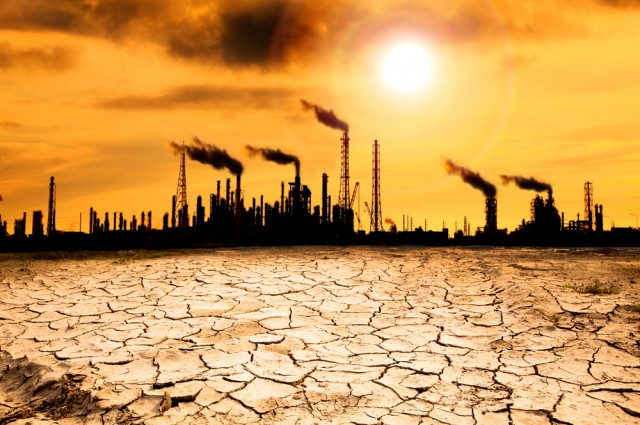
This is not just happening in Canada. In the United Kingdom, All UK households told to sleep downstairs…for key reason. What’s the reason you ask? The article says, “Every household across the UK is being advised to relocate their sleeping arrangements downstairs starting… This guidance follows warnings of scorching temperatures reaching 33C…” Now I have four things to say about this story. First, more and more I am seeing governments telling us what we can and can’t do. Now they are telling people where to sleep. What is next? Are governments going to tell us what time to go to bed? Now you may say, they are just concerned about us. I call bullshit. This is about control. Second, am I to assume citizens of the UK are not intelligent enough to know if it is too hot to sleep upstairs, that they wouldn’t know to sleep downstairs? Do governments think we are stupid? Thirdly, when I was a kid, 33 degrees was just a really hot summer day and there were never warnings about scorching temperatures. Sounds like fear mongering to me. This leads to my forth point, which is that all this is government rhetoric to justify Climate Change and Climate Lockdowns.

Continuing with the UK, people are being urged not to drink popular drink this weekend during weekend. Why you ask? The article says, “As the UK is set to bask in a sizzling heatwave this weekend, Brits are being warned against consuming a popular beverage due to the soaring temperatures.” I’m scratching my head too. According to Gov.UK, water and diluted squash are recommended for staying hydrated, while fruit juice and sugary fizzy drinks should be consumed with caution due to their high sugar content, which can worsen dehydration. These are the same people who told us Covid “vaccines” were safe. Do some research on that one.

Now this story really had me ‘scratching my head.’ The government of Canada has banned water craft, except canoes in all Yoho National Park lakes. The bulletin Restricted activity: Fishing and watercraft use in all areas in Yoho National Park states:

Prohibited watercraft include but are not limited to: kayaks, paddleboards, canoes, inflatable boats, or any other vessel. Fishing and the use of waders and wading boots is prohibited in all waters.
The following exceptions apply: Use of rental canoes at Emerald Lake.

Why you ask? The article says “to prevent the spread of whirling disease. This parasitic disease affects some fish species but does not present any health risks for people or other animals.”

Yup, you can’t make this shit up.  I have just one question. How do non-rental canoes spread whirling disease but rental canoes at Emerald Lake do not? Please enlighten me. This is about control once again. Governments are slowly removing our rights to control us.

Kananaskis consists of nine provincial parks and over 50 recreation, wilderness and natural areas where outdoor adventures can occur and its wildlife habitat is protected.  Now all of Kananaskis Country is under a bear warning, some trails closed. My son and I have hiked in Kananaskis Country many times and never before has the entire area been issued a “bear warning.” Yes, the odd trail has been closed, but never more than that. This sounds like fear mongering to me. Again, is this another way to implement Climate Lockdowns. In 15 years of hiking in mountainous back country, we’ve never encountered a bear. We hiked knowing bears are around. We just carried bear spray, and made lots of noise.

I’m going to end with this story, because I am still scratching my head. The article, Speaking English Might Spread Coronavirus Quicker Than Other Languages is baffling. The article, Why Speaking English May Spread More Coronavirus Than Some Other Languages says, “New research suggests that English speakers put more droplets into the air when they talk, which may make them more likely to spread COVID-19.” I call bullshit on that. More rhetoric. This is merely governments trying to distract us from the real story. Do some research on masks and the spread of Covid.

All of this slow removal of our basic rights is bullying (#bullying, #antibullying). Our governments are acting as dictators. Abraham Lincoln during his Gettysburg Address said, “Government of the people, by the people, for the people, shall not perish from the Earth.” That seems to have reversed. Governments are not for the people; they seem to be against the people. Does that mean if something doesn’t change regarding our governments, we just may perish from the Earth?


Avatar’s Lessons

My wife and I, along with our son, recently went to the newly released Avatar sequel; Avatar: The Way of Water. There’s been lots of hype about the movie since the last Avatar movie was released in 2009. It’s a story of the Sully family (Jake, Neytiri, and their children) who get displaced and are forced to flee to another Indigenous tribe’s—the Metkayina—water world. I won’t give any more of the plot away than that.

It’s been over 10 years since my wife and I saw the first Avatar, so we watched it again. Avatar 1 takes place on the alien world of Pandora where the humanoid indigenous Na’vi live, a primitive, yet highly evolved people. The planet’s environment is poisonous for humans and to the Na’vi hybrids or Avatars. These Avatars link to human minds to allow for free movement on Pandora. Former Marine, Jake Sully, is paralyzed so becomes mobile again through his Avatar.

For me ((#blogger #blog #somseason #YA #authors) the most infuriating part of the movie is the corporate CEO’s intention to drive off the Na’vi in order to mine a precious material. In exchange for the spinal surgery to fix his legs, Jake gathers knowledge of the Na’vi way of life for a military unit commanded by an arrogant, egotistical Colonel. While bonding with the native tribe, Jake falls in love with Neytiri, one of the clan’s females. The Colonel uses ruthless bullying (#bullying, #antibullying) tactics to remove the Na’vi which forces Jake to take a stand and he fights back. The Colonel ends up destroying the clan’s village tree, and much of the story centers around the ‘Tree of Souls,’ the clan’s most sacred site, which is also destroyed by the Colonel.

Watching the two movies got me thinking about the indigenous people on our planet. Both movies have a similar plot; corporation gets rich taking valuable resources and uses any force necessary to do so. It is obvious the corporate world cares only about money and couldn’t care less about the indigenous on Pandora. Isn’t that what happened to our Indigenous peoples? I’m not just referring to North America’s (NA) Indigenous peoples, but also those found in South America, Australia, and Africa as well. I will focus on Canada’s Indigenous since I am most familiar with them.

According to National Geographic’s, The untold story of the Hudson’s Bay Company, in October 1666, King Charles II of England was told of the “great store of beaver” discovered in NA. That led to settlers setting up on James Bay’s southern shores where they traded with the Cree, but by the mid-1800s, attitudes toward Indigenous Peoples grew more contemptuous when the Hudson Bay Company (HBC) officials began to rely less on Indigenous knowledge. In 1822, George Simpson, a Scottish explorer and colonial governor of the HBC wrote that Indigenous peoples “must be ruled with a rod of iron, to bring and to keep them in a proper state of subordination.” The motto for the corporate world seems to be: If the Indigenous aren’t cooperative, then use force.

It struck me in the first Avatar movie that the indigenous people were referred to as “blue monkeys,” and “hostiles.” Our North America indigenous people were often referred to as “savages” and “barbarians.”

The Na’vi’s most sacred place the“Tree of Souls” is where they could access their ancestors. NA Indigenous people believe nature is sacred. A Native American Elder once said, “Honor the sacred. Honor the earth, our mother. Honor the elders. Honor all with whom we share the earth: four-leggeds, two-leggeds, winged ones, swimmers, crawlers, plant, and rock people. Walk in balance and beauty.” It’s difficult to summarize Native American spirituality as there are hundreds of tribes, each unique, but there seems to be a strong sense of reverence for ancestors and nature in Native American culture. 

In another scene, Scully tells the CEO about how the Na’vi talk about ‘flows of energy, that energy flows through everything, and energy is only borrowed.’ When the CEO is told about the ‘Tree of Souls’ and the scientists urge him to leave the tree alone because the root system connects all trees, the CEO laughs and responds saying, “Those fly bitten savages. They’re just trees.” To the Colonel’s pleasure, the military is instructed to go in with force to move out the Na’vi. Soldiers just follow orders, showing no compassion or care for the Na’vi, except one pilot who says “I didn’t sign up for this shit,” when she realized a slaughter was happening.

Native Americans operate under the belief that both the living and nonliving have an individual spirit that is part of the greater soul of the universe.  Chief Big Thunder expresses it best when he said, “The Great Spirit is in all things. He is in the air we breathe. The Great Spirit is our father, but the earth is our mother. She nourishes us. That which we put into the ground she returns to us.” It’s why the indigenous people believed the land was never theirs, as Chief Seattle said, “The earth does not belong to man; man belongs to the earth.” It’s also why Crazy Horse, a Lakota war leader who said, “One does not sell the land people walk on.” An ancient native American proverb says, “We don’t inherit the Earth from our Ancestors; we borrow it from our Children.” Indigenous people had no sense of ownership, everything was shared.

I’m presently reading the book Braiding Sweetgrass, by Robin Wall Kimmerer. She is an indigenous woman belonging to the Potawatomi Nation, and is a distinguished professor of Environmental Sciences at the State University of New York College of Environmental Science and Forestry. She tells a story of teaching a class when she asked the hypothetical question: What do you suppose would happen if people believed this crazy notion that the Earth loved them back? The class erupted and wanted to discuss it. One student summed it up saying, “You wouldn’t harm what gives you love” (page 124). Would our planet have the environmental crises it has today if that attitude had been adopted?

Kimmerer describes her early university experience saying,

The first plant science class was a disaster. I barely scraped by with a C and could not muster much enthusiasm for memorizing…There were times I wanted to quit, but the more I learned, the more fascinated I became…mesmerized by plant ecology, evolution, taxonomy, physiology, soils and fungi…yet there was always something tapping on my shoulder…My natural inclination was to see relationships, to seek the threads that connect the world, to join instead of divide. But science is rigorous in separating the observer from the observed, and the observed from the observer. Why two flowers are beautiful together would violate the division necessary for objectivity…I scarcely doubted the primacy of scientific thought. Following the path of science trained me to separate, to distinguish perception from physical reality, to atomize complexity into its smallest components, to honor the chain of evidence and logic, to discern one thing from another, to savor the pleasure of precision… (page 42)

Science compartmentalizes and seldom looks at the big picture, or the interconnectedness of things.  Science doesn’t acknowledge what American author, Amy Leigh Mercree says, “Interconnection permeates the entire universe. We are all one.”

There is a scene in the first Avatar where Neytiri is sad after she killed the animals who were attacking Sully’s Avatar, and she even apologized to them. According to the article, What Is the Relationship Between Indigenous Peoples and Animals, many Indigenous Peoples believe that: “the Animal People have spirits and enter the human world to give their bodies to supply men with food, fur and other materials. After their flesh is used the animals return home, put on new flesh and re-enter the human world whenever they choose.” Indigenous people respect the animal world and never took more than what they needed.

Britannica’s article: Which Animal Is the Smartest? says, “Strictly speaking, humans are the smartest animals on Earth—at least according to human standards.” That is what we’re taught in our Western World, and I grew up believing that, but Kimmerer writes in her book,

In the Western tradition there is a recognized hierarchy of beings, with, of course, the human being on top—the pinnacle of evolution, the darling of creation—and the plants on the bottom. But in the Native ways of knowing, human people are often referred to as ‘the younger brothers of creation.’ We say the humans have the least experience with how to live and thus the most to learn—we must look to our teachers among the other species for guidance. Their wisdom is apparent in the way that they live. They teach us by example. They’ve been on the earth far longer than we’ve been and have had the time to figure things out. They [plants] live both above and below ground, joining Skyworld to the earth. Plants know how to make food and medicine from light and water, and then give it away (page 9).

We humans seem to think we have it all figured out, that animals and plants are inferior, yet the Indigenous culture teaches us to learn from nature; to learn from the plants and animals because of their wisdom . How much better off would we be if we had liberated ourselves from our arrogant Western ideals and learned from the Indigenous? That is one of Avatar’s lessons.

Is Nature Fighting Back?

A commentary about the environmental abuse

National Geographic’s recent article, To prevent pandemics, stop disrespecting nature, states:

Some people are viewing the pandemic as nature fighting back against all that has been and continues to be done to it. But it is human behavior and disrespect for nature that have been the cause. Furthermore, as we cope with the pandemic, climate change is marching ahead. It’s causing strong ripples of change in all ecosystems and probably tipping the balance in favor of pathogens currently unknown to us. The wise way forward is to invest in conservation and science, and to embrace nature and the glorious variety of life with which we share this planet. A healthy future for humanity and a healthy biodiverse planet go hand in hand.

Perhaps, science is catching up with Indigenous spiritual teachings since Indigenous people have been telling us since first contact to respect the earth. For example, Big Thunder (Bedagi) Wabanaki, Algonquin is credited with the quote: “The Great Spirit is in all things. He is in the air we breathe. The Great Spirit is our Father, but the Earth is our Mother. She nourishes us. That which we put into the ground she returns to us.” There is an ancient Indian (Indigenous) proverb that says, “Treat the earth well: it was not given to you by your parents, it was loaned to you by your children. We do not inherit the Earth from our Ancestors, we borrow it from our Children.” There is a Cree prophecy which says, “When all the trees have been cut down, when all the animals have been hunted, when all the waters are polluted, when all the air is unsafe to breathe, only then will you discover you cannot eat money.” On the Assembly of First Nations website it says,

Indigenous peoples are caretakers of Mother Earth and realize and respect her gifts of water, air and fire. First Nations peoples’ have a special relationship with the earth and all living things in it. This relationship is based on a profound spiritual connection to Mother Earth that guided indigenous peoples to practice reverence, humility and reciprocity. It is also based on the subsistence needs and values extending back thousands of years.

Indigenous people have always believed the earth to be a living organism. Now even some scientists are saying the earth is alive. It is called the Gaia hypothesis, first articulated by James Lovelock and Lynn Margulis in the 1970s, and argues that Earth’s physical and biological processes are inextricably connected to form a self-regulating, essentially sentient system. Check it out in the Astrobiology Magazine.

In another National Geographic article titled, Traditional indigenous beliefs are a powerful tool for understanding the pandemic, it states:

While this pandemic is presenting an opportunity to find meaningful ways to connect, it’s also a wake-up call with important lessons for the future. “If we don’t learn from now,” warns Mindahi Bastida Muñoz, general coordinator of the Otomi-Toltec Regional Council in Mexico, “then another thing, more powerful, is going to come.

I’ve  (#blog, #blogger, #YA, #authors, #somseason) always argued that this pandemic is a wakeup call for humanity. To borrow a phrase from singer Jidenna’s song, ‘Bully of the Earth,’ we humans cannot continue to bully the earth. Let’s call it earth bullying (#antibullying, #bullying), and by that, I mean, exploiting and abusing the planet by polluting the air, ignoring climate change, pouring plastics into the ocean, deforestation, and pouring tons of chemicals (herbicides, pesticides, etc.) into our environment. If the Gaia hypothesis is true, and the planet is a living organism, then we humans are killing Mother Earth.

Yet, we humans continue with the earth bullying. The New York Times has an article, The Trump Administration Is Reversing 100 Environmental Rules, listing all the environmental protection rules that have been or are in the process of being eliminated. CBC News’ article, Alberta regulator’s move to suspend oilpatch monitoring sets dangerous precedent, reports that oil companies say the environmental suspensions are necessary to maintain COVID-19 guidelines. In essence, the oil companies are claiming it is too dangerous to monitor the environment, yet it is not too dangerous for hair dressers to cut hair. The argument is weak to say the least, yet our provincial government fell for it. CBC News reports in their article, Alberta rescinds decades-old policy that banned open-pit coal mines in Rockies and Foothills, says the provincial government is cancelling environmental protections that have been in place since the 1970s,  making it easier for open-pit coal mining in some of the province’s most ecologically sensitive areas. This move has nothing to do with Covid. This is about corporate greed, and governments enabling companies to do so at the expense of the planet. It is shameful!

Back in 2018, the Guardian had an article, The Earth is in a death spiral. It will take radical action to save us, claiming “climate breakdown could be rapid and unpredictable. We can no longer tinker around the edges and hope minor changes will avert collapse.” There is no doubt for me that continued abuse of the earth will have dire consequences for humanity. National Geographic’s article, Ocean Threats, has a long list of threats to our oceans because of human activities. The Guardian has an article, Humans just 0.01% of all life but have destroyed 83% of wild mammals – study, essentially arguing that humans are the cause of a mass extinction. I’ve seen articles about bird populations declining, and bee populations being endangered. It is all alarming!

Having said that, CBS News’ article, Before-and-after photos show dramatic decline in air pollution around the world during coronavirus lockdown, is eye opening. The earth, whether a living organism or not, has shown an amazing ability to heal itself when allowed to.

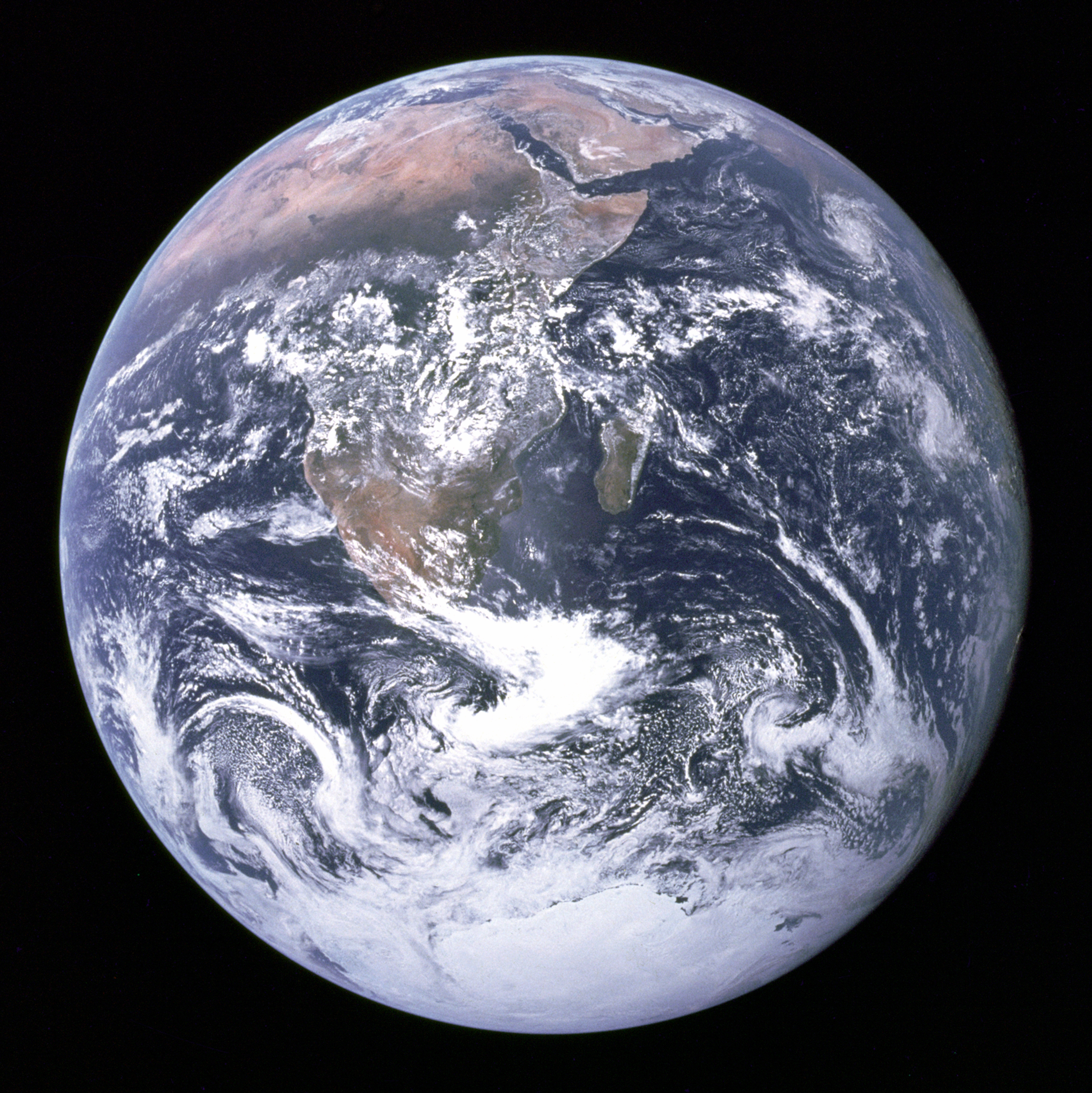
A NASA photo

I’ve always argued in my posts that this COVID pandemic is a tool of some higher power—God, Allah, Yahweh, Universe, Source, or whatever you want to call it—bringing about transformation on our planet, creating a simpler, kinder, and more caring world, and that includes the earth. Maybe it is a reminder to humanity to respect and honour the earth instead of being a bully of the earth. The Indigenous people have always said that. If only we of European decent had listened to the Indigenous people instead of bullying them into submission, before bullying the earth.

The Lungs of the Earth are in Trouble

A commentary on the state of our planet

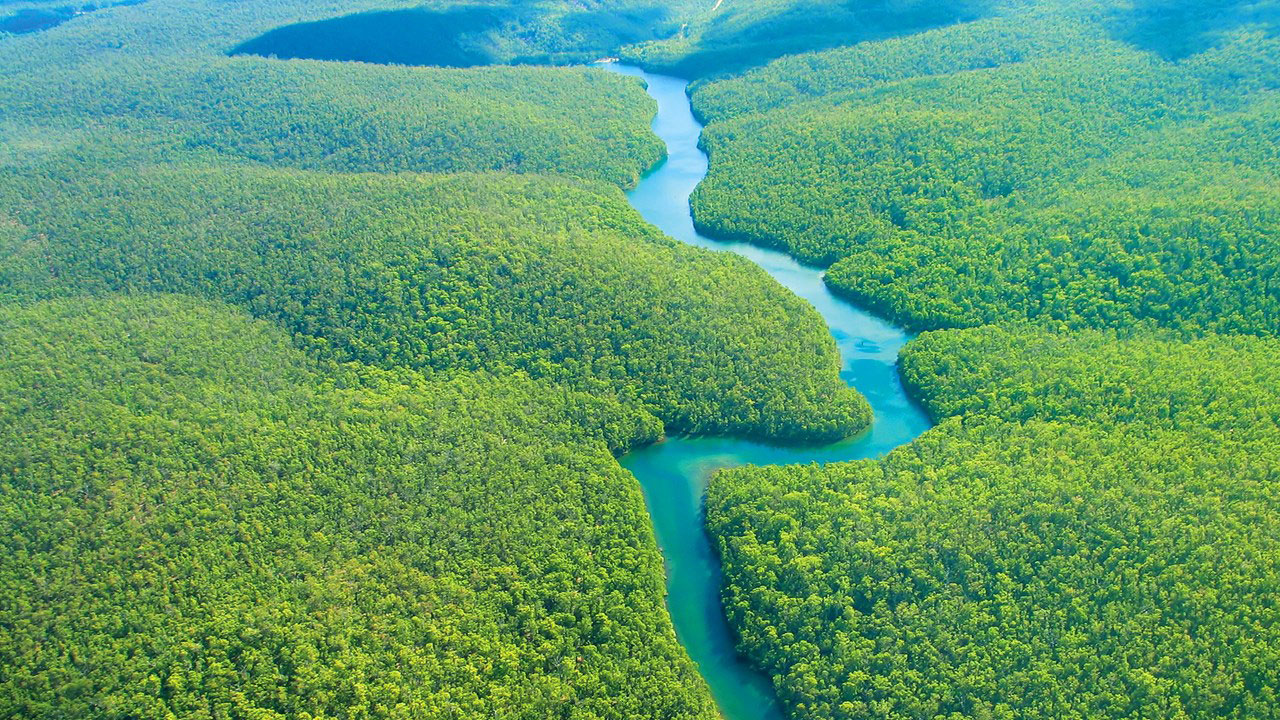
For the past week or so, I’ve seen several posts and news reports about the Amazon Forest burning. This is terrible, and  if you’re not alarmed, you should be. Why? According to National Geographic’s Amazon Facts, the Amazon Forest is often referred to as ‘the lungs of the Earth’ because of its rich vegetation that takes carbon dioxide (CO2) out of the air, and releases oxygen back in it. More than 20% of the world’s oxygen is produced by the Amazon, and some articles say up to 30%.

Amazon Rain Forest

Here are some facts about the Amazon, according to National Geographic. The Amazon is the world’s largest tropical rainforest, covering over 5.5 million square kilometres. It is so big, that the UK and Ireland would fit into it 17 times! It has an incredibly rich ecosystem – there are around 40,000 plant species, 1,300 bird species, 3,000 types of fish, 430 mammals and 2.5 million different insects. The Amazon is home to a whole host of fascinating – and deadly – creatures, including electric eels, flesh eating piranhas, poison dart frogs, jaguars, and some seriously venomous snakes.

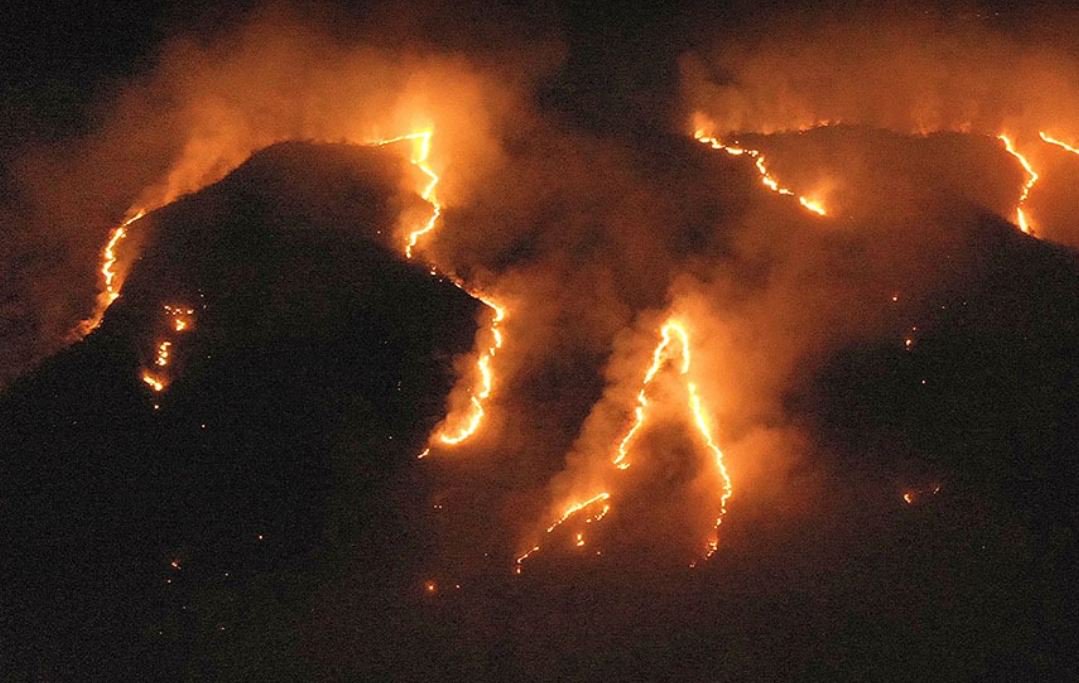
Since the beginning of 2019, Brazil’s National Institute for Space Research (INPE) has reported 72,843 fires in the country, with more than half of these being seen in the Amazon region. This means more than one-and-a-half soccer fields of Amazon rainforest is being destroyed every minute of every day. An 80% increase in deforestation has occurred so far this year compared to last year, according to the institute. That is alarming to say the least.

So why is the rainforest burning? According to the CNN article, Here’s what we know about the fires in the Amazon rainforest, farmers and cattle ranchers have long used fire to clear land and make it ready for use, so they are likely behind the unusually large number fires burning in the Amazon today. This year’s fires fit with an established seasonal agricultural pattern, said CNN meteorologist Haley Brink. “It’s the best time to burn because the vegetation is dry. Farmers wait for the dry season and they start burning and clearing the areas so that their cattle can graze. And that’s what we’re suspecting is going on …”

Mongabay,  a nonprofit environmental science and conservation news platform, agrees saying 65-70% of the deforestation in the Amazon is caused by cattle ranching, 25-30 by agriculture, and 2-3% by logging.

Amazon on fire

UNILAD, a youth platform for breaking news, in its article, Brazil’s President Is Actively Trying To Destroy Amazon, claims Bolsonaro, Brazil’s controversial far-right president, appears to be sabotaging a conservation effort aiming to conserve 265 million square kilometers of the Amazon forest. Brazil’s president is not the only president putting our planet in jeopardy. National Geographic has a running list of how Trump, the current resident of the US White House, is harming the planet, all designed to increase corporate profit.

So I must ask: Is leaving a planet that is inhabitable for our children and grandchildren a priority, or is making money? Saving our planet, which is in crisis, should be the priority. Back in October of 2018, the New York Post ran a headline, Terrifying climate change warning: 12 years until we’re doomed. The headline speaks for itself. The United Nations says,

Climate Change is the defining issue of our time and we are at a defining moment. From shifting weather patterns that threaten food production, to rising sea levels that increase the risk of catastrophic flooding, the impacts of climate change are global in scope and unprecedented in scale. Without drastic action today, adapting to these impacts in the future will be more difficult and costly.

How does Climate Change relate to the Amazon Forest? The answer relates to Greenhouse Gases of which CO2 is one of the biggest ones. As the forest burns, it releases CO2 into the air, contributing to global warming. As more and more of the forest is destroyed, less and less of the CO2 is removed from our atmosphere since trees trap CO2 and release O2. Remember, as I mentioned earlier, more than 20%-maybe 30%-of the world’s oxygen is produced by the Amazon. If the Amazon Forest disappears, we will have 20% to 30% less O2 for us to breathe. That is frightening, folks!

The way I see it, the world’s biggest forest—the Amazon Forest—is being deforested so more meat can be provided for the planet since 65-70% of the deforestation in the Amazon is caused by cattle ranching. A growing trend toward veganism and vegetarianism is happening, in part because of this issue. Food Revolution Network, a site committed to healthy, ethical, and sustainable food for all reports

Veganism was a top search trend in Canada in 2017. And the preliminary draft of Canada’s new Food Guide, released in 2017 by the Canadian government, favors plant-based foods

There’s been a 600% increase in people identifying as vegans in the U.S in the last three years.According to a report by research firm GlobalData, only 1% of U.S. consumers claimed to be vegan in 2014. And in 2017, that number rose to 6%.

Am I advocating that everyone should become vegans or vegetarians? No, but we certainly can decrease our meat consumption to help the planet. My wife and I have made that choice, not only to save the planet, but also for health reasons. In the September 2019 Reader’s Digest magazine is an article entitled, Foods: “Good or Bad” Too Simplistic, describes a Harvard lead analysis of 36 trials where red-meat was replaced with plant-based proteins to study the effects of meat verses plant-based diets.  Their conclusion was that cardiovascular risk factors changed more favourably with those on a plant-based diet. It seems there is increased evidence that diets high in meat—especially red meat—are not healthy. There are lots of books and documentaries on this topic, so don’t take my word for it; do your own research.

Perhaps it is time for us in North America to decrease our meat consumption for the sake our planet and maybe for our health as well. According to World Atlas’ article, Top Meat Consuming Countries In The World,  the United States is the second largest consumer of meat on the planet consuming 200.6 pounds of meat per person per year. Australia is number one at 205 pounds per person annually. Canada is in ninth place on the list of high meat-consuming countries.

We can stick our head in the sand and pretend everything is fine, or we can do something. To save our planet, there are a few things you can do. You can demand that protecting the planet is priority over profit. Demand our governments leave a planet that is inhabitable for our children and grandchildren. We can also decrease our consumption of meat. And lastly, learn about the issues. Learn about Climate Change, deforestation, and other issues that planet Earth faces. Our grandchildren are counting on it, and our planet depends on it.

Water is Scarce, You Say!

A commentary on the status of the world’s freshwater supply.

Cape Town’s Reservoir From: http://www.capetownpartnership.co.za

Lately I’ve heard people talk about the water crisis in Cape Town, South Africa and I’ve seen the occasional post on Facebook about it. Often, I am skeptical when it comes to posts I see on Facebook. To quote Donald Trump, it could be Fake News. I try to stick to reputable websites when doing my posts. Curious about this water shortage, I did some research. It seems the talk I’ve heard and the posts I’ve seen are true. Cape Town is running out of water.

According to a CBC News article titled, Cape Town water crisis prompts rationing to prevent Day Zero tap shutoff,  a city with 4 million people, Cape Town’s main water source is now at about 27 per cent, but the final 10 per cent is considered unusable because of mud, weeds and debris at the bottom. The city’s managers have instructed residents, starting February 1st, to use only 50 litres of water daily, a decrease from the current 87-litre limit. Day Zero, the day when authorities would force the closure of most taps, is projected to arrive on April 12, but some fear it could come sooner.  The hope is water rationing will prolong Day Zero. The city says it would have to turn off most taps if the average reservoir level falls below 13.5 per cent. If Day Zero arrives, many people would have to go to collection points for a daily ration of 25 litres.

That’s rather disturbing to say the least. Four million people living in a city without water. Reading this got me wondering if water shortages are happening in other locations. It seems there are shortages elsewhere. There have been water shortage scares in the United States, especially in the states of Arizona and California.  Two years ago there was much concern that parts of California would experience a water shortage (see: NYT). Thankfully, heavy winter snows in the Rocky Mountains have rescued Western U.S. cities such as Phoenix, Tucson and Mesa for 2018 (see: Daily Herald).

Does that mean people living in the Western United States can give a sigh of relief? No, it does not. In 2015, the UN Predicted there would be serious water shortages by 2030.  The UN’s World Water Development Report  says, the world will only have 60% of the water it needs by 2030 without significant global policy change. It says countries like India are rapidly depleting their groundwater and rainfall patterns around the world are becoming more unpredictable due to global warming.

According to a National Geographic article entitled, What You Need to Know About the World’s Water Wars, states that fears are being sounded about the depletion of underground water supplies known as aquifers. More specifically, an aquifer is an underground layer of permeable rock, sediment, or soil that produces water. About 30 percent of the planet’s available freshwater is in the aquifers located under every continent. According to this article, the world’s largest underground water reserves in Africa, Eurasia (Europe and Asia), and the Americas are under stress. It is interesting to learn that over two-thirds of the groundwater consumed around the world is for irrigation purposes for agriculture, while the rest supplies drinking water to cities. The article says, Beijing is experiencing sinking because soil collapses into the space created as groundwater is depleted. Parts of Shanghai, Mexico City, and other cities are also sinking because of shrinking aquifers. Sections of California’s Central Valley have dropped by 38 centimetres, and in some localized areas, by as much as 8.5 metres.

Kofi Annan, the seventh Secretary-General of the United Nations, once said, “Fierce national competition over water resources has prompted fears that water issues contain the seeds of violent conflict.”  He may be right. A Newsweek Article, The World will soon be at war over water, lists seven conflicts over water that have already happened. What’s interesting to me is I had no idea that these conflicts were over water. I was happy to read that some of the hottest conflicts over the water supply have been resolved through negotiation.

American composer, musician and poet, Michael Franti once said,

“If we do not change our negative habits toward climate change, we can count on worldwide disruptions in food production, resulting in mass migration, refugee crises and increased conflict over scarce natural resources like water and farm land. This is a recipe for major security problems.”

Mr. Franti is right. Humanity needs to “wake up” and realize that we must change our practices; our practices towards climate change, our habits towards water usage and even the way agriculture is practiced. The reality is water is a limited resource. As 1937 Nobel Prize recipient Albert Szent-Gyorgyi once said, Water is life’s mater and matrix, mother and medium. There is no life without water.”  Let’s face reality. If our water supply runs out, we are doomed.

In September of 2010, the United Nations General Assembly declared “the right to safe and clean drinking water and sanitation as a human right that is essential for the full enjoyment of life and all human rights.” (see: UN declaration). Slovenia in July of 2017 officially declared that having access to drinkable water is a human right. This announcement was made following a vote by the Slovenian parliament who voted in favour of the law that prevents the country’s water sources from being commercialized (see: Slovenia). I say “bravo”! A round of applause for Slovenia. Other countries should be following in Solvenia’s footsteps.

Now I don’t want to sound like a pessimist. I would rather be an optimist., which begs the question: Are there solutions to a water crisis besides conflict? Yes. According to the Canada Free Press’ article, Israel holds the solution to world water crisis, Israel has many new innovative products and policies. Some of these are drip irrigation and “fertigation,” a process of injecting fertilizers, soil amendments, and other water-soluble products into an irrigation system. Israel promotes dual-flush toilets, seawater desalination, advanced wastewater treatment and reuse, free-market pricing of water, drought-resistant seeds, cutting-edge metering and leak-detection systems, conservation education and precision agriculture. These are some of the ways we can use water in a more sustainable way. We just need to ‘wake up’ and demand that changes be made.

Scientists Protesting! An Unprecedented Event

A commentary on the Global March for Science

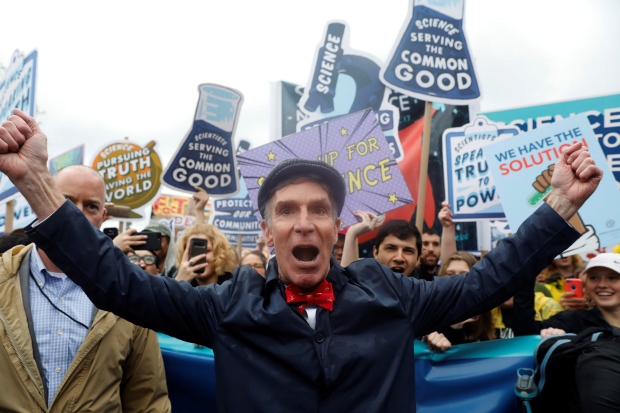
Bill Nye, the Science Guy (from CBC.ca)

CBC recently published an article, Global March for Science which caught my attention. When I read the headline, I was immediately curious as to why a global protest about science was going on. I had never heard of such a thing before and being as I was science teacher, my curiosity got the best of me.

The article reports that scientists along with their supporters marched in hundreds of cities around the world on Earth Day protesting against proposed U.S. government funding cuts to scientific research and public rejection of established science such as climate change. People in at least 18 locations across Canada are participating in marches to promote and advocate for science.

Earth Day is an annual event celebrated on April 22.  Assorted events are held to demonstrate support for environmental protection worldwide. It was first celebrated in 1970 and now events are held in more than 193 countries.

The purpose of the global march was to spread the message that science matters. Protesters are saying to the politicians who try to undermine science, ruin trust in science, or politically motivate funding of science are a risk to the planet and so they are speaking out against it. While climate change is a major issue, protestors are also concerned about a number of Trump’s executive orders and his proposed budget, which proposes massive cuts to scientific research.

So, my next thought was what is this inexperienced, seemingly uninformed president doing south of our border to rile up the science community?. Anything that Trump does regarding the environment is concerning to me since their environmental policies directly affect my country. Acid precipitation is a good example of that. I proceeded to do some research.

Times article, Donald Trump’s Science Denial Is Becoming National Policy, reports soon after Donald Trump was sworn in as president, the official White House website purged all mentions of climate from the site except one,  the promise to eliminate the “harmful and unnecessary” Climate Action Plan implemented by former President Obama. Soon thereafter, scientists and other employees of the Environmental Protection Agency (EPA) and the United States Department of Agriculture (USDA) were told not to speak to the public. When a National Park Service Twitter account sent out impartial facts, the White House had them deleted, plus the EPA was told to take down its climate-change page. Climate change is a huge issue and Trump did tweet on November 6, 2012: “The concept of global warming was created by and for the Chinese in order to make U.S. manufacturing non-competitive.” Then on October 19, 2015, Trump tweeted: “It’s really cold outside, they are calling it a major freeze, weeks ahead of normal. Man, we could use a big fat dose of global warming!” This clearly tells me that this man is ignorant of science.

The Times article also says Trump appointed Robert F. Kennedy, Jr., an anti-vaccine activist to run a commission on immunization safety. Both Trump and Kennedy have spread far-flung theories linking vaccines to autism in children, an idea that medical experts overwhelmingly reject. Experts have warned the refusal to immunize is endangering public health by discouraging parents from immunizing their kids. Trump also appointed Dr. Scott Gottlieb to run the Food and Drug Administration. Dr. Gottlieb is a strong supporter of the pharmaceutical industry and has supported deregulation. Trump is also known to have called the fact that asbestos causes cancer a “con” and even refused to believe the objective scientific reality of drought in California.

The U.S. Senate confirmed Scott Pruitt, Trump’s choice to lead the Environmental Protection Agency.  Susan Margaret Collins, a Senator who is generally seen as the most pro-environment Republican in the Senate, said she was not convinced that Pruitt would protect public health. According to USA Today, she quoted as saying;

I have significant concerns that Mr. Pruitt has actively opposed and sued EPA on numerous issues that are of great importance to the state of Maine, including mercury controls for coal-fired power plants and efforts to reduce cross-state air pollution and greenhouse gas emissions,” Collins said. “His actions leave me with considerable doubts about whether his vision for the EPA is consistent with the Agency’s critical mission to protect human health and the environment.

National Geographic’s, A Running List of How Trump Is Changing the Environment, reports that Trump’s proposed budget plans deep cuts to U.S. science and environmental agencies, especially EPA and the National Oceanic and Atmospheric Administration (NOAA) in an effort to increase defence spending by $54 billion. Actions speak louder than words. Even though Trump says, “We can and must protect our environment without harming America’s working families,” the fact that he is proposing a cut of 31% to the EPA tells me how he really feels about protecting the environment. I find this alarming. Americans should be as well.

National Geographic also say that against the advice of the EPA’s chemical safety experts, EPA administrator Scott Pruitt rejected a decade-old petition asking that the EPA ban all use of the pesticide chlorpyrifos. In 2000, the EPA banned its use in households, but the pesticide is still used on farms, which EPA scientists recommended stop. Even though Dow Chemical, the pesticide’s manufacturer, argues that it is safe when properly used, research suggests that chlorpyrifos may be associated with brain damage in children and farm workers, even at low exposures.

That same article claims President Trump signed a joint resolution passed by Congress revoking the U.S. Department of the Interior’s “Stream Protection Rule.” That rule, put in place by President Obama, placed stricter restrictions on dumping mining waste into surrounding waterways. It seems that mining companies are now free to throw whatever waste they desire in American waterways. These wastes eventually end up in the ocean and affect the ocean’s health. Once again, alarming.

So, is the world’s science community and all its supporters over reacting? Based upon my research, NO! I’ve only mentioned some of the policy changes made by the Trump administration. These policy changes are ALARMING to say the least. I am concerned about the planet. Trump’s choices affect the planet as the U.S.A. is the second largest contributor (15%) of greenhouse gases in the world, second only to China at 22.7% (see Gas Emissions, 2010). Canada only emits 1.7%. I personally would like an inhabitable planet for my children and grandchildren to reside on. Evo Morales, President of Bolivia since 2006, says it best. “Sooner or later, we will have to recognize that the Earth has rights, too, to live without pollution. What [hu]mankind must know is that human beings cannot live without Mother Earth, but the planet can live without humans”.

2/3 Wildlife to Disappear by 2020. That’s Disturbing!

A commentary on climate change and endangered species.

A few weeks ago, an article on CBC.ca caused me some distress. The article is called; Two-thirds of wildlife will disappear by 2020, WWF. The news report says that according to the WWF conservation group, “worldwide populations of mammals, birds, fish, amphibians and reptiles have plunged by almost 60% since 1970.” It then goes on to say, “the decline is yet another sign that people have become the driving force for change on Earth”. Specifically, according to the article, this change is due to “the rising human population…threatening wildlife by clearing land for farms and cities”. It also lists other causes as “pollution, invasive species, hunting and climate change”. Think about that for a second. The year 2020 is only three years from now and according to the WWF 2/3 or 67%; more than half of the worlds wildlife will be extinct. I grew up seeing many of these animals in the wild or in zoos. To think my grandchildren will only be able to see pictures or videos of these animals is upsetting.

I went on to research this topic further. Another CBC report; A third of birds in North America threatened with extinction, states that “the first State of North America’s Birds report finds that of 1,154 bird species that live in and migrate among Canada, the U.S. and Mexico, 432 are of ‘high concern’ due to low or declining populations, shrinking ranges and threats such as human-caused habitat loss, invasive predators and climate change”. Still another CBC report, Hundreds of animals, plants locally extinct due to climate change, reveals that a “new study found local extinctions (this is when a species can no longer be found at a location where it once lived) related to global warming have occurred in half of species studied”. But the article that alarmed me the most was CBC’s, Giraffes threatened by extinction, put on watch list. Giraffes! Really! The article blamed shrinking living space as the main cause. It says the giraffe situation is worsened by poaching and disease. There seems to be a common theme here, that is, that we humans are the problem. Another common theme is climate change.

Now I understand that climate change is not the sole cause for the loss of wildlife but I’ve read enough articles to come to the conclusion that it is definitely a big part of the problem. We’ve all heard the stories about polar bears. The chief threat to the polar bear is the loss of its sea ice habitat due to global warming. The National Wildlife Federation’s article; Effects on Wildlife and Habitat,  goes into detail of how climate change is affecting wildlife.

There are still people who have “their head in the sand”. There is still debate about the cause of climate change. Is it due to human activities or is it a natural phenomenon? There is no doubt that climate change is happening as the CBC news article, ‘It’s a little scary’: On Lennox Island, no one debates whether climate change is real, says. If you are at all skeptical watch the documentary Chasing Ice. It’s a 2012 documentary film about the efforts of nature photographer James Balog and his Extreme Ice Survey to inform the public to the effects of climate change. My wife and I, on recommendation of my sister, recently watched it on Netflix. If you haven’t seen it, I would strongly encourage you to. In case you haven’t, here it is.

http://www.youtube.com/watch?v=j5RYBGJDCAI

According to Wikipedia, a 2013 paper in Environmental Research Letters (a scientific journal) reviewed 11,944 abstracts of scientific papers matching “global warming” or “global climate change”. They found 4,014 which discussed the cause of recent global warming, and of these 97.1% endorsed the consensus position that humans are causing global warming. To me that says that the vast majority of environmental scientists agree that climate change is due to human influence.

global_warming_0It concerns me when the president-elect in the United States tweeted in November of 2012 “The concept of global warming was created by and for the Chinese in order to make U.S. manufacturing non-competitive” and who promised during his campaign to roll back President Obama’s efforts to combat climate change. According to CNBC, a business news site, “president-elect Donald Trump’s Energy Department transition team sent the agency a memo this week asking for the names of people who have worked on climate change…alarming employees and advisors”. The fear is that Trump is preparing a political enemies list. At least I can proudly say that the Canadian government is working on implementing a national climate change plan (see Manitoba will not sign).

Historically, the European immigrants came to North America with their Eurocentric world view; a view that tended to interpret the world in terms of European values and experiences; a view that saw European values as better than Aboriginal values.  In reality, the aboriginal people had the right values as they had the far superior values. Before European influence, many First Nation communities believed everything was connected. The spirit world was connected to the earthly world; the sea was connected to the land and that the sky was connected to the land. Consequently, humans co-existed with animals and plants, with equal rights to life. In this belief lies commitment to respect all living things. George Blondin, a highly respected Dene Elder who was born in the Northwest Territories, put it this way.

“We are people of the land; we see ourselves as no different than the trees, the caribou, and the raven, except we are more complicated.”

First Nations people were very religious and respectful of the Great Spirit, and other spirits that they believe inhabited the land and animals all around them. These people were taught from a very young age to respect and give thanks to the animals, birds, plants, land and water which gave them everything they needed to stay alive.

Maybe it is time to take a serious look at aboriginal spirituality. These people once had a sacred relationship with Mother Earth and had a reverent respect for the plants and animals.  The reality is if we don’t, we may end up living on a planet with 2/3 less plant and animal species or worse. That would be shameful and a complete lack of respect for our future ancestors. But then again, maybe, just maybe, science can come to the rescue. CBC has a news article called, Reviving extinct species within reach, which quotes Hendrik Poinar, a scientist at McMaster University’s Ancient DNA Centre, who says, “The revival of an extinct species is in reach.” He is referring to a new field of science called ‘de-extinction’.

Bears Have Rights Too

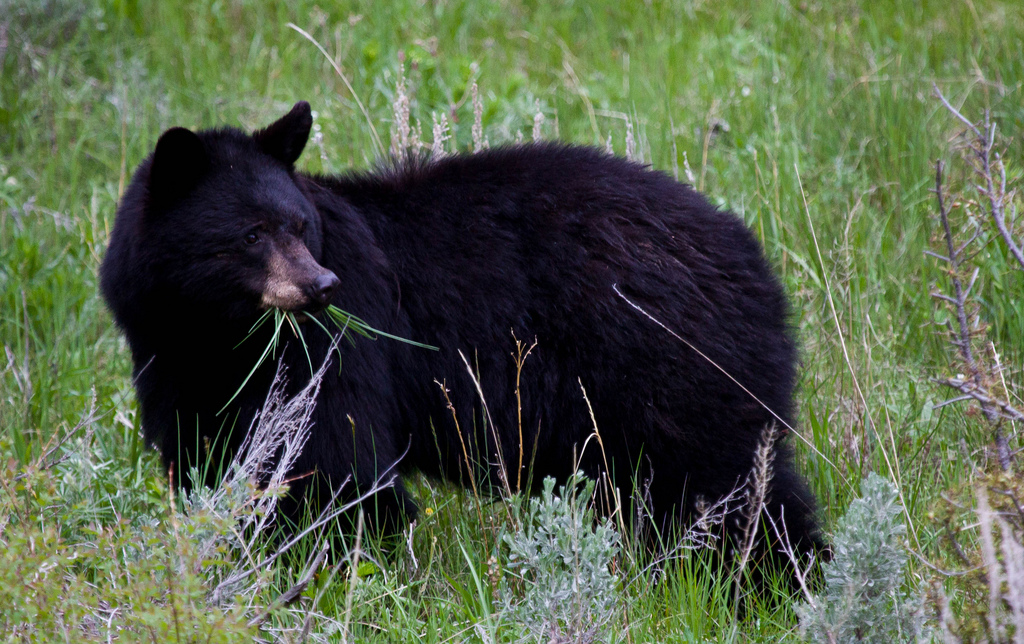
tentI mentioned in a previous blog post, The Encounter, that my son and I do annual hiking trips in the Canadian Rocky Mountains. This past weekend we did a trip to Jasper National Park hiking up the Sunwapta Peak trail.  This was our 14th trip together. We stayed in a campground called, Wabasso, near the town of Jasper. When we were registering at the campground, we were warned that a black bear had been in the campsite the previous night. While eating our supper that evening, the people at the tent next to us started yelling, “there’s a bear!” They made a bunch of noise to scare the bear away. We never did get a glimpse of the wild animal but nonetheless, the possibility of a bear nearby always makes a person a bit anxious.

Now in the 14 years of doing this, we have only encountered a bear once (if you can call it that).  It was five years ago and the black bear was on the trail in Jasper National Park some 500 or more metres ahead of us.  When we yelled and my brother-in-law set off a “bear banger” (that is a device that makes a very loud bang) the bear took off. Bears are always on your mind when hiking in the mountainous wilderness so we’ve always taken precautions. All of us carry bear spray, a type of pepper spray or capsicum deterrent that is used to deter aggressive bears. Thankfully, we’ve never had to use it although we have talked to hikers who have. When we hike we travel in groups and make lots of noise so that if there is a bear nearby, it knows humans are nearby as Parks Canada advises. (see Safe Travel in Bear Country). We also make sure our food is stored in vehicles, lockers or on bear poles. Bear poles are tall metal poles with hooks so that hikers can hoist their bags (food especially) up to the hooks for safekeeping overnight.

black-bear-blogHaving freshly done a mountain hike in bear country, I began to have some questions about bears so I did some research. The first question I wondered: Just how common are bear attacks? According to the article, Behaviour, by the Get Bear Smart Society,

Bears are NOT mean or malicious. Bears are normally shy, retiring animals that have very little desire to interact with humans. Unless they are forced to be around humans to be near a food source, they usually choose to avoid us.

That leads to my second question: Just how common are bear attacks? According to the article, A few surprises in decades-long black bear study, in the  Globe and Mail,

“Fatal black bear attacks were rare from 1900 to 2009 but they disproportionately occurred in Canada, according to an analysis published in the Journal of Wildlife Management. Of the 63 people who died in 59 incidents, 44 victims were mauled in Canada. It’s not known why, but periodic food shortages due to shorter growing seasons could be a factor.”

That means there were only 44 Canadian victims in 109 year span. The article also reports,

Researchers found that the vast majority of the confrontations weren’t the result of chance meetings in the woods, but the outcome of predatory behaviour, nearly always by lone male black bears. Surprisingly, only 8 per cent of the deadly attacks were attributed to mother bears.

So that made me wonder: Why are there bear attacks?  According to the Globe and Mail article,

Bear-caused fatalities have increased largely in lockstep with the continent’s human population growth and subsequent rise of recreational activities. Most of the deadly encounters with bears – 86 per cent – were recorded since 1960. Nine out of 10 times, the victim was alone or with only one other person. Improperly stored food and garbage was a likely attractant in 38 per cent of the incidents… In all cases, researchers found that bear pepper spray was not deployed as a measure of defence.

Another question: How do conservationists respond to bear habituation? Habituation is when a bear has constant, repeated exposure to people. When this happens bears can become increasingly bold and less afraid of people. These bears run the risk of becoming “problem” bears that enter townsites and campgrounds, places they are more likely to be illegally fed or rewarded with improperly stored garbage or pet food. Parks Canada’s wildlife specialists do their best to reverse this behaviour, but if a bear can’t be rehabilitated they are destroyed because they became too much of a risk to public safety. In areas outside the national parks, bears are often destroyed once they’ve been habituated. In Revelstoke, British Columbia, nine bears were destroyed in one week. (see the CBC article,  9 Bears Killed in one Week).

Recently Josh Bowmar, an American and a former javelin athlete, posted a video of himself killing a black bear in Alberta with a spear. That video caused sharp criticism on social media and from the provincial government. In the video, a black bear can be seen circling and then approaching the area that had been baited where Bowmar stands nearby before he impels the spear into the bear’s stomach.  The bear ran off, likely suffering for many hours and was found dead the next day. Alberta’s government have since announced it will introduce a ban on spear hunting this fall as part of those updated regulations. (see Alberta Government orders Investigation). If you haven’t seen the video, here it is.

I was surprised that spear hunting was even legal in Alberta. I was even more surprised to learn that baiting bears and other animals was also legal. Personally, I’ve never understood the appeal of hunting. When I was a teen I once shoot a sparrow with my pellet gun and killed the bird. I felt so incredibly guilty when the bird died that I’ve never intentional killed an animal since except for mosquitos, flies and spiders when my wife forces me to. Typically, I rescue the spiders and put them outside.

The bottom line is we humans have an obligation to learn how to live in harmony with wildlife. All living creatures have a right to exist. In fact, UNESCO, an agency of the United Nations, issued a Declaration for All Life on Earth which declared, we shall create a world based on love and harmony in which all forms of life are respected. Organizations such as, World Wildlife Federation (WWF) states their mission to stop the degradation of the planet’s natural environment and to build a future in which humans live in harmony with nature. I believe this is possible and education is the key. Dr. Jane Goodall, an animal rights activist and best known for dwelling with Tanzanian chimps to observe their behaviour, said it best when she said, “Only if we understand, will we care. Only if we care, will we help. Only if we help shall all be saved.”  If you are going to be in bear country, it is imperative that you get educated.  A good place to start is to read the Dispelling Myths article by the Get Bear Smart Society. To quote Nelson Mandela, “Education is the most powerful weapon which you can use to change the world”.