Does Canada Have a Systemic Racism Problem?

A commentary on systemic racism

The Beaverton, a weekly satirical Canadian news show, recently had the headline: Country [Canada] responsible for the Indian Act, Chinese Head Tax, Komagata Maru, Africville, “None Is Too Many,” Japanese Internment Camps, Sixties Scoop, Residential Schools, Oka Crisis, and MMIWG declares itself not racist. This headline is based on prominent Canadians such as Stockwell Day, Doug Ford and Rex Murphy claiming that Canada is not racist. Stockwell Day is a former Conservative politician, a person I met with when he was a member of Alberta’s Legislature. Doug Ford is presently premier of Ontario, and Rex Murphy is a Canadian commentator and author.

These three prominent Canadians have all argued that Canada is not a racist country. Mr. Day resigned from several roles, such as a Telus board member, after being called out when he denied the existence of systemic racism in Canada on CBC’s “Power Play.” Here is a link to his comments (see Power Play).  Doug Ford drew strong criticism when he claimed that Canada doesn’t have the same “systemic, deep roots” of racism that the United States has. (see Doug Ford’s comments on racism ignore history of black trauma in Canada).  The National Post’s article; Rex Murphy: Canada is not a racist country, despite what the Liberals say, has the commentary by Mr. Murphy where he says:

“…Canada is a mature, welcoming, open-minded and generous country. It would be helpful if these Liberals kept the full story of this country in mind when discussing racism, and not leap so reflexively to grim characterizations of a country that, while not perfect, has been doing its best to be tolerant and welcoming.”

Canadians are watching the events of our southern neighbour and comparing them to Canada.  I (#blogger, #blog, #YA, #authors, #somseason) taught Social Studies for many years and I taught about the Indian Act, Chinese Head Tax, Africville, “None Is Too Many,” Japanese Internment Camps, Sixties Scoop, Residential Schools, Komagata Maru, the Oka Massacre, and MMIWG. I’ve provided links should you be interested in learning more about these Canadian events.  Most of us Canadians like to see ourselves as “mature, welcoming, open-minded and generous,” but the truth is, our history reveals that Canada’s past is filled with racial bullying (#bullying, #antibullying). The Beaverton’s list proves that. Systemic racism is just as much a Canadian problem as it is a USA problem, and likely a worldwide problem.  Systemic racism is all of the policies and practices entrenched in society that harm certain racial groups and benefit others. Canadian history books rarely, if ever, talk about the systemic racism, but that doesn’t mean it isn’t there.

The problem is, most people read a history book thinking it is fact. My students did until I taught them that history is an interpretation of the past, so it is not necessarily factual. Here is a social studies lesson.

What do I mean by past? It refers to primary documents; records created in the past that have survived into the present. Historians use a wide variety of written records, from personal diaries to statistical records kept by government departments, as the basis for their historical investigations. Historians even use non-document records, including photographs, moving pictures, the spoken word, architectural plans, or botanical (plant) inventories to find clues about how people lived in the past. All of these primary documents are the “raw materials” that historians work with as they attempt to figure out what happened in the past.

So, what is history? History is a story or tale of what has happened, or may have happened, in the past. Historical interpretation is the process by which we describe, analyze, evaluate, and create an explanation of past events. History involves debate, discussion, and conversation. Hugh Trevor-Roper wrote in 1957, ‘history that is not controversial is dead history’.

The Magazine, History Today, has an article titled, A Question of Interpretation, that says:

“Yet the truth is, if you take a group of historians working on the same problem, writing at different times and in different places – even if they all use their evidence in a scrupulous, honest, critical and informed way – the conclusions they reach may differ.”

The reality is, a historian’s belief system, values, biases, prejudices, and experiences, all influence how a historian interprets the past. Dan Brown, in The Da Vinci Code, wrote “History is always written by the winners. When two cultures clash, the loser is obliterated, and the winner writes the history books-books which glorify their own cause and disparage the conquered foe. As Napoleon once said, ‘What is history, but a fable agreed upon?” There is truth in that statement.

With my students, I always gave a concrete example, so let’s use 9/11, the alleged terrorist attack on the US.  I say alleged because there are many who question if we have been told the full truth. For example, Reader’s Digest has an article, 12 Questions People Still Have About 9/11, with questions that have not been given convincing answers. The Foreign Policy Journal’s article, 9/11: Finally the Truth Comes Out? Says;

Every informed person is aware that elements of the US government were involved either in the perpetration or a coverup of the 9/11 attacks

I certainly have questions about 9/11. The article, 737 Passenger Plane Possibly Struck and Damaged by Drone on Landing, shows damage done to a plane by a drone. This video shows a plane going through a twin tower.

My question is: How is that possible, when a drone can do that much damage to a 737 and when jet airplanes are made of light materials, like aluminum, can go through a tower designed to withstand the impact of a commercial jet airplane? My point is, the past (9/11 event) is open to interpretation. Anyway, enough about 9/11 questions. I’m starting to sound like a conspiracy theorist.

Returning to 9/11 as an example of historical interpretation. After the September 11 attacks on the World Trade Centre and the Pentagon, George W. Bush, president of the U.S. at the time, said; “Freedom itself was attacked this morning by a faceless coward, and freedom will be defended.”  Osama bin Laden, the alleged mastermind of the terrorist attack, said; “America has been hit by Allah at its most vulnerable point, destroying, thank God, its most prestigious buildings.”  Same past event, but two very different interpretations.

Does Canada have a systemic racism problem? Based on our past, I would say yes. We have legislative documents to prove it. In last week’s post, I mentioned a meme I saw that defined White Privilege as, “Privilege is when you think something is not a problem because you aren’t personally affected.” Perhaps those with white privilege, and those who aren’t personally affected, choose to see our nation the way they want to. They choose to deny that racial bullying exists in this country. It is time to wake up and take a closer look at our country folks! We’re not as innocent as we like to think.

It is Time to Get Serious, People

A commentary on the importance of following pandemic rules

PM Trudeau giving COVID-19 update

Global News reports that Canada’s Prime Minister, Justin Trudeau, said in March that the federal government was/is considering invoking the Emergencies Act to help keep the Canadian economy afloat as the  COVID-19 spreads throughout the country. This act was created to provide a legal framework for power to be temporarily consolidated with the prime minister and cabinet to issue executive orders during national emergencies. It was only used three times in Canadian history. The War Measures Act—the act before 1988—was invoked during the first and second World Wars, as well as during the October Crisis of 1970 when members of the Front de Libération du Québec (FLQ), a terrorist group in Quebec, carried out kidnappings. (see October Crisis).

The point is, the Emergencies Act allows a great deal of power to the prime minister and cabinet. They would have the right to take over property, public utilities, provide special services and special compensation, regulate, prohibit public assembly, and prevent travel anywhere within the country, among other things.

This Act infringes on our individual rights, such as restrict travel in our own country, and dictate who we can and cannot see. The Megan Meier Foundation, a foundation working to create a world without bullying and cyberbullying, defines bullying as “an aggressive behaviour that involves an imbalance of power or strength.” One could argue, that Emergencies Act is aggressive and involves an imbalance of power, since governments would have all the power, thus making an argument that leaders are bullying their citizens to comply with their demands.

The Boston Globe has an opinion piece titled, A civil liberties pandemic, which debates the toll being taken on Americans’ freedom and constitutional liberties by the unprecedented restrictions that have been imposed to enforce physical distancing. The Military Times even has an article titled, Will coronavirus lead to martial law?  Martial law is the replacement of civil rule with temporary military rule in a time of crisis.

NPR is a media organization founded on a mission to create a more informed public. Their article,  Life During Coronavirus, reports that Chinese citizens are financially rewarded for reporting those who fail to follow quarantine orders reflecting a decades-long history of social control, which has been mobilized on an unprecedented scale for the COVID-19 crisis.

The Boston Globe’s opinion piece, A civil liberties pandemic, which I mentioned earlier reports that in Israel, the government has ordered a round-the-clock curfew and deployed anti-terrorist technology to track down people suspected of violating the coronavirus restrictions. In Norway, anyone caught violating isolation rules can be fined $2,000 or jailed for 15 days.

Even in Canada, most provincial governments have issued stay at home orders,  implemented fines for anyone returning to Canada and not self-isolating for 14 days, or not practicing social distancing (see Provinces inpose fines). The purpose of these measures is to avoid overwhelming health care systems and reducing the spread of the Coronavirus.

I have not heard, or read, anything, about any such debate occurring in Canada about civil liberties (freedoms to do certain things without restraint from government), other than the occasional meme on social media saying (paraphrased): “Stay at home or risk losing more civil liberties.”  No one that I have spoken to—via technology, of course—has mentioned any concern about their civil liberties disappearing, unlike the U.S. That doesn’t mean things couldn’t change. Our Prime Minister has not invoked the Emergencies Act as of yet, but if enough people don’t respect the stay at home orders and practice social or physical distancing, then more civil liberties could be removed. Our governments have warned us of that.

Yet, there are still a number of people who are not respecting the pandemic rules. CBC News has an news article, Grocery store staff fed up with ‘social’ shoppers who flout pandemic rules, reporting that customers are chatting and getting too close to others in grocery stores. Some employees say they have been yelled at, cursed at, and accused of overreacting as they try to enforce physical distancing measures put in place by their employers.

I’ve heard of “Snow Birds,” (Canadians who winter in warm places like Arizona or Mexico) returning to Canada after the Canadian Government advised all vacationers to return to Canada. In the town where I grew up, I’ve heard of Snow Birds ignoring the 14-day self-isolation rule by going into the post office to collect their mail. Local papers told of Snow Birds in a nearby town going in the grocery stores upon their return. Urban Dictionary coined the term “convidiot” for those misbehaving during the coronavirus pandemic. Its definition:

1. A stupid person who stubbornly ignored ‘social distancing’ protocol thus help to further spread COVID-19

2. A stupid person who hoards groceries needlessly spreading COVID-19 fears and depriving others of vital supplies

I am very willing to give up my civil liberties if it means keeping my family and me safer. I felt that way during the October or FLQ Crisis in 1970 as well. But the thing is, we don’t have to give up our civil liberties if all people followed the advice of the health professionals, and took this pandemic seriously. Or, to use Urban Dictionary’s word, stop being a convidiots. To me, it is all common sense. Perhaps the French writer and philosopher, Voltaire, was right when he said, “Maybe Common sense is not so common.” The bottom line, we will all get through this much faster—in theory—if everyone followed what the experts tell us, that is, follow the pandemic rules.

There is a post circulating on social media. It reads:

History repeats itself. Came across this poem written in 1869, reprinted during 1919 Pandemic. This is Timeless….It was written in 1869 by Kathleen O’Mara:

And people stayed at home

And read books

And listened

And they rested

And did exercises

And made art and played

And learned new ways of being

And stopped and listened

More deeply

Someone meditated, someone prayed

Someone met their shadow

And people began to think differently

And people healed.

And in the absence of people who

Lived in ignorant ways

Dangerous, meaningless and heartless,

The earth also began to heal

And when the danger ended and

People found themselves

They grieved for the dead

And made new choices

And dreamed of new visions

And created new ways of living

And completely healed the earth

Just as they were healed.

NetFlix docuseries Pandemic

What is the truth around this poem? There was a Cholera pandemic that spread throughout the Middle East and was carried to Russia, Europe, Africa and North America, but according to Oprah Magazine, the poem was actually written by a Kitty O’Meara. Magazine editors contacted the author in her home outside of Madison, WI. Remember, not all you read on social media is fact!  Nonetheless, the message of the poem tells a truth. I’ve seen evidence that people are beginning to think differently. My hope is that there will be an absence of people who live in ignorant ways; who are dangerous, meaningless and heartless. When this is all over, I dream of people making new choices, having new visions, creating new ways of living, and ultimately healing the earth, just as the poem says. As I’ve said in other posts, maybe this virus is trying to teach the world, and more specifically each of us, to live differently. I also mentioned that we humans are slow learners!

The Two Faces of a Pandemic

A commentary on the current pandemic

The NetFlix docuseries Pandemic

As I watch the world literally shut down because of the virus known as COVID-19, and as my wife and I are practicing “social distancing” by self-isolating in our home, I can observe and reflect on the world’s new reality.  American author, J Lynn, says, “Sometimes when things are falling apart, they may actually be falling into place,” or American singer-songwriter, Morgan Harper Nichols who says, “Going through things you never thought you’d go through, will only take you places you’d never thought you’d get to.” Perhaps this is what is happening. This COVID-19 pandemic may involve forces we don’t understand that are taking the world in a new direction. My wife and I call it a “reset.”

I been  feeling like the world is out of control for a while now. Democracy in its present form is failing us. Corporate greed is irreparably damaging the planet. Racism and hate are on the rise. I could go on and on.

Tough times—presently the COVID-19 virus—can bring out the best in people, and the worst in people. I witnessed and read about both. First, the worst in people.

A personal example is recently a parent asked our great nieces to stop at the grocery store on the way home from school to pick up some milk. It just so happened that they got the last jug. Three ladies with their carts stocked piled with various products followed them around the store, calling them selfish. They were traumatized by the experience and refused to ever go back during this pandemic.

Barbara Coloroso,  an international bestselling author says this about bullying:

Bullying is not about anger, it’s about contempt, a powerful feeling of dislike toward somebody considered to be worthless, inferior, and undeserving of respect…

These three selfish ladies were feeling contempt towards our nieces because they were not able to get the last jug of milk. They likely—I’m speculating—considered two teenagers to be inferior and undeserving of their respect. The Japan Times has an news report titled, Japan sees rise in harassment, bullying and discrimination linked to COVID-19, so bullying is occurring as a result of this pandemic.

The HuffPost article, Forced To Finally Take Coronavirus Seriously, Trump Turns To Racism, reports that after months of properly referring to the virus as Coronavirus or COVID-19, the U. S. president is now insisting on calling it the “Chinese virus.” Trump claims he does this because it is where the pandemic has its roots, but what he is really doing is laying blame on Chinese people and encouraging prejudice and violence against people of Chinese or Asian descent. The American leader is promoting hatred, racism, and bullying. Is racism bullying, you ask?

Childline, based in London, England, is a confidential service for children, says this about bullying and racism.

Racial bullying is a type of racism where someone’s bullying focuses on your race, ethnicity, or culture. Racism and racist bullying can include:

  • being called racist names or being sent insulting messages or threats
  • having your belongings damaged or having to see racist graffiti
  • personal attacks, including violence or assault
  • being left out, treated differently or excluded
  • people making assumptions about you because of your colour, race or culture
  • being made to feel like you have to change how you look
  • racist jokes, including jokes about your colour, nationality race or culture.

What Trump is doing is shamefully encouraging people to be exclusive of Asians and to treat Asians differently. Racism is bullying!

I have also observed that this pandemic is doing wonderful things. China and Italy’s pollution have drastically lessoned. (see CBC News). Fish and dolphins have returned to Venice’s canals because of halted tourism (see Venice). Italians sing from their balconies during pandemic lockdown (see Singing). People are posting all sorts humorous memes (see example below) to uplift people’s spirits, and posting creative ways to de-stress during this difficult time.  I could go on.

What I find most interesting during this difficult time in history, is people’s attitudes seem to be shifting. I’ve heard people say, “I feel relief and less stressed now that my commitments are gone.” One person told my wife that she has never felt better now that she isn’t working because of social distancing.  People seem to be coming to the realization that maybe their lives have been out of control, and this pandemic is forcing them to slow down. The world was required to “be still” as the Christian scriptures say, “Be still and know that I am God” in Psalm 46:10. Many in the world are beginning to see all humans as a family, saying things like, “We’re all in this together,” and “We all must do our part to prevent overwhelming our health care systems.” Humanity is reaching out to one another.

For example, people are making posts of encouragement. I just read this one:

This too shall pass. I just wanted to take a moment today to remind everyone that storms do end and nothing lasts forever. Things may get worse before they get better, but as a world we will get through this crisis together and emerge stronger because of it. This is a time to demonstrate our capacity to come together to help, care for, and support one another.  We can use these struggles to reforge our faith in one another and prove to ourselves our capacity to tackle difficult global challenges collaboratively. Like our ancestors before us did after the wars, we can use this humbling situation as a catalyst for new grow and new direction for the century to come.

Perhaps this is the silver lining! Perhaps this pandemic is transforming the world into one that is simpler, kinder, and more caring. Let’s hope so.

Remembrance Day, a Day to Yearn for Peace

A commentary on war and peace.

It amazes me how fast annual events come. Once again, November 11th Remembrance Day is upon us. It is the day of the year that marks the anniversary of the official ending of World War I, and in Canada Remembrance Day is a public holiday and federal statutory holiday with a notable exception of Nova Scotia, North West Territories, Ontario and Quebec. All Commonwealth Nations—an organization of 53 member states that were mostly territories of the former British Empire—observe this day as a day to remember the members of their armed forces who have died in the line of duty.

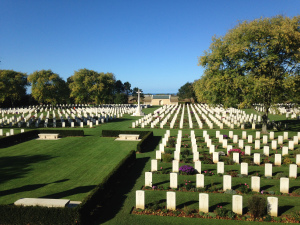
Since visiting Vimy Ridge and the Normandy Beaches in France four years ago, my wife and I have a much stronger appreciation for all soldiers and the sacrifice they made to maintain peace and freedom in our world. Visiting both WWI and WWII military cemeteries was a humbling experience to say the least. What shocked us the most was the age of many of the soldiers, some as young as 17 years old. We now attend the Remembrance Day ceremonies with much more gratitude and appreciation for all soldiers.

We Canadians, as well as all world citizens, must consider Remembrance Day an important day to observe. It is essential that we remember the soldiers who have lost their lives or put their lives on the line to protect the rights of its citizens.

Having said that, I began to wonder why we don’t have days that honour those who work towards peace. Why not a national holiday devoted to the promotion of peace. To my surprise, such a day exists. Why have I never heard of it? The United Nations (UN) International Day of Peace, or Peace Day, is observed around the world each year on September 21st. The UN established this day in 1981 with a unanimous United Nations resolution, and “Peace Day provides a globally shared date for all humanity to commit to Peace above all differences and to contribute to building a Culture of Peace” according to the International day of Peace website.

A Culture of Peace News Network survey in 2019 found internet reports concerning more than 655 celebrations of the International Day of Peace from 103 countries around the world. These included 280 events occurring in all states of the United States and 6 provinces of Canada, 144 events in Europe, 54 in countries formerly part of the Soviet Union, 53 in Africa, and 53 in Latin America and the Caribbean. There were 50 events in Asia and the Pacific, and 21 from Arab and Middle Eastern countries.

Only 6 provinces in my country held events? When I checked, the province in which I live, Alberta, did nothing. Is peace not a goal for Albertans? Every country, every state, and every province should be holding events on Peace Day. Let’s be honest, our world is at one of it’s most divided times in history. The potential for another world conflict is once again high. The idea of a planet getting along peacefully, respecting the planet’s diverse cultures and peoples, and living in harmony is badly needed. Every country on this planet, and every citizen living on this planet, should be excited about a day for peace that would promote a more peaceful existence.

There are always those pessimists who say, “peace will never be possible.” With that attitude, they’re probably right, but perhaps a global day to celebrate peace could change the attitudes of pessimists.

New Internationalist is a leading independent media organization dedicated to socially conscious journalism. It has an article called, 10 steps to world peace, which outlines a plan; a plan that I believe has merit.

  1. Stamping out exclusion. When corrupt elites prevent a decent life for the majority of people, an injustice occurs.
  2. Bring true equality between women and men. The larger a country’s gender gap, the more likely it is to be involved in violent conflict, according to research.
  3. Share wealth fairly. According to a World Bank survey, 40 per cent of those who join rebel groups do so because of a lack of economic opportunities.
  4. Tackle climate change. Ecological stress from global warming is proven to worsen conflicts over natural resources.
  5. Control arms sales. Promotion of arms sales and heavy military spending heightens global tensions.
  6. Atonement for past aggression on the international stage. The conditions forced upon Germany by the Treaty of Versailles, WWI’s peace treaty, were severe and widespread and set the seeds for WWII. I would also suggest reconciliation for past aggression on indigenous peoples must also happen.
  7. Protect political space. Across the world public dissent must be defended from repressive tools such as unplanned administrative regulation, misuse of anti-terrorist measures, arbitrary arrest and imprisonment, torture and murder.
  8. Fix intergenerational relations. Much conflict can be understood as a youth revolt against established corrupt systems run by, largely, older men. Recent climate change activism led by Greta Thunberg is a example of this.
  9. Build an integrated peace movement. International Day of Peace could be a way to achieve this.
  10. Look within. Peace starts with you and me.

There is no question that some countries are more peaceful than others. In fact, according to Global Finance’s article, The Most Peaceful Countries In The World 2019, the

most peaceful nations also enjoy lower interest rates, a stronger currency and higher foreign investment—not to mention better political stability and stronger correlation with the individual level of perceived happiness.

According to the 2019 Global Peace Index compiled by the international think-tank Institute for Economics and Peace (IEP) covering 163 independent states and territories that are home to 99.7% of the world’s population, the most peaceful country in the world is Iceland, followed by New Zealand and Portugal. I’m happy to say that Canada was ranked 6 out of 163 countries. The USA was ranked 128th. To create a peaceful world, peace starts with individuals, then peaceful nations.

Mahatma Gandhi, leader of the nationalist movement against the British rule of India, once said, “Peace between countries must rest on the solid foundation of love between individuals.”  Unless humanity can reach a point where diversity is celebrated, respect is the norm, and love is the motivating factor, world peace cannot happen.

Really the answer to achieve world peace is very simple. Leaders of countries must live by the Golden Rule. This Rule is the principle of treating others as you want to be treated. The Golden Rule is found in most religions and cultures. In some religions, the Golden Rule is considered an ethic of reciprocity. This rule appears in the positive or negative:

  • Treat others as you would like others to treat you (positive)
  • Do not treat others in ways that you would not like to be treated (negative)
  • What you wish upon others, you wish upon yourself (empathetic)

This principle is found in the Christian scriptures in Luke 6:31 which says, “Treat others the same way you want them to treat you.” (New American Standard Bible). If all people followed this rule, peace would occur and there would no longer be a need for soldiers.

Young People Who Inspire Me (Part One)

A commentary on impressive young people.

Often, my commentaries are about something negative happening in the world, and there are no shortage of those stories. The other day I was watching CTV News and they reported on 16-year-old Swedish climate activist, Greta Thunberg, arriving in New York City to attend a conference on global warming. A while back, I saw a video of this young lady’s speech to the U.N, and she inspired me then.

Now, I’ve spent a career working with young people, and I’ve taught many who inspired me to be a better person. I’ve also taught many who were troubled and not so inspiring. Today’s youth are often portrayed as “bad news” by much of the media and it seems to be the ‘bad ones’ who make the headlines. On August 28, CBC ran this headline; Verdict in October for youth accused of shooting German tourist west of Calgary. In July the country was consumed with this story: How 3 killings in B.C. turned into the cross-Canada pursuit of 2 teenagers. There are no shortage of stories about “bad youth.” It made me wonder about the “good youth?” It seems the youth who are making a difference in our world are seldom recognized, so this post is dedicated to the “youth who inspire me.” Allow me to introduce some of them.

First, I’ll start with 16-year-old Greta Thunberg from Sweden. I first heard about Greta when I saw a video of her U.N. speech when she was 15 years old. If you haven’t seen it, here it is.

This is Greta’s story according to Wikipedia. Thunberg says she first heard about climate change in 2011, when she was 8 years old, and could not understand why so little was being done about it. Three years later she became depressed and stopped talking.

In 2018, at the age of 15, Thunberg took time off school to demonstrate outside the Swedish parliament holding up a sign calling for bold climate action. Her “school strike for the climate” began attracting media attention and other students then engaged in similar protests in their own communities. Thunberg addressed the 2018 United Nations Climate Change Conference, and she has inspired student strikes that took place every week somewhere in the world. In 2019, there were at least two coordinated multi-city protests involving over one million students each. I can’t help but admire these students who are standing up for the planet. Why wouldn’t they, since they are the ones who will inherit the mess my, and previous generations, left for them.

This teen is a much needed “mover and a shaker” on an issue our political leaders are ‘dragging their feet’ on. Why is climate change being touted as ‘not a big deal’ by many political leaders? Because of money, because making changes affects the economy, and likely the biggest reason, to maintain the lifestyle of the wealthily. The United Nations has said that “climate change is the defining issue of our time and we are at a defining moment.” Thank God for Greta Thunberg because she is motivating our youth to speak out, and take action; Greta has given young people a voice. I applaud this young lady!

CBC News has a story, Climate activist Greta Thunberg lands in New York harbour after Atlantic voyage, The 16-year-old landed in New York after crossing the Atlantic Ocean on a zero-emissions sailboat to attend a conference on global warming. She is set to speak at the United Nations Climate Action Summit. The teenager refused to fly to New York to avoid a plane’s fossil-fuel emissions. This is a 16-year-old with integrity; a person who lives by what she preaches.

Global News reported a few days later that People’s Party of Canada Leader (a leader of a new political party in Canada) Maxime Bernier attempted to discredit Greta Thunberg by calling her “mentally unstable.” Mr. Bernier is one of those political leaders who thinks Climate Change is being exaggerated. Essentially, he is a Climate Change denier.

From CNN

CNN has a story entitled, A 7-year-old wants to build a wall to highlight kindness around the world. The article explains that when 7-year-old Áine Peterson saw images of child migrants being detained at the US-Mexico border, she had to speak out about injustices in the world. The article says, “While some politicians see a divisive wall as a solution to the immigration crisis, Áine, who calls herself ‘the Kind Crusader,’ envisions a wall to bring people together. All the art work she is asking for has to be revolved around kindness, like giving shelter to those in need.” Aine says in a video promoting her campaign, “I want to put together a kindness wall, with art from people all around the world.”

Now I have taught 7-year-olds, and in my experience, this is no ordinary 7-year-old. No 7-year-old that I have worked with has a sense of injustice like Aine does. This is one special kid who deserves to be listened to. She is one to watch and is one who will have an impact on this world.

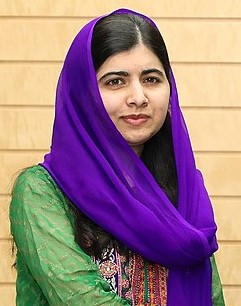
Another impressive young lady is Malala Yousafzai. She is a Pakistani activist for female education and the youngest Nobel Prize laureate. She is known for her human rights advocacy, especially the education of women and children in her native Swat Valley in Khyber Pakhtunkhwa in northwest Pakistan, where the local Taliban had at times banned girls from attending school.

Here is her story according to Wikipedia. In early 2009, when she was 11, Malala wrote a blog detailing her life during the Taliban occupation of Swat Valley in Pakistan. She rose in prominence, giving interviews in print and on television. On October 9, 2012, after taking an exam, Malala Yousafzai and two other girls were shot by a Taliban gunman in an assassination attempt in retaliation for her activism. The 15-year-old was hit in the head with a bullet and remained unconscious in critical condition. The attempt on her life sparked an international outpouring of support for her.

Following her recovery, Malala became a prominent activist for the right to education, especially for girls. She founded the Malala Fund, a non-profit organization. She was the co-recipient of the 2014 Nobel Peace Prize, and then aged 17, the youngest-ever Nobel Prize laureate. In 2017, she was awarded honorary Canadian citizenship and became the youngest person to address the Canadian House of Commons of Canada.

This young lady is making a difference in this world. She comes from a part of the world where females were, and maybe still are, denied a basic human right of education. Article 26, of the U.N. Declaration of Human Rights, it says; “Everyone has the right to education. Education shall be free, at least in the elementary and fundamental stages.” Malala is fighting for a basic human right. Sadly, we still live in world where the sexes are not equal and basic human rights are denied to some people. Those of the female gender are not treated equally to males. As Plato once allegedly said, “If women are expected to do the same work as men, we must teach them the same things.”

I applaud this young lady for her work to achieve equality between the genders. As Ban Ki-moon, the eighth Secretary-General of the United Nations, said, “Achieving gender equality requires the engagement of women and men, girls and boys. It is everyone’s responsibility.” Malala deserves to be recognized for her important work.

These are three young people who I admire for their bravery and passion. I will introduce others in my next post.

Is Democracy Broken?

A commentary on the present state of the world’s democracies.

A few weeks ago, we visited friends in a nearby city. During one of our discussions, this friend mentioned that he is disillusioned with democracy (not his exact words). I asked him why and he questioned the type of leaders that were being elected; leaders who were racist, narcissistic, misogynistic, anti-immigration, and who support white supremacy. This got me thinking. I began to wonder if democracy is broken.

When I visited China last November, our tour guide said something that made me question democracy. Our guide said the democratic world accomplishes little as governments are always squabbling. He further explained, whenever a democratic country elects a new political party, the previous party’s policies are reversed, thus little progress is made. I elaborated on this in my post on China (see China post). This begs the question: Are our democracies working efficiently? Is there something wrong with the way democracy is presently practiced?

Presently, there is increasing popularity in electing extremist right-wing politicians. According to Reference, neoconservatism is considered to be one of the more extreme right-wing ideologies. It takes a firm stance against anti-authority media and aligns itself with religious conservatives. Religious conservatives have specific positions on certain political issues such as abortion, homosexuality, creationism, science education, treatment of prisoners, immigration, and many other issues. Typically, conservative Christians favour anti-abortion laws, oppose gay marriage,  and many have a hardline against illegal immigration (see Intelligence Report).

Extremist right-wing politicians also tend to be nationalistic. In high school social studies—one of the courses I taught for many years—nationalism is defined as the belief that nations will benefit from acting independently rather than collectively, emphasizing national rather than international goals. Nationalist leaders are gaining momentum in Europe (see BBC). American president Donald Trump calls himself a nationalist. (See HuffPost). There are many extremist right-wing nationalistic politicians being elected. Why is this so? Does this mean democracy is failing us?

When our politicians act more like school aged children with their bullying behaviours and temper tantrums when they don’t get their way, I believe democracy is broken. When it becomes acceptable to vote for politicians who spout rhetoric that is divisive and “unchristian,” democracy is failing us.  When it becomes acceptable for the US president to use profanity, such as the “F” bomb (listen to Trump), we are electing a breed of politicians of the lowest kind.

Israeli Prime Minister Benjamin Netanyahu faced criminal investigations for fraud and bribery. A google search shows numerous US politicians under investigation. The US president is under investigation for obstruction of justice as well as other crimes. Two former Brazilian presidents were investigated for a scandal known as Operation Car Wash (see BBS).

My province recently elected a premier who was under investigation of voter fraud (see CBC). I thought politicians where supposed to have integrity. Even more disturbing for me, is our newly elected premier handed out earplugs to his caucus, clearly indicating his refusal to hear debate from democratically elected opposition members about a bill that removes some bargaining rights for government workers (see HuffPost). This kind of behaviour from a leader stems from arrogance; a leader who thinks his party knows best and those who have alternative views are to be ignored. I thought the heart of democracy was healthy debate. Apparently not in my province. Former US president, Barack Obama said, “The strongest democracies flourish from frequent and lively debate, but they endure when people of every background and belief find a way to set aside smaller differences in service of a greater purpose.” I believe this to be true. When healthy debate is squashed in our legislatures, then as far as I am concerned, democracy is broken.

That leads us to the question: What is wrong with democracy? Former British Prime Minster, Winston Churchill once said, “The best argument against democracy is a five-minute conversation with the average voter.” Perhaps he is onto something.  Louis L’Amour, an American novelist said, “To make democracy work, we must be a nation of participants, not simply observers. One who does not vote has no right to complain.” Exactly!

My brother and his wife worked during our province’s recent election, and both expressed how appalled they were by the electorate. They said they had numerous voters in their 30s and 40s who were voting for the first time. They also said they fielded numerous questions asking how the voting process works. Both my brother and his wife were shocked when several voters asked them why there were names on the ballots which they did not recognize. Many of them were looking for the party leaders’ names on the ballot. I was shocked to hear this. This is why, at least in part, democracy is broken. The voters are failing democracy.

Former US president, Franklin D. Roosevelt said, “Democracy cannot succeed unless those who express their choice are prepared to choose wisely. The real safeguard of democracy, therefore, is education.” That is it! Voters are too apathetic to educate themselves. That explains, at least in part, why Donald Trump won the 2016 election.  Trump’s supporters are largely uneducated, according to polls (see Inquisitr).

Former US president, John F. Kennedy, once said, “The ignorance of one voter in a democracy impairs the security of all.”  I have to wonder if unprepared voters, who buy into the dangerous rhetoric being spouted by extremist right-wing nationalistic politicians is putting world security at risk. History teaches extreme nationalism started both world wars. Jose Marti, a Cuban poet, writer, and nationalist leader said, “The first duty of a man is to think for himself.”  Democracy is literally “rule by people,” and is a system where the citizens choose their leaders or government. To fix our broken democracy, people need to start thinking for themselves and educating themselves. Voters need to make informed decisions when voting, and that means determining what news stories are true and which are “fake news” stories. This does not seem to be happening at the moment as most voters believe the rhetoric spouted by extremist right-wing nationalistic politicians. English humourist, writer, and journalist, Allan Coren says, “Democracy consists of choosing your dictators, after they’ve told you what you think it is you want to hear.”  Ralph Waldo Emerson, American 19th-century philosopher says, “Democracy becomes a government of bullies tempered by editors.” Are we electing dictators? Seems that way to me. Are we electing bullies?  I see this more and more, and voter ignorance is to blame.

Former US president, Abraham Lincoln said democracy is “government of, by and for the people.”  I still believe this is why democracy is the better system when it is not broken. Former US president Barack Obama said, “No party has a monopoly on wisdom. No democracy works without compromise.” Perhaps compromise is another problem. We’re living in a polarized time in history and compromise seems to have gone out the window. Each political party thinks they know best and are unwilling to listen to other parties’ views. An openness to different points of views and a willingness to compromise must occur for democracy to work effectively! Politicians must unite and do what is best for all. 

I know it is more complicated than what I’ve outlined, and democracy has problems other than those I’ve addressed above. The issue of corporate donations to help political parties get elected, for example.  Corporate wealth increases when a corporation’s preferred political party is elected and makes policies that perpetuate corporate greed. An informed electorate that votes responsibly is a good start to fixing our broken democracies.

Is Hate the New Norm?

A commentary on the increase of hate crimes.

Lately I’ve been seeing a lot of news reports about hate crimes; reports that I find both disturbing and alarming. Here are a few examples.

I recently read about a homophobic attack on a lesbian couple in London, England. The couple were travelling on a city bus where they were assaulted by a group of teens after they allegedly refused to kiss each other on demand (see Homophobic Attack).

The New York Times reported that in “Staten Island, the phrase ‘Synagogue of Satan’ was spray painted on a wall outside of a Jewish school. In Brooklyn, a pro-Hitler message was scrawled on a poster outside a Jewish children’s museum whose mission is to fight anti-Semitism. In Manhattan, two rainbow pride flags were set on fire outside of a gay bar.” (see Swastikas and Burning Pride Flags).  Another New York Times article reports “The number of reported murders, rapes and robberies in New York is lower now [2019] than it was a year ago…These recent figures show that the drop in crime that began in the mid-1990s has largely continued…Reported hate crimes are up 64 percent compared with this time a year ago. A majority of those incidents were targeted at Jews, officials said” (see Hate Crimes Up).

In my country, Canada, CBC News reports that “the number of police-reported hate crimes reached an all-time high in 2017, largely driven by incidents targeting Muslim, Jewish and black people, according to Statistics Canada data… [saying] hate crimes have been steadily climbing since 2014, but shot up by some 47 per cent 2017, the last year for which data was collected” (see Hate crimes reach all time high).

This is just a small sampling of articles I’ve seen about hate crimes. Not only was I alarmed and disturbed, but began to wonder if hate was the new norm. One of last times hate was so prevalent on our planet was pre WWII, during a time when Hitler set out to eliminate Jews, LTQB, and other undesirables. It was also the time of the Nanking massacre in China by the Japanese. The last time the world went down a path of hate; a path lead by Hitler and other extremist leaders, WWII occurred.

I used to naively think that the human race had learned from WWI and WWII and would never make that mistake again. Now I am not so sure. One thing that strikes me, is many of those who are perpetrating hate claim to be Christians. THEY ARE NOT TRUE CHRISTIANS.

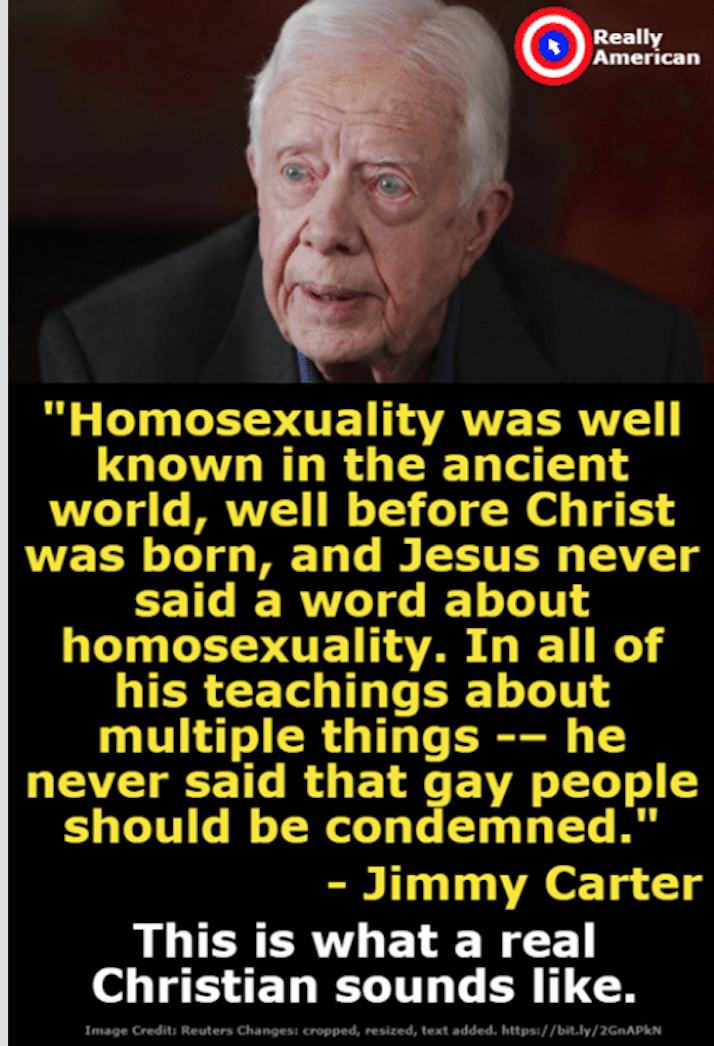
A meme recently went across my Facebook feed which is a quote from Jimmy Carter, the 39th president of the United States.

I agree with the former US president. Homophobes are not real Christians! I saw another meme on my Facebook feed.

That sums it up. Hate is the choice. We cannot choose homosexuality no more than we can choose to be heterosexual. It wasn’t a choice for me. I was just attracted to the opposite sex. I did not choose to be Caucasian. I did not choose to be born in Canada, although I am grateful I was. I did not choose to  come from European heritage. I can, however, choose to hate because I fear someone different than me. I can also choose to include and love those different from me.

Pope Francis is quoted as saying: “A person once asked me, in a provocative manner, if I approved of homosexuality. I replied with another question: ‘Tell me: when God looks at a gay person, does he endorse the existence of this person with love, or reject and condemn this person? We must always consider the person” (see  America Magazine in 2013). Pope Francis also said, “It is deplorable that homosexual persons have been and are the object of violent malice in speech or in action. Such treatment deserves the condemnation from the church’s pastors wherever it occurs.”

Where is all this hate coming from. One word answers that. FEAR. Much of that fear is propagated by extremist leaders.

Kevyn Aucoin, American makeup artist, photographer, and author, once said:

Fear is the most debilitating emotion in the world, and it can keep you from ever truly knowing yourself and others – its adverse effects can no longer be overlooked or underestimated. Fear breeds hatred, and hatred has the power to destroy everything in its path.

How true that is. Angela Merkel, former Chancellor of Germany, once said, “Hatred, racism, and extremism have no place in this country.” I agree with Ms. Merkel wholeheartedly. Hatred, racism, misogynism, anti-immigration, or anti-tolerance of any kind has no place in any country, especially my country.

The bottom line is unless humanity makes the choice to love one another, humanity is headed down perhaps another dark path like those that caused WWI and WWII.  After all,  Jesus commanded in John 13:34 of the Christian scriptures,

“I give you a new commandment, that you love one another. Just as I have loved you, you also should love one another.”

This is what a true Christian does!

These Pathogens Have Not Been Eradicated?

A commentary on the state of our world.

A Pow Wow my wife and I attended two years ago.

Last week my wife, a friend, and I attended an event called, “Meet the Inuit.” It was a series of talks by Inuit, Metis and Indigenous speakers, along with cultural performances. Many speakers said things that caught my attention. One Indigenous speaker talked about the clash of two cultures; Indigenous, Inuit, and Metis cultures verses European culture.

This made sense to me. Indigenous culture is present orientated—time conscious without clocks—whereas European Canadians are future oriented—time conscious with clocks. Indigenous Canadians (likely all Indigenous peoples) share their possessions freely—at least traditionally,  cooperate, are spiritual, and live in harmony with nature whereas European Canadians are savers and hoarders, compete for goods, driven by capitalism, and try to conquer nature. The world views of these two groups are vastly different.

Some of the speakers shared their experiences in the Residential Schools. It always strikes me when a Residential School survivor speaks of being taken away from their parents at ages 4 or 5, given haircuts and new clothes, told never to speak their native tongue, kept from their siblings who were attending the same school, and forced to stay several years in an unwelcoming large building. One speaker even told us how his brother literally was taken off the street by government agents without his parents being informed. His parents thought his brother had gone  missing.

CBC News has an article titled, Genocide against Indigenous Peoples, reports that the Canadian Museum for Human Rights in Winnipeg, Manitoba, now deems the treatment of Indigenous Peoples in Canada a genocide. Previously, the museum had said Indigenous Peoples faced cultural genocide rather than genocide.

The United Nations’ convention on Genocide (1948) says a genocide is:

  1. causing serious bodily or mental harm to members of the group
  2. deliberately inflicting on the group conditions of life calculated to bring about its physical destruction in whole or in part
  3. forcibly transferring children of the group to another group.

As The Star’s article, Cultural genocide?  says;

Canada did not pack Indigenous people onto train cars and send them to be gassed, or march them into fields and execute them with machine-gun fire. However, our country committed not “cultural” genocide, but just regular genocide.

We forcibly took children from families — sometimes at gunpoint — and flew them to remote locations they could not escape — sometimes in tiny handcuffs — where they were submitted to a program of forced labour and “education” designed to destroy their cultures and civilizations. This desire to destroy cultures seems to be the reasoning for various public figures’ use of the adjective “cultural” before genocide. The other reason, I presume, is that some cling tightly — and childishly — to the idea that Canada has always been on the side of goodness and justice, and they find it very hard to accept, admit, and announce that we are a country that committed a program of genocide that lasted for many decades.

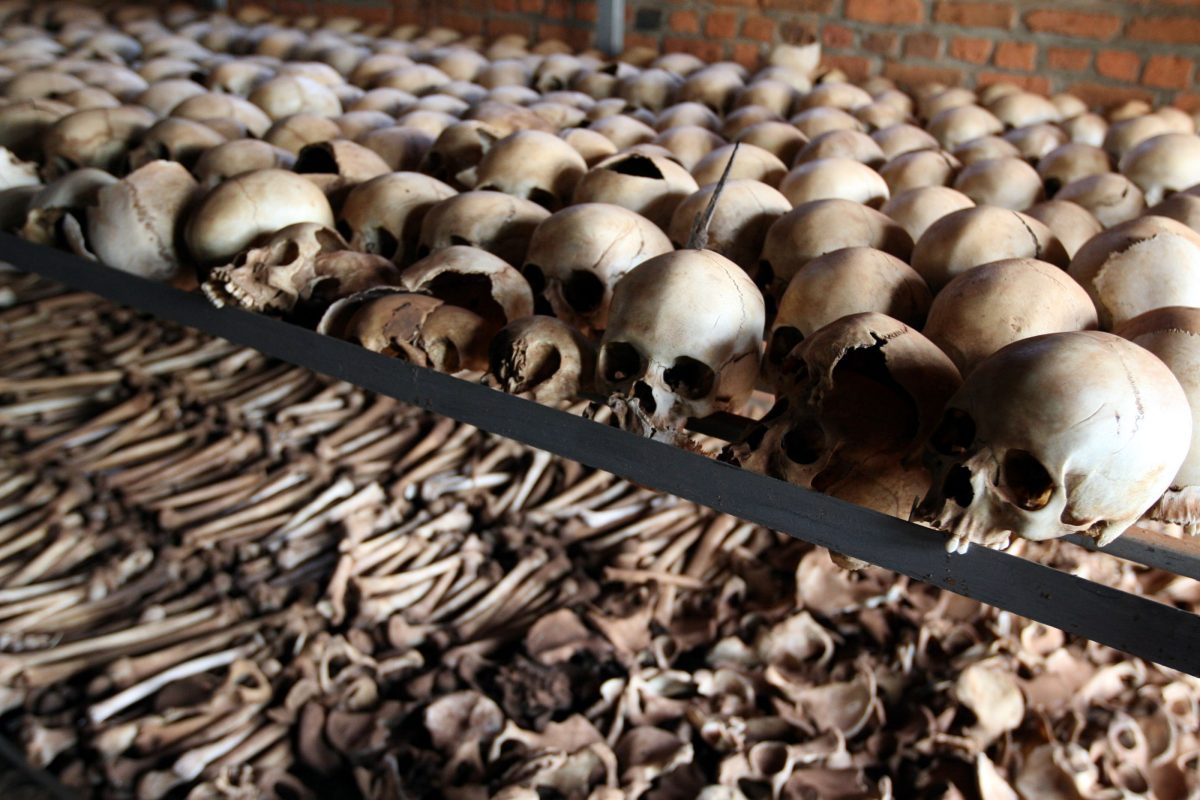
Results of Rwandan Genocide

Let’s call “a spade a spade.” Canada committed genocide against our Indigenous, Inuit and Metis people; a genocide no different than the ones committed by Nazi Germany during WWII, or Rwanda in 1990s.  I must confess, I was one of those Canadians that held to the idea that Canada has always been on the side of goodness and justice. I no longer think that, and I now recognize that Canada has a dark past. Let us not forget the Japanese Internment during WWII; another dark part of our history.

One of the Indigenous speakers talked about how our greatest hurdles come from within. He spoke about what he called, The Six Social Pathogens.

Merriam-Webster defines a pathogen as a specific causative agent of disease. It typically refers to a bacterium or virus, but in the context of the speaker, a pathogen is a causative agent of the disease of racism. The six pathogens are: assumptions, presumptions, stereotyping, profiling, bias (for, or against), and misappropriation of feelings. This speaker says everyone—whether we’re aware of it or not—has some or all of the for mentioned pathogens working within us.

Before I go any further, let’s define the six pathogens. An assumption refers to something that is accepted as true without proof, whereas a presumption refers to an idea that is considered to be true on the basis of probability. Stereotyping is a set idea that people have about what a person, or group of people, are like. Profiling is the act of suspecting or targeting a person on the basis of observed characteristics or behaviour. A bias is a particular tendency, trend, inclination, feeling, or opinion, especially one that is preconceived or unreasoned.  Misappropriation means to put to a wrong use, so misappropriation of feelings is putting our feelings to a wrong use.

These six pathogens don’t just apply to attitudes towards the Indigenous, Metis, and Inuit people. They can apply to any group. As I observe what is happening in my country and the world, I would argue that these pathogens are presently very active. A Statistics Canada report in 2016 (the latest statistics I could find), revealed that the number of violent hate crimes rose 16% from the previous year, driven by increases in common assault, criminal harassment and uttering threats.” A 2014 Statistics Canada report found that, in two-thirds of cases, victims of crimes don’t report these hate crimes to the police.

As long as these six pathogens are alive and active, and there is a “us verses them” attitude, racism, prejudices, hate crimes, and so on, will continue. As long as we identify with a tribe instead of the human race, there will be conflict. As long as Christians, or Jews, or Hindus, or Muslims, or Buddhists think their faith is the right faith, there will be religious conflict. As long as there is masculism, there will be feminism. As long as feminist seeks to promote the rights and equality of women—which they should—and see themselves as equal with men, there will be misogyny, which is the disrespect and oppression of women.

As long as conservatives, as opposed to liberals, think their philosophy is best, there will be political tensions. As long as there are people who believe in “White Supremacy,” there will be racism and hate crimes. As long as there is ethnocentrism—The Cultural Superiority Complex, there will be anti-immigration. I could go on and on. Neale Donald Walsch, in one of his Conversations With God books, said, “Your way is not the only way. It’s just a way.”  We humans need to integrate that. Unless humans are willing to understand and accept differences, our planet is headed down a dark path.

Now, I had to ask myself: Do I have these pathogens? When I thought about it, and was completely honest with myself, the answer is yes. Have I made assumptions, or presumptions? Yes. I once believed Christianity was the superior religion. Did I stereotype? Yes. I once thought that people living on the streets were just too lazy to get a job. Did I profile? Yes. I targeted “unique” individuals in high school. Did I have biases. Yes. I had preconceived ideas about Indigenous people—they were lazy, drunks, etc.—until I educated myself. Were my feelings misappropriated? Yes.  I had my opinions about the LGBT community until I got to know some of their members. I would judge people based on first impressions, when I knew nothing about them, or knew anything about their story. In other words, I didn’t follow the Muslim proverb:  To understand a man, you’ve got to walk a mile in his shoes, whether they fit or not. Other variations of this proverb are: walk a mile in someone else’s moccasins, put oneself in another’s shoes, put oneself in another’s place, walk a mile in someone else’s shoes, and see the world through someone else’s eyes. Now, I try to do this; I try and  understand others and avoid judging them. I’m not saying I’m always successful, but I try.  If humanity did the same, perhaps our planet would be in a better place.