Are We Canadians Really That Naïve?

Another commentary on systemic racial bullying

In my June 7th post, I asked the question: Does Canada Have a Systemic Racism Problem?  In that post, I mentioned that Stockwell Day, Doug Ford and Rex Murphy, all prominent Canadians, denied that systemic racism existed in Canada. It seems this trend has continued. The Guardian’s article, Canada urged to open its eyes to systemic racism in wake of police violence, refers to Quebec’s premier, François Legault, who refused to acknowledge the systemic nature of racism;  the biases, policies and practices entrenched in institutions. Canada’s RCMP commissioner, Brenda Lucki, said: “I think that if systemic racism is meaning that racism is entrenched in our [the RCMP] policies and procedures, I would say that we don’t have systemic racism.” The Globe and Mail’s article, Alberta watchdog questions benefit of collecting race data, says:

The agency that investigates serious incidents involving police in Alberta says it is unclear what would be gained if it tracked data on the race of people killed or injured by officers, arguing such statistics would do nothing to address systemic racism.

Why are so many prominent Canadians denying that systemic racism is a part of Canada? I wanted to know. The 2017 article, White Supremacy: An Illness Denied, by Huffpost says:

The late Dr. Frances Cress Welsing said in the Isis Papers: The Keys to the Colors, “that ‘racism is a system.’ Racism is white supremacy, and white supremacy is racism, she said. White people live in fear that they will lose their power, and so they perpetuate racism and white supremacy, all the while denying it…White supremacy is so ingrained in the minds of white Americans – no matter their geographic location – that it has become wearily accepted as something that ‘just is’…They are taught that black people are inferior, not equal to whites…

In the Now article, In Canada, white supremacy is the law of the land, Indigenous leader and activist, the late Arthur Manuel, said:

Canada, as a society, is still in denial about its historical and current colonialism when it comes to Indigenous peoples, and how the country is still largely based on the white supremacism of its founding document, the British North America (BNA) Act…  I know, calling Canada a white supremacist country sounds controversial to some, but it shouldn’t. Blacks and Asians were systematically excluded from Canada until well after the Second World War and the few allowed in were here for very specific reasons – cheap and expendable labour to build the transcontinental railway in the case of the Chinese and as domestics or railway porters in the case of Blacks.

As a former History teacher, I (#blog #blogger #YA, #authors, #somseason) know this to be true, and I have to agree with the Huffpost and Mr. Manuel. It explains why so many prominent Canadians deny systemic racism in Canada.  The answer to the question: Why are so many prominent Canadians denying that systemic racism a part of Canada? is that white supremacy is ingrained in the minds of white Canadians, that we’re taught that Indigenous, Asian, African Canadians, or any visible minority for that matter, are inferior, and that most Canadians deny Canada’s historical and current—yes colonialism is still happening today—colonialism.  Although there are various definitions of colonialism, essentially it is a practice of domination, which involves the subjugation of one people to another.

Now if you’re doubting that we’re indoctrinated to believe that visible minorities are inferior, watch this video:

The fact is, Canada is a country founded and built on white privilege and systemic racial bullying (#bullying #antibullying).  Just how does white privilege and systemic racial bullying work in Canada. Allow me to give you a concrete example.

The Edmonton Journal reported in its June 6th article, Northern Alberta chief accuses RCMP of beating him, ‘manhandling’ his wife over expired licence plate, that Fort McMurray Chief Allan Adam of the Athabasca Chipewyan First Nation accused Wood Buffalo RCMP of beating him, and pushing around his wife outside a Casino in March. According to the chief, the incident happened in the parking lot when officers noticed his truck had an expired license plate. Chief Adam says he had not realized his registration had expired. The Indigenous chief left the vehicle and confronted the officer when he wasn’t allowed to leave. At that point, a second officer who was not part of the initial stop ran over and tackled Chief Adam to the ground leaving his face bruised and cut. While Adam’s wife was released without charges, Chief Adam spent the night at a Wood Buffalo RCMP detachment and was released the following morning. He was charged with resisting arrest and assaulting an officer. Here is a video of the incident.

The video is rather disturbing, and granted, Chief Adam did become confrontational at times, but not enough to warrant the treatment he received in my opinion. The treatment of the RCMP was excessive. Don’t take my word, be your own judge. Watch the video.

I wondered if this was normal behaviour for the RCMP. I found a news article in the Global News titled, Tickets for expired vehicle registrations spike in Alberta. This article came out in 2017, just after April 2016,  when the government, as a cost saving measure, no longer sent out a letter in the mail reminding Albertans to renew their driver’s license or vehicle registrations . This article describes how a 32-year-old white male from Sherwood Park, Alberta, was pulled over by police. The police, as per normal procedure, checked to see if the driver had a valid driver’s license and vehicle registration. The Sherwood Park resident’s vehicle registration had expired because he had forgotten to renew it as he never received a reminder in the mail. He was fined $310. There was no manhandling or beating involved.

What struck me was how different the treatment of the white male was compared to the Indigenous man.  Both men had expired vehicle registrations. Both men said they didn’t realize their registration had expired.  The white male was fined and left alone, but the Indigenous man was beaten, arrested, and charged with assault. Why wasn’t the Indigenous man fined and left alone, like the white male in Sherwood Park?  Instead, a RCMP officer tackled him while the other officer was manhandling Chief Adam. Of course the Indigenous man was resisting. Who wouldn’t. Could systemic racism be a factor here? Was Chief Adam reacting to him being a constant target of racial profiling ? Racial profiling is the use of personal characteristics or behaviour patterns to make generalizations about a person. I wonder.

This sounds like systemic racial bullying and a case of white privilege to me. If you disagree with me, that is okay, but I have to wonder. Are you are disagreeing with me because you were taught that Indigenous people are inferior making it is okay for them to be treated disrespectfully? If I were hassled on a regular basis, I’m sure I would become bitter, angry and confrontational too.

I Didn’t Know That!

A commentary on Canada’s systemic racial bullying

I (#blog #blogger #YA, #authors, #somseason) recently read an article titled, Anti-racism march in central Alberta postponed after angry backlash, in the National Post. It’s tells of a person planning to hold an anti-racism march in a small town in Alberta, the province I live in. The protest was postponed following what its organizer calls a “bigoted backlash.” What caught my attention most was in the article, it quoted a man who wrote, “I will not welcome this to our town, the entire thing insinuates we have some sort of racial problem which we do not.” This exposes the fact that at least some Canadians believe Canada is not a racist country.

It got me wondering just how bad racial bullying (#bully #antibullying) is in my country. A CTV News’s article, Racism not a big problem? Activist says survey shows Canadians ‘in denial,’ discusses a 2019 survey which says, 8 in 10 Canadians believe race relations in their own communities are “generally good” with the largest majority of positive views held by white respondents (84%), and the smallest among Indigenous respondents (69%). The survey also divulges that Canadians were more likely to view racial discrimination as the attitudes and actions of individuals, and not a systemic issue embedded in Canadian institutions. Two-thirds of respondents said people from all races have the same opportunities to succeed in life.

If most Canadians believe all races have the same opportunities, is that the truth? The Canadian Human Rights Commission says:

“The roots of anti-Black racism and systemic discrimination in Canada run deep. They are historically embedded in our society, in our culture, in our laws and in our attitudes. They are built into our institutions and perpetuate the social and economic disparities that exist in everything from education, to healthcare, to housing and employment.”

The article, “White Privilege, Systemic Racism” BUILT INTO Society: Canadian Human Rights Commission states:

Canada is a racist nation steeped in perpetual white privilege. The descendants of the colonial founders of our country have racism and bigotry “built into their brains…Canadian society is intrinsically anti-black, not to mention anti-Muslim, anti-Sikh, anti-Jewish, as well as haters of homosexuals. PM Justin Trudeau has informed society that white Canadians are genocidal toward First Nations peoples.

Wow! That hurts. I was one of those Canadians that actually believed Canada was less racist than the USA. My eyes were opened when I started learning and teaching about Residential Schools in Canada. I thought I knew everything there was to know about Canada’s racial bullying of Indigenous peoples. After all, I was a history teacher.  Then I read in the Globe and Mail’s, When Canada used hunger to clear the West, which says:

…medical experimentation [was done] on malnourished aboriginal people in northern Canada and in residential schools. Rather than feed the hungry among its wards, government-employed physicians used pangs of hunger to further their research into malnutrition.

The article explains that for years, government officials withheld food from aboriginal people until they relocated to their allotted reserves, forcing them to trade freedom for rations. Once on reserves, food was placed in ration houses and was intentionally withheld for so long that much of it rotted while the people it was intended to feed fell into a decades-long cycle of malnutrition, suppressed immunity and sickness from diseases such as tuberculosis, resulting in thousands Indigenous people dying.

Now that sounds like genocide to me. Residential schools were a deliberate attempt at a cultural genocide, which I knew and taught about, but was there an attempt to deliberately starve Indigenous people?  Seems like it to me. What shocked me more was to learn of the shameful experimentation on Indigenous people in the residential schools. This was new information to me, and I taught history for most of my career. How could I be a history teacher, and not know this stuff. I knew nothing about African Canadians, since there were few in Western Canada where I grew up. I taught about the US’s history of slavery, but was slavery  a thing in Canada?

Ricochet uses journalism which seeks to illuminate the cultural and political diversity within Canada.  Its article, A forgotten history of slavery in Canada, says:

Institutionalized for 206 years, slavery occurred in Upper Canada (now Ontario), New France (Quebec), Nova Scotia, Prince Edward Island, and New Brunswick, and at least 4,000 people were its victims. French colonists initially bought slaves from U.S. colonies, and also brought them to New France from the West Indies, Africa, and Europe… “In my engagement with African Canadian history, I have come to realize that Black history has less to do with Black people and more with White pride,” writes Afua Cooper in The Hanging of Angélique: The Untold Story of Canadian Slavery and the Burning of Old Montréal. “That is why slavery has been erased from the collective consciousness. It is about an ignoble and unsavoury past, and because it casts Whites in a ‘bad’ light, they as chroniclers of the country’s past, creators and keepers of its traditions and myths, banished this past to the dustbins of history.”

That fits with what I said in my last post, Does Canada Have a Systemic Racism Problem?  In that post, I said history is a story or tale of what has happened, or may have happened, in the past. It seems to me that we Canadians have been told a tale; a myth; the myth that we are morally superior to the US.  I was never taught about slavery in Canada, nor was it a part of the school curriculum. As the article says, “Too many stories have been ignored, exaggerated, or capitalized on in Canada’s history.”

It astounds me how I can grow up not knowing about the Residential Schools and Slavery in Canada until in my 50’s and later. I learned when I  visited a residential school, which is now a indigenous university, just north of where I live, where a speaker told us that residents in the nearby town of St. Paul were completely oblivious as to what was happening in a school just a few kilometres outside their town. This part of our history was hidden from us.

We Canadians claim we embrace diversity and human rights as the foundation of our democracy, yet systemic racial bullying is prevalent in our country. In the article, A forgotten history of slavery in Canada, which I mentioned earlier, it states:

It is no longer racism which is the problem– it is “systemic racism”–a much more potent variety for the cultivation of punitive damages toward European-Canadians.

In my last post, I mentioned a definition of White Privilege as, “Privilege is when you think something is not a problem because you aren’t personally affected.”  Those of use of European heritage must stop believing the myths we’ve been taught, start doing our own research, and realize that Canada has a dark history. Our history books fail to tell us the full truth of our past. Open your eyes, fellow Canadians! Systemic racism, or systemic racial bullying, is part of our past. It is hypocritical to condemn racial bullying in the USA when we have a racial bullying problem ourselves.  It says in Matthew 7:5 of the Christian Scriptures; You hypocrite, first take the log out of your own eye, and then you will see clearly to take the speck out of your brother’s eye.” It is time for Canadians to “get our heads out of the sand” and admit the truth that we too have a systemic racial bullying problem, and start dismantling it.

Does Canada Have a Systemic Racism Problem?

A commentary on systemic racism

The Beaverton, a weekly satirical Canadian news show, recently had the headline: Country [Canada] responsible for the Indian Act, Chinese Head Tax, Komagata Maru, Africville, “None Is Too Many,” Japanese Internment Camps, Sixties Scoop, Residential Schools, Oka Crisis, and MMIWG declares itself not racist. This headline is based on prominent Canadians such as Stockwell Day, Doug Ford and Rex Murphy claiming that Canada is not racist. Stockwell Day is a former Conservative politician, a person I met with when he was a member of Alberta’s Legislature. Doug Ford is presently premier of Ontario, and Rex Murphy is a Canadian commentator and author.

These three prominent Canadians have all argued that Canada is not a racist country. Mr. Day resigned from several roles, such as a Telus board member, after being called out when he denied the existence of systemic racism in Canada on CBC’s “Power Play.” Here is a link to his comments (see Power Play).  Doug Ford drew strong criticism when he claimed that Canada doesn’t have the same “systemic, deep roots” of racism that the United States has. (see Doug Ford’s comments on racism ignore history of black trauma in Canada).  The National Post’s article; Rex Murphy: Canada is not a racist country, despite what the Liberals say, has the commentary by Mr. Murphy where he says:

“…Canada is a mature, welcoming, open-minded and generous country. It would be helpful if these Liberals kept the full story of this country in mind when discussing racism, and not leap so reflexively to grim characterizations of a country that, while not perfect, has been doing its best to be tolerant and welcoming.”

Canadians are watching the events of our southern neighbour and comparing them to Canada.  I (#blogger, #blog, #YA, #authors, #somseason) taught Social Studies for many years and I taught about the Indian Act, Chinese Head Tax, Africville, “None Is Too Many,” Japanese Internment Camps, Sixties Scoop, Residential Schools, Komagata Maru, the Oka Massacre, and MMIWG. I’ve provided links should you be interested in learning more about these Canadian events.  Most of us Canadians like to see ourselves as “mature, welcoming, open-minded and generous,” but the truth is, our history reveals that Canada’s past is filled with racial bullying (#bullying, #antibullying). The Beaverton’s list proves that. Systemic racism is just as much a Canadian problem as it is a USA problem, and likely a worldwide problem.  Systemic racism is all of the policies and practices entrenched in society that harm certain racial groups and benefit others. Canadian history books rarely, if ever, talk about the systemic racism, but that doesn’t mean it isn’t there.

The problem is, most people read a history book thinking it is fact. My students did until I taught them that history is an interpretation of the past, so it is not necessarily factual. Here is a social studies lesson.

What do I mean by past? It refers to primary documents; records created in the past that have survived into the present. Historians use a wide variety of written records, from personal diaries to statistical records kept by government departments, as the basis for their historical investigations. Historians even use non-document records, including photographs, moving pictures, the spoken word, architectural plans, or botanical (plant) inventories to find clues about how people lived in the past. All of these primary documents are the “raw materials” that historians work with as they attempt to figure out what happened in the past.

So, what is history? History is a story or tale of what has happened, or may have happened, in the past. Historical interpretation is the process by which we describe, analyze, evaluate, and create an explanation of past events. History involves debate, discussion, and conversation. Hugh Trevor-Roper wrote in 1957, ‘history that is not controversial is dead history’.

The Magazine, History Today, has an article titled, A Question of Interpretation, that says:

“Yet the truth is, if you take a group of historians working on the same problem, writing at different times and in different places – even if they all use their evidence in a scrupulous, honest, critical and informed way – the conclusions they reach may differ.”

The reality is, a historian’s belief system, values, biases, prejudices, and experiences, all influence how a historian interprets the past. Dan Brown, in The Da Vinci Code, wrote “History is always written by the winners. When two cultures clash, the loser is obliterated, and the winner writes the history books-books which glorify their own cause and disparage the conquered foe. As Napoleon once said, ‘What is history, but a fable agreed upon?” There is truth in that statement.

With my students, I always gave a concrete example, so let’s use 9/11, the alleged terrorist attack on the US.  I say alleged because there are many who question if we have been told the full truth. For example, Reader’s Digest has an article, 12 Questions People Still Have About 9/11, with questions that have not been given convincing answers. The Foreign Policy Journal’s article, 9/11: Finally the Truth Comes Out? Says;

Every informed person is aware that elements of the US government were involved either in the perpetration or a coverup of the 9/11 attacks

I certainly have questions about 9/11. The article, 737 Passenger Plane Possibly Struck and Damaged by Drone on Landing, shows damage done to a plane by a drone. This video shows a plane going through a twin tower.

My question is: How is that possible, when a drone can do that much damage to a 737 and when jet airplanes are made of light materials, like aluminum, can go through a tower designed to withstand the impact of a commercial jet airplane? My point is, the past (9/11 event) is open to interpretation. Anyway, enough about 9/11 questions. I’m starting to sound like a conspiracy theorist.

Returning to 9/11 as an example of historical interpretation. After the September 11 attacks on the World Trade Centre and the Pentagon, George W. Bush, president of the U.S. at the time, said; “Freedom itself was attacked this morning by a faceless coward, and freedom will be defended.”  Osama bin Laden, the alleged mastermind of the terrorist attack, said; “America has been hit by Allah at its most vulnerable point, destroying, thank God, its most prestigious buildings.”  Same past event, but two very different interpretations.

Does Canada have a systemic racism problem? Based on our past, I would say yes. We have legislative documents to prove it. In last week’s post, I mentioned a meme I saw that defined White Privilege as, “Privilege is when you think something is not a problem because you aren’t personally affected.” Perhaps those with white privilege, and those who aren’t personally affected, choose to see our nation the way they want to. They choose to deny that racial bullying exists in this country. It is time to wake up and take a closer look at our country folks! We’re not as innocent as we like to think.

Has the World Gone Mad?

A Commentary on the worlds rage over George Floyd’s murder

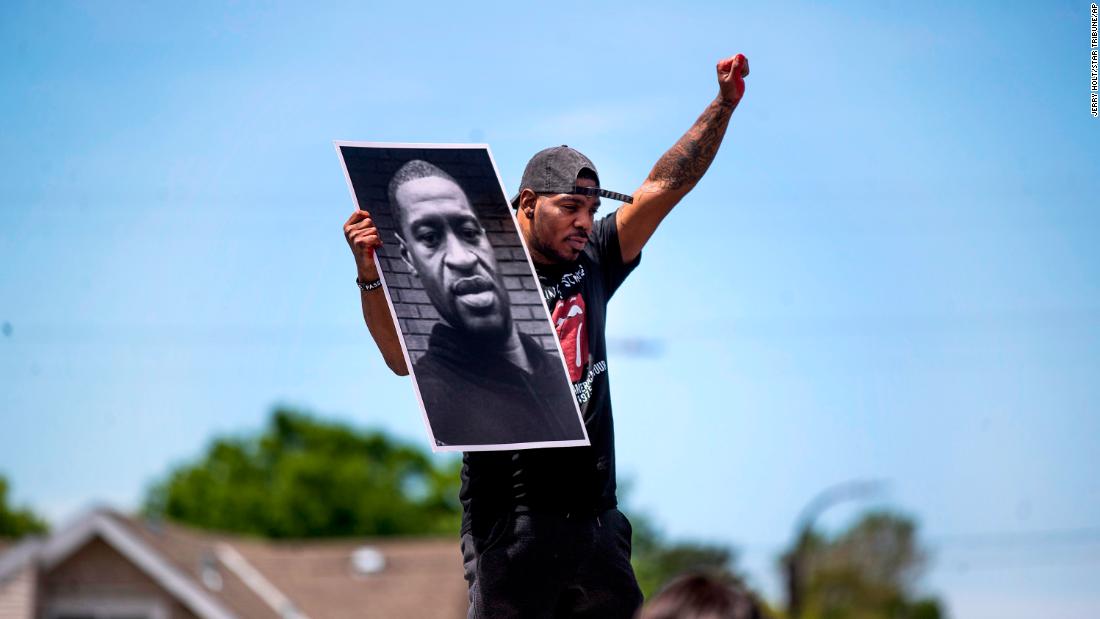
Jerry Holt/Star Tribune

Just when I think 2020 can’t get any worse, I (#blogger, #blog, #YA, #authors, #somseason) witness the United States fall into Chaos as rage spread across the country over police brutality of African Americans. The rage is expressed in the form of protests and riots resulting in destroyed businesses and damaged landmarks. Protests also occurred around the world, with people gathering in solidarity with protestors in Montreal, Vancouver, Jerusalem, London, Berlin, Paris, Copenhagen, Rio de Janeiro, and in 140 American cities. (See ‘We Are All George Floyd’: Global Anger Grows Over a Death in Minneapolis). World leaders in Addis Ababa, Ethiopia, and Beijing criticized the U.S’s rapidly eroding moral authority on the world stage.

This Chaos was sparked by racial bullying, (#antibullying, #bullying) with a police officer murdering George Floyd, a 46-year-old black man in Minneapolis.  Racial bullying is a type of racism where someone’s bullying focuses on race, ethnicity or culture. George Floyd’s friends and family referred to him as a “gentle giant,” and say he never made an enemy. Mr. Floyd is just the latest of a growing list of African Americans whose deaths have sparked outrage and protests across the nation.  Ahmaud Arbery was shot and killed in February in Brunswick, Georgia, by two white guys while he was out jogging. (See Ahmaud Arbery) Other victims of racial bullying are Breonna TaylorSandra BlandPhilando CastileEric Garner. Trayvon Martin.

People across the world are enraged with racism on the planet. We Canadians like to see ourselves as non-racist, but truth be known, it is a problem here as well. CBC News’ article, Thousands rally in Toronto to protest racism in wake of the death of Regis Korchinski-Paquet, reports that thousands of people attended a peaceful rally to protest racism around the world and to demand answers in the death of 29-year-old African Canadian Toronto resident Regis Korchinski-Paquet. In the case of Korchinski-Paquet, her mother had called for police assistance after a domestic conflict, requesting that her daughter be taken to the Centre for Addiction and Mental Health. Regis’ family has accused Toronto Police of pushing her off  of the balcony, while the police claim that she was on the balcony when their officers arrived, and that she jumped from the building.

In the article by The Guardian, Black Toronto residents 20 times more likely to be shot dead by police, study says, it reports that black people made up 61% of cases where police used force that resulted in death according to the Ontario human rights commission. In another CBC News article, Canadian police must acknowledge racial bias to fix it, Indigenous advocates say, it states there are numerous cases involving police use of force against Indigenous people. The pattern is police physically abuse Indigenous people, but rarely cause deaths unlike the U.S. Racial bullying is an issue in Canada, just as in the U.S.

Bullying of any kind, including racial bullying, is a learned behaviour. If it is learned, then it can be unlearned. Penn State University has an article, Racism is Learned at an Early Age, where it states:

Learned racism is the outcome of how often an individual is personally exposed to how dissimilar cultures and races of people interact with one another…improved relations and withheld judgments may occur if a child observes positive interactions and attitudes among diverse groups.

A huge part of racial bullying has to do with White Privilege. Alberta Civil Liberties Research Centre, (ACLRC) at the University of Calgary, defines White Privilege, or White-Skinned Privilege, this way:

“The unquestioned and unearned set of advantages, entitlements, benefits and choices bestowed upon people solely because they are white. Generally white people who experience such privilege do so without being conscious of it. Examples of privilege might be: ‘I can walk around a department store without being followed’; ‘I can come to a meeting late and not have my lateness attributed to my race’; ‘I can turn on the television or look to the front page and see people of my ethnic and racial background represented”

I can say, as a Caucasian, that I have never been followed around in a department store. Any time I’ve been late to a  meeting, my lateness was never attributed to being white. That cannot be said for Indigenous people or those of African heritage.  The vast majority of shows I watch on television are actors of my ethnic and racial background. That is not true for Indigenous people. Having white skin bestows benefit and privileges that white people often do not grasp. On the other hand, many people of colour, and Indigenous people, are likely highly aware of these privileges because they are denied them on a daily basis. Check out McIntosh’s “White Privileges” checklist in the ACLRC article and see if you answer yes to them as a Caucasian. I answered yes to them all.

I recently saw this quote in a meme: “Privilege is when you think something is not a problem because you aren’t personally affected.” That about sums it up. Those of us with White Privilege must understand that the outrage happening in the U.S, and around the world, is because African Americans, African Canadians, and Indigenous people have less privilege (less access to education, jobs, etc.), are labelled (lazy, unethical, etc.), are regularly bullied, and can’t even go for an evening walk in their neighbourhoods without fearing racial bullying. Caucasians must recognize their part in maintaining and benefiting because of white supremacy.

So long as White Privilege exists, and racism or intolerance is modelled to our children, this problem will exist. What is happening in the U.S. is very disturbing, but understandable. It’s a wakeup call for the human family to stop, reflect, and decide what type of world we want to live in. Do we want to live in a world where compassion is the norm, and true equality exits? Our political documents say we are all equal, but the reality is, this world lacks equality. As George Orwell’s Animal Farms says, “Some are more equal than others.” Like the pandemic, this is just another wakeup call for the human family. These protests are call for a better world, and we the people must demand it.

I’ve said many times in previous posts, there is a very simple solution to bullying, and that is following the Golden Rule which says, “Do unto others as you would have them do unto you,” and it’s true. If only it were that simple.

Is Nature Fighting Back?

A commentary about the environmental abuse

National Geographic’s recent article, To prevent pandemics, stop disrespecting nature, states:

Some people are viewing the pandemic as nature fighting back against all that has been and continues to be done to it. But it is human behavior and disrespect for nature that have been the cause. Furthermore, as we cope with the pandemic, climate change is marching ahead. It’s causing strong ripples of change in all ecosystems and probably tipping the balance in favor of pathogens currently unknown to us. The wise way forward is to invest in conservation and science, and to embrace nature and the glorious variety of life with which we share this planet. A healthy future for humanity and a healthy biodiverse planet go hand in hand.

Perhaps, science is catching up with Indigenous spiritual teachings since Indigenous people have been telling us since first contact to respect the earth. For example, Big Thunder (Bedagi) Wabanaki, Algonquin is credited with the quote: “The Great Spirit is in all things. He is in the air we breathe. The Great Spirit is our Father, but the Earth is our Mother. She nourishes us. That which we put into the ground she returns to us.” There is an ancient Indian (Indigenous) proverb that says, “Treat the earth well: it was not given to you by your parents, it was loaned to you by your children. We do not inherit the Earth from our Ancestors, we borrow it from our Children.” There is a Cree prophecy which says, “When all the trees have been cut down, when all the animals have been hunted, when all the waters are polluted, when all the air is unsafe to breathe, only then will you discover you cannot eat money.” On the Assembly of First Nations website it says,

Indigenous peoples are caretakers of Mother Earth and realize and respect her gifts of water, air and fire. First Nations peoples’ have a special relationship with the earth and all living things in it. This relationship is based on a profound spiritual connection to Mother Earth that guided indigenous peoples to practice reverence, humility and reciprocity. It is also based on the subsistence needs and values extending back thousands of years.

Indigenous people have always believed the earth to be a living organism. Now even some scientists are saying the earth is alive. It is called the Gaia hypothesis, first articulated by James Lovelock and Lynn Margulis in the 1970s, and argues that Earth’s physical and biological processes are inextricably connected to form a self-regulating, essentially sentient system. Check it out in the Astrobiology Magazine.

In another National Geographic article titled, Traditional indigenous beliefs are a powerful tool for understanding the pandemic, it states:

While this pandemic is presenting an opportunity to find meaningful ways to connect, it’s also a wake-up call with important lessons for the future. “If we don’t learn from now,” warns Mindahi Bastida Muñoz, general coordinator of the Otomi-Toltec Regional Council in Mexico, “then another thing, more powerful, is going to come.

I’ve  (#blog, #blogger, #YA, #authors, #somseason) always argued that this pandemic is a wakeup call for humanity. To borrow a phrase from singer Jidenna’s song, ‘Bully of the Earth,’ we humans cannot continue to bully the earth. Let’s call it earth bullying (#antibullying, #bullying), and by that, I mean, exploiting and abusing the planet by polluting the air, ignoring climate change, pouring plastics into the ocean, deforestation, and pouring tons of chemicals (herbicides, pesticides, etc.) into our environment. If the Gaia hypothesis is true, and the planet is a living organism, then we humans are killing Mother Earth.

Yet, we humans continue with the earth bullying. The New York Times has an article, The Trump Administration Is Reversing 100 Environmental Rules, listing all the environmental protection rules that have been or are in the process of being eliminated. CBC News’ article, Alberta regulator’s move to suspend oilpatch monitoring sets dangerous precedent, reports that oil companies say the environmental suspensions are necessary to maintain COVID-19 guidelines. In essence, the oil companies are claiming it is too dangerous to monitor the environment, yet it is not too dangerous for hair dressers to cut hair. The argument is weak to say the least, yet our provincial government fell for it. CBC News reports in their article, Alberta rescinds decades-old policy that banned open-pit coal mines in Rockies and Foothills, says the provincial government is cancelling environmental protections that have been in place since the 1970s,  making it easier for open-pit coal mining in some of the province’s most ecologically sensitive areas. This move has nothing to do with Covid. This is about corporate greed, and governments enabling companies to do so at the expense of the planet. It is shameful!

Back in 2018, the Guardian had an article, The Earth is in a death spiral. It will take radical action to save us, claiming “climate breakdown could be rapid and unpredictable. We can no longer tinker around the edges and hope minor changes will avert collapse.” There is no doubt for me that continued abuse of the earth will have dire consequences for humanity. National Geographic’s article, Ocean Threats, has a long list of threats to our oceans because of human activities. The Guardian has an article, Humans just 0.01% of all life but have destroyed 83% of wild mammals – study, essentially arguing that humans are the cause of a mass extinction. I’ve seen articles about bird populations declining, and bee populations being endangered. It is all alarming!

Having said that, CBS News’ article, Before-and-after photos show dramatic decline in air pollution around the world during coronavirus lockdown, is eye opening. The earth, whether a living organism or not, has shown an amazing ability to heal itself when allowed to.

A NASA photo

I’ve always argued in my posts that this COVID pandemic is a tool of some higher power—God, Allah, Yahweh, Universe, Source, or whatever you want to call it—bringing about transformation on our planet, creating a simpler, kinder, and more caring world, and that includes the earth. Maybe it is a reminder to humanity to respect and honour the earth instead of being a bully of the earth. The Indigenous people have always said that. If only we of European decent had listened to the Indigenous people instead of bullying them into submission, before bullying the earth.

Bullying Takes Many Forms

A commentary on the forms of bullying

I (#blog, #blogger, #YA, #authors, #somseason) stumbled upon an article, Bullying can happen in many different forms, which made me reflect on my life. The article says that most people accept physical bullying (punching, pushing) as bullying (#antibullying, #bullying), but that other forms of bullying are not as wildly accepted as bullying. In my recent post, Why do Things Have to be Complicated? I suggested that we make the definition for bullying simple, suggesting;  “If someone feels unsafe or threatened by another, then they are being bullied.”  Now I think I should expand that definition to read: “If someone feels unsafe, threatened, rejected, or inferior because of another, then they are being bullied.” The article lists some kinds of bullying as:

  1. Verbal (name-calling)
  2. Physical (punching, pushing)
  3. Social (leaving someone out of a game or group on purpose)
  4. Extortion (stealing someone’s money or toys)
  5. Cyberbullying (using computers, the Internet, mobile phones, etc. to bully others)

The article says all forms of bullying are harmful, but argues verbal bullying, which includes name-calling, is the most common type of bullying. I would have to agree. Never have I had a school yard supervision without some little person running up to me saying, “____called me a ____” You fill in the blanks. Social bullying was also a common occurrence as little ones often came up to me while on supervision saying, “____won’t play with me.”

This article provides an interesting fact (although it gives no reference as to where the fact came from). The article claims, “bullying happens to someone in Canada every seven minutes on the playground.” For the author talks for my book, A Shattered New Start, I use a PREVNet statistic, which is a Canadian authority on bullying research, who say, “75% of people say they have been affected by bullying.” I suspect that number is even higher. The point is, bullying is epidemic.

Another fact the article mentions is; “Other kids are watching 85% of the time when one kid bullies another kid. Adults, like teachers or parents, hardly ever see a bully being mean to someone else.” This is true. Kids are always watching whether you are aware of it or not. For my author talks, I use some stats provided by the Canadian Red Cross, who say; “Over half of bullied children do not report being bullied to a teacher,” and “71% of teachers say they usually intervene with bullying problems; but only 25% of students say that teachers intervene.” The latter stat is concerning.  The truth is, kids perceive teachers as ‘not caring’ or ‘turning a blind eye.” From my experience of a 35-year veteran retired teacher, I don’t believe that is true. It is more likely teachers don’t see the bullying happening. We only hear about it after the incident.

In my last post, I Want to Know, I solicited bullying stories, and I am still doing that. I offered a free promo code to the first 15 people who sent me their bullying story, and in return they could download a digital version of my book, A Shattered New Start, from the  iTunes bookstore. My email is: authorkjsom@gmail.com. The codes are valid until June 1st, so you need to hurry. Since I am asking to hear other people’s bullying stories, it is only fair that I share more of mine, so here goes.

Have I ever been the recipient of verbal bullying?  You bet, even as a teacher. I have been told to, pardon my language, “fuck off,” a few times as a teacher.  Probably the time that stands out most was during my second or third year as a ‘rookie teacher.’  I received in the mail—it was snail mail in those days—a hand written letter from a student, or maybe a group of students, telling me to quit teaching. The author(s) of the letter called me some unkind names. As an insecure ‘rookie teacher,’ that was a blow to the self-esteem. I felt unsafe, threatened, and rejected because of this letter. What might these kids do next, and in fact, my vehicle was “keyed” (scratched by a key) or vandalized around that time, so for all I know it was the same kids.

That letter bothered me for a long time, but I accepted it was kids being kids. As the American Academy of Child and Adolescent Psychiatry says,

Adolescents differ from adults in the way they behave, solve problems, and make decisions. Teenagers occasionally behave in an impulsive, irrational, or dangerous way…[they] don’t think things through or fully consider the consequences of their actions.” That doesn’t make the bullying okay, but it makes it understandable.

A home-schooling friend of ours, who recently read my book, A Shattered New Start, told me that it never occurred to her that a teacher might feel frightened by a student. I have on many occasions. My daughter, who is also a teacher, told me she has as well, and she teaches kindergarteners and grade ones. Students can be intimidating.

Have I ever been the recipient of physical bullying?  You bet. I remember in elementary school—don’t remember what grade I was in—my brother and I were walking home from school. We lived in a small town, so we had to walk to and from school. One of the town bullies was harassing my brother and I, calling us names, etc. What I remember most is the bully taking snow and rubbing it into our faces. My brother and I were scared as the bully was bigger than either of us. It was a humiliating and upsetting experience. We definitely felt unsafe and threatened by this bully.

Have I ever been the recipient of social bullying? You bet, as a non-athletic person. All throughout school, in gym class, I was always one of the last kids to be picked for a team. You remember those times because you feel unwanted and rejected. I felt inferior thinking I was not good enough to play on a team.

Have I ever bullied? I am sad to say, yes.  As a teacher, I once strapped a student. In the early part of my career, corporal punishment was the norm.  I hated it. Inflicting pain on a student felt awful.  The belief was, if you inflicted physical punishment on a kid, it would be a deterrent; ensuring they would never commit the infraction again. It seldom worked though.    I only ever did it once because it was such an unpleasant experience. There was nothing about being a bully—in my case, carrying out corporal punishment—that felt good.

So, there you have it; some more of my experiences with bullying. Please, please send me some of your bullying experiences, and don’t leave out your feelings. If you are kind enough to share your bullying experience, you’ll receive a free promo code to download a digital version of my book, A Shattered New Start, from the iTunes bookstore, but hurry, as the codes expire June 1st.

Email me at: authorkjsom@gmail.com.

Why do Things Have to be Complicated?

A commentary about what bullying is.

Adam Davies is a former member of Nova Scotia’s Chignecto-Central Regional School Board who writes commentaries. His editorial: Is the word bullying misunderstood? published in the Halifax, Nova Scotia’s (NS) Chronicle Herald asks the question: Is the word bullying maligned, misunderstood or meaningless? This is a valid question. If you google the definition of bullying on the Internet, you get 184 million hits. That is a lot of definitions, and they do vary greatly. Two people can witness the same incident, and one might say it was bullying (#antibullying, #bullying) and the other it was not. Why? Because each has a different definition of bullying.

Mr. Davies says;

Many of us know a textbook definition of the word, such as this from the provincial school code of conduct: ‘Bullying means behaviour, typically repeated, that is intended to cause or should be known to cause fear, intimidation, humiliation, exclusion, distress or other harm to another person’s body, feelings, self-esteem, reputation or property, and can be direct or indirect, and includes assisting or encouraging the behaviour in any way.’

However, he argues that definitions leave gaps. For example, Mr. Davies argues some bullying is dismissed as teasing or horseplay. “Clearly, bullying only means what we want it to mean,” he says. In his editorial, Mr. Davies refers to an incident that occurred in a NS High School. A CTV News report, Several students suspended after alleged assault at Cape Breton high school, describes the incident that Mr. Davies is referring to. It also has an edited video of the disturbing incident, which was a violent incident at the NS high school that was circulated on social media. It shows a grade 9 student being attacked by another student who literally throws the grade nine student across the locker room. The attacked student was hurt in the incident.

The author of the editorial argues that many news reports described the incident as an alleged assault but there were others who described it as bullying. Yahoo News’s headline, Assault caught on video at Cape Breton high school, calls it an assault, while the Halifax Chronicle Herald’s headline, Bullying incident in Coxheath shines light on complex issue, calls it bullying. So, the question is: Was it bullying or was it an assault? It’s both. An assault is a physical attack, and that clearly happened in the NS incident.

Before COVID-19, I (#blog, #blogger, #YA, #authors, #somseason) gave author talks for my book, A Shattered New Start. In that talk, I used a definition for bullying from Bullying Reporting and Prevention (BRIM), a company that develops Anti-Bullying Software. Their definition is designed for children, which is why I used it, and it says, “Bullying is when you keep picking on someone because you think you’re cooler, smarter, stronger or better than them.” Writing a post about the definition of bullying has made me realize even that definition is lacking. The Royal Canadian Mounted Police (RCMP) define bullying “as when there is an imbalance of power; where someone purposely and repeatedly says or does hurtful things to someone else.” Many definitions of bullying say to be bullying, it must happen more than once. The news reports fail to report whether the NS boy was repeatedly assaulted either physically (using your body or objects to cause harm), verbally (using words to hurt someone), or socially (using your friends and relationships to hurt someone). Based on my experience with school bullying, and using definitions like Oxford’s definition, “seek to harm, intimidate, or coerce someone perceived as vulnerable,” which makes no reference to repetition, the NS youth was definitely bullied.

Mr. Davies sites a 2019 research study on student well-being and experiences at school which was commissioned by the Nova Scotia Department of Education and Early Childhood Development. Their report, based on survey data from more than 54,000 students in Grades 4 to 12, did not use the terms bullying or bullying behaviour. Instead, students were asked if they felt unsafe or threatened at school within the past month. According to the survey, 19% of students felt unsafe or threatened at school, with 35% for students with physical disabilities, and 36% for those who identified as LGBTQ. The survey revealed that students were most worried about gossip, pranks and being left out by their friends and peers. Most disturbing to me was 61% of students surveyed reported feeling physically threatened and about half of those surveyed were concerned about cyber threats, including online gossip, hurtful messages and the spread of inappropriate photos.

The survey on student well-being and experiences at school reveals a lot of other things about school life, but the fact that 19%, or approximately one in five students, feel unsafe at school is alarming.

The Canadian Red Cross has a simple definition of bullying. It says, “bullying is a form of aggression where there is a power imbalance; the person doing the bullying has power over the person being victimized.” That is a good definition because it is simple, yet it encapsulates what bullying is. Perhaps there is an even a simpler definition of bullying? Maybe bullying should be defined as when a person is made to feel threatened or unsafe by another person. It’s simple, yet says what bullying is all about.

Bullying typically is defined by three elements: aggression, a power differential, and repetition. I have a problem with the repetition part. If a person feels threatened or unsafe, because of another person, even one time, then in my view, bullying has occurred. Under no circumstances should a person ever feel threatened or unsafe because of another individual. Many will argue that bullying is complex and you can’t define it as I just did, but perhaps that is the problem. Maybe we humans want to make everything more complicated than it has to be. To me it is simple. If a student, or anyone for that matter, feels unsafe or threatened by another, they are being bullied.

It’s Time to Express Our Gratitude!

A commentary on those who deserve recognition during this world pandemic

NetFlix docuseries Pandemic

I found that the news media since the coronavirus pandemic started is relatively quiet about bullying. That could mean one of two things. Either the media is focused solely on COVID-19 news, or bullying has declined drastically since stay at home orders have been implemented by governments.

I did find an article, published in March, in Education Week which is an independent news organization providing coverage on K-12 education. Its article titled, How Teachers Are Talking to Students About the Coronavirus, tells of information available for educators to help them challenge racist comments related to the coronavirus in the classroom. Its creator says teachers should confront bullying behaviour since it is counterproductive when bullying is trying to find a “scapegoat” for a global health crisis. In a recent post, I pointed out how the U.S. president at one time was referring to COVID-19 as the “Chinese virus,” claiming he does this because it was where the pandemic had its roots. This is laying blame on Chinese people and encouraging racial bullying against people of Chinese or Asian descent. Teachers are expected to counter bullying of any kind.

Haim Ginott, an Israeli child psychologist, psychotherapist, and a parent educator, once said; “Teachers are expected to reach unattainable goals with inadequate tools. The miracle is that at times they accomplish this impossible task.” I see teachers criticized more than valued.

I’m happy to see many wonderful posts thanking doctors, nurses, and other essential workers during this pandemic. These people deserve our recognition and gratitude, not only now but also during normal times. Here is a recent post I’ve seen:

Next year I don’t wanna hear about the Oscars, Grammys, Tonys or Golden Globes. I don’t want to see a single pathetic actor, actress, singer, celebrity or sports person on any red carpet!!!

Next year I want to see nurses, doctors, ambulance crews, health care support workers, shop workers and truck drivers, all essential workers, grocery store workers having free red-carpet parties with awards and expensive goodie bags. If this doesn’t happen it will be the biggest injustice ever!! Thank you! All of you that are working hard to keep us safe and allow us to have food on our table.

I couldn’t agree more. I’ve always believed there is too much value placed on celebrities of the performing and sports worlds. These people get paid outrageous amounts of money to entertain us. I have never understood why child care workers, for example, receive next to nothing for wages when these people care for our precious children. For me, it feels like our priorities are “out of whack.”

Our teachers are another group overlooked when it comes to receiving gratitude. As a retired teacher, I know how much work it is to teach in normal times. School closures due to the current world pandemic have forced teachers all over the world to teach differently. Suddenly, educators are forced to teach through technology. For some teachers, this is not a huge adjustment as they already post assignments and lessons online. These would be mainly high school teachers, but for elementary teachers, this is a huge shift.

My 29-year-old tech savvy daughter is one of them. She finds implementing creative ways to teach kindergarteners and grade 3 math students to be overwhelming, highly stressful, and time consuming, often working 12-hour days. She has calmed teachers in tears, overwhelmed with the technology. These are committed people who care about their students.

I’ve seen posts paying tribute to the graduate class of 2020 who will not experience a graduation ceremony. There are Facebook posts from the school I once taught at telling their students that they miss them. I’ve seen signs on school windows saying “we miss you.” As a former teacher, I have no trouble believing that teachers miss their students as my students were my family. After all, a teacher spends 6 or more hours a day with them.

bl020717Teachers are essential workers! They are the ones keeping a child’s education going during this crisis. I read all sorts of posts saying parents are home schooling their children, and in part they are. But true home schoolers prepare the lessons and evaluate their child’s progress. Most parents are ensuring their child is learning, but it is the teachers who are preparing and teaching lessons virtually, and are the ones evaluating the child’s progress.

My wife was out walking in our local park, and came across a grandmother. Practicing physical distancing, the grandmother said her daughter who is now homeschooling her children, was doing great. My wife responded, “You do understand that it is the teachers preparing the lessons, right?” This grandmother could not grasp what she meant.

CBS Boston’s article, Teachers Find Creative Ways To Reach Students During Coronavirus Closure talks about the challenges teachers have during this pandemic. A Fox News’ article, Parents praise teachers, say they deserve ‘billion dollars’ while homeschooling kids amid coronavirus outbreak, reveals the many U.S. parents who are grateful for their child’s teachers. I have not come across any Canadian articles, other than articles saying teachers are hosting virtual lessons, expressing gratitude for Canada’s teachers. This saddens me. I was happy to find that Buzzfeed, an American News outlet, has an article called, 23 Teacher Appreciation Tweets In Response To Schools Being Closed And Kids Being Quarantined At Home, showing tweets of gratitude for teachers.  French-American historian, Jacques Barzun, says; “In teaching you cannot see the fruit of a day’s work. It is invisible and remains so, maybe for twenty years.” We don’t see the impact of a good teacher until children are adults. I have had many students approach me long after they graduated to tell me the effect I had on their life.

It is time to include teachers in the list of essential workers during this time of world crisis. It is time to express gratitude for the work teachers do. They are doing their part to prevent the spread of COVID-19 by teaching virtually. They are doing their part to ensure your children and grandchildren’s education continues. The Greek philosopher, Aristotle, allegedly said, “Teachers, who educate children, deserve more honour than parents, who merely gave them birth; for the latter provided mere life, while the former ensured a good life.” In my view, teachers are invisible frontline workers!