World Leaders Need to be Good Role Models

A commentary on the world’s leadership

I came upon a news article in the Singapore Strait Times called, Bullying wrong, cannot be tolerated: Ong Ye Kung, which reports that Ong Ye Kung,  a Singaporean politician and the Education Minister, who saw a case of bullying on social media at Mee Toh School in Singapore. The case involved Primary 5 pupils who wrote insulting notes, such as “you are Dumbo the elephant” and “you look so ugly and you really turn me down, you make puke.” The Education Minister, Mr. Ong, posted on Facebook that he was “dismayed and troubled” after finding out that a group of pupils at the school had picked on a Malay classmate.  Malays are an Austronesian ethnic group native to an area collectively known as the Malay world. “This is bullying, (it) is wrong and cannot be tolerated anywhere, especially in schools,” the Minister said.

He also said:

“The school will ensure that the students understand the seriousness of their actions, and will follow up with appropriate disciplinary actions. Our values of kindness, respect for others, cohesiveness as a multi-racial society must be inculcated from a young age, with the collective effort of families, schools and community. This should be a lesson for all students to learn from.”

Now that is leadership! This article gives me hope that there are world leaders on the planet who are working to create a better world. This is a true example of a Servant leader who leads with a people-first mindset and believes that when people feel personally fulfilled, they’re more effective and more likely to be good citizens. Thankfully, there are Servant leaders in some of the world’s governments who oppose bullying behaviour and try to change bullying behaviour.

I also read a Washington Post article, How the bully in chief is turning America nastier, which reports on a new report from The Post saying, across the United States schools are reporting increased incidents of bullying and harassment directed at minority children in the time since Trump began running for office. The report says:

Since Trump’s rise to the nation’s highest office, his inflammatory language — often condemned as racist and xenophobic — has seeped into schools across America. Many bullies now target other children differently than they used to, with kids as young as 6 mimicking the president’s insults and the cruel way he delivers them.

It’s not all kids are bullying kids — some of the cases involve teachers telling minority students that Trump will deport them or saying things such as “You’re getting kicked out of my country” (and there are also cases, though much smaller in number, of pro-Trump children being bullied).

This is no surprise to me, as I’ve written posts about this before. Trump’s style of leadership is Narcissistic leadership, a leadership style in which the leader is only interested in him/herself. Their priority is themselves at the expense of others. Such leaders exhibit the characteristics of a narcissist: arrogance, dominance and hostility.

What is disheartening for me being a Canadian, and  living in a country so close to the U.S, is that Trump’s rhetoric influences impressionable Canadians, especially the youth. I read more and more cases of bullying incidents happening in Canada. Being I have worked under numerous principals during my 35-year teaching career, and witnessing how much a principal influences a school, it is not a stretch to imagine how much a country’s leader impacts a countries psyche. A country’s leader can impact their country in a positive way, such as in Singapore, or in a negative way, as in the United States.

It is so important that we elect leaders who have integrity and are Servant leaders.  Ronald Reagan once said, “The greatest leader is not necessarily the one who does the greatest things. He is the one that gets the people to do the greatest things.” That is what a Servant leader does. He or she inspires their people to do great things, such as deter bullying. Rosalynn Carter, wife of former president Jimmy Carter says, “A leader takes people where they want to go. A great leader takes people where they don’t necessarily want to go, but ought to be.”  She is so right! A great leader—a Servant leader—will lead their people to create a more loving and caring society; one where bullying does not exist. Harold Kushner, a prominent American rabbi, says, “Caring about others, running the risk of feeling, and leaving an impact on people, brings happiness.”  From what I observe, people are stressed, fearful, and unhappy. Is that because people are becoming more narcissistic influenced by Narcissistic leadership?

Jeb Bush, brother to former U.S. president George W Bush said, “But without a caring society, without each citizen voluntarily accepting the weight of responsibility, government is destined to grow even larger, taking more of your money, burrowing deeper into your lives.”  What I experience is government taking more of my money and removing more of my rights. Is that because people are becoming more narcissistic and less caring influenced by Narcissistic leadership? One has to wonder.

Leadership and Influence

A commentary on how much leaders empower their followers

A February 12, 2020 Washington Post article titled, Trump’s rhetoric has changed the way hundreds of kids are bullied in classrooms, caught my attention. It reported:

2016 online survey of over 10,000 kindergarten through 12th-grade educators by the Southern Poverty Law Center found that more than 2,500 “described specific incidents of bigotry and harassment that can be directly traced to election rhetoric,” although the overwhelming majority never made the news. In 476 cases, offenders used the phrase “build the wall.” In 672, they mentioned deportation.

The news article sites examples such as:

Two kindergartners in Utah told a Latino boy that President Trump would send him back to Mexico, and teenagers in Maine sneered “Ban Muslims” at a classmate wearing a hijab. In Tennessee, a group of middle-schoolers linked arms, imitating the president’s proposed border wall as they refused to let nonwhite students pass. In Ohio, another group of middle-schoolers surrounded a mixed-race sixth-grader and, as she confided to her mother, told the girl: “This is Trump country.”

In 2017, the LGBTQ-rights organization Human Rights Campaign reported on a new survey of more than 50,000 young people ages 13-18 “revealing the deeply damaging fallout the November [2016] election had on youth across the United States.” The survey included respondents representing a diversity in gender, sexual orientation, race, ethnicity and religious background. Seventy percent of those surveyed reported witnessing bullying, hate messages or harassment during or since the November election. Of those who witnessed such behaviour, 79% said it occurred more frequently following the start of the campaign.

I wondered how much my country is affected by this constant rhetoric we hear from our news media. The late and former Canadian Prime Minster, Pierre Trudeau, once said about the United States, “Living next to you is in some ways like sleeping with an elephant. No matter how friendly and even-tempered is the beast, if I can call it that, one is affected by every twitch and grunt.” Canada is very much influenced by the United States, and not always in a good way.

CBC News did a series examining the impact of peer-on-peer violence on students and parents. Its October 29, 2019 article,  ‘I get nightmares’: How racial violence in high schools is taking a mental toll on students,  says:

In a first-of-its-kind survey commissioned by the CBC with 4,000 youths aged 14 to 21, more than half of young people that identified as visible minorities say they’ve been subjected to racist names or comments. One in eight said it happened more than five times. The survey also revealed that 41 per cent of boys reported being physically assaulted in high school, and 21 per cent have been threatened with a weapon — a significantly higher percentage than girls.

Although it was not stated, or even implied, I can only speculate that many of the racist bullies where inspired by rhetoric heard by political leaders in Canada, and especially the U.S. How can young impressionable minds not be influenced by the constant racist and xenophobic rhetoric coming from a person touted as the most powerful leader of the free world? Leaders empower and inspire people and the current resident of the White House is empowering children to bully. I am keenly aware after teaching for 35 years how much power my words had and how those words influenced my students. Teachers are leaders, and any leader empowers their followers.

Leaderonomics is a leadership development organization based in Malaysia that began with the purpose of transforming nations through leadership. Its article, Leadership Is Influence, defines influence “as the ability to move others into action.” It goes on to say, “Whenever we can change someone’s thought process and convince them to pursue a course of action, we have exercised influence, hence demonstrated leadership. The heart of strategic influencing is to gain willing cooperation instead of mere compliance.”

When I observe our world leaders, many of them use influence to gain compliance as opposed to cooperation. The recent Senate Impeachment hearings were more about complying with their political party as opposed to cooperating to determine if the U.S. president did indeed commit a crime.

An article titled, Influence and Leadership, says:

Leaders lead by mobilizing people around a compelling vision of the future, by inspiring them to follow in the leader’s footsteps…Leaders lead by modeling ways of thinking or acting…The best leaders are teachers, mentors, and role models–and they accomplish the vast majority of their work through influence, not authority.

Leaders should inspire us to be the best we can, yet I see many world leaders modelling selfish and bullying behaviours. What our world is sadly lacking is leaders who inspire people to create a better world. The Born This Way Foundation was created to build a future that supports the wellness of young people through an evidence-based approach that is fiercely kind, compassionate, accepting, and inclusive. I share their vision. I wish to do my part in creating a world that is kind, compassionate, accepting, and inclusive for everyone regardless of age.

Mohandas Gandhi once said, “Be the change you want to see in the world.” Leaders can inspire us to do that. The Dalai Lama said, “I believe that individuals can make a difference in society. Since periods of change such as the present one come so rarely in human history, it is up to each of us to make the best use of our time to help create a happier world” John F. Kennedy said, “One person can make a difference, and everyone should try.” We can all do our part in creating a better world, and as I’ve said in some of my previous posts, there is a very simple solution to bullying, and that is following the Golden Rule, which says, “Do unto others as you would have them do unto you.”  It’s a rule that is recorded in many world religions and philosophies (see Wikipedia).

These Statistics are Shocking!

A commentary on bullying statistics

EducationCorner.com has some disturbing statistics on what students today have to deal with. It reports:

90% of students in grades 4-8 report have been harassed or bullied.

28% of students in grades 6-12 experience bullying.

20% of students in grades 9-12 experience bullying. (stopbullying.gov)

Over 160,000 kids refuse to go to school each day for fear of being bullied. (Nation Education Association)

6% of students report having witnessed bullying in their school, and over 71% say bullying is a problem.

Over 10% of students who drop out of school do so due to being bullied repeatedly.

Nearly 75% of school shootings have been linked to harassment and bullying.

The Daily Mail article, Secret Service study… reports that

“most [75% according to statistics above] students who committed deadly school attacks over the past decade were badly bullied, had a history of disciplinary trouble and their behaviour concerned others but was never reported, according to a U.S. Secret Service study.”

Canadian Red Cross says

Over half of bullied children do not report being bullied to a teacher

71 % of teachers say they usually intervene with bullying problems, but only 25% of students say that teachers intervene.

Over 71% of  young people say bullying is a problem, and they are right. These statistics prove it. I find these statistics alarming, especially as a retired educator. I spent my entire career dealing with school bullies. I’ve always tried to address bullying problems when they arose—which was often. When I read that 71 % of teachers say they usually intervene with bullying problems, but only 25% of students say that teachers intervene, I am astounded. Is this a perception problem, or are many teachers all talk? Just because some teachers say they intervene, doesn’t mean they do, and what is that intervention? Is it a “tongue lashing,” some form of punitive action, or forcing the bully to apologize? I’ve tried all these methods and none of them curb bullying.

During much of my teaching years, I considered bullies to be “bad” kids who needed a good dose of discipline, which  meant punishing them punitively with detentions, expulsions, and even corporal punishment. Yes, corporal punishment was used when I first began teaching. Typically, the aim of punitive approaches is either to punish the offender or satisfy feelings of revenge. Now I look at the problem of bullying differently.

American author, Joel Osteen says,

“Keep in mind, hurting people often hurt other people as a result of their own pain. If somebody is rude and inconsiderate, you can almost be certain that they have some unresolved issues inside. They have some major problems, anger, resentment, or some heartache they are trying to cope with or overcome.”

 Joel Osteen is right! Bullies are really hurting people who take their pain out on others. As the adage says, “hurting people hurt people.” I am convinced that when we start addressing the hurts of people who bully, we will begin to heal the hearts of these bullies. One less hurting person is one less bully!

My book, “A Shattered New Start,” is written with this mindset and shows the human side of bullies. It is a story about a bully, Ryan, and his victim, Jonathan. Here is a teaser.

Does Religious Bullying Occur?

A commentary on Religious Bullying

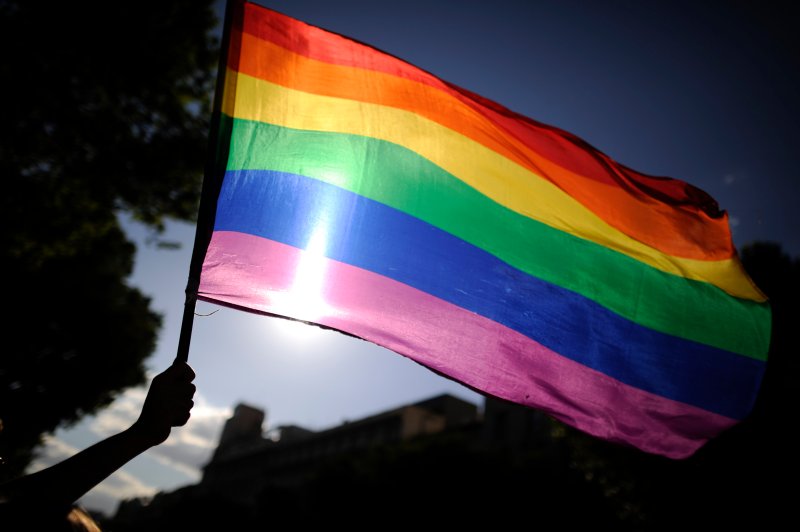
The National Post recently had an article titled, Christian school expels student who posed with rainbow birthday cake outside class, which reported that Whitefield Academy in Louisville, Kentucky, a private school, revealed it would expel students for living a lifestyle that does not align with Christian beliefs, and apparently that is exactly what they did. This Kentucky Christian school expelled a student after officials found a picture of her posing with a rainbow birthday cake. In the photo, the student of the Academy wears a long-sleeve sweater, with a rainbow on it, and she is sitting in front of a rainbow-coloured cake. For those who may not know, the rainbow is associated with LGBTQ pride. The Academy sent an email to the family outlining that the offending student, their child, showed “a posture of morality and cultural acceptance contrary to that of Whitefield Academy’s beliefs,” and the photo was the last straw in a series of “lifestyle violations.” Some Christian groups reject people who identify as LGBTQ. The mother of the student says that her daughter is not gay, not that it matters.

Rainbow flag  (Photo credit PEDRO ARMESTRE/AFP/GettyImages)

Stories like these infuriate me! Why? Because this student attending Whitefield Academy is a victim of bullying.  Legal Match defines bullying as “the use of intimidation to achieve a state of dominance over another person. Bullying can involve conduct such as, threats, force, coercion, aggressive or offensive behaviour.” The Kentucky student is being forced to change her ways, or risk being expelled from the school she chose to attend. That means the student was bullied! This is the use of coercion, or intimidation, so the school can achieve dominance over their students; to force students to comply with their belief system. That means they are bulling. Let’s call this what it is. This is religious bullying. The W. Y. Alice Chan website says “religious bullying occurs when a religious…person chooses to intentionally or unintentionally degrade another person emotionally, mentally, or physically based on: the bullied individual’s actual or perceived religious…identity, or the doctrines or practices of their belief.” In short, degrading another because someone’s religious beliefs do not align with theirs.

What is this type of behaviour really about? This is yet another story about intolerance, cold-heartedness, and exclusiveness of another.  American political activist, Rabbi Lerner, calls this ‘desanctification’, which is not being able to see the divine in the other. French philosopher, Pierre Teilhard de Chardin called it “dehumanization,” which is not being able to see the humanity in the other.

Barbara Coloroso  is an international bestselling author and is an internationally recognized speaker and consultant on parenting, teaching, school discipline, positive school climate, bullying, cyber bullying, grieving, nonviolent conflict resolution and restorative justice. I’ve never had the honour of hearing her speak, but some of my colleagues have. In her book, The Bully, The Bullied, and the Bystander, she says,

 Bullying is not about anger, it’s about contempt, a powerful feeling of dislike toward somebody considered to be worthless, inferior, and undeserving of respect. Contempt comes with three apparent psychological advantages that allow kids [or adults] to harm others without feeling empathy, compassion or shame. These are: a sense of entitlement, that they have the right to hurt or control others, an intolerance towards difference, and a freedom to exclude, bar, isolate and segregate others.

I like the way Ms. Coloroso defines bullying, and it applies to this story. The private Christian school is showing a powerful dislike toward the LGBTQ community and this student because she is perceived as being connected to the community. The community seems to be “considered to be worthless, inferior, and undeserving of respect.” The school appears to think it has the right “to harm others without feeling empathy, compassion or shame.”  It appears the school has “a sense of entitlement, that they have the right to hurt or control others, an intolerance towards difference, and a freedom to exclude, bar, isolate and segregate others.”  By all definitions, the school is bullying. Just because someone has different beliefs, or disagrees with your beliefs, doesn’t make their victims any less human. Every human deserves respect, regardless of what they may believe.

In fact, this is the stand of the United Nations (UN). In the UN’s Universal Declaration of Human Rights, it says in Article 1:

 All human beings are born free and equal in dignity and rights. They are endowed with reason and conscience and should act towards one another in a spirit of brotherhood.

Article 2 states,

Everyone is entitled to all the rights and freedoms set forth in this Declaration, without distinction of any kind, such as race, colour, sex, language, religion, political or other opinion, national or social origin, property, birth or other status…

As I said in my last post, there is a very simple solution to bullying, and that is the Golden Rule, which says, “Do unto others as you would have them do unto you.” Ironically, there are 6 scripture texts in Christian scripture that say this in one way or another. They are Matthew 7:12, Luke 6:31, Matthew 22:39-40, Mark 12:31, Romans 13:8-9, and Galatians 5:24. In my view, the behaviour of the Academy is unchristian, and hypocritical, since Christians are supposed to emulate Jesus Christ. Jesus was one of the most tolerant, understanding and accepting people ever, as Christian scripture says Jesus ate with many tax collectors and sinners (Mark 2:15). Tax collectors in biblical times were Jews who worked for the hated Romans. They were seen as traitors who enriched themselves at the expense of their fellow Jews. So, for Jesus to eat with them was a big deal. If every person lived by this simple rule, bullying would stop. It would make for a better world.

Why So Many Bully Leaders?

A commentary on bullying

I have talked to several people lately who are disillusioned with our government leaders and who question whether our democracy is working. I must agree, as I’ve said in other posts, I believe our democracy is broken. When corrupted leaders are elected, and governments refuse to listen to the people they govern, something is wrong with our democracy. In 1863, Abraham Lincoln delivered his Gettysburg Address in which he said, “Government of the people, by the people, for the people, shall not perish from the Earth.”

What did Lincoln mean? Well, that is open to interpretation, but for me, “of the people” means voters elect fellow citizens to represent their views in office. “By the People” are those same voters having a say in what their government does or does not do. This means governments listen to the people who elected them. “For the People” is government taking care of every single citizen by way of human rights, education, disaster aid and providing adequate health care.  It also means maintaining infrastructure and protecting the environment for the betterment of the entire community. This is what a democracy should be. Governments listen to their citizens and make decisions based on what is best for all citizens, and not exclusively on their political ideology.

As I observe our world, I see so many leaders who make decisions to benefit themselves and their buddies without listening to the people who elected them and often at the determent of the people they represent. Watching this behaviour takes me back to my teaching days when I had to deal with school yard bullies. Merriam-Webster dictionary defines a bully as someone who treats someone in a cruel, insulting, threatening, or aggressive fashion, or as someone who forces someone to do something by coercion. So many of our government leaders are acting like school bullies. Here are a few examples, and there are many.

This month, our provincial leaders, the government of the province of Alberta used closure—a process in parliamentary procedure aimed at bringing debate to a quick end—and passed Bill 22.  Without consulting with the owners of the various pension funds—teachers, nurses, public employees—this new law enabled the government to take over control of the pension funds.  This is no different than a school bully that takes another kid’s lunch money.  Our premier (provincial leader) and his government dishonourably took control of money that was not theirs to take. Over 30 000 teacher emails were sent to government members asking them to stop, but the government ignored what the teachers wanted and forced the bill through the parliamentary process in record time. No bill has ever been passed in that short of time.

Bill 22 also enabled our Premier to fire the Elections Commissioner who is investigating his party for what is called the Kamikaze Scandal; a scandal involving fraud, bribery, and more. Once again, I see a government leader bullying.  It is cruel and aggressive to fire someone unjustly. (see Global News:Bill 22)

Another premier, the premier of the province of Ontario, is accused of bullying as well. Teachers in Ontario are outraged at the unfair and unreasonable behaviour of their Premier and his government who are forcing professional educators to do something they object to. When force is used, then bullying is occurring. (see National Post)

The current leader of the free world—more accurately “bully of the free world”—uses Twitter and television to bully regularly. He has done this since becoming president. The Times headline; Trump accused of bullying witness in Ukraine impeachment hearing, reveals that the US president is “accused of witness intimidation in real time” regarding the impeachment House hearings. The Newsletter has an article titled, Donald Trump Is a Simple-Minded Bully. I could go on and on with examples of bully politicians, but I’m sure you get my point.

I hear of bullying in the workplace all the time. CBC’s  has an article entitled, Canadians bullied at work, which reports that an assistant professor of management at the University of Windsor’s Odette School of Business, who has spent years researching bullies in the workplace, says 40% of Canadians have experienced one or more acts of workplace bullying at least once a week.

This all got me wondering; Why do people bully? So many of these bullies claim to be people of faith or devout Christians, yet they bully. What happened to following the Golden Rule? There is an adage, “Hurt people, hurt people.” The only explanation I can come up with is bullies are hurt people who take their hurt out on others. The article 15 Ways Hurting People Hurt People lists the various ways hurting people pain others. So, I really have to wonder, are these bully politicians hurting people. I believe they are.

Many times I’ve witnessed bullying on a school playground, in a school hallway, or in a school classroom. Most often those students who bullied were hurting. Some felt rejected; rejected by their friends, or even rejected by their parents. Some were grieving, dealing with a broken friendship or even the death of someone. Many were in a great deal of emotional pain because they were feeling lonely. Some felt like failures, perhaps told by a parent, teacher or friend that they were. Some were feeling guilty about something they did or said. There are many types of hurts.

Click on book cover to order

This is one of the reasons I wrote my book, “A Shattered New Start,” a fictional book about bullying. I’ve seen so much bullying in my life, been the recipient of bullies on several occasions, and dealt with many in my career. Can bullies be reformed? For starters, healing their hurt can make a difference. It can be as simple as listening to a bully so they feel heard.

For more information on the book, click on the book website icon below or click:  Book Info

Screen Shot 2019-12-01 at 4.43.34 PM
Click here to go to book website

Bullies can be healed!

Remembrance Day, a Day to Yearn for Peace

A commentary on war and peace.

It amazes me how fast annual events come. Once again, November 11th Remembrance Day is upon us. It is the day of the year that marks the anniversary of the official ending of World War I, and in Canada Remembrance Day is a public holiday and federal statutory holiday with a notable exception of Nova Scotia, North West Territories, Ontario and Quebec. All Commonwealth Nations—an organization of 53 member states that were mostly territories of the former British Empire—observe this day as a day to remember the members of their armed forces who have died in the line of duty.

Since visiting Vimy Ridge and the Normandy Beaches in France four years ago, my wife and I have a much stronger appreciation for all soldiers and the sacrifice they made to maintain peace and freedom in our world. Visiting both WWI and WWII military cemeteries was a humbling experience to say the least. What shocked us the most was the age of many of the soldiers, some as young as 17 years old. We now attend the Remembrance Day ceremonies with much more gratitude and appreciation for all soldiers.

We Canadians, as well as all world citizens, must consider Remembrance Day an important day to observe. It is essential that we remember the soldiers who have lost their lives or put their lives on the line to protect the rights of its citizens.

Having said that, I began to wonder why we don’t have days that honour those who work towards peace. Why not a national holiday devoted to the promotion of peace. To my surprise, such a day exists. Why have I never heard of it? The United Nations (UN) International Day of Peace, or Peace Day, is observed around the world each year on September 21st. The UN established this day in 1981 with a unanimous United Nations resolution, and “Peace Day provides a globally shared date for all humanity to commit to Peace above all differences and to contribute to building a Culture of Peace” according to the International day of Peace website.

A Culture of Peace News Network survey in 2019 found internet reports concerning more than 655 celebrations of the International Day of Peace from 103 countries around the world. These included 280 events occurring in all states of the United States and 6 provinces of Canada, 144 events in Europe, 54 in countries formerly part of the Soviet Union, 53 in Africa, and 53 in Latin America and the Caribbean. There were 50 events in Asia and the Pacific, and 21 from Arab and Middle Eastern countries.

Only 6 provinces in my country held events? When I checked, the province in which I live, Alberta, did nothing. Is peace not a goal for Albertans? Every country, every state, and every province should be holding events on Peace Day. Let’s be honest, our world is at one of it’s most divided times in history. The potential for another world conflict is once again high. The idea of a planet getting along peacefully, respecting the planet’s diverse cultures and peoples, and living in harmony is badly needed. Every country on this planet, and every citizen living on this planet, should be excited about a day for peace that would promote a more peaceful existence.

There are always those pessimists who say, “peace will never be possible.” With that attitude, they’re probably right, but perhaps a global day to celebrate peace could change the attitudes of pessimists.

New Internationalist is a leading independent media organization dedicated to socially conscious journalism. It has an article called, 10 steps to world peace, which outlines a plan; a plan that I believe has merit.

  1. Stamping out exclusion. When corrupt elites prevent a decent life for the majority of people, an injustice occurs.
  2. Bring true equality between women and men. The larger a country’s gender gap, the more likely it is to be involved in violent conflict, according to research.
  3. Share wealth fairly. According to a World Bank survey, 40 per cent of those who join rebel groups do so because of a lack of economic opportunities.
  4. Tackle climate change. Ecological stress from global warming is proven to worsen conflicts over natural resources.
  5. Control arms sales. Promotion of arms sales and heavy military spending heightens global tensions.
  6. Atonement for past aggression on the international stage. The conditions forced upon Germany by the Treaty of Versailles, WWI’s peace treaty, were severe and widespread and set the seeds for WWII. I would also suggest reconciliation for past aggression on indigenous peoples must also happen.
  7. Protect political space. Across the world public dissent must be defended from repressive tools such as unplanned administrative regulation, misuse of anti-terrorist measures, arbitrary arrest and imprisonment, torture and murder.
  8. Fix intergenerational relations. Much conflict can be understood as a youth revolt against established corrupt systems run by, largely, older men. Recent climate change activism led by Greta Thunberg is a example of this.
  9. Build an integrated peace movement. International Day of Peace could be a way to achieve this.
  10. Look within. Peace starts with you and me.

There is no question that some countries are more peaceful than others. In fact, according to Global Finance’s article, The Most Peaceful Countries In The World 2019, the

most peaceful nations also enjoy lower interest rates, a stronger currency and higher foreign investment—not to mention better political stability and stronger correlation with the individual level of perceived happiness.

According to the 2019 Global Peace Index compiled by the international think-tank Institute for Economics and Peace (IEP) covering 163 independent states and territories that are home to 99.7% of the world’s population, the most peaceful country in the world is Iceland, followed by New Zealand and Portugal. I’m happy to say that Canada was ranked 6 out of 163 countries. The USA was ranked 128th. To create a peaceful world, peace starts with individuals, then peaceful nations.

Mahatma Gandhi, leader of the nationalist movement against the British rule of India, once said, “Peace between countries must rest on the solid foundation of love between individuals.”  Unless humanity can reach a point where diversity is celebrated, respect is the norm, and love is the motivating factor, world peace cannot happen.

Really the answer to achieve world peace is very simple. Leaders of countries must live by the Golden Rule. This Rule is the principle of treating others as you want to be treated. The Golden Rule is found in most religions and cultures. In some religions, the Golden Rule is considered an ethic of reciprocity. This rule appears in the positive or negative:

  • Treat others as you would like others to treat you (positive)
  • Do not treat others in ways that you would not like to be treated (negative)
  • What you wish upon others, you wish upon yourself (empathetic)

This principle is found in the Christian scriptures in Luke 6:31 which says, “Treat others the same way you want them to treat you.” (New American Standard Bible). If all people followed this rule, peace would occur and there would no longer be a need for soldiers.

Young People Who Inspire Me (Part Two)

A commentary on social activism.

In my last post, Young People Who Inspire Me (Part One), I talked about Greta Thunberg, Áine Peterson, and Malala Yousafzai, three young people who inspire because they are making an impact in our world. I would like to continue with that same theme.

Greta Thunberg

First, an update on 16-year-old Greta Thunberg from Sweden. She is participating in the first ever Youth Climate Action Summit which brings youth climate campaigners together from more than 140 countries and territories to share their solutions to climate change on the global stage, and deliver a message to world leaders that we need to act now.

In her address to the UN Youth Climate Summit, she said, “Yesterday, millions of people across the globe marched and demanded real climate action, especially young people. We showed that we are united and that we, young people, are unstoppable.” (see Greta delivers message). Her phrase, “young people are unstoppable,” caught my attention and I hope she is right since it is the youth that have  the most to lose.

CBC’s article, Protest for Climate Action, reported that millions of youth were taking to the streets in roughly 150 countries around the world on September 20,  as part of a global strike demanding world leaders gathering at a UN climate summit to adopt urgent measures to avert an environmental catastrophe. This worldwide strike was inspired by Greta, and these were her words to the demonstrators in New York:

“Right now, we are the ones who are making a difference. If no one else will take action, then we will…We demand a safe future. Is that really too much to ask?”

I am excited about what is happening, as it gives me hope for change. I believe the world must change and UN Secretary-General António Guterres who spoke at the UN Youth Climate Summit said it best when he said,

“I have granddaughters. I want them to live in a livable planet. My generation has a huge responsibility. It is your generation that must hold us accountable to make sure we don’t betray the future of humankind.”

I don’t have grandchildren yet, but I want my children and future grandchildren “to live in a livable planet.” I’ve seen many science fiction movies that portrayed an uninhabitable world because we humans left the planet in ruins. The UN Secretary-General is right. The youth must hold my generation accountable. Let’s be honest; my, and previous generations, have exploited planet Earth for profits. American politician, Bernie Sanders, said, “What a disgrace that it takes a 16 year-old to tell world leaders what they won’t acknowledge.” He is right! So, I say, bravo, to Greta. I support your cause and wish you success.

Craig Kielburger, age 12

Craig Kielburger, a Canadian human rights activist and social entrepreneur, is another young person who inspires me. I used him as an example  of how one person can make a difference when I taught high school Social Studies. He is the co-founder, with his brother Marc Kielburger, of WE Charity, as well as WE Day.  In 2008, Kielburger was named a Member of the Order of Canada.

Craig Kielburger’s story starts in 1995, when at age 12 years old, he saw the headline, Battled child labour, boy, 12, murdered, in the Toronto Star newspaper. This was a story about a young Pakistani boy, a child labourer, turned child-rights activist who was killed for speaking out against the carpet industry. Kielburger did research on child labour and asked his grade seven teacher to speak to his classmates on the topic. Several students wanted to help, and the group of pre-teens started “Kids Can Free the Children” (later named WE Charity).

In December that same year, Kielburger travelled to Asia to see for himself the conditions of child labourers. While there, he learnt that then Canadian Prime Minister, Jean Chrétien, was travelling to India. He requested to meet with Mr. Chrétien, and was initially denied.  Kielburger was granted 15 minutes with Chretien, and he advocated for Canadian action on the issue of child labour, making headlines across Canada and internationally.  Kielburger attracted international media attention with features on 60 Minutes and the Oprah Winfrey Show.

Remember, this young man was 12 years old when he was inspired to act against injustice. I have taught many 12 year-olds, and don’t recall any of them being that aware of injustice in the world.

Time Magazine’s article, The School Shooting Generation Has Had Enough, tells the story of the Never again MSD movement. The days after the Parkland shooting—On February 14, 2018, a gunman opened fire with a AR-15 style semi-automatic rifle at Marjory Stoneman Douglas High School in Parkland, Florida, killing 17 people and injuring 17 others—Parkland kids publicly called out the NRA’s influence on national politics, and shamed the leaders they considered responsible for the nation’s slack gun laws.

Cameron Kasky in centre

The Never Again MSD group was co-formed by Cameron Kasky and his high school friends in the first four days after the shooting.  After a vigil, Kasky invited Wind and Whitney (the other cofounders) to his house, and they came up with the name “Never Again.” The next three days after the shooting, the group gained over 35,000 followers on Facebook. The group organized a nationwide protest on March 24, 2018, where nearly a million kids across the country left class for the National School Walkout to protest the school-shooting epidemic.

The Never Again group has lost the attention of the media and is no longer making headlines. Since the groups inception, many attempts to discredit the Never Again movement have been attempted in the form of verbal attacks and misinformation by right-wing Republican leaders. Wikipedia provides specifics.

Many have spoken out about school shootings. Here are some of the most noteworthy in my opinion. Richard Patrick, an American musician, singer and songwriter, said:

“We live in a crazy time. Every other week, there’s a school shooting. There’s always some nutty thing and I’ve always wanted to kind of understand the crazy.”

Florence Yared, a Parkland school shooting survivor, spoke in Tallahassee, Florida. This was where five people were shot and wounded at the University Village Shopping Center. She passionately said:

“The right to bear arms … does not and never will overpower the individual’s right to life, liberty and the pursuit of happiness…We cannot protect our guns before we protect our children.”

Brandon Wolf, Pulse nightclub shooting survivor, also spoke in Tallahassee. He said:

“After first graders were gunned down at Sandy Hook, what did you do? Not a damn thing. After 49 people, including my two brothers, were murdered at Pulse, what did you do? Not a damn thing. You plugged your ears and turned your eyes and hoped that we would stop talking. Now we’re here again. 17 people are dead. 14 of them are children. And what did you do yesterday when given the chance to do something about it? Not a damn thing.”

According to Wikipedia, there have been 28 school shootings in 2019, and that doesn’t include the many that have been thwarted. The young people behind the Never Again MSD movement have just cause.

Young people—high school aged when they started—are leading the way for change and speaking out against injustice. Why? Because they have Didaskaleinophobia, the fear of school or fear of going to school. An American High School student, Jillian French, said, “We shouldn’t have to be scared (when we leave for school) that we are not going back home.” Like Greta Thunberg, high school aged youth have to tell leaders in the U.S. what they won’t acknowledge.

I applaud these young people, support their cause, and wish them success! Thank God for youth! They just might save the world.

Is Democracy Broken?

A commentary on the present state of the world’s democracies.

A few weeks ago, we visited friends in a nearby city. During one of our discussions, this friend mentioned that he is disillusioned with democracy (not his exact words). I asked him why and he questioned the type of leaders that were being elected; leaders who were racist, narcissistic, misogynistic, anti-immigration, and who support white supremacy. This got me thinking. I began to wonder if democracy is broken.

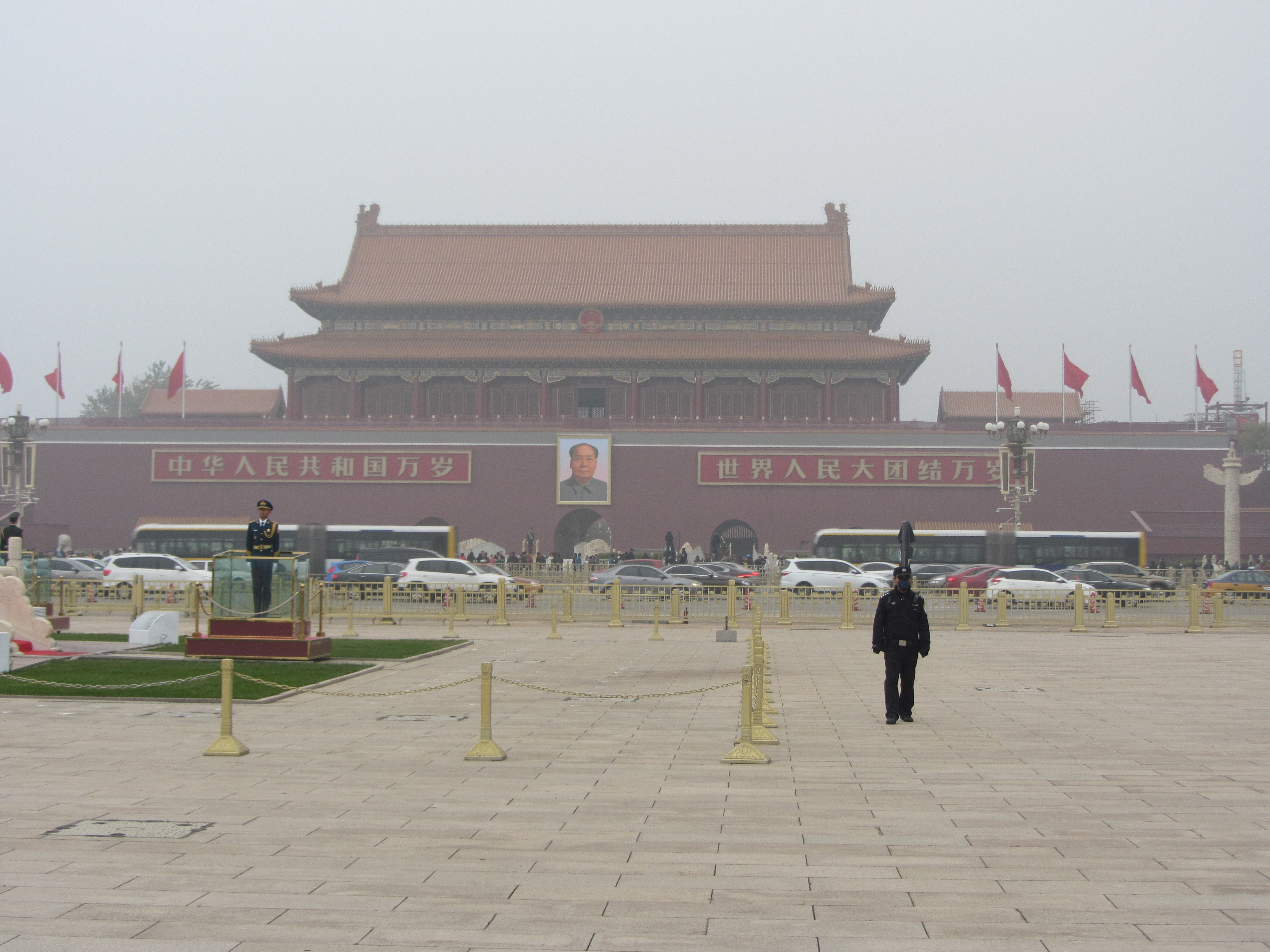
When I visited China last November, our tour guide said something that made me question democracy. Our guide said the democratic world accomplishes little as governments are always squabbling. He further explained, whenever a democratic country elects a new political party, the previous party’s policies are reversed, thus little progress is made. I elaborated on this in my post on China (see China post). This begs the question: Are our democracies working efficiently? Is there something wrong with the way democracy is presently practiced?

Presently, there is increasing popularity in electing extremist right-wing politicians. According to Reference, neoconservatism is considered to be one of the more extreme right-wing ideologies. It takes a firm stance against anti-authority media and aligns itself with religious conservatives. Religious conservatives have specific positions on certain political issues such as abortion, homosexuality, creationism, science education, treatment of prisoners, immigration, and many other issues. Typically, conservative Christians favour anti-abortion laws, oppose gay marriage,  and many have a hardline against illegal immigration (see Intelligence Report).

Extremist right-wing politicians also tend to be nationalistic. In high school social studies—one of the courses I taught for many years—nationalism is defined as the belief that nations will benefit from acting independently rather than collectively, emphasizing national rather than international goals. Nationalist leaders are gaining momentum in Europe (see BBC). American president Donald Trump calls himself a nationalist. (See HuffPost). There are many extremist right-wing nationalistic politicians being elected. Why is this so? Does this mean democracy is failing us?

When our politicians act more like school aged children with their bullying behaviours and temper tantrums when they don’t get their way, I believe democracy is broken. When it becomes acceptable to vote for politicians who spout rhetoric that is divisive and “unchristian,” democracy is failing us.  When it becomes acceptable for the US president to use profanity, such as the “F” bomb (listen to Trump), we are electing a breed of politicians of the lowest kind.

Israeli Prime Minister Benjamin Netanyahu faced criminal investigations for fraud and bribery. A google search shows numerous US politicians under investigation. The US president is under investigation for obstruction of justice as well as other crimes. Two former Brazilian presidents were investigated for a scandal known as Operation Car Wash (see BBS).

My province recently elected a premier who was under investigation of voter fraud (see CBC). I thought politicians where supposed to have integrity. Even more disturbing for me, is our newly elected premier handed out earplugs to his caucus, clearly indicating his refusal to hear debate from democratically elected opposition members about a bill that removes some bargaining rights for government workers (see HuffPost). This kind of behaviour from a leader stems from arrogance; a leader who thinks his party knows best and those who have alternative views are to be ignored. I thought the heart of democracy was healthy debate. Apparently not in my province. Former US president, Barack Obama said, “The strongest democracies flourish from frequent and lively debate, but they endure when people of every background and belief find a way to set aside smaller differences in service of a greater purpose.” I believe this to be true. When healthy debate is squashed in our legislatures, then as far as I am concerned, democracy is broken.

That leads us to the question: What is wrong with democracy? Former British Prime Minster, Winston Churchill once said, “The best argument against democracy is a five-minute conversation with the average voter.” Perhaps he is onto something.  Louis L’Amour, an American novelist said, “To make democracy work, we must be a nation of participants, not simply observers. One who does not vote has no right to complain.” Exactly!

My brother and his wife worked during our province’s recent election, and both expressed how appalled they were by the electorate. They said they had numerous voters in their 30s and 40s who were voting for the first time. They also said they fielded numerous questions asking how the voting process works. Both my brother and his wife were shocked when several voters asked them why there were names on the ballots which they did not recognize. Many of them were looking for the party leaders’ names on the ballot. I was shocked to hear this. This is why, at least in part, democracy is broken. The voters are failing democracy.

Former US president, Franklin D. Roosevelt said, “Democracy cannot succeed unless those who express their choice are prepared to choose wisely. The real safeguard of democracy, therefore, is education.” That is it! Voters are too apathetic to educate themselves. That explains, at least in part, why Donald Trump won the 2016 election.  Trump’s supporters are largely uneducated, according to polls (see Inquisitr).

Former US president, John F. Kennedy, once said, “The ignorance of one voter in a democracy impairs the security of all.”  I have to wonder if unprepared voters, who buy into the dangerous rhetoric being spouted by extremist right-wing nationalistic politicians is putting world security at risk. History teaches extreme nationalism started both world wars. Jose Marti, a Cuban poet, writer, and nationalist leader said, “The first duty of a man is to think for himself.”  Democracy is literally “rule by people,” and is a system where the citizens choose their leaders or government. To fix our broken democracy, people need to start thinking for themselves and educating themselves. Voters need to make informed decisions when voting, and that means determining what news stories are true and which are “fake news” stories. This does not seem to be happening at the moment as most voters believe the rhetoric spouted by extremist right-wing nationalistic politicians. English humourist, writer, and journalist, Allan Coren says, “Democracy consists of choosing your dictators, after they’ve told you what you think it is you want to hear.”  Ralph Waldo Emerson, American 19th-century philosopher says, “Democracy becomes a government of bullies tempered by editors.” Are we electing dictators? Seems that way to me. Are we electing bullies?  I see this more and more, and voter ignorance is to blame.

Former US president, Abraham Lincoln said democracy is “government of, by and for the people.”  I still believe this is why democracy is the better system when it is not broken. Former US president Barack Obama said, “No party has a monopoly on wisdom. No democracy works without compromise.” Perhaps compromise is another problem. We’re living in a polarized time in history and compromise seems to have gone out the window. Each political party thinks they know best and are unwilling to listen to other parties’ views. An openness to different points of views and a willingness to compromise must occur for democracy to work effectively! Politicians must unite and do what is best for all. 

I know it is more complicated than what I’ve outlined, and democracy has problems other than those I’ve addressed above. The issue of corporate donations to help political parties get elected, for example.  Corporate wealth increases when a corporation’s preferred political party is elected and makes policies that perpetuate corporate greed. An informed electorate that votes responsibly is a good start to fixing our broken democracies.