The Two Faces of a Pandemic

A commentary on the current pandemic

The NetFlix docuseries Pandemic

As I watch the world literally shut down because of the virus known as COVID-19, and as my wife and I are practicing “social distancing” by self-isolating in our home, I can observe and reflect on the world’s new reality.  American author, J Lynn, says, “Sometimes when things are falling apart, they may actually be falling into place,” or American singer-songwriter, Morgan Harper Nichols who says, “Going through things you never thought you’d go through, will only take you places you’d never thought you’d get to.” Perhaps this is what is happening. This COVID-19 pandemic may involve forces we don’t understand that are taking the world in a new direction. My wife and I call it a “reset.”

I been  feeling like the world is out of control for a while now. Democracy in its present form is failing us. Corporate greed is irreparably damaging the planet. Racism and hate are on the rise. I could go on and on.

Tough times—presently the COVID-19 virus—can bring out the best in people, and the worst in people. I witnessed and read about both. First, the worst in people.

A personal example is recently a parent asked our great nieces to stop at the grocery store on the way home from school to pick up some milk. It just so happened that they got the last jug. Three ladies with their carts stocked piled with various products followed them around the store, calling them selfish. They were traumatized by the experience and refused to ever go back during this pandemic.

Barbara Coloroso,  an international bestselling author says this about bullying:

Bullying is not about anger, it’s about contempt, a powerful feeling of dislike toward somebody considered to be worthless, inferior, and undeserving of respect…

These three selfish ladies were feeling contempt towards our nieces because they were not able to get the last jug of milk. They likely—I’m speculating—considered two teenagers to be inferior and undeserving of their respect. The Japan Times has an news report titled, Japan sees rise in harassment, bullying and discrimination linked to COVID-19, so bullying is occurring as a result of this pandemic.

The HuffPost article, Forced To Finally Take Coronavirus Seriously, Trump Turns To Racism, reports that after months of properly referring to the virus as Coronavirus or COVID-19, the U. S. president is now insisting on calling it the “Chinese virus.” Trump claims he does this because it is where the pandemic has its roots, but what he is really doing is laying blame on Chinese people and encouraging prejudice and violence against people of Chinese or Asian descent. The American leader is promoting hatred, racism, and bullying. Is racism bullying, you ask?

Childline, based in London, England, is a confidential service for children, says this about bullying and racism.

Racial bullying is a type of racism where someone’s bullying focuses on your race, ethnicity, or culture. Racism and racist bullying can include:

  • being called racist names or being sent insulting messages or threats
  • having your belongings damaged or having to see racist graffiti
  • personal attacks, including violence or assault
  • being left out, treated differently or excluded
  • people making assumptions about you because of your colour, race or culture
  • being made to feel like you have to change how you look
  • racist jokes, including jokes about your colour, nationality race or culture.

What Trump is doing is shamefully encouraging people to be exclusive of Asians and to treat Asians differently. Racism is bullying!

I have also observed that this pandemic is doing wonderful things. China and Italy’s pollution have drastically lessoned. (see CBC News). Fish and dolphins have returned to Venice’s canals because of halted tourism (see Venice). Italians sing from their balconies during pandemic lockdown (see Singing). People are posting all sorts humorous memes (see example below) to uplift people’s spirits, and posting creative ways to de-stress during this difficult time.  I could go on.

What I find most interesting during this difficult time in history, is people’s attitudes seem to be shifting. I’ve heard people say, “I feel relief and less stressed now that my commitments are gone.” One person told my wife that she has never felt better now that she isn’t working because of social distancing.  People seem to be coming to the realization that maybe their lives have been out of control, and this pandemic is forcing them to slow down. The world was required to “be still” as the Christian scriptures say, “Be still and know that I am God” in Psalm 46:10. Many in the world are beginning to see all humans as a family, saying things like, “We’re all in this together,” and “We all must do our part to prevent overwhelming our health care systems.” Humanity is reaching out to one another.

For example, people are making posts of encouragement. I just read this one:

This too shall pass. I just wanted to take a moment today to remind everyone that storms do end and nothing lasts forever. Things may get worse before they get better, but as a world we will get through this crisis together and emerge stronger because of it. This is a time to demonstrate our capacity to come together to help, care for, and support one another.  We can use these struggles to reforge our faith in one another and prove to ourselves our capacity to tackle difficult global challenges collaboratively. Like our ancestors before us did after the wars, we can use this humbling situation as a catalyst for new grow and new direction for the century to come.

Perhaps this is the silver lining! Perhaps this pandemic is transforming the world into one that is simpler, kinder, and more caring. Let’s hope so.

World Leaders Need to be Good Role Models

A commentary on the world’s leadership

I came upon a news article in the Singapore Strait Times called, Bullying wrong, cannot be tolerated: Ong Ye Kung, which reports that Ong Ye Kung,  a Singaporean politician and the Education Minister, who saw a case of bullying on social media at Mee Toh School in Singapore. The case involved Primary 5 pupils who wrote insulting notes, such as “you are Dumbo the elephant” and “you look so ugly and you really turn me down, you make puke.” The Education Minister, Mr. Ong, posted on Facebook that he was “dismayed and troubled” after finding out that a group of pupils at the school had picked on a Malay classmate.  Malays are an Austronesian ethnic group native to an area collectively known as the Malay world. “This is bullying, (it) is wrong and cannot be tolerated anywhere, especially in schools,” the Minister said.

He also said:

“The school will ensure that the students understand the seriousness of their actions, and will follow up with appropriate disciplinary actions. Our values of kindness, respect for others, cohesiveness as a multi-racial society must be inculcated from a young age, with the collective effort of families, schools and community. This should be a lesson for all students to learn from.”

Now that is leadership! This article gives me hope that there are world leaders on the planet who are working to create a better world. This is a true example of a Servant leader who leads with a people-first mindset and believes that when people feel personally fulfilled, they’re more effective and more likely to be good citizens. Thankfully, there are Servant leaders in some of the world’s governments who oppose bullying behaviour and try to change bullying behaviour.

I also read a Washington Post article, How the bully in chief is turning America nastier, which reports on a new report from The Post saying, across the United States schools are reporting increased incidents of bullying and harassment directed at minority children in the time since Trump began running for office. The report says:

Since Trump’s rise to the nation’s highest office, his inflammatory language — often condemned as racist and xenophobic — has seeped into schools across America. Many bullies now target other children differently than they used to, with kids as young as 6 mimicking the president’s insults and the cruel way he delivers them.

It’s not all kids are bullying kids — some of the cases involve teachers telling minority students that Trump will deport them or saying things such as “You’re getting kicked out of my country” (and there are also cases, though much smaller in number, of pro-Trump children being bullied).

This is no surprise to me, as I’ve written posts about this before. Trump’s style of leadership is Narcissistic leadership, a leadership style in which the leader is only interested in him/herself. Their priority is themselves at the expense of others. Such leaders exhibit the characteristics of a narcissist: arrogance, dominance and hostility.

What is disheartening for me being a Canadian, and  living in a country so close to the U.S, is that Trump’s rhetoric influences impressionable Canadians, especially the youth. I read more and more cases of bullying incidents happening in Canada. Being I have worked under numerous principals during my 35-year teaching career, and witnessing how much a principal influences a school, it is not a stretch to imagine how much a country’s leader impacts a countries psyche. A country’s leader can impact their country in a positive way, such as in Singapore, or in a negative way, as in the United States.

It is so important that we elect leaders who have integrity and are Servant leaders.  Ronald Reagan once said, “The greatest leader is not necessarily the one who does the greatest things. He is the one that gets the people to do the greatest things.” That is what a Servant leader does. He or she inspires their people to do great things, such as deter bullying. Rosalynn Carter, wife of former president Jimmy Carter says, “A leader takes people where they want to go. A great leader takes people where they don’t necessarily want to go, but ought to be.”  She is so right! A great leader—a Servant leader—will lead their people to create a more loving and caring society; one where bullying does not exist. Harold Kushner, a prominent American rabbi, says, “Caring about others, running the risk of feeling, and leaving an impact on people, brings happiness.”  From what I observe, people are stressed, fearful, and unhappy. Is that because people are becoming more narcissistic influenced by Narcissistic leadership?

Jeb Bush, brother to former U.S. president George W Bush said, “But without a caring society, without each citizen voluntarily accepting the weight of responsibility, government is destined to grow even larger, taking more of your money, burrowing deeper into your lives.”  What I experience is government taking more of my money and removing more of my rights. Is that because people are becoming more narcissistic and less caring influenced by Narcissistic leadership? One has to wonder.

Leadership and Influence

A commentary on how much leaders empower their followers

A February 12, 2020 Washington Post article titled, Trump’s rhetoric has changed the way hundreds of kids are bullied in classrooms, caught my attention. It reported:

2016 online survey of over 10,000 kindergarten through 12th-grade educators by the Southern Poverty Law Center found that more than 2,500 “described specific incidents of bigotry and harassment that can be directly traced to election rhetoric,” although the overwhelming majority never made the news. In 476 cases, offenders used the phrase “build the wall.” In 672, they mentioned deportation.

The news article sites examples such as:

Two kindergartners in Utah told a Latino boy that President Trump would send him back to Mexico, and teenagers in Maine sneered “Ban Muslims” at a classmate wearing a hijab. In Tennessee, a group of middle-schoolers linked arms, imitating the president’s proposed border wall as they refused to let nonwhite students pass. In Ohio, another group of middle-schoolers surrounded a mixed-race sixth-grader and, as she confided to her mother, told the girl: “This is Trump country.”

In 2017, the LGBTQ-rights organization Human Rights Campaign reported on a new survey of more than 50,000 young people ages 13-18 “revealing the deeply damaging fallout the November [2016] election had on youth across the United States.” The survey included respondents representing a diversity in gender, sexual orientation, race, ethnicity and religious background. Seventy percent of those surveyed reported witnessing bullying, hate messages or harassment during or since the November election. Of those who witnessed such behaviour, 79% said it occurred more frequently following the start of the campaign.

I wondered how much my country is affected by this constant rhetoric we hear from our news media. The late and former Canadian Prime Minster, Pierre Trudeau, once said about the United States, “Living next to you is in some ways like sleeping with an elephant. No matter how friendly and even-tempered is the beast, if I can call it that, one is affected by every twitch and grunt.” Canada is very much influenced by the United States, and not always in a good way.

CBC News did a series examining the impact of peer-on-peer violence on students and parents. Its October 29, 2019 article,  ‘I get nightmares’: How racial violence in high schools is taking a mental toll on students,  says:

In a first-of-its-kind survey commissioned by the CBC with 4,000 youths aged 14 to 21, more than half of young people that identified as visible minorities say they’ve been subjected to racist names or comments. One in eight said it happened more than five times. The survey also revealed that 41 per cent of boys reported being physically assaulted in high school, and 21 per cent have been threatened with a weapon — a significantly higher percentage than girls.

Although it was not stated, or even implied, I can only speculate that many of the racist bullies where inspired by rhetoric heard by political leaders in Canada, and especially the U.S. How can young impressionable minds not be influenced by the constant racist and xenophobic rhetoric coming from a person touted as the most powerful leader of the free world? Leaders empower and inspire people and the current resident of the White House is empowering children to bully. I am keenly aware after teaching for 35 years how much power my words had and how those words influenced my students. Teachers are leaders, and any leader empowers their followers.

Leaderonomics is a leadership development organization based in Malaysia that began with the purpose of transforming nations through leadership. Its article, Leadership Is Influence, defines influence “as the ability to move others into action.” It goes on to say, “Whenever we can change someone’s thought process and convince them to pursue a course of action, we have exercised influence, hence demonstrated leadership. The heart of strategic influencing is to gain willing cooperation instead of mere compliance.”

When I observe our world leaders, many of them use influence to gain compliance as opposed to cooperation. The recent Senate Impeachment hearings were more about complying with their political party as opposed to cooperating to determine if the U.S. president did indeed commit a crime.

An article titled, Influence and Leadership, says:

Leaders lead by mobilizing people around a compelling vision of the future, by inspiring them to follow in the leader’s footsteps…Leaders lead by modeling ways of thinking or acting…The best leaders are teachers, mentors, and role models–and they accomplish the vast majority of their work through influence, not authority.

Leaders should inspire us to be the best we can, yet I see many world leaders modelling selfish and bullying behaviours. What our world is sadly lacking is leaders who inspire people to create a better world. The Born This Way Foundation was created to build a future that supports the wellness of young people through an evidence-based approach that is fiercely kind, compassionate, accepting, and inclusive. I share their vision. I wish to do my part in creating a world that is kind, compassionate, accepting, and inclusive for everyone regardless of age.

Mohandas Gandhi once said, “Be the change you want to see in the world.” Leaders can inspire us to do that. The Dalai Lama said, “I believe that individuals can make a difference in society. Since periods of change such as the present one come so rarely in human history, it is up to each of us to make the best use of our time to help create a happier world” John F. Kennedy said, “One person can make a difference, and everyone should try.” We can all do our part in creating a better world, and as I’ve said in some of my previous posts, there is a very simple solution to bullying, and that is following the Golden Rule, which says, “Do unto others as you would have them do unto you.”  It’s a rule that is recorded in many world religions and philosophies (see Wikipedia).

Why So Many Bully Leaders?

A commentary on bullying

I have talked to several people lately who are disillusioned with our government leaders and who question whether our democracy is working. I must agree, as I’ve said in other posts, I believe our democracy is broken. When corrupted leaders are elected, and governments refuse to listen to the people they govern, something is wrong with our democracy. In 1863, Abraham Lincoln delivered his Gettysburg Address in which he said, “Government of the people, by the people, for the people, shall not perish from the Earth.”

What did Lincoln mean? Well, that is open to interpretation, but for me, “of the people” means voters elect fellow citizens to represent their views in office. “By the People” are those same voters having a say in what their government does or does not do. This means governments listen to the people who elected them. “For the People” is government taking care of every single citizen by way of human rights, education, disaster aid and providing adequate health care.  It also means maintaining infrastructure and protecting the environment for the betterment of the entire community. This is what a democracy should be. Governments listen to their citizens and make decisions based on what is best for all citizens, and not exclusively on their political ideology.

As I observe our world, I see so many leaders who make decisions to benefit themselves and their buddies without listening to the people who elected them and often at the determent of the people they represent. Watching this behaviour takes me back to my teaching days when I had to deal with school yard bullies. Merriam-Webster dictionary defines a bully as someone who treats someone in a cruel, insulting, threatening, or aggressive fashion, or as someone who forces someone to do something by coercion. So many of our government leaders are acting like school bullies. Here are a few examples, and there are many.

This month, our provincial leaders, the government of the province of Alberta used closure—a process in parliamentary procedure aimed at bringing debate to a quick end—and passed Bill 22.  Without consulting with the owners of the various pension funds—teachers, nurses, public employees—this new law enabled the government to take over control of the pension funds.  This is no different than a school bully that takes another kid’s lunch money.  Our premier (provincial leader) and his government dishonourably took control of money that was not theirs to take. Over 30 000 teacher emails were sent to government members asking them to stop, but the government ignored what the teachers wanted and forced the bill through the parliamentary process in record time. No bill has ever been passed in that short of time.

Bill 22 also enabled our Premier to fire the Elections Commissioner who is investigating his party for what is called the Kamikaze Scandal; a scandal involving fraud, bribery, and more. Once again, I see a government leader bullying.  It is cruel and aggressive to fire someone unjustly. (see Global News:Bill 22)

Another premier, the premier of the province of Ontario, is accused of bullying as well. Teachers in Ontario are outraged at the unfair and unreasonable behaviour of their Premier and his government who are forcing professional educators to do something they object to. When force is used, then bullying is occurring. (see National Post)

The current leader of the free world—more accurately “bully of the free world”—uses Twitter and television to bully regularly. He has done this since becoming president. The Times headline; Trump accused of bullying witness in Ukraine impeachment hearing, reveals that the US president is “accused of witness intimidation in real time” regarding the impeachment House hearings. The Newsletter has an article titled, Donald Trump Is a Simple-Minded Bully. I could go on and on with examples of bully politicians, but I’m sure you get my point.

I hear of bullying in the workplace all the time. CBC’s  has an article entitled, Canadians bullied at work, which reports that an assistant professor of management at the University of Windsor’s Odette School of Business, who has spent years researching bullies in the workplace, says 40% of Canadians have experienced one or more acts of workplace bullying at least once a week.

This all got me wondering; Why do people bully? So many of these bullies claim to be people of faith or devout Christians, yet they bully. What happened to following the Golden Rule? There is an adage, “Hurt people, hurt people.” The only explanation I can come up with is bullies are hurt people who take their hurt out on others. The article 15 Ways Hurting People Hurt People lists the various ways hurting people pain others. So, I really have to wonder, are these bully politicians hurting people. I believe they are.

Many times I’ve witnessed bullying on a school playground, in a school hallway, or in a school classroom. Most often those students who bullied were hurting. Some felt rejected; rejected by their friends, or even rejected by their parents. Some were grieving, dealing with a broken friendship or even the death of someone. Many were in a great deal of emotional pain because they were feeling lonely. Some felt like failures, perhaps told by a parent, teacher or friend that they were. Some were feeling guilty about something they did or said. There are many types of hurts.

Click on book cover to order

This is one of the reasons I wrote my book, “A Shattered New Start,” a fictional book about bullying. I’ve seen so much bullying in my life, been the recipient of bullies on several occasions, and dealt with many in my career. Can bullies be reformed? For starters, healing their hurt can make a difference. It can be as simple as listening to a bully so they feel heard.

For more information on the book, click on the book website icon below or click:  Book Info

Screen Shot 2019-12-01 at 4.43.34 PM
Click here to go to book website

Bullies can be healed!

The Lungs of the Earth are in Trouble

A commentary on the state of our planet

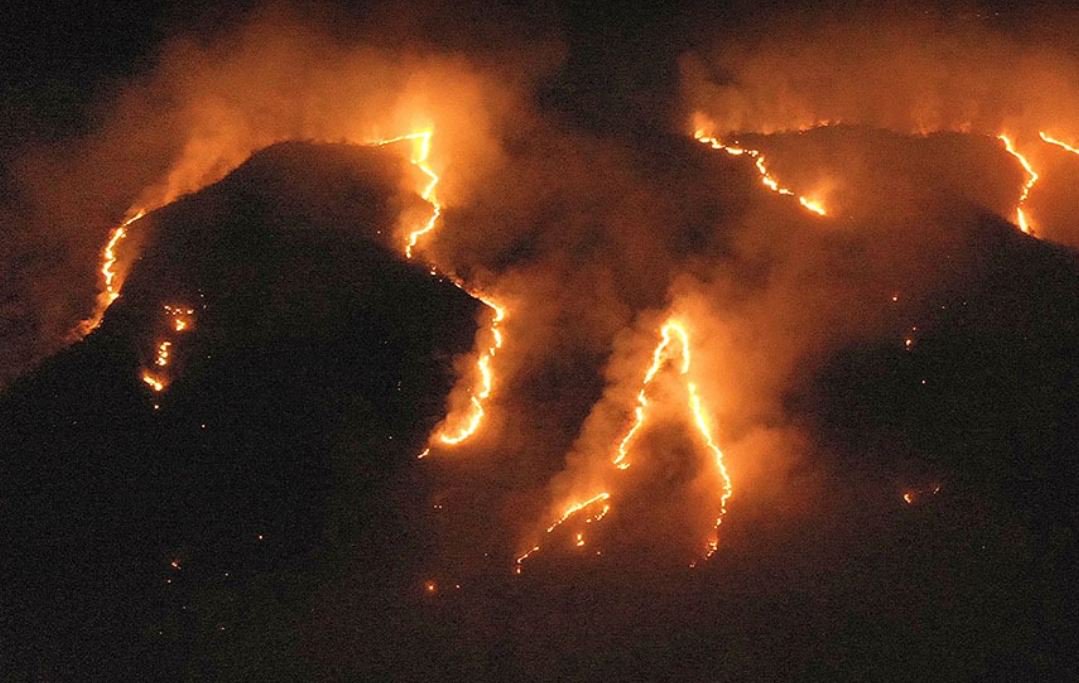
For the past week or so, I’ve seen several posts and news reports about the Amazon Forest burning. This is terrible, and  if you’re not alarmed, you should be. Why? According to National Geographic’s Amazon Facts, the Amazon Forest is often referred to as ‘the lungs of the Earth’ because of its rich vegetation that takes carbon dioxide (CO2) out of the air, and releases oxygen back in it. More than 20% of the world’s oxygen is produced by the Amazon, and some articles say up to 30%.

Amazon Rain Forest

Here are some facts about the Amazon, according to National Geographic. The Amazon is the world’s largest tropical rainforest, covering over 5.5 million square kilometres. It is so big, that the UK and Ireland would fit into it 17 times! It has an incredibly rich ecosystem – there are around 40,000 plant species, 1,300 bird species, 3,000 types of fish, 430 mammals and 2.5 million different insects. The Amazon is home to a whole host of fascinating – and deadly – creatures, including electric eels, flesh eating piranhas, poison dart frogs, jaguars, and some seriously venomous snakes.

Since the beginning of 2019, Brazil’s National Institute for Space Research (INPE) has reported 72,843 fires in the country, with more than half of these being seen in the Amazon region. This means more than one-and-a-half soccer fields of Amazon rainforest is being destroyed every minute of every day. An 80% increase in deforestation has occurred so far this year compared to last year, according to the institute. That is alarming to say the least.

So why is the rainforest burning? According to the CNN article, Here’s what we know about the fires in the Amazon rainforest, farmers and cattle ranchers have long used fire to clear land and make it ready for use, so they are likely behind the unusually large number fires burning in the Amazon today. This year’s fires fit with an established seasonal agricultural pattern, said CNN meteorologist Haley Brink. “It’s the best time to burn because the vegetation is dry. Farmers wait for the dry season and they start burning and clearing the areas so that their cattle can graze. And that’s what we’re suspecting is going on …”

Mongabay,  a nonprofit environmental science and conservation news platform, agrees saying 65-70% of the deforestation in the Amazon is caused by cattle ranching, 25-30 by agriculture, and 2-3% by logging.

Amazon on fire

UNILAD, a youth platform for breaking news, in its article, Brazil’s President Is Actively Trying To Destroy Amazon, claims Bolsonaro, Brazil’s controversial far-right president, appears to be sabotaging a conservation effort aiming to conserve 265 million square kilometers of the Amazon forest. Brazil’s president is not the only president putting our planet in jeopardy. National Geographic has a running list of how Trump, the current resident of the US White House, is harming the planet, all designed to increase corporate profit.

So I must ask: Is leaving a planet that is inhabitable for our children and grandchildren a priority, or is making money? Saving our planet, which is in crisis, should be the priority. Back in October of 2018, the New York Post ran a headline, Terrifying climate change warning: 12 years until we’re doomed. The headline speaks for itself. The United Nations says,

Climate Change is the defining issue of our time and we are at a defining moment. From shifting weather patterns that threaten food production, to rising sea levels that increase the risk of catastrophic flooding, the impacts of climate change are global in scope and unprecedented in scale. Without drastic action today, adapting to these impacts in the future will be more difficult and costly.

How does Climate Change relate to the Amazon Forest? The answer relates to Greenhouse Gases of which CO2 is one of the biggest ones. As the forest burns, it releases CO2 into the air, contributing to global warming. As more and more of the forest is destroyed, less and less of the CO2 is removed from our atmosphere since trees trap CO2 and release O2. Remember, as I mentioned earlier, more than 20%-maybe 30%-of the world’s oxygen is produced by the Amazon. If the Amazon Forest disappears, we will have 20% to 30% less O2 for us to breathe. That is frightening, folks!

The way I see it, the world’s biggest forest—the Amazon Forest—is being deforested so more meat can be provided for the planet since 65-70% of the deforestation in the Amazon is caused by cattle ranching. A growing trend toward veganism and vegetarianism is happening, in part because of this issue. Food Revolution Network, a site committed to healthy, ethical, and sustainable food for all reports

Veganism was a top search trend in Canada in 2017. And the preliminary draft of Canada’s new Food Guide, released in 2017 by the Canadian government, favors plant-based foods

There’s been a 600% increase in people identifying as vegans in the U.S in the last three years.According to a report by research firm GlobalData, only 1% of U.S. consumers claimed to be vegan in 2014. And in 2017, that number rose to 6%.

Am I advocating that everyone should become vegans or vegetarians? No, but we certainly can decrease our meat consumption to help the planet. My wife and I have made that choice, not only to save the planet, but also for health reasons. In the September 2019 Reader’s Digest magazine is an article entitled, Foods: “Good or Bad” Too Simplistic, describes a Harvard lead analysis of 36 trials where red-meat was replaced with plant-based proteins to study the effects of meat verses plant-based diets.  Their conclusion was that cardiovascular risk factors changed more favourably with those on a plant-based diet. It seems there is increased evidence that diets high in meat—especially red meat—are not healthy. There are lots of books and documentaries on this topic, so don’t take my word for it; do your own research.

Perhaps it is time for us in North America to decrease our meat consumption for the sake our planet and maybe for our health as well. According to World Atlas’ article, Top Meat Consuming Countries In The World,  the United States is the second largest consumer of meat on the planet consuming 200.6 pounds of meat per person per year. Australia is number one at 205 pounds per person annually. Canada is in ninth place on the list of high meat-consuming countries.

We can stick our head in the sand and pretend everything is fine, or we can do something. To save our planet, there are a few things you can do. You can demand that protecting the planet is priority over profit. Demand our governments leave a planet that is inhabitable for our children and grandchildren. We can also decrease our consumption of meat. And lastly, learn about the issues. Learn about Climate Change, deforestation, and other issues that planet Earth faces. Our grandchildren are counting on it, and our planet depends on it.

Is Democracy Broken?

A commentary on the present state of the world’s democracies.

A few weeks ago, we visited friends in a nearby city. During one of our discussions, this friend mentioned that he is disillusioned with democracy (not his exact words). I asked him why and he questioned the type of leaders that were being elected; leaders who were racist, narcissistic, misogynistic, anti-immigration, and who support white supremacy. This got me thinking. I began to wonder if democracy is broken.

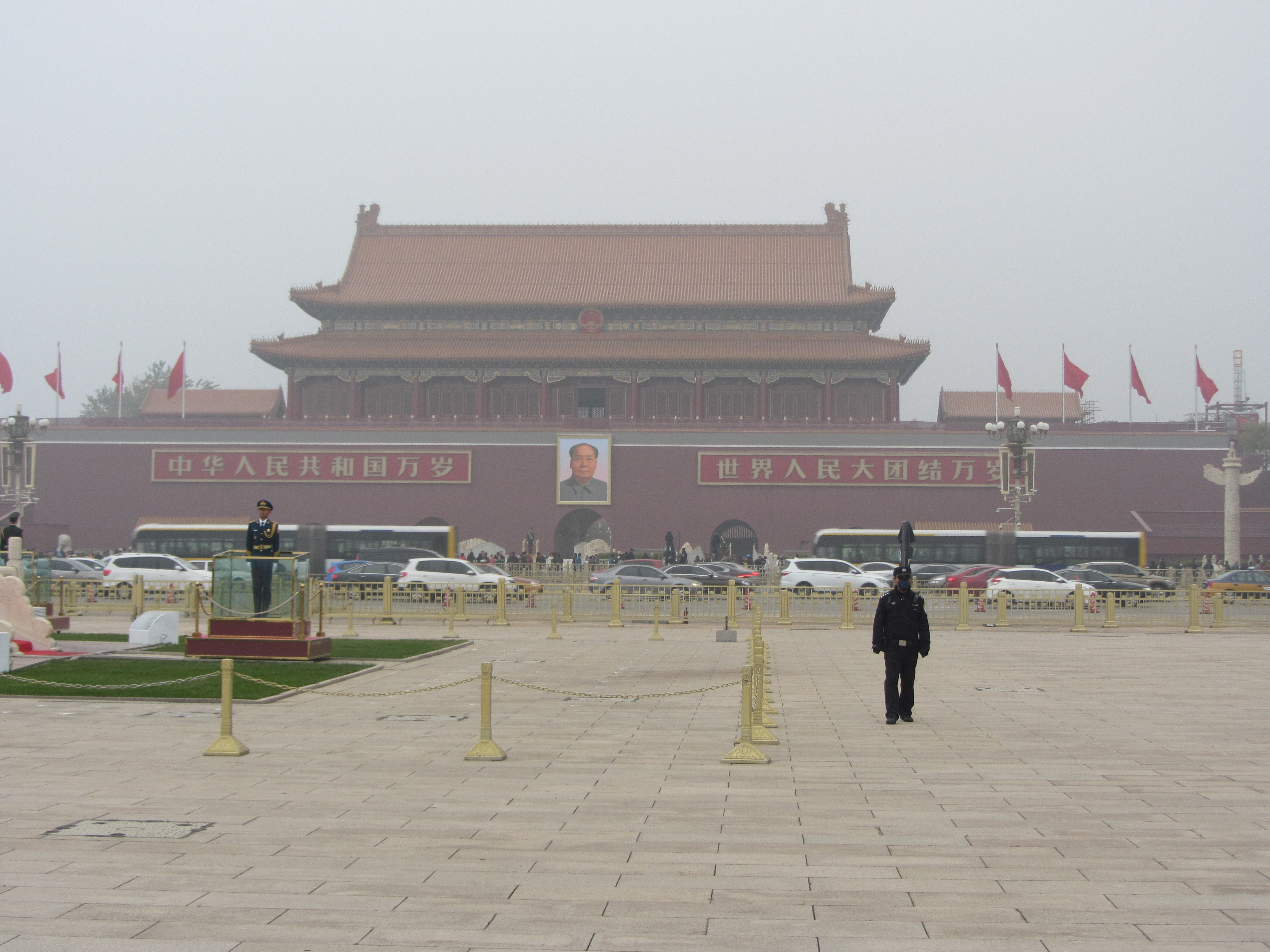
When I visited China last November, our tour guide said something that made me question democracy. Our guide said the democratic world accomplishes little as governments are always squabbling. He further explained, whenever a democratic country elects a new political party, the previous party’s policies are reversed, thus little progress is made. I elaborated on this in my post on China (see China post). This begs the question: Are our democracies working efficiently? Is there something wrong with the way democracy is presently practiced?

Presently, there is increasing popularity in electing extremist right-wing politicians. According to Reference, neoconservatism is considered to be one of the more extreme right-wing ideologies. It takes a firm stance against anti-authority media and aligns itself with religious conservatives. Religious conservatives have specific positions on certain political issues such as abortion, homosexuality, creationism, science education, treatment of prisoners, immigration, and many other issues. Typically, conservative Christians favour anti-abortion laws, oppose gay marriage,  and many have a hardline against illegal immigration (see Intelligence Report).

Extremist right-wing politicians also tend to be nationalistic. In high school social studies—one of the courses I taught for many years—nationalism is defined as the belief that nations will benefit from acting independently rather than collectively, emphasizing national rather than international goals. Nationalist leaders are gaining momentum in Europe (see BBC). American president Donald Trump calls himself a nationalist. (See HuffPost). There are many extremist right-wing nationalistic politicians being elected. Why is this so? Does this mean democracy is failing us?

When our politicians act more like school aged children with their bullying behaviours and temper tantrums when they don’t get their way, I believe democracy is broken. When it becomes acceptable to vote for politicians who spout rhetoric that is divisive and “unchristian,” democracy is failing us.  When it becomes acceptable for the US president to use profanity, such as the “F” bomb (listen to Trump), we are electing a breed of politicians of the lowest kind.

Israeli Prime Minister Benjamin Netanyahu faced criminal investigations for fraud and bribery. A google search shows numerous US politicians under investigation. The US president is under investigation for obstruction of justice as well as other crimes. Two former Brazilian presidents were investigated for a scandal known as Operation Car Wash (see BBS).

My province recently elected a premier who was under investigation of voter fraud (see CBC). I thought politicians where supposed to have integrity. Even more disturbing for me, is our newly elected premier handed out earplugs to his caucus, clearly indicating his refusal to hear debate from democratically elected opposition members about a bill that removes some bargaining rights for government workers (see HuffPost). This kind of behaviour from a leader stems from arrogance; a leader who thinks his party knows best and those who have alternative views are to be ignored. I thought the heart of democracy was healthy debate. Apparently not in my province. Former US president, Barack Obama said, “The strongest democracies flourish from frequent and lively debate, but they endure when people of every background and belief find a way to set aside smaller differences in service of a greater purpose.” I believe this to be true. When healthy debate is squashed in our legislatures, then as far as I am concerned, democracy is broken.

That leads us to the question: What is wrong with democracy? Former British Prime Minster, Winston Churchill once said, “The best argument against democracy is a five-minute conversation with the average voter.” Perhaps he is onto something.  Louis L’Amour, an American novelist said, “To make democracy work, we must be a nation of participants, not simply observers. One who does not vote has no right to complain.” Exactly!

My brother and his wife worked during our province’s recent election, and both expressed how appalled they were by the electorate. They said they had numerous voters in their 30s and 40s who were voting for the first time. They also said they fielded numerous questions asking how the voting process works. Both my brother and his wife were shocked when several voters asked them why there were names on the ballots which they did not recognize. Many of them were looking for the party leaders’ names on the ballot. I was shocked to hear this. This is why, at least in part, democracy is broken. The voters are failing democracy.

Former US president, Franklin D. Roosevelt said, “Democracy cannot succeed unless those who express their choice are prepared to choose wisely. The real safeguard of democracy, therefore, is education.” That is it! Voters are too apathetic to educate themselves. That explains, at least in part, why Donald Trump won the 2016 election.  Trump’s supporters are largely uneducated, according to polls (see Inquisitr).

Former US president, John F. Kennedy, once said, “The ignorance of one voter in a democracy impairs the security of all.”  I have to wonder if unprepared voters, who buy into the dangerous rhetoric being spouted by extremist right-wing nationalistic politicians is putting world security at risk. History teaches extreme nationalism started both world wars. Jose Marti, a Cuban poet, writer, and nationalist leader said, “The first duty of a man is to think for himself.”  Democracy is literally “rule by people,” and is a system where the citizens choose their leaders or government. To fix our broken democracy, people need to start thinking for themselves and educating themselves. Voters need to make informed decisions when voting, and that means determining what news stories are true and which are “fake news” stories. This does not seem to be happening at the moment as most voters believe the rhetoric spouted by extremist right-wing nationalistic politicians. English humourist, writer, and journalist, Allan Coren says, “Democracy consists of choosing your dictators, after they’ve told you what you think it is you want to hear.”  Ralph Waldo Emerson, American 19th-century philosopher says, “Democracy becomes a government of bullies tempered by editors.” Are we electing dictators? Seems that way to me. Are we electing bullies?  I see this more and more, and voter ignorance is to blame.

Former US president, Abraham Lincoln said democracy is “government of, by and for the people.”  I still believe this is why democracy is the better system when it is not broken. Former US president Barack Obama said, “No party has a monopoly on wisdom. No democracy works without compromise.” Perhaps compromise is another problem. We’re living in a polarized time in history and compromise seems to have gone out the window. Each political party thinks they know best and are unwilling to listen to other parties’ views. An openness to different points of views and a willingness to compromise must occur for democracy to work effectively! Politicians must unite and do what is best for all. 

I know it is more complicated than what I’ve outlined, and democracy has problems other than those I’ve addressed above. The issue of corporate donations to help political parties get elected, for example.  Corporate wealth increases when a corporation’s preferred political party is elected and makes policies that perpetuate corporate greed. An informed electorate that votes responsibly is a good start to fixing our broken democracies.

Oh, Those Stereotypes.

A commentary on stereotyping.

A stereotype is an over-generalized belief about a particular group of people. Business Insider’s article, 5 mistaken ideas about Americans, says a common stereotype of Americans throughout the world, is Americans are loud, arrogant, and entitled. That is certainly a stereotype that many Canadians hold.

The Globe and Mail’s article, These days, Canadians aren’t big fans of the U.S, published in October 2018, says,

In its report, the Pew Research Center found that “just” 39 per cent of Canadians had a favourable opinion of the U.S., the lowest percentage in polling since 2002. Two years ago, during the final stretch of Barack Obama’s presidency, 65 per cent of Canadians expressed a favourable opinion of their southern neighbour.

The drop was even more dramatic for Mr. Trump himself. “Only” 25 per cent of Canadians have confidence in Mr. Trump, the report said – a slight uptick from 2017, but plummeting from 83 per cent in the final year of Mr. Obama’s tenure.

Now that is striking, and in my experience accurate as pretty much anyone I talk to, has a negative view of Americans. The reality is, America gets a bad rap because of the current resident of the White House.  He certainly fits the American stereotype of being loud, arrogant, and entitled. News reports that us Canadians hear about white supremacy and the anti-immigration rhetoric coming from the United States doesn’t help either.

The Globe and Mail article goes on to say,

The trends in Canada – a two-year erosion of U.S. favourability and presidential ratings – were pervasive among America’s allies and neighbours, the survey suggests. In Mexico, positive views of the U.S. have decreased by an even greater percentage than in Canada since the end of the Obama presidency.

The negative view of the United States is prevalent throughout the world.

I believe regular, everyday Americans are getting a bad rap. Let me tell you why, based on my experience.  My wife and I just returned two weeks ago from a vacation in Maui, Hawaii. It was a wonderful trip of sun and beaches after a winter from hell. But this is not my point. Being we were in one of the American states, as expected, we met American citizens from all over. We met people from California, Tennessee, Kentucky, Oregon, Montana, New York, Washington, Arizona—I’m sure I’m missing some—and Hawaii.  I can honestly tell you that not a single one of them were loud, arrogant, or acted entitled. In fact, the only loud, arrogant person we met, ironically, was a Canadian.

An interesting side note, the vast majority of Americans that we met never spoke of their president or talked politics. I may be wrong, but Americans almost seemed embarrassed by their politics. We did meet a few people who made of point of telling us that their country was a mess because of Trump.

So, the question is: Is the stereotype wrong? No.  The article, All Stereotypes Are True, Except, by Psychology Today,  says,

Many stereotypes are empirical generalizations with a statistical basis and thus on average tend to be true. If they are not true, they wouldn’t be stereotypes. The only problem with stereotypes and empirical generalizations is that they are not always true for all individual cases. They are generalizations, not invariant laws.

There are plenty of Americans who are loud, arrogant, and entitled, but as far as that goes, there are plenty of Canadians who are as well. I’ve met many of them. I’m sure there are in every country.

Is there a danger with Stereotyping?  Yes. Stereotypes encourage prejudice.  How?  Another Psychology Today article, The Psychology of Prejudice and Racism, says,

By definition, stereotypes are limiting and disregard people’s individuality. They also lend themselves to negative and derogatory assumptions. When that happens the stereotype blends into prejudice.

As I mentioned earlier, not a single American that we met in Maui was loud, arrogant, or acted entitled. How does one explain that? Well, I can only speculate, but of all the Americans we met, they all were willing to travel and try new experiences, even if it was only in their own country. Many mentioned that they’ve been to Europe or other places, though. Those that travel meet people of other races and cultures, and become more tolerant of difference.

Intolerance can also be built by meeting and getting to know immigrants. If people—Muslims, Christians, Blacks, White, Indigenous, and so on—get to know one another, prejudices and racism would decrease. The reality is, we are all human beings with the same pains, desires, struggles, etc. This is what William Shakespeare is saying in the play, The Merchant of Venice.

In Act 3, scene 1 of the play, Shylock confronts two provoking Christians saying, “I am a Jew. Hath not a Jew eyes? Hath not a Jew hands, organs, dimensions, senses, affections, passions… warm’d and cool’d by the same winter and summer, as a Christian is? If you prick us, do we not bleed? If you tickle us, do we not laugh? If you poison us, do we not die…”

It seems this struggle has gone on for centuries.

Does creating friendships with individuals from other cultures and races reduce prejudice? Absolutely!  The Psychology Today article mentioned earlier says,

Positive emotional experiences with members of different groups [people from other cultures or races] can also reduce negative stereotypes. Having close friends from different groups is especially effective in this regard.

I would encourage everyone to put away their fear of other cultures and races, and instead ,talk to them, whether that be through travelling or meeting new immigrants. The world will be a better place because of it.

When Will the Meanness End?

As a teacher, I spent my entire career trying to instill in my students the values of respect, responsibility, honesty, integrity, kindness, and compassion. I know many of my colleagues did as well. We tried, as teachers, to show students that bullying behaviour was unacceptable, and not the way to solve problems. We also taught that all people were equal and that racism was immoral.

What is discouraging is the amount of bullying I see happening in the world. The World Health Organization defines bullying as, “repeated exposure of one person to physical and/or emotional aggression including teasing, name calling, mockery, threats, harassment, taunting, hazing, social exclusion or rumours.”  Here are two recent examples.

The Edmonton Journal reported that an Edmonton, Alberta mosque received a detestable letter in January of this year. Here are some of the highlights of the letter:

“On behalf of real Albertans, we would like to advise you that you and your religion [Muslims] don’t belong here in Alberta…We are White. We are Christians. We are Proud…Our Premier to be…is going to take Alberta back…We are not racist. We just want our way of life back.”

What amazes me is the author(s) say they speak on behalf of real Albertans. For those who may not know, an Albertan is a person who lives in Alberta, one of the ten provinces in Canada. I googled ‘real Albertans’ because I really don’t know what a real Albertan is. I could not find a definition. By the tone of the letter, I would say I am not a real Albertan, even though I was born, raised, and lived here all my life.

The letter says ‘we are White’ and ‘We are Christians.” I’m also white and raised Christian. A declaration of ‘we are white’ can only be interpreted as a declaration of white supremacy. Meriam-Webster Dictionary defines white supremacy as a “person who believes that the white race is inherently superior to other races and that white people should have control over people of other races.” So, that definitely makes me not a real Albertan as I think ALL humans are equal. That is what the UN Declaration of Human Rights says in Article 1: “All human beings are born free and equal in dignity and rights.”

Now what astonishes me the most about this terrible letter is the declaration, “We are Christian.” There is nothing Christian about this letter’s message. Romans 2:11, in the Christian Bible says, “For God shows no partiality.” Furthermore, Mark 12:31 commands, “You shall love your neighbour as yourself.” The message of the letter is the opposite. There is NOTHING Christian about this letter’s message.

The declaration, “We are not racist,” in the letter is what astounds me the most. Meriam-Webster Dictionary defines racism as “a belief that race is the primary determinant of human traits and capacities and that racial differences produce an inherent superiority of a particular race.” The letter’s declaration of “We are White” infers whites are superior. Clearly the author(s) of this letter are racist and don’t know what a racist is, nor what a Christian is.

In January of this year, CTV News reported that a threatening letter was left on the doorstep of a Leduc, Alberta Indigenous family urging them to ‘move out’.  The letter said, ‘We do not like your kind’. This is eerily similar to a letter I referred to in an earlier blog post, Should we be worried.  That letter, like this one, was signed “Your friendly Neighbours.” There is nothing friendly about a letter that threatens. The authors of this letter are hypocrites.

Furthermore, this is a racist letter. The author(s) are suggesting superiority of a particular race—the white race—for they stated, ‘We do not like your kind’.  They disapproved of the family’s “lifestyle,” criticizing the upkeep of the family’s home. The writers wrote, “If you cannot take care of your property, then go back to the Indian reservation where it is accepted…We gave you land and you need to respect the generosity.”

The last statement is insulting, as the author(s) clearly don’t know Canada’s history. Indigenous people are the original peoples—thus why they are referred to as First Nations People—of Canada. A website of the government of British Columbia (another Canadian province), also called B.C. says, “Indigenous people have lived in the area now known as B.C. for more than 10,000 years.” Europeans, on the other hand, landed in Canada in 1497 with the expedition of John Cabot. Really, the Norsemen (Vikings) were the first in Canada dating to around the year 1000. L’Anse aux Meadows, in Newfoundland and Labrador is the only confirmed Norse archeological site in North America, and is widely accepted as evidence. Indigenous people were in Canada long before Europeans.  This is why the letter’s statement, “We gave you land and you need to respect the generosity,” is absurd. If anyone was generous, it was the Indigenous people who welcomed and allowed the Europeans to stay.

I like to believe that we teachers made a difference in instilling values into our students. I’ve had parents tell me we have. But, it only takes one person to undermine what teachers and parents do. The Psychology Today’s article, The Trump Effect: An Update, says,

“Last spring, we wrote a two-part post about “The Trump Effect,” which was originally defined as an increase in bullying in schools caused by the rhetoric Donald Trump used during his presidential campaign. Now, a year into Mr. Trump’s presidency, the definition of The Trump Effect has expanded to include religious and racial bullying by adults as well as: misogyny, sexual assault, and other socially unacceptable behaviours.”

The article goes on to say,

“Free speech and expressing our opinion is a constitutional right. It’s up to others whether or not they want to listen. But when the speaker is POTUS, we all listen. And when the president’s use of provocative rhetoric that causes harm to others, including and especially innocents, or when he behaves in previously unacceptable ways, what can we do? What should we do?

First, we can realize the only person we have control over is ourselves. We control what we think, what we choose to say, and how we act and react. We can choose to be harsh and damaging, or to be kind and compassionate.”

It is not fair to put all the blame on the current resident of the White House, as there are other world leaders spewing rhetoric promoting racism and bullying. However, Trump is likely the single most negative influence in North America. This childish man has brought out the worst in some people and his rhetoric is impacting my country. What Trump has taught me is our world needs more love, kindness and compassion.  Thankfully, there are good people. Neighbours of the Leduc Indigenous family overwhelming came out supporting the family. (see Hateful letter backfires).

A TRUE Christian speaks out against unkindness, racism and bullying. Christian or not, that is what we need to do. I think Francis of Assisi said it best in the Serenity Prayer. “Lord, grant that I might not so much seek to be loved as to love.”  Or as the Christian Bible says in 1 John 4:20,

“If anyone says, “I love God,” and hates his brother, he is a liar; for he who does not love his brother whom he has seen cannot love God whom he has not seen.” If the authors of these letters claim to be Christian, then they need to act as one.